


Why are some cable guides underneath BB plastic and some integrated?
 09-11-18 | 11:09 PM
#1
Thread Starter
Senior Member

Joined: Aug 2012
Posts: 810
Likes: 133
Why are some cable guides underneath BB plastic and some integrated?
I have seen many bikes with ''plastic cable guides'' bolted onto the frame (both high/low end bike frames), why is that they used plastic instead of all being integrated into the steel frame? Aren't the integrated ones superior vs the plastic cable guides? Id assume so..
 09-12-18 | 12:13 AM
#2

Senior Member


Joined: Nov 2014
Posts: 27,576
Likes: 5,489
From: Eugene, Oregon, USA
As far as I can tell, the plastic cable guides wear very well for a long time. And, are replaceable if they are ever damaged.
The metal ones should last essentially forever, but risk wearing through the paint, and perhaps higher friction. Cable Liner fit in them helps.
Also, with vintage galvanized cable, the metal on metal runs greater risk of either cable or cable guides getting rust damage.
It is hard to say one or the other is better, but with good and bad aspects of both.
The metal ones should last essentially forever, but risk wearing through the paint, and perhaps higher friction. Cable Liner fit in them helps.
Also, with vintage galvanized cable, the metal on metal runs greater risk of either cable or cable guides getting rust damage.
It is hard to say one or the other is better, but with good and bad aspects of both.
09-12-18 | 01:24 AM
#3

aire díthrub
Joined: Sep 2017
Posts: 553
Likes: 56
From: chatham-savannah
Bikes: Raleigh Competition, Pashley Roadster Sovereign, Mercian Vincitore Speciale
Cost, more than anything else. If we’re talking strictly mass manufactured bikes, it’s just cost. A small bit of plastic screwed into the bottom bracket shell is a lot cheaper than manufacturing shells with integrated guides. More expensive bikes are typically going to have integrated guides, just like they are more likely to have internal cable routing and various other niceties. If we’re talking older, more hand built frames, then it depends mostly on when the frame was made. older frames either had no guides (usually used clamp on guides at the base of the down tube) or more likely had braze on guides on the top of the shell, which was much more common on 1970s and some older frames. Though a lot of older frames without brazed on or integrated guides can be found modified with a plastic guide, as a plastic one is a cheap easy way to upgrade an older frame. The most commonly found guide is manufactured by shimano and came as an accessory with shimano shifters for a long time, since the 80s maybe? And was meant specifically to be used to modify a frame that didnt have guides to be able to use the shiny new shimano parts you just bought. A lot of 80s and 90s steel frames have these shimano pieces. A craftsman of course, likely wouldnt use plastic guides unless requested for some reason by a customer. A plastic guide can be removed though, so it can offer a bit of customisation and versatility for the frame. Mostly though, it’s just cost.
Last edited by seamuis; 09-12-18 at 01:51 AM.
09-12-18 | 01:36 AM
#4

verktyg
Joined: Jul 2006
Posts: 4,034
Likes: 1,273
From: SF Bay Area
Bikes: Current favorites: 1988 Peugeot Birraritz, 1984 Gitane Super Corsa, 1980s DeRosa, 1981 Bianchi Campione Del Mondo, 1992 Paramount OS, 1988 Colnago Technos, 1985 RalieghUSA SBDU Team Pro
BB Cable Guides
$$$$$$
Most of the bottom bracket shells with integrated cable guides are investment cast and more expensive than standard shells which are much cheaper to produce.
Some shells are made with the "spigots" drawn out of piece of tubing, others are stamped, formed and welded across the bottom like this BB shell:
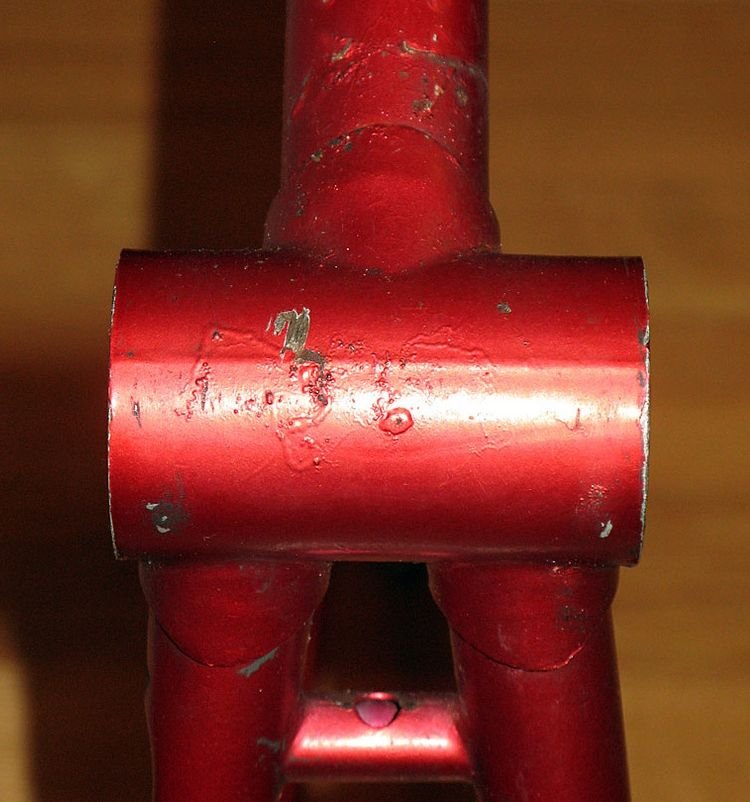
Tubing brazed under the BB
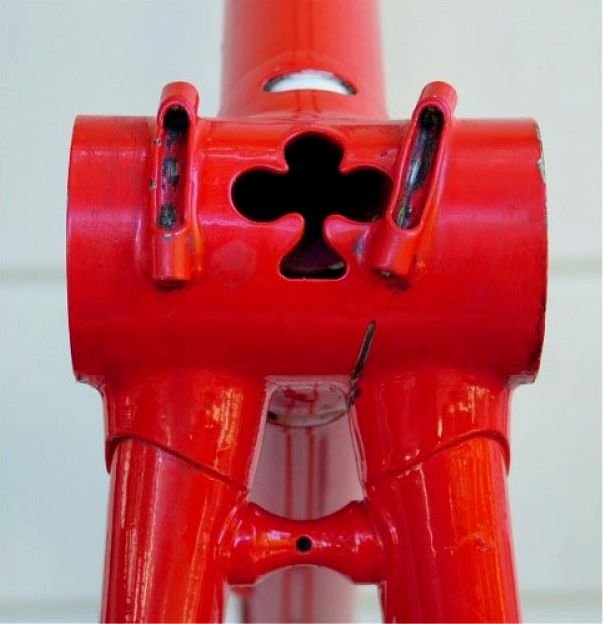
2 styles of Cinelli investment cast BB shells with integral cable guides.

I suspect that running the derailleur cables under the BB was originally intended to save the time and labor used to braze cable guides on to the top of the BB shell.

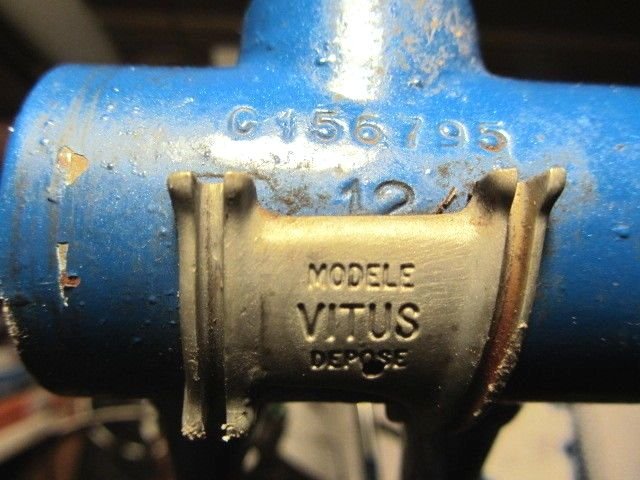
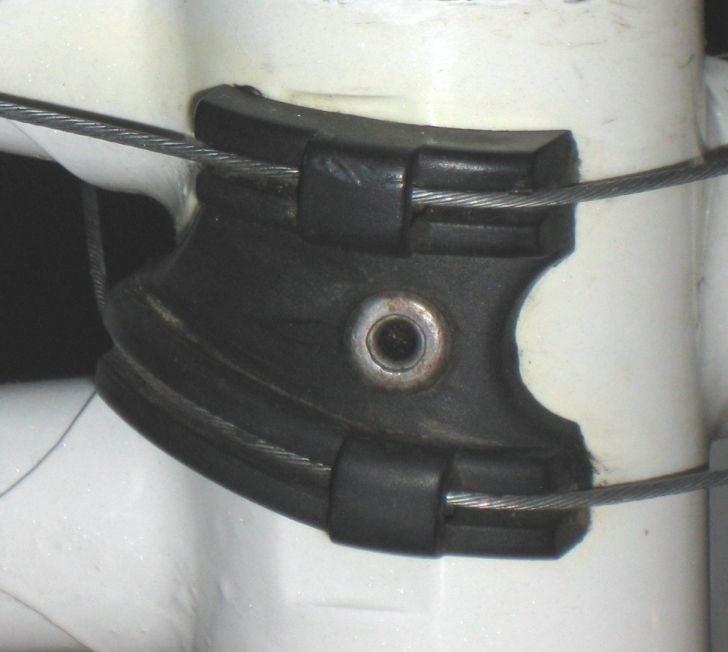
Plastic and metal cable guides are even cheaper. They are pressed, screwed or riveted into the BB shell.
verktyg
Most of the bottom bracket shells with integrated cable guides are investment cast and more expensive than standard shells which are much cheaper to produce.
Some shells are made with the "spigots" drawn out of piece of tubing, others are stamped, formed and welded across the bottom like this BB shell:
Tubing brazed under the BB
2 styles of Cinelli investment cast BB shells with integral cable guides.
I suspect that running the derailleur cables under the BB was originally intended to save the time and labor used to braze cable guides on to the top of the BB shell.
Plastic and metal cable guides are even cheaper. They are pressed, screwed or riveted into the BB shell.
verktyg
__________________
Don't believe everything you think! History is written by those who weren't there....
Chas. ;-)
Don't believe everything you think! History is written by those who weren't there....
Chas. ;-)
Last edited by verktyg; 09-12-18 at 01:53 AM.
 09-12-18 | 05:56 AM
#5


feros ferio

Joined: Jul 2000
Posts: 22,417
Likes: 1,883
From: www.ci.encinitas.ca.us
Bikes: 1959 Capo Modell Campagnolo; 1960 Capo Sieger (2); 1962 Carlton Franco Suisse; 1970 Peugeot UO-8; 1982 Bianchi Campione d'Italia; 1988 Schwinn Project KOM-10;
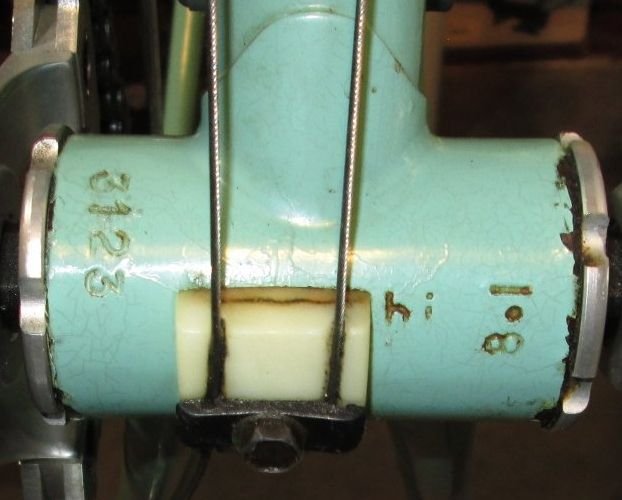
Corrosion is a very real problem down there. I have the integrated metal loops on the Schwinn and the plastic/Teflon plate on the Bianchi, and I would vote for the latter any day.
__________________
"Far and away the best prize that life offers is the chance to work hard at work worth doing." --Theodore Roosevelt
Capo: 1959 Modell Campagnolo, S/N 40324; 1960 Sieger (2), S/N 42624, 42597
Carlton: 1962 Franco Suisse, S/N K7911
Peugeot: 1970 UO-8, S/N 0010468
Bianchi: 1982 Campione d'Italia, S/N 1.M9914
Schwinn: 1988 Project KOM-10, S/N F804069
"Far and away the best prize that life offers is the chance to work hard at work worth doing." --Theodore Roosevelt
Capo: 1959 Modell Campagnolo, S/N 40324; 1960 Sieger (2), S/N 42624, 42597
Carlton: 1962 Franco Suisse, S/N K7911
Peugeot: 1970 UO-8, S/N 0010468
Bianchi: 1982 Campione d'Italia, S/N 1.M9914
Schwinn: 1988 Project KOM-10, S/N F804069
09-12-18 | 06:04 AM
#6
Senior Member

Joined: Nov 2004
Posts: 23,212
Likes: 3,123
+1. It's economics. After paying off the tooling investment, plastic BB cable guides are extremely inexpensive. They can also be manufactured using self-lubricating material that provides far less friction. Being a homogeneous material, they maintain a consistent appearance, unlike metal, which corrodes after the cables wear through the paint. However, the big saving is that they can be quickly installed by inexpensive, unskilled labour. Brazing takes much longer and brazers are classified as skilled labour with much higher pay rates.
When you're a mass volume manufacturer, even a small savings per bicycle quickly adds up to large amounts. Mass volume manufacturers operate in a much more competitive market segment, where profit margins are smaller and careful cost management is necessary. The smaller, prestige builders have larger profit margins to absorb the extra cost of metal cable guides, either brazed-on or investment cast into the BB shells.
Plastic guides mounted under he BB shell started became prominent in the 1980s on entry and mid-range models from mass volume manufacturers. However, there were precedents. Simplex had their hybrid material cable guides that clamped to the down tube, just ahead of the bottom bracket shell. A Delrin cable guide housing was riveted to a metal clamp. These were ubiquitous during the early 1970s bicycle boom.
When you're a mass volume manufacturer, even a small savings per bicycle quickly adds up to large amounts. Mass volume manufacturers operate in a much more competitive market segment, where profit margins are smaller and careful cost management is necessary. The smaller, prestige builders have larger profit margins to absorb the extra cost of metal cable guides, either brazed-on or investment cast into the BB shells.
Plastic guides mounted under he BB shell started became prominent in the 1980s on entry and mid-range models from mass volume manufacturers. However, there were precedents. Simplex had their hybrid material cable guides that clamped to the down tube, just ahead of the bottom bracket shell. A Delrin cable guide housing was riveted to a metal clamp. These were ubiquitous during the early 1970s bicycle boom.
09-12-18 | 07:53 AM
#7
Randomhead
Joined: Aug 2008
Posts: 25,930
Likes: 4,825
From: Happy Valley, Pennsylvania
from a current prospective, I like plastic guides better. The old Campagnolo guides are classy, but when they forced 11 tooth cassettes on us, routing the rear derailleur cable above the chainstay became problematic. I have pretty much given up on sourcing cassettes that have more teeth on the small cog. I think I might have some metal under-bb guides in my parts bin somewhere, but they had teflon lining. I figure the plastic guides are out of sight and you can avoid any issues with holding the teflon in place.
I finally got around to overhauling the bb on my '85 rockhopper recently (30 years, what's the rush?). After struggling for quite some time to put a cartridge bb in it, I eventually realized the under bb guide mounting screw was too long, pushing the cartridge out of line.
I finally got around to overhauling the bb on my '85 rockhopper recently (30 years, what's the rush?). After struggling for quite some time to put a cartridge bb in it, I eventually realized the under bb guide mounting screw was too long, pushing the cartridge out of line.
09-12-18 | 10:47 AM
#8

Ride, Wrench, Swap, Race

Joined: Jan 2010
Posts: 9,835
Likes: 1,816
From: Northern California
Bikes: Cheltenham-Pedersen racer, Boulder F/S Paris-Roubaix, Varsity racer, '52 Christophe, '62 Continental, '92 Merckx, '75 Limongi, '76 Presto, '72 Gitane SC, '71 Schwinn SS, etc.
As T-Mar mentioned, the plastic is much better in terms of friction, i.e. being self-lubricating. This became more critical when indexed shifting required there to be as little friction as possible along the length of the cable in order to maintain accurate transmission of shifting movements from the shifter to the derailer.
A worst-case scenario of cable guide material selection occurred around 20+ years ago, when Trek (for several years apparently) was using a piece of formed stainless-steel sheet under the bottom bracket of their OCLV carbon frames. With the cable wires on such higher-end bikes also being made of stainless steel by this time, the friction level was quite problematic unless the cable's external path was kept well lubricated. Stainless steel on stainless-steel is of course prone to the sort of cold-welding that can multiply friction levels to well beyond that produced along the entire balance of the cable's path, so Trek's stainless guides created a need for a lot of otherwise-unnecessary maintenance visits.
I got in the habit of using the "hoops" of the stainless guides to secure short sections of thick-walled plastic tubing, isolating the cable from the guide. Luckily the guide hoops were flexible enough to be made to grip the tubing reliably using the closest size of tubing one could readily source.
A worst-case scenario of cable guide material selection occurred around 20+ years ago, when Trek (for several years apparently) was using a piece of formed stainless-steel sheet under the bottom bracket of their OCLV carbon frames. With the cable wires on such higher-end bikes also being made of stainless steel by this time, the friction level was quite problematic unless the cable's external path was kept well lubricated. Stainless steel on stainless-steel is of course prone to the sort of cold-welding that can multiply friction levels to well beyond that produced along the entire balance of the cable's path, so Trek's stainless guides created a need for a lot of otherwise-unnecessary maintenance visits.
I got in the habit of using the "hoops" of the stainless guides to secure short sections of thick-walled plastic tubing, isolating the cable from the guide. Luckily the guide hoops were flexible enough to be made to grip the tubing reliably using the closest size of tubing one could readily source.
09-12-18 | 03:35 PM
#9

Me duelen las nalgas
Joined: Aug 2015
Posts: 13,519
Likes: 2,832
From: Texas
Bikes: Centurion Ironman, Trek 5900, Univega Via Carisma, Globe Carmel
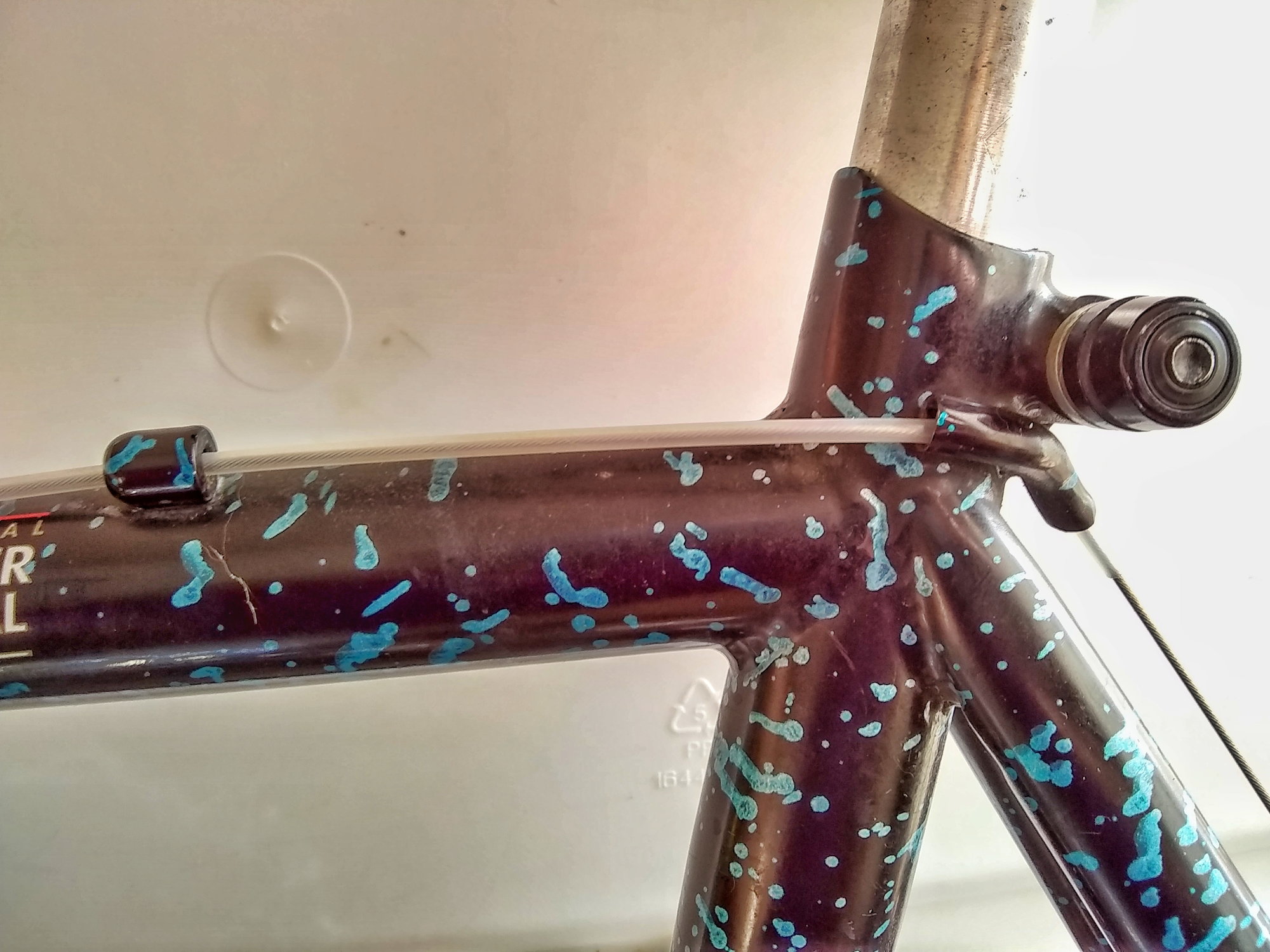
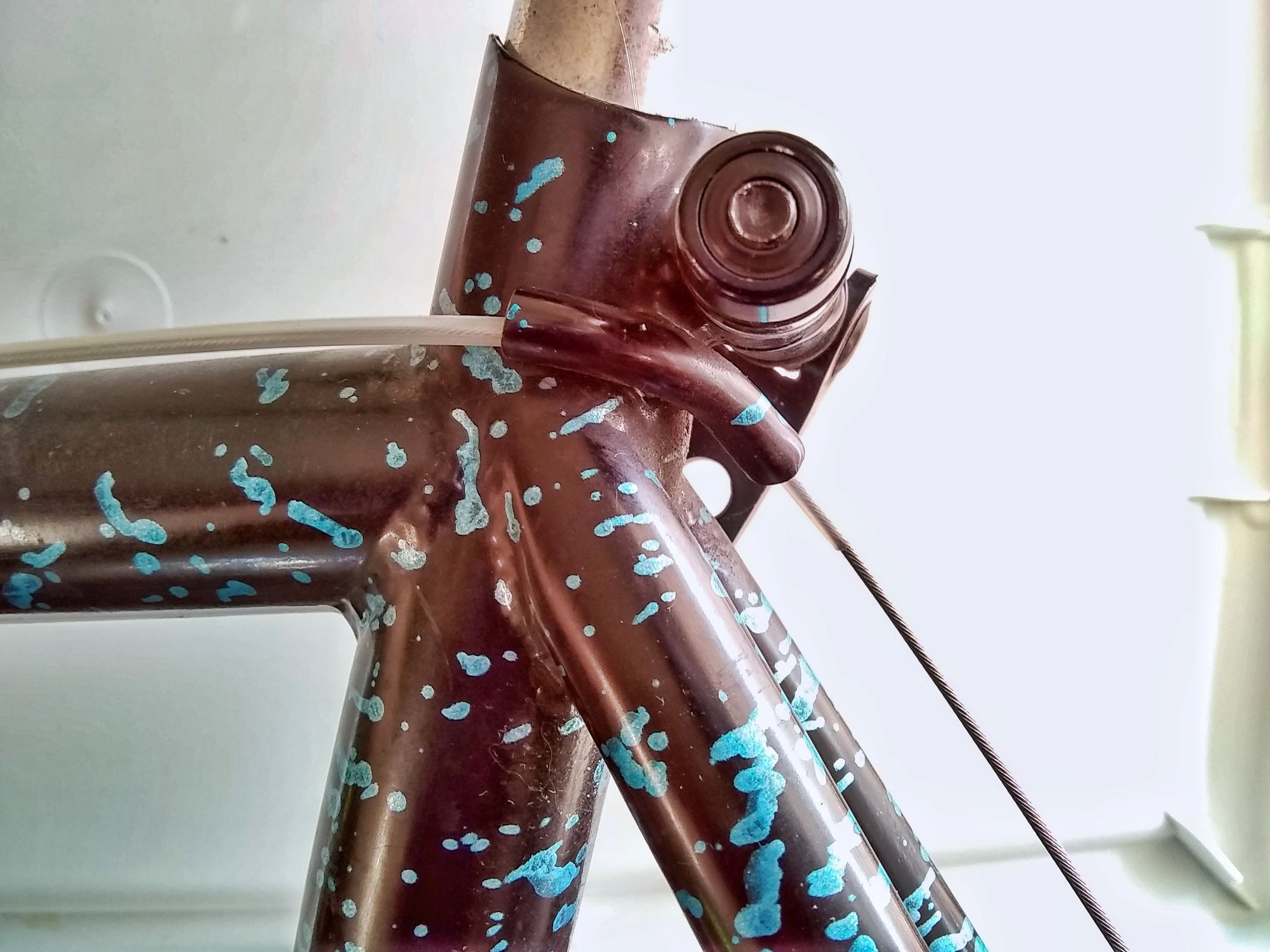
Translucent plastic liner inside metal guides for cantilever brake cable
As other folks noted, metal on plastic is self lubricating. The plastic is a sacrificial piece that can be replaced.
However a more elegant solution would be brass, bronze or other softer metal guide for the steel cables. The guides would need to be fairly thick to withstand years of abrasion from steel cables.
My Univega Via Carisma has a peculiar pair of metal ferrule guides for the rear cantilever brake cable. One is a curved noodle attached to the frame -- the metal is almost as thin is a straw. It looks like an elegant solution to centering the brake cable between the seat post and seat stays. But it's not a great idea to run bare steel cable through a thin softer metal guide.
So it needs a plastic liner. The guides are too small in diameter for any conventional brake or shifter cable. The old plastic liner was cracked and I couldn't find what I needed online because I didn't know what it was called. I visited the LBS, showed them the old piece and they gave me a new plastic liner from their bin. I still don't know what it's called!
Last edited by canklecat; 09-12-18 at 03:42 PM.
09-12-18 | 03:51 PM
#10

Senior Member

Joined: Apr 2014
Posts: 1,619
Likes: 385
From: Back in Lincoln Sq, Chicago...🙄
Bikes: '84 Miyata 610 ‘91 Cannondale ST600,'83 Trek 720 ‘84 Trek 520, 620, ‘91 Miyata 1000LT, '79 Trek 514, '78 Trek 706, '73 Raleigh Int. frame.
Translucent plastic liner inside metal guides for cantilever brake cable
As other folks noted, metal on plastic is self lubricating. The plastic is a sacrificial piece that can be replaced.
However a more elegant solution would be brass, bronze or other softer metal guide for the steel cables. The guides would need to be fairly thick to withstand years of abrasion from steel cables.
My Univega Via Carisma has a peculiar pair of metal ferrule guides for the rear cantilever brake cable. One is a curved noodle attached to the frame -- the metal is almost as thin is a straw. It looks like an elegant solution to centering the brake cable between the seat post and seat stays. But it's not a great idea to run bare steel cable through a thin softer metal guide.
So it needs a plastic liner. The guides are too small in diameter for any conventional brake or shifter cable. The old plastic liner was cracked and I couldn't find what I needed online because I didn't know what it was called. I visited the LBS, showed them the old piece and they gave me a new plastic liner from their bin. I still don't know what it's called!
From my days in the motorcycle repair industry I can tell you with some reliability that those would be classified as a “gawzintah”. Because it goes in ta that part a’ the frame. This may be a Massachusetts colloquialism.
09-12-18 | 03:58 PM
#11
Me duelen las nalgas
Joined: Aug 2015
Posts: 13,519
Likes: 2,832
From: Texas
Bikes: Centurion Ironman, Trek 5900, Univega Via Carisma, Globe Carmel
Heh! And all this time I thought Ben Lawee was from Iraq. Maybe he spent some time in Massachusetts en route to California and making Univegas!
09-12-18 | 04:01 PM
#12

Steel is real
Joined: May 2016
Posts: 1,180
Likes: 1,508
From: Stockholm, Sweden
Bikes: 40 - accumulated over (now - more than) 40 years
All the above - except maybe for the - "More expensive bikes are typically going to have integrated guides". Typically might have been true for some time but looking at later top of the line production frames like for instance the Merckx MXL shows that even the expensive frames had plastic pieces.
Here is my Merckx Corsa Extra in MAX tubing - a short run top of the line model - with metal guides and the following top model Merckx MXL with plastic.

Same with very limited numbers Bianchi Proto and Caurus in MAX tubing. First metal and later plastic. These - both Merckx MAX/MXL and Bianchi MAX were really expensive frames.
Here is my Merckx Corsa Extra in MAX tubing - a short run top of the line model - with metal guides and the following top model Merckx MXL with plastic.
Same with very limited numbers Bianchi Proto and Caurus in MAX tubing. First metal and later plastic. These - both Merckx MAX/MXL and Bianchi MAX were really expensive frames.
 09-13-18 | 01:40 AM
#14
Thread Starter
Senior Member
Joined: Aug 2012
Posts: 810
Likes: 133
All the above - except maybe for the - "More expensive bikes are typically going to have integrated guides". Typically might have been true for some time but looking at later top of the line production frames like for instance the Merckx MXL shows that even the expensive frames had plastic pieces.
Here is my Merckx Corsa Extra in MAX tubing - a short run top of the line model - with metal guides and the following top model Merckx MXL with plastic.
Same with very limited numbers Bianchi Proto and Caurus in MAX tubing. First metal and later plastic. These - both Merckx MAX/MXL and Bianchi MAX were really expensive frames.
Here is my Merckx Corsa Extra in MAX tubing - a short run top of the line model - with metal guides and the following top model Merckx MXL with plastic.
Same with very limited numbers Bianchi Proto and Caurus in MAX tubing. First metal and later plastic. These - both Merckx MAX/MXL and Bianchi MAX were really expensive frames.
09-13-18 | 03:45 AM
#16

Peugeot PSV10 or somethin
Joined: Jun 2018
Posts: 211
Likes: 16
Bikes: yes
The plastic bottom bracket cable guide on my Dawes Atlantis is glued on with what looks like cheap insulation or gap filler or something  it's also technically a cable housing guide, which seems unnecessary, but since it's there I ran the cables without housing.
it's also technically a cable housing guide, which seems unnecessary, but since it's there I ran the cables without housing.
09-13-18 | 04:23 AM
#17
Full Member
Joined: Sep 2008
Posts: 426
Likes: 54
From: Kansas City
Translucent plastic liner inside metal guides for cantilever brake cable
As other folks noted, metal on plastic is self lubricating. The plastic is a sacrificial piece that can be replaced.
However a more elegant solution would be brass, bronze or other softer metal guide for the steel cables. The guides would need to be fairly thick to withstand years of abrasion from steel cables.
My Univega Via Carisma has a peculiar pair of metal ferrule guides for the rear cantilever brake cable. One is a curved noodle attached to the frame -- the metal is almost as thin is a straw. It looks like an elegant solution to centering the brake cable between the seat post and seat stays. But it's not a great idea to run bare steel cable through a thin softer metal guide.
So it needs a plastic liner. The guides are too small in diameter for any conventional brake or shifter cable. The old plastic liner was cracked and I couldn't find what I needed online because I didn't know what it was called. I visited the LBS, showed them the old piece and they gave me a new plastic liner from their bin. I still don't know what it's called!
A good fix on the spot is to use the housing liner from inside the steel guide on an available v-brake.
09-13-18 | 08:20 AM
#18

Bike Butcher of Portland
Joined: Jul 2014
Posts: 12,493
Likes: 8,061
From: Portland, OR
Bikes: It's complicated.
When I'm brazing on a lot of bits on a bike with none, I use the plastic one. All I need to do is tap and drill an M5 hole in the bottom. I buy 'em 10 at a time, they're cheap and they work. The only time I'll braze on the top of the BB types is when there's a cable stop on the top of the chainstay and the frame has good chrome, otherwise it's easier to hack, file, and sand off the top cable stop and braze on underneath than to brazeon the top of the BB type.
Like others have written, it's an outta site, outta mind part.
Like others have written, it's an outta site, outta mind part.
__________________
If someone tells you that you have enough bicycles and you don't need any more, stop talking to them. You don't need that kind of negativity in your life.
If someone tells you that you have enough bicycles and you don't need any more, stop talking to them. You don't need that kind of negativity in your life.
12-03-23 | 08:58 PM
#19
Newbie
Joined: Dec 2023
Posts: 1
Likes: 0
Hey,
do you know what frame is shown in your post, the one with the braze on cable guides on top of the bottom bracket. I've got a frame that looks identical except the previous owned painted it and forgot the name. Any info would be help full and appreciated
-Kyle
do you know what frame is shown in your post, the one with the braze on cable guides on top of the bottom bracket. I've got a frame that looks identical except the previous owned painted it and forgot the name. Any info would be help full and appreciated
-Kyle
12-03-23 | 10:02 PM
#20

Senior Member
Joined: Oct 2015
Posts: 16,223
Likes: 9,611
From: PDX
Bikes: Merz x 5 + Specialized Merz Allez x 2, Strawberry/Newlands/DiNucci/Ti x3, Gordon, Fuso/Moulton x2, Bornstein, Paisley,1958-74 Paramounts x3, 3rensho, 74 Moto TC, 73-78 Raleigh Pro's x5, Marinoni x2, 1960 Cinelli SC, 1980 Bianchi SC, PX-10 X 2
Hey,
do you know what frame is shown in your post, the one with the braze on cable guides on top of the bottom bracket. I've got a frame that looks identical except the previous owned painted it and forgot the name. Any info would be help full and appreciated
-Kyle
do you know what frame is shown in your post, the one with the braze on cable guides on top of the bottom bracket. I've got a frame that looks identical except the previous owned painted it and forgot the name. Any info would be help full and appreciated
-Kyle
 12-03-23 | 11:54 PM
#21

Senior Member
Joined: Oct 2014
Posts: 14,192
Likes: 5,329
From: Portland, OR
Bikes: (2) ti TiCycles, 2007 w/ triple and 2011 fixed, 1979 Peter Mooney, ~1983 Trek 420 now fixed and ~1973 Raleigh Carlton Competition gravel grinder
And while this old file is open - a plus of the plastic guides: if the bike's mission changes, they are really easy to remove or change. (Says the guy who has converted so many bikes to fix gear.) And that now unused hole? Well they are more than a few out there that say any bike ridden in all weather should have an under-the-BB drainage hole; that water in from the tires is a far less insidious enemy than longstanding trapped water.
12-04-23 | 05:52 AM
#22
Senior Member
Joined: May 2008
Posts: 10,106
Likes: 2,762
From: Fredericksburg, Va
Bikes: ? Proteous, '65 Frejus TDF, '73 Bottecchia Giro d'Italia, '83 Colnago Superissimo, '84 Trek 610, '84 Trek 760, '88 Pinarello Veneto, '88 De Rosa Pro, '89 Pinarello Montello, 'Litespeed Catalyst'94 Burley Duet, 97 Specialized RockHopper, 2010 Langster
I am surprised with the FD guide in the picture of the MAX Merckx in post 12. There is a nasty transition going to the shifter inducing significant wear and friction point.
A Merckx is on the bucket list and I prefer the non-plastic guides just because it indicates an approach of paying attention to detail. The benefits of the plastic guide do not escape me. My weak argument would be the collection of crude and water under the plastic piece. Being the lowest point on the frame, it would be the last place to dry out if ridden in the rain.
To the point of seamed BB shells, here is a pic of a Pinarello including brazed guides.
 P1020832 on Flickr
A Merckx is on the bucket list and I prefer the non-plastic guides just because it indicates an approach of paying attention to detail. The benefits of the plastic guide do not escape me. My weak argument would be the collection of crude and water under the plastic piece. Being the lowest point on the frame, it would be the last place to dry out if ridden in the rain.
To the point of seamed BB shells, here is a pic of a Pinarello including brazed guides.
P1020832 on Flickr
__________________
Bikes don't stand alone. They are two tired.
Bikes don't stand alone. They are two tired.
Last edited by SJX426; 12-04-23 at 06:00 AM.


 12-04-23 | 08:41 AM
#25
As far as I can tell, the plastic cable guides wear very well for a long time. And, are replaceable if they are ever damaged.
The metal ones should last essentially forever, but risk wearing through the paint, and perhaps higher friction. Cable Liner fit in them helps.
Also, with vintage galvanized cable, the metal on metal runs greater risk of either cable or cable guides getting rust damage.
It is hard to say one or the other is better, but with good and bad aspects of both.
The metal ones should last essentially forever, but risk wearing through the paint, and perhaps higher friction. Cable Liner fit in them helps.
Also, with vintage galvanized cable, the metal on metal runs greater risk of either cable or cable guides getting rust damage.
It is hard to say one or the other is better, but with good and bad aspects of both.
‘that was 40 years ago.
only note, easier to clean, gets dirty more frequently.