


The ideal drive train for bikes...
 03-14-19 | 07:46 AM
#26

Extraordinary Magnitude


Joined: Aug 2009
Posts: 14,085
Likes: 2,140
From: Waukesha WI
Bikes: 1978 Trek TX700; 1978/79 Trek 736; 1984 Specialized Stumpjumper Sport; 1984 Schwinn Voyageur SP; 1985 Trek 620; 1985 Trek 720; 1986 Trek 400 Elance; 1987 Schwinn High Sierra; 1990 Miyata 1000LT
I like triples. If just for that "throw it in the little ring" bail out.
For the most part- I had everything decided for me by my decision to use the shifters I like- Command Shifters work with 6 speed- so that's what I was riding. Now there's a 10 speed ring for them- so I went from 6 to 10 speed in the back. It's effing glorious. So I'll eventually be swapping my Command Shiftered bikes to 10 speed.
Maybe I'll do that "wide range double" or "compact double" thing that all the kids are into these days.
For the most part- I had everything decided for me by my decision to use the shifters I like- Command Shifters work with 6 speed- so that's what I was riding. Now there's a 10 speed ring for them- so I went from 6 to 10 speed in the back. It's effing glorious. So I'll eventually be swapping my Command Shiftered bikes to 10 speed.
Maybe I'll do that "wide range double" or "compact double" thing that all the kids are into these days.
__________________
*Recipient of the 2006 Time Magazine "Person Of The Year" Award*
Commence to jigglin’ huh?!?!
"But hey, always love to hear from opinionated amateurs." -says some guy to Mr. Marshall.
Commence to jigglin’ huh?!?!
"But hey, always love to hear from opinionated amateurs." -says some guy to Mr. Marshall.
 03-14-19 | 09:27 AM
#27
Senior Member

Joined: Jun 2003
Posts: 18,138
Likes: 324
Bikes: 2 many
So do you have to stop and loosen the rear wheel to move the chain between different cogs?
I've seen 3-cog rear freewheels, but have often wondered what the application is.
I've seen 3-cog rear freewheels, but have often wondered what the application is.
 03-14-19 | 10:14 AM
#29

ambulatory senior

Joined: Dec 2016
Posts: 6,451
Likes: 4,517
From: Peoria Il
Bikes: Austro Daimler modified by Gugie! Raleigh Professional and lots of other bikes.
03-14-19 | 10:25 AM
#30
Banned
Joined: Jun 2010
Posts: 43,586
Likes: 1,380
From: NW,Oregon Coast
Bikes: 8
Newer NIG 3 speeds shift much easier than the older AW which could drop between 2nd & 3rd
Mk2 with AW3 , Steel trigger .. was a push to get in 1st ..

gave way to a Mk 4 with BSR with plastic shifter.. it shifts more effortlessly into all 3 gears ..

Mk2 with AW3 , Steel trigger .. was a push to get in 1st ..
gave way to a Mk 4 with BSR with plastic shifter.. it shifts more effortlessly into all 3 gears ..
03-14-19 | 12:38 PM
#32
Banned
Joined: Aug 2013
Posts: 6,480
Likes: 450
I've always been impressed how well very old but properly maintained IGH 3 speeds perform. They really are tough and unlike finicky or temperamental derailleurs.
Currently have a project in the works with a new Shimano Alfine 8 speed IGH. Time will tell...
Derailleur-
As for other bikes and applications, do enjoy a basic 1 x 5 on vintage Bottechia but initially had chain drops when quickly shifting low to high range. Weaker spring design in the Campy Velox but solved the chain drop by adding a front chain guide. Now perfect. That bike can get caked of dirt on messy singletracks (knobby 700x32 Dugast tubulars) and it shifts without issues.
Dig the 1 x 11 for mtb. Flawless and quick.
And then there's the wide range odd ball 3 x 3 x 2. This one is a blast.
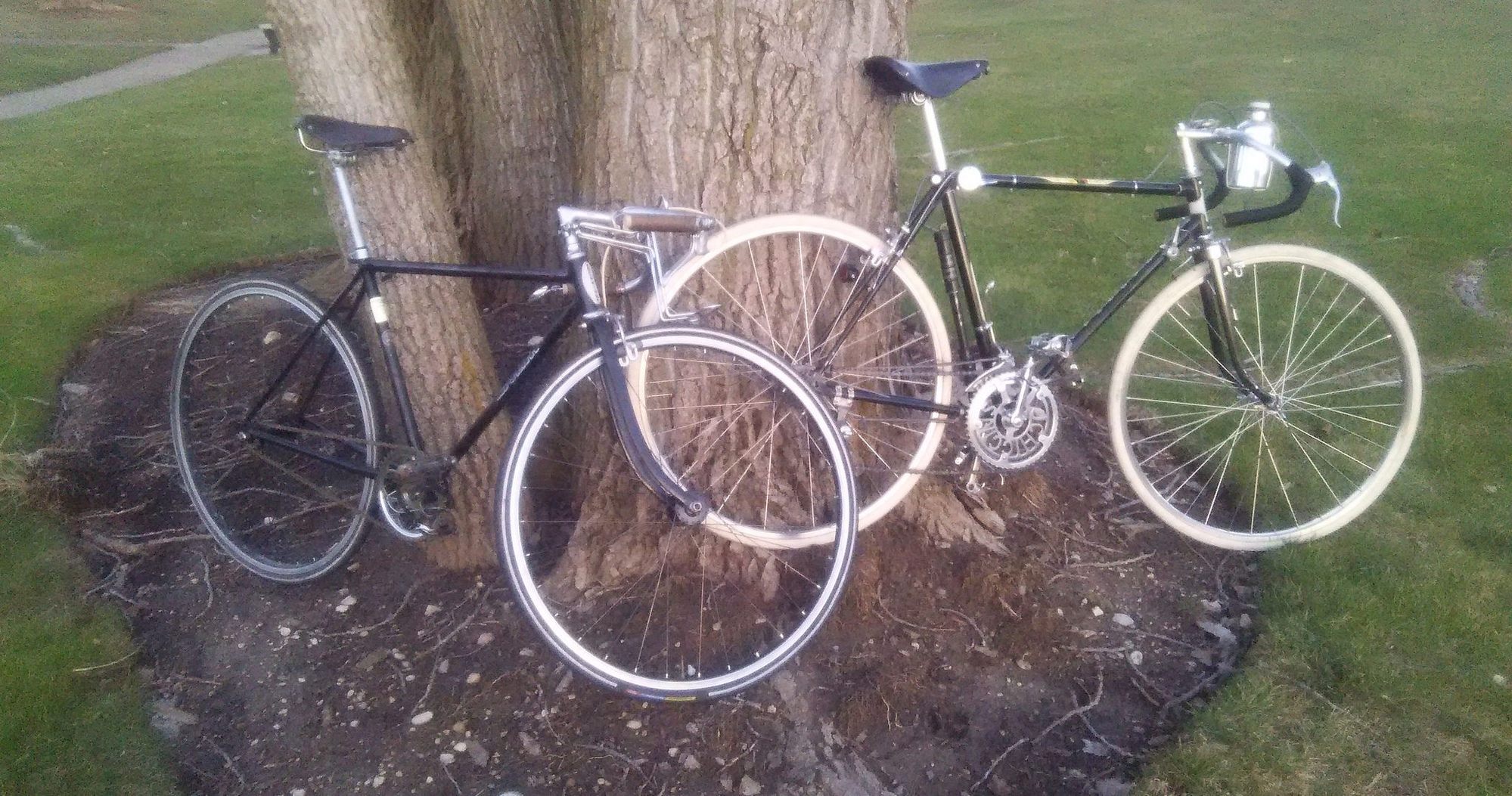
Fixed gear and 3 x 3 x 2
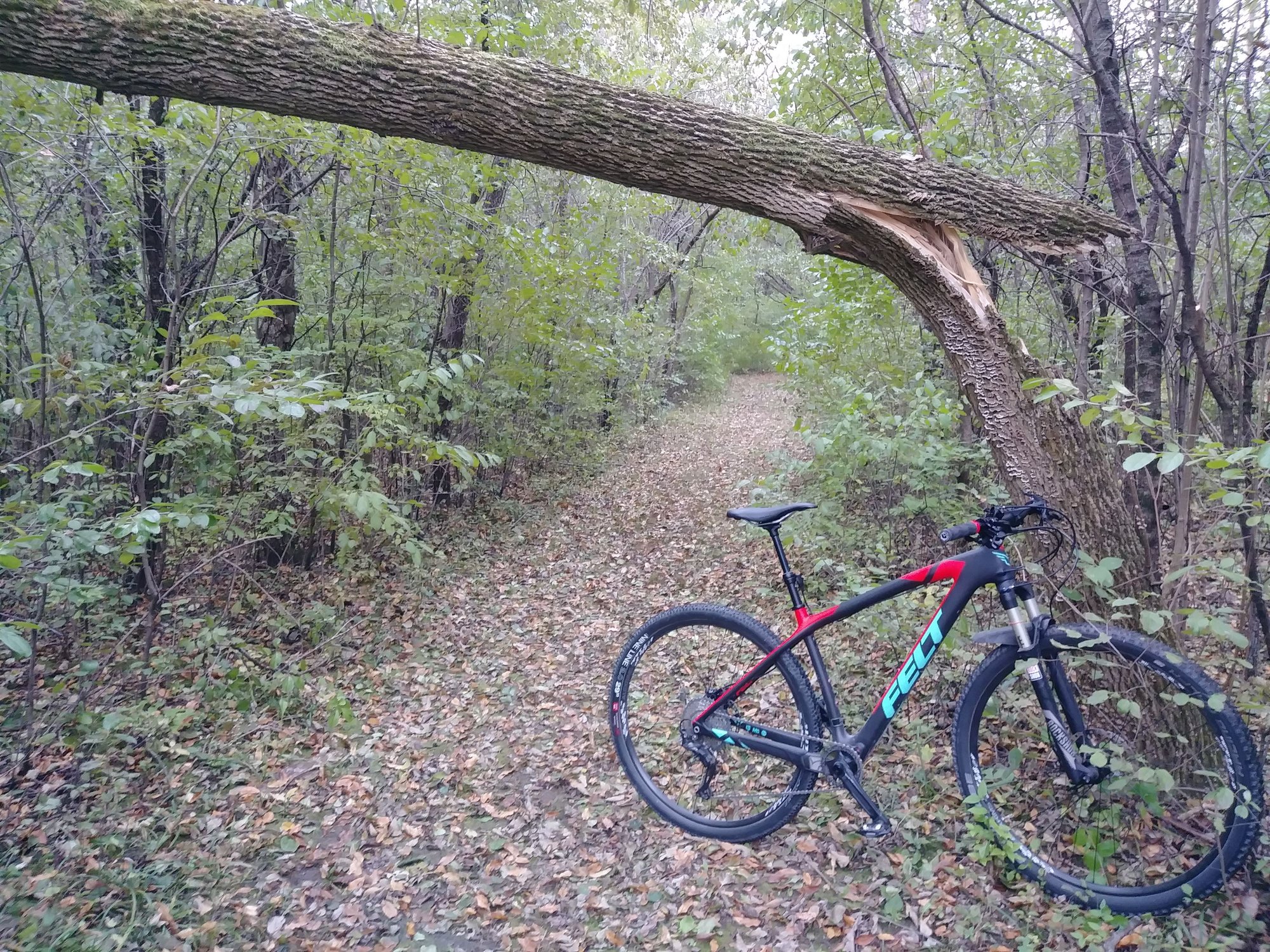
1 x 11
Currently have a project in the works with a new Shimano Alfine 8 speed IGH. Time will tell...
Derailleur-
As for other bikes and applications, do enjoy a basic 1 x 5 on vintage Bottechia but initially had chain drops when quickly shifting low to high range. Weaker spring design in the Campy Velox but solved the chain drop by adding a front chain guide. Now perfect. That bike can get caked of dirt on messy singletracks (knobby 700x32 Dugast tubulars) and it shifts without issues.
Dig the 1 x 11 for mtb. Flawless and quick.
And then there's the wide range odd ball 3 x 3 x 2. This one is a blast.
Fixed gear and 3 x 3 x 2
1 x 11
03-14-19 | 01:15 PM
#33

aka Tom Reingold


Joined: Jan 2009
Posts: 44,299
Likes: 6,556
From: New York, NY, and High Falls, NY, USA
Bikes: 1962 Rudge Sports, 1971 Raleigh Super Course, 1971 Raleigh Pro Track, 1974 Raleigh International, 1975 Viscount Fixie, 1982 McLean, 1996 Lemond (Ti), 2002 Burley Zydeco tandem
What do I want from a gear system? I want gears that are close enough but not too close. I want a low enough bottom and a high enough top. I want a relatively easy shifting pattern. I want replacement parts at a reasonable cost.
I have a 3x9 bike, and I find it indistinguishable in the above criteria as my 3x10 bike. The gears on the 3x8 are certainly close enough. I bet once I try the 3x8 drivetrain that is sitting and waiting for installation on my gravel bike, they will probably be close enough.
Our tandem was 3x7. We needed a lower bottom and a higher top. I looked around and thought about it. I decided not to go with used stuff for an upgrade. I decided on an 11-speed cassette and shifter because of how fast stuff goes obsolete. That was one factor, but it's easier to find 11-speed new stuff than fewer speeds. Another advantage of the latest stuff is that it might just be better designed or made. I replaced the cassette and hub and shifter. I kept the old front derailleur and shifter. The rear derailleur and shifter (Deore XT) look and feel cheap in the hands, but that may not be the case. They work magnificently. So one test is durability, and that will take time. The new top gear is better but still not high enough. I'll try a bigger big chainring. It might work with the current derailleur and chain. We now have closer gears than we need, which isn't so bad. But driving a tandem is like driving a tractor trailer. I'm often rowing from bottom gear to top gear and back.
I have a 3x9 bike, and I find it indistinguishable in the above criteria as my 3x10 bike. The gears on the 3x8 are certainly close enough. I bet once I try the 3x8 drivetrain that is sitting and waiting for installation on my gravel bike, they will probably be close enough.
Our tandem was 3x7. We needed a lower bottom and a higher top. I looked around and thought about it. I decided not to go with used stuff for an upgrade. I decided on an 11-speed cassette and shifter because of how fast stuff goes obsolete. That was one factor, but it's easier to find 11-speed new stuff than fewer speeds. Another advantage of the latest stuff is that it might just be better designed or made. I replaced the cassette and hub and shifter. I kept the old front derailleur and shifter. The rear derailleur and shifter (Deore XT) look and feel cheap in the hands, but that may not be the case. They work magnificently. So one test is durability, and that will take time. The new top gear is better but still not high enough. I'll try a bigger big chainring. It might work with the current derailleur and chain. We now have closer gears than we need, which isn't so bad. But driving a tandem is like driving a tractor trailer. I'm often rowing from bottom gear to top gear and back.
__________________
Tom Reingold, tom@noglider.com
New York City and High Falls, NY
Blogs: The Experienced Cyclist; noglider's ride blog
“When man invented the bicycle he reached the peak of his attainments.” — Elizabeth West, US author
Please email me rather than PM'ing me. Thanks.
Tom Reingold, tom@noglider.com
New York City and High Falls, NY
Blogs: The Experienced Cyclist; noglider's ride blog
“When man invented the bicycle he reached the peak of his attainments.” — Elizabeth West, US author
Please email me rather than PM'ing me. Thanks.
 03-14-19 | 01:40 PM
#35

Senior Member

Joined: Oct 2014
Posts: 14,180
Likes: 5,312
From: Portland, OR
Bikes: (2) ti TiCycles, 2007 w/ triple and 2011 fixed, 1979 Peter Mooney, ~1983 Trek 420 now fixed and ~1973 Raleigh Carlton Competition gravel grinder
I had a local framebuilder braze 2 cogs together; the first flipped, then a steel spacer, then the second with the second cut out so it slips over the threaded portion of the first. A 21-17 "dingle". I also put a touch of dish in the wheel so those two cogs line up with the first two chainrings and the other, now dished out, lines up with the outside chainring. Works really well. Each ca hainline is a rock solid, simple fix gear, just three very different gears.
Ben
Ben
03-14-19 | 01:45 PM
#36
Senior Member
Joined: Oct 2014
Posts: 14,180
Likes: 5,312
From: Portland, OR
Bikes: (2) ti TiCycles, 2007 w/ triple and 2011 fixed, 1979 Peter Mooney, ~1983 Trek 420 now fixed and ~1973 Raleigh Carlton Competition gravel grinder
So do you have to stop and loosen the rear wheel to move the chain between different cogs?
I've seen 3-cog rear freewheels, but have often wondered what the application is.
I've seen 3-cog rear freewheels, but have often wondered what the application is.
Ben
03-14-19 | 02:02 PM
#37
Banned
Joined: Aug 2013
Posts: 6,480
Likes: 450
I used to ride MX and of course its natural to be flexible off the saddle - mostly ride the pegs.
For off road bicycles and especially hardtail, its the same scenario. Getting the saddle out of the way is a godsend, far more flexible and properly 'riding ON the pedals'. Yet also conveniently allows the opposite, often want it 'exactly in position' for when the trail smooths out.
Last edited by crank_addict; 03-14-19 at 02:07 PM.
03-14-19 | 02:14 PM
#38

Mr. Anachronism
Joined: Jan 2013
Posts: 2,110
Likes: 293
From: Somewhere west of Tobie's
Bikes: fillet-brazed Chicago Schwinns, and some other stuff

__________________
"My only true wisdom is in knowing I have none" -Socrates
"My only true wisdom is in knowing I have none" -Socrates
03-14-19 | 07:17 PM
#40

I never finish anyth
Joined: Jul 2010
Posts: 1,114
Likes: 137
From: Western KY
Bikes: 2008 Merckx LXM, 2003 Giant XTC mtb, 2001 Lemond Alpe d'Huez, 1997 Lemond Zurich, 1989 Cannondale ST, 1988 Masi Nuovo Strada, 1983 Pinarello Turismo
I'm looking forward to seeing this one at the Bourbon and Tobacco Tour in about a month. Right John? You're still bringing it aren't you?
__________________
Dale, NL4T
Dale, NL4T
03-14-19 | 07:47 PM
#41
Banned
Joined: Aug 2013
Posts: 6,480
Likes: 450
Just crossed my mind but I have this Sachs 3 x 7 all in the back. Its been dependable.
This Sachs IGH rear hub opens up many possibilities including adding a front derailleur (which I don't have for this particular rig).
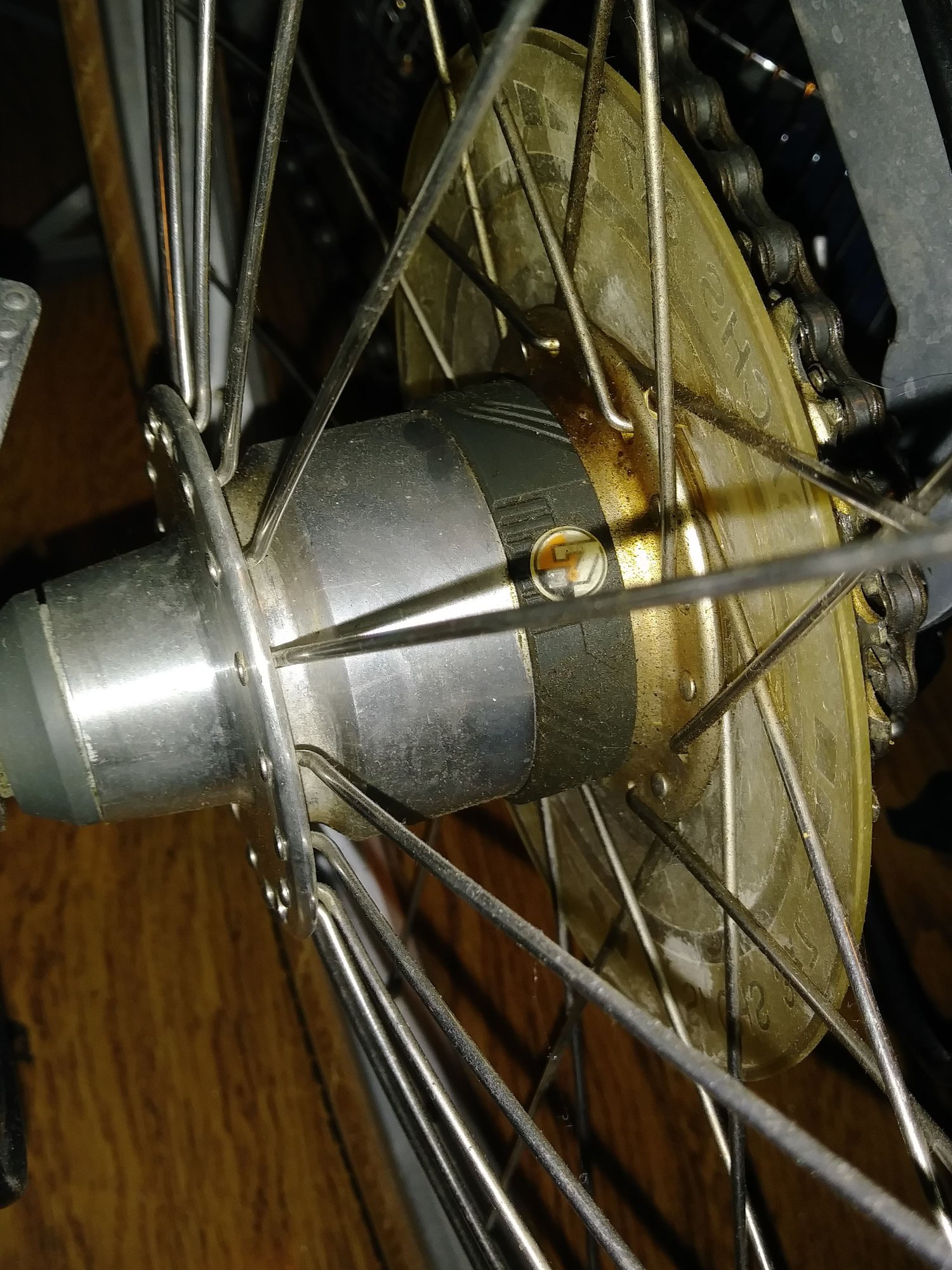
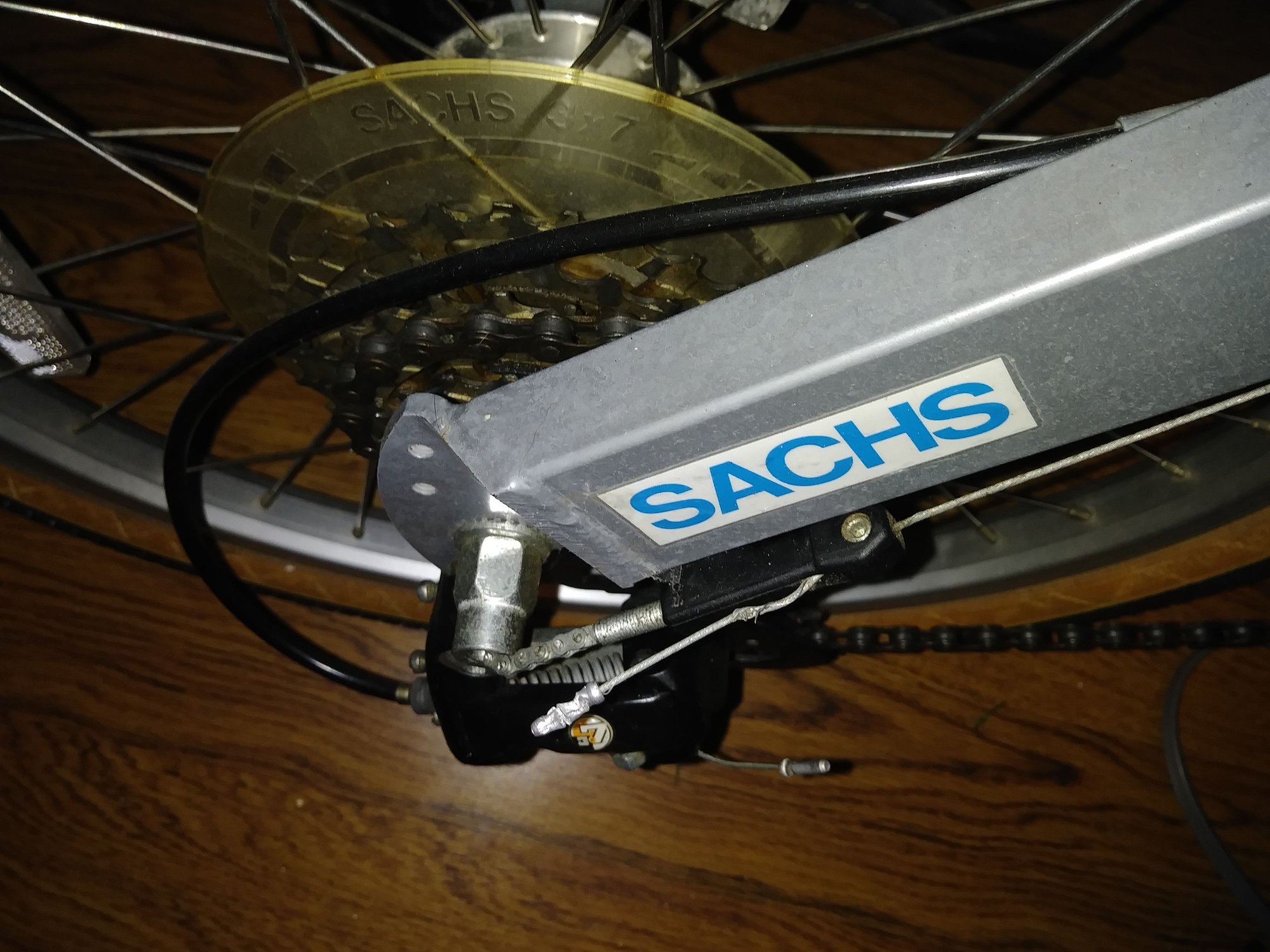
This Sachs IGH rear hub opens up many possibilities including adding a front derailleur (which I don't have for this particular rig).
Last edited by crank_addict; 03-20-19 at 11:09 AM.
03-15-19 | 06:32 AM
#42

Señor Member

Joined: Oct 2004
Posts: 18,481
Likes: 1,565
From: Hardy, VA
Bikes: Mostly English - predominantly Raleighs
03-18-19 | 04:30 PM
#43
Junior Member
Joined: Mar 2009
Posts: 16
Likes: 0
As brevity is the soul of wit, Simplicity is the soul of engineering -CC
The "best drivetrain" is always the next one
Wide/Narrow front single chain ring
correct chainline
Cassette hub for strength with a 8spd cassette
Know your rear mech limits when choosing cassettes
Low gear as needed for the big hill
#4 sprocket gear should produce your cruising speed
You can always coast if you run out of gear at the top.
Enjoy lighter, simpler, cycling zen -CC
The "best drivetrain" is always the next one
Wide/Narrow front single chain ring
correct chainline
Cassette hub for strength with a 8spd cassette
Know your rear mech limits when choosing cassettes
Low gear as needed for the big hill
#4 sprocket gear should produce your cruising speed
You can always coast if you run out of gear at the top.
Enjoy lighter, simpler, cycling zen -CC
03-19-19 | 06:38 AM
#44
Junior Member
Joined: May 2018
Posts: 18
Likes: 6
From: Central Ohio
Bikes: 1970 Raleigh Super Course; 1985 Team Fuji; 200? On-One InBred
The "ideal" drivetrain? All the years I've been riding around relatively flat Columbus, the trusty 1x1 setup on my "city bike" has been perfect. UDoDU 
03-19-19 | 11:44 PM
#45
Highly Enriched Driftium
Joined: Apr 2017
Posts: 6,879
Likes: 2,240
Internal gear hubs are fascinating and elegant, I grew up on them, but they have numerous drawbacks, and some critical advantages:
- Heavy.
- Complex. Try to fix one in the field or find someone to do so on a world tour in East Berzerkistan. Heck, in many major US cities, to actually repair it rather than getting the line "You need a new rear wheel." Periodic maintenance, simply periodic internal greasing is a major thing, and many manufacturers don't make things easy.
- Weather fragile; If you live someplace rain intense, you need to do a full overhaul with marine grease annually. See above.
- Planetary gears typical consume 5% energy in friction, unless operating in the one direct drive gear.
- Often utilize oiled main hub bearings instead of grease, with a large diameter so more runout, so harder to adjust for a precise fit and preload, tiny steel balls so not rated for heavy loads as with touring, poor seals (labyrinth instead of rubber lip) so leak oil and are rain sensitive.
+ Ability to shift when stopped.
+ Can use a larger, more effective chainguard.
+ For very small wheels like on a Brompton, provides an overdrive to give sufficient high gear.
- Heavy.
- Complex. Try to fix one in the field or find someone to do so on a world tour in East Berzerkistan. Heck, in many major US cities, to actually repair it rather than getting the line "You need a new rear wheel." Periodic maintenance, simply periodic internal greasing is a major thing, and many manufacturers don't make things easy.
- Weather fragile; If you live someplace rain intense, you need to do a full overhaul with marine grease annually. See above.
- Planetary gears typical consume 5% energy in friction, unless operating in the one direct drive gear.
- Often utilize oiled main hub bearings instead of grease, with a large diameter so more runout, so harder to adjust for a precise fit and preload, tiny steel balls so not rated for heavy loads as with touring, poor seals (labyrinth instead of rubber lip) so leak oil and are rain sensitive.
+ Ability to shift when stopped.
+ Can use a larger, more effective chainguard.
+ For very small wheels like on a Brompton, provides an overdrive to give sufficient high gear.
03-20-19 | 05:19 AM
#46
Senior Member
Joined: Mar 2017
Posts: 531
Likes: 60
From: Williston FL
Bikes: 1988 Panasonic, 1989 Fuji, Schwinn Beach Cruiser
If I had a mountain bike 1x would be preferable. My beach cruiser has 1x7 and is just fine as well, though it hardly sees an incline. I have rode 105 11 speed. I may be too accustomed to 5 - 7 speeds, found myself skipping cogs a lot. 50/34 front and a 28-32 low cog rear, and I seem to work with it ok and keep cadence and speed decently. Meanwhile, unless I buy something new or move back to mountain country, I don’t see myself moving on to a 10-11 speed cassette.
03-20-19 | 07:00 AM
#47
ambulatory senior
Joined: Dec 2016
Posts: 6,451
Likes: 4,517
From: Peoria Il
Bikes: Austro Daimler modified by Gugie! Raleigh Professional and lots of other bikes.
Internal gear hubs are fascinating and elegant, I grew up on them, but they have numerous drawbacks, and some critical advantages:
- Heavy.
- Complex. Try to fix one in the field or find someone to do so on a world tour in East Berzerkistan. Heck, in many major US cities, to actually repair it rather than getting the line "You need a new rear wheel." Periodic maintenance, simply periodic internal greasing is a major thing, and many manufacturers don't make things easy.
- Weather fragile; If you live someplace rain intense, you need to do a full overhaul with marine grease annually. See above.
- Planetary gears typical consume 5% energy in friction, unless operating in the one direct drive gear.
- Often utilize oiled main hub bearings instead of grease, with a large diameter so more runout, so harder to adjust for a precise fit and preload, tiny steel balls so not rated for heavy loads as with touring, poor seals (labyrinth instead of rubber lip) so leak oil and are rain sensitive.
+ Ability to shift when stopped.
+ Can use a larger, more effective chainguard.
+ For very small wheels like on a Brompton, provides an overdrive to give sufficient high gear.
- Heavy.
- Complex. Try to fix one in the field or find someone to do so on a world tour in East Berzerkistan. Heck, in many major US cities, to actually repair it rather than getting the line "You need a new rear wheel." Periodic maintenance, simply periodic internal greasing is a major thing, and many manufacturers don't make things easy.
- Weather fragile; If you live someplace rain intense, you need to do a full overhaul with marine grease annually. See above.
- Planetary gears typical consume 5% energy in friction, unless operating in the one direct drive gear.
- Often utilize oiled main hub bearings instead of grease, with a large diameter so more runout, so harder to adjust for a precise fit and preload, tiny steel balls so not rated for heavy loads as with touring, poor seals (labyrinth instead of rubber lip) so leak oil and are rain sensitive.
+ Ability to shift when stopped.
+ Can use a larger, more effective chainguard.
+ For very small wheels like on a Brompton, provides an overdrive to give sufficient high gear.
03-20-19 | 07:13 AM
#48

Thread Starter
Senior Member
Joined: Apr 2016
Posts: 851
Likes: 70
Internal gear hubs are fascinating and elegant, I grew up on them, but they have numerous drawbacks, and some critical advantages:
- Heavy.
- Complex. Try to fix one in the field or find someone to do so on a world tour in East Berzerkistan. Heck, in many major US cities, to actually repair it rather than getting the line "You need a new rear wheel." Periodic maintenance, simply periodic internal greasing is a major thing, and many manufacturers don't make things easy.
- Weather fragile; If you live someplace rain intense, you need to do a full overhaul with marine grease annually. See above.
- Planetary gears typical consume 5% energy in friction, unless operating in the one direct drive gear.
- Often utilize oiled main hub bearings instead of grease, with a large diameter so more runout, so harder to adjust for a precise fit and preload, tiny steel balls so not rated for heavy loads as with touring, poor seals (labyrinth instead of rubber lip) so leak oil and are rain sensitive.
+ Ability to shift when stopped.
+ Can use a larger, more effective chainguard.
+ For very small wheels like on a Brompton, provides an overdrive to give sufficient high gear.
- Heavy.
- Complex. Try to fix one in the field or find someone to do so on a world tour in East Berzerkistan. Heck, in many major US cities, to actually repair it rather than getting the line "You need a new rear wheel." Periodic maintenance, simply periodic internal greasing is a major thing, and many manufacturers don't make things easy.
- Weather fragile; If you live someplace rain intense, you need to do a full overhaul with marine grease annually. See above.
- Planetary gears typical consume 5% energy in friction, unless operating in the one direct drive gear.
- Often utilize oiled main hub bearings instead of grease, with a large diameter so more runout, so harder to adjust for a precise fit and preload, tiny steel balls so not rated for heavy loads as with touring, poor seals (labyrinth instead of rubber lip) so leak oil and are rain sensitive.
+ Ability to shift when stopped.
+ Can use a larger, more effective chainguard.
+ For very small wheels like on a Brompton, provides an overdrive to give sufficient high gear.
Never have owned one , I will profess that the Rohloff hubs intrigue me, and by all user accounts they seem indestructible . I have not heard an account of one requiring service to date , but that doesn't mean anything. The weight is concerning ...
03-20-19 | 12:36 PM
#49
Highly Enriched Driftium
Joined: Apr 2017
Posts: 6,879
Likes: 2,240
I think even heavier or at least equally heavy was the NuVinci hub, brilliantly simple, but I had doubts about durability from a hub that relied on friction between hard steel elements immersed in oil, the same doubts I have about automotive CVTs.
04-29-19 | 04:28 PM
#50

Old Bike Craphound
Joined: Oct 2014
Posts: 209
Likes: 58
From: Vancouver, Canada
Bikes: 1974 Teledyne Titan, 1970's Sekine, 4 tandems including 1980's CounterPoint Opus III, plus a few dozen
I am test riding a dingle-6 geared bike today. AW hub with both 28T and 18T in the back (spacers removed) with 52T and 42T double crankset. Gives crazy wide range, but requires a 15mm wrench to change between 42x28 or 52x18. Gear range is from below 30GI to over 100GI. I followed Sheldon's suggestion of making the larger 28T sprocket for the AW hub by grinding some of the teeth off sprockets from an 8 speed cassette. I will report on my test once I have ridden for a few days.
-Will
-Will