


CO2 inflator. Which one?
 08-24-21 | 06:48 PM
#51

Senior Member


Joined: Jul 2008
Posts: 30,471
Likes: 4,549
From: 25 miles northwest of Boston
Bikes: Bottecchia Sprint, GT Timberline 29r, Marin Muirwoods 29er, Trek FX Alpha 7.0
I have a couple of CO2 inflators (come in handy for night riding) and one of them is like this one. Don’t like it. The spring is stiff and you have to push on the head while the liquid flashes to gas which gets really, really cold. The Genuine Innovation Ultraflate is better insulated.
 08-24-21 | 06:51 PM
#52
Senior Member
Joined: Jul 2008
Posts: 30,471
Likes: 4,549
From: 25 miles northwest of Boston
Bikes: Bottecchia Sprint, GT Timberline 29r, Marin Muirwoods 29er, Trek FX Alpha 7.0
 08-24-21 | 07:14 PM
#53
Senior Member
Joined: Jul 2008
Posts: 30,471
Likes: 4,549
From: 25 miles northwest of Boston
Bikes: Bottecchia Sprint, GT Timberline 29r, Marin Muirwoods 29er, Trek FX Alpha 7.0
the cartridges come in diff. sizes
it was particularly useful one time when I had a slow leak. I was able to occasionally boost the inflation as I finished my ride. so convenient!
as cyccommute mentioned, the spring tension is tight. in fact, I thought my first unit got worse or wasn't fitting right, so I bought a 2nd & carry both. but they both work. they are tiny so I have to keep them in separate plastic zip bags, in my field repair bag, to be sure I don't lose them. 1 is by itself & 1 is w/ 2 cartridges
on epic rides I sometimes carry 4 cartridges in addition to my pump
on at least 1 occasion, I had 1 new cartridge be a dud. brand new, screwed it on, no gas. unscrewed it, no gas escape & it had a new hole from the inflator. I imagine new cartridge duds are quite rare but still, if you're gonna carry 1 you might as well carry 2
cartridges don't work when frozen so I keep them in my house during winter & carry them with me when I go out. they don't go in the winter bag they go in a coat pocket close to my body to stay at least a reasonable temperature
I also carry a small hand pump
you might want to test using it at home the next time you're swapping tires or something, so you have a feel for it. especially if you're using Presta valves, I think
 08-24-21 | 07:22 PM
#54

Senior Member


Joined: Jul 2020
Posts: 1,820
Likes: 1,485
From: Oakland, CA
--Shannon
08-24-21 | 07:58 PM
#55

Banned.
Joined: Jul 2009
Posts: 12,292
Likes: 4,863
From: PAZ
Now I'm wondering which works better against an aggressive dog: a whack with a pump or a face full of CO2? Discuss 
DD
DD

 08-24-21 | 09:50 PM
#56

Mad bike riding scientist


Joined: Nov 2004
Posts: 29,152
Likes: 6,209
From: Denver, CO
Bikes: Some silver ones, a red one, a black and orange one, and a few titanium ones
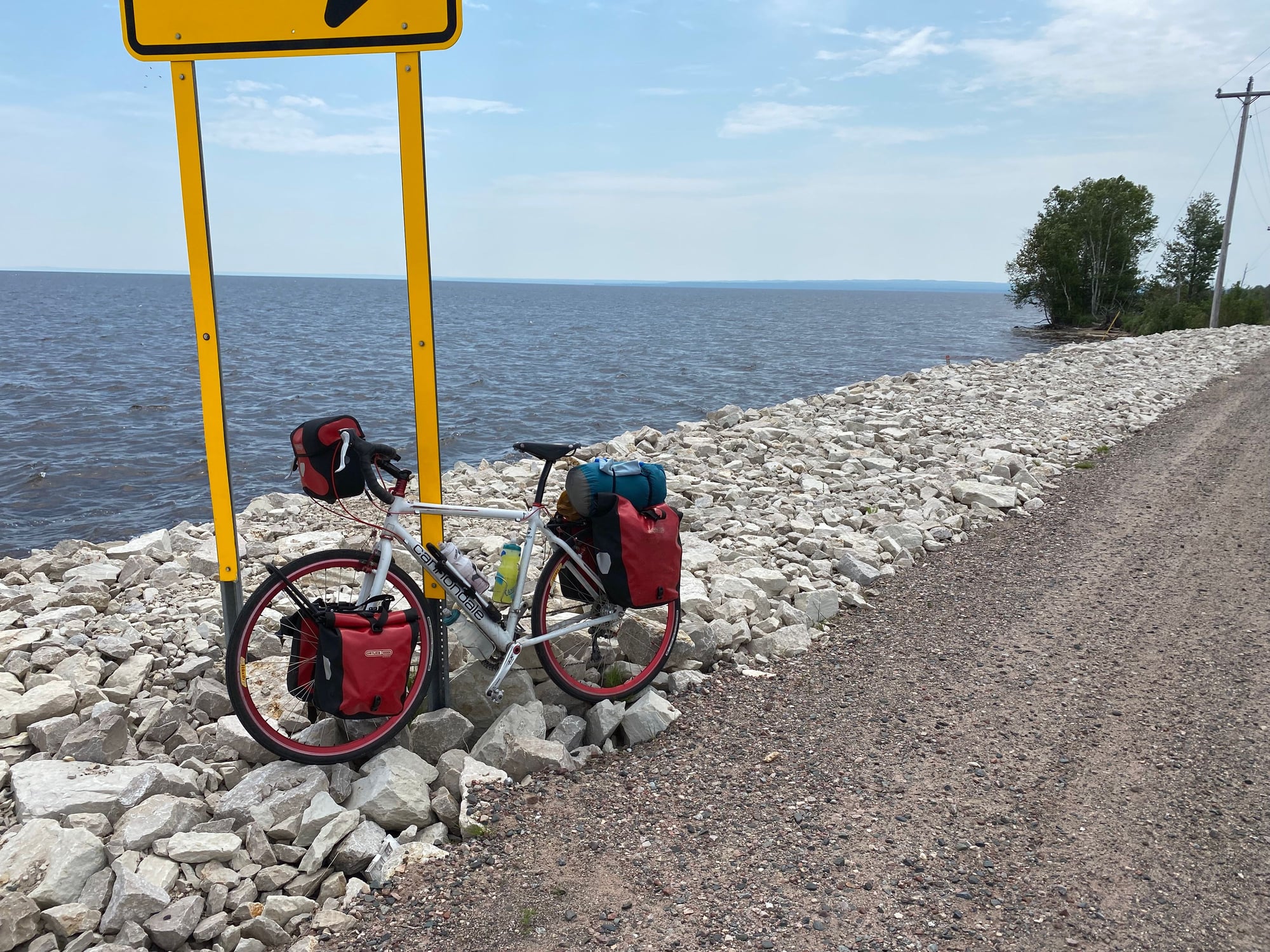
Length is close and, having run over a number of Zefal HP pumps because they popped out of the frame, the mount is far more secure. I bought my first Topeak Morph in 2000 and still have it. It still works and is going strong. I think it will last.
And it doesn’t rip valve stems out nor have to be pumped against a fence post or, worse, my knee to get to the proper pressure.
__________________
Stuart Black
Dreamin' of Bemidji Down the Mississippi (in part)
Plan Epsilon Around Lake Michigan in the era of Covid
Gold Fever Three days of dirt in Colorado
Pokin' around the Poconos A cold ride around Lake Erie
Dinosaurs in Colorado A mountain bike guide to the Purgatory Canyon dinosaur trackway
Solo Without Pie. The search for pie in the Midwest.
Picking the Scablands. Washington and Oregon, 2005. Pie and spiders on the Columbia River!
Stuart Black
Dreamin' of Bemidji Down the Mississippi (in part)
Plan Epsilon Around Lake Michigan in the era of Covid
Gold Fever Three days of dirt in Colorado
Pokin' around the Poconos A cold ride around Lake Erie
Dinosaurs in Colorado A mountain bike guide to the Purgatory Canyon dinosaur trackway
Solo Without Pie. The search for pie in the Midwest.
Picking the Scablands. Washington and Oregon, 2005. Pie and spiders on the Columbia River!
08-25-21 | 04:47 AM
#57
Senior Member
Joined: Feb 2020
Posts: 4,008
Likes: 2,324
As well, you can exert more force on the air column in the pump with it held between your hands than you can pushing down on the ground.
08-25-21 | 05:33 PM
#58
Mad bike riding scientist
Joined: Nov 2004
Posts: 29,152
Likes: 6,209
From: Denver, CO
Bikes: Some silver ones, a red one, a black and orange one, and a few titanium ones
As to leaking hoses, hasn’t been a problem in 20 years of using one. Zefals, on the other hand, don’t work at all if you run over them…which I have done numerous times.
As well, you can exert more force on the air column in the pump with it held between your hands than you can pushing down on the ground.
__________________
Stuart Black
Dreamin' of Bemidji Down the Mississippi (in part)
Plan Epsilon Around Lake Michigan in the era of Covid
Gold Fever Three days of dirt in Colorado
Pokin' around the Poconos A cold ride around Lake Erie
Dinosaurs in Colorado A mountain bike guide to the Purgatory Canyon dinosaur trackway
Solo Without Pie. The search for pie in the Midwest.
Picking the Scablands. Washington and Oregon, 2005. Pie and spiders on the Columbia River!
Stuart Black
Dreamin' of Bemidji Down the Mississippi (in part)
Plan Epsilon Around Lake Michigan in the era of Covid
Gold Fever Three days of dirt in Colorado
Pokin' around the Poconos A cold ride around Lake Erie
Dinosaurs in Colorado A mountain bike guide to the Purgatory Canyon dinosaur trackway
Solo Without Pie. The search for pie in the Midwest.
Picking the Scablands. Washington and Oregon, 2005. Pie and spiders on the Columbia River!
08-25-21 | 07:08 PM
#59
Senior Member
Joined: Feb 2020
Posts: 4,008
Likes: 2,324
Um…no. Physics. When you push down into the ground, the maximum force is your body weight. When you push from one arm into the other, you can’t exert as much force. We don’t hold floor pumps between our hands and pump tires that way because we can exert as much force as our body weight.
Anyone who can do a pull-up is exerting more force than their body weight.
Squeezing a pump is, of course, not a pull-up; an exercise that is fairly similar to pumping is a chest-fly; average values for machine chest flys (flies?) quoted on the 'net show that any male more advanced than "novice" can exert more force than their body weight.
And if you did manage to exert more force on a floor pump than your body weight you'd be (briefly) doing a different kind of flying.
Of course, in a way this is all academic. All you need is a smidgen more than the pressure in the tyre - did you *really* need to get them up to 195 psi?
08-25-21 | 08:59 PM
#60
Mad bike riding scientist
Joined: Nov 2004
Posts: 29,152
Likes: 6,209
From: Denver, CO
Bikes: Some silver ones, a red one, a black and orange one, and a few titanium ones
I don't think that's correct.
Anyone who can do a pull-up is exerting more force than their body weight.
Squeezing a pump is, of course, not a pull-up; an exercise that is fairly similar to pumping is a chest-fly; average values for machine chest flys (flies?) quoted on the 'net show that any male more advanced than "novice" can exert more force than their body weight.
Anyone who can do a pull-up is exerting more force than their body weight.
Squeezing a pump is, of course, not a pull-up; an exercise that is fairly similar to pumping is a chest-fly; average values for machine chest flys (flies?) quoted on the 'net show that any male more advanced than "novice" can exert more force than their body weight.
Intermediate: Stronger than 50% of lifters. An intermediate lifter has trained regularly in the technique for at least two years.
Stronger than 20% of lifters. A novice lifter has trained regularly in the technique for at least six months.
__________________
Stuart Black
Dreamin' of Bemidji Down the Mississippi (in part)
Plan Epsilon Around Lake Michigan in the era of Covid
Gold Fever Three days of dirt in Colorado
Pokin' around the Poconos A cold ride around Lake Erie
Dinosaurs in Colorado A mountain bike guide to the Purgatory Canyon dinosaur trackway
Solo Without Pie. The search for pie in the Midwest.
Picking the Scablands. Washington and Oregon, 2005. Pie and spiders on the Columbia River!
Stuart Black
Dreamin' of Bemidji Down the Mississippi (in part)
Plan Epsilon Around Lake Michigan in the era of Covid
Gold Fever Three days of dirt in Colorado
Pokin' around the Poconos A cold ride around Lake Erie
Dinosaurs in Colorado A mountain bike guide to the Purgatory Canyon dinosaur trackway
Solo Without Pie. The search for pie in the Midwest.
Picking the Scablands. Washington and Oregon, 2005. Pie and spiders on the Columbia River!
08-26-21 | 07:24 AM
#62
Mad bike riding scientist
Joined: Nov 2004
Posts: 29,152
Likes: 6,209
From: Denver, CO
Bikes: Some silver ones, a red one, a black and orange one, and a few titanium ones
They say “average”. I assume that’s over all weight ranges. I also assume that everyone who uses one of these machines isn’t using the maximum weight all the time.
__________________
Stuart Black
Dreamin' of Bemidji Down the Mississippi (in part)
Plan Epsilon Around Lake Michigan in the era of Covid
Gold Fever Three days of dirt in Colorado
Pokin' around the Poconos A cold ride around Lake Erie
Dinosaurs in Colorado A mountain bike guide to the Purgatory Canyon dinosaur trackway
Solo Without Pie. The search for pie in the Midwest.
Picking the Scablands. Washington and Oregon, 2005. Pie and spiders on the Columbia River!
Stuart Black
Dreamin' of Bemidji Down the Mississippi (in part)
Plan Epsilon Around Lake Michigan in the era of Covid
Gold Fever Three days of dirt in Colorado
Pokin' around the Poconos A cold ride around Lake Erie
Dinosaurs in Colorado A mountain bike guide to the Purgatory Canyon dinosaur trackway
Solo Without Pie. The search for pie in the Midwest.
Picking the Scablands. Washington and Oregon, 2005. Pie and spiders on the Columbia River!
08-26-21 | 10:26 AM
#63
Full Member

Joined: Nov 2013
Posts: 292
Likes: 578
as much as I feel like a Silca frame pump is the one true and pure way to put air into tires, I feel obliged to mention that racers were carrying compressed gas for inflating spare tires a long time ago.
These cylinders of compressed gas (just air, I think) were larger than modern CO2 cartridges, and the French term is "gonfleur". A search for this term pulls up various images, such as this one from Flickr..
[...]
Steve in Peoria (still a Silca Impero fan)
These cylinders of compressed gas (just air, I think) were larger than modern CO2 cartridges, and the French term is "gonfleur". A search for this term pulls up various images, such as this one from Flickr..
[...]
Steve in Peoria (still a Silca Impero fan)
https://www.flickr.com/photos/414206...7719190382423/

This bottle filled with compressed air at 100 kilos allows you to largely inflate two tubulars to 4 kilos. Each bottle is tested at a pressure of 300 kilos before being put into service.
The right-angled connector, which does not change the rider's usual gesture, fits easily on all valves and has the advantage of not twisting the mechanism pins, provided of course that the connector is fully engaged on the valve. Simply screw the body on to open the bottle, and unscrew it to stop the compressed air outlet. The cylinder is provided with a centre point at each end for mounting on the bicycle frame itself.
08-26-21 | 03:59 PM
#64

Senior Member
Joined: Feb 2008
Posts: 5,309
Likes: 4,811
From: Peoria, IL
A few more detail's from Heiko's Rebour archives on Flickr
https://www.flickr.com/photos/414206...7719190382423/
"FOR QUICK INFLATION"
This bottle filled with compressed air at 100 kilos allows you to largely inflate two tubulars to 4 kilos. Each bottle is tested at a pressure of 300 kilos before being put into service.
The right-angled connector, which does not change the rider's usual gesture, fits easily on all valves and has the advantage of not twisting the mechanism pins, provided of course that the connector is fully engaged on the valve. Simply screw the body on to open the bottle, and unscrew it to stop the compressed air outlet. The cylinder is provided with a centre point at each end for mounting on the bicycle frame itself.
https://www.flickr.com/photos/414206...7719190382423/
"FOR QUICK INFLATION"
This bottle filled with compressed air at 100 kilos allows you to largely inflate two tubulars to 4 kilos. Each bottle is tested at a pressure of 300 kilos before being put into service.
The right-angled connector, which does not change the rider's usual gesture, fits easily on all valves and has the advantage of not twisting the mechanism pins, provided of course that the connector is fully engaged on the valve. Simply screw the body on to open the bottle, and unscrew it to stop the compressed air outlet. The cylinder is provided with a centre point at each end for mounting on the bicycle frame itself.
I'm trying to figure out what a "kilo" translates into. I'm inclined to think it might be a kilopascal (kpa), but 4kpa is only 27.6 psi. I'm not sure how big the tubulars were back then, but 27.6psi seems quite low.
Of course, translation is always difficult, and especially when different eras and cultures are part of the translation. I like the comment "The right-angled connector, which does not change the rider's usual gesture", which I think means that the rider uses the same position/posture to use it as the rider would use when operating a Silca Impero pump. In the current culture in the USA, "the rider's usual gesture" suggests some sort of body language that is intended to send a message... probably not a happy message either, when fixing a flat.
Steve in Peoria
08-26-21 | 04:23 PM
#65

Senior Member
Joined: Aug 2011
Posts: 22,676
Likes: 2,642
From: CID
Bikes: 1991 Bianchi Eros, 1964 Armstrong, 1988 Diamondback Ascent, 1988 Bianchi Premio, 1987 Bianchi Sport SX, 1980s Raleigh mixte (hers), All-City Space Horse (hers)
always nice to see another Daniel Rebour drawing! I'm slowly making my way through Heiko's flickr pages.
I'm trying to figure out what a "kilo" translates into. I'm inclined to think it might be a kilopascal (kpa), but 4kpa is only 27.6 psi. I'm not sure how big the tubulars were back then, but 27.6psi seems quite low.
Of course, translation is always difficult, and especially when different eras and cultures are part of the translation. I like the comment "The right-angled connector, which does not change the rider's usual gesture", which I think means that the rider uses the same position/posture to use it as the rider would use when operating a Silca Impero pump. In the current culture in the USA, "the rider's usual gesture" suggests some sort of body language that is intended to send a message... probably not a happy message either, when fixing a flat.
Steve in Peoria
I'm trying to figure out what a "kilo" translates into. I'm inclined to think it might be a kilopascal (kpa), but 4kpa is only 27.6 psi. I'm not sure how big the tubulars were back then, but 27.6psi seems quite low.
Of course, translation is always difficult, and especially when different eras and cultures are part of the translation. I like the comment "The right-angled connector, which does not change the rider's usual gesture", which I think means that the rider uses the same position/posture to use it as the rider would use when operating a Silca Impero pump. In the current culture in the USA, "the rider's usual gesture" suggests some sort of body language that is intended to send a message... probably not a happy message either, when fixing a flat.
Steve in Peoria
08-26-21 | 05:42 PM
#66
Mad bike riding scientist
Joined: Nov 2004
Posts: 29,152
Likes: 6,209
From: Denver, CO
Bikes: Some silver ones, a red one, a black and orange one, and a few titanium ones
That’s 1400 psi. Not sure I’d want to carry around a bottle with that much pressure and an unregulated valve. It’s also going to take one hell of a compressor to fill them. CO2 cartridges are at about 800 psi.
__________________
Stuart Black
Dreamin' of Bemidji Down the Mississippi (in part)
Plan Epsilon Around Lake Michigan in the era of Covid
Gold Fever Three days of dirt in Colorado
Pokin' around the Poconos A cold ride around Lake Erie
Dinosaurs in Colorado A mountain bike guide to the Purgatory Canyon dinosaur trackway
Solo Without Pie. The search for pie in the Midwest.
Picking the Scablands. Washington and Oregon, 2005. Pie and spiders on the Columbia River!
Stuart Black
Dreamin' of Bemidji Down the Mississippi (in part)
Plan Epsilon Around Lake Michigan in the era of Covid
Gold Fever Three days of dirt in Colorado
Pokin' around the Poconos A cold ride around Lake Erie
Dinosaurs in Colorado A mountain bike guide to the Purgatory Canyon dinosaur trackway
Solo Without Pie. The search for pie in the Midwest.
Picking the Scablands. Washington and Oregon, 2005. Pie and spiders on the Columbia River!
08-26-21 | 06:56 PM
#67
Senior Member
Joined: Aug 2011
Posts: 22,676
Likes: 2,642
From: CID
Bikes: 1991 Bianchi Eros, 1964 Armstrong, 1988 Diamondback Ascent, 1988 Bianchi Premio, 1987 Bianchi Sport SX, 1980s Raleigh mixte (hers), All-City Space Horse (hers)
4 kgf/cm^2 is still only 57 psi in those tubulars.
Last edited by ThermionicScott; 08-26-21 at 07:02 PM.
08-26-21 | 07:04 PM
#68
Senior Member
Joined: Jul 2020
Posts: 1,820
Likes: 1,485
From: Oakland, CA
08-26-21 | 08:27 PM
#69

Thread Starter
Senior Member
Joined: Jun 2018
Posts: 1,168
Likes: 516
From: NW Ohio
Bikes: 1983 Univega Super Strada, 1986 Panasonic DX5000, 1984 Fuji Team 85 Univega Gran Turismo, 1984 Lotus Unique, 1987 Centurion Expert, 1987 Centurion Ironman Master,
CO2 is not vintage, so I would never use them. Plus, when I see spent cartridges litter the sides of the roads, I go postal.
I still have my Silca frame-fit pumps with Campy two-prong metal heads, although a couple of them have some rust. But I find myself more often than not just bringing along a mini pump. It's less vintage, but nobody is ever like, "hey, great vintage bike but where's your Silca pump?" Just sayin'.
I still have my Silca frame-fit pumps with Campy two-prong metal heads, although a couple of them have some rust. But I find myself more often than not just bringing along a mini pump. It's less vintage, but nobody is ever like, "hey, great vintage bike but where's your Silca pump?" Just sayin'.
08-27-21 | 01:21 AM
#70
Mad bike riding scientist
Joined: Nov 2004
Posts: 29,152
Likes: 6,209
From: Denver, CO
Bikes: Some silver ones, a red one, a black and orange one, and a few titanium ones
My favorite dumb idea inflator is Genuine Innovations propane inflator. They call it “Big Air” probably because of the boost that the explosion gives you

__________________
Stuart Black
Dreamin' of Bemidji Down the Mississippi (in part)
Plan Epsilon Around Lake Michigan in the era of Covid
Gold Fever Three days of dirt in Colorado
Pokin' around the Poconos A cold ride around Lake Erie
Dinosaurs in Colorado A mountain bike guide to the Purgatory Canyon dinosaur trackway
Solo Without Pie. The search for pie in the Midwest.
Picking the Scablands. Washington and Oregon, 2005. Pie and spiders on the Columbia River!
Stuart Black
Dreamin' of Bemidji Down the Mississippi (in part)
Plan Epsilon Around Lake Michigan in the era of Covid
Gold Fever Three days of dirt in Colorado
Pokin' around the Poconos A cold ride around Lake Erie
Dinosaurs in Colorado A mountain bike guide to the Purgatory Canyon dinosaur trackway
Solo Without Pie. The search for pie in the Midwest.
Picking the Scablands. Washington and Oregon, 2005. Pie and spiders on the Columbia River!
Last edited by cyccommute; 08-27-21 at 08:04 AM.
08-27-21 | 06:29 PM
#71
Senior Member
Joined: Jul 2020
Posts: 1,820
Likes: 1,485
From: Oakland, CA
Bike Pros might disagree. The picture is copywrited 1996 but inflators have been around for quite a while. There’s a patent from 1954 but I can’t say that’s the first one.
My favorite dumb idea inflator is Genuine Innovations propane inflator. They call it “Big Air” probably because of the boost that the explosion gives you
My favorite dumb idea inflator is Genuine Innovations propane inflator. They call it “Big Air” probably because of the boost that the explosion gives you
--Shannon
09-17-21 | 07:40 AM
#72

Newbie
Joined: Dec 2017
Posts: 61
Likes: 134
From: East Frisia, Germany
"Kilo" does not fit into the unit system of pressures in this context. As in Europe we use "bar" or "Pascal", it would either mean 4 kilobar (58015 Psi) or 4 kiloPascal (0.58 Psi).
1 bar = 100 kPa = 100000 Pa
1 Pa = 1 N/m² (apx 0.0981 kgf / m²)
1 bar = 100000 N/m² = 10 N/cm² (apx 0.981 kgf / cm²)
I would assume that Rebour is thinking in a different category in this text, that of ambient atmospheric air pressure.
Atmospheric air pressure (weather) is given a number in Europe that is around 1000. In a high pressure weather situation it is usually above 1000, in a low pressure situation it is below. The correct unit for this is millibar (mbar) or hectopascal (hPa).
So the "4 kilos" written in the text are surely 4000 mbar = 4 bar = 58 Psi.
In those days (1950!) racing bicycle tubulars on French roads were around 700x28c to 700x32c.
Last edited by HeikoS69; 09-17-21 at 07:43 AM.
09-17-21 | 07:54 AM
#73
Senior Member
Joined: Aug 2011
Posts: 22,676
Likes: 2,642
From: CID
Bikes: 1991 Bianchi Eros, 1964 Armstrong, 1988 Diamondback Ascent, 1988 Bianchi Premio, 1987 Bianchi Sport SX, 1980s Raleigh mixte (hers), All-City Space Horse (hers)
Close!
"Kilo" does not fit into the unit system of pressures in this context. As in Europe we use "bar" or "Pascal", it would either mean 4 kilobar (58015 Psi) or 4 kiloPascal (0.58 Psi).
1 bar = 100 kPa = 100000 Pa
1 Pa = 1 N/m² (apx 0.0981 kgf / m²)
1 bar = 100000 N/m² = 10 N/cm² (apx 0.981 kgf / cm²)
I would assume that Rebour is thinking in a different category in this text, that of ambient atmospheric air pressure.
Atmospheric air pressure (weather) is given a number in Europe that is around 1000. In a high pressure weather situation it is usually above 1000, in a low pressure situation it is below. The correct unit for this is millibar (mbar) or hectopascal (hPa).
So the "4 kilos" written in the text are surely 4000 mbar = 4 bar = 58 Psi.
In those days (1950!) racing bicycle tubulars on French roads were around 700x28c to 700x32c.
"Kilo" does not fit into the unit system of pressures in this context. As in Europe we use "bar" or "Pascal", it would either mean 4 kilobar (58015 Psi) or 4 kiloPascal (0.58 Psi).
1 bar = 100 kPa = 100000 Pa
1 Pa = 1 N/m² (apx 0.0981 kgf / m²)
1 bar = 100000 N/m² = 10 N/cm² (apx 0.981 kgf / cm²)
I would assume that Rebour is thinking in a different category in this text, that of ambient atmospheric air pressure.
Atmospheric air pressure (weather) is given a number in Europe that is around 1000. In a high pressure weather situation it is usually above 1000, in a low pressure situation it is below. The correct unit for this is millibar (mbar) or hectopascal (hPa).
So the "4 kilos" written in the text are surely 4000 mbar = 4 bar = 58 Psi.
In those days (1950!) racing bicycle tubulars on French roads were around 700x28c to 700x32c.

Even though it's Earth-centric, I like the idea of referring to pressure in multiples of atmospheres. I wish it were done more.
09-17-21 | 01:50 PM
#74

Full Member
Joined: Mar 2015
Posts: 348
Likes: 247
From: The Lou
Bikes: 82 Trek 710, 90 Trek 750, 86 Vitus, Nishiki Cervino, 1989 Bianchi CdI, 2 Nashbars, an Italian Steel MTB, Sears Spaceliner, and a 74 Schwinn Speedster. I also manage a fleet of Volcanic Patrol bikes, 83 of them.
I ride most of the time with a pump. Have for years but I did get a co2 inflator to top off the tire. The first one I had didn't have the control valve so when you screwed the cartridge on it was punchered and used up all the co2. Not very efficient. The second was this Silca one I got sometime in the late 80's or early 90's don't remember when.

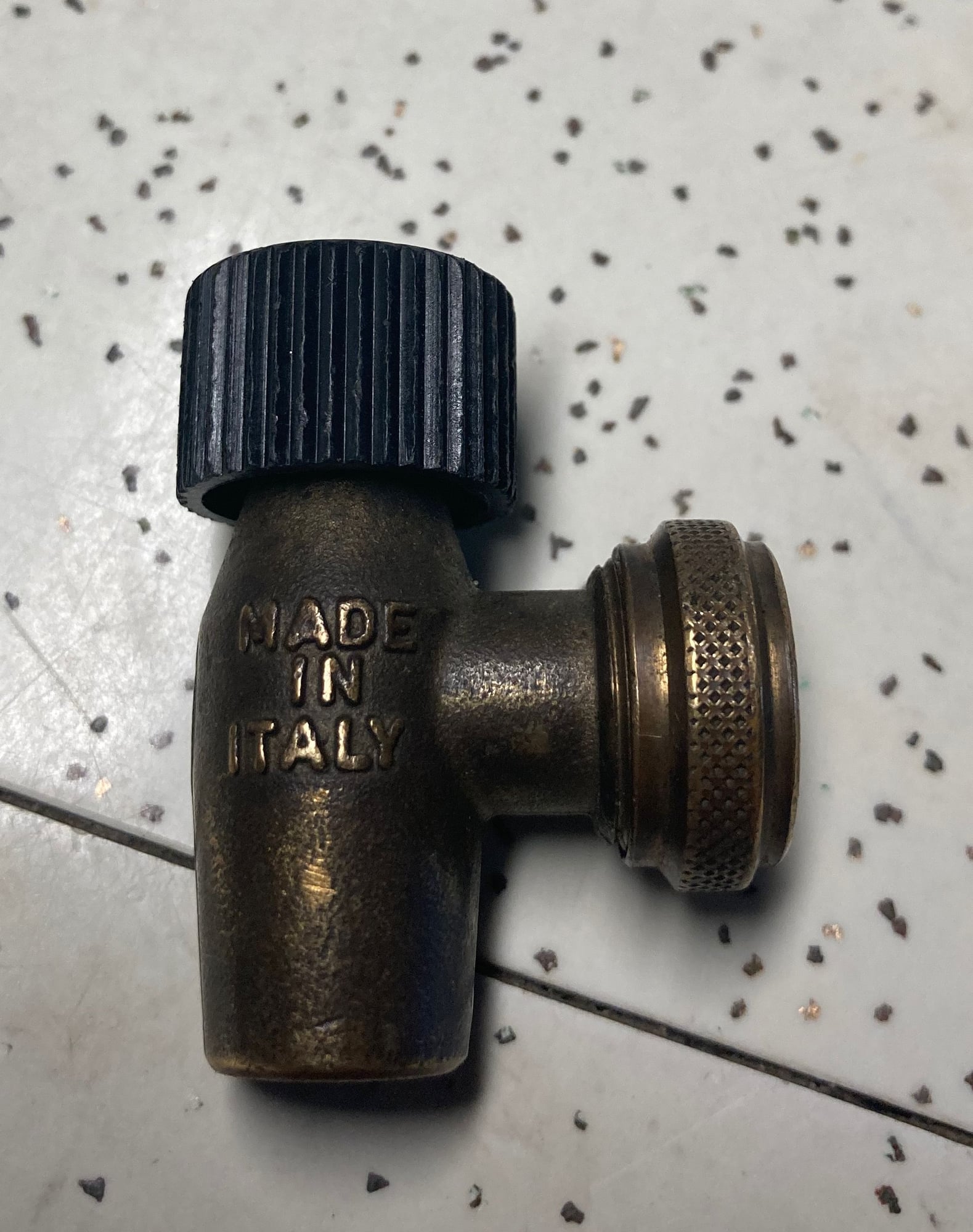
I went on a ride with friends once with no pump just three cartridges, thought that would be enough. One of the other riders flatted three times and didn't have a pump so I let him use my inflator and cartridges. He bailed on the end of the ride, an unsupported century, and I flatted about twenty miles later. At this point I had been dropped by the other riders and no-one was answering my phone calls so I walked about two miles before they figured out something was wrong and came back for me.
Needless to say, I don't ride with out a pump anymore. Still carry the co2 but always carry a pump.
I went on a ride with friends once with no pump just three cartridges, thought that would be enough. One of the other riders flatted three times and didn't have a pump so I let him use my inflator and cartridges. He bailed on the end of the ride, an unsupported century, and I flatted about twenty miles later. At this point I had been dropped by the other riders and no-one was answering my phone calls so I walked about two miles before they figured out something was wrong and came back for me.
Needless to say, I don't ride with out a pump anymore. Still carry the co2 but always carry a pump.

