


Another Frame ID
 03-02-23 | 12:52 AM
#1
Thread Starter
Newbie
Joined: Nov 2019
Posts: 22
Likes: 1
Another Frame ID
Just wondering if anyone can ID my bike frame, which I have told is English given the location of the serial no. - on the Left Dropout. It is long. K xx 23 28 29 ("xx" being obscured, so nine digits in all). 531, 2.0kg/690g weight, probably late '70s.. Nothing of note in terms of lug flourishes etc however it does have all it's brazing pins still attached. When I got it it was painted up in Hillman (of Australia) colours, but it is NOT a Hillman, nor Australian bespoke given the serial, indicative of a volume manufacturer. Just about to buy new Hillman decals and ride it but having a throw at the stumps wondering if anyone can suggest it's true identity. (Sorry, tried to post photo's but they were too large, will try to reduce them tonight)


 03-03-23 | 07:38 PM
#3


did you check and confirm the BB to be 68mm wide and 1.37" x 24 tpi threading?
How about the fork: is there a matching serial number on it? threading and crown race diameter? forkends also Campy (matching the DOs)?
Is there something more than the forkblade decal to tell you it's 531?
Most of these frame details don't say any certain country of origin...you might rule a few OUT, however.
The DS DO is going to need a little help, but it can be corrected (taking it slowly)
How about the fork: is there a matching serial number on it? threading and crown race diameter? forkends also Campy (matching the DOs)?
Is there something more than the forkblade decal to tell you it's 531?
Most of these frame details don't say any certain country of origin...you might rule a few OUT, however.
The DS DO is going to need a little help, but it can be corrected (taking it slowly)
03-03-23 | 07:46 PM
#4

Senior Member

Joined: Feb 2013
Posts: 15,369
Likes: 4,391
From: Alta California
-----
rudimentary information you might wish to relate to the readership includes steerer & bottom bracket threads as well as tube diameters
lug pattern appears it may be Prugnat S Serie
BOCAMA did a similar patter but their points are shorter
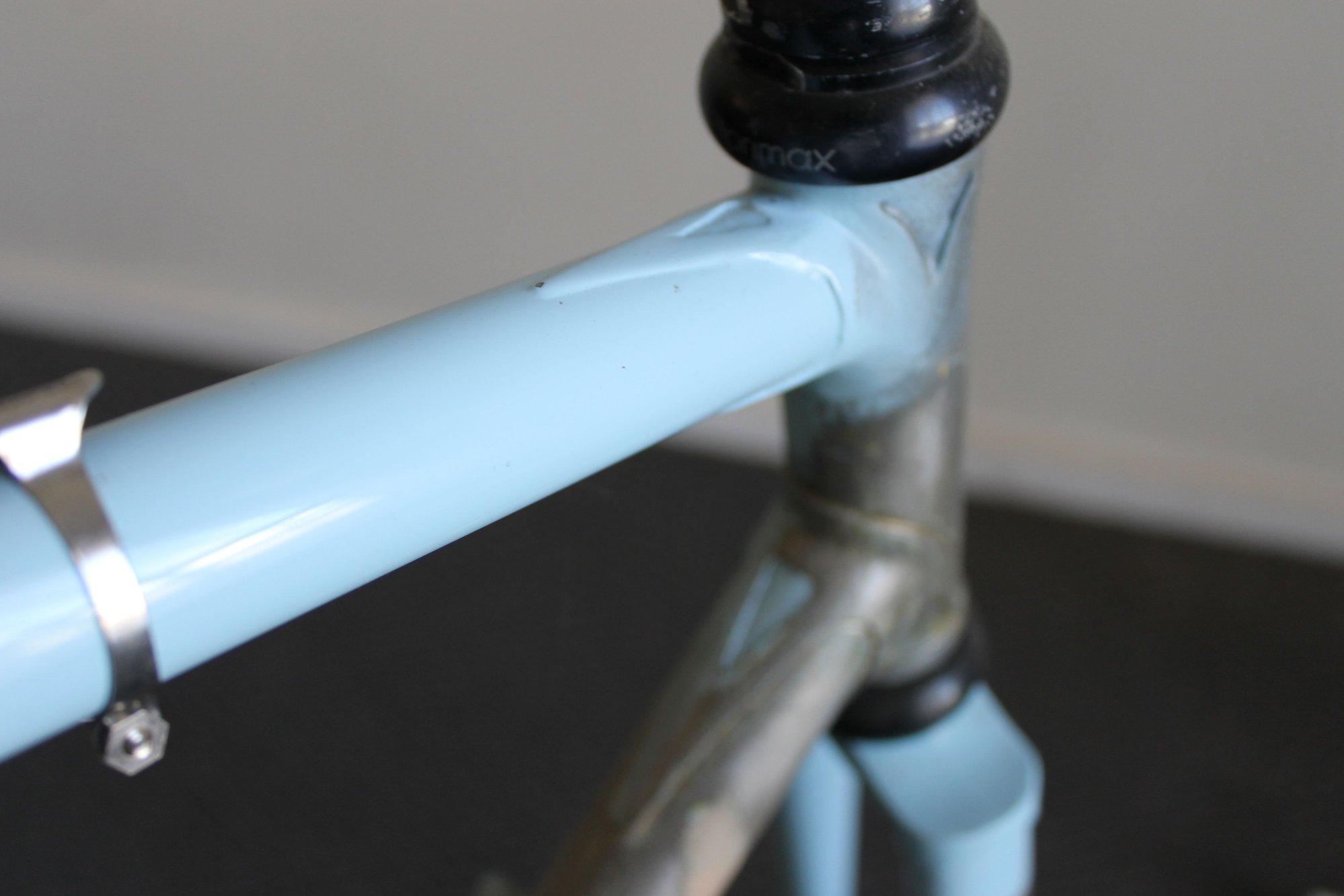
several makers did fork crowns of this pattern; the recesses on the faces narrow it down
bottom bracket shell looks to be BOCAMA Professional
-----
rudimentary information you might wish to relate to the readership includes steerer & bottom bracket threads as well as tube diameters
lug pattern appears it may be Prugnat S Serie
BOCAMA did a similar patter but their points are shorter
several makers did fork crowns of this pattern; the recesses on the faces narrow it down
bottom bracket shell looks to be BOCAMA Professional
-----
03-03-23 | 08:11 PM
#5
Thread Starter
Newbie
Joined: Nov 2019
Posts: 22
Likes: 1
did you check and confirm the BB to be 68mm wide and 1.37" x 24 tpi threading?
How about the fork: is there a matching serial number on it? threading and crown race diameter? forkends also Campy (matching the DOs)?
Is there something more than the forkblade decal to tell you it's 531?
The DS DO is going to need a little help, but it can be corrected (taking it slowly)
How about the fork: is there a matching serial number on it? threading and crown race diameter? forkends also Campy (matching the DOs)?
Is there something more than the forkblade decal to tell you it's 531?
The DS DO is going to need a little help, but it can be corrected (taking it slowly)
03-03-23 | 08:18 PM
#6
Thread Starter
Newbie
Joined: Nov 2019
Posts: 22
Likes: 1
-----
rudimentary information you might wish to relate to the readership includes steerer & bottom bracket threads as well as tube diameters
several makers did fork crowns of this pattern; the recesses on the faces narrow it down
bottom bracket shell looks to be BOCAMA Professional
-----
rudimentary information you might wish to relate to the readership includes steerer & bottom bracket threads as well as tube diameters
several makers did fork crowns of this pattern; the recesses on the faces narrow it down
bottom bracket shell looks to be BOCAMA Professional
-----
03-03-23 | 08:25 PM
#7
that's excellent as far as ID-ing the fork, but can you positively link it to the frame as OEM?
As juvela notes the frame bits are sourced from French makers (and of course Campagnolo DOs) but those were used in many counties by even more builders, ditto for the tubing assuming it also can be confirmed to be 531DB (the same faint stamps can SOMETIMES also be found on the tubes themselves, but not always and the paint needs to be completely stripped bare... when present they are often near the tubing ends.
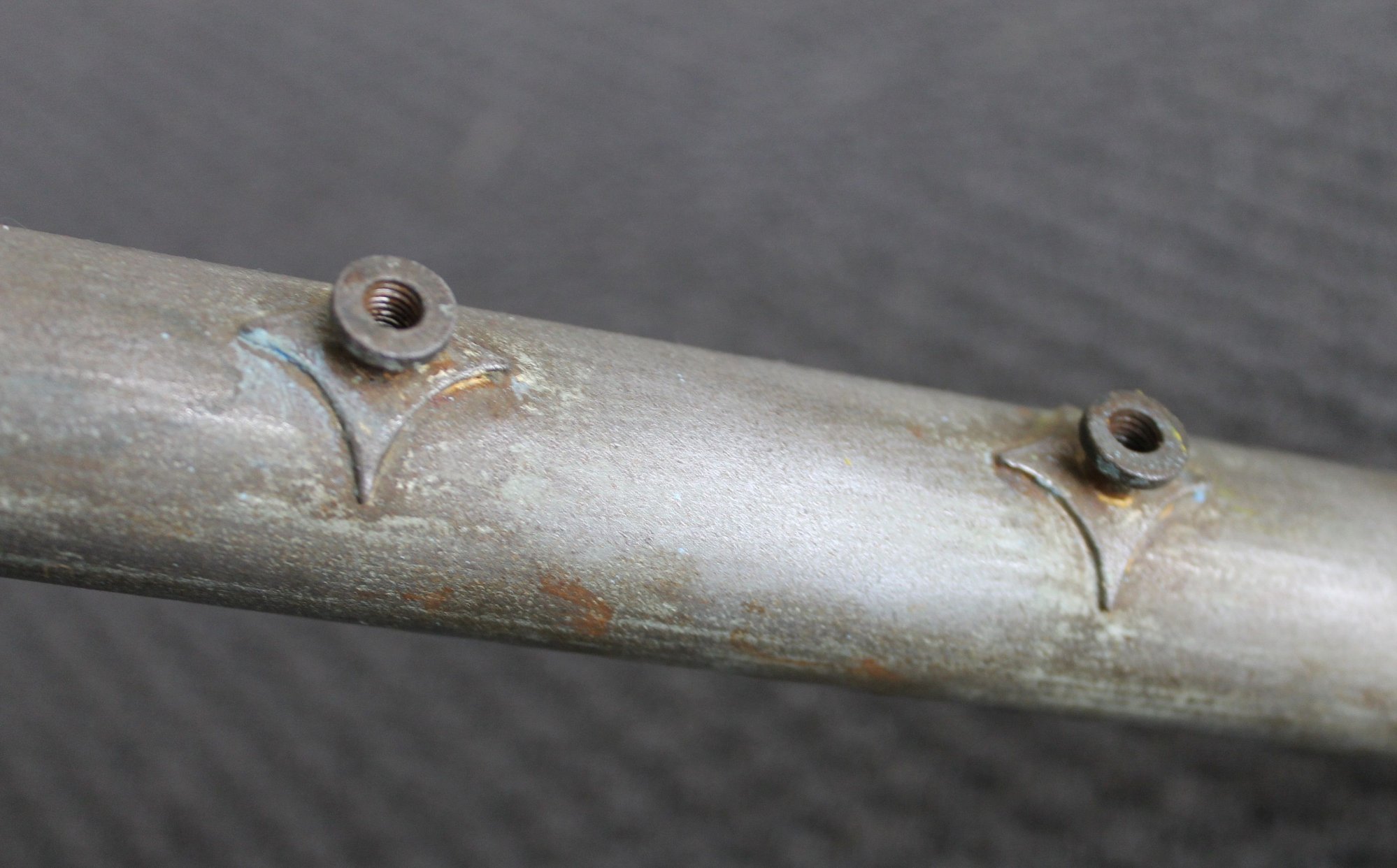
Are the waterbottle mounts "nuts" rather than the more commonplace bosses?
Are there any distinctive features of the bridges (brake or chainstay) you can show us?
is the brake drilling for nutted brakes both F&R (my guess)
EDIT: your post above came in as I was typing, BUT a 26.8 seatpost? Maybe for a plain-gauge 531seat tube, but with forged Campy DOs...? a little bit of a mis-match in the quality dept.
As juvela notes the frame bits are sourced from French makers (and of course Campagnolo DOs) but those were used in many counties by even more builders, ditto for the tubing assuming it also can be confirmed to be 531DB (the same faint stamps can SOMETIMES also be found on the tubes themselves, but not always and the paint needs to be completely stripped bare... when present they are often near the tubing ends.
Are the waterbottle mounts "nuts" rather than the more commonplace bosses?
Are there any distinctive features of the bridges (brake or chainstay) you can show us?
is the brake drilling for nutted brakes both F&R (my guess)
EDIT: your post above came in as I was typing, BUT a 26.8 seatpost? Maybe for a plain-gauge 531seat tube, but with forged Campy DOs...? a little bit of a mis-match in the quality dept.
Last edited by unworthy1; 03-03-23 at 08:28 PM.
03-03-23 | 08:27 PM
#8
Senior Member
Joined: Feb 2013
Posts: 15,369
Likes: 4,391
From: Alta California
-----
having difficulty seeing the chain stay stop clearly enough for an identification
if the front face is cylinder shaped and the back face flat (with a recess of course) the and top nearly flat
that would signal an anglophone product, have never once seen the stop described to be employed on a product from the continent
-----
having difficulty seeing the chain stay stop clearly enough for an identification
if the front face is cylinder shaped and the back face flat (with a recess of course) the and top nearly flat
that would signal an anglophone product, have never once seen the stop described to be employed on a product from the continent
-----
03-03-23 | 08:30 PM
#9
Thread Starter
Newbie
Joined: Nov 2019
Posts: 22
Likes: 1
03-03-23 | 08:39 PM
#10
Thread Starter
Newbie
Joined: Nov 2019
Posts: 22
Likes: 1
that's excellent as far as ID-ing the fork, but can you positively link it to the frame as OEM?
Are the waterbottle mounts "nuts" rather than the more commonplace bosses?
Are there any distinctive features of the bridges (brake or chainstay) you can show us?
is the brake drilling for nutted brakes both F&R (my guess)
EDIT: your post above came in as I was typing, BUT a 26.8 seatpost? Maybe for a plain-gauge 531seat tube, but with forged Campy DOs...? a little bit of a mis-match in the quality dept.
Are the waterbottle mounts "nuts" rather than the more commonplace bosses?
Are there any distinctive features of the bridges (brake or chainstay) you can show us?
is the brake drilling for nutted brakes both F&R (my guess)
EDIT: your post above came in as I was typing, BUT a 26.8 seatpost? Maybe for a plain-gauge 531seat tube, but with forged Campy DOs...? a little bit of a mis-match in the quality dept.
03-03-23 | 08:40 PM
#11

Senior Member
Joined: Dec 2011
Posts: 2,340
Likes: 781
From: Saint Paul, Minnesota
Bikes: '08 Look 585, '07 Kuota Kebel, '80s Alan Peitsch
The frame could be Reynolds 753 metric which could take a 26.8 seatpost especially if it is French. Interesting to know what the seat tube outside dimension is. If it is 28mm probably 753 metric.
03-03-23 | 08:46 PM
#13
Certainly is one way to skin that cat!
But your repairer might also try to bend the "malleable" steel back into place first, before you pay his fee to braze-out/braze-in a NOS piece. Entirely your (and repair guy's) call of course, but for me it would be "got nothing to lose and if it cracks? no problem!"
So a Haden fork crown and Reynolds stamp on the steerer we can say 100% that's a British fork.
But for the rest of the frame I wouldn't say anything is 100% certain yet and no definitive maker's name, either.
Those waterbottle mounts are very unusual, I don't think I've ever seen them with the "diamond" reinforcing plates, too, before.
But your repairer might also try to bend the "malleable" steel back into place first, before you pay his fee to braze-out/braze-in a NOS piece. Entirely your (and repair guy's) call of course, but for me it would be "got nothing to lose and if it cracks? no problem!"
So a Haden fork crown and Reynolds stamp on the steerer we can say 100% that's a British fork.
But for the rest of the frame I wouldn't say anything is 100% certain yet and no definitive maker's name, either.
Those waterbottle mounts are very unusual, I don't think I've ever seen them with the "diamond" reinforcing plates, too, before.
Last edited by unworthy1; 03-03-23 at 08:49 PM.
03-03-23 | 09:43 PM
#15
Senior Member
Joined: Feb 2013
Posts: 15,369
Likes: 4,391
From: Alta California
-----
if fork original to frame and chain stay stop the one described above that would pretty much lock in an anglophone origin, even without a check of tubing diameters and threading
it is understandable to jump to the notion that anglophone will mean "British"
odds certainly in that direction but other national origins possible as well: AU, CA, NZ, US
---
dropout deformation -

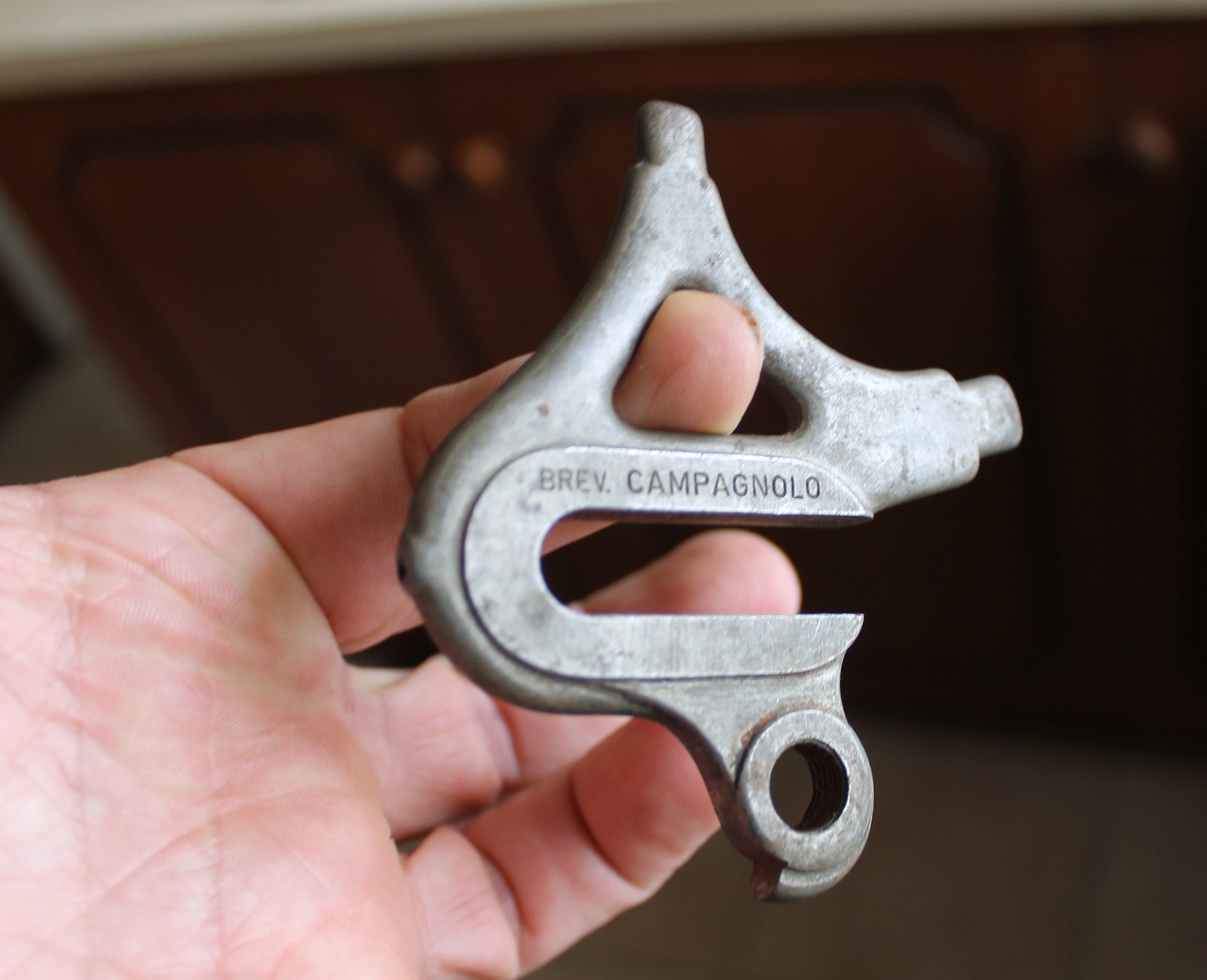 the "dropped jaw" does not disturb me too much by itself; have had success in coldsetting a few like this
the symptom which bothers me in this case is the deformation "goiter" surrounding the adjuster hole
of course you would always wish to go with the professional framebuilder's recommendation
disclaimer: no metallurgy or metal work knowledge here
---
shell marking -
in this image we can see a single character stamped into the underside of the frame's bottom bracket shell

depending on how one looks at it can be read as a letter T or possibly an E, an F or even a P if unevenly struck
your eyes are the ones on the scene; how doth it appear to thee?
-----
if fork original to frame and chain stay stop the one described above that would pretty much lock in an anglophone origin, even without a check of tubing diameters and threading
it is understandable to jump to the notion that anglophone will mean "British"
odds certainly in that direction but other national origins possible as well: AU, CA, NZ, US
---
dropout deformation -
the "dropped jaw" does not disturb me too much by itself; have had success in coldsetting a few like thisthe symptom which bothers me in this case is the deformation "goiter" surrounding the adjuster hole
of course you would always wish to go with the professional framebuilder's recommendation
disclaimer: no metallurgy or metal work knowledge here
---
shell marking -
in this image we can see a single character stamped into the underside of the frame's bottom bracket shell
depending on how one looks at it can be read as a letter T or possibly an E, an F or even a P if unevenly struck
your eyes are the ones on the scene; how doth it appear to thee?
-----
Last edited by juvela; 03-03-23 at 09:52 PM. Reason: spellin'
03-04-23 | 07:25 AM
#16
Senior Member
Joined: Feb 2013
Posts: 15,369
Likes: 4,391
From: Alta California
-----
one view which might advance the inquiry a bit for the Brit experts would be the inner face of the drive side dropout where the stays join
there be differing approaches to "flattening" the stay ends to achieve chain and cog clearance
---
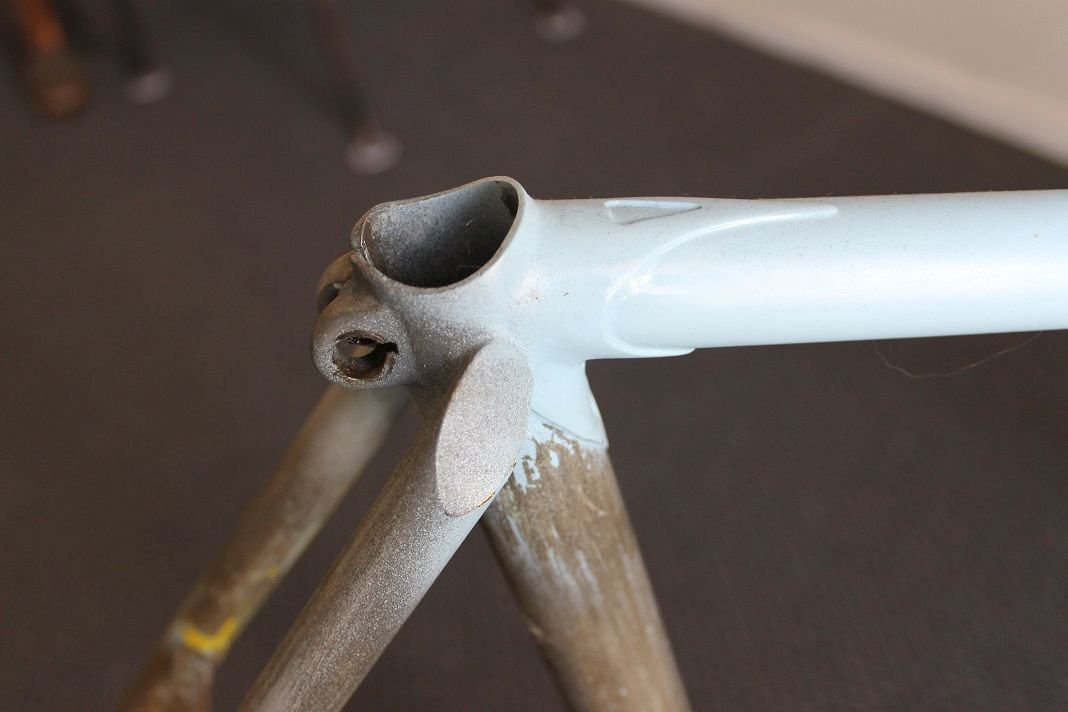
the single most striking feature of the subject frame for me is the seat stay cap choice
simple flat seat stay caps are of course quite common
at one end of the range are the tiny ones seen on lower model and older Tube Investments produce
at the other are the long ones which can vary a bit in shape and are selected by makers for a certain "griffe" (signature)
the model chosen here is a seldom seen middle ground length
this is a piece offered "off-the-shelf" by lug producers and not something created by builder
the Brit experts may recall where they have seen it employed previously...
---
w/b -
this looks like it may have been added post-manufacture using "bits at hand" and in a manner chosen by the person performing the work
the decorations used typically exhibit much larger holes to accept the nut
makes one wonder at the intended use for these specific ones...
---
dating -
currently thinking we are in the '73-'75 era here
'73 was first year investment cast frame bits became available such as the Haden crown employed
suspect w/b to be a post-construction addition; possible bottom bracket cable guides may be as well
note absence of top tube cable guides and shift lever bosses
-----
one view which might advance the inquiry a bit for the Brit experts would be the inner face of the drive side dropout where the stays join
there be differing approaches to "flattening" the stay ends to achieve chain and cog clearance
---
the single most striking feature of the subject frame for me is the seat stay cap choice
simple flat seat stay caps are of course quite common
at one end of the range are the tiny ones seen on lower model and older Tube Investments produce
at the other are the long ones which can vary a bit in shape and are selected by makers for a certain "griffe" (signature)
the model chosen here is a seldom seen middle ground length
this is a piece offered "off-the-shelf" by lug producers and not something created by builder
the Brit experts may recall where they have seen it employed previously...
---
w/b -
this looks like it may have been added post-manufacture using "bits at hand" and in a manner chosen by the person performing the work
the decorations used typically exhibit much larger holes to accept the nut
makes one wonder at the intended use for these specific ones...
---
dating -
currently thinking we are in the '73-'75 era here
'73 was first year investment cast frame bits became available such as the Haden crown employed
suspect w/b to be a post-construction addition; possible bottom bracket cable guides may be as well
note absence of top tube cable guides and shift lever bosses
-----
03-04-23 | 01:46 PM
#17
-----
one view which might advance the inquiry a bit for the Brit experts would be the inner face of the drive side dropout where the stays join
there be differing approaches to "flattening" the stay ends to achieve chain and cog clearance
---
the single most striking feature of the subject frame for me is the seat stay cap choice
simple flat seat stay caps are of course quite common
at one end of the range are the tiny ones seen on lower model and older Tube Investments produce
at the other are the long ones which can vary a bit in shape and are selected by makers for a certain "griffe" (signature)
the model chosen here is a seldom seen middle ground length
this is a piece offered "off-the-shelf" by lug producers and not something created by builder
the Brit experts may recall where they have seen it employed previously...
---
w/b -
this looks like it may have been added post-manufacture using "bits at hand" and in a manner chosen by the person performing the work
the decorations used typically exhibit much larger holes to accept the nut
makes one wonder at the intended use for these specific ones...
---
dating -
currently thinking we are in the '73-'75 era here
'73 was first year investment cast frame bits became available such as the Haden crown employed
suspect w/b to be a post-construction addition; possible bottom bracket cable guides may be as well
note absence of top tube cable guides and shift lever bosses
-----
one view which might advance the inquiry a bit for the Brit experts would be the inner face of the drive side dropout where the stays join
there be differing approaches to "flattening" the stay ends to achieve chain and cog clearance
---
the single most striking feature of the subject frame for me is the seat stay cap choice
simple flat seat stay caps are of course quite common
at one end of the range are the tiny ones seen on lower model and older Tube Investments produce
at the other are the long ones which can vary a bit in shape and are selected by makers for a certain "griffe" (signature)
the model chosen here is a seldom seen middle ground length
this is a piece offered "off-the-shelf" by lug producers and not something created by builder
the Brit experts may recall where they have seen it employed previously...
---
w/b -
this looks like it may have been added post-manufacture using "bits at hand" and in a manner chosen by the person performing the work
the decorations used typically exhibit much larger holes to accept the nut
makes one wonder at the intended use for these specific ones...
---
dating -
currently thinking we are in the '73-'75 era here
'73 was first year investment cast frame bits became available such as the Haden crown employed
suspect w/b to be a post-construction addition; possible bottom bracket cable guides may be as well
note absence of top tube cable guides and shift lever bosses
-----
"...absence of top tube cable guides and shift lever bosses"
it appears to have shift lever bosses, at least one on the DS down tube.
How many of the braze-ons were added after original build? I dunno.


