


Safest bike for commuting
 07-14-18 | 11:39 AM
#1
Thread Starter
Junior Member
Joined: Jul 2018
Posts: 5
Likes: 0
Safest bike for commuting
I have been commuting to work for 30 yrs in New York City. Last year I got rid of failing mountain bike and replaced with a Specialized hybrid which is much faster and lighter. But since then I have had 3 falls triggered by slight touches by a car or other bike resulting in broken thumb and fractured ribs. There is a lot more but traffic recently partly because of Citibike proram and I am certainly older ( 72 ), but I wonder if my new bike is less "stable". So rather than give up riding, which everyone has suggested, my questions are -what is the most stable kind of bike? Is there protective apparel that I can wear?
 07-14-18 | 12:19 PM
#2

Disco Infiltrator


Joined: May 2013
Posts: 15,328
Likes: 3,518
From: Folsom CA
Bikes: Stormchaser, Paramount, Tilt, Samba tandem
I have been commuting to work for 30 yrs in New York City. Last year I got rid of failing mountain bike and replaced with a Specialized hybrid which is much faster and lighter. But since then I have had 3 falls triggered by slight touches by a car or other bike resulting in broken thumb and fractured ribs. There is a lot more but traffic recently partly because of Citibike proram and I am certainly older ( 72 ), but I wonder if my new bike is less "stable". So rather than give up riding, which everyone has suggested, my questions are -what is the most stable kind of bike? Is there protective apparel that I can wear?
07-14-18 | 12:29 PM
#3

Senior Member

Joined: Nov 2014
Posts: 27,576
Likes: 5,455
From: Eugene, Oregon, USA
There is no reason why an old bicycle you are comfortable with can't be repaired rather than replaced. Even having a bike that is comfortable to you and you trust is worth quite a bit. If your old bike is gone, you can always hunt for one like it.
As far as the hybrid vs MTB being safer... I'm not sure there would be a huge difference, at least not for a younger rider. The "Faster" might make a difference, as well, if you are riding for longer distances.
However, the other thing you have to cope with is that you are in fact getting older. There are plenty of fit 72 year olds, but strength often decreases, as well as reaction times. So, a slight bump 30 years ago, and you might have recovered without going down, while at 72, it leaves you in a heap on the ground.
Did other aspects of your riding change recently? Retired, allowing more riding? Different riding?
As far as the hybrid vs MTB being safer... I'm not sure there would be a huge difference, at least not for a younger rider. The "Faster" might make a difference, as well, if you are riding for longer distances.
However, the other thing you have to cope with is that you are in fact getting older. There are plenty of fit 72 year olds, but strength often decreases, as well as reaction times. So, a slight bump 30 years ago, and you might have recovered without going down, while at 72, it leaves you in a heap on the ground.
Did other aspects of your riding change recently? Retired, allowing more riding? Different riding?
07-14-18 | 12:33 PM
#4
Senior Member
Joined: Nov 2014
Posts: 27,576
Likes: 5,455
From: Eugene, Oregon, USA
As far as stability, there are always the trikes.
I wrote a little summary here a couple of days ago.
Adult Tricycles
The tadpole trikes are very low, so good if you can get up and down easily. I don't know how they would interact with NYC traffic, but I am sure you could find your place. And, really hard to roll them.
And, they would still be good exercise.
I wrote a little summary here a couple of days ago.
Adult Tricycles
The tadpole trikes are very low, so good if you can get up and down easily. I don't know how they would interact with NYC traffic, but I am sure you could find your place. And, really hard to roll them.
And, they would still be good exercise.
07-14-18 | 01:31 PM
#5
Callipygian Connoisseur
Joined: Nov 2008
Posts: 1,373
Likes: 351
Without knowing you, I can say your reaction times are measurably slower than they were years ago. Your physical abilities are diminished too. These are normal age related changes. Is it time to change the bike you're on, or just change the way you're riding it? I'm assuming you're not cognitively impaired or significantly physically limited. As we age we must adapt to our environment and limitations. Only you (and your MD) can decide when and how you make changes, but the notion you can do something the same way forever is a good way to wind up in the hospital. Your question suggests you're considering the possibilities, which is good, but I promise you there's no one here who can answer for you.
You said "everyone" has suggested you give up riding. Why would they say that? Do they see something you're missing? Be honest with yourself. If necessary, make changes where you can. Listen to those who love you the most. There are many steps one can take along the way from riding with the pack to standing on the curb. Making smart choices early can be the difference between extending your riding days and unwanted consequences.
-Kedosto
You said "everyone" has suggested you give up riding. Why would they say that? Do they see something you're missing? Be honest with yourself. If necessary, make changes where you can. Listen to those who love you the most. There are many steps one can take along the way from riding with the pack to standing on the curb. Making smart choices early can be the difference between extending your riding days and unwanted consequences.
-Kedosto
07-14-18 | 02:22 PM
#6

Senior Member
Joined: Oct 2015
Posts: 4,073
Likes: 2,015
From: San Diego, California
Bikes: Velo Orange Piolet
I think fatter (~2 inch) tires are a safety feature. They can handle cracks and grooves in roads better and are less jarring over bumps and potholes, and make it easier to veer off into the shoulder/dirt if needed.
Last edited by tyrion; 07-16-18 at 04:11 PM.
07-14-18 | 02:44 PM
#7
Senior Member
Joined: Nov 2014
Posts: 27,576
Likes: 5,455
From: Eugene, Oregon, USA
You might check out the 50+ subforum.
https://www.bikeforums.net/fifty-plus-50/
There are quite a few riders > 60 and > 70, and maybe a few over 80.
If you have the ability, you might also look for a safer community to cycle, especially if you are nearing retirement, or retired.
I have a few neighbors in the 70+ year age range that have expressed an interest in riding, but I don't trust them on upright bikes. Maybe trikes. Age can be hard on people.
Yet, a few weeks ago I met a jolly old cyclist (70+) that lived at the top of a wicked steep hill that would certainly be a challenge for me, 20 years younger. Of course, he had a lightweight road bike, and very low gearing, and enjoyed the climb. His plan was to ride until he was 85, then retire the bike.
Distances are also important. 1 mile a week for 10 minutes won't get a person in shape.
20+ miles a day, and cycling may well have a rejuvenating effect.
https://www.bikeforums.net/fifty-plus-50/
There are quite a few riders > 60 and > 70, and maybe a few over 80.
If you have the ability, you might also look for a safer community to cycle, especially if you are nearing retirement, or retired.
I have a few neighbors in the 70+ year age range that have expressed an interest in riding, but I don't trust them on upright bikes. Maybe trikes. Age can be hard on people.
Yet, a few weeks ago I met a jolly old cyclist (70+) that lived at the top of a wicked steep hill that would certainly be a challenge for me, 20 years younger. Of course, he had a lightweight road bike, and very low gearing, and enjoyed the climb. His plan was to ride until he was 85, then retire the bike.
Distances are also important. 1 mile a week for 10 minutes won't get a person in shape.
20+ miles a day, and cycling may well have a rejuvenating effect.
07-14-18 | 09:26 PM
#8
Disco Infiltrator
Joined: May 2013
Posts: 15,328
Likes: 3,518
From: Folsom CA
Bikes: Stormchaser, Paramount, Tilt, Samba tandem
I dunno if this is a good story for you or a bad one. My grandad died from complications after a bicycle crash. He was 91!
07-15-18 | 04:37 AM
#9
Senior Member
Joined: Nov 2009
Posts: 2,025
Likes: 154
From: Boston area
Bikes: 1984 Bridgestone 400 1985Univega nouevo sport 650b conversion 1993b'stone RBT 1985 Schwinn Tempo
Wider tires are often more stable than narrow tires.
More trail tends to make a bike more stable.
A low bottom bracket will lower the center of gravity and contribute to a more stable bike.
All these factors interact with the others. It is possible to make a bike too stable. In that case it might be hard to correct the line if you have to avoid a pothole or another bike.
Also after years of riding one bike; it takes time to adapt to a new bike, and its handling characteristics.
More trail tends to make a bike more stable.
A low bottom bracket will lower the center of gravity and contribute to a more stable bike.
All these factors interact with the others. It is possible to make a bike too stable. In that case it might be hard to correct the line if you have to avoid a pothole or another bike.
Also after years of riding one bike; it takes time to adapt to a new bike, and its handling characteristics.
07-15-18 | 06:51 AM
#10
Full Member
Joined: May 2013
Posts: 430
Likes: 7
From: Indiana
Bikes: Giant ATX Lite & Schwinn Mesa
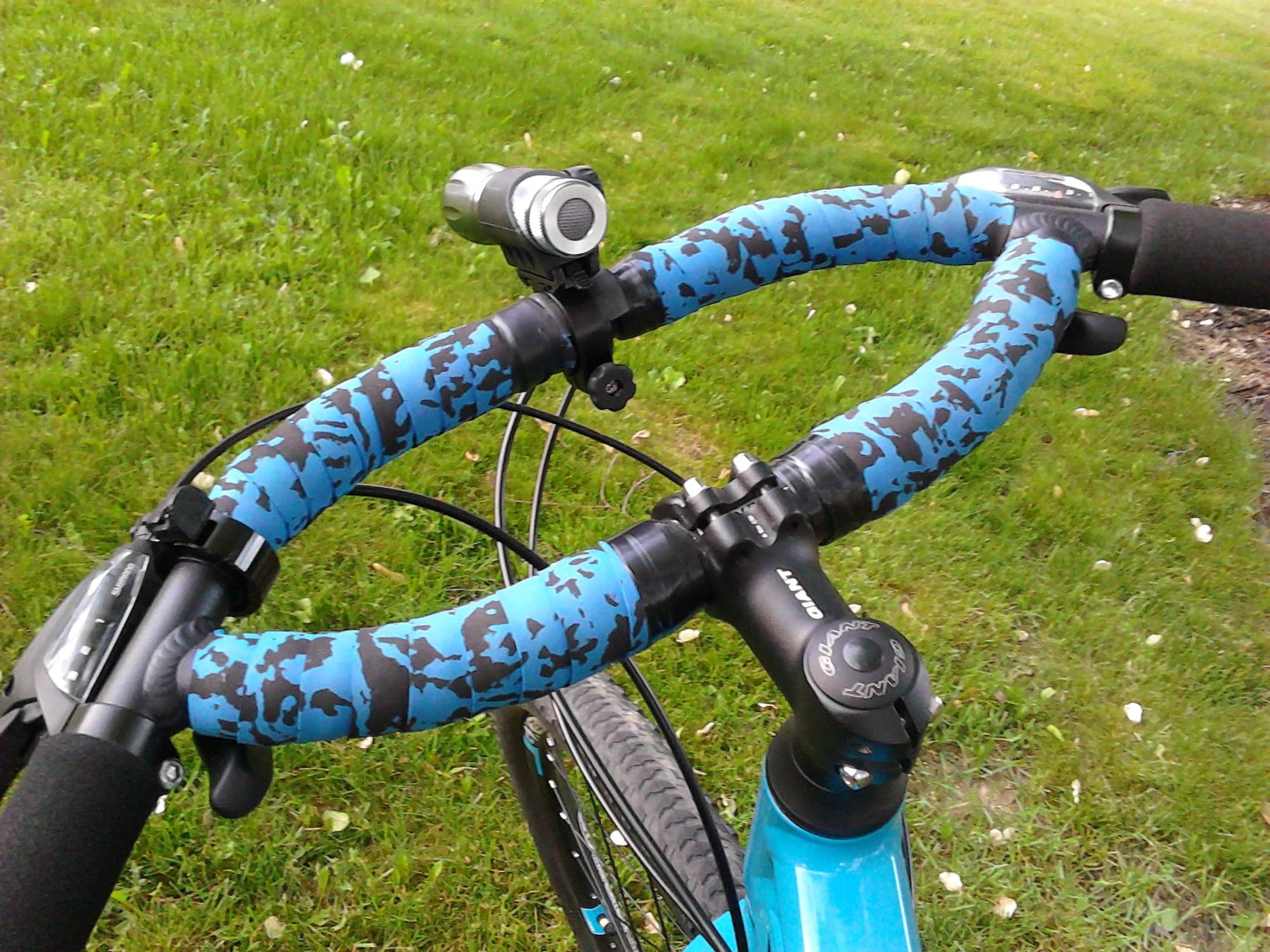

Are there less crowded routes you could take? Do you use some kind of mirror, how do you know whats behind you? I feel safer on a ridged mountain bike or adventure bike. I currently ride a Giant ATX with Jones H loop handlebars. The current one is a giant ARX2 https://www.giant-bicycles.com/us/bikes-arx
07-15-18 | 07:24 AM
#11

Senior Member

Joined: Apr 2007
Posts: 4,129
Likes: 56
From: Munising, Michigan, USA
Bikes: Priority 600, Priority Continuum, Devinci Dexter
07-16-18 | 02:10 PM
#13

Unlisted member
Joined: Dec 2005
Posts: 6,192
Likes: 435
From: Chicagoland
Bikes: Specialized Hardrock
How about a crank forward bike like an Electra?
07-17-18 | 05:15 AM
#15

Senior Member

Joined: Jul 2016
Posts: 1,335
Likes: 1,261
From: Groningen
Bikes: Gazelle rod brakes, Batavus compact, Peugeot hybrid
I rode a flat bar hybrid for a couple of years, but I believe a fully upright bike with swept handlebars and the typical geometry for those bikes. For me the main issue was the lack of vision from a flat bar position, but I don't like the nervous steering of a hybrid either.
07-17-18 | 02:08 PM
#16
Senior Member
Joined: Jul 2008
Posts: 6,431
Likes: 44
From: Minneapolis, MN
Things that could be factors:
- Genuine flaws in the bike. For example, I had a new bike where there was something defective with the headset. The symptom was that if you held the front wheel in place you could still turn the handlebars without the front wheel turning. The bike shop was appalled and that's very dangerous and fixed it for free by replacing the stem.
- Poor bike fit. Perhaps the new bike is a little to big or small for you so it's not as natural to control.
- Tires. The fatter the tire the more junk on the road it can roll over without a problem. The drawback is that fatter tires are generally slower on pavement. Also really cheap low quality tires can more easily lose grip on the road especially if the road is raining.
- Clipless. If you need to get a foot down in an emergency clipless will slow you down a little. For most people it's not a problem, but for a few people their brain and muscle memory never quite "get" it and they'd be much safer with flat pedals. If you struggle to unclip from clipless and you face serious dehabilitating injury if you fall over on the bike you should definitely go with flats.
- Pedals. Cheap slipper pedals often come with bikes and people have issues with their foot slipping off the pedal, you can get much better pedals for the bike. For example the Shimano PD-GR500's are $50 and a good quality pedal with a good shape and metal pins. If you really want absolute traction on the pedal you can also get five ten freerider shoes which use a special extra grippy rubber that will not slip off the pedal without lifiting your foot up.
- Riding position. Some bikes definitely have you more hunched over than others. However, the specialized sirrus is a fairly upright bike (though there are more upright bikes with better visibility for riding).
But the biggest factor is crashes is your awareness of the vehicles around you and avoiding ever being to close to them. Is is odd that you keep getting brushed by bikes or cars. Ever since someone I know had a crash when a jogger on the trail turned around without warning right into them, I make sure to leave at least a person worth of space between myself and anyone I'm going around or by.
- Genuine flaws in the bike. For example, I had a new bike where there was something defective with the headset. The symptom was that if you held the front wheel in place you could still turn the handlebars without the front wheel turning. The bike shop was appalled and that's very dangerous and fixed it for free by replacing the stem.
- Poor bike fit. Perhaps the new bike is a little to big or small for you so it's not as natural to control.
- Tires. The fatter the tire the more junk on the road it can roll over without a problem. The drawback is that fatter tires are generally slower on pavement. Also really cheap low quality tires can more easily lose grip on the road especially if the road is raining.
- Clipless. If you need to get a foot down in an emergency clipless will slow you down a little. For most people it's not a problem, but for a few people their brain and muscle memory never quite "get" it and they'd be much safer with flat pedals. If you struggle to unclip from clipless and you face serious dehabilitating injury if you fall over on the bike you should definitely go with flats.
- Pedals. Cheap slipper pedals often come with bikes and people have issues with their foot slipping off the pedal, you can get much better pedals for the bike. For example the Shimano PD-GR500's are $50 and a good quality pedal with a good shape and metal pins. If you really want absolute traction on the pedal you can also get five ten freerider shoes which use a special extra grippy rubber that will not slip off the pedal without lifiting your foot up.
- Riding position. Some bikes definitely have you more hunched over than others. However, the specialized sirrus is a fairly upright bike (though there are more upright bikes with better visibility for riding).
But the biggest factor is crashes is your awareness of the vehicles around you and avoiding ever being to close to them. Is is odd that you keep getting brushed by bikes or cars. Ever since someone I know had a crash when a jogger on the trail turned around without warning right into them, I make sure to leave at least a person worth of space between myself and anyone I'm going around or by.
07-17-18 | 07:32 PM
#17
Newbie
Joined: Oct 2014
Posts: 16
Likes: 5
Just ride
Norker, I’m 64, live in Brooklyn and ride into the city every day. 13 miles winter, twenty plus in the summer
The idea of using a trike in nyc is unrealistic; the idea of moving somewhere else is laughable
I think the biggest safety feature for a rider is that hunk of meat lying in between your ears. Much more reliable than any change to a bike.
I find myself consciously slowing down more often. If you think you’re making dumb errors from being tired, consider pedal assist. Great thing about that is there’s no penalty for stopping at a light, the motor gets you up to speed. I try to avoid bike routes sometimes as I feel they tend to get too congested. Go over a block or two and stay on the left where the drivers have the best vision of you.
I also tend to avoid bike bike paths and park loops; too much casual traffic and people walking.
What borough ugh are you in and how are you getting hit? Are you commuting to work? What’s your route?
The idea of using a trike in nyc is unrealistic; the idea of moving somewhere else is laughable
I think the biggest safety feature for a rider is that hunk of meat lying in between your ears. Much more reliable than any change to a bike.
I find myself consciously slowing down more often. If you think you’re making dumb errors from being tired, consider pedal assist. Great thing about that is there’s no penalty for stopping at a light, the motor gets you up to speed. I try to avoid bike routes sometimes as I feel they tend to get too congested. Go over a block or two and stay on the left where the drivers have the best vision of you.
I also tend to avoid bike bike paths and park loops; too much casual traffic and people walking.
What borough ugh are you in and how are you getting hit? Are you commuting to work? What’s your route?
07-17-18 | 10:17 PM
#18

Senior Member

Joined: Sep 2014
Posts: 3,902
Likes: 681
While my locale is nothing like NYC, I find that visibility, good tires, and brakes, are the most important factors. For me, an upright posture helps me stay more aware of my surroundings, but that's an individual preference. Any mainstream bike that fits is as maneuverable as any other for me, once I've been on it for a few blocks.
07-22-18 | 11:24 AM
#19
Thread Starter
Junior Member
Joined: Jul 2018
Posts: 5
Likes: 0
Thanks for your response.
What do you mean by "more trail"?
What do you mean by a 'low bottom bracket'
What about bike "geometry"
Is a mountain bike or a brand that is most consistent with your comments?
What do you mean by "more trail"?
What do you mean by a 'low bottom bracket'
What about bike "geometry"
Is a mountain bike or a brand that is most consistent with your comments?
07-22-18 | 11:30 AM
#20
Thread Starter
Junior Member
Joined: Jul 2018
Posts: 5
Likes: 0
Thank you for your response.
I dont use a mirror. I have found them to a limited field of vision and end up being distraction.
Do the handlebars add to stability?
what is a ridged mountain bike?
I dont use a mirror. I have found them to a limited field of vision and end up being distraction.
Do the handlebars add to stability?
what is a ridged mountain bike?
07-22-18 | 12:04 PM
#21
Banned
Joined: Jun 2010
Posts: 43,586
Likes: 1,380
From: NW,Oregon Coast
Bikes: 8
You live in NYC to make more money than you can in safer places..
Good luck , be careful , armor plating is heavy , and so what is safest is a Tank, but you ride a bike..
you cannot shop your way to safety , other than Moving somewhere else..
Good luck , be careful , armor plating is heavy , and so what is safest is a Tank, but you ride a bike..
you cannot shop your way to safety , other than Moving somewhere else..
07-22-18 | 11:45 PM
#22
Senior Member
Joined: Apr 2007
Posts: 780
Likes: 155
From: Allentown, Pennsylvania
Bikes: 2018 Lynskey Cooper CX; 2007 Cannondale F4
Stick with what works for you. Fat, 2" wide tires and mtb geometry/steering.
Rigid mtb (mountain bike) just means no suspension. Most newer mtbs have at least front suspension (referred to as hardtail), with many having front and rear (referred to as full suspension)
Rigid mtb (mountain bike) just means no suspension. Most newer mtbs have at least front suspension (referred to as hardtail), with many having front and rear (referred to as full suspension)
07-23-18 | 10:31 AM
#23

Full Member
Joined: Aug 2013
Posts: 325
Likes: 59
From: Spokane Area
Bikes: 2021 Salsa Warbird, (Specially Love my) 2021 Salsa Cutthroat, 2012 Surly LHT, 2015 Surly Cross-Check, 2008 Giant OCR A1, 2005 Leader 735R, 2005 Gary Fisher Montare, 1991 Nishiki Pueblo,
You live in NYC to make more money than you can in safer places..
Good luck , be careful , armor plating is heavy , and so what is safest is a Tank, but you ride a bike..
you cannot shop your way to safety , other than Moving somewhere else..
Good luck , be careful , armor plating is heavy , and so what is safest is a Tank, but you ride a bike..
you cannot shop your way to safety , other than Moving somewhere else..
07-24-18 | 09:46 AM
#24

Senior Member
Joined: Jul 2017
Posts: 1,523
Likes: 183
From: Queens, NY for now...
Bikes: 82 Lotus Unique, 86 Lotus Legend, 88 Basso Loto, 88 Basso PR, 89 Basso PR, 96 Bianchi CDI, 2013 Deda Aegis, 2019 Basso Diamante SV
As others have said, the wider tires of the mountain bike might have helped a bit, and I'm also wondering if your mountain bike wasn't a little smaller. This would have kept you closer to the ground, lowering your overall center of gravity...
But yes, many people on Citibikes are a menace, so don't necessarily blame yourself.
Yeah, no.
But yes, many people on Citibikes are a menace, so don't necessarily blame yourself.
Yeah, no.
07-24-18 | 09:51 AM
#25

You gonna eat that?
Joined: Sep 2008
Posts: 14,917
Likes: 543
From: Fort Worth, Texas Church of Hopeful Uncertainty
Bikes: 1966 Raleigh DL-1 Tourist, 1973 Schwinn Varsity, 1983 Raleigh Marathon, 1994 Nishiki Sport XRS
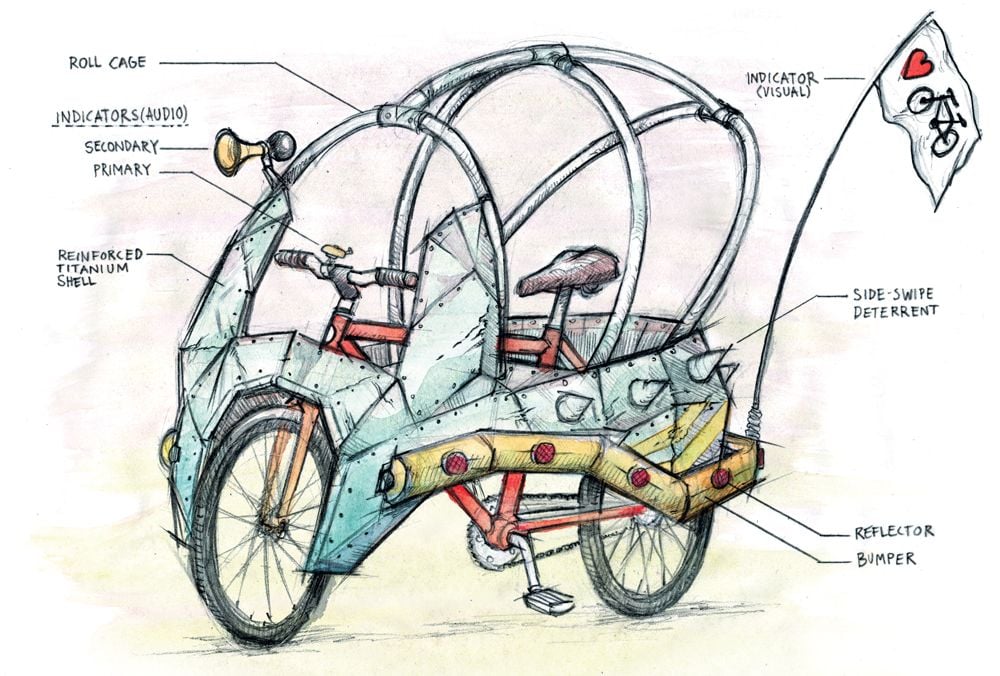
This should keep you safe.
__________________
I stop for people / whose right of way I honor / but not for no one.
 Originally Posted by bragi
  "However, it's never a good idea to overgeneralize."
I stop for people / whose right of way I honor / but not for no one.
Originally Posted by bragi "However, it's never a good idea to overgeneralize."