


Need help with dynamo + LED system
 04-14-09 | 10:14 AM
#1

Need help with dynamo + LED system
Howdy!
First time posting in this subforum, but after reading through many threads I know there's some folks with experience to share.
I'm looking into building my own light set, and so far my research has pointed me toward a single Cree or Seoul emitter powered by a Shimano DH-3D71 dynamo hub. The hard part has been nailing down how to go about it electronically. After reading through a few sites there seems to be no concensus on pucks versus direct multiple LEDs, techniques for a standlight, current protection, bridge rectifiers, etc.
I realize that there are many considerations for lights. Some folks need the most powerful lights possible, others are trying to do the most with the least and building on a tight budget. These are my considerations:
I apologize for the criticism as I very much admire what has been done with homebuilt lights technically...but have found quite a few to be lacking in aesthetics. I'm going for a clean, retro, old world look, so as few wires, switches and mounting brackets will be exposed as possible, hence the automatic optical switch and discreet manual shutoff. The enclosures will be integrated into homebuilt fenders, so long bulb life will create less hassle in changing them out, although I will design them to be disassembled...it's just not something I'd want to do regularly.
What I am asking for is a parts list, schematics for electronics boards needed, impressions of the relative merits of emitters, or any guidance at all. I already have the 650b dynamo wheel built and am already tinkering with ideas for the copper enclosure. Any electronics boards or taillight designs must be flexible enough for me to place them in any sort of enclosure I might come up with that fits the overall look.
So far I am liking the Circuit 12 design at www.pilom.com that fits into a headtube, but am confused as to whether it includes a standlight, provisions for a taillight or could be modified for optical and manual switches.
Thanks in advance for any input.
First time posting in this subforum, but after reading through many threads I know there's some folks with experience to share.
I'm looking into building my own light set, and so far my research has pointed me toward a single Cree or Seoul emitter powered by a Shimano DH-3D71 dynamo hub. The hard part has been nailing down how to go about it electronically. After reading through a few sites there seems to be no concensus on pucks versus direct multiple LEDs, techniques for a standlight, current protection, bridge rectifiers, etc.
I realize that there are many considerations for lights. Some folks need the most powerful lights possible, others are trying to do the most with the least and building on a tight budget. These are my considerations:
- Emitter does not have to be the most powerful on market, just a good balance of performance/power requirements/longevity
- Standlight
- Space considerations limit me to one emitter, possibly two if stacked vertically
- Long bulb life
- Automatic optical switch, integrated
- Manual shutoff switch, remote
- Flashing taillight w/standlight
- Electronics will be homebuilt
- Enclosure will be homebuilt
- Quality componentry/design that lasts
I apologize for the criticism as I very much admire what has been done with homebuilt lights technically...but have found quite a few to be lacking in aesthetics. I'm going for a clean, retro, old world look, so as few wires, switches and mounting brackets will be exposed as possible, hence the automatic optical switch and discreet manual shutoff. The enclosures will be integrated into homebuilt fenders, so long bulb life will create less hassle in changing them out, although I will design them to be disassembled...it's just not something I'd want to do regularly.
What I am asking for is a parts list, schematics for electronics boards needed, impressions of the relative merits of emitters, or any guidance at all. I already have the 650b dynamo wheel built and am already tinkering with ideas for the copper enclosure. Any electronics boards or taillight designs must be flexible enough for me to place them in any sort of enclosure I might come up with that fits the overall look.
So far I am liking the Circuit 12 design at www.pilom.com that fits into a headtube, but am confused as to whether it includes a standlight, provisions for a taillight or could be modified for optical and manual switches.
Thanks in advance for any input.
 04-14-09 | 10:27 AM
#2
Randomhead
Joined: Aug 2008
Posts: 25,930
Likes: 4,825
From: Happy Valley, Pennsylvania
There is a good thread about standlights on Candlepower forums. And Pilom is the gold standard. You might also want to look through the mtbr forums diy section. If you are using a single led or two for that matter, you don't need Circuit 12. Circuit 12 improves low speed performance for a large number of emitters. At low speed, the dyno can't generate enough voltage to overcome 12-24v Vf of a large number of emitters. Circuit 12 does not incorporate a standlight.
I just got the Cutter XPE triple. 3 emitters on a 20mm board. Haven't decided which circuit to run it on.
I just got the Cutter XPE triple. 3 emitters on a 20mm board. Haven't decided which circuit to run it on.
04-14-09 | 10:41 AM
#3
Yes, I checked out that standlight thread at Candlepower Forums.
That's exactly why I'm confused! They didn't seem to come to any consensus that I could understand, and neither could my electronics whiz buddy.
Wow, that Cutter XPE is nice, though probably a bit much for what I'm doing. Seoul and Cree single emitters can be had for $5, and that sounds reasonable to me.
That's exactly why I'm confused! They didn't seem to come to any consensus that I could understand, and neither could my electronics whiz buddy.
Wow, that Cutter XPE is nice, though probably a bit much for what I'm doing. Seoul and Cree single emitters can be had for $5, and that sounds reasonable to me.
 04-14-09 | 10:54 AM
#5
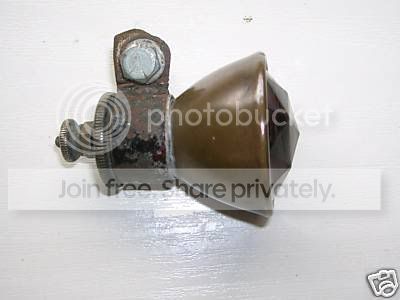
That's a cool looking light UC.
Unfortunately due to where I want to place the light (and my own vision of what that will look like) I'm pretty stuck on building my own. Finding a vintage enclosure that meets my parameters could be a lifelong search. I would however love to see how you achieved the conversion. Is it running on a dynamo?
After looking at that Cutter XPE that unterhausen linked to again...yeah, that could work. I hadn't realized it was such a small package, and that it included optics. I'm still at a loss as to how to go about powering it.
Unfortunately due to where I want to place the light (and my own vision of what that will look like) I'm pretty stuck on building my own. Finding a vintage enclosure that meets my parameters could be a lifelong search. I would however love to see how you achieved the conversion. Is it running on a dynamo?
After looking at that Cutter XPE that unterhausen linked to again...yeah, that could work. I hadn't realized it was such a small package, and that it included optics. I'm still at a loss as to how to go about powering it.
04-14-09 | 11:17 AM
#6
Senior Member
Joined: Jul 2008
Posts: 1,757
Likes: 0
From: UK
The minimum amount of components and wiring you can successfully use is 1 rectifying diode and 1 LED - however you would be wasting 1/2 of the output from the hub.
After that you want four diodes in a bridge which you can then connect to any number of diodes.
Here's a rectifier:
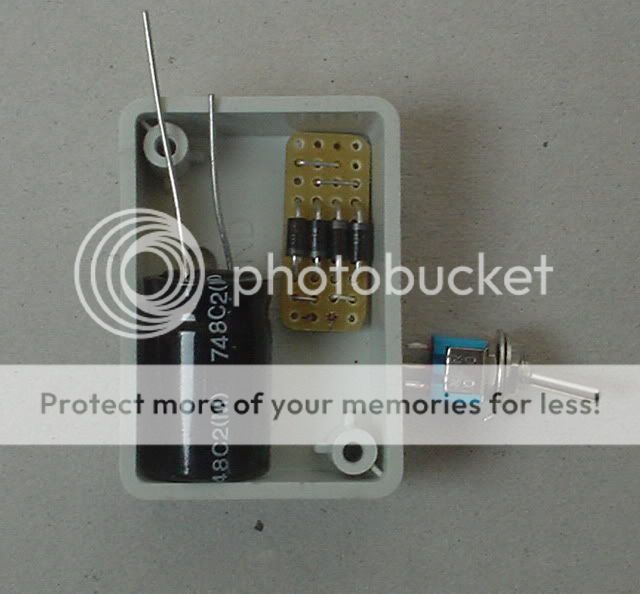
The capacitor is optional and is to reduce flicker at low speed.
The board is 1" long and designed for the space I have and simplified connection, ie. ac in one end, dc out the other.
It could be made smaller or the diodes could be soldered directly together with no circuit board and then covered in heatshrink with leads coming out of each end - for inline connection.
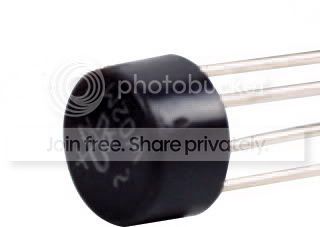
If you don't mind a less efficient option you can simply buy a bridge rectifier:
 04-14-09 | 12:14 PM
#7
UC, let's say I were to use the Cutter XPE triple. Would you recommend using your rectifier or one of pilom's designs? If so, specifically which one would accommodate a standlight and optical switch?
While I'm not concerned about building the brightest light out there, I do appreciate good design and getting the most out of whichever emitter is chosen. What would you do if you were building it for yourself and had plenty of time to do it optimally?
While I'm not concerned about building the brightest light out there, I do appreciate good design and getting the most out of whichever emitter is chosen. What would you do if you were building it for yourself and had plenty of time to do it optimally?
04-14-09 | 02:41 PM
#8
Senior Member
Joined: Oct 2008
Posts: 250
Likes: 0
From: medford ma
Bikes: flying pigeon roadster
I put a light together for a roadster six months ago, and I had good results with lazyness. That is, I decided I didn't really need everything I thought I wanted at first.
I thought I wanted a dynamo tail light. Then I realized that LED taillights take so little power that I could run a rear stand alone with on an enclosed non-rechargeable battery for six months to a year. So no wires to the rear.
I thought I wanted something to smooth the beam so it wouldn't flicker. That is, a dynamo hub puts out power in a sine wave of increasing frequency. If you rectify with just a little bridge recitifier, you get flicker at low speeds. To get the nicest output you can make moderately complex rectifier that uses capacitors to smooth this. When I actually put the light together, though, I found that there was no flicker unless I was walking the bike or going insanely slowly.
I thought I wanted a standlight. But with the complexity of batteries and charging circuits, and running a rear battery powered light, I decided the benefits were quite small.
I thought I wanted several emitters. Then I realized that with a single cree XR-E (R2, WH tint) (I'm sure there are better ones now) I had more light output than people with 20W halogens had been riding on five years ago.
I thought I wanted a switch. I even chose an enclosure with one. But after setting it all up, I realized I couldn't feel whether it was on or off, and I liked that drivers would see me better with it on. So I leave the switch on 'on'.
So you can certainly make something complex that meets all your criteria, but you may decide it's not worth it. If you do, and just want something like I made, all you need is:
1 White power led
1 heatsink for led
1 elliptical (10/40) lens for led
1 bridge rectifier
Connect the two outputs of the dynamo to the two pins marker ~ on the rectifier. Connect the rectifier + to the led +, the rectifier - to the led -. Attach the led to the heatsink with thermal glue. Attach the lens to the led as appropriate. Put in housing. Done.
If you want a switch, it can go anywhere.
I thought I wanted a dynamo tail light. Then I realized that LED taillights take so little power that I could run a rear stand alone with on an enclosed non-rechargeable battery for six months to a year. So no wires to the rear.
I thought I wanted something to smooth the beam so it wouldn't flicker. That is, a dynamo hub puts out power in a sine wave of increasing frequency. If you rectify with just a little bridge recitifier, you get flicker at low speeds. To get the nicest output you can make moderately complex rectifier that uses capacitors to smooth this. When I actually put the light together, though, I found that there was no flicker unless I was walking the bike or going insanely slowly.
I thought I wanted a standlight. But with the complexity of batteries and charging circuits, and running a rear battery powered light, I decided the benefits were quite small.
I thought I wanted several emitters. Then I realized that with a single cree XR-E (R2, WH tint) (I'm sure there are better ones now) I had more light output than people with 20W halogens had been riding on five years ago.
I thought I wanted a switch. I even chose an enclosure with one. But after setting it all up, I realized I couldn't feel whether it was on or off, and I liked that drivers would see me better with it on. So I leave the switch on 'on'.
So you can certainly make something complex that meets all your criteria, but you may decide it's not worth it. If you do, and just want something like I made, all you need is:
1 White power led
1 heatsink for led
1 elliptical (10/40) lens for led
1 bridge rectifier
Connect the two outputs of the dynamo to the two pins marker ~ on the rectifier. Connect the rectifier + to the led +, the rectifier - to the led -. Attach the led to the heatsink with thermal glue. Attach the lens to the led as appropriate. Put in housing. Done.
If you want a switch, it can go anywhere.
04-14-09 | 03:15 PM
#9
Senior Member
Joined: Jul 2008
Posts: 1,757
Likes: 0
From: UK
UC, let's say I were to use the Cutter XPE triple. Would you recommend using your rectifier or one of pilom's designs? If so, specifically which one would accommodate a standlight and optical switch?
While I'm not concerned about building the brightest light out there, I do appreciate good design and getting the most out of whichever emitter is chosen. What would you do if you were building it for yourself and had plenty of time to do it optimally?
While I'm not concerned about building the brightest light out there, I do appreciate good design and getting the most out of whichever emitter is chosen. What would you do if you were building it for yourself and had plenty of time to do it optimally?
My design isn't any different from Pilom's - it's just a basic bridge rectifier which is where all the Pilom designs start.
If I was attempting to do what you are saying, I would probably use a MC-E custom wired as a series/parallel network and connect it directly to the hub without any rectifier.
I haven't tried this myself but I am aware other people on here have run LEDs without separate rectifiers, the bonus is that there is no voltage drop due to the rectifier.
I'd then add a non-polarised capacitor if the light output needed smoothing,
A single LED at 500mA or less isn't going to provide much light, so if you are going to get above walking speed I reckon a 2S2P network could be ideal.
I haven't tried this myself yet, so I wouldn't recommend that you do.
It would give you max light at low speed with the minimum number of components and the smallest possible footprint.
 04-14-09 | 03:54 PM
#10
Senior Member
Joined: Oct 2008
Posts: 250
Likes: 0
From: medford ma
Bikes: flying pigeon roadster
If I was attempting to do what you are saying, I would probably use a MC-E custom wired as a series/parallel network and connect it directly to the hub without any rectifier.
I haven't tried this myself but I am aware other people on here have run LEDs without separate rectifiers, the bonus is that there is no voltage drop due to the rectifier.
I haven't tried this myself but I am aware other people on here have run LEDs without separate rectifiers, the bonus is that there is no voltage drop due to the rectifier.
Three years ago I would have agreed, but leds keep getting better and better. I can see quite well with my single XR-E (R2). It's rated at 120 lm at 350 mA, so should be around 200 lm at 500 mA. Combined with good elliptical optics, it really can be good enough.
04-14-09 | 04:35 PM
#11
Senior Member
Joined: Jul 2008
Posts: 1,757
Likes: 0
From: UK
I think you'll find you need a lot more than 500mA to get 200 lumens from a R2......
04-14-09 | 04:59 PM
#12
Randomhead
Joined: Aug 2008
Posts: 25,930
Likes: 4,825
From: Happy Valley, Pennsylvania
The triple XPE is going on the rando bike. Maybe I should just go the simple route there too. Not sure how much time I will spend going slow enough to worry about the low speed output.
04-14-09 | 05:30 PM
#14
I put a light together for a roadster six months ago, and I had good results with lazyness. That is, I decided I didn't really need everything I thought I wanted at first.
I thought I wanted a dynamo tail light. Then I realized that LED taillights take so little power that I could run a rear stand alone with on an enclosed non-rechargeable battery for six months to a year. So no wires to the rear.
I thought I wanted something to smooth the beam so it wouldn't flicker. That is, a dynamo hub puts out power in a sine wave of increasing frequency. If you rectify with just a little bridge recitifier, you get flicker at low speeds. To get the nicest output you can make moderately complex rectifier that uses capacitors to smooth this. When I actually put the light together, though, I found that there was no flicker unless I was walking the bike or going insanely slowly.
I thought I wanted a standlight. But with the complexity of batteries and charging circuits, and running a rear battery powered light, I decided the benefits were quite small.
I thought I wanted several emitters. Then I realized that with a single cree XR-E (R2, WH tint) (I'm sure there are better ones now) I had more light output than people with 20W halogens had been riding on five years ago.
I thought I wanted a switch. I even chose an enclosure with one. But after setting it all up, I realized I couldn't feel whether it was on or off, and I liked that drivers would see me better with it on. So I leave the switch on 'on'.
So you can certainly make something complex that meets all your criteria, but you may decide it's not worth it. If you do, and just want something like I made, all you need is:
1 White power led
1 heatsink for led
1 elliptical (10/40) lens for led
1 bridge rectifier
Connect the two outputs of the dynamo to the two pins marker ~ on the rectifier. Connect the rectifier + to the led +, the rectifier - to the led -. Attach the led to the heatsink with thermal glue. Attach the lens to the led as appropriate. Put in housing. Done.
If you want a switch, it can go anywhere.
I thought I wanted a dynamo tail light. Then I realized that LED taillights take so little power that I could run a rear stand alone with on an enclosed non-rechargeable battery for six months to a year. So no wires to the rear.
I thought I wanted something to smooth the beam so it wouldn't flicker. That is, a dynamo hub puts out power in a sine wave of increasing frequency. If you rectify with just a little bridge recitifier, you get flicker at low speeds. To get the nicest output you can make moderately complex rectifier that uses capacitors to smooth this. When I actually put the light together, though, I found that there was no flicker unless I was walking the bike or going insanely slowly.
I thought I wanted a standlight. But with the complexity of batteries and charging circuits, and running a rear battery powered light, I decided the benefits were quite small.
I thought I wanted several emitters. Then I realized that with a single cree XR-E (R2, WH tint) (I'm sure there are better ones now) I had more light output than people with 20W halogens had been riding on five years ago.
I thought I wanted a switch. I even chose an enclosure with one. But after setting it all up, I realized I couldn't feel whether it was on or off, and I liked that drivers would see me better with it on. So I leave the switch on 'on'.
So you can certainly make something complex that meets all your criteria, but you may decide it's not worth it. If you do, and just want something like I made, all you need is:
1 White power led
1 heatsink for led
1 elliptical (10/40) lens for led
1 bridge rectifier
Connect the two outputs of the dynamo to the two pins marker ~ on the rectifier. Connect the rectifier + to the led +, the rectifier - to the led -. Attach the led to the heatsink with thermal glue. Attach the lens to the led as appropriate. Put in housing. Done.
If you want a switch, it can go anywhere.
I wish I knew how many ambitious projects I've started only to drop them due to overcomplication. Thanks very much for the benefit of your experience.
04-14-09 | 09:06 PM
#15
04-14-09 | 09:46 PM
#16

Zoom zoom zoom zoom bonk

Joined: Sep 2006
Posts: 4,922
Likes: 978
From: New Zealand
Bikes: Giant Defy, Trek 1.7c, BMC GF02, Trek Marlin 6, Scott Sub 35, Kona Rove, Trek Verve+2
See the standlight thread over at CPF.
The easiest way is simply a supercap across one led (works ok).
Or if using more than 1 led you can charge the cap to a higher voltage and have it discharge through a resistor, (works well, brighter for longer).
Or you can use the dyno to charge a NiMH battery(s) and run an LED off it. Getting complicated now.
Personally, I think a commercial dyno light will do a lot of what you want and look good too.
The easiest way is simply a supercap across one led (works ok).
Or if using more than 1 led you can charge the cap to a higher voltage and have it discharge through a resistor, (works well, brighter for longer).
Or you can use the dyno to charge a NiMH battery(s) and run an LED off it. Getting complicated now.
Personally, I think a commercial dyno light will do a lot of what you want and look good too.
04-14-09 | 11:30 PM
#18
Zoom zoom zoom zoom bonk
Joined: Sep 2006
Posts: 4,922
Likes: 978
From: New Zealand
Bikes: Giant Defy, Trek 1.7c, BMC GF02, Trek Marlin 6, Scott Sub 35, Kona Rove, Trek Verve+2
You have pretty much listed every possible feature for a dyno light. Its a big ask!
Heres a nice looking one
https://www.candlepowerforums.com/vb/...d.php?t=222866
Heres the standlight thread
https://www.candlepowerforums.com/vb/...d.php?t=210602
Heres a nice looking one
https://www.candlepowerforums.com/vb/...d.php?t=222866
Heres the standlight thread
https://www.candlepowerforums.com/vb/...d.php?t=210602
04-15-09 | 10:45 AM
#20
Senior Member
Joined: Oct 2008
Posts: 250
Likes: 0
From: medford ma
Bikes: flying pigeon roadster
a) 120 lumens at 350 mA
b) light output increases linearly with current (up to about 1A)
And from this I calculate
c) expected output at 500 mA: 170 lm
d) expected current for 200 lm: 585mA
So my "200 lm" guess was too high; I should have said 170.
Or is one of a, b, c wrong?
04-15-09 | 11:51 AM
#21
Randomhead
Joined: Aug 2008
Posts: 25,930
Likes: 4,825
From: Happy Valley, Pennsylvania
Nobody has really spent the time to do what you want and deliver it to you as a clean package. If someone did do that design, the might keep it to themselves and sell it. Seems like there is some opportunity along those lines, but the top end commercial lights are pretty nice. Sorry to be the bearer of bad news.
Is it really linear? And even if it is linear, my understanding is that the LED life will be badly affected at higher currents.
Is it really linear? And even if it is linear, my understanding is that the LED life will be badly affected at higher currents.
04-15-09 | 12:16 PM
#22
Senior Member
Joined: Oct 2008
Posts: 250
Likes: 0
From: medford ma
Bikes: flying pigeon roadster
https://www.cree.com/products/pdf/XLamp7090XR-E.pdf
On p8 they have a graph of relative luminous flux against current. It looks close to linear. At 500mA it looks like it's 140% the flux of 350mA, which comes to about 170 lm.
Max current is listed on their site as 1A, and later on in the datasheet, on p10, they say: "based on internal long-term reliability testing, Cree projects that white XLamp XR-E LEDs will deliver median 70% lumen
maintenance after 50,000 hours of operation at a forward current of 700 mA."
04-15-09 | 03:47 PM
#23
Zoom zoom zoom zoom bonk
Joined: Sep 2006
Posts: 4,922
Likes: 978
From: New Zealand
Bikes: Giant Defy, Trek 1.7c, BMC GF02, Trek Marlin 6, Scott Sub 35, Kona Rove, Trek Verve+2
R2:
40 lm at 100mA
80 lm at 220mA
120lm at 350mA
160lm at 500mA
200lm around 650mA
240lm around 850mA
280lm arond 1050mA
Note power goes up faster than current as the Vf increases.
Numers from JTR1962 "white lumen testing" thread on CPF
Will post link later.
The points we are interested in are 250 and 500mA as thats what you can easily achieve from a dyno. Thats 90 and 160 lm.
Last edited by znomit; 04-17-09 at 04:17 AM. Reason: added link
04-16-09 | 08:52 AM
#24
Senior Member
Joined: Oct 2008
Posts: 250
Likes: 0
From: medford ma
Bikes: flying pigeon roadster
Thanks znomit. I found the thread you referenced:
https://www.candlepowerforums.com/vb/...ad.php?t=89607
it is a pretty amazing thread. jtr1962 has done a huge amount of testing.
Sounds like it's not quite linear, though it is close in the 350-500mA range.
I guess I need to revise my number down further from 170 to 160. Which is now pretty far from 200.
Qualitatively, though, I've found it definitely bright enough to see.
https://www.candlepowerforums.com/vb/...ad.php?t=89607
it is a pretty amazing thread. jtr1962 has done a huge amount of testing.
Sounds like it's not quite linear, though it is close in the 350-500mA range.
I guess I need to revise my number down further from 170 to 160. Which is now pretty far from 200.
Qualitatively, though, I've found it definitely bright enough to see.
04-16-09 | 09:18 AM
#25
Nobody has really spent the time to do what you want and deliver it to you as a clean package. If someone did do that design, the might keep it to themselves and sell it. Seems like there is some opportunity along those lines, but the top end commercial lights are pretty nice. Sorry to be the bearer of bad news.
What I was looking for was simply something that was proven to work and reliable. What I am gathering is that this is yet another complex hobby I don't need. No worries, we'll work out something. I was just hoping to save some time.

