


Fat bike and sand
 11-30-23 | 11:33 PM
#26

Senior Member

Joined: Apr 2017
Posts: 1,806
Likes: 725
From: NE Italy
Seems to be a good bike. Components look higher end. It looks to be a small, hope it fits.
Use a dry lube so sand does not get glued to every thing.
Tell us your impressions
Enjoy
PS. Are you the thread starter or did you just piggy back on?
Use a dry lube so sand does not get glued to every thing.
Tell us your impressions
Enjoy
PS. Are you the thread starter or did you just piggy back on?
 12-01-23 | 04:57 PM
#27
^ * * ^ * * ^
Joined: May 2014
Posts: 165
Likes: 301
From: FL USA
Bikes: 1977 Tom Kellogg Nr. 27 - 1984 Bob Jackson - 1987 Alpineer - 1999 Bianchi - 2002 LeMond Buenos Aries- 2007 Specialized Tarmac Pro - 2024 Gravity 29er 2-Speed Rigid MTB
Went out for an hour or so today. The bike performed great. No problem with the sand really. A lot of it is 'crusted' and very easy to ride on (even with my 29x2.35 tire gravel bike) but there are many loose soft sand sections. The main activity in this area is horseback riding so there are hoof prints that are a bit of a PITA. But there seems to be nothing you can't really ride through if the gear is low enough (I was surprised I used the small chainring a few times!). But make no mistake, fat bike riding in general is a big effort. I don't have a gauge accurate enough to measure low pressures. So I put 10psi in and then lowered them by feel, guessing that I had maybe 8psi. So there are some gains to be had for sure with pressures.
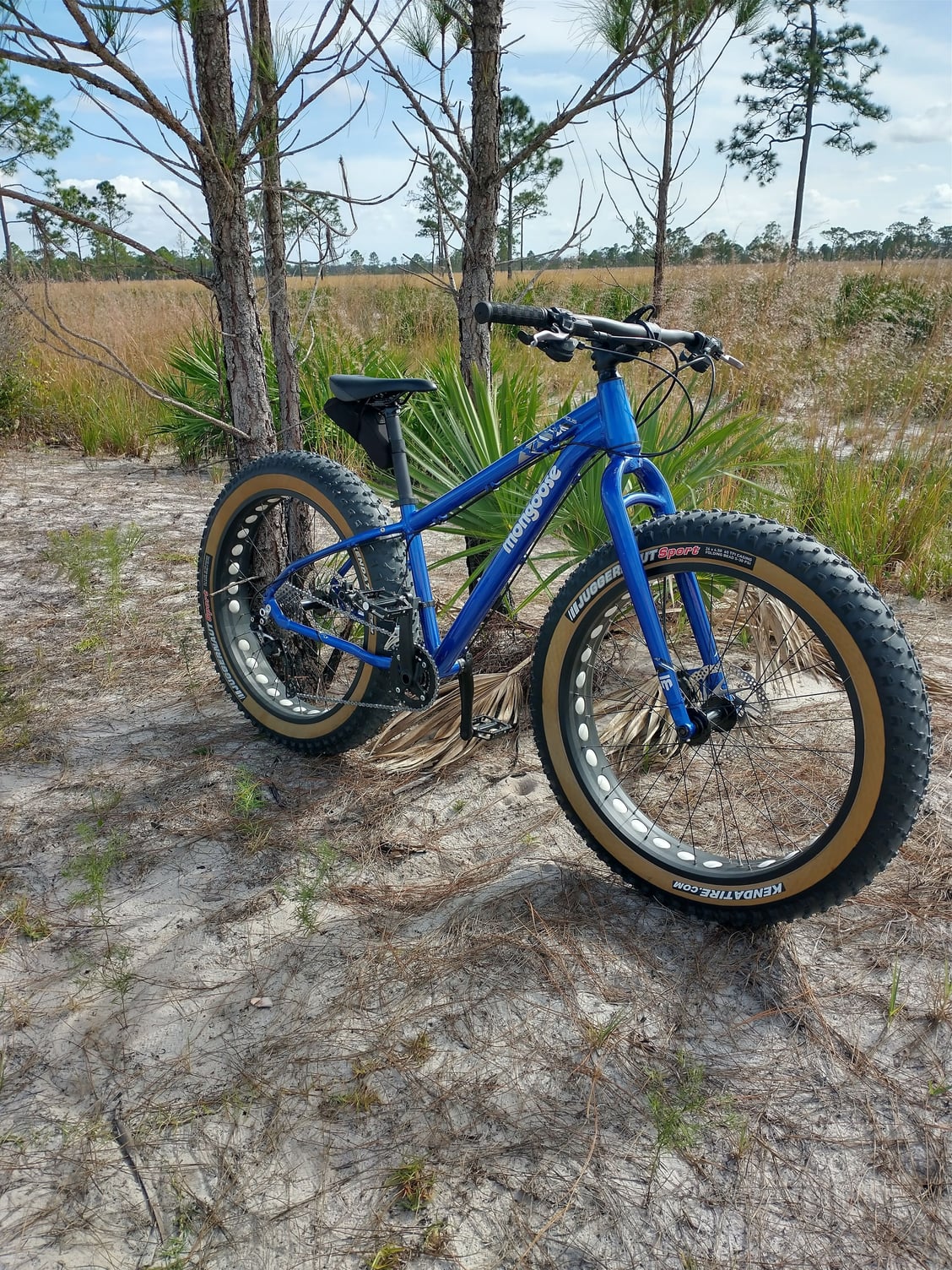
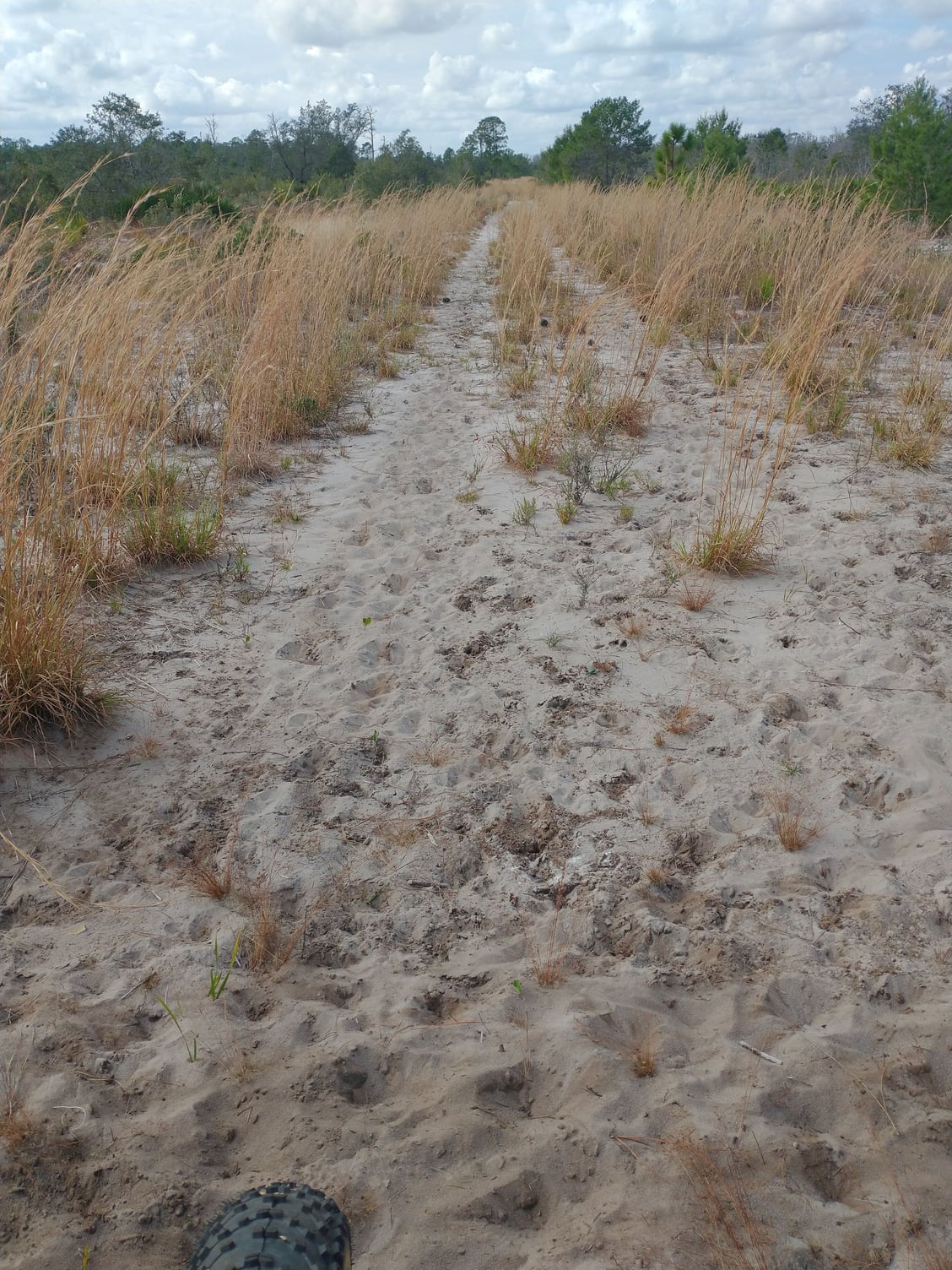
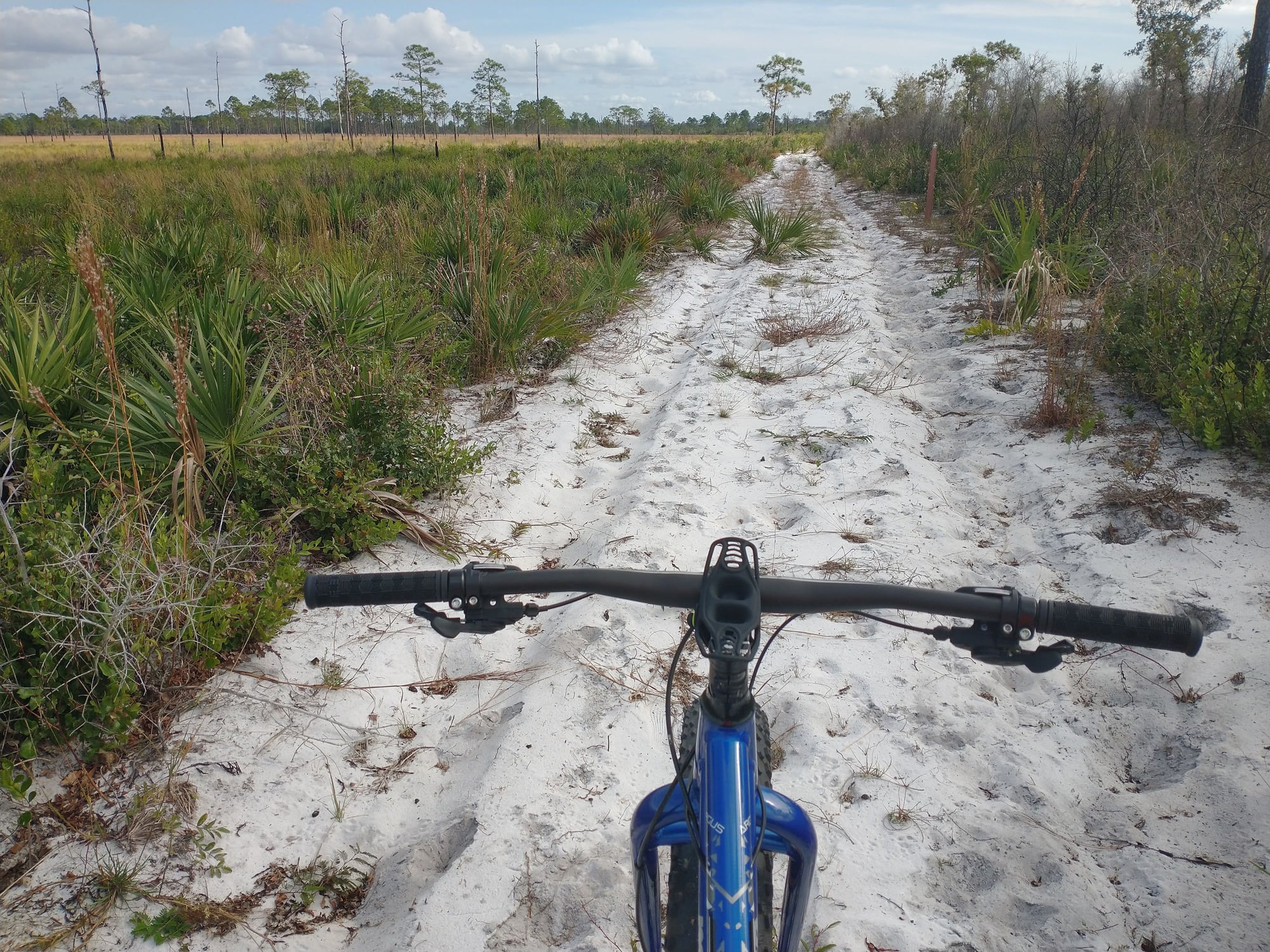
Now for the problem. This is a completely natural area with fire roads that are rarely driven on. These aren't trails so to speak. So there's vegetation of all sorts growing in the sand. And one of these plants does not like to be ridden on. Thorns, thorns, and more thorns. Both tires were covered at the end of the ride. They're actually embedded in the rubber. I pulled them out individually with tweezers No flats, they're quite small. But I'm thinking best-case-scenario, i'd have to spend 30 minutes after every ride pulling thorns. I need to identify exactly which plant is the culprit and see if they can be mostly avoided.
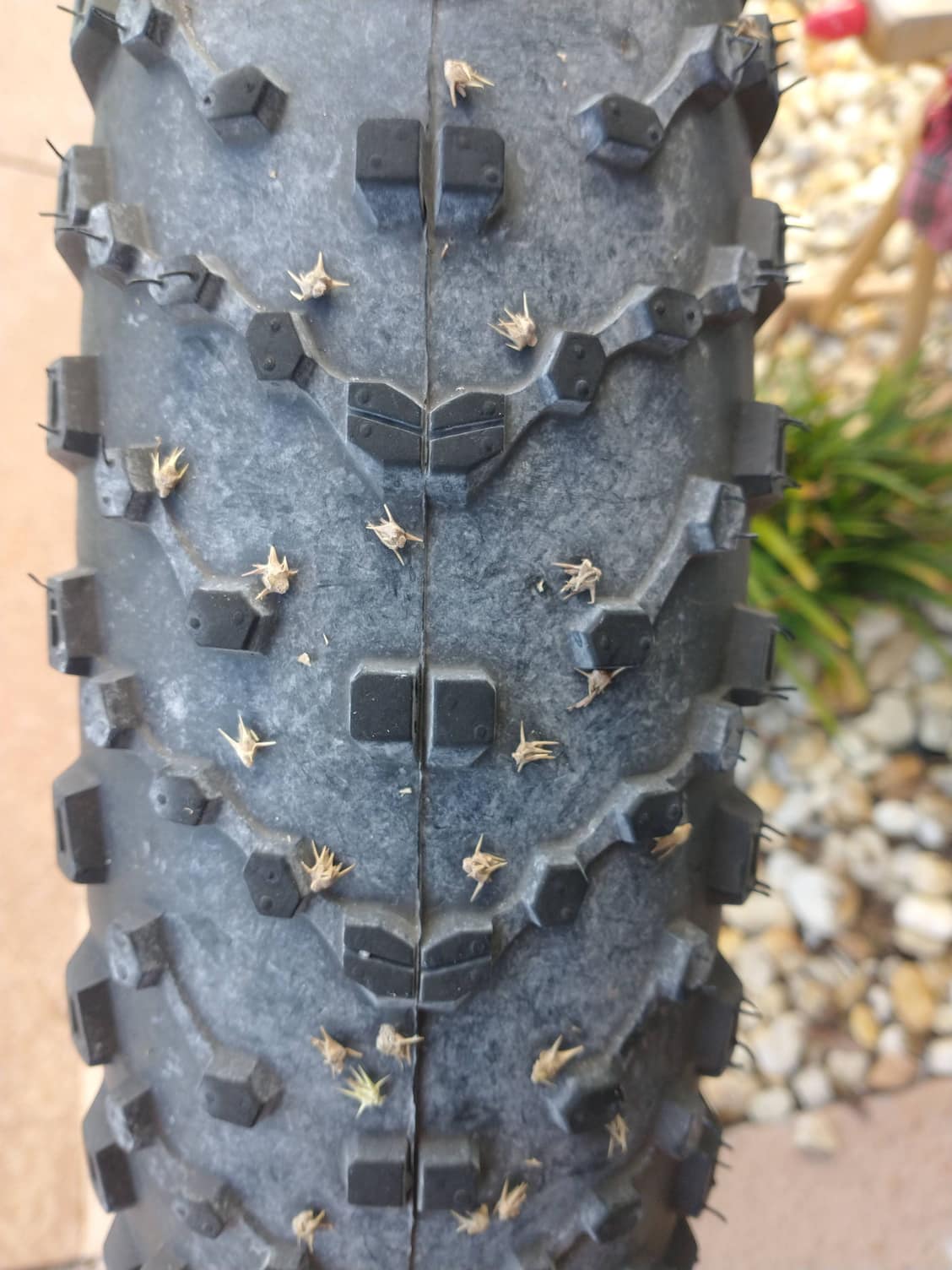
Now for the problem. This is a completely natural area with fire roads that are rarely driven on. These aren't trails so to speak. So there's vegetation of all sorts growing in the sand. And one of these plants does not like to be ridden on. Thorns, thorns, and more thorns. Both tires were covered at the end of the ride. They're actually embedded in the rubber. I pulled them out individually with tweezers
No flats, they're quite small. But I'm thinking best-case-scenario, i'd have to spend 30 minutes after every ride pulling thorns. I need to identify exactly which plant is the culprit and see if they can be mostly avoided.
Last edited by cegerer; 12-02-23 at 06:42 AM.
12-02-23 | 07:24 PM
#28
Guest

Joined: Dec 2004
Posts: 1,606
Likes: 1,446
Oh yeah, I remember sand like that.
No way that'll work with a smaller tire.
Consider 5 PSI as a starting point. (going by feel is actually not a bad technique, If i can push to the rim, I add a few pumps)
As for those stickers... (burrs, thorns)
Good luck. Hated those things. Probably won't pierce the tire, but consider a patch kit and pump just in case.
No way that'll work with a smaller tire.
Consider 5 PSI as a starting point. (going by feel is actually not a bad technique, If i can push to the rim, I add a few pumps)
As for those stickers... (burrs, thorns)
Good luck. Hated those things. Probably won't pierce the tire, but consider a patch kit and pump just in case.
12-03-23 | 06:52 PM
#29
^ * * ^ * * ^
Joined: May 2014
Posts: 165
Likes: 301
From: FL USA
Bikes: 1977 Tom Kellogg Nr. 27 - 1984 Bob Jackson - 1987 Alpineer - 1999 Bianchi - 2002 LeMond Buenos Aries- 2007 Specialized Tarmac Pro - 2024 Gravity 29er 2-Speed Rigid MTB
^^^ Thanks. Without the horse hoof divots in that trail, it would be awesome. Still not bad even with them. Also, I ordered the Fatty Stripper kit and am converting to tubeless. Next ride I'm going to play around with pressures and see what happens. "pushing to the rim and adding a few pumps" is a LOT lower than what I was running. I'll give that a try.
12-04-23 | 11:08 PM
#30
Senior Member
Joined: Apr 2017
Posts: 1,806
Likes: 725
From: NE Italy
^^^ Thanks. Without the horse hoof divots in that trail, it would be awesome. Still not bad even with them. Also, I ordered the Fatty Stripper kit and am converting to tubeless. Next ride I'm going to play around with pressures and see what happens. "pushing to the rim and adding a few pumps" is a LOT lower than what I was running. I'll give that a try.
12-05-23 | 12:29 AM
#31
Guest
Joined: Dec 2004
Posts: 1,606
Likes: 1,446
But being Florida, the brush has stickers, now at shin/thigh/arm height, along with much more thorny plants, and spiders snakes and occasionally gator.
12-10-23 | 03:00 PM
#32

Going tubeless will be surprisingly better. Those tubes at a ton of rotating mass, and rolling resistance. It should be an obvious change the first few rides, and might even keep you riding a bit longer.
12-10-23 | 04:18 PM
#33
Senior Member
Joined: Jun 2023
Posts: 767
Likes: 208
From: Illinois
Many people assume that going tubeless saves weight, but it rarely does.
12-11-23 | 06:16 AM
#34
^ * * ^ * * ^
Joined: May 2014
Posts: 165
Likes: 301
From: FL USA
Bikes: 1977 Tom Kellogg Nr. 27 - 1984 Bob Jackson - 1987 Alpineer - 1999 Bianchi - 2002 LeMond Buenos Aries- 2007 Specialized Tarmac Pro - 2024 Gravity 29er 2-Speed Rigid MTB
^^^ When I do my conversion, I'm going to weigh the entire wheel/tire assembly before and after. It likely has thick, heavy tubes in it so it will be interesting to see the difference in my specific case.
12-11-23 | 10:14 AM
#35
Well, I lost about a pound in my case. It was swapping out the super-heavy cheap OEM tubes, not some expensive lightweight.
I think the main part is the rolling resistance - tubes inside tires create a lot of friction, and on a fatbike, that's more pronounced. And, rolling resistance differences can be huge - just go to sites that measure rolling resistance, and even on a gravel tire it makes ~5w of difference. Fatbikes, with the much lower pressure, and huge surface area, cause more than that.
It basically felt similar a tire swap to a more efficient tread and softer rubber that I did on a mountain bike a little while before. It's something you notice immediately on a straight-away or climb you've done 100 times on the old setup, but after a short time becomes the new norm. Switching back to the slower tire setup will be obvious for a while - until you adapt.
I think the main part is the rolling resistance - tubes inside tires create a lot of friction, and on a fatbike, that's more pronounced. And, rolling resistance differences can be huge - just go to sites that measure rolling resistance, and even on a gravel tire it makes ~5w of difference. Fatbikes, with the much lower pressure, and huge surface area, cause more than that.
It basically felt similar a tire swap to a more efficient tread and softer rubber that I did on a mountain bike a little while before. It's something you notice immediately on a straight-away or climb you've done 100 times on the old setup, but after a short time becomes the new norm. Switching back to the slower tire setup will be obvious for a while - until you adapt.
