


What are your thoughts on this handlebar extension?
 07-03-24 | 06:14 AM
#1
Thread Starter
Senior Member

Joined: Jan 2005
Posts: 1,559
Likes: 54
What are your thoughts on this handlebar extension?
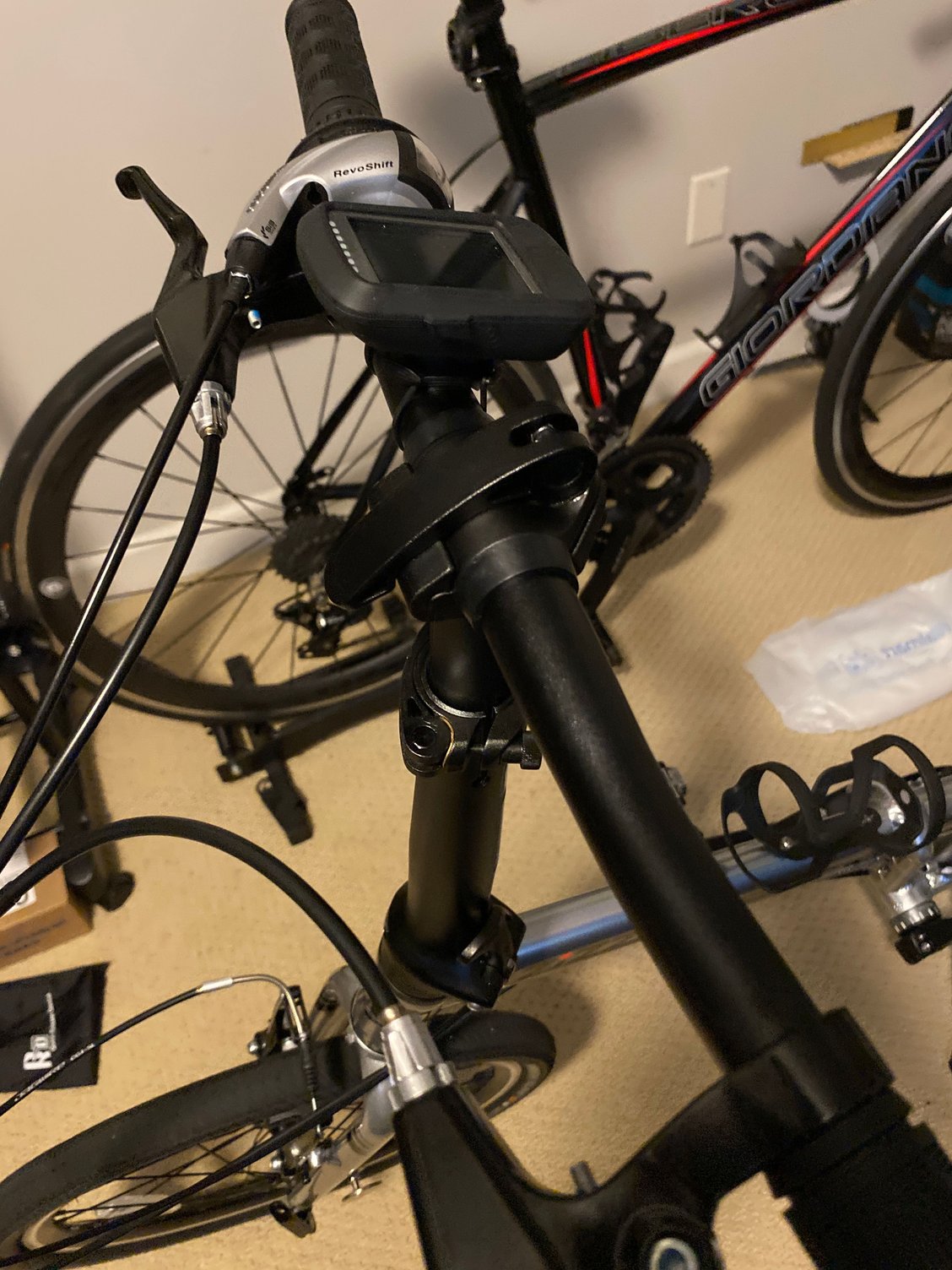
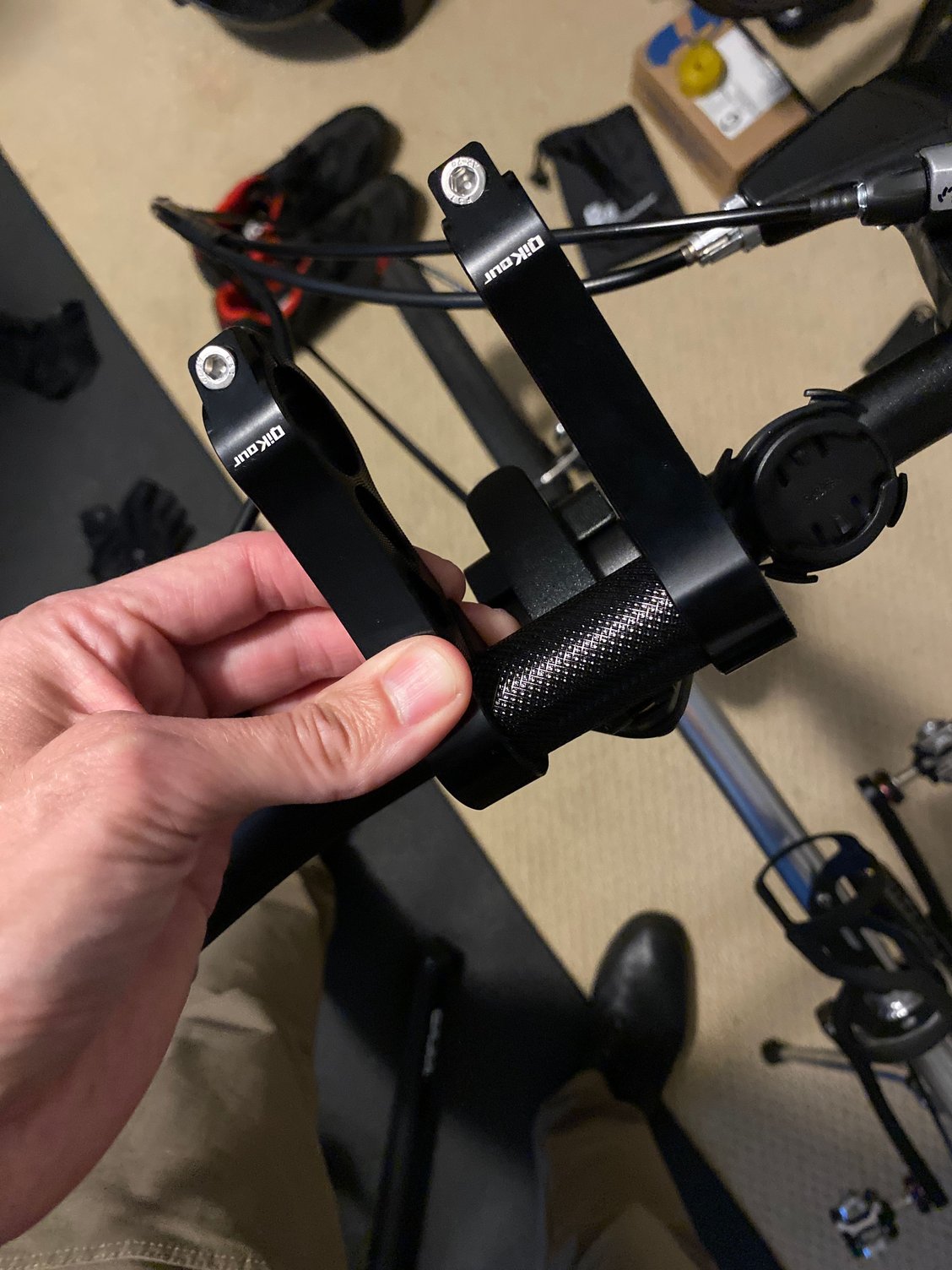
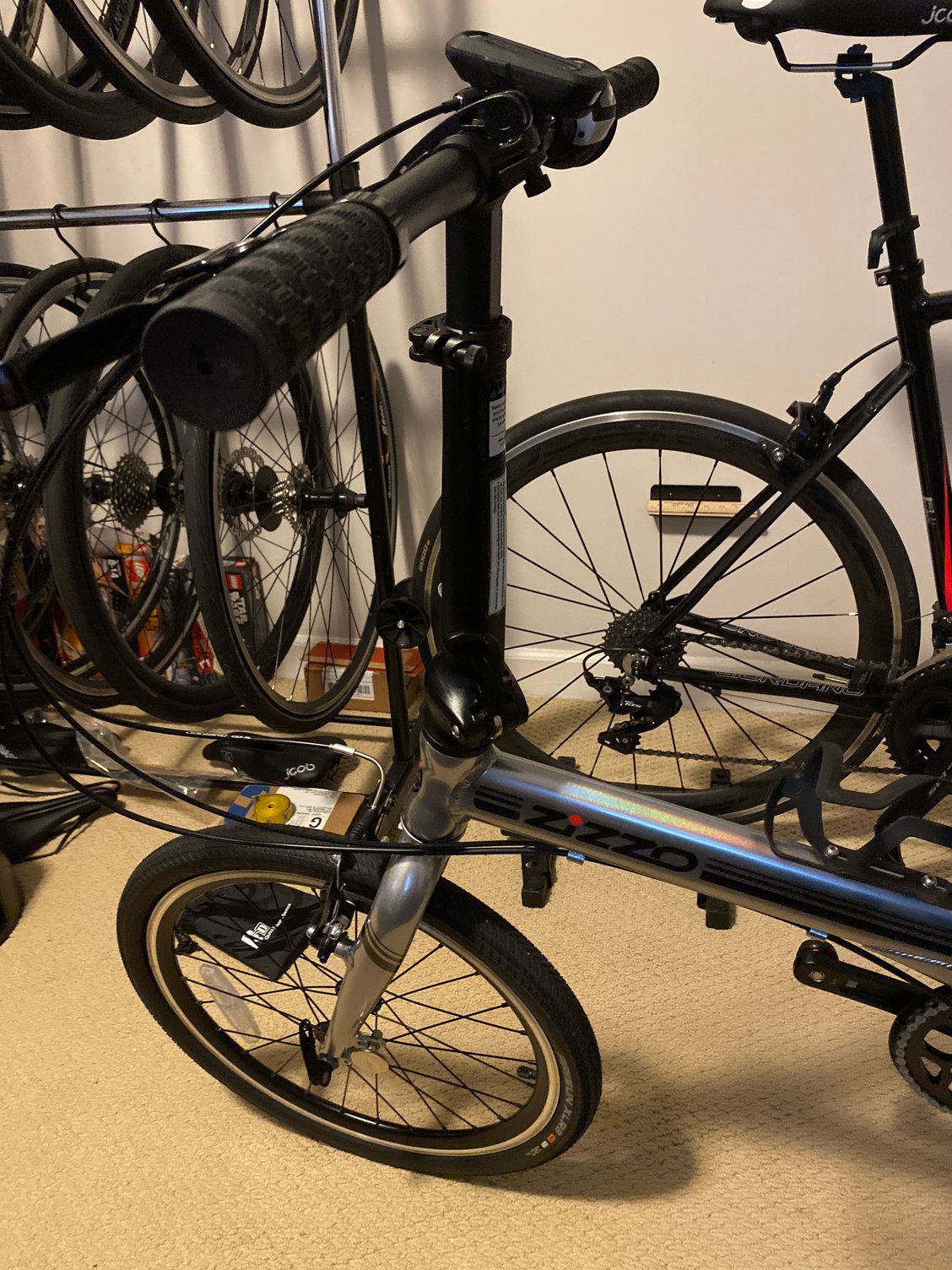
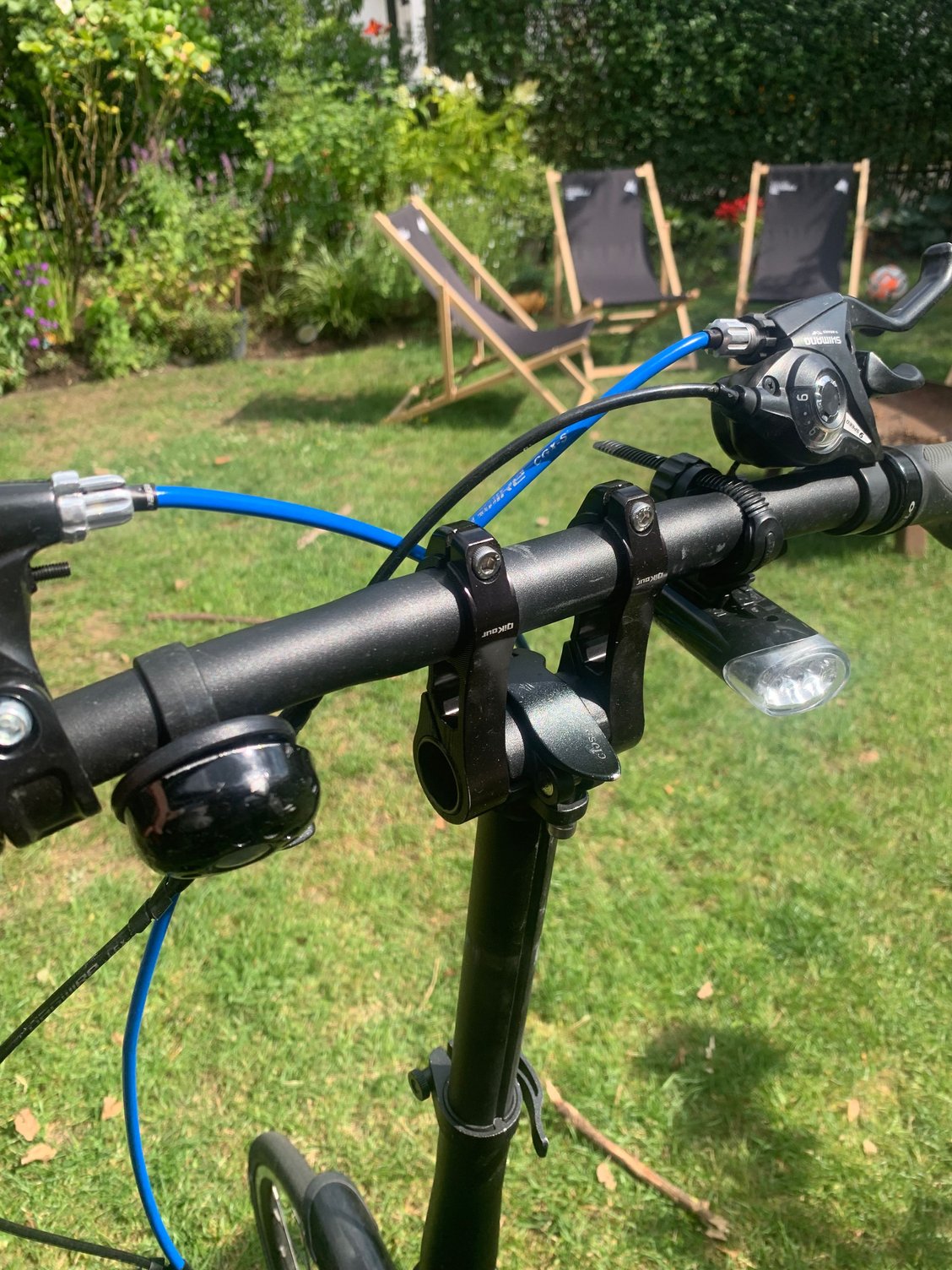
I bought this handlebar extension to gain another 2.5” or so of reach on my new folding bike. Does anyone have any experience with an extension like this, or thoughts on how it may or may not impact the handling of the bike? Any perceived issues? Obviously have not installed it yet - trying to decide whether or not to keep it. I could definitely use the extra reach though. Thanks in advance!

 07-03-24 | 07:07 AM
#3
Thread Starter
Senior Member
Joined: Jan 2005
Posts: 1,559
Likes: 54
07-03-24 | 07:16 AM
#4
Thread Starter
Senior Member
Joined: Jan 2005
Posts: 1,559
Likes: 54
Was also wondering if the extra pressure (if any) on the tall steerer assembly would be of any issue/concern. This is my first folding bike, so I don’t have experience with anything quite like this.
07-03-24 | 04:26 PM
#5

Senior Member

Joined: Jun 2022
Posts: 2,333
Likes: 1,275
From: The Ring of Fire, the Global South, Asia-Pacific, the Tropics...
Bikes: Several, all affordably priced, none exalted cult artifacts or hype jobs
You've already bought it so go ahead and try it out. Another option would have been a riser bar tilted forwards. Let us know how get along.
07-03-24 | 07:21 PM
#6
Thread Starter
Senior Member
Joined: Jan 2005
Posts: 1,559
Likes: 54
Thanks, I saw riser bar options and those would work. Wanted to try this first as no need to remove brakes/shifters, and everything should fold normally too. We’ll see how it goes.
07-03-24 | 07:54 PM
#7
Senior Member
Joined: Jun 2022
Posts: 2,333
Likes: 1,275
From: The Ring of Fire, the Global South, Asia-Pacific, the Tropics...
Bikes: Several, all affordably priced, none exalted cult artifacts or hype jobs
...as for how it will affect steering, once installed with the extender the grips will be farther than before from the steering axis, creating a larger circle (at the grips). This means that for a given turn of the steering axis, you'll need a greater angular displacement at the grips, but this will require less force. The principle here is the same as why a door knob is placed at the edge of the door, far from the hinge or turning axis. Conversely, the present set up without the extender requires less angular displacement, but greater force. Pick your poison. I myself prefer the quick, agile steering of the latter.
Last edited by Ron Damon; 07-06-24 at 08:33 PM.
 07-06-24 | 06:33 PM
#9
Guest
Joined: Dec 2004
Posts: 1,606
Likes: 1,443
I bought this handlebar extension to gain another 2.5” or so of reach on my new folding bike. Does anyone have any experience with an extension like this, or thoughts on how it may or may not impact the handling of the bike? Any perceived issues? Obviously have not installed it yet - trying to decide whether or not to keep it. I could definitely use the extra reach though. Thanks in advance!
My only concern is the length of the extension, it's quite a bit of a change.
On the bright side, you can decrease the extension if necessary by installing at a greater or lesser than 0 degree rise.
Folding. Probably shouldn't interfere with folding. I installed a fixed stem of about 30-40mm on a Dahon and it didn't interfere at all.
Your mileage may vary.
Also, the handling shouldn't change in a negative way. Stem length does not significantly change the handling or stability of your ride.
07-09-24 | 01:19 AM
#10

Senior Member

Joined: Oct 2008
Posts: 1,616
Likes: 184
From: Frankfurt, Germany
Bikes: Focus trash find commuter, Eddy Merckx Corsa, BP Stealth TT bike, Leader 720 TT bike, Boardman Comp Hybrid drop bar conversion, Quantec CX budget cyclocross build, SerottaNOS frameset ready to build up!
I have that exact one.
remove the bolts before installation and reinstall with a dab of threadlock; one worked loose.
It’s not a hassle to fold. You will quickly get a feel for the amount of torque you need on the main bolt.
It‘s definitely the one to get, for my Tern at least, as the extra length of the extension means you can easily access the quick release on the handlebar post.
I highly recommend it.
remove the bolts before installation and reinstall with a dab of threadlock; one worked loose.
It’s not a hassle to fold. You will quickly get a feel for the amount of torque you need on the main bolt.
It‘s definitely the one to get, for my Tern at least, as the extra length of the extension means you can easily access the quick release on the handlebar post.
I highly recommend it.
 07-15-24 | 05:18 AM
#11
Senior Member
Joined: Oct 2008
Posts: 1,616
Likes: 184
From: Frankfurt, Germany
Bikes: Focus trash find commuter, Eddy Merckx Corsa, BP Stealth TT bike, Leader 720 TT bike, Boardman Comp Hybrid drop bar conversion, Quantec CX budget cyclocross build, SerottaNOS frameset ready to build up!
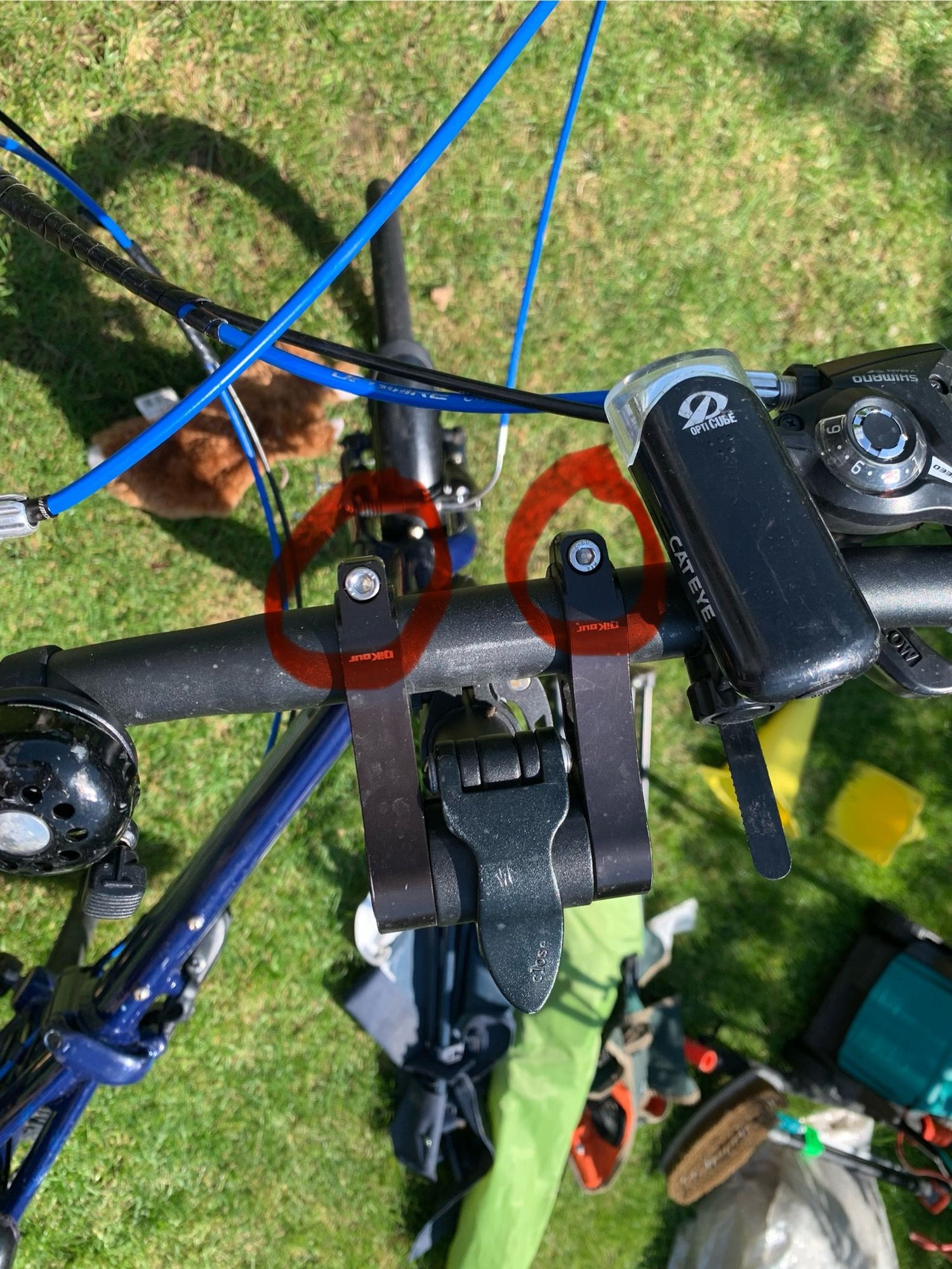

the four bolts ringed in red are the ones that would benefit from a dab of Loctite Blue.
Fitting this extension transforms the handling from ‘unpleasant, twitchy, almost dangerous’ to ‘acceptable, still a bit cramped but almost like a normal hybrid’
07-16-24 | 04:39 AM
#12
Highly Enriched Driftium


Joined: Apr 2017
Posts: 6,754
Likes: 2,187
I call these devices double-clamps. Some are lightweight and will just hold accessories like lights and are very dubious for transmitting full handlebar loads when climbing. Some are beefier looking. Tern makes one that comes standard on their bike, lever quick release, beefy, heavy, expensive. I'll be trying a bolted one on my bike to both raise the bars (flat and aeros), and allow a quick disassembly for travel tight-pack, as my riser/handlepost does not have a clamshell opening handlebar clamp.
07-23-24 | 03:01 PM
#13
Senior Member
Joined: Jul 2005
Posts: 654
Likes: 192
From: Dublin, OH
Bikes: Serial bike flipper
I found out these are available in a long length, 10mm more than the LitePro one I had. I need that extra reach on my Zizzo Liberte, so I just installed one. We'll see how it goes!
 07-24-24 | 06:07 AM
#14
Senior Member
Joined: Oct 2008
Posts: 1,616
Likes: 184
From: Frankfurt, Germany
Bikes: Focus trash find commuter, Eddy Merckx Corsa, BP Stealth TT bike, Leader 720 TT bike, Boardman Comp Hybrid drop bar conversion, Quantec CX budget cyclocross build, SerottaNOS frameset ready to build up!
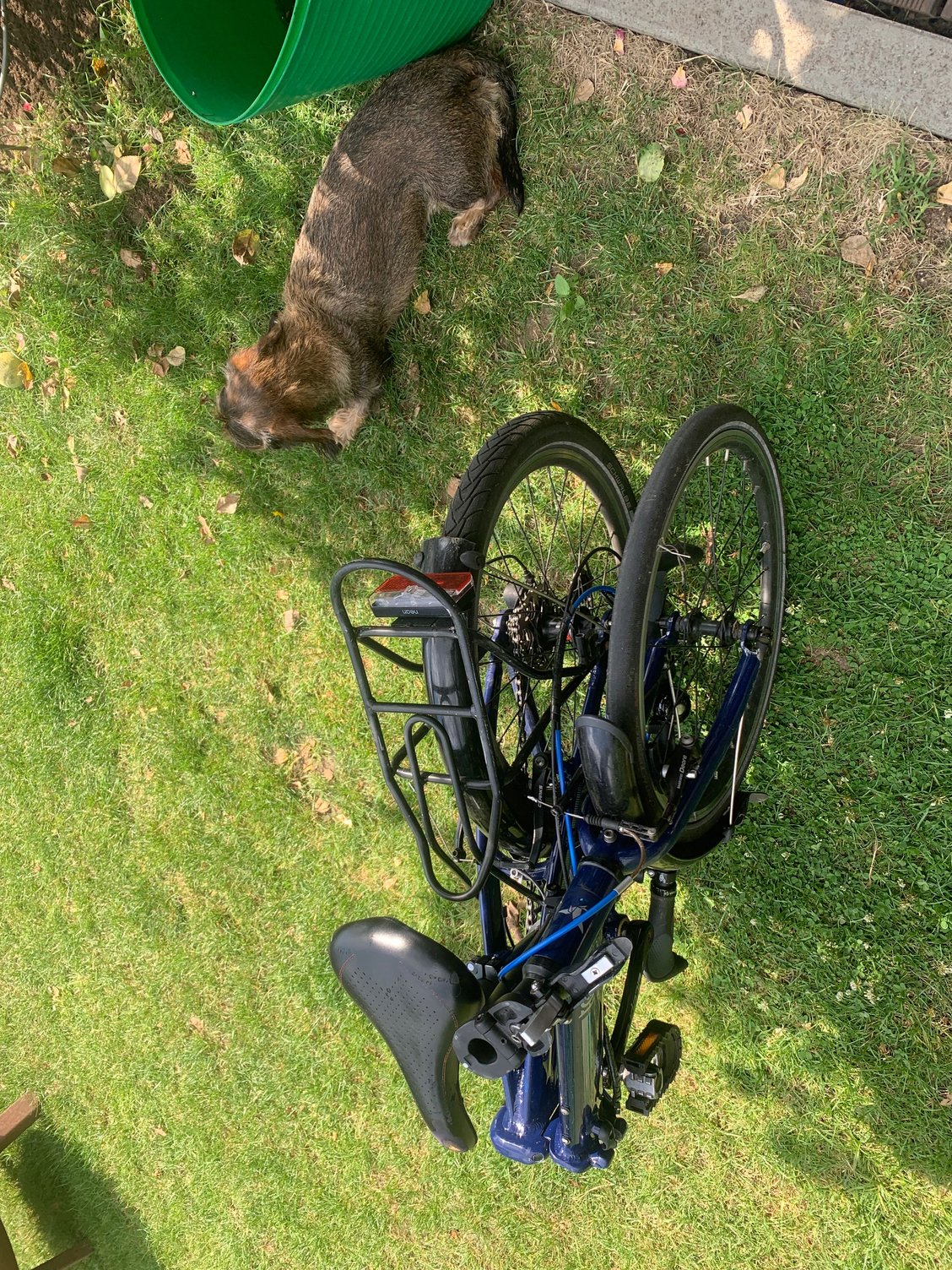
You asked if it affects the fold; it doesn’t.
raise it upright first, then fold as normal.
raise it upright first, then fold as normal.
07-24-24 | 02:21 PM
#15
Highly Enriched Driftium
Joined: Apr 2017
Posts: 6,754
Likes: 2,187
Ones that can withstand actual handlebar loads, I'm only seeing at 45mm C2C. Longer ones look flimsy, just designed to hold a short bar for accessories, not take handlebar loads.
07-24-24 | 03:18 PM
#16

Schwinnasaur
Joined: Dec 2006
Posts: 1,943
Likes: 354
From: New Orleans, LA
Is it problem if force is place on it in its highest position? Is there much flex?
Is Ron Damon's door knob analogy valid for this case. I guess what he is saying is it creates more torsional flex. He can correcty me if I missed the point of his post.
07-24-24 | 04:48 PM
#17
Senior Member
Joined: Jun 2022
Posts: 2,333
Likes: 1,275
From: The Ring of Fire, the Global South, Asia-Pacific, the Tropics...
Bikes: Several, all affordably priced, none exalted cult artifacts or hype jobs
I have a few questions, on my bar there is bulge and they taper. Is this a problem. The clamp is 31.8 but tapers. Is this a potential prombem?
Is it problem if force is place on it in its highest position? Is there much flex?
Is Ron Damon's door knob analogy valid for this case. I guess what he is saying is it creates more torsional flex. He can correcty me if I missed the point of his post.
Is it problem if force is place on it in its highest position? Is there much flex?
Is Ron Damon's door knob analogy valid for this case. I guess what he is saying is it creates more torsional flex. He can correcty me if I missed the point of his post.


My earlier analogy to a door knob is a general principle that applies to any rotating structure. The farther from the axis of rotation the point at which force is applied, the smaller the force required for a given angular displacement. Conversely, the closer the force to the axis of rotation, the stronger the force required (but the smaller the angular displacement). This same principle applies to cogsets. The big, innermost cog feels the easiest, lightest because it is farthest out from the wheel axis. Same principle applies with these extender jigs. They extend the distance from the steering axis (the Pythagorean Theorem will tell you how much. The new increased distance from the steering axis is the hypotenuse. The two sides are the extender length and the original distance to the steering axis), meaning that it will take a lesser force to turn the steering axis, but with a longer "throw" or turn for a given angle. Note that none of this is opinion or perceptions, but rather fundamental Newtonian mechanics or physics.
Whether and how an extender makes steering more or less "twitchy" remains subjective so long as the term remains undefined and personal. Does it mean a propensity for lighter but longer throws? Or does it mean a propensity for heavier but shorter throws? What exactly is it meant by "twitchiness"?
I myself prefer the shorter, harder throws of a shorter moment-arm, but I appreciate the fact that if you need additional reach, you need the additional reach.
Last edited by Ron Damon; 07-24-24 at 06:42 PM.
07-24-24 | 06:53 PM
#18
Schwinnasaur
Joined: Dec 2006
Posts: 1,943
Likes: 354
From: New Orleans, LA
These extension jigs come in 25.4mm and 31.8mm clamp diameter to suit the diameter of the handlebar center bulge. The latter are sometimes labeled as OS (for Over-sized). Choose accordingly.
My earlier analogy to a door knob is a general principle that applies to any rotating structure. The farther from the axis of rotation the point at which force is applied, the smaller the force required for a given angular displacement. Conversely, the closer the force to the axis of rotation, the stronger the force required (but the smaller the angular displacement). This same principle applies to cogsets. The big, innermost cog feels the easiest, lightest because it is farthest out from the wheel axis. Same principle applies with these extender jigs. They extend the distance from the steering axis (the Pythagorean Theorem will tell you how much. The new increased distance from the steering axis is the hypotenuse. The two sides are the extender length and the original distance to the steering axis), meaning that it will take a lesser force to turn the steering axis, but with a longer "throw" or turn for a given angle. Note that none of this is opinion or perceptions, but rather fundamental Newtonian mechanics or physics.
Whether and how an extender makes steering more or less "twitchy" remains subjective so long as the term remains undefined and personal. Does it mean a propensity for lighter but longer throws? Or does it mean a propensity for heavier but shorter throws? What exactly is it meant by "twitchiness"?
I myself prefer the shorter, harder throws of a shorter moment arm, but I appreciate the fact that if you need additional reach, you need the additional reach.
My earlier analogy to a door knob is a general principle that applies to any rotating structure. The farther from the axis of rotation the point at which force is applied, the smaller the force required for a given angular displacement. Conversely, the closer the force to the axis of rotation, the stronger the force required (but the smaller the angular displacement). This same principle applies to cogsets. The big, innermost cog feels the easiest, lightest because it is farthest out from the wheel axis. Same principle applies with these extender jigs. They extend the distance from the steering axis (the Pythagorean Theorem will tell you how much. The new increased distance from the steering axis is the hypotenuse. The two sides are the extender length and the original distance to the steering axis), meaning that it will take a lesser force to turn the steering axis, but with a longer "throw" or turn for a given angle. Note that none of this is opinion or perceptions, but rather fundamental Newtonian mechanics or physics.
Whether and how an extender makes steering more or less "twitchy" remains subjective so long as the term remains undefined and personal. Does it mean a propensity for lighter but longer throws? Or does it mean a propensity for heavier but shorter throws? What exactly is it meant by "twitchiness"?
I myself prefer the shorter, harder throws of a shorter moment arm, but I appreciate the fact that if you need additional reach, you need the additional reach.
I had trouble understanding what your saying. The force is a torque force which applied at the same distance from the steering axis. Changing the point of the force does not matter. The moment stays the same. The only change being made is the length of the axis has changed. The distance that handgrip moves will be slightly larger to the small addtional length in stearing axis. So negligable. Pythagoris need not apply, not hiring. So explain what I am missing?
07-24-24 | 07:01 PM
#19
Highly Enriched Driftium
Joined: Apr 2017
Posts: 6,754
Likes: 2,187
I have a few questions, on my bar there is bulge and they taper. Is this a problem. The clamp is 31.8 but tapers. Is this a potential prombem?
Is it problem if force is place on it in its highest position? Is there much flex?
Is Ron Damon's door knob analogy valid for this case. I guess what he is saying is it creates more torsional flex. He can correcty me if I missed the point of his post.
Is it problem if force is place on it in its highest position? Is there much flex?
Is Ron Damon's door knob analogy valid for this case. I guess what he is saying is it creates more torsional flex. He can correcty me if I missed the point of his post.
The other possibility is using a constant-section handlebar (like a Ti bar I have with a center shim), that will eliminate the tapers and I can put the double clamps just outboard of the aero bars.
Last edited by Duragrouch; 07-24-24 at 07:07 PM.
07-24-24 | 07:24 PM
#20
Senior Member
Joined: Jun 2022
Posts: 2,333
Likes: 1,275
From: The Ring of Fire, the Global South, Asia-Pacific, the Tropics...
Bikes: Several, all affordably priced, none exalted cult artifacts or hype jobs
...The force is a torque force which applied at the same distance from the steering axis. Changing the point of the force does not matter. The moment stays the same. The only change being made is the length of the axis has changed. The distance that handgrip moves will be slightly larger to the small addtional length in stearing axis. So negligable. Pythagoris need not apply, not hiring. So explain what I am missing?
Last edited by Ron Damon; 07-24-24 at 07:29 PM.
07-24-24 | 08:08 PM
#21
Senior Member
Joined: Jun 2022
Posts: 2,333
Likes: 1,275
From: The Ring of Fire, the Global South, Asia-Pacific, the Tropics...
Bikes: Several, all affordably priced, none exalted cult artifacts or hype jobs
Moment- or lever-arms
Moment-arm: no extender
Handlebar: 58cm
O: steering axis
x: grip position
|x-------------O-------------x|
Moment-arm = distance x-O = 58/2 =29cm
.
.
Moment-arm: with extender
|x------------- o -------------x|
................ O ...............
x-o length: 29cm
o-O length: 8cm
Moment-arm= x-O length = √(29² + 8²) = 30.1cm
Basic formula
Moment-arm with extender is longer, therefore the force required for any unit change in direction/angle is smaller. Is this a trivial, insignificant difference? Perhaps. Which should then make your skeptical about claims that it changes steering feel dramatically.
Handlebar: 58cm
O: steering axis
x: grip position
|x-------------O-------------x|
Moment-arm = distance x-O = 58/2 =29cm
.
.
Moment-arm: with extender
|x------------- o -------------x|
................ O ...............
x-o length: 29cm
o-O length: 8cm
Moment-arm= x-O length = √(29² + 8²) = 30.1cm
Basic formula
Torque = Force x Moment-arm
For a given torque, a longer moment-arm requires less force.Moment-arm with extender is longer, therefore the force required for any unit change in direction/angle is smaller. Is this a trivial, insignificant difference? Perhaps. Which should then make your skeptical about claims that it changes steering feel dramatically.
Last edited by Ron Damon; 07-25-24 at 07:15 AM.
07-25-24 | 06:51 AM
#22
Schwinnasaur
Joined: Dec 2006
Posts: 1,943
Likes: 354
From: New Orleans, LA
Moment-arm: no extender
Handlebar: 58cm
O: steering axis
x: grip position
|x-------------O-------------x|
Moment-arm = distance x-O = 58/2 =24cm
.
.
Moment-arm: with extender
|x------------- o -------------x|
................ O ...............
x-o length: 24cm
o-O length: 8cm
Moment-arm= x-O length = √(24² + 8²) = 25.3cm
Basic formula
Moment-arm with extender is longer, therefore the force required for any unit change in direction/angle is smaller, 5.4% smaller in this case. Is this a trivial, insignificant difference? Perhaps. Which should then make your skeptical about claims that it changes steering feel dramatically.
Handlebar: 58cm
O: steering axis
x: grip position
|x-------------O-------------x|
Moment-arm = distance x-O = 58/2 =24cm
.
.
Moment-arm: with extender
|x------------- o -------------x|
................ O ...............
x-o length: 24cm
o-O length: 8cm
Moment-arm= x-O length = √(24² + 8²) = 25.3cm
Basic formula
Torque = Force x Moment-arm
For a given torque, a longer moment-arm requires less force.Moment-arm with extender is longer, therefore the force required for any unit change in direction/angle is smaller, 5.4% smaller in this case. Is this a trivial, insignificant difference? Perhaps. Which should then make your skeptical about claims that it changes steering feel dramatically.
07-25-24 | 07:04 AM
#23
Senior Member
Joined: Jun 2022
Posts: 2,333
Likes: 1,275
From: The Ring of Fire, the Global South, Asia-Pacific, the Tropics...
Bikes: Several, all affordably priced, none exalted cult artifacts or hype jobs
You mean where the Force is applied. We apply a Force which results in a Torque. The resulting Torque is the product of the Force and the Moment-arm. If you apply the Force at the end of the handlebar at the grips, the Moment-arm is greater than if you apply the same Force closer to the steering axis. Again, look at the formula. Torque = Force x Moment-arm
Last edited by Ron Damon; 07-25-24 at 07:28 AM.
07-25-24 | 07:13 AM
#24
Schwinnasaur
Joined: Dec 2006
Posts: 1,943
Likes: 354
From: New Orleans, LA
No one said that he is changing the handlebar to a wider one. All throughout, including the example above, the assumption is of constant handlebar width. You are obviously still not understanding how the moment-arm is increasing. The installation of the extender is effectively increasing the moment arm. And I have shown you exactly by how much, from 24cm to 25.3cm.
You mean where the Force is applied. We apply a Force which results in a Torque. The resulting Torque is the product of the Force and the Moment-arm.
You mean where the Force is applied. We apply a Force which results in a Torque. The resulting Torque is the product of the Force and the Moment-arm.
07-25-24 | 07:20 AM
#25
Senior Member
Joined: Jun 2022
Posts: 2,333
Likes: 1,275
From: The Ring of Fire, the Global South, Asia-Pacific, the Tropics...
Bikes: Several, all affordably priced, none exalted cult artifacts or hype jobs
Last edited by Ron Damon; 07-25-24 at 07:33 AM.