


tube and lug kits / practice
 01-16-24 | 01:36 PM
#1

Thread Starter
Senior Member


Joined: Jul 2006
Posts: 11,514
Likes: 4,929
From: San Jose (Willow Glen) Ca
Bikes: Kirk Custom JK Special, 86 De Rosa Pro, '84 Team Miyata,(dura ace old school) 80?? SR Semi-Pro 600 Arabesque
tube and lug kits / practice
I have been watching and am fascinated building my own frame.....not sure I ever will, but was wondering if anyone knows of supply places offering full kits of tubes/lugs? just seems to be a good base.
Only on I seen now is, Richard Sachs..... certainly would a a quality start
practice: any ideas for sources for practice 4130 ? or anyone willing to put scraps in usps box and send (pay for it of course)
Only on I seen now is, Richard Sachs..... certainly would a a quality start
practice: any ideas for sources for practice 4130 ? or anyone willing to put scraps in usps box and send (pay for it of course)
__________________
Life is too short not to ride the best bike you have, as much as you can.
Life is too short not to ride the best bike you have, as much as you can.
 01-16-24 | 01:48 PM
#2
Randomhead
Joined: Aug 2008
Posts: 25,930
Likes: 4,825
From: Happy Valley, Pennsylvania
Lugs are relatively expensive. Ceeway used to have a full kit, I think I recently saw they wanted $190 or something like that. Nova used to have kits, but they are gone. I used to buy their columbus SL kits, those were a bargain.
When I wanted to practice for using brass with lugs, I cut out some 4130 rings in lengths from 1/2" up to 3". If you can braze from one end of a 3" sleeve to the other, you can braze any lug.
Bike tubing is inexpensive for what it is. But one issue for practice is the butting. You used to be able to buy TrueTemper straight gauge, but they are long gone now. I feel like 4130 is better for practicing.
One more edit: I think a lot of people buy nice stuff for their first frame and then botch the frame and don't want to just cut it up. The nice thing about cheap tubes is you can go into building a first frame with the idea you are going to cut it up.
Yet another edit: you might look on ebay
When I wanted to practice for using brass with lugs, I cut out some 4130 rings in lengths from 1/2" up to 3". If you can braze from one end of a 3" sleeve to the other, you can braze any lug.
Bike tubing is inexpensive for what it is. But one issue for practice is the butting. You used to be able to buy TrueTemper straight gauge, but they are long gone now. I feel like 4130 is better for practicing.
One more edit: I think a lot of people buy nice stuff for their first frame and then botch the frame and don't want to just cut it up. The nice thing about cheap tubes is you can go into building a first frame with the idea you are going to cut it up.
Yet another edit: you might look on ebay
Last edited by unterhausen; 01-16-24 at 02:01 PM.
01-16-24 | 02:24 PM
#3
Senior Member

Joined: Dec 2019
Posts: 1,198
Likes: 394
I would practice on old bike frames. I happened to have a 4130 Trek that broke. By the time I'd cut it up into pieces a few inches long and welded them back together again at various angles I just about had the ability to make my first new frame. I TIG everything but you can probably heat the lugs off an old frame. Or make some lug-like things for practising. The steel alloy doesn't matter but the thickness does, especially for TIG: you need to be able to handle thin walled tubes.
01-16-24 | 02:42 PM
#4

Senior Member

Joined: Feb 2012
Posts: 19,381
Likes: 5,527
From: Rochester, NY
Bikes: Stewart S&S coupled sport tourer, Stewart Sunday light, Stewart Commuting, Stewart Touring, Co Motion Tandem, Stewart 3-Spd, Stewart Track, Fuji Finest, Mongoose Tomac ATB, GT Bravado ATB, JCP Folder, Stewart 650B ATB
Many of us did recycle old frames into practice material but the time it took to clean off the paint was taking away from the practice torch stuff time so speaking for myself I suggest raw tubing as a first choice. There are a lot of on line sellers of 4130 tubing. Aircraft Spruce, Stockcar Steel, McMaster-Carr, to name a few on my saved list.
I save my cut offs (sometimes called drops by the metal supply industry) for practice and small projects. I do have a box full right now and would send someone some of it (cost to be agreed on) if asked. Andy
I save my cut offs (sometimes called drops by the metal supply industry) for practice and small projects. I do have a box full right now and would send someone some of it (cost to be agreed on) if asked. Andy
__________________
AndrewRStewart
AndrewRStewart
01-16-24 | 04:56 PM
#5
Senior Member
Joined: Jul 2011
Posts: 823
Likes: 340
I have been watching and am fascinated building my own frame.....not sure I ever will, but was wondering if anyone knows of supply places offering full kits of tubes/lugs? just seems to be a good base.
Only on I seen now is, Richard Sachs..... certainly would a a quality start
practice: any ideas for sources for practice 4130 ? or anyone willing to put scraps in usps box and send (pay for it of course)
Only on I seen now is, Richard Sachs..... certainly would a a quality start
practice: any ideas for sources for practice 4130 ? or anyone willing to put scraps in usps box and send (pay for it of course)
On occasions, I had seen lugs on eBay that were quite affordable. You may want to try checking.
Well, here you go:
https://www.ebay.com/itm/16648137608...Bk9SR-qPtseiYw
https://www.ebay.com/itm/30397920124...Bk9SR-qPtseiYw
01-16-24 | 05:45 PM
#6
semi-retired framebuilder
Joined: Dec 2007
Posts: 151
Likes: 595
From: Halifax, Nova Scotia, Canada
Bikes: twenty-three at last count
Ceeway still has a couple of options of starter frame kits, a standard diameter set for £188.95 and an oversized set for £194.95. They are very complete. See the scroll bar at the top of their website - Tube and Parts Bundle if you haven’t found it already. Peter gives excellent service.
01-16-24 | 07:31 PM
#7

Senior Member

Joined: Apr 2004
Posts: 6,357
Likes: 167
From: Sacramento CA
Bikes: Too Many
I have a bunch of random lugs that would be good for practice. They came as part of a package of tubing and bit I bought during peak pandemic. Happy to send you several of them for postage. PM me if interested.
__________________
I'm not one for fawning over bicycles, but I do believe that our bikes communicate with us, and what this bike is saying is, "You're an idiot." BikeSnobNYC
I'm not one for fawning over bicycles, but I do believe that our bikes communicate with us, and what this bike is saying is, "You're an idiot." BikeSnobNYC
01-16-24 | 08:08 PM
#8
Junior Member
Joined: May 2021
Posts: 99
Likes: 62
From: New Hampshire
Bikes: Converted mid-80's Shogun 500 for the perfect bike! 1986 Schwinn Voyageur, SWB home-built recumbent and a couple other uninteresting ones.
Many of us did recycle old frames into practice material but the time it took to clean off the paint was taking away from the practice torch stuff time so speaking for myself I suggest raw tubing as a first choice. There are a lot of on line sellers of 4130 tubing. Aircraft Spruce, Stockcar Steel, McMaster-Carr, to name a few on my saved list.
Speaking as someone currently going through this - consider modifying an existing frame. I am taking a 21" and changing the stack/reach to test out the geo I think I want, before spending $400 on new steel. The only thing I purchased is a head tube (20 years ago, actually). For me this is proving to be a low cost way to try out the techniques, figure out processes and experience the joy of a fillet-brazing, where the goal post comes into view very quickly.
For new tubing to play around with, some places have mixed bags and drops for a discount, although at the end of the day the shipping is going to get you no matter what.
01-16-24 | 08:35 PM
#9

Senior Member
Joined: Jun 2004
Posts: 3,169
Likes: 581
From: Torrance, CA
Bikes: Homebuilt steel
I don't have tons of spares, but I've got a few random tubes and lugs that may be helpful. Yours for shipping cost. PM if interested, and I'll pull out the spares box to see what, if anything, is of interest.
Ed
Ed
01-16-24 | 11:37 PM
#10
Randomhead
Joined: Aug 2008
Posts: 25,930
Likes: 4,825
From: Happy Valley, Pennsylvania
I just went and looked at a couple of U.S. based suppliers. Cheapest tubes/lugs were at framebuilder supply. Columbus Cromor is really cheap, but chainstays and seatstays really add up. So you could just make a couple of main triangles.
I feel like Joe Bringheli could put together an inexpensive practice kit for you, but I haven't heard his status recently. Last time I ordered from him was a long time ago. He went out to the shed to look at what he had in stock and called me. I bought a batch of Zero Tre from him for practice, enough to get a quantity discount.
If you want to ride your first frame, put something really valuable in the top tube to motivate you to cut it up. I would say your wedding ring, but that might cause trouble. Maybe just a stack of Starrett hacksaw blades?
I feel like Joe Bringheli could put together an inexpensive practice kit for you, but I haven't heard his status recently. Last time I ordered from him was a long time ago. He went out to the shed to look at what he had in stock and called me. I bought a batch of Zero Tre from him for practice, enough to get a quantity discount.
If you want to ride your first frame, put something really valuable in the top tube to motivate you to cut it up. I would say your wedding ring, but that might cause trouble. Maybe just a stack of Starrett hacksaw blades?
01-17-24 | 03:06 AM
#11
Senior Member
Joined: Dec 2019
Posts: 1,198
Likes: 394
Many of us did recycle old frames into practice material but the time it took to clean off the paint was taking away from the practice torch stuff time so speaking for myself I suggest raw tubing as a first choice. There are a lot of on line sellers of 4130 tubing. Aircraft Spruce, Stockcar Steel, McMaster-Carr, to name a few on my saved list.
I save my cut offs (sometimes called drops by the metal supply industry) for practice and small projects. I do have a box full right now and would send someone some of it (cost to be agreed on) if asked. Andy
I save my cut offs (sometimes called drops by the metal supply industry) for practice and small projects. I do have a box full right now and would send someone some of it (cost to be agreed on) if asked. Andy
 And often use the ends of stays for bridge tubes. I just took the paint (it was powder coat) off with a "birds nest" wheel on a grinder which didn't take long.
01-17-24 | 10:16 AM
And often use the ends of stays for bridge tubes. I just took the paint (it was powder coat) off with a "birds nest" wheel on a grinder which didn't take long.
01-17-24 | 10:16 AM
#12
Randomhead
Joined: Aug 2008
Posts: 25,930
Likes: 4,825
From: Happy Valley, Pennsylvania
I'm assuming a bird's nest wheel is called a "cup wheel" here in the states. I never had much luck with a grinder, always had to burn off the paint. Which isn't a good idea. I have a stack of tubes i want to get the paint off of. I was thinking about setting up a camping stove in the middle of the back yard and burning it off that way.
01-17-24 | 11:00 AM
#13
Senior Member
Joined: Dec 2019
Posts: 1,198
Likes: 394
I'm assuming a bird's nest wheel is called a "cup wheel" here in the states. I never had much luck with a grinder, always had to burn off the paint. Which isn't a good idea. I have a stack of tubes i want to get the paint off of. I was thinking about setting up a camping stove in the middle of the back yard and burning it off that way.
https://www.amazon.co.uk/Removal-Gri.../dp/B08MVLHR87
They're very good at taking off the paint and only the paint. If you're actually stripping a complete frame for repainting (i.e. not cutting it up) then the work is all the tight bits you can't quite get to with the wheel.
01-17-24 | 01:08 PM
#14
Randomhead
Joined: Aug 2008
Posts: 25,930
Likes: 4,825
From: Happy Valley, Pennsylvania
Interesting, I have some of those. I'll have to try it. The tubes I want to strip are cut out of frames already, so no hidden parts. Removing paint mechanically is much better than the alternatives
01-17-24 | 07:49 PM
#15
Senior Member
Joined: Feb 2012
Posts: 19,381
Likes: 5,527
From: Rochester, NY
Bikes: Stewart S&S coupled sport tourer, Stewart Sunday light, Stewart Commuting, Stewart Touring, Co Motion Tandem, Stewart 3-Spd, Stewart Track, Fuji Finest, Mongoose Tomac ATB, GT Bravado ATB, JCP Folder, Stewart 650B ATB
I have to admit the whole angle grinder world is foreign to me. Andy
__________________
AndrewRStewart
AndrewRStewart
01-18-24 | 03:37 AM
#16
Senior Member
Joined: Dec 2019
Posts: 1,198
Likes: 394
I know it's not the traditional framebuilder tool but I like it and use it for nearly everything. I don't have to worry about tube blocks because I can just hold a tube with one hand and cut it with the other (using a cutoff wheel). I mitre with templates and find it very quick and accurate just to sand up to the line with a 120-grit flap disk. Works better for me than filing. I also don't have to clamp the tube (and actually it helps to be able to roll it around a bit with one hand while holding the grinder in the other). I use the same 120-grit disks (when they're new) for sharpening tungsten electrodes. I also use it to clean up any flat parts like drop-outs ready for welding. And of course to remove tubes when modifying a frame or something has gone wrong.
01-18-24 | 10:32 AM
#17
Randomhead
Joined: Aug 2008
Posts: 25,930
Likes: 4,825
From: Happy Valley, Pennsylvania
Angle grinders can be dangerous, so it's possible not having one is a good thing. I like to live dangerously, so I have 3. I recently got a cordless grinder. I have never used one on a frame though, I feel like my angle grinding game isn't up to something that aggressive. They are pretty useful for cleaning rust off of things before welding. Like our chimney cap that was rude enough to fall off.
01-18-24 | 01:57 PM
#18

Senior Member


Joined: Apr 2009
Posts: 3,812
Likes: 5,700
From: Seattle
I know it's not the traditional framebuilder tool but I like it and use it for nearly everything. I don't have to worry about tube blocks because I can just hold a tube with one hand and cut it with the other (using a cutoff wheel). I mitre with templates and find it very quick and accurate just to sand up to the line with a 120-grit flap disk. Works better for me than filing. I also don't have to clamp the tube (and actually it helps to be able to roll it around a bit with one hand while holding the grinder in the other). I use the same 120-grit disks (when they're new) for sharpening tungsten electrodes. I also use it to clean up any flat parts like drop-outs ready for welding. And of course to remove tubes when modifying a frame or something has gone wrong.
I trust your standards are higher than his, I'm not lumping you in with him! Also I will grudgingly admit that my insistence on "water-tight" miters is overkill. I probably do let Perfect be the enemy of Good sometimes.
01-18-24 | 06:17 PM
#20
Senior Member
Joined: Apr 2009
Posts: 3,812
Likes: 5,700
From: Seattle
 01-19-24 | 08:39 AM
#22
Senior Member
Joined: Dec 2019
Posts: 1,198
Likes: 394
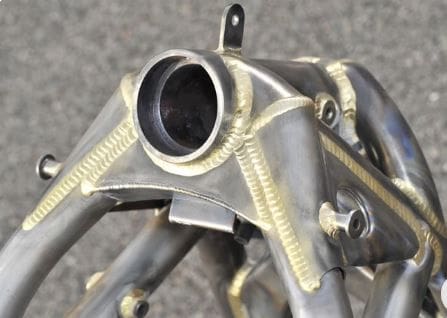
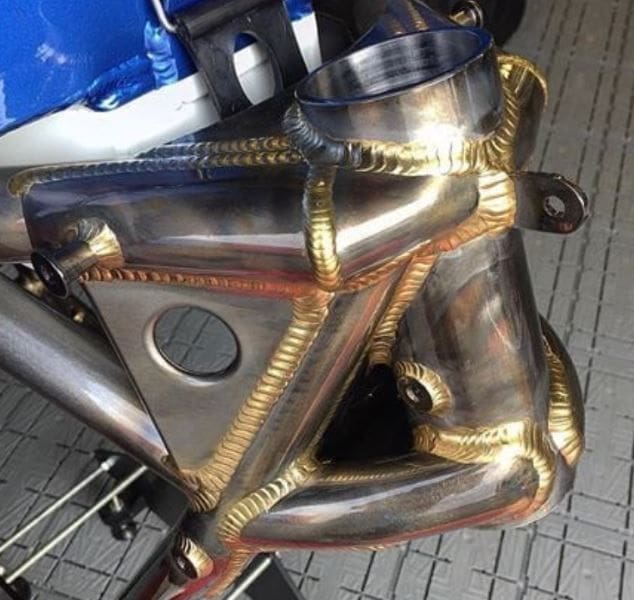
There's a youtuber who goes by something like The Fabricator. I watched his video on notching tubes, which he does for making roll cages for race cars. He notched with a flap wheel in an angle grinder, quite crudely compared to what I'm used to, and said something like "There — perfect tube notch!" Looked worse than the worst miter I have ever done, but I have no doubt it's good enough for the thick stuff he makes rollbars from. Thin bike tube would warp all over as those big gaps pull closed.
I trust your standards are higher than his, I'm not lumping you in with him! Also I will grudgingly admit that my insistence on "water-tight" miters is overkill. I probably do let Perfect be the enemy of Good sometimes.
I trust your standards are higher than his, I'm not lumping you in with him! Also I will grudgingly admit that my insistence on "water-tight" miters is overkill. I probably do let Perfect be the enemy of Good sometimes.
If it's a straightforward mitre it's very good, like you can't see any light there and it's really touching all the way around. But, especially on some of my earlier frames, I have had some bigger gaps with some of the trickier spots, like at the DT/ST/BB shell that has a double-mitre. Also the first jig I made wasn't great. But I welded it anyway (I'm quite good at welding across gaps due to my often not great fit-up but have never had any significant distortion post-welding, although I was quite afraid of it.Car people (working with thicker walled tube of course) tend to actually bevel back the cut edge a bit if they use a hole-saw. Not so there's a gap but at least somewhere for the weld to go. Some YouTubers I have seen making bike frames notch with a hole-saw and then don't knock it back at all. This means the tubes fit perfectly, but there's actually very thin metal at the joint. Then they weld it with "pulse and lay wire" which doesn't add much filler. I have my doubts about the strength of that. For welding there's nothing wrong with a tiny gap IME. You can even fill quite a big one and get away with it if you have the welding skills to do that. But it's all about the fun and satisfaction of trying to do the best job you can which for me does mean improving fit-up.
01-19-24 | 02:05 PM
#23
Senior Member
Joined: Apr 2009
Posts: 3,812
Likes: 5,700
From: Seattle
Car people (working with thicker walled tube of course) tend to actually bevel back the cut edge a bit if they use a hole-saw. Not so there's a gap but at least somewhere for the weld to go. Some YouTubers I have seen making bike frames notch with a hole-saw and then don't knock it back at all. This means the tubes fit perfectly, but there's actually very thin metal at the joint.
I'll never miter with an angle-grinder since I have at least 4 other ways to miter that are faster for me, and I think probably just a little more precise. Pretty sure I can have my miters done before you've even got your paper templates printed and taped on. But I have big expensive tools. 3 of my 4 ways (mill, lathe and belt-grinder set up for mitering) involve kilodollar expenditures and a certain amount of shop space that they take up, so they're not for everyone. Nice to have though, for things other than mitering.
My fourth way is filing, which I'm fast at because I made frames full-time that way for 2 or 3 years before we got a mill. No paper templates needed when you just "know" how the miter is supposed to look. Oh and you need the right sizes of half-round, that cut the correct radius "automatically".
I've told this story here a few times but here it is again: When we got a mill, I raced with Glenn Erickson, and he filed his faster than I got mine done on the mill. Maybe Glenn was a little faster than me at filing miters but I was close. I don't remember how many filed miters it took before I was good at it, that was 45 years ago. I don't think it was all that many though; I think the first time I did it (with expert supervision) was more than good enough, though of course slower than I got later with practice. I can't swear, from memory, that the accuracy was perfect, but I think they were pretty darn close since I was mostly making lugless tandems in those years, more demanding of miter accuracy than say lugged joints. We only got the mill because our tandems had one continuous way-oversized top tube that was pierced in the middle for the cap'n seat tube, which was smaller than the TT. That pierced hole was tricky and slow with a drill, die-grinder and files, piece of cake with the mill.
It's because of that experience filing miters that I think paper templates are a waste of time. Maybe useful for a first-timer, but after that they're slowing you down. With proper filing technique, the paper does nothing.
01-19-24 | 07:45 PM
#24
Senior Member
Joined: Dec 2019
Posts: 1,198
Likes: 394
As for mechanical mitring I am using that for one thing: joining steerers to fork legs (for a segmented or a unicrown fork). I made a fairly robust jig for holding the arbour from a cheap "tube mitring" thing in and I can get a pretty decent cut that way. The angles for one of these are very tricky and you can't wrap paper around a curved fork leg if it's a unicrown.
