


Need a Second Opinion here, Please
 07-19-10 | 08:25 PM
#1

Thread Starter
Senior Member
Joined: Jan 2010
Posts: 1,701
Likes: 0
From: Wahiawa. Oahu
Need a Second Opinion here, Please
OK, I like road bikes and drop bars. Looking at a new titanium frame.
I'm an old fart, not as limber as I used to be. Consequently I need handlebars quite a bit higher than the norm. Actually, what works best for me is to use fork with uncut alloy steerer with high-rise stem mounted at the top of the steerer ala Sheldon:
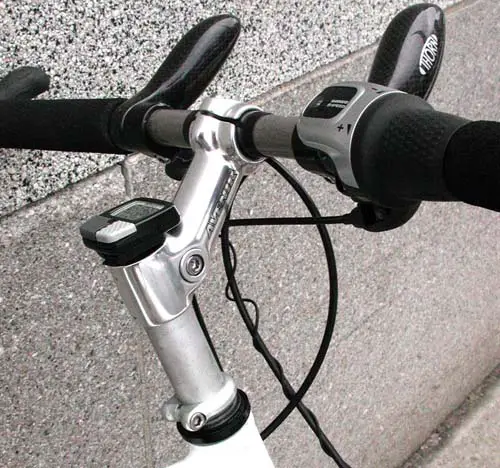
Since this puts a lot of stress on the steer tube, I have mentioned to the framebuilder that I would like to leave the frame geometry exactly the same as on his standard frame, only lengthening the head tube at the top by a couple of inches.
He says "A long head tube extension above the top tube puts
a lot more stress on the top tube / head tube junction
(since the forces can't be dissipated in the steer tube
as easily). "
His solution is to modify the frame to incorporate the longer head tube I desire by raising the top tube proportionally, with the limiting factor being the standover height in the middle of the top tube.
His solution of course requires a custom frame which is more $$.
Besides the increased $$, I have reservations (1) that the frame is going to look like a weird mutant and (2) I don't really understand/buy into his reason for not just lengthening the head tube at the top.
I agree that using the whole length of the uncut steerer is going to magnify the stresses on the headtube, but those same stresses will be there whether the head tube is 4" or 7" (because the headset rigidly locks the steerer into the headtube).. If the head tube is 7" it will help support the steerer which is what I'm looking for.
We're talking about a metal frame here, not carbon. I am 145 pounds and never pedal while standing, due to physical limitations. So i'm comfortable with the use of the full steerer--it's a given--I'm using this arrangement on my 2 bikes now, and it works fine. The question is how best to have the head tube support the steerer. Maybe I should just go with the standard head-tube length, but on this model it's only 10.5cm--supporting a 30cm steerer with a hi-rise stem on top. Seems like it needs some help.
The framebuilder is a nice guy and I don't want to offend him.
What do you experts think about this?
I'm an old fart, not as limber as I used to be. Consequently I need handlebars quite a bit higher than the norm. Actually, what works best for me is to use fork with uncut alloy steerer with high-rise stem mounted at the top of the steerer ala Sheldon:
Since this puts a lot of stress on the steer tube, I have mentioned to the framebuilder that I would like to leave the frame geometry exactly the same as on his standard frame, only lengthening the head tube at the top by a couple of inches.
He says "A long head tube extension above the top tube puts
a lot more stress on the top tube / head tube junction
(since the forces can't be dissipated in the steer tube
as easily). "
His solution is to modify the frame to incorporate the longer head tube I desire by raising the top tube proportionally, with the limiting factor being the standover height in the middle of the top tube.
His solution of course requires a custom frame which is more $$.
Besides the increased $$, I have reservations (1) that the frame is going to look like a weird mutant and (2) I don't really understand/buy into his reason for not just lengthening the head tube at the top.
I agree that using the whole length of the uncut steerer is going to magnify the stresses on the headtube, but those same stresses will be there whether the head tube is 4" or 7" (because the headset rigidly locks the steerer into the headtube).. If the head tube is 7" it will help support the steerer which is what I'm looking for.
We're talking about a metal frame here, not carbon. I am 145 pounds and never pedal while standing, due to physical limitations. So i'm comfortable with the use of the full steerer--it's a given--I'm using this arrangement on my 2 bikes now, and it works fine. The question is how best to have the head tube support the steerer. Maybe I should just go with the standard head-tube length, but on this model it's only 10.5cm--supporting a 30cm steerer with a hi-rise stem on top. Seems like it needs some help.
The framebuilder is a nice guy and I don't want to offend him.
What do you experts think about this?
 07-19-10 | 08:35 PM
#2

Senior Member

Joined: Dec 2003
Posts: 11,013
Likes: 24
From: Tucson, AZ
Bikes: Custom Zona c/f tandem + Scott Plasma single
Agree with your builder.
Here is an example of a tandem with such a configuration.smiley tandem
Here is an example of a tandem with such a configuration.smiley tandem
07-19-10 | 08:43 PM
#3
Thread Starter
Senior Member
Joined: Jan 2010
Posts: 1,701
Likes: 0
From: Wahiawa. Oahu
Agree with your builder.
Here is an example of a tandem with such a configuration.smiley tandem
Here is an example of a tandem with such a configuration.smiley tandem
07-19-10 | 09:21 PM
#4
Randomhead
Joined: Aug 2008
Posts: 25,930
Likes: 4,825
From: Happy Valley, Pennsylvania
it's pretty common to lengthen the head tube. There is certainly more stress in the head tube, I don't think there is any more stress on the head tube/top tube junction. If you are worried about the bike looking like a mutant, I think that extended head tubes look worse than slanty top tubes. I've thought about this a lot, I think it's really difficult to make a bike with a tall stem look good.
07-19-10 | 09:55 PM
#5
Senior Member

Joined: Apr 2010
Posts: 2,941
Likes: 506
From: Elevation 666m Edmonton Canada
Bikes: 2013 Custom SA5w / Rohloff Tourster
Why not just change that too straight HBar ??
If there is a 2" rise in the bar then the post can go down 2".
I'm using my upsidedown 1974 Raleigh bar on my hybrid, after i got tired of a bar like yours, but mine had a 1" rise at least.
There was a 4" change in height, with the turn over.
If there is a 2" rise in the bar then the post can go down 2".
I'm using my upsidedown 1974 Raleigh bar on my hybrid, after i got tired of a bar like yours, but mine had a 1" rise at least.
There was a 4" change in height, with the turn over.
07-19-10 | 09:55 PM
#6
Thread Starter
Senior Member
Joined: Jan 2010
Posts: 1,701
Likes: 0
From: Wahiawa. Oahu
OK, so we agree that it's gonna look dorky no matter what.
My question at this point is should i go for the longer head tube the way the framebuilder recommends, which would cost more and offer marginal structural benefit? Or would i be just about as safe with a stock setup?
I guess I'm concerned that with a steerer tube that long, it may deform under stress with just a tiny short headtube.
My question at this point is should i go for the longer head tube the way the framebuilder recommends, which would cost more and offer marginal structural benefit? Or would i be just about as safe with a stock setup?
I guess I'm concerned that with a steerer tube that long, it may deform under stress with just a tiny short headtube.
07-19-10 | 10:00 PM
#7
Thread Starter
Senior Member
Joined: Jan 2010
Posts: 1,701
Likes: 0
From: Wahiawa. Oahu
Why not just change that too straight HBar ??
If there is a 2" rise in the bar then the post can go down 2".
I'm using my upsidedown 1974 Raleigh bar on my hybrid, after i got tired of a bar like yours, but mine had a 1" rise at least.
There was a 4" change in height, with the turn over.
If there is a 2" rise in the bar then the post can go down 2".
I'm using my upsidedown 1974 Raleigh bar on my hybrid, after i got tired of a bar like yours, but mine had a 1" rise at least.
There was a 4" change in height, with the turn over.
07-19-10 | 10:22 PM
#11


Decrepit Member
Joined: Aug 2005
Posts: 10,488
Likes: 92
From: Santa Rosa, California
Bikes: Waterford 953 RS-22, several Paramounts
Like the OP, at 68 I'm not as flexible as I used to be and need a higher bar than I did thirty years ago.
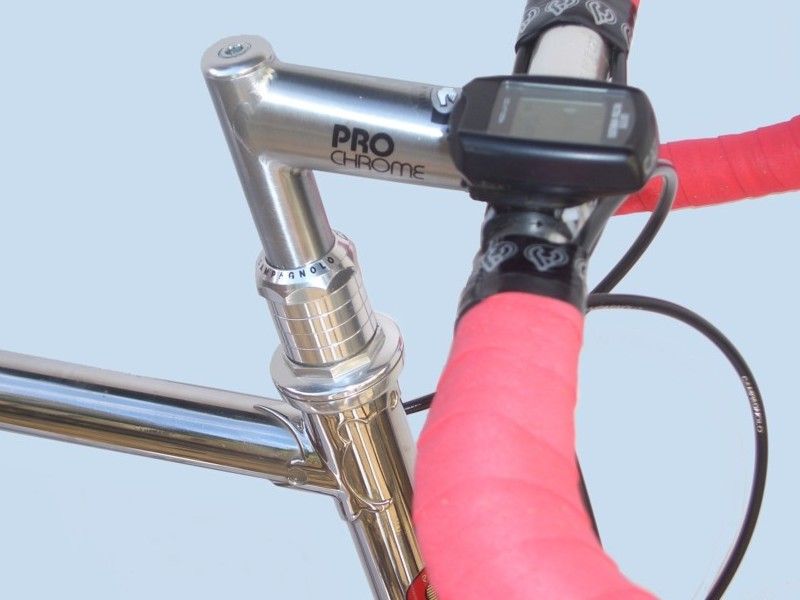
My 2007 Waterford has a threaded 1" headset. Like many modern lug sets, the Newvex top head lug is made for a longer head tube extension above the top tube than lugs thirty years ago. We left the steerer tube full length and used four spacers between the headset and the steerer locknut. The quill stem doesn't look abnormally long (because it isn't) and has a standard 17° extension angle, yet the bar is at a comfortable height for me. This setup works well for me without looking too dorky.

My 2007 Waterford has a threaded 1" headset. Like many modern lug sets, the Newvex top head lug is made for a longer head tube extension above the top tube than lugs thirty years ago. We left the steerer tube full length and used four spacers between the headset and the steerer locknut. The quill stem doesn't look abnormally long (because it isn't) and has a standard 17° extension angle, yet the bar is at a comfortable height for me. This setup works well for me without looking too dorky.
 07-19-10 | 10:49 PM
#13
Decrepit Member
Joined: Aug 2005
Posts: 10,488
Likes: 92
From: Santa Rosa, California
Bikes: Waterford 953 RS-22, several Paramounts
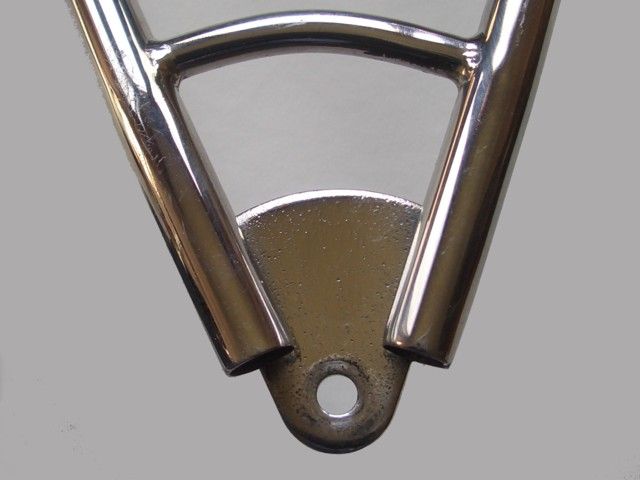
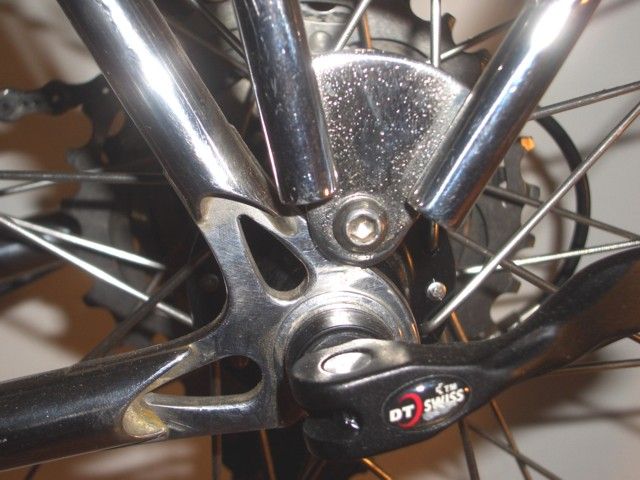
The monostay is bolted to a stainless tab secured to the brake bridge with the brake mounting bolt.

The bottom is bolted to the rear dropout eyelet on both sides. It's very secure.

Last edited by Scooper; 07-20-10 at 08:35 AM. Reason: Replaced photos with better ones
 07-20-10 | 07:32 AM
#16
Decrepit Member
Joined: Aug 2005
Posts: 10,488
Likes: 92
From: Santa Rosa, California
Bikes: Waterford 953 RS-22, several Paramounts
Thanks! The bike attracts lots of attention.
Yep; 1" threaded headset.
Yep; 1" threaded headset.
07-20-10 | 11:52 AM
#17
Thread Starter
Senior Member
Joined: Jan 2010
Posts: 1,701
Likes: 0
From: Wahiawa. Oahu
[QUOTE=Scooper;11142688]Like the OP, at 68 I'm not as flexible as I used to be and need a higher bar than I did thirty years ago.
My 2007 Waterford has a threaded 1" headset. Like many modern lug sets, the Newvex top head lug is made for a longer head tube extension above the top tube than lugs thirty years ago. We left the steerer tube full length and used four spacers between the headset and the steerer locknut. The quill stem doesn't look abnormally long (because it isn't) and has a standard 17° extension angle, yet the bar is at a comfortable height for me. This setup works well for me without looking too dorky.
What is frame material? I was thinking Ti, but maybe stainless steel? How hard to preserve polish/shine?
My 2007 Waterford has a threaded 1" headset. Like many modern lug sets, the Newvex top head lug is made for a longer head tube extension above the top tube than lugs thirty years ago. We left the steerer tube full length and used four spacers between the headset and the steerer locknut. The quill stem doesn't look abnormally long (because it isn't) and has a standard 17° extension angle, yet the bar is at a comfortable height for me. This setup works well for me without looking too dorky.
What is frame material? I was thinking Ti, but maybe stainless steel? How hard to preserve polish/shine?
07-20-10 | 12:21 PM
#18
Decrepit Member
Joined: Aug 2005
Posts: 10,488
Likes: 92
From: Santa Rosa, California
Bikes: Waterford 953 RS-22, several Paramounts
It's Reynolds 953 stainless steel. All I've ever done to maintain the shine is wipe it down with a damp terrycloth towel when it gets dirty.
There's nothing wrong with titanium, but I like steel and I like lugs.
There's nothing wrong with titanium, but I like steel and I like lugs.
07-20-10 | 03:50 PM
#19
Thread Starter
Senior Member
Joined: Jan 2010
Posts: 1,701
Likes: 0
From: Wahiawa. Oahu
The bottom line
I think what I'm going to do is just buy an off-the-rack frame, use The entire uncut steer tube of the fork, but instead of "no spacers" (like Sheldon photo in post #1 above), I'm going to find one long piece of the stock that they cut the spacers from--a piece about 9cm long, and use it as one big spacer. That should provide sufficient support.
Do any of you guys know where I could find this spacer stock? I'd like to buy 3 pieces, each 9cm long, to fit 1 1/8" steer tube. That should last me the rest of this incarnation!
Do any of you guys know where I could find this spacer stock? I'd like to buy 3 pieces, each 9cm long, to fit 1 1/8" steer tube. That should last me the rest of this incarnation!
07-20-10 | 06:22 PM
#21
Decrepit Member
Joined: Aug 2005
Posts: 10,488
Likes: 92
From: Santa Rosa, California
Bikes: Waterford 953 RS-22, several Paramounts
Chris King 1-1/8" spacers are available in four heights: 3mm, 6mm, 12mm, and 25mm. Anodized colors are: Black, Silver, Red, Navy, and Pewter.
07-20-10 | 09:25 PM
#24
Decrepit Member
Joined: Aug 2005
Posts: 10,488
Likes: 92
From: Santa Rosa, California
Bikes: Waterford 953 RS-22, several Paramounts
You might try contacting Purely Custom to see if they'll cut you a 10cm long spacer. They do make a 4cm long 1-1/8" spacer, but there might be an engineering reason they don't go longer.
The aluminum alloy spacers are typically 7050 or 7075-T6 seamless. Measuring a 1-1/8" spacer, the I.D. is 28.8mm (to fit over a 28.6mm O.D. steerer) and the O.D. is 35.0mm.
The aluminum alloy spacers are typically 7050 or 7075-T6 seamless. Measuring a 1-1/8" spacer, the I.D. is 28.8mm (to fit over a 28.6mm O.D. steerer) and the O.D. is 35.0mm.