


Before Carbon Fiber There Was... Plastic?
 05-11-20 | 09:02 AM
#1
Thread Starter
Senior Member

Joined: Nov 2013
Posts: 969
Likes: 519
From: Richfield, WI
Bikes: Trek Domane SL7 Disc, Cannondale F29
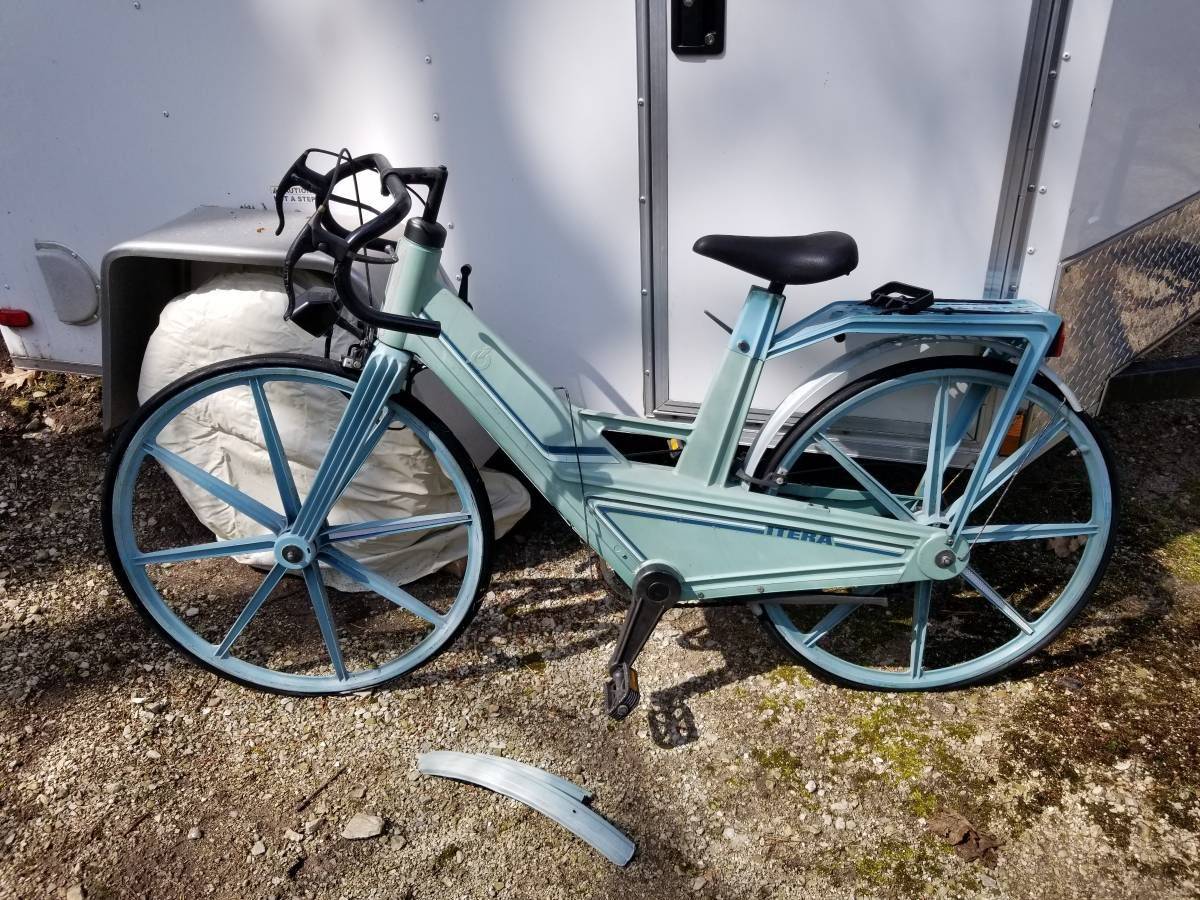
Before Carbon Fiber There Was... Plastic?
Craziest looking bike I've seen in a long time showed-up on my local Craigslist...
https://milwaukee.craigslist.org/bik...115272850.html
I wonder if it's recyclable?
https://milwaukee.craigslist.org/bik...115272850.html
I wonder if it's recyclable?

 05-11-20 | 10:39 AM
#2
Banned
Joined: Apr 2010
Posts: 9,923
Likes: 1,066
From: Lincoln Ne
Bikes: RANS Stratus TerraTrike Tour II
But in actuality CF bikes are plastic bikes too. They are just carbon fiber reinforced plastic resin. I know bike mfg that make a huge profit on their plastic bike would probably like to put out a hit on me, but it is the truth.
05-11-20 | 11:08 AM
#4

Senior Member


Joined: May 2010
Posts: 2,528
Likes: 152
From: midwest
Bikes: 2018 Roubaix Expert Di2, 2016 Diverge Expert X1
And steel is just iron with carbon and alloy bikes are just aluminum with magnesium and other elements. Carbon Fiber is Carbon Fiber with some resin to bind it together., It isn't reinforced plastic. These materials are far superior to their base material. You wouldn't make bike from iron, pure aluminum or plastic. So what's your point?
Last edited by GeneO; 05-11-20 at 11:29 AM.
05-11-20 | 11:11 AM
#5
Senior Member
Joined: May 2010
Posts: 2,528
Likes: 152
From: midwest
Bikes: 2018 Roubaix Expert Di2, 2016 Diverge Expert X1
Craziest looking bike I've seen in a long time showed-up on my local Craigslist...
https://milwaukee.craigslist.org/bik...115272850.html
I wonder if it's recyclable?
https://milwaukee.craigslist.org/bik...115272850.html
I wonder if it's recyclable?
Last edited by GeneO; 05-11-20 at 11:16 AM.
05-11-20 | 11:13 AM
#6


Kinda interesting has drop bars on it. Last bike I'd think about aero or headwinds on.
Specialized sees it they have a new gravel bike
Specialized sees it they have a new gravel bike
 05-11-20 | 03:27 PM
#9

Senior Member

Joined: Oct 2014
Posts: 14,182
Likes: 5,314
From: Portland, OR
Bikes: (2) ti TiCycles, 2007 w/ triple and 2011 fixed, 1979 Peter Mooney, ~1983 Trek 420 now fixed and ~1973 Raleigh Carlton Competition gravel grinder
And steel is just iron with carbon and alloy bikes are just aluminum with magnesium and other elements. Carbon Fiber is Carbon Fiber with some resin to bind it together., It isn't reinforced plastic. These materials are far superior to their base material. You wouldn't make bike from iron, pure aluminum or plastic. So what's your point?
This from someone who has built ~50 frp boats, one with carbon fiber. It's just another fiber you have to lay out in a mold, wet out and cure. Yes, the wetout now is prepreg and the laying out is done in a dry state, molds are usually closed and the end result oven heated but overall, fundamentally the same. Workmanship is just as important but now no no one can see it, not the customer and often not even the supervisor.
Carbon fiber is a much bigger jump from the bare fibers than any metal form its raw element. You could make and ride an iron bicycle just fine, It might weigh 100 pounds but it would work, Same with raw aluminum or titanium. That bag of fabric will never get you anywhere.
05-11-20 | 03:39 PM
#10
Senior Member
Joined: May 2010
Posts: 2,528
Likes: 152
From: midwest
Bikes: 2018 Roubaix Expert Di2, 2016 Diverge Expert X1
But - you'd have something much closer to a bike with just the resin, no carbon fiber than if you left out the resin. There was good reason fiberglass was called GRP (glass reinforced plastic or FRP (fiber reinforced plastic).
This from someone who has built ~50 frp boats, one with carbon fiber. It's just another fiber you have to lay out in a mold, wet out and cure. Yes, the wetout now is prepreg and the laying out is done in a dry state, molds are usually closed and the end result oven heated but overall, fundamentally the same. Workmanship is just as important but now no no one can see it, not the customer and often not even the supervisor.
Carbon fiber is a much bigger jump from the bare fibers than any metal form its raw element. You could make and ride an iron bicycle just fine, It might weigh 100 pounds but it would work, Same with raw aluminum or titanium. That bag of fabric will never get you anywhere.
This from someone who has built ~50 frp boats, one with carbon fiber. It's just another fiber you have to lay out in a mold, wet out and cure. Yes, the wetout now is prepreg and the laying out is done in a dry state, molds are usually closed and the end result oven heated but overall, fundamentally the same. Workmanship is just as important but now no no one can see it, not the customer and often not even the supervisor.
Carbon fiber is a much bigger jump from the bare fibers than any metal form its raw element. You could make and ride an iron bicycle just fine, It might weigh 100 pounds but it would work, Same with raw aluminum or titanium. That bag of fabric will never get you anywhere.
Somehow I don't think the amount of resin in a CF would be enough to make anything close to a usable bike - just took at what it took to add enough strength to the plastic bike posted here. IMO it is clear that the CF is what makes the material, not the resin.
Last edited by GeneO; 05-11-20 at 03:43 PM.
05-11-20 | 03:40 PM
#11
Senior Member
Joined: Apr 2015
Posts: 4,272
Likes: 1,304
From: Seattle
Such a bicycle may literally have been manufactured. There was a bicycle in the 1890s called the Lu-Mi-Num, the frame being a one-piece casting, and it's likely that the metal used was pure aluminum.
It's a composite. The combination of the materials makes the material.
The amount of resin in a CF bike wouldn't be enough to make a viable frame, because it's not reinforced. But if you used a lot more resin, it can be done as long as we don't end up volume-limited. The same cannot be said for carbon fiber, which by itself is just threads: even if you had boatloads of carbon fiber fabric, it's difficult to imagine how you'd create a usable bicycle frame out of it. This is why what we're calling "carbon fiber" is often referred to as "carbon fiber reinforced polymer", not as "polymer-bonded carbon fiber."
Somehow I don't think the amount of resin in a CF would be enough to make anything close to a useable bike - just took at what it took to add enough strength to the plastic bike posted here.t is clear that the CF is what makes the material, not the resin that binds it together IMO.
The amount of resin in a CF bike wouldn't be enough to make a viable frame, because it's not reinforced. But if you used a lot more resin, it can be done as long as we don't end up volume-limited. The same cannot be said for carbon fiber, which by itself is just threads: even if you had boatloads of carbon fiber fabric, it's difficult to imagine how you'd create a usable bicycle frame out of it. This is why what we're calling "carbon fiber" is often referred to as "carbon fiber reinforced polymer", not as "polymer-bonded carbon fiber."
Last edited by HTupolev; 05-11-20 at 03:49 PM.
05-11-20 | 03:47 PM
#12

Dirty Heathen
Joined: Oct 2015
Posts: 2,324
Likes: 1,046
From: MC-778, 6250 fsw
Bikes: 1997 Cannondale, 1976 Bridgestone, 1998 SoftRide, 1989 Klein, 1989 Black Lightning #0033
The drop bars are kind of a head-scratcher, especially given that it appears to be a single speed. They look to be newer than the rest of the bike, do make of that what you will.
I would have expected a coaster brake, but maybe the frame isn’t strong enough there.
Looks like the kind of bike you’d buy a bunch of for a lake/ beach resort that you can just leave around outside. (Solid tires, too)
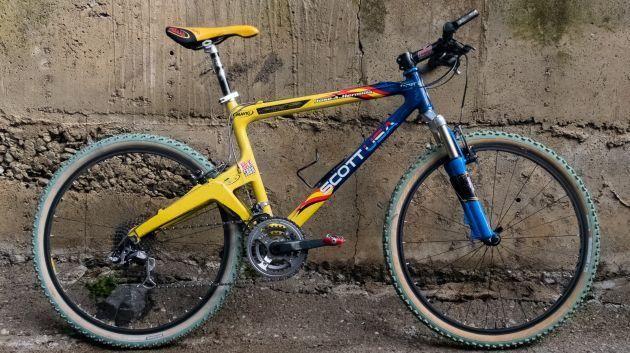
Scott and YETI produced some plastic-framed MTBs in the 90’s, when CF was still too brittle for trail use. (They tried a lot of strange things in the 90’s)
I would have expected a coaster brake, but maybe the frame isn’t strong enough there.
Looks like the kind of bike you’d buy a bunch of for a lake/ beach resort that you can just leave around outside. (Solid tires, too)
Scott and YETI produced some plastic-framed MTBs in the 90’s, when CF was still too brittle for trail use. (They tried a lot of strange things in the 90’s)



 05-11-20 | 06:25 PM
#15

Senior Member
Joined: Oct 2013
Posts: 1,394
Likes: 334
Bikes: 2018 Lynskey R260, 2005 Diamondback 29er, 2003 Trek 2300
And steel is just iron with carbon and alloy bikes are just aluminum with magnesium and other elements. Carbon Fiber is Carbon Fiber with some resin to bind it together., It isn't reinforced plastic. These materials are far superior to their base material. You wouldn't make bike from iron, pure aluminum or plastic. So what's your point?
05-11-20 | 07:00 PM
#16
Senior Member
Joined: Oct 2013
Posts: 1,394
Likes: 334
Bikes: 2018 Lynskey R260, 2005 Diamondback 29er, 2003 Trek 2300
It probably wouldn't have been lost on the producers of that bike that right up till then the public would have looked at an all-aluminum bike as literally a bike made for a king. Oh how times change. :-)
05-11-20 | 07:55 PM
#17

SE Wis

Joined: Apr 2005
Posts: 11,556
Likes: 4,333
From: Milwaukee, WI
Bikes: '68 Raleigh Sprite, '02 Raleigh C500, '84 Raleigh Gran Prix, '91 Trek 400, 2013 Novara Randonee, 1990 Trek 970
05-11-20 | 08:15 PM
#18

Disco Infiltrator

Joined: May 2013
Posts: 15,345
Likes: 3,542
From: Folsom CA
Bikes: Stormchaser, Paramount, Tilt, Samba tandem
Found this for you all...

__________________
Genesis 49:16-17
"Well, well!" said Holmes, impatiently. "A good cyclist does not need a high road. The moor is intersected with paths and the moon is at the full."
Genesis 49:16-17
"Well, well!" said Holmes, impatiently. "A good cyclist does not need a high road. The moor is intersected with paths and the moon is at the full."
 05-12-20 | 08:32 AM
#19
Banned
Joined: Apr 2010
Posts: 9,923
Likes: 1,066
From: Lincoln Ne
Bikes: RANS Stratus TerraTrike Tour II
And steel is just iron with carbon and alloy bikes are just aluminum with magnesium and other elements. Carbon Fiber is Carbon Fiber with some resin to bind it together., It isn't reinforced plastic. These materials are far superior to their base material. You wouldn't make bike from iron, pure aluminum or plastic. So what's your point?
05-12-20 | 10:01 AM
#20
Dirty Heathen
Joined: Oct 2015
Posts: 2,324
Likes: 1,046
From: MC-778, 6250 fsw
Bikes: 1997 Cannondale, 1976 Bridgestone, 1998 SoftRide, 1989 Klein, 1989 Black Lightning #0033
CF typically uses a catalyzed resin binder, as opposed to the thermoplastic in a typical FRP part.
This is why CF parts are lighter and stiffer than ‘plastic’ but relatively brittle. They’re good for where you would use a tube or monocoque structure, and where impact resistance isn’t a priority.
FRP is generally denser (read heavier) but tougher, particularly impact resistance and compression. I’ve seen it used a lot in applications where you might otherwise see an aluminum or magnesium casting.
05-12-20 | 10:10 AM
#21
Airplanes, bikes, beer.
Joined: Jan 2020
Posts: 763
Likes: 788
From: Off the front
Bikes: Road bikes, mountain bikes, a cx bike, a gravel bike…
But - you'd have something much closer to a bike with just the resin, no carbon fiber than if you left out the resin. There was good reason fiberglass was called GRP (glass reinforced plastic or FRP (fiber reinforced plastic).
This from someone who has built ~50 frp boats, one with carbon fiber. It's just another fiber you have to lay out in a mold, wet out and cure. Yes, the wetout now is prepreg and the laying out is done in a dry state, molds are usually closed and the end result oven heated but overall, fundamentally the same. Workmanship is just as important but now no no one can see it, not the customer and often not even the supervisor.
Carbon fiber is a much bigger jump from the bare fibers than any metal form its raw element. You could make and ride an iron bicycle just fine, It might weigh 100 pounds but it would work, Same with raw aluminum or titanium. That bag of fabric will never get you anywhere.
This from someone who has built ~50 frp boats, one with carbon fiber. It's just another fiber you have to lay out in a mold, wet out and cure. Yes, the wetout now is prepreg and the laying out is done in a dry state, molds are usually closed and the end result oven heated but overall, fundamentally the same. Workmanship is just as important but now no no one can see it, not the customer and often not even the supervisor.
Carbon fiber is a much bigger jump from the bare fibers than any metal form its raw element. You could make and ride an iron bicycle just fine, It might weigh 100 pounds but it would work, Same with raw aluminum or titanium. That bag of fabric will never get you anywhere.
Yeah, carbon is the softest element in the a Universe. Especially in that really clear form that brides tend to favor over the version that husbands prefer in the bbq. It’s all about how you use it, and how it is prepared. I’d love to see a raw iron bike. No prep, no smelting, no heating. Just a raw iron bike. Can’t wait.
05-12-20 | 09:17 PM
#22

Lopsided biped

Joined: Nov 2017
Posts: 742
Likes: 167
From: NE Ohio
Bikes: 2017 Day 6 Cyclone (the Buick); 2015 Simcoe Deluxe (the Xebec); Street Strider 3i (the not-a-bike); GreenSpeed Anura (the Black Swan)
See also, "harsh ride". Those wheels are almost identical to a great many wheelchair wheels (I worked in a wheelchair shop for 12 yrs). Nearly impossible to break, but give the ride comfort of cast iron. And yes, they're FRP, which is why they don't break. You could bend them, though, which makes me wonder how badly that frame flexed. And it looks like even the crankarms are FRP, which couldn't have been good at all.
If the OP's example were in pristine condition it might have some collectible value. As it is, it's not restorable; it'd be a flat-out miracle to find an OEM handlebar for it.
If the OP's example were in pristine condition it might have some collectible value. As it is, it's not restorable; it'd be a flat-out miracle to find an OEM handlebar for it.
05-12-20 | 10:03 PM
#23
Senior Member
Joined: Nov 2019
Posts: 684
Likes: 333
From: Iowa
Bikes: 2021 Salsa Fargo 1x12, 2019 Jamis Renegade Exploit 1x11. Motobacne NX Fat Tire
Plastic is an extremely generic name, sometimes called “polymers” or “resins”. The name plastics is usually reserved for cheaper consumer goods That are recyclable, but it’s a blurred line. The resins for bike frames used are a thermoset type which cannot be recycled. Their are literally millions of formulations and as different as flavors of soup. (Polymer) Soup is actually a great analogy.
The role of the resins is to protect the fibers and transfer the loads to the fibers. The resins themselves are relatively weak but in a liquid processing state wet out the fibers for a strong bond. The fibers have the majority of the attractive engineering properties we want. Carbon fibers being the most common for their high tensile properties and strength to weight ratio. The continuous fiber strands are also key, short fibers don’t have the aspect ratio to take advantage of the material properties for high structural applications.
The design and manufacture of these fiber-resin Composites is high level engineering stuff, essentially Aerospace level. These are not simple boat hulls. The directionality of the layers (lamina) are highly controlled and specifically designed for your strength and flex in different locations on your bike frame. A LOT can go wrong, which is why I would never trust a cheap no-name brand. These things are expensive for a reason And quality matters. Joe’s auto repair shop can’t just weld one or fabricate one up.
I got my Engineering degree in composites. I fondly recall Laminate Analysis being one of the most difficult classes ever as computers back in the early 90s weren’t what they are today for analysis. Yes, I calculated things by hand involving large matrices mathematics that still gives me nightmares 25 years later. Today’s computers handle the analysis much better... god bless technology. But computers don’t make the design decisions. Quality manufacturing has come a long way too.
The role of the resins is to protect the fibers and transfer the loads to the fibers. The resins themselves are relatively weak but in a liquid processing state wet out the fibers for a strong bond. The fibers have the majority of the attractive engineering properties we want. Carbon fibers being the most common for their high tensile properties and strength to weight ratio. The continuous fiber strands are also key, short fibers don’t have the aspect ratio to take advantage of the material properties for high structural applications.
The design and manufacture of these fiber-resin Composites is high level engineering stuff, essentially Aerospace level. These are not simple boat hulls. The directionality of the layers (lamina) are highly controlled and specifically designed for your strength and flex in different locations on your bike frame. A LOT can go wrong, which is why I would never trust a cheap no-name brand. These things are expensive for a reason And quality matters. Joe’s auto repair shop can’t just weld one or fabricate one up.
I got my Engineering degree in composites. I fondly recall Laminate Analysis being one of the most difficult classes ever as computers back in the early 90s weren’t what they are today for analysis. Yes, I calculated things by hand involving large matrices mathematics that still gives me nightmares 25 years later. Today’s computers handle the analysis much better... god bless technology. But computers don’t make the design decisions. Quality manufacturing has come a long way too.
Last edited by Toadmeister; 05-13-20 at 07:46 AM.
05-14-20 | 09:15 AM
#25
Banned
Joined: Apr 2010
Posts: 9,923
Likes: 1,066
From: Lincoln Ne
Bikes: RANS Stratus TerraTrike Tour II
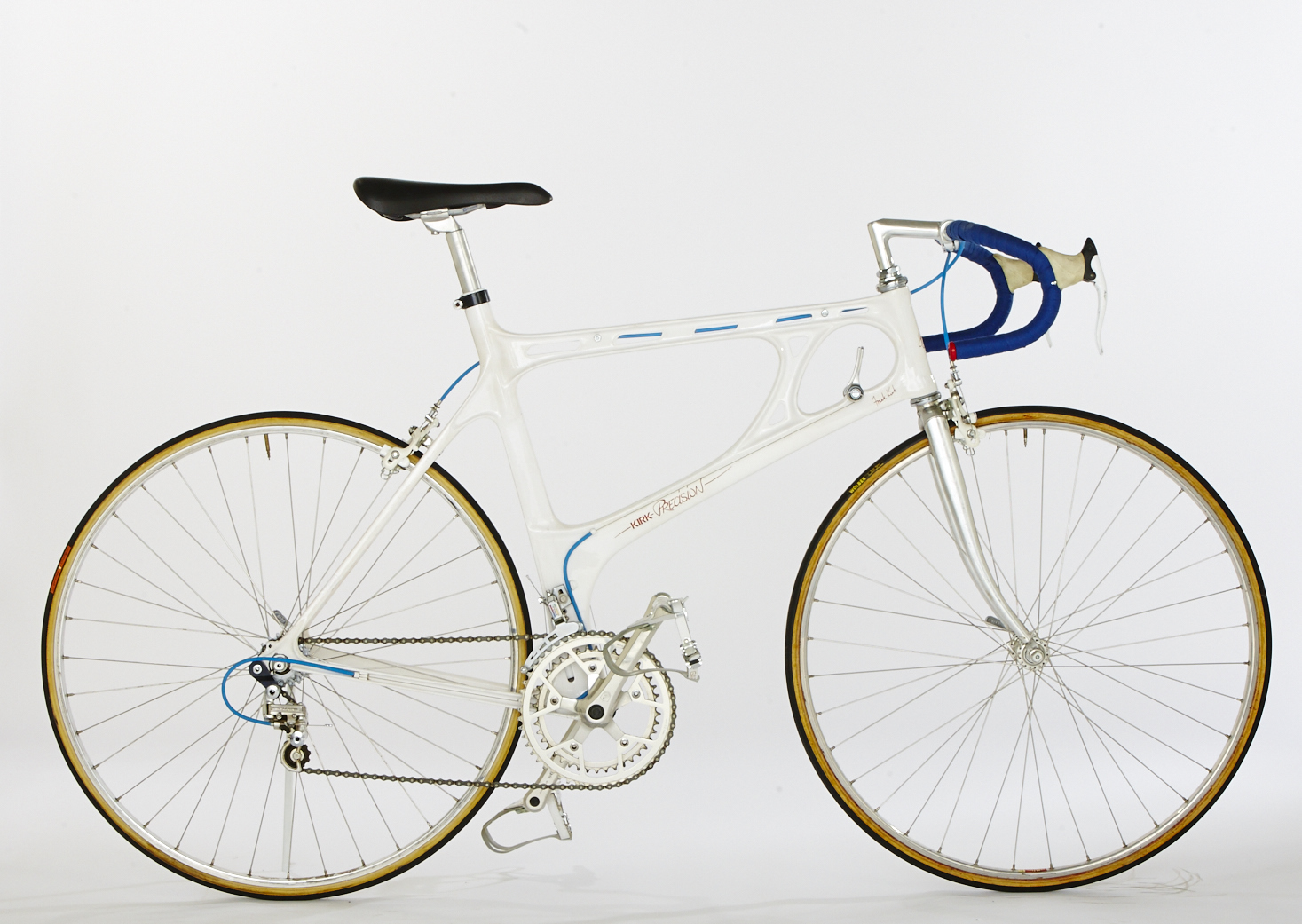
In actuality this would seem to be an outstanding way to make a bike frame that is not that expensive. Once you have the mold, one fast high pressure injection, and you have a strong light frame. BTW notice how clean it is with its down tube shifters and the brake cable wrapped to the handle bars. No cables flapping in the wind.