


SPD holes brand differences
 08-07-20 | 02:15 AM
#1
Thread Starter
Full Member
Joined: Mar 2017
Posts: 213
Likes: 9
SPD holes brand differences
Hello,
I am struggling with some right big toe pain after 80km.
I had Mavic crossmax shoes, they were too big so I changed them for Mavic boa SPD, sizing looks perfect but I still have right big toe pain.
Over the internet I read a lot of times that cleats should be as far back as possible to minimize injuries and for instance big toe pain.
I also read (but those posts are close to 10 years old), that you can't go as far back with Mavic's than with other brands in general.
So my question is : with what shoe brand can I buy SPD shoes that will allow me to place the cleat further back (towards my heel) ?
Thanks
I am struggling with some right big toe pain after 80km.
I had Mavic crossmax shoes, they were too big so I changed them for Mavic boa SPD, sizing looks perfect but I still have right big toe pain.
Over the internet I read a lot of times that cleats should be as far back as possible to minimize injuries and for instance big toe pain.
I also read (but those posts are close to 10 years old), that you can't go as far back with Mavic's than with other brands in general.
So my question is : with what shoe brand can I buy SPD shoes that will allow me to place the cleat further back (towards my heel) ?
Thanks
 08-07-20 | 05:37 AM
#2
Senior Member

Joined: May 2013
Posts: 2,314
Likes: 1,192
From: Kips Bay, NY
Bikes: Ritchey Swiss Cross | Teesdale Kona Hot | Haro Extreme | Specialized Stumpjumper Comp | Cannondale F1000 | Shogun 1000 | Cannondale M500 | Norco Charger | Marin Muirwoods 29er | Shogun Kaze | Breezer Lightning
I've never heard of putting cleats as far back as possible, I've always placed the widest part of the foot over the axle; this is rarely the furthest back on the shoe.
08-07-20 | 05:56 AM
#3
Banned
Joined: Jun 2007
Posts: 12,585
Likes: 6,538
From: TN
My current Shimano shoes allow the cleats to be more to the rear than some I've had. I don't know that you can generalize by brand. In the past I've modified some shoes with a drill and Dremel. You might try that if you like the shoes otherwise.
08-07-20 | 06:17 AM
#4
Industry guy

Joined: Nov 2007
Posts: 415
Likes: 103
From: Minnesota
Bikes: To many to name - I ride a custom built steel frame.
Pedaling dynamics are based on having the "ball" of the great/big toe over the pedal spindle.
One suggestion would be to use some method to cant the foot.
Either inside the shoe with simple under the insole shim(cardboard or plastic would be a way to test this)
or an aftermarket product for the same.
Canting the cleat itself, is an option as well.
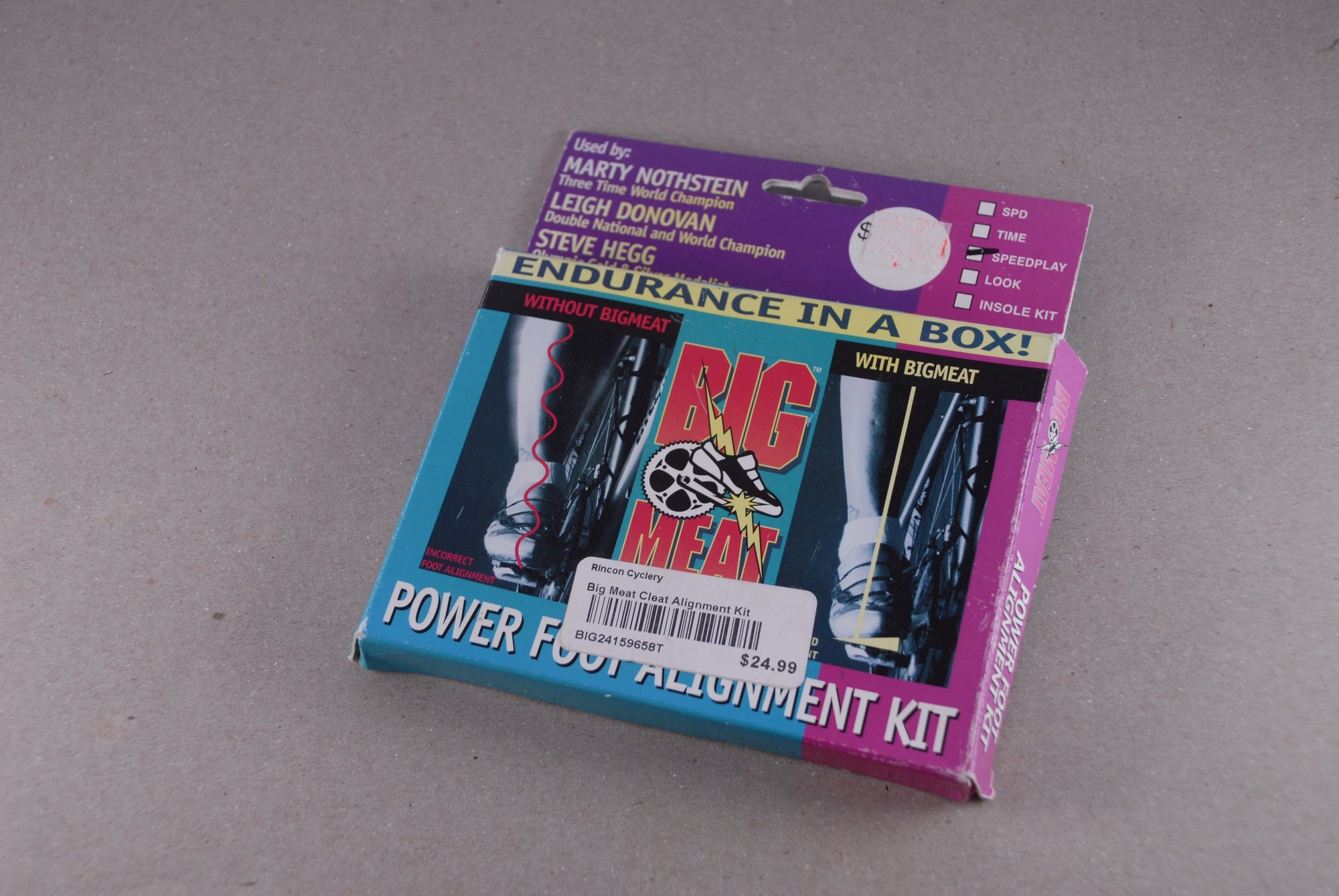
Custom, ortho insoles would also be a potential solution.
rusty
One suggestion would be to use some method to cant the foot.
Either inside the shoe with simple under the insole shim(cardboard or plastic would be a way to test this)
or an aftermarket product for the same.
Canting the cleat itself, is an option as well.
Custom, ortho insoles would also be a potential solution.
rusty
08-07-20 | 06:34 AM
#5

Senior Member


Joined: Jan 2010
Posts: 45,429
Likes: 23,589
 08-07-20 | 03:42 PM
#6
Industry guy
Joined: Nov 2007
Posts: 415
Likes: 103
From: Minnesota
Bikes: To many to name - I ride a custom built steel frame.
The center point where the two feet come together near the great toe.
The feet in the photo are slightly canted, but if they were vertical, the spindle of the pedal would also
Hit the main part of the foot, just beneath where the small toe extends.
Please note that the photo shows, as in real life, two different size feet.
It isn't a perfect science, so it may take an adjustment or two,
Saddle alignment, both height, pitch and fore and aft, and cleat position are linked.
Comfort will dictate individual positioning.
As you can see from out conversation there can be a lot involved in these adjustments and recommendations.
It is why LBS charge what they do for fitting a bicycle.
rusty
The feet in the photo are slightly canted, but if they were vertical, the spindle of the pedal would also
Hit the main part of the foot, just beneath where the small toe extends.
Please note that the photo shows, as in real life, two different size feet.
It isn't a perfect science, so it may take an adjustment or two,
Saddle alignment, both height, pitch and fore and aft, and cleat position are linked.
Comfort will dictate individual positioning.
As you can see from out conversation there can be a lot involved in these adjustments and recommendations.
It is why LBS charge what they do for fitting a bicycle.
rusty
08-07-20 | 08:20 PM
#7
Senior Member
Joined: Jan 2010
Posts: 45,429
Likes: 23,589
Look closely. The photo shows one foot closer to the camera than the other. With that said, many people’s feet are not the same size. That’s a no-brainer.
But the point was, that it’s the ball of the foot, not the ball of the toe.
But the point was, that it’s the ball of the foot, not the ball of the toe.
08-07-20 | 09:11 PM
#8

Senior Member
Joined: Oct 2014
Posts: 14,182
Likes: 5,314
From: Portland, OR
Bikes: (2) ti TiCycles, 2007 w/ triple and 2011 fixed, 1979 Peter Mooney, ~1983 Trek 420 now fixed and ~1973 Raleigh Carlton Competition gravel grinder
Ben
 08-08-20 | 06:48 AM
#10
Industry guy
Joined: Nov 2007
Posts: 415
Likes: 103
From: Minnesota
Bikes: To many to name - I ride a custom built steel frame.
There are always going to be those who propose they have a better idea.
Oval chainrings come to mind. I have been through at least 5 iterations of them in my bicycle industry career.
Look at the foot positioning of the any of worlds top cyclists- racers in any venue- road, track, atb, bmx or triathlon.
This position would not allow the rider to power through the pedal circle.
Not one uses the positioning shown in the advertisement for the next great thing in pedals.
This design would be equivalent to someone running flat footed.
Comfort perhaps, not efficacy of mechanics or energy.
Oval chainrings come to mind. I have been through at least 5 iterations of them in my bicycle industry career.
Look at the foot positioning of the any of worlds top cyclists- racers in any venue- road, track, atb, bmx or triathlon.
This position would not allow the rider to power through the pedal circle.
Not one uses the positioning shown in the advertisement for the next great thing in pedals.
This design would be equivalent to someone running flat footed.
Comfort perhaps, not efficacy of mechanics or energy.
08-08-20 | 08:55 AM
#11

Senior Member

Joined: Dec 2004
Posts: 12,560
Likes: 799
From: Middle of da Mitten
Bikes: Trek 7500, RANS V-Rex, Optima Baron, Velokraft NoCom, M-5 Carbon Highracer, Bacchetta Quattro, Catrike Speed
Most recumbent cyclists move their cleats back as far as they'll go, or even enlarge the slots in their shoes to move the cleats back further. AFAIK you can do that with any shoe. Don't forget that there is a lateral adjustment too. You want the foot in on the pedal as far as you can without hitting the crank arm. Having the foot too far to the outside will concentrate pressure on the big toe.
PS if you can't center your foot laterally over the pedal because of wide feet or a toe-out, consider pedal extenders.
PS if you can't center your foot laterally over the pedal because of wide feet or a toe-out, consider pedal extenders.
08-08-20 | 09:21 AM
#12
Full Member
Joined: Aug 2002
Posts: 318
Likes: 88
From: Springdale, Arkansas
Bikes: 2021 Trek Domane SLR7 Project One 62cm- 2010 Specialized Allez 61cm
Therefore, I used SPD-SL pedals with a built in +4mm and I added a +1mm washer to each side. Really helped a lot.
Glenn
08-08-20 | 10:54 AM
#13

Senior Member
Joined: Apr 2012
Posts: 6,017
Likes: 925
From: Nor Cal
This is a pretty good discussion of the factors involved.
tl;dr: "You'll never have a problem if it's (cleat) too far back, but you might start to develop a problem if it's too far forward.
Starting point for this fitter = 13-18mm behind 1st metatarsal joint- sz42.
Cleat further back= lower seat height = more aero, and possibly more hamstring engagement= less weight on hands. Slightly less jump in sprint, no difference in overall power.
IMO, cleat holes in shoes tend to be based on wrong concept. Putting cleats anywhere near their forward position on the shoe is the equivalent of walking on one's toes all day. I doubt anyone has ever wished that they could move the cleats further forward (than the shoe allows), while many wish them further back.
To OP: Try more arch support. Tape pieces of bar tape or equal to underside of insole until it is quite noticeable.
tl;dr: "You'll never have a problem if it's (cleat) too far back, but you might start to develop a problem if it's too far forward.
Starting point for this fitter = 13-18mm behind 1st metatarsal joint- sz42.
Cleat further back= lower seat height = more aero, and possibly more hamstring engagement= less weight on hands. Slightly less jump in sprint, no difference in overall power.
IMO, cleat holes in shoes tend to be based on wrong concept. Putting cleats anywhere near their forward position on the shoe is the equivalent of walking on one's toes all day. I doubt anyone has ever wished that they could move the cleats further forward (than the shoe allows), while many wish them further back.
To OP: Try more arch support. Tape pieces of bar tape or equal to underside of insole until it is quite noticeable.
Last edited by woodcraft; 08-08-20 at 10:58 AM.
08-08-20 | 03:16 PM
#14

Advocatus Diaboli
Joined: Feb 2015
Posts: 9,147
Likes: 1,740
From: Wherever I am
Bikes: Merlin Cyrene, Nashbar steel CX
Steve Hogg is a proponent of the axle a bit further back.. ie. you can read thru the below.
https://www.stevehoggbikefitting.com...leat-position/
Of course, a downside for especially us big-footed folks, is that the propensity for toe/wheel overlap is that much greater.
https://www.stevehoggbikefitting.com...leat-position/
Of course, a downside for especially us big-footed folks, is that the propensity for toe/wheel overlap is that much greater.
08-08-20 | 06:03 PM
#15

Senior Member
Joined: Nov 2011
Posts: 704
Likes: 129
From: CA
Moving cleats as far back as possible is something triathlon athletes sometimes do in order to reduce the workload on their calves (i.e. preserve calf muscles for the running stage). Now, if you are not running in a triathlon, then your cleats should be actually moved forward to make your calf muscles take part in the actual cycling effort. To "minimize injuries" remember to stretch and warm up your calves (and overall) before riding intensively.
Maybe moving cleats too far forward can contribute to big toe pain... but I doubt that. Big toe pain = wrong shoe size and, maybe, the nail needs some trimming...
Last edited by AndreyT; 08-08-20 at 07:54 PM.
08-09-20 | 01:37 PM
#16
Thread Starter
Full Member
Joined: Mar 2017
Posts: 213
Likes: 9
Shoe size is good, I tried 3 different shoes that were fitting me very well + 1 that was a bit too big and with all of them I got the same exact big toe pain (intensity/at the same time in the ride)
On the bike it feels like there is too much body weight on the big toe, I think moving the cleat backwards will help in this regard
