


The Return of the ATB? Food for thought.
 02-22-22 | 11:57 PM
#1
Thread Starter
Guest
Joined: Sep 2020
Posts: 2,886
Likes: 3,279
The Return of the ATB? Food for thought.
I agree with a lot of what this author says, regarding the middle ground between "gravel" and "mountain" bikes.
A good read, anyway: https://bikepacking.com/plog/atb-manifesto/
A good read, anyway: https://bikepacking.com/plog/atb-manifesto/

 02-23-22 | 04:48 AM
#2

Senior Member


Joined: Oct 2013
Posts: 8,290
Likes: 3,691
From: Mich
Bikes: RSO E-tire dropper fixie brifter
when I think of MTB, ATB, Gravel, Cyclocross & Tri bicycles, I don't expect them to be good for a long outdoorsy bike ride. More so "geared" for the short term event..
I can see OEM's refitting existing frames with quickly whipped up secondary major components in order to remarket them for profitable sales.
I can see OEM's refitting existing frames with quickly whipped up secondary major components in order to remarket them for profitable sales.
__________________
-YMMV
-YMMV
02-23-22 | 05:02 AM
#3
Must be symmetrical
Joined: Sep 2018
Posts: 480
Likes: 351
From: Germany
Bikes: ... but look, they're all totally different!
@ US Consumer, "We, the cycling press, as dutiful mouthpieces of the marketing departments of bike makers, would like to tell you something that has absolutely nothing to do with our need to sell more bikes.
In the 1990s, we duped you into tossing out your bikes that could do everything, let's call it your bikes for all terrains. We played on your fantasy that despite being middle aged and over weight, that you were really a bike racer at heart (just keep the heart rate reasonable, please). You therefore need bike racing equipment, one bike only for pavement, another bike only for dirt (but it turns out that there are so many kinds of dirt, so so many kinds of bikes for dirt). We convinced you that the best place to shave weight from your set-up was in a plastic frame (not your body), and that it was ok to add that weight back with disc brakes...oh, you don't know they usually weigh more than cantis, ok, pretend I didn't say anything...
In fact, we would like you to believe that "most everywhere else" in the world people also ditched these bikes for mountain bikes. Please ignore the fact that this isn't true--in "most everwhere else," and not just in France, people recognized the need and desirability of a do it all bike, and this type of bike continued to be made. And no one in "everywhere else" would call an ATB (or whatever the local translation happens to be--we only bothered to look up the French term because, you know it's France) a mountain bike, or call a mountain bike an ATB.
In "most everywhere else," people resisted the kind of marketing talk that killed companies like Bridgestone in the US and has reliably gotten you, the US consumer, to buy our bikes at our say so.
But I digress. We would like to inform you how great it would be for us if you once more bought the kind of bike we convinced you to toss in the 1990s. And it is totally different than the gravel bike we already got you to buy because, um, that kind of bike is only good on gravel, not all terrain types.
And best of all, the French are doing it. And you know, the French and bikes are a really cool combination."
In the 1990s, we duped you into tossing out your bikes that could do everything, let's call it your bikes for all terrains. We played on your fantasy that despite being middle aged and over weight, that you were really a bike racer at heart (just keep the heart rate reasonable, please). You therefore need bike racing equipment, one bike only for pavement, another bike only for dirt (but it turns out that there are so many kinds of dirt, so so many kinds of bikes for dirt). We convinced you that the best place to shave weight from your set-up was in a plastic frame (not your body), and that it was ok to add that weight back with disc brakes...oh, you don't know they usually weigh more than cantis, ok, pretend I didn't say anything...
In fact, we would like you to believe that "most everywhere else" in the world people also ditched these bikes for mountain bikes. Please ignore the fact that this isn't true--in "most everwhere else," and not just in France, people recognized the need and desirability of a do it all bike, and this type of bike continued to be made. And no one in "everywhere else" would call an ATB (or whatever the local translation happens to be--we only bothered to look up the French term because, you know it's France) a mountain bike, or call a mountain bike an ATB.
In "most everywhere else," people resisted the kind of marketing talk that killed companies like Bridgestone in the US and has reliably gotten you, the US consumer, to buy our bikes at our say so.
But I digress. We would like to inform you how great it would be for us if you once more bought the kind of bike we convinced you to toss in the 1990s. And it is totally different than the gravel bike we already got you to buy because, um, that kind of bike is only good on gravel, not all terrain types.
And best of all, the French are doing it. And you know, the French and bikes are a really cool combination."


 02-23-22 | 05:18 AM
#4
Senior Member

Joined: May 2017
Posts: 2,426
Likes: 2,275
From: Hacienda Hgts
Bikes: 2026 Motobecane Mulekick 520 Steel 1999 Schwinn Peloton Ultegra 10, Kestrel RT-1000 Ultegra, Trek Marlin 6 Deore 29'er
^^^^^^ Boy, did you open up a can of worms.
Prepare to defend yourself bike soldier.
Prepare to defend yourself bike soldier.
02-23-22 | 05:56 AM
#5

Full Member
Joined: Jun 2020
Posts: 478
Likes: 385
From: Central Florida
Bikes: Trek Emonda ALR 5
@ US Consumer, "We, the cycling press, as dutiful mouthpieces of the marketing departments of bike makers, would like to tell you something that has absolutely nothing to do with our need to sell more bikes.
In the 1990s, we duped you into tossing out your bikes that could do everything, let's call it your bikes for all terrains. We played on your fantasy that despite being middle aged and over weight, that you were really a bike racer at heart (just keep the heart rate reasonable, please). You therefore need bike racing equipment, one bike only for pavement, another bike only for dirt (but it turns out that there are so many kinds of dirt, so so many kinds of bikes for dirt). We convinced you that the best place to shave weight from your set-up was in a plastic frame (not your body), and that it was ok to add that weight back with disc brakes...oh, you don't know they usually weigh more than cantis, ok, pretend I didn't say anything...
In fact, we would like you to believe that "most everywhere else" in the world people also ditched these bikes for mountain bikes. Please ignore the fact that this isn't true--in "most everwhere else," and not just in France, people recognized the need and desirability of a do it all bike, and this type of bike continued to be made. And no one in "everywhere else" would call an ATB (or whatever the local translation happens to be--we only bothered to look up the French term because, you know it's France) a mountain bike, or call a mountain bike an ATB.
In "most everywhere else," people resisted the kind of marketing talk that killed companies like Bridgestone in the US and has reliably gotten you, the US consumer, to buy our bikes at our say so.
But I digress. We would like to inform you how great it would be for us if you once more bought the kind of bike we convinced you to toss in the 1990s. And it is totally different than the gravel bike we already got you to buy because, um, that kind of bike is only good on gravel, not all terrain types.
And best of all, the French are doing it. And you know, the French and bikes are a really cool combination."
In the 1990s, we duped you into tossing out your bikes that could do everything, let's call it your bikes for all terrains. We played on your fantasy that despite being middle aged and over weight, that you were really a bike racer at heart (just keep the heart rate reasonable, please). You therefore need bike racing equipment, one bike only for pavement, another bike only for dirt (but it turns out that there are so many kinds of dirt, so so many kinds of bikes for dirt). We convinced you that the best place to shave weight from your set-up was in a plastic frame (not your body), and that it was ok to add that weight back with disc brakes...oh, you don't know they usually weigh more than cantis, ok, pretend I didn't say anything...
In fact, we would like you to believe that "most everywhere else" in the world people also ditched these bikes for mountain bikes. Please ignore the fact that this isn't true--in "most everwhere else," and not just in France, people recognized the need and desirability of a do it all bike, and this type of bike continued to be made. And no one in "everywhere else" would call an ATB (or whatever the local translation happens to be--we only bothered to look up the French term because, you know it's France) a mountain bike, or call a mountain bike an ATB.
In "most everywhere else," people resisted the kind of marketing talk that killed companies like Bridgestone in the US and has reliably gotten you, the US consumer, to buy our bikes at our say so.
But I digress. We would like to inform you how great it would be for us if you once more bought the kind of bike we convinced you to toss in the 1990s. And it is totally different than the gravel bike we already got you to buy because, um, that kind of bike is only good on gravel, not all terrain types.
And best of all, the French are doing it. And you know, the French and bikes are a really cool combination."
02-23-22 | 06:37 AM
#6

Senior Member
Joined: Feb 2015
Posts: 6,006
Likes: 2,286
From: Mission Viejo
Bikes: 1986 Cannondale SR400 (Flat bar commuter), 1988 Cannondale Criterium XTR, 1992 Serotta T-Max, 1995 Trek 970
It isn’t much of a revelation. If you slow everything down and reduce the technical level, then you can use a bike that is a jack of all trades and master of none.
Nothing wrong with that approach, and I would guess preferred by a lot of people. You just can’t expect it to be as good as the bikes for each discipline. After all, people have been riding multiple surfaces long before ATBs.
John
Nothing wrong with that approach, and I would guess preferred by a lot of people. You just can’t expect it to be as good as the bikes for each discipline. After all, people have been riding multiple surfaces long before ATBs.
John
02-23-22 | 06:52 AM
#7
Must be symmetrical
Joined: Sep 2018
Posts: 480
Likes: 351
From: Germany
Bikes: ... but look, they're all totally different!
I don't really know how much defending i can or should do.
For those who agree with me--because they have experience in international bike markets, because they might be retrogrouches or fans of classic bikes, who are just inclined via temperament to see technological change for change's sake as a gimmick, or who just didn't get the message to ditch their ATB, I don't have to defend my position.
For those who disagree with me, no defense will convince them--and yeah, I know there are arguments for laterally stiff but vertically complient frames and disc brakes, but if all this stuff was better as an objective fact, then half of the conversations on this forum wouldn't have happened and we all would be riding the stuff without question. But we aren't.
The last complete bike I purchased was in 1995. Since then, I have been so dissatisfied and disillusioned with the market that I build my own bikes. And I have built and ridden carbon bikes, and even with suspension! I just didn't keep them. When I see an article about an innovation that has as the first photo a bike that looks a whole lot like my 1992 steel, rigid, 26 inch mountain bike, gravel bikes that are less capable than was my 1993 RBT, or "modern" mtb geometry that seems like it was ripped off of a Repack beach cruiser, then it makes me wonder what all this technological progress really means.
Has it actually improved the experience of cycling? Not to open another can of worms, but boes running tubeless really send you to a nirvana that is unavailable with tubes?
02-23-22 | 06:59 AM
#8
Thread Killer

Joined: Aug 2008
Posts: 13,141
Likes: 2,165
From: Ann Arbor, MI
Bikes: 15 Kinesis Racelight 4S, 76 Motebecane Gran Jubilée, 17 Dedacciai Gladiatore2, 12 Breezer Venturi, 09 Dahon Mariner, 12 Mercier Nano, 95 DeKerf Team SL, 19 Tern Rally, 21 Breezer Doppler Cafe+, 19 T-Lab X3, 91 Serotta CII, 23 3T Strada
A good read, anyway: https://bikepacking.com/plog/atb-manifesto/

 02-23-22 | 07:46 AM
#9

Senior Member
Joined: Apr 2016
Posts: 2,114
Likes: 561
From: South Carolina Upstate
Bikes: 2010 Fuji Absolute 3.0 1994 Trek 850
marketing people are smart and need us to continue buying bikes..which we do
But I do not see it as being duped into buying..ppl want the latest and greatest and have the money for it so why not?
Are we supposed to buy 1 bike and keep it for life? That could apply to anything (cars, tv's, computers, lawn mower, etc.)
But I do not see it as being duped into buying..ppl want the latest and greatest and have the money for it so why not?
Are we supposed to buy 1 bike and keep it for life? That could apply to anything (cars, tv's, computers, lawn mower, etc.)
 02-23-22 | 08:20 AM
#10
Senior Member
Joined: Mar 2016
Posts: 3,722
Likes: 2,104
From: Sussex County, Delaware
marketing people are smart and need us to continue buying bikes..which we do
But I do not see it as being duped into buying..ppl want the latest and greatest and have the money for it so why not?
Are we supposed to buy 1 bike and keep it for life? That could apply to anything (cars, tv's, computers, lawn mower, etc.)
But I do not see it as being duped into buying..ppl want the latest and greatest and have the money for it so why not?
Are we supposed to buy 1 bike and keep it for life? That could apply to anything (cars, tv's, computers, lawn mower, etc.)
I see your point, but my belief is that we, the consumers, allow ourselves to be duped. No one lies to oneself better than oneself. It's all about feeding the ego to loosen the pockets. I am as guilty of playing this as anyone else. At my age, I have gotten much better at just saying no to impulse buying. I really think part of that is not having TV reception at home, rarely listening to the radio, and staying away from most internet social media. I am not inundated with all the marketing ploys, which cuts down on temptation. Having said that, I do scan the sales on this and another forum for "good deals, along with Ebay and Craigslist. Most of what I see that I think I want, I have no need for. Need has become more important than want.
To me, having a degree in Marketing is like being certified at lying with a ring of truth to it. In the end, it's the consumers that are to blame. I like the idea of having 1 car, 1 bike, etc. for life, but that is just not practical. All things age and become ineffective and a drain. As always, this is just opinion.
 02-23-22 | 08:28 AM
#11

Advanced Slacker
Joined: Feb 2017
Posts: 6,286
Likes: 2,602
Bikes: Soma Fog Cutter, Surly Wednesday, Canfielld Tilt
I agree with a lot of what this author says, regarding the middle ground between "gravel" and "mountain" bikes.
A good read, anyway: https://bikepacking.com/plog/atb-manifesto/
A good read, anyway: https://bikepacking.com/plog/atb-manifesto/
Frankly, I think some people get way too sensitive about what things are called. Names change and get redefined all the time as the market and contexts change. It is often hard to tell until after the fact whether changes in a certain type of bike should be considered the evolution of that genre or creating a new one.
What is defined as “mountain bike” has changed and diversified drastically over the pst 30 years, and left a gap that now other bikes are moving to fill. I don’t see anything sinister about any of that. MTBs just got a lot better at being MTBs.
But it is entertaining to watch people yell at clouds.
 02-23-22 | 08:30 AM
#12
Must be symmetrical
Joined: Sep 2018
Posts: 480
Likes: 351
From: Germany
Bikes: ... but look, they're all totally different!
marketing people are smart and need us to continue buying bikes..which we do
But I do not see it as being duped into buying..ppl want the latest and greatest and have the money for it so why not?Are we supposed to buy 1 bike and keep it for life? That could apply to anything (cars, tv's, computers, lawn mower, etc.)
But I do not see it as being duped into buying..ppl want the latest and greatest and have the money for it so why not?Are we supposed to buy 1 bike and keep it for life? That could apply to anything (cars, tv's, computers, lawn mower, etc.)
I just grate against reinventions portrayed as innovations for whatever reason (yes it's the "return of the atb," but reinvented in version 2.0...). I also think there is a difference between saying, wow, that's better, and I am going to switch because it offers me these distinct benefits, and wow that's new, so I'm going to switch because it's new.
I get the car comparison but think it doesn't quite fit. One thing that is different between cars and bikes is that the tech in bikes is much more transparent, at least it was, more modular, and cheaper. So one could fix and maintain on one's own, giving riders and bikes a longevity that cars didn't necessarily have without a steep garage bill. This was also made possible because components and frame manufacturers were different companies, mostly, so components had to be standardized. In cars that's not the case--I can't really put a motor from manufacture x in car made by y relying on standard z. But when there were meaningful standards in the bike industry, this was possible, further increasing longevity of the bike. This is now less possible, and I'm sure it was a totally unintended consequence of technological progress--oh no, wait, now I remember what happened: Shimano got sued by SRAM for bundle component group discounts, and Shimano lost. Then SRAM and Shimano started ramping up integration of previously separate components and intensively pushing propriety "standards." This was a way to accomplish the same thing as bundle discounts, but through reengineering the technology itself so that it forced the same bundle. Introducing new cassette spacing or pull ratios may bring some marginal gains to some people, but it also has as a side effect that stuff that worked yesterday stops working...people buy new.
How much has the technology in bikes really advanced in the last 30 years? Can a shifter today really do something that a shifter from the late 1980s can't? Well, perhaps not surprisingly, I prefer friction shifting because it frees me from pretty much any manufacturer dependence. My six speed XT thumbies, in friction mode, can pull enough cable to shift across modern cassette ranges. What does this mean to me? Well, Shimano basically had shifter tech dialed in in 1987, just without as many clicks. Since then, they have just been adding a click every few years, and in the process, getting people to upgrade.
Of course, there are a whole lot of cyclists who weren't born/cycling in the 1990s, and for them, the return of the ATB is great!
02-23-22 | 09:05 AM
#13
Advanced Slacker
Joined: Feb 2017
Posts: 6,286
Likes: 2,602
Bikes: Soma Fog Cutter, Surly Wednesday, Canfielld Tilt
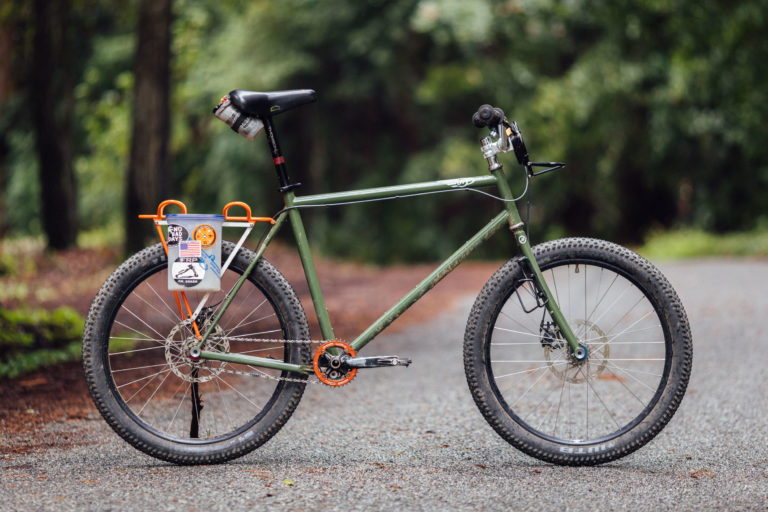
The all terrain bike? Yeah, not so much. Two things come to mind, though:
Much better tire options.
Better drop bar options (the bars themselves).
For the application of these bikes, 90s era brakes and drive trains work fine.


 02-23-22 | 10:11 AM
#15
Senior Member

Joined: Jun 2015
Posts: 5,797
Likes: 1,805
From: North Central Wisconsin
Thanks for the thumbs up.
I don't really know how much defending i can or should do.
For those who agree with me--because they have experience in international bike markets, because they might be retrogrouches or fans of classic bikes, who are just inclined via temperament to see technological change for change's sake as a gimmick, or who just didn't get the message to ditch their ATB, I don't have to defend my position.
For those who disagree with me, no defense will convince them--and yeah, I know there are arguments for laterally stiff but vertically complient frames and disc brakes, but if all this stuff was better as an objective fact, then half of the conversations on this forum wouldn't have happened and we all would be riding the stuff without question. But we aren't.
The last complete bike I purchased was in 1995. Since then, I have been so dissatisfied and disillusioned with the market that I build my own bikes. And I have built and ridden carbon bikes, and even with suspension! I just didn't keep them. When I see an article about an innovation that has as the first photo a bike that looks a whole lot like my 1992 steel, rigid, 26 inch mountain bike, gravel bikes that are less capable than was my 1993 RBT, or "modern" mtb geometry that seems like it was ripped off of a Repack beach cruiser, then it makes me wonder what all this technological progress really means.
Has it actually improved the experience of cycling? Not to open another can of worms, but boes running tubeless really send you to a nirvana that is unavailable with tubes?
I don't really know how much defending i can or should do.
For those who agree with me--because they have experience in international bike markets, because they might be retrogrouches or fans of classic bikes, who are just inclined via temperament to see technological change for change's sake as a gimmick, or who just didn't get the message to ditch their ATB, I don't have to defend my position.
For those who disagree with me, no defense will convince them--and yeah, I know there are arguments for laterally stiff but vertically complient frames and disc brakes, but if all this stuff was better as an objective fact, then half of the conversations on this forum wouldn't have happened and we all would be riding the stuff without question. But we aren't.
The last complete bike I purchased was in 1995. Since then, I have been so dissatisfied and disillusioned with the market that I build my own bikes. And I have built and ridden carbon bikes, and even with suspension! I just didn't keep them. When I see an article about an innovation that has as the first photo a bike that looks a whole lot like my 1992 steel, rigid, 26 inch mountain bike, gravel bikes that are less capable than was my 1993 RBT, or "modern" mtb geometry that seems like it was ripped off of a Repack beach cruiser, then it makes me wonder what all this technological progress really means.
Has it actually improved the experience of cycling? Not to open another can of worms, but boes running tubeless really send you to a nirvana that is unavailable with tubes?
I started cycling in the 80's. I'll take 1x drivetrains, cartridge bearing hubs, better tire technology, disc brakes, longer lasting parts, etc. over that crap that was available in the 80's and 90's any day of the week.
Last edited by prj71; 02-23-22 at 10:16 AM.
 02-23-22 | 10:13 AM
#16
Advanced Slacker
Joined: Feb 2017
Posts: 6,286
Likes: 2,602
Bikes: Soma Fog Cutter, Surly Wednesday, Canfielld Tilt
Surly has been making some version (many, actually) of what the author is talking about for at least 15 years.
We also saw some version of this in the Monster-cross movement a while back.
In the end, there has always been some market for these bikes, but it has been small and will likely continue to be so, IMO.
For me personally, I love the IDEA of this kind of bike, but when I actually built one, I found that after the novelty wore off, I did not have a lot of use for it. I found for most rides I either wanted my All-Road bike or one of my MTBs. That’s not to say I never had a use for it, but not enough that it was worth keeping around.
That probably has a lot to do where I live and how I ride. If I lived out west or just spent more time on extended adventure/bikepacking rides (which I would love to do if I have the chance) I would get one of these again.
We also saw some version of this in the Monster-cross movement a while back.
In the end, there has always been some market for these bikes, but it has been small and will likely continue to be so, IMO.
For me personally, I love the IDEA of this kind of bike, but when I actually built one, I found that after the novelty wore off, I did not have a lot of use for it. I found for most rides I either wanted my All-Road bike or one of my MTBs. That’s not to say I never had a use for it, but not enough that it was worth keeping around.
That probably has a lot to do where I live and how I ride. If I lived out west or just spent more time on extended adventure/bikepacking rides (which I would love to do if I have the chance) I would get one of these again.
02-23-22 | 10:23 AM
#17
Senior Member
Joined: Jun 2015
Posts: 5,797
Likes: 1,805
From: North Central Wisconsin
Surly has been making some version (many, actually) of what the author is talking about for at least 15 years.
We also saw some version of this in the Monster-cross movement a while back.
In the end, there has always been some market for these bikes, but it has been small and will likely continue to be so, IMO.
For me personally, I love the IDEA of this kind of bike, but when I actually built one, I found that after the novelty wore off, I did not have a lot of use for it. I found for most rides I either wanted my All-Road bike or one of my MTBs. That’s not to say I never had a use for it, but not enough that it was worth keeping around.
That probably has a lot to do where I live and how I ride. If I lived out west or just spent more time on extended adventure/bikepacking rides (which I would love to do if I have the chance) I would get one of these again.
We also saw some version of this in the Monster-cross movement a while back.
In the end, there has always been some market for these bikes, but it has been small and will likely continue to be so, IMO.
For me personally, I love the IDEA of this kind of bike, but when I actually built one, I found that after the novelty wore off, I did not have a lot of use for it. I found for most rides I either wanted my All-Road bike or one of my MTBs. That’s not to say I never had a use for it, but not enough that it was worth keeping around.
That probably has a lot to do where I live and how I ride. If I lived out west or just spent more time on extended adventure/bikepacking rides (which I would love to do if I have the chance) I would get one of these again.

 02-23-22 | 10:50 AM
#20

Senior Member
Joined: May 2021
Posts: 11,620
Likes: 7,017
02-23-22 | 11:04 AM
#21
Senior Member
Joined: Oct 2020
Posts: 478
Likes: 254
People always say that about this topic. Not much different than "gravel bikes" they have been called the same thing. Its not really true or what the author is getting at.
More accurate would be a bike thats not pigeon holed into just being able to do one thing and thats it. I feel like the author is promoting a idea or a feeling and not really a bike type.
More accurate would be a bike thats not pigeon holed into just being able to do one thing and thats it. I feel like the author is promoting a idea or a feeling and not really a bike type.
02-23-22 | 11:07 AM
#22

Sunshine
Joined: Aug 2014
Posts: 18,744
Likes: 10,298
From: Des Moines, IA
Bikes: '18 class built steel roadbike, '19 Fairlight Secan, '88 Schwinn Premis , Black Mountain Cycles Monstercross V4, '89 Novara Trionfo
It was OK to read, I guess. It was just a lot of complaining about categories of bikes, and then asking for a specific category of bike to be focused on more.
If flatbar adventure riding were more popular, there would be more of these bikes.
Same reality for Pennyfarthings.
I think the other challenge here is that so many of these types of bikes are built frame up or are parts bin builds. That was probably done for a long time out of necessity, but at this point there is just so much customization and individuality going on that those who do like this genre are very dedicated in their ways. Watered down versions from larger brands would almost certainly be criticized for missing the mark and/or trying to monetize on a subcategory(where has that overused claim been used recently?).
If flatbar adventure riding were more popular, there would be more of these bikes.
Same reality for Pennyfarthings.
I think the other challenge here is that so many of these types of bikes are built frame up or are parts bin builds. That was probably done for a long time out of necessity, but at this point there is just so much customization and individuality going on that those who do like this genre are very dedicated in their ways. Watered down versions from larger brands would almost certainly be criticized for missing the mark and/or trying to monetize on a subcategory(where has that overused claim been used recently?).
02-23-22 | 11:09 AM
#23
Shawn of the Dead
Joined: Apr 2021
Posts: 578
Likes: 450
@ US Consumer, "We, the cycling press, as dutiful mouthpieces of the marketing departments of bike makers, would like to tell you something that has absolutely nothing to do with our need to sell more bikes.
In the 1990s, we duped you into tossing out your bikes that could do everything, let's call it your bikes for all terrains. We played on your fantasy that despite being middle aged and over weight, that you were really a bike racer at heart (just keep the heart rate reasonable, please). You therefore need bike racing equipment, one bike only for pavement, another bike only for dirt (but it turns out that there are so many kinds of dirt, so so many kinds of bikes for dirt). We convinced you that the best place to shave weight from your set-up was in a plastic frame (not your body), and that it was ok to add that weight back with disc brakes...oh, you don't know they usually weigh more than cantis, ok, pretend I didn't say anything...
In fact, we would like you to believe that "most everywhere else" in the world people also ditched these bikes for mountain bikes. Please ignore the fact that this isn't true--in "most everwhere else," and not just in France, people recognized the need and desirability of a do it all bike, and this type of bike continued to be made. And no one in "everywhere else" would call an ATB (or whatever the local translation happens to be--we only bothered to look up the French term because, you know it's France) a mountain bike, or call a mountain bike an ATB.
In "most everywhere else," people resisted the kind of marketing talk that killed companies like Bridgestone in the US and has reliably gotten you, the US consumer, to buy our bikes at our say so.
But I digress. We would like to inform you how great it would be for us if you once more bought the kind of bike we convinced you to toss in the 1990s. And it is totally different than the gravel bike we already got you to buy because, um, that kind of bike is only good on gravel, not all terrain types.
And best of all, the French are doing it. And you know, the French and bikes are a really cool combination."
In the 1990s, we duped you into tossing out your bikes that could do everything, let's call it your bikes for all terrains. We played on your fantasy that despite being middle aged and over weight, that you were really a bike racer at heart (just keep the heart rate reasonable, please). You therefore need bike racing equipment, one bike only for pavement, another bike only for dirt (but it turns out that there are so many kinds of dirt, so so many kinds of bikes for dirt). We convinced you that the best place to shave weight from your set-up was in a plastic frame (not your body), and that it was ok to add that weight back with disc brakes...oh, you don't know they usually weigh more than cantis, ok, pretend I didn't say anything...
In fact, we would like you to believe that "most everywhere else" in the world people also ditched these bikes for mountain bikes. Please ignore the fact that this isn't true--in "most everwhere else," and not just in France, people recognized the need and desirability of a do it all bike, and this type of bike continued to be made. And no one in "everywhere else" would call an ATB (or whatever the local translation happens to be--we only bothered to look up the French term because, you know it's France) a mountain bike, or call a mountain bike an ATB.
In "most everywhere else," people resisted the kind of marketing talk that killed companies like Bridgestone in the US and has reliably gotten you, the US consumer, to buy our bikes at our say so.
But I digress. We would like to inform you how great it would be for us if you once more bought the kind of bike we convinced you to toss in the 1990s. And it is totally different than the gravel bike we already got you to buy because, um, that kind of bike is only good on gravel, not all terrain types.
And best of all, the French are doing it. And you know, the French and bikes are a really cool combination."
Sometimes I buy a bike just because of how it looks. I am ordering a way more expensive mountain bike than I need because the cheaper one doesn't come in the color I want. I'm stupid like that LOL. I'm happy to have an old hardtail MTB and a new one on order. I wish I hadn't sold my late 80s Specialized Rockhopper comp. I like spending my coin on bikes and bike stuff and would hate if they were all the same or similar.
Heck , I bought an SLR 6 vs the cheaper one based on color and the team Zegafredo sticker .... that was honestly the main reason ...is it nicer than the lower spec model ...heck yeah. Do I need all the higher spec stuff ....heck no.
Did I need an "R" model Ducati over the already light years beyond my ability "S" model ...nope ....but I wanted it . I am a marketers wet dream LOL
02-23-22 | 11:14 AM
#24

Senior Member
Joined: May 2010
Posts: 5,628
Likes: 2,500
From: Bastrop Texas
Bikes: Univega, Peu P6, Peu PR-10, Ted Williams, Peu UO-8, Peu UO-18 Mixte, Peu Dolomites
ATB, Mountain Bike, Road Bike, Hybrid, City, Touring, Cross, Gravel, Gezzer, Special Needs, Big Box... Yikes! Franken too...
Or middle ground between "Road" and "Gravel" and what just is a name or classification. Anyway, it's a good article. I am sure the concept of the ATB never left us. Personally I feel the modern "Gravel Bikes" are just our old style "Mountain Bikes" with modern components. And our new "Mountain Bikes", WOW... What an engineering marvel, they are beautiful!
Or middle ground between "Road" and "Gravel" and what just is a name or classification. Anyway, it's a good article. I am sure the concept of the ATB never left us. Personally I feel the modern "Gravel Bikes" are just our old style "Mountain Bikes" with modern components. And our new "Mountain Bikes", WOW... What an engineering marvel, they are beautiful!
__________________
 No matter where you're at... There you are... Δf:=f(1/2)-f(-1/2)
Last edited by zandoval; 02-23-22 at 11:27 AM.
02-23-22 | 11:23 AM
#25
Thread Starter
Guest
Joined: Sep 2020
Posts: 2,886
Likes: 3,279
The point seemed pretty clear that the terms "mountain bike" and "gravel bike" have become so encompassing as to be meaningless, and that non-racing, multi-terrain bikes that are neither of those should have their own category in order to more accurately differentiate them for the consumer.
I don't have a strong opinion on the nomenclature, but I agree that the terms "mountain" and "gravel" carry connotations that don't apply to all the bikes that get categorized as such.
I don't have a strong opinion on the nomenclature, but I agree that the terms "mountain" and "gravel" carry connotations that don't apply to all the bikes that get categorized as such.