


Do people ever do a "Century" ride on a straight bar?

 08-18-24 | 09:07 AM
#2

Senior Member

Joined: Oct 2005
Posts: 5,556
Likes: 1,827
From: Southwestern Ontario
Yes; three times, in my case. No issues at all. People have ridden and continue to ride tens of thousands of kms. on straight (flat) bars: across country, around the world; Alaska to Patagonia ... everywhere ... just as they do on drop bars. Personal preference combined with objectives for the ride -- those are the deciding factors, nothing else.

 08-18-24 | 09:19 AM
#4
Senior Member

Joined: May 2017
Posts: 2,426
Likes: 2,275
From: Hacienda Hgts
Bikes: 2026 Motobecane Mulekick 520 Steel 1999 Schwinn Peloton Ultegra 10, Kestrel RT-1000 Ultegra, Trek Marlin 6 Deore 29'er
Over a 100 miles, you will be expending more energy over the same distance on a flat bar bike.
 08-18-24 | 09:29 AM
#5

Senior Member
Joined: May 2021
Posts: 11,620
Likes: 7,017
08-18-24 | 10:09 AM
#6
Senior Member
Joined: Oct 2005
Posts: 5,556
Likes: 1,827
From: Southwestern Ontario

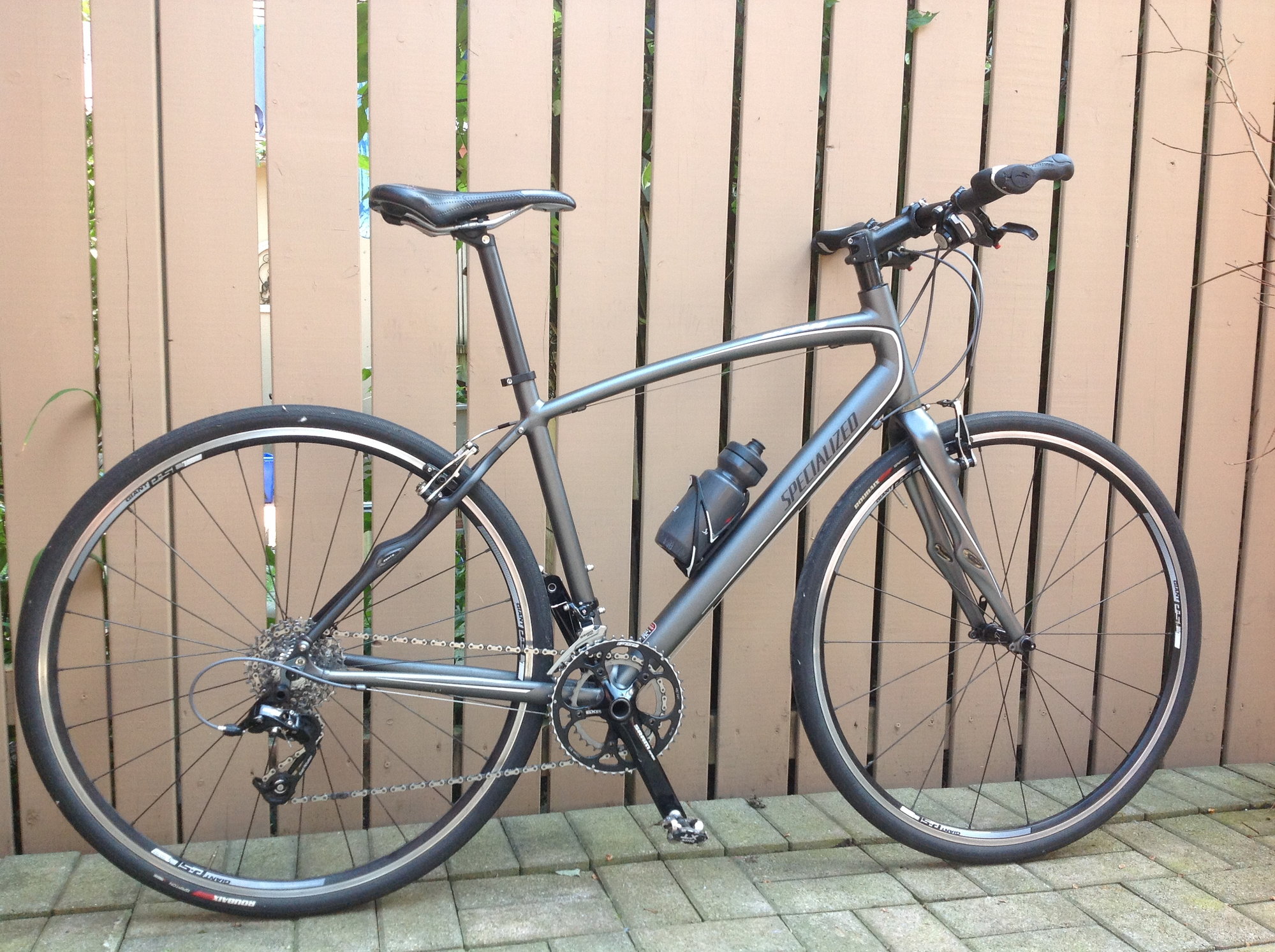
That said, I still maintain there is no inherent significant difference between the two 'types' for a recreational cyclist doing a long-distance ride, especially solo : choice depends on personal preference. My preference was and is for simple flat bars w/bar ends. As it happens, the bike I used for those 'century' rides (true ones, 100+ miles) was set up (with lbs) to put me in the same position as I would have on the then-current Spec Roubaix. Position when I was 'on the grips' was slightly forward (torso angle) of where I would be on the 'tops' on a Roubaix; position on the bar ends was pretty much equivalent to where I would be on the hoods on a Roubaix. Main difference was that my arms were of course spread a bit wider (580mm as opposed to 400/420mm), so a slight 'aero' penalty there, and of course no drops. Other than that, there wasn't much in it. I miss that bike; sadly, it was stolen a couple years ago. A pic of it in 'daily driver'/ride to work mode.
 08-18-24 | 10:26 AM
#7

I climb a lot


Joined: Mar 2023
Posts: 2,590
Likes: 5,621
From: NorCal
Bikes: Santa Cruz Blur 4 TR, Santa Cruz Hightower, Canyon Ultimate cf slx(x2), Canyon Endurace cf sl(rain bike,) Obed GVR, Ritchey Swiss Cross v3, Lauf Seigla rigid
I've done long MTB rides/races on my flat bar XC bike, as well as doing centuries on my drop bar bikes. Assuming the terrain isn't technical MTB terrain, I'd much rather ride with the drop bars. The improved aerodynamics and comfort are the driving factors for me.
As far as flat bars/MTBs go, I have a fairly aero position on XC bike(big saddle to bar drop.) That being said, the bars are nearly twice the width as my most narrow drop bar. In racing scenarios, I'm often holding the bars inboard of the brake levers or holding the aero "puppy paws" position(when on non-technical parts of the course.)
I have carpal-tunnel syndrome in both wrists, my symptoms most often flare up when using flat bars. The multiple hand positions offered by drop bars definitely helps too.
As far as flat bars/MTBs go, I have a fairly aero position on XC bike(big saddle to bar drop.) That being said, the bars are nearly twice the width as my most narrow drop bar. In racing scenarios, I'm often holding the bars inboard of the brake levers or holding the aero "puppy paws" position(when on non-technical parts of the course.)
I have carpal-tunnel syndrome in both wrists, my symptoms most often flare up when using flat bars. The multiple hand positions offered by drop bars definitely helps too.
08-18-24 | 10:30 AM
#8
Thread Starter
Newbie
Joined: Jun 2012
Posts: 29
Likes: 1
Then, I read people say, oh, don't get a hybrid they're dying. Yet, outside of a hybrid I don't want a cruiser.
Plus, sometimes the straight bars hurt my hands, so I wanted to switch them.
08-18-24 | 10:34 AM
#9

Klaatu..Verata..Necktie?


Joined: May 2007
Posts: 23,771
Likes: 17,226
From: SF Bay Area
Bikes: Litespeed Ultimate, Ultegra; Canyon Endurace, 105; Battaglin MAX, Chorus; Bianchi 928 Veloce; Ritchey Road Logic, Dura Ace; Cannondale R500 RX100; Schwinn Circuit, Sante; Lotus Supreme, Dura Ace
Flat bars have basically one hand position, with the wrists fully pronated. Drop bars have at least 6 different hand positions, most of which allow a more neutral wrist position. Also, in most of those positions the arms run straight from the shoulders to the bar, rather than splayed out to the sides. If you're riding into the wind, or down a descent, you can get in the drops for better aerodynamics.
The key is that the bike has to be set up properly. It's not like you put a drop bar at the same height and distance as a flat bar, because then the hoods will be too far away and you'll end up riding on the tops all the time.
The key is that the bike has to be set up properly. It's not like you put a drop bar at the same height and distance as a flat bar, because then the hoods will be too far away and you'll end up riding on the tops all the time.
__________________
"Don't take life so serious-it ain't nohow permanent."
"Everybody's gotta be somewhere." - Eccles
"Don't take life so serious-it ain't nohow permanent."
"Everybody's gotta be somewhere." - Eccles
08-18-24 | 11:06 AM
#10

I rode with drop bars exclusively for 40 years. Then, after I developed ulnar nerve damage that surgery didn't fix completely, I added a set of aero bars to my drop bars.
Now, almost 20 years later, I alternate between bikes with flat bars and bullhorn bars, both fitted with aero bars. Still have a couple of bikes with drop bars plus aero bars, but I rarely ride them. All else equal, I find that bikes with flat bars and aero bars are safer in traffic than bikes with drop bars and faster elsewhere.
An incident I just remembered that illustrates the benefit of aero bars versus drops:
A year or so after Trek came out with their 5200 OCLV carbon model, which had the lightest production frame on the market, I sold one to a friend of mine. We went out on a training ride a few days later. He was riding his Trek; I was on a mid-level steel Schwinn that I'd converted from drops to flat bars and aero bars.
We were generally about equal in strength, climbing ability, etc., but that day, a couple of hours in, I unintentionally dropped him repeatedly over several miles of a long, slightly rolling stretch of road. (Having just sold him the 5200, which was arguably the most advanced bike on the market, I felt an obscure urge to apologize.)
Now, almost 20 years later, I alternate between bikes with flat bars and bullhorn bars, both fitted with aero bars. Still have a couple of bikes with drop bars plus aero bars, but I rarely ride them. All else equal, I find that bikes with flat bars and aero bars are safer in traffic than bikes with drop bars and faster elsewhere.
An incident I just remembered that illustrates the benefit of aero bars versus drops:
A year or so after Trek came out with their 5200 OCLV carbon model, which had the lightest production frame on the market, I sold one to a friend of mine. We went out on a training ride a few days later. He was riding his Trek; I was on a mid-level steel Schwinn that I'd converted from drops to flat bars and aero bars.
We were generally about equal in strength, climbing ability, etc., but that day, a couple of hours in, I unintentionally dropped him repeatedly over several miles of a long, slightly rolling stretch of road. (Having just sold him the 5200, which was arguably the most advanced bike on the market, I felt an obscure urge to apologize.)
08-18-24 | 11:20 AM
#11

Facts just confuse people
Joined: Jul 2017
Posts: 19,374
Likes: 7,077
From: Mississippi
Bikes: Tarmac Disc Comp Di2 - 2020
It's very obvious that you can. My son even did his first century with me and rode the only bike he had at the time, a flat bar mountain bike 29er. A Trek Marlin weighing in at very heavy.
He saw the advantages of less weight and more aero on that ride. He got a Trek Emonda for the next century ride.
If you get a lightweight hybrid, you'll be better off than those on heavy hybrid if you wish to do centuries. But if you are performance oriented in your cycling, then consider the advantages of aero and being able to change up your hand positions on a drop bar which also changes the leverage of your body's ability to put power into the pedals for the times you wish to go very hard.
If you are not performance oriented, then the no-brainer should be that any bicycle or tricycle is acceptable. Just so long as you finish before the SAG time.
He saw the advantages of less weight and more aero on that ride. He got a Trek Emonda for the next century ride.
If you get a lightweight hybrid, you'll be better off than those on heavy hybrid if you wish to do centuries. But if you are performance oriented in your cycling, then consider the advantages of aero and being able to change up your hand positions on a drop bar which also changes the leverage of your body's ability to put power into the pedals for the times you wish to go very hard.
If you are not performance oriented, then the no-brainer should be that any bicycle or tricycle is acceptable. Just so long as you finish before the SAG time.
08-18-24 | 11:45 AM
#12

Senior Member

Joined: Jan 2010
Posts: 45,395
Likes: 23,565
I rode across the country self contained with a dozen other people. One participant had a flat bar hybrid. We had at least 2 century days on that trip.
EDIT: Totally forgot that there were two flat bar riders on the trip.
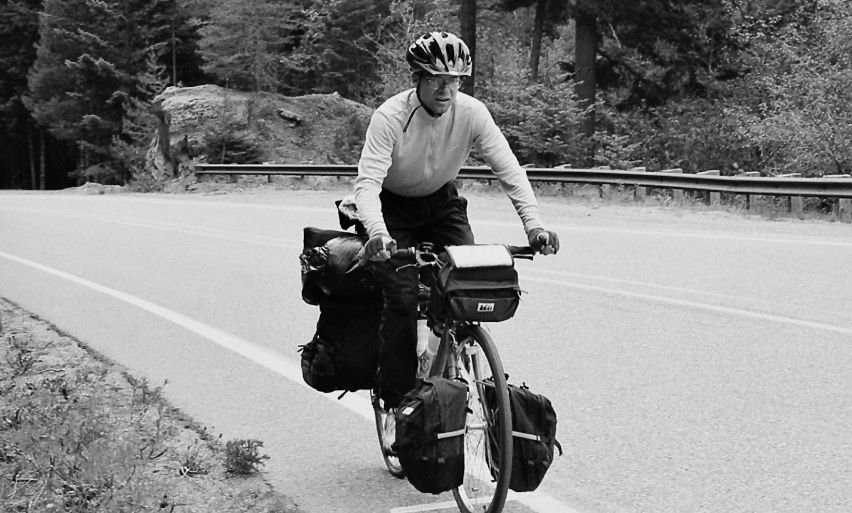
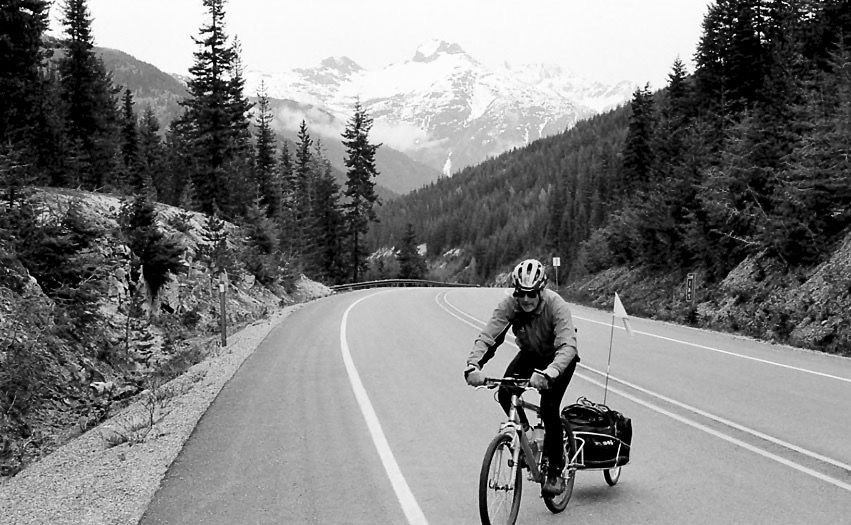
Also forgot about the ex-GF and I doing a century in MT to get from St. Mary to the west side of Glacier N.P. (Sprague Creek C.G.) because Logan Pass was still closed.
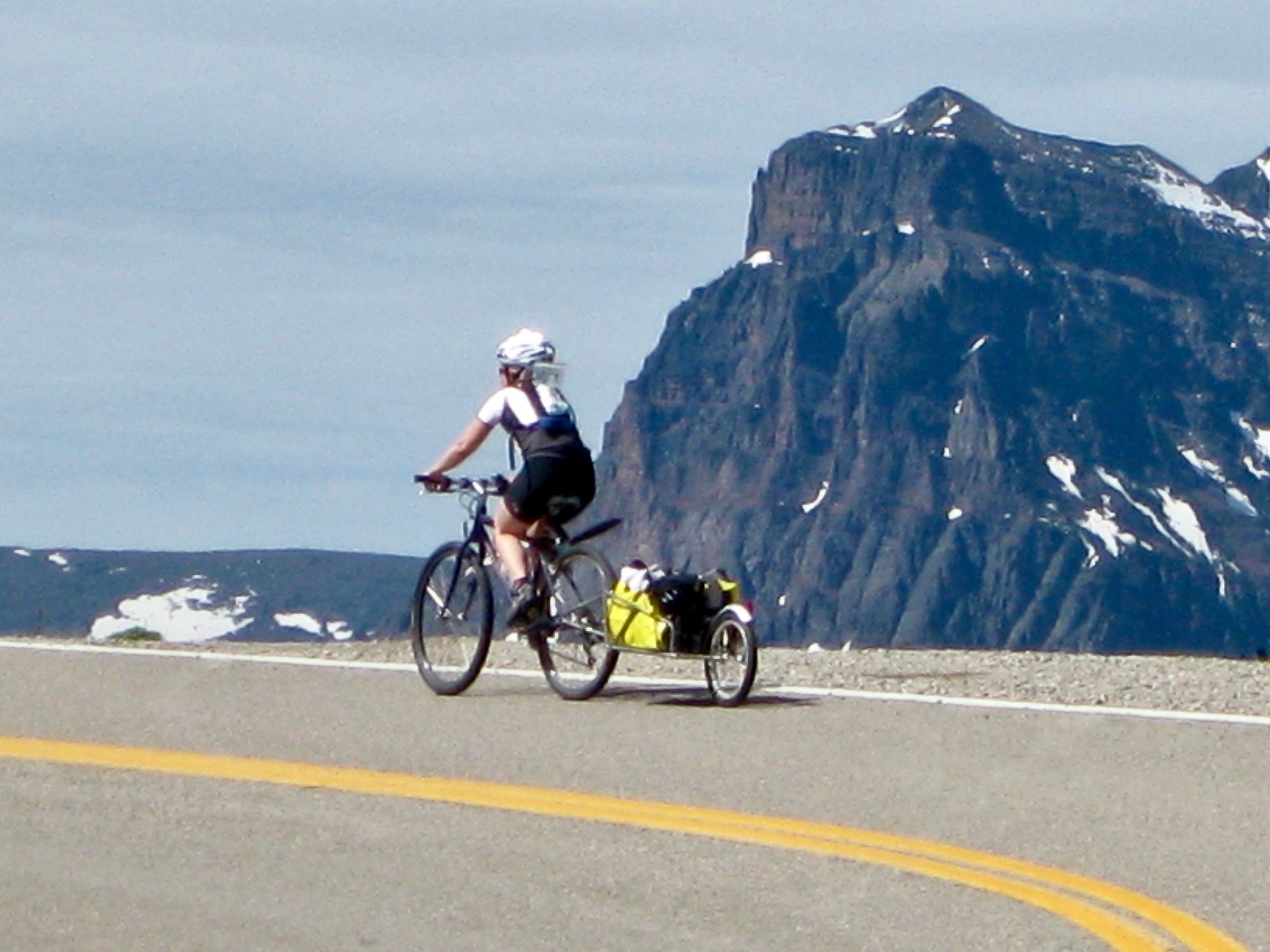
EDIT: Totally forgot that there were two flat bar riders on the trip.
Also forgot about the ex-GF and I doing a century in MT to get from St. Mary to the west side of Glacier N.P. (Sprague Creek C.G.) because Logan Pass was still closed.
Last edited by indyfabz; 08-19-24 at 06:29 AM.

 08-18-24 | 01:37 PM
#14
Banned
Joined: Jun 2007
Posts: 12,585
Likes: 6,538
From: TN
Yes. Because I don't know I want the drop bar, and I like the option of replacing the flat bar with something like the Surly bar. I also wanted to try and ride it a long way, but I always see that being done on drop bars.
Then, I read people say, oh, don't get a hybrid they're dying. Yet, outside of a hybrid I don't want a cruiser.
Plus, sometimes the straight bars hurt my hands, so I wanted to switch them.
Then, I read people say, oh, don't get a hybrid they're dying. Yet, outside of a hybrid I don't want a cruiser.
Plus, sometimes the straight bars hurt my hands, so I wanted to switch them.
 08-18-24 | 01:59 PM
#15
Thread Starter
Newbie
Joined: Jun 2012
Posts: 29
Likes: 1
It's very obvious that you can. My son even did his first century with me and rode the only bike he had at the time, a flat bar mountain bike 29er. A Trek Marlin weighing in at very heavy.
He saw the advantages of less weight and more aero on that ride. He got a Trek Emonda for the next century ride.
If you get a lightweight hybrid, you'll be better off than those on heavy hybrid if you wish to do centuries. But if you are performance oriented in your cycling, then consider the advantages of aero and being able to change up your hand positions on a drop bar which also changes the leverage of your body's ability to put power into the pedals for the times you wish to go very hard.
If you are not performance oriented, then the no-brainer should be that any bicycle or tricycle is acceptable. Just so long as you finish before the SAG time.
He saw the advantages of less weight and more aero on that ride. He got a Trek Emonda for the next century ride.
If you get a lightweight hybrid, you'll be better off than those on heavy hybrid if you wish to do centuries. But if you are performance oriented in your cycling, then consider the advantages of aero and being able to change up your hand positions on a drop bar which also changes the leverage of your body's ability to put power into the pedals for the times you wish to go very hard.
If you are not performance oriented, then the no-brainer should be that any bicycle or tricycle is acceptable. Just so long as you finish before the SAG time.
08-18-24 | 02:01 PM
#16
Senior Member
Joined: May 2021
Posts: 11,620
Likes: 7,017
That said, I still maintain there is no inherent significant difference between the two 'types' for a recreational cyclist doing a long-distance ride, especially solo : choice depends on personal preference. My preference was and is for simple flat bars w/bar ends. As it happens, the bike I used for those 'century' rides (true ones, 100+ miles) was set up (with lbs) to put me in the same position as I would have on the then-current Spec Roubaix. Position when I was 'on the grips' was slightly forward (torso angle) of where I would be on the 'tops' on a Roubaix; position on the bar ends was pretty much equivalent to where I would be on the hoods on a Roubaix. Main difference was that my arms were of course spread a bit wider (580mm as opposed to 400/420mm), so a slight 'aero' penalty there, and of course no drops. Other than that, there wasn't much in it. I miss that bike; sadly, it was stolen a couple years ago. A pic of it in 'daily driver'/ride to work mode.
Is this obvious drop bar bias simply because most road bikes are sold with drop bars or are they just better suited for most riders on these events? I tend to think the latter, although I can see how a flat bar with bar ends would get closer. But if we are talking about using a pure flat bar then I think it’s no contest.
When it comes to more leisurely road riding then flat bars become far more popular in a more upright riding position.
FWIW I ride mostly on the hoods, but use the drops for technical descents and tops for climbing or sitting up. Braking on the hioods is also pretty effective with modern hydraulic brakes. Mountain biking is the only time I prefer flat bars and they are far wider.
08-18-24 | 03:04 PM
#17
Senior Member
Joined: Nov 2022
Posts: 996
Likes: 695
From: California's capital
Bikes: Litespeed Firenze, Spot Acme, Specialzed S Works Pro Race, Davidson Stiletto, Colnago Superissimo
Never tried. Could envision it but only if it has bar ends for varied positions. Personally need to move my hands on longer rides.
The typical more upright riding position will lower average speed on the flats.
Had a friend who could do a century on his high-wheeler--amazingly strong rider. Also saw a dude ride a fixie on a different century. No idea if he finished.
In sum no rules, just what a given rider can manage on a given day.
The typical more upright riding position will lower average speed on the flats.
Had a friend who could do a century on his high-wheeler--amazingly strong rider. Also saw a dude ride a fixie on a different century. No idea if he finished.
In sum no rules, just what a given rider can manage on a given day.
08-18-24 | 04:47 PM
#18

Senior Member
Joined: Jun 2008
Posts: 1,145
Likes: 780
From: Shanghai, China
Bikes: Waltly Custom Ti // Seaboard CX01 // Dahon Boardwalk
I did my first ever centuries (metric and imperial) on a flat bar fitness hybrid many years ago. I do them today on a drop bar road or gravel bike. While the flat bar did work, for me it's far more comfortable to do those kind of distances on a drop bar for more comfort and speed.
08-18-24 | 08:25 PM
#19
Senior Member
Joined: Feb 2011
Posts: 1,123
Likes: 49
Bikes: 29er commuter/tourer, 26er commuter/tourer, folding mixed-mode commuter
I've done a few centuries on mildly swept (not to the point of being considered an alt-bar) "flat" bars. Once a flat bar's position gets dialed in, it can be very comfortable over long distances.
08-18-24 | 08:27 PM
#20
Senior Member
Joined: Feb 2011
Posts: 1,123
Likes: 49
Bikes: 29er commuter/tourer, 26er commuter/tourer, folding mixed-mode commuter
How upright one rides will have a far greater effect on speed than handlebar type. An aggressively low flat bar will allow higher speeds than a comfortably high drop bar will allow.
08-18-24 | 08:40 PM
#21
Senior Member
Joined: May 2021
Posts: 11,620
Likes: 7,017
Last edited by PeteHski; 08-18-24 at 08:44 PM.
08-18-24 | 08:46 PM
#22
Senior Member
Joined: Feb 2011
Posts: 1,123
Likes: 49
Bikes: 29er commuter/tourer, 26er commuter/tourer, folding mixed-mode commuter
For most people, the trunk creates much more wind resistance than do the arms.
Aggressively low flat bars are not exactly uncommon.
08-18-24 | 08:52 PM
#23
Senior Member
Joined: May 2021
Posts: 11,620
Likes: 7,017
They don't need to be of similar width if they're installed substantially lower, unless the cyclist has a bizarre combination of no pectoral muscles or shoulder muscles to speak of, but does have 32-inch biceps and massive forearms.
For most people, the trunk creates much more wind resistance than do the arms.
Aggressively low flat bars are not exactly uncommon.
For most people, the trunk creates much more wind resistance than do the arms.
Aggressively low flat bars are not exactly uncommon.
08-18-24 | 08:59 PM
#24
Senior Member
Joined: Feb 2011
Posts: 1,123
Likes: 49
Bikes: 29er commuter/tourer, 26er commuter/tourer, folding mixed-mode commuter
All else equal, narrower bars are more aero than wider bars.
This discussion has not been an "all else equal" discussion. There are plenty of levers for a bicyclist to substantially improve their aerodynamics without switching from a flat bar.
08-18-24 | 09:58 PM
#25

Rider. Wanderer. Creator.
Joined: May 2007
Posts: 2,979
Likes: 4,265
From: New Jersey
Bikes: Bike Friday All-Packa, Zizzo Liberte, Ozark Trail G.1 Explorer
As others have noted, many people have done centuries on straight bars. But drop bars are clearly more common in long distance endeavors because they offer varied hand positions and are more aerodynamic. If you don't like drop bars, it may be that you've never been properly fitted for them to feel comfortable; bars that are even 1cm too far away can cause shoulder and neck pain.
A compromise of sorts that I've been using recently is a flat bar with forward pointing stubs about shoulder-width apart. Some people call them inner bar ends and they kind of resemble aerobars. The flat bars, which these days are quite wide, give me control on technical terrain, while the inner bar ends give me an alternate handlebar position that is akin to riding the hoods of a drop bar and much more aerodynamic.
Here's a short video demonstrating the bars.
A compromise of sorts that I've been using recently is a flat bar with forward pointing stubs about shoulder-width apart. Some people call them inner bar ends and they kind of resemble aerobars. The flat bars, which these days are quite wide, give me control on technical terrain, while the inner bar ends give me an alternate handlebar position that is akin to riding the hoods of a drop bar and much more aerodynamic.
Here's a short video demonstrating the bars.
__________________
Rider. Wanderer. Creator.
JohnMFlores.com | YouTube: JohnMFlores
Insta: JohnMichaelFlores | Substack: https://followingwyman.substack.com/
Rider. Wanderer. Creator.
JohnMFlores.com | YouTube: JohnMFlores
Insta: JohnMichaelFlores | Substack: https://followingwyman.substack.com/
