


Aero Wheels Worth Adding 2 Pounds?
 10-19-10 | 04:05 PM
#1
Thread Starter
eMail Sold to Spammers
Joined: Oct 2010
Posts: 522
Likes: 19
Aero Wheels Worth Adding 2 Pounds?
I have done some searches and read a few threads comparing light weight wheels vs. aerodynamic wheels. The consesus that I got out of reading those threads was that aero wheels are superior.
I have been looking at different wheels. I found a light weight set at 1360g and an aero 5 spoke set that weighs 2900g in about the same price range. That is a 2# difference.
Are the aero wheels still that much superior?
I have been looking at different wheels. I found a light weight set at 1360g and an aero 5 spoke set that weighs 2900g in about the same price range. That is a 2# difference.
Are the aero wheels still that much superior?
 10-19-10 | 04:13 PM
#3

No matches
Joined: Aug 2008
Posts: 11,647
Likes: 444
From: Eastern PA
Bikes: two wheeled ones
I'm guessing you actually meant 1900g, because, well, a 2900g wheelset would make an excellent downhill MTB wheelset.
It would depend on how aero the 5 spoke is (probably not real aero, those are relatively old design probably), and how fast you ride, and how steep the road is.
Too many variables to just say "aero is better". If you're climbing a 10% mountain, then light is better unless you're going really, really fast, but it also depends on how much lighter, and how much more aero, etc.
It would depend on how aero the 5 spoke is (probably not real aero, those are relatively old design probably), and how fast you ride, and how steep the road is.
Too many variables to just say "aero is better". If you're climbing a 10% mountain, then light is better unless you're going really, really fast, but it also depends on how much lighter, and how much more aero, etc.

 10-19-10 | 04:25 PM
#7
Thread Starter
eMail Sold to Spammers
Joined: Oct 2010
Posts: 522
Likes: 19
 They're more about durability and looks right? I know they're pretty popular in the FG/SS crowd.
10-19-10 | 04:31 PM
They're more about durability and looks right? I know they're pretty popular in the FG/SS crowd.
10-19-10 | 04:31 PM
#9
No matches
Joined: Aug 2008
Posts: 11,647
Likes: 444
From: Eastern PA
Bikes: two wheeled ones
They're a joke as far as aero goes, and they weigh about as much as most bikes.
10-19-10 | 04:31 PM
#10
Banned.
Joined: Aug 2010
Posts: 732
Likes: 0
You need to learn your conversions then, that's a 3.3 lb difference. Assuming you are light enough to.make 1300 gram wheels daily riders there are probably other aero rims that would be better. Seems if.your that light.a. deep v rim which is.strong with a low spoke count to reduce weight would be in.the.same price range and be a happy medium.
10-19-10 | 04:34 PM
#11
Senior Member


Joined: Feb 2007
Posts: 15,410
Likes: 189
From: Tariffville, CT
Bikes: Tsunami road bikes, Dolan DF4 track
First, the short answer. No, not for normal speeds (avg under 20 mph).
Now the long part.
Even at 22 mph not really, at least not for me (250w FTP on a good day). They make a noticeable difference once you're sustaining (even for brief amounts of time, 20-30 seconds), 30+ mph. For me that means less than a minute, but if I can go really fast for a minute, I really like it
Incidentally you're looking at 1600 grams difference. That's about 3.5 lbs at 454 grams per pound.
First, make sure that the 5 spoke wheel is really aero. If it's the Aerospoke wheel, it's not aero. It's slower than a lot of wheels out there. If it's the Mavic 5 spoke or similar... well, now you're talking. But it wouldn't be 2900g.
Regardless of the wheel, 2 lbs is about the difference between my "non-aero" HED clinchers (Bastogne) and HED aero clinchers (Jet6 front, Jet9 rear). The Jet wheels are aero, like truly aero.
Having said that, the weight difference, to me, at solo training speeds in slightly rolling terrain (big ring hills), is noticeable, and at my sub 20 mph avg speed, the aero benefits are negligible (i.e. not noticeable).
However...
I really like going fast on the bike. I live for going fast. So I'll struggle with heavy wheels for 30 minutes if it means I can go faster for 30 seconds (compared to going 30 seconds without the aero wheels).
I will first take into account safety (so, for example, I'll think about it before going out in a hurricane on dual TriSpokes, although I've done it because I couldn't resist the idea of a 50-80 mph tailwind). If the wheels seems safe, I'll consider them. I won't use an aero front wheel if I think I'll be descending much faster than 45 mph (50-55+ mph). At that speed I usually tuck, and when I tuck I'm more vulnerable to sudden crosswinds and such. Aero front wheels become a liability at those speeds, in a tuck.
If I'm not tucking then I'll use an aero front wheel, even if I think I'll be going fast (45-ish) anyway.
I noticed a huge difference in acceleration effort with the extra 2 lbs on the wheels. Since the hubs are identical between the two wheelsets, and the cassette is virtually identical, it is the rims, tires and tubes that make the difference. I have comparable weight tires on both wheelsets, literally the same brand tubes, so it's the rims. The aero rims weigh more, a lot more, and the weight is towards the outside of the rim, the worst place to be. I pretty much used up my legs in 2-3 hard jumps with the aero clinchers versus the non-aero clinchers (this on the same course, flat, 3 turns, windy, race, so jumps from 22-25 mph to 30+ mph as hard as possible).
For training I prefer the non-aero wheels overall. But if I'm going out thinking I'll feel good (i.e. my schedule leading up to the ride means I should be riding reasonably and relatively well), I'll go out with the non-aero front and aero rear. This gives me the most stability (aero wheels up front reduce stability in any kind of wind), some aero (rear wheel is about 1/3 of aero wheelset's gains), and less of the 2 lbs weight penalty. Finally, I like the rear Jet9 simply because I have an 11T on it, and I'd like to think I need it on the fast bits (right now that means downhills or when chasing big vehicles since I rarely need even a 12T on the flats in the fall).
If I had one pair of wheels to use (and I make this choice every year when I go to my SoCal training camp), I bring either non-aero clinchers or moderately aero (46 mm) carbon clinchers. In 2011 I'll bring just the Bastognes (non-aero), but I'll put the 11T cassette on the wheels before I go out there (for sustained, tucked, over 45 mph descents). I'm debating bringing the Jet9 rear since the bike will be even faster, but dragging that weight up a climb for 2 hours will hurt (descents aren't free).
cdr
Now the long part.
Even at 22 mph not really, at least not for me (250w FTP on a good day). They make a noticeable difference once you're sustaining (even for brief amounts of time, 20-30 seconds), 30+ mph. For me that means less than a minute, but if I can go really fast for a minute, I really like it
Incidentally you're looking at 1600 grams difference. That's about 3.5 lbs at 454 grams per pound.
First, make sure that the 5 spoke wheel is really aero. If it's the Aerospoke wheel, it's not aero. It's slower than a lot of wheels out there. If it's the Mavic 5 spoke or similar... well, now you're talking. But it wouldn't be 2900g.
Regardless of the wheel, 2 lbs is about the difference between my "non-aero" HED clinchers (Bastogne) and HED aero clinchers (Jet6 front, Jet9 rear). The Jet wheels are aero, like truly aero.
Having said that, the weight difference, to me, at solo training speeds in slightly rolling terrain (big ring hills), is noticeable, and at my sub 20 mph avg speed, the aero benefits are negligible (i.e. not noticeable).
However...
I really like going fast on the bike. I live for going fast. So I'll struggle with heavy wheels for 30 minutes if it means I can go faster for 30 seconds (compared to going 30 seconds without the aero wheels).
I will first take into account safety (so, for example, I'll think about it before going out in a hurricane on dual TriSpokes, although I've done it because I couldn't resist the idea of a 50-80 mph tailwind). If the wheels seems safe, I'll consider them. I won't use an aero front wheel if I think I'll be descending much faster than 45 mph (50-55+ mph). At that speed I usually tuck, and when I tuck I'm more vulnerable to sudden crosswinds and such. Aero front wheels become a liability at those speeds, in a tuck.
If I'm not tucking then I'll use an aero front wheel, even if I think I'll be going fast (45-ish) anyway.
I noticed a huge difference in acceleration effort with the extra 2 lbs on the wheels. Since the hubs are identical between the two wheelsets, and the cassette is virtually identical, it is the rims, tires and tubes that make the difference. I have comparable weight tires on both wheelsets, literally the same brand tubes, so it's the rims. The aero rims weigh more, a lot more, and the weight is towards the outside of the rim, the worst place to be. I pretty much used up my legs in 2-3 hard jumps with the aero clinchers versus the non-aero clinchers (this on the same course, flat, 3 turns, windy, race, so jumps from 22-25 mph to 30+ mph as hard as possible).
For training I prefer the non-aero wheels overall. But if I'm going out thinking I'll feel good (i.e. my schedule leading up to the ride means I should be riding reasonably and relatively well), I'll go out with the non-aero front and aero rear. This gives me the most stability (aero wheels up front reduce stability in any kind of wind), some aero (rear wheel is about 1/3 of aero wheelset's gains), and less of the 2 lbs weight penalty. Finally, I like the rear Jet9 simply because I have an 11T on it, and I'd like to think I need it on the fast bits (right now that means downhills or when chasing big vehicles since I rarely need even a 12T on the flats in the fall).
If I had one pair of wheels to use (and I make this choice every year when I go to my SoCal training camp), I bring either non-aero clinchers or moderately aero (46 mm) carbon clinchers. In 2011 I'll bring just the Bastognes (non-aero), but I'll put the 11T cassette on the wheels before I go out there (for sustained, tucked, over 45 mph descents). I'm debating bringing the Jet9 rear since the bike will be even faster, but dragging that weight up a climb for 2 hours will hurt (descents aren't free).
cdr
10-19-10 | 04:35 PM
#12

Elitist
Joined: Jul 2005
Posts: 15,966
Likes: 94
From: Atlanta, GA
You can do a lot better for cheaper that weighs less. I would venture to guess that a set of $250 base model Mavic Aksium's would perform better.
10-19-10 | 04:35 PM
#13

Senior Member
Joined: Mar 2010
Posts: 23,208
Likes: 10,653
From: Seattle, WA
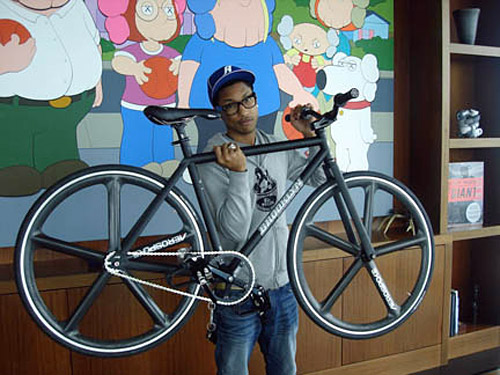
Aerospoke wheels are known for being heavy, and I've heard and read several times times that they're not particularly aerodynamic. I've only heard this from people who dislike fixies, so there could be more going on than meets the eye. But I've never been passed by anyone riding an aerospoke.
Also, for the type of riding you do, it sounds like aero wheels probably aren't worth your money.
Also, for the type of riding you do, it sounds like aero wheels probably aren't worth your money.
10-19-10 | 04:36 PM
#14
Banned.
Joined: Aug 2010
Posts: 732
Likes: 0
A guy at my.gym has them, they look nice on his fixie and he honestly looms like the guy in the pic, it.could really be him, im viewing this thread from my Droid with a.cracked.screen and can't quite tell. At any rate his, fixie has 1 brake, 1 chainrings, 1 cog, and a racing seat so even with those heavy wheels, the bike is light. I haven't asked him about their true aero properties.
10-19-10 | 04:36 PM
#15

If you're just riding on the bike trail along the Am River, then no, you don't need aero wheels. You may want aero wheels. But that's another issue altogether.
IMO, look for a good solid set of wheels in the 1550 to 1800gr range. Slightly deep (like 30mm or so). You'll be good to go. If you intend to start climbing lots of hills, and there are a LOT of 'em around, then you may want to go a bit lighter.
Best thing to do is to set a budget for yourself and get the best set of wheels you can in that budget. Handbuilt are likely the way to go.
IMO, look for a good solid set of wheels in the 1550 to 1800gr range. Slightly deep (like 30mm or so). You'll be good to go. If you intend to start climbing lots of hills, and there are a LOT of 'em around, then you may want to go a bit lighter.
Best thing to do is to set a budget for yourself and get the best set of wheels you can in that budget. Handbuilt are likely the way to go.
__________________
-------
Some sort of pithy irrelevant one-liner should go here.
-------
Some sort of pithy irrelevant one-liner should go here.

 10-19-10 | 05:37 PM
#19

Boom.
Joined: May 2010
Posts: 2,523
Likes: 0
From: Pittsburgh -> Cleveland -> San Francisco
First, the short answer. No, not for normal speeds (avg under 20 mph).
Now the long part.
Even at 22 mph not really, at least not for me (250w FTP on a good day). They make a noticeable difference once you're sustaining (even for brief amounts of time, 20-30 seconds), 30+ mph. For me that means less than a minute, but if I can go really fast for a minute, I really like it
Incidentally you're looking at 1600 grams difference. That's about 3.5 lbs at 454 grams per pound.
First, make sure that the 5 spoke wheel is really aero. If it's the Aerospoke wheel, it's not aero. It's slower than a lot of wheels out there. If it's the Mavic 5 spoke or similar... well, now you're talking. But it wouldn't be 2900g.
Regardless of the wheel, 2 lbs is about the difference between my "non-aero" HED clinchers (Bastogne) and HED aero clinchers (Jet6 front, Jet9 rear). The Jet wheels are aero, like truly aero.
Having said that, the weight difference, to me, at solo training speeds in slightly rolling terrain (big ring hills), is noticeable, and at my sub 20 mph avg speed, the aero benefits are negligible (i.e. not noticeable).
However...
I really like going fast on the bike. I live for going fast. So I'll struggle with heavy wheels for 30 minutes if it means I can go faster for 30 seconds (compared to going 30 seconds without the aero wheels).
I will first take into account safety (so, for example, I'll think about it before going out in a hurricane on dual TriSpokes, although I've done it because I couldn't resist the idea of a 50-80 mph tailwind). If the wheels seems safe, I'll consider them. I won't use an aero front wheel if I think I'll be descending much faster than 45 mph (50-55+ mph). At that speed I usually tuck, and when I tuck I'm more vulnerable to sudden crosswinds and such. Aero front wheels become a liability at those speeds, in a tuck.
If I'm not tucking then I'll use an aero front wheel, even if I think I'll be going fast (45-ish) anyway.
I noticed a huge difference in acceleration effort with the extra 2 lbs on the wheels. Since the hubs are identical between the two wheelsets, and the cassette is virtually identical, it is the rims, tires and tubes that make the difference. I have comparable weight tires on both wheelsets, literally the same brand tubes, so it's the rims. The aero rims weigh more, a lot more, and the weight is towards the outside of the rim, the worst place to be. I pretty much used up my legs in 2-3 hard jumps with the aero clinchers versus the non-aero clinchers (this on the same course, flat, 3 turns, windy, race, so jumps from 22-25 mph to 30+ mph as hard as possible).
For training I prefer the non-aero wheels overall. But if I'm going out thinking I'll feel good (i.e. my schedule leading up to the ride means I should be riding reasonably and relatively well), I'll go out with the non-aero front and aero rear. This gives me the most stability (aero wheels up front reduce stability in any kind of wind), some aero (rear wheel is about 1/3 of aero wheelset's gains), and less of the 2 lbs weight penalty. Finally, I like the rear Jet9 simply because I have an 11T on it, and I'd like to think I need it on the fast bits (right now that means downhills or when chasing big vehicles since I rarely need even a 12T on the flats in the fall).
If I had one pair of wheels to use (and I make this choice every year when I go to my SoCal training camp), I bring either non-aero clinchers or moderately aero (46 mm) carbon clinchers. In 2011 I'll bring just the Bastognes (non-aero), but I'll put the 11T cassette on the wheels before I go out there (for sustained, tucked, over 45 mph descents). I'm debating bringing the Jet9 rear since the bike will be even faster, but dragging that weight up a climb for 2 hours will hurt (descents aren't free).
cdr
Now the long part.
Even at 22 mph not really, at least not for me (250w FTP on a good day). They make a noticeable difference once you're sustaining (even for brief amounts of time, 20-30 seconds), 30+ mph. For me that means less than a minute, but if I can go really fast for a minute, I really like it
Incidentally you're looking at 1600 grams difference. That's about 3.5 lbs at 454 grams per pound.
First, make sure that the 5 spoke wheel is really aero. If it's the Aerospoke wheel, it's not aero. It's slower than a lot of wheels out there. If it's the Mavic 5 spoke or similar... well, now you're talking. But it wouldn't be 2900g.
Regardless of the wheel, 2 lbs is about the difference between my "non-aero" HED clinchers (Bastogne) and HED aero clinchers (Jet6 front, Jet9 rear). The Jet wheels are aero, like truly aero.
Having said that, the weight difference, to me, at solo training speeds in slightly rolling terrain (big ring hills), is noticeable, and at my sub 20 mph avg speed, the aero benefits are negligible (i.e. not noticeable).
However...
I really like going fast on the bike. I live for going fast. So I'll struggle with heavy wheels for 30 minutes if it means I can go faster for 30 seconds (compared to going 30 seconds without the aero wheels).
I will first take into account safety (so, for example, I'll think about it before going out in a hurricane on dual TriSpokes, although I've done it because I couldn't resist the idea of a 50-80 mph tailwind). If the wheels seems safe, I'll consider them. I won't use an aero front wheel if I think I'll be descending much faster than 45 mph (50-55+ mph). At that speed I usually tuck, and when I tuck I'm more vulnerable to sudden crosswinds and such. Aero front wheels become a liability at those speeds, in a tuck.
If I'm not tucking then I'll use an aero front wheel, even if I think I'll be going fast (45-ish) anyway.
I noticed a huge difference in acceleration effort with the extra 2 lbs on the wheels. Since the hubs are identical between the two wheelsets, and the cassette is virtually identical, it is the rims, tires and tubes that make the difference. I have comparable weight tires on both wheelsets, literally the same brand tubes, so it's the rims. The aero rims weigh more, a lot more, and the weight is towards the outside of the rim, the worst place to be. I pretty much used up my legs in 2-3 hard jumps with the aero clinchers versus the non-aero clinchers (this on the same course, flat, 3 turns, windy, race, so jumps from 22-25 mph to 30+ mph as hard as possible).
For training I prefer the non-aero wheels overall. But if I'm going out thinking I'll feel good (i.e. my schedule leading up to the ride means I should be riding reasonably and relatively well), I'll go out with the non-aero front and aero rear. This gives me the most stability (aero wheels up front reduce stability in any kind of wind), some aero (rear wheel is about 1/3 of aero wheelset's gains), and less of the 2 lbs weight penalty. Finally, I like the rear Jet9 simply because I have an 11T on it, and I'd like to think I need it on the fast bits (right now that means downhills or when chasing big vehicles since I rarely need even a 12T on the flats in the fall).
If I had one pair of wheels to use (and I make this choice every year when I go to my SoCal training camp), I bring either non-aero clinchers or moderately aero (46 mm) carbon clinchers. In 2011 I'll bring just the Bastognes (non-aero), but I'll put the 11T cassette on the wheels before I go out there (for sustained, tucked, over 45 mph descents). I'm debating bringing the Jet9 rear since the bike will be even faster, but dragging that weight up a climb for 2 hours will hurt (descents aren't free).
cdr
10-19-10 | 05:54 PM
#20
Senior Member
Joined: Mar 2009
Posts: 2,606
Likes: 0
From: San Diego, CA
Just got some 404 aluminum clinchers and agree that they're heavy feeling when trying to spin them up. Once they're spinning though and I'm around 25mph the aero benefits are definitely there. Below 21mph not so much. GL
10-19-10 | 05:56 PM
#21

Senior Member
Joined: Jun 2009
Posts: 5,095
Likes: 5
From: Boone, North Carolina
Bikes: 2009 Cannondale CAAD9-6 2014 Trek Domaine 5.9
10-19-10 | 06:25 PM
#22
Senior Member
Joined: Dec 2009
Posts: 4,700
Likes: 5
10-19-10 | 07:51 PM
#23
Senior Member

Joined: Jul 2004
Posts: 8,162
Likes: 647
From: Brooklyn NY
Bikes: Kuota Kredo/Chorus, Trek 7000 commuter, Trek 8000 MTB and a few others
Just buy a decent set of regular lightweight wheels. Easton EA90 Aero might be a good compromise. Light enough and still aero. For 2900g you can have TWO sets of wheels.
10-19-10 | 08:02 PM
#24

Administrator
Joined: Feb 2005
Posts: 13,655
Likes: 2,706
From: Delaware shore
Bikes: Cervelo C5, Guru Photon, Waterford, Specialized CX

Thread
Thread Starter
Forum
Replies
Last Post
FlashBazbo
Road Cycling
54
07-01-10 06:38 AM
