


Climbing gears
 05-11-25 | 11:27 PM
#1
Thread Starter
Guest
Joined: Sep 2023
Posts: 71
Likes: 110
Climbing gears
When reading about bigger rides or amateur races, I’ve been noticing something of a pattern: singlespeeders will say something to the effect of "I geared down to 42/18 to make the hills manageable,” whereas a geared rider (perhaps on a vintage bike) might observe “with a lowest gear of only 42/28, the hills were a bit challenging…”
What gives? Are geared riders climbing Mont Ventoux while we singlespeeders are climbing speed bumps in a parking lot? Are we cavalier about our knees? Do we just have bigger thighs?
It sometimes seems like singlespeeding (to say nothing of fixed riding) is quite a different discipline from “normal” cycling.
What gives? Are geared riders climbing Mont Ventoux while we singlespeeders are climbing speed bumps in a parking lot? Are we cavalier about our knees? Do we just have bigger thighs?
It sometimes seems like singlespeeding (to say nothing of fixed riding) is quite a different discipline from “normal” cycling.
Last edited by Bfuser59829; 05-11-25 at 11:39 PM.
 05-12-25 | 07:06 AM
#2


When reading about bigger rides or amateur races, I’ve been noticing something of a pattern: singlespeeders will say something to the effect of "I geared down to 42/18 to make the hills manageable,” whereas a geared rider (perhaps on a vintage bike) might observe “with a lowest gear of only 42/28, the hills were a bit challenging…”
What gives? Are geared riders climbing Mont Ventoux while we singlespeeders are climbing speed bumps in a parking lot? Are we cavalier about our knees? Do we just have bigger thighs?
It sometimes seems like singlespeeding (to say nothing of fixed riding) is quite a different discipline from “normal” cycling.
What gives? Are geared riders climbing Mont Ventoux while we singlespeeders are climbing speed bumps in a parking lot? Are we cavalier about our knees? Do we just have bigger thighs?
It sometimes seems like singlespeeding (to say nothing of fixed riding) is quite a different discipline from “normal” cycling.
That said, I started riding a track bike on the road in 1964 and resigned myself to climbing whatever I needed to climb when out training with my teammates.
After 60 years of riding maybe 30 percent of my racing and training miles on a fixed-gear bike with a 48/18 chainring/cog combination, my left knee has finally convinced me to give up riding fixed and stick to geared bikes.
05-12-25 | 11:12 AM
#3

Old fart


Joined: Nov 2004
Posts: 26,314
Likes: 5,225
From: Appleton WI
Bikes: Several, mostly not name brands.
Speaking for myself, riding 44/17 gearing and 70 years old in a couple weeks, I just pace myself on long/steep climbs. I don't set any speed records, and my pedal cadence drops considerably, but I always get to the top. And that's all that matters to me.
05-12-25 | 03:54 PM
#4

Senior Member

Joined: Mar 2016
Posts: 2,067
Likes: 573
Bikes: '87-ish Pinarello Montello; '89 Nishiki Ariel; '85 Raleigh Wyoming, '16 Wabi Special, '16 Wabi Classic, '14 Kona Cinder Cone, 2023 Surly Disk Trucker
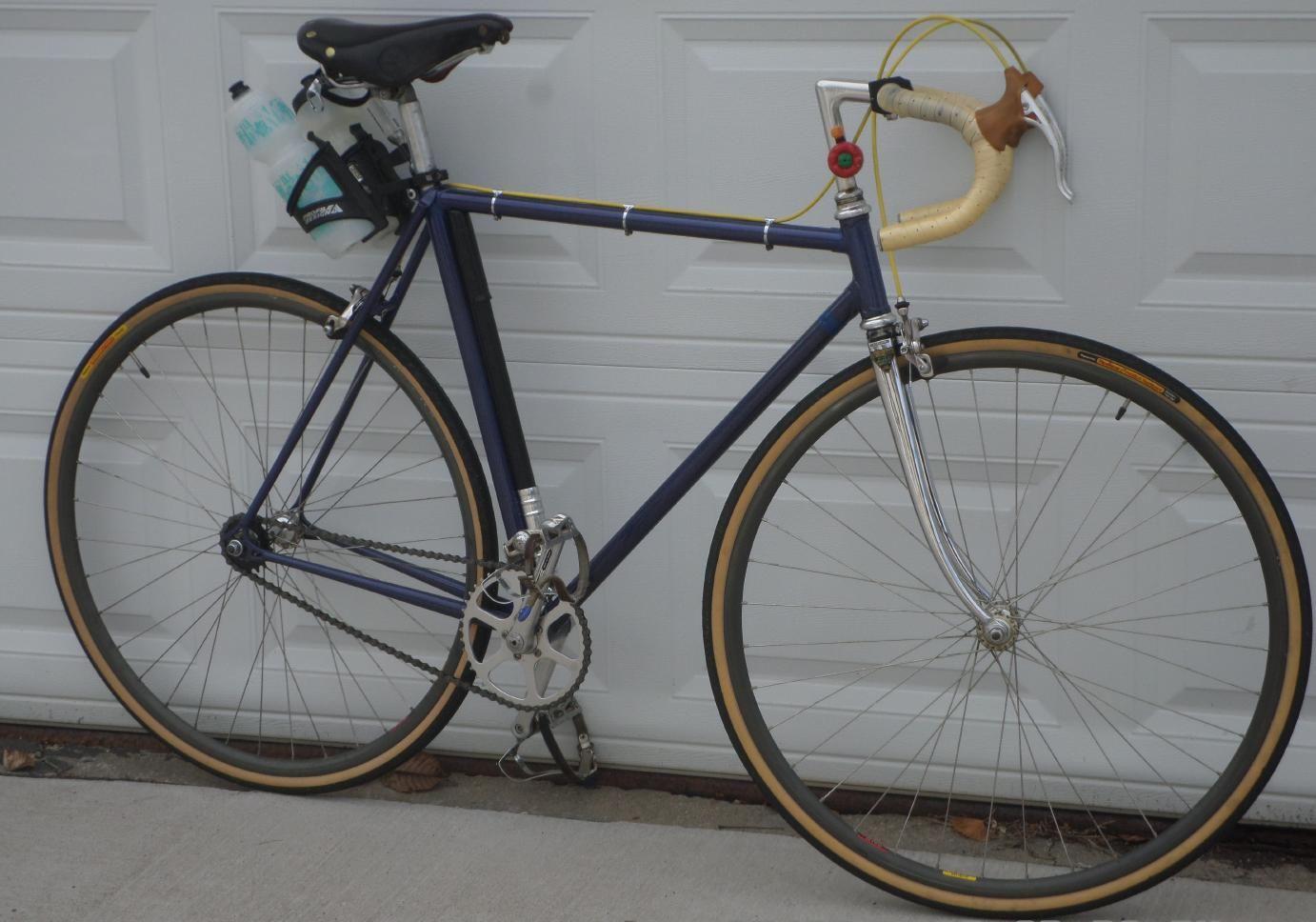
I currently run a 46/18 for my semi-hilly 20 mile urban rides. I used to run a 46/16 and that was too hard for the hills, and then a 46/17 and it was better, but as I get older the 46/18 is easier on my legs and knees.
This is an older photo of My Wabi Classic and it may have a 17 on it then.

This is an older photo of My Wabi Classic and it may have a 17 on it then.
05-12-25 | 06:02 PM
#5

Senior Member

Joined: Sep 2017
Posts: 2,380
Likes: 1,266
From: Hotel CA / DFW
Bikes: 80s Colnago Super/NMx, 50th Daccordi, Pinarello's, Guerciotti's, Masi NS, 90s DB/GT Mtn Bikes, 90s Colnago Master, 96 Serotta Colorado TG, 95/05 Colnago C40/C50, 06 LS TI, 08 Lemond Filmore FG SS, 12 Cervelo R3, 20/15 Surly Stragler & Steamroller
When reading about bigger rides or amateur races, I’ve been noticing something of a pattern: singlespeeders will say something to the effect of "I geared down to 42/18 to make the hills manageable,” whereas a geared rider (perhaps on a vintage bike) might observe “with a lowest gear of only 42/28, the hills were a bit challenging…”
What gives? Are geared riders climbing Mont Ventoux while we singlespeeders are climbing speed bumps in a parking lot? Are we cavalier about our knees? Do we just have bigger thighs?
It sometimes seems like singlespeeding (to say nothing of fixed riding) is quite a different discipline from “normal” cycling.
What gives? Are geared riders climbing Mont Ventoux while we singlespeeders are climbing speed bumps in a parking lot? Are we cavalier about our knees? Do we just have bigger thighs?
It sometimes seems like singlespeeding (to say nothing of fixed riding) is quite a different discipline from “normal” cycling.
In general SS / FG riders are better mashers with big gears ...
Climbing Mont Ventoux on a fixed gear (single-speed) bike is a challenging but achievable feat for experienced cyclists. It requires significant physical and mental preparation, as the climb is long, steep, and relentless. The average gradient is around 7.5%, and the total elevation gain is over 1,590 meters (about 5,305 feet). The climb can take anywhere from 1 hour 30 minutes for seasoned cyclists to 2 hours 30 minutes for intermediate riders
05-13-25 | 08:35 AM
#6
Thread Starter
Guest
Joined: Sep 2023
Posts: 71
Likes: 110
There are SS riders that conquer Mont Ventoux
In general SS / FG riders are better mashers with big gears ...
Climbing Mont Ventoux on a fixed gear (single-speed) bike is a challenging but achievable feat for experienced cyclists. It requires significant physical and mental preparation, as the climb is long, steep, and relentless. The average gradient is around 7.5%, and the total elevation gain is over 1,590 meters (about 5,305 feet). The climb can take anywhere from 1 hour 30 minutes for seasoned cyclists to 2 hours 30 minutes for intermediate riders
In general SS / FG riders are better mashers with big gears ...
Climbing Mont Ventoux on a fixed gear (single-speed) bike is a challenging but achievable feat for experienced cyclists. It requires significant physical and mental preparation, as the climb is long, steep, and relentless. The average gradient is around 7.5%, and the total elevation gain is over 1,590 meters (about 5,305 feet). The climb can take anywhere from 1 hour 30 minutes for seasoned cyclists to 2 hours 30 minutes for intermediate riders
Good point about mashing. If a geared rider who prefers spinning “mashes out” in the lowest gear, then that gearing would probably feel worse than a single higher gear does to someone who expects to mash.
I run 60/22 (about 73 g.i.) on my road bike, by the way, so happily mashing away in the hills!
05-13-25 | 09:58 AM
#7
It's the little things
Joined: Jan 2016
Posts: 961
Likes: 495
From: Chicagoland
Bikes: Too many, yet not enough
Wow, a climb that long would certainly require physical and mental stamina in equal measure!
Good point about mashing. If a geared rider who prefers spinning “mashes out” in the lowest gear, then that gearing would probably feel worse than a single higher gear does to someone who expects to mash.
I run 60/22 (about 73 g.i.) on my road bike, by the way, so happily mashing away in the hills!
Good point about mashing. If a geared rider who prefers spinning “mashes out” in the lowest gear, then that gearing would probably feel worse than a single higher gear does to someone who expects to mash.
I run 60/22 (about 73 g.i.) on my road bike, by the way, so happily mashing away in the hills!
05-13-25 | 10:54 AM
#8

aka Tom Reingold


Joined: Jan 2009
Posts: 44,123
Likes: 6,340
From: New York, NY, and High Falls, NY, USA
Bikes: 1962 Rudge Sports, 1971 Raleigh Super Course, 1971 Raleigh Pro Track, 1974 Raleigh International, 1975 Viscount Fixie, 1982 McLean, 1996 Lemond (Ti), 2002 Burley Zydeco tandem
I think that riders who choose SS or FG tend to climb aggressively and are therefore better able to climb in a higher gear than a geared-bike-riding person would. I saw this happen to me when I rode FG a lot. I strongly prefer to pedal up hills than to walk my bike, so I put in a lot of effort. It's what made me a good climber. So I think the difference is the riders.
__________________
Tom Reingold, tom@noglider.com
New York City and High Falls, NY
Blogs: The Experienced Cyclist; noglider's ride blog
“When man invented the bicycle he reached the peak of his attainments.” — Elizabeth West, US author
Please email me rather than PM'ing me. Thanks.
Tom Reingold, tom@noglider.com
New York City and High Falls, NY
Blogs: The Experienced Cyclist; noglider's ride blog
“When man invented the bicycle he reached the peak of his attainments.” — Elizabeth West, US author
Please email me rather than PM'ing me. Thanks.
Last edited by noglider; 05-21-25 at 06:27 PM.
05-13-25 | 11:13 AM
#9
Thread Starter
Guest
Joined: Sep 2023
Posts: 71
Likes: 110
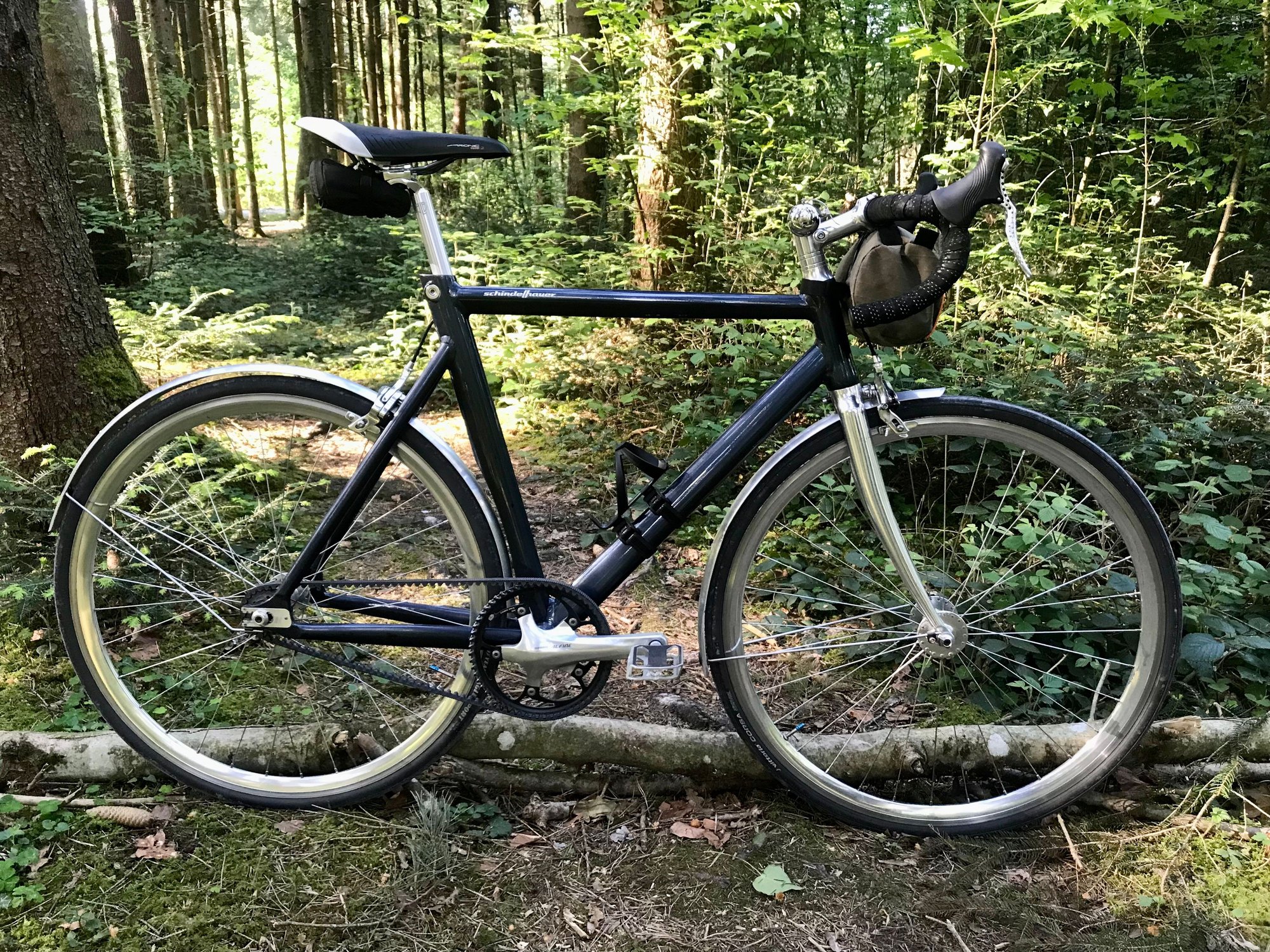
Belt drive:
I knew it—it’s the bigger thighs!
I think that rides who choose SS or FG tend to climb aggressively and are therefore better able to climb in a higher gear than a geared-bike-riding person would. I saw this happen to me when I rode FG a lot. I strongly prefer to pedal up hills than to walk my bike, so I put in a lot of effort. It's what made me a good climber. So I think the difference is the riders.
 05-21-25 | 05:53 PM
#11

Perpetual Pedaler
Joined: May 2025
Posts: 94
Likes: 34
From: Earth
Bikes: SE Bikes - Lager
Get your front wheel's edge as linear to the lead vehicle's rear bumper as possible without going past then cut left, rotate the crank maybe once, pull a short leftward skid for speed adjustment and direction... and daring style... then bam! You're two lanes over and ready to make your left hand turn! Oh yeah, be mindful of that far lane.
I love playing in traffic.
05-21-25 | 06:29 PM
#12

Broken neck Ken
Joined: Oct 2008
Posts: 5,221
Likes: 3,516
From: Portland, OR
Bikes: Trek Domane SL6 Gen 3, Soma Fog Cutter, Detroit Bikes Sparrow FG, Trek Mt Track XCNimbus MUni
Last year I rode a 400km brevet with 10k feet climbing on the fixie. 44x16. This year I rode the same route geared.
My conclusion is, on the geared bike, I'm a wimp, whereas on the fixie, I'm a badass MF. Same rider, totally different attitude.
My conclusion is, on the geared bike, I'm a wimp, whereas on the fixie, I'm a badass MF. Same rider, totally different attitude.
05-23-25 | 10:47 AM
#13

Cheerfully low end
Joined: Jun 2020
Posts: 2,227
Likes: 1,298
Otto
05-23-25 | 12:28 PM
#14

Senior Member
Joined: Aug 2011
Posts: 22,676
Likes: 2,642
From: CID
Bikes: 1991 Bianchi Eros, 1964 Armstrong, 1988 Diamondback Ascent, 1988 Bianchi Premio, 1987 Bianchi Sport SX, 1980s Raleigh mixte (hers), All-City Space Horse (hers)
There are SS riders that conquer Mont Ventoux
In general SS / FG riders are better mashers with big gears ...
Climbing Mont Ventoux on a fixed gear (single-speed) bike is a challenging but achievable feat for experienced cyclists. It requires significant physical and mental preparation, as the climb is long, steep, and relentless. The average gradient is around 7.5%, and the total elevation gain is over 1,590 meters (about 5,305 feet). The climb can take anywhere from 1 hour 30 minutes for seasoned cyclists to 2 hours 30 minutes for intermediate riders
In general SS / FG riders are better mashers with big gears ...
Climbing Mont Ventoux on a fixed gear (single-speed) bike is a challenging but achievable feat for experienced cyclists. It requires significant physical and mental preparation, as the climb is long, steep, and relentless. The average gradient is around 7.5%, and the total elevation gain is over 1,590 meters (about 5,305 feet). The climb can take anywhere from 1 hour 30 minutes for seasoned cyclists to 2 hours 30 minutes for intermediate riders
 05-23-25 | 01:06 PM
#15
Senior Member
Joined: Sep 2017
Posts: 2,380
Likes: 1,266
From: Hotel CA / DFW
Bikes: 80s Colnago Super/NMx, 50th Daccordi, Pinarello's, Guerciotti's, Masi NS, 90s DB/GT Mtn Bikes, 90s Colnago Master, 96 Serotta Colorado TG, 95/05 Colnago C40/C50, 06 LS TI, 08 Lemond Filmore FG SS, 12 Cervelo R3, 20/15 Surly Stragler & Steamroller
routes in one day, and an even more elite recognition conquering those
climbs plus the unpaved forest road.
As far as Iknow, this had never been done on a fixed-gear bike.
Doing both Ventoux and PBP on FG
Historic!
Last edited by joesch; 05-23-25 at 01:09 PM.
06-03-25 | 05:35 AM
#16

Senior Member
Joined: May 2013
Posts: 2,642
Likes: 3,330
From: Greenwood SC USA
Bikes: 2002 Mercian Vincitore, 1982 Mercian Colorado, 1976 Puch Royal X, 1973 Raleigh Competition, 1971 Gitane Tour de France and others
For me, it is definitely attitude. From when I started riding road bikes c.1974 until really last year, there was always an intimidation factor for me when it comes to hills. I dreaded them. When riding gears I would always shift down, slow to a crawl, and still struggle up them.
When I got back on a bike last year and started riding seriously (or as seriously as I get!), I realized that when I get to a hill, I just know to stand and lope my way up it. Some times I count pedal strokes, other times I sing inside my own head (the hymns "He Is Exalted" that the choir I sing with uses to warm up works well for this, but so would any number of songs!). And I get up the hill and roll on. I'm not that much faster on gears.
My usual gear is 42x16 on 32mm tires now, so figure maybe 71 or so gear inches. In the past I would flip the wheel 'round to run 42x18 on gravel roads when I came to them, but now I just muscle on along. We note that I am 63 and had quadruple bypass surgery 21 years ago.
I also note that this works for me in the rolling terrain of what they're calling the South Carolina Lakelands - all bets are off if you're in the real mountains!
When I got back on a bike last year and started riding seriously (or as seriously as I get!), I realized that when I get to a hill, I just know to stand and lope my way up it. Some times I count pedal strokes, other times I sing inside my own head (the hymns "He Is Exalted" that the choir I sing with uses to warm up works well for this, but so would any number of songs!). And I get up the hill and roll on. I'm not that much faster on gears.
My usual gear is 42x16 on 32mm tires now, so figure maybe 71 or so gear inches. In the past I would flip the wheel 'round to run 42x18 on gravel roads when I came to them, but now I just muscle on along. We note that I am 63 and had quadruple bypass surgery 21 years ago.
I also note that this works for me in the rolling terrain of what they're calling the South Carolina Lakelands - all bets are off if you're in the real mountains!
06-03-25 | 06:14 AM
#17

Senior Member
Joined: Jul 2023
Posts: 1,960
Likes: 1,202
From: "Driftless" WI
Bikes: 1972 Motobecane Grand Record, 2023 Specialized Tarmac SL7,'26 Spesh Diverge, '22 Kona Dew+
For me, it is definitely attitude. From when I started riding road bikes c.1974 until really last year, there was always an intimidation factor for me when it comes to hills. I dreaded them. When riding gears I would always shift down, slow to a crawl, and still struggle up them.
The whole reasoning behind multiple gears is to make it easier to negotiate different cadence/incline endeavors, isn't it?
Once one realizes that a significant change in technique (i.e. - mashing vs. spinning) is a useful skill to have in one's kit, the utility of those lower gears becomes less important.
06-03-25 | 11:21 AM
#18
Senior Member
Joined: May 2013
Posts: 2,642
Likes: 3,330
From: Greenwood SC USA
Bikes: 2002 Mercian Vincitore, 1982 Mercian Colorado, 1976 Puch Royal X, 1973 Raleigh Competition, 1971 Gitane Tour de France and others
06-03-25 | 11:37 AM
#19
Thread Starter
Guest
Joined: Sep 2023
Posts: 71
Likes: 110
One way of viewing it - fixed/ss is the essence of choosing technique (which is engrained and becomes a part of one who develops it) vs. technology (which is purchased and becomes obsolete the moment you buy it). Fixed/SS calls for use of body English, different techniques, and is the biggest reason I can see to choose dropped bars with their multitude of positions allowing changing the emphasis of different muscle groups while riding.
And yes, I also see changing positions on drop bars as a “gear change” of sorts (shifting between different muscles). I also like to have a saddle that accommodates multiple positions.
06-03-25 | 09:09 PM
#21

Senior Member
Joined: Oct 2014
Posts: 14,150
Likes: 5,273
From: Portland, OR
Bikes: (2) ti TiCycles, 2007 w/ triple and 2011 fixed, 1979 Peter Mooney, ~1983 Trek 420 now fixed and ~1973 Raleigh Carlton Competition gravel grinder
Minor point here. Riding fix gear and changing gears are mutually exclusive only if you choose to go that route (or just default to the bikes that are out there). Riding hills fixed and changing gear ratios has been done for at least the past 120 years. Double sided "flip-flp: hubs with cogs on both sides. It used to be standard practice in races for everyone to come to a stop before the mountain and flip their wheels around. I built my avatar photo bike to do just that. And rode the week long Crater Lake Cycle Oregon on it, bringing every cog between 23 and 12 teeth and taking three each day. (Carried a lightweight chainwhip so I could screw on a 12 or 12 tooth cog for the descents.)
I love riding fix gears. But I knew as I approached my 60th year that I had no business doing mountain climbs on flat ground compromises. Also that my soft areas were way past wanting to do 200 RPM 8 mile descents. The bike I dreamed up to do this and had made is basically a late '80s road race bike except - velodrome standard drive train, a road inspired forward facing dropout that can handle any of those cogs with no change in chain length and a decently high BB so I can pedal fast corners on the 175 cranks my knees love.
22k miles later, I can report that the concept works. It's my favorite bike of all time. Its ridden 4 Cycle Oregons. Done at least two 130 mile days. Using dropouts, NOT track ends, means that two minute wheel flips and 5 minute cog changes is not hard when I am in practice. You are welcome to say I cheat. That's been said about gears right from the beginning. But every inch that bike has gone has been as a true fix gear - meaning I've pedaled down down hills in the 42-23 and up a few on the 12. The little mind game of "do I stop, waste 2 minutes and cool off or do I muscle the next hill" is quite real. I also look carefully at elevation profiles. Whether to do that year's Cycle Oregon fixed is, for me, decided by the number of hills more than the total elevation. Crater Lake is much more fun that Oregon's coast highway!
If somebody wants to do this, the secret is the dropout. I can go look if someone want the number but mine has a slot roughly 2 inches long and takes a 90 degree turn down at the front - so I can run the biggest cog with the tire nearly touching the seat tube and still pull the wheel out easily, like a vertical dropout, to do the flip. A pure joy to use. (You want to keep the chainstays relatively short since the wheelbase gets a lot longer as you push the wheel back for the 12 tooth.) Uphill you want that wheel close so you don't spin the tire on wet or sand and waste that precious energy that, trust me, you need much more than those geared folk. I designed my dropout to sit at an angle of 11 degrees; roughly half the angle of a traditional road dropout. Yes, my brake pads ride up and down the rear rim but the tail end of the bike stays roughly the same height and the bottom bracket doesn't change much running that tiny cog. (And high speeds on the 12 is when you REALLY want all the bottom bracket height you can get!). I solve the pad travel by running deepish rims. Yes, on the big cogs, the pad is well below the intended braking surface but just how fast do you ever go on a 42-23 fix gear? Anybody who wants to do this is welcome to contact me and I'll dig up the drawing. (My invention but I learned after the bike was built that there was a production version of this made in Europe (pretty sure) and perhaps in the 1930s. Shaw, a builder in the Bay area also has built fix gears with a similar (but shorter) dropouts. I've seen that bike in person.
I love riding fix gears. But I knew as I approached my 60th year that I had no business doing mountain climbs on flat ground compromises. Also that my soft areas were way past wanting to do 200 RPM 8 mile descents. The bike I dreamed up to do this and had made is basically a late '80s road race bike except - velodrome standard drive train, a road inspired forward facing dropout that can handle any of those cogs with no change in chain length and a decently high BB so I can pedal fast corners on the 175 cranks my knees love.
22k miles later, I can report that the concept works. It's my favorite bike of all time. Its ridden 4 Cycle Oregons. Done at least two 130 mile days. Using dropouts, NOT track ends, means that two minute wheel flips and 5 minute cog changes is not hard when I am in practice. You are welcome to say I cheat. That's been said about gears right from the beginning. But every inch that bike has gone has been as a true fix gear - meaning I've pedaled down down hills in the 42-23 and up a few on the 12. The little mind game of "do I stop, waste 2 minutes and cool off or do I muscle the next hill" is quite real. I also look carefully at elevation profiles. Whether to do that year's Cycle Oregon fixed is, for me, decided by the number of hills more than the total elevation. Crater Lake is much more fun that Oregon's coast highway!
If somebody wants to do this, the secret is the dropout. I can go look if someone want the number but mine has a slot roughly 2 inches long and takes a 90 degree turn down at the front - so I can run the biggest cog with the tire nearly touching the seat tube and still pull the wheel out easily, like a vertical dropout, to do the flip. A pure joy to use. (You want to keep the chainstays relatively short since the wheelbase gets a lot longer as you push the wheel back for the 12 tooth.) Uphill you want that wheel close so you don't spin the tire on wet or sand and waste that precious energy that, trust me, you need much more than those geared folk. I designed my dropout to sit at an angle of 11 degrees; roughly half the angle of a traditional road dropout. Yes, my brake pads ride up and down the rear rim but the tail end of the bike stays roughly the same height and the bottom bracket doesn't change much running that tiny cog. (And high speeds on the 12 is when you REALLY want all the bottom bracket height you can get!). I solve the pad travel by running deepish rims. Yes, on the big cogs, the pad is well below the intended braking surface but just how fast do you ever go on a 42-23 fix gear? Anybody who wants to do this is welcome to contact me and I'll dig up the drawing. (My invention but I learned after the bike was built that there was a production version of this made in Europe (pretty sure) and perhaps in the 1930s. Shaw, a builder in the Bay area also has built fix gears with a similar (but shorter) dropouts. I've seen that bike in person.
06-05-25 | 05:37 PM
#22
Senior Member
Joined: Mar 2016
Posts: 2,067
Likes: 573
Bikes: '87-ish Pinarello Montello; '89 Nishiki Ariel; '85 Raleigh Wyoming, '16 Wabi Special, '16 Wabi Classic, '14 Kona Cinder Cone, 2023 Surly Disk Trucker
When riding gears I would always shift down, slow to a crawl, and still struggle up them.
Before we moved back to where I live now we lived in Arizona. I was riding long rides all year round on my fixed gear, including, yes, when it was 117 degrees. Chugging up steep hills and enduring the evil windy days in Arizona. When we moved back east I kept riding and found that I was passing people that when we used to live here were faster than I was. I was able to catch them on the hills but they'd pass me on the straights. I hope to get back to that soon.
There's a lot to be said about grinding up hills with a fixed or single-geared bike that folks that have never ridden them just don't understand the advantages fully.
