


Stem Sizing and Fitting
 06-26-06 | 02:14 PM
#1
Thread Starter
Biggity-bam
Joined: Apr 2006
Posts: 698
Likes: 0
From: West Lafayette IN, Ann Arbor MI
Bikes: Pista Concept, Fetish beater, Fuji road
Stem Sizing and Fitting
What is the general method you guys use to determine what size stem to use? I'm going to order a thomson to match my seatpost, and I want to atleast be in the ballpark. With my saddle currently set up to be comfortable, when I'm standing I feelt like I'm over the front wheel. I can tell I need a longer stem, and just want to see how much longer. I have heard things for road bikes like," When you are in the drops, your bars should eclipse the hub." Any general rule like that for riding on the track?
Gratzi
Gratzi
 06-26-06 | 02:26 PM
#2


i am sure that i hate you
Joined: Aug 2005
Posts: 3,230
Likes: 0
From: 703
Bikes: 'Cha-ruzu Fosuta Orusan Kein' Fuji Track (2005), Schwinn Tank MTB (?), Fuji Royale (1979)
or trial and error
__________________
putting the pi back in pirate!
putting the pi back in pirate!
It’s an upstanding member of the solar system
Apply the laws of earth and make it a victim
Of Proposition 187
Apply the laws of earth and make it a victim
Of Proposition 187
06-26-06 | 02:33 PM
#3

Senior Member
Joined: Nov 2004
Posts: 3,959
Likes: 4
From: Davis CA
Bikes: Surly Cross-Check, '85 Giant road bike (unrecogizable fixed-gear conversion
Originally Posted by Learn_not2burn
What is the general method you guys use to determine what size stem to use? I'm going to order a thomson to match my seatpost, and I want to atleast be in the ballpark. With my saddle currently set up to be comfortable, when I'm standing I feelt like I'm over the front wheel. I can tell I need a longer stem, and just want to see how much longer. I have heard things for road bikes like," When you are in the drops, your bars should eclipse the hub." Any general rule like that for riding on the track?
Gratzi
Gratzi
I generally go with being on the hoods and and having the bars eclipss the hub. My stem would have to be stupid long for that to happen on the drops.
Also, before you mess with your stem length, make sure that your saddle is where it is supposed to be in relation to your pedals/cranks/bottom bracket.
I just got a longer stem for my road bike. I went from a 100mm to a 120mm. What I learned was that I need a 110mm. Fortunately, I only paid $15 for the stem.
 06-26-06 | 04:13 PM
#6

jack of one or two trades
Joined: Jun 2005
Posts: 5,640
Likes: 0
From: Suburbia, CT
Bikes: Old-ass gearie hardtail MTB, fix-converted Centurion LeMans commuter, SS hardtail monster MTB
Originally Posted by Learn_not2burn
How do you ensure your saddle is in the correct position in relation to the cranks?
06-26-06 | 09:26 PM
#8

Elitist
Joined: Jul 2005
Posts: 15,966
Likes: 94
From: Atlanta, GA
A rule of thumb that I learned was to sit on the bike in a normal, comfortable position with hands on the bars. Then look down at your front hub. The proper stem will place the handlebars right in the line of sight to the bolts of your front hub.
If the bars are ahead of the bolts, the stem is too long. If the bars are behind the bolts, then the stem is too short.
This isn't an exact science, but it is a good starting point.
Remember, you can also adjust your seat rails on the post to go up and back as well.
If the bars are ahead of the bolts, the stem is too long. If the bars are behind the bolts, then the stem is too short.
This isn't an exact science, but it is a good starting point.
Remember, you can also adjust your seat rails on the post to go up and back as well.
06-26-06 | 10:12 PM
#9

not the car.
Joined: Mar 2006
Posts: 106
Likes: 2
From: Montreal, QC
as a general roadie fit, you're supposed to have about 25-30 deg of bend in your legs when at the bottom of the pedal stroke, when your cranks are at noon and 6 o clock. most roadies i know ride their seat waaaaayyyy too high - track messengers are probbaly the worst offenders as seat height often seems an estimate based on aesthetics, not pedaling efficiency at all.
with seat rail position, make your own plumb out of something metal and pointy. your pedal axle should line up horizontally below your knee when at 3 and 9:00. most trackies like to have their knee 1 cm more forward for more power.
as for stem length, i think fit is kind of a weird thing when it comes to track-city riding.
based on general fit guidelines, the whole bar-top hiding the hub thing is a general rule, but is largely dependent on how flexible your lower back is, and as long as your within the "normal" 50cm-59cm frame size. plus, this rule is based on a fit with the majority of riding done on the hoods, which don't exist on track bikes.
I'm a big fan of a way longer stem 4 risers, a tiny bit longer than normal for drop bars , and an ultra short one for bullhorns. i played around with my fit alot, but putting ,my track bike on a magtrainer and seeing what positions i could hold comfortably for 15-20 min efforts. sounds nerdy sure, but i was able to get a realistic feel for what's the good compromise for a good efficient fit and one that's good for trackstanding, back-circles and skidding.
anyway, flame on.
d
with seat rail position, make your own plumb out of something metal and pointy. your pedal axle should line up horizontally below your knee when at 3 and 9:00. most trackies like to have their knee 1 cm more forward for more power.
as for stem length, i think fit is kind of a weird thing when it comes to track-city riding.
based on general fit guidelines, the whole bar-top hiding the hub thing is a general rule, but is largely dependent on how flexible your lower back is, and as long as your within the "normal" 50cm-59cm frame size. plus, this rule is based on a fit with the majority of riding done on the hoods, which don't exist on track bikes.
I'm a big fan of a way longer stem 4 risers, a tiny bit longer than normal for drop bars , and an ultra short one for bullhorns. i played around with my fit alot, but putting ,my track bike on a magtrainer and seeing what positions i could hold comfortably for 15-20 min efforts. sounds nerdy sure, but i was able to get a realistic feel for what's the good compromise for a good efficient fit and one that's good for trackstanding, back-circles and skidding.
anyway, flame on.
d
06-27-06 | 12:27 AM
#10

Senior Member
Joined: Mar 2006
Posts: 47
Likes: 0
From: living in sin
According to Bicycling Science, adding 10% more height to one's properly measured seat height allows one to generate extra power, while reducing the seat height by 10% or more reduces power output. They can't seem to explain why leg muscles that are tasked to doing the same kind of work would have such differences simply due to seat height.
Maybe because when you look cooler, you go faster
Maybe because when you look cooler, you go faster
06-27-06 | 12:34 AM
#12

or tarckeemoon, depending
Joined: Dec 2005
Posts: 7,017
Likes: 2
From: the pesto of cities
Bikes: Davidson Impulse, Merckx Titanium AX, Bruce Gordon Rock & Road, Cross Check custom build, On-One Il Pomino, Shawver Cycles cross, Zion 737, Mercian Vincitore, Brompton S1L, Charge Juicer
Originally Posted by onetwentyeight
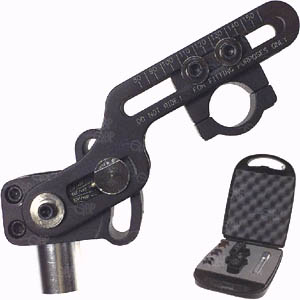
because im bored at work, just got this in the mail, feel like gloating, and this is a thread about stems...
i got this today...

<insert evil laugh here>

anyway yea. back to stem sizing.
i got this today...
<insert evil laugh here>
anyway yea. back to stem sizing.
So this will go on a "just right" Italian bike to be named later?
06-27-06 | 12:50 AM
#13
LF for the accentdeprived
Joined: May 2005
Posts: 3,549
Likes: 0
From: Budapest, Hungary
Originally Posted by Renz
According to Bicycling Science, adding 10% more height to one's properly measured seat height allows one to generate extra power, while reducing the seat height by 10% or more reduces power output. They can't seem to explain why leg muscles that are tasked to doing the same kind of work would have such differences simply due to seat height.
If you add 10% to your properly measured saddle height, your feet won't reach the pedal at all, so that's bull****. And anyway, "properly measured" means "ideal". If you change from that in either direction, you're kicking yourself in the arse.
 06-27-06 | 01:37 PM
#17
Senior Member
Joined: Mar 2006
Posts: 47
Likes: 0
From: living in sin
Originally Posted by LóFarkas
If you add 10% to your properly measured saddle height, your feet won't reach the pedal at all, so that's bull****. And anyway, "properly measured" means "ideal". If you change from that in either direction, you're kicking yourself in the arse.
Also more tests results, setting the saddle height 40 - 50 mm above the "normal" height, "normal" being that for which the heel can just reach the pedal with the leg stretched and the posture upright. For durations less than half an hour (a 39 yr old and not very athletic test subject) at least 1 and a half times greater endurance was achieved at each power level.
Conversely when the saddle is set 100mm lower than normal, resulted in a dramatic 15-30% reduction in power.
