


Pavementality
 12-27-25 | 05:01 PM
#1
Thread Starter
Hooked on Touring


Joined: Mar 2004
Posts: 3,020
Likes: 355
From: Wyoming
Pavementality
One of the many questionable rationales that the current leadership of Adventure Cycling offered for membership and financial losses,
thus the need for the sale of its headquarters in Missoula, is the following:
“We are not bringing in enough new members because Adventure Cycling’s brand is perceived as older and pavement-centric
and our programming is not well aligned with growing bike travel types (e.g. gravel, trail) and event trends (e.g. meet-ups and bike summits).”
Pavement-centric? Huh?!?
At no time over the past six months has the leadership attempted to explain how ACA lost more than half of its members - 50,000 down to 18,000 - since 2020.
Other than blaming the boomers for getting too old. Well, I am unconvinced that there is any huge membership pool waiting in the gravel.
Safe, convenient pavement riding is far more likely to attract new and former cyclists. Of course, there’s nothing wrong with doing both.
But if they think gravel is the golden goose, they are grasping at straws.
It doesn’t take a rocket scientist to figure out that the two most likely demographics for bike touring are:
a) Younger people who are not into career tracks or starting a family and
b) Older people who are winding down careers and have empty nests.
If the goal of ACA is to expand bicycle touring, what kind of riding might these two groups prefer?
Gravel is not at the top of the list.
Boomer cyclists grew up in an era when every kid rode a bicycle. Remember “E.T.”?
Elementary and middle schools had dozens of packed bike racks.
Many school districts only allowed seniors to drive to high school.
Boomer kids also biked to the store and to baby-sitting jobs and paper routes.
But changes in parenting and perceptions of risk altered that dramatically by the early 2000s.
And the internet. And the internet.
Now there is a single, near-empty bike rack at school - while lines of cars drop off their kids at the school drive-up.
An extremely concerning article in The Atlantic this past July provided stark data.
In the 1990s, 20 million kids rode a bike at least 6 times a year.
Now, that figure is just 10 million and only a half million kids ride frequently.
Let me repeat this for the ACA management - -
It is much, much more than the boomer generation ageing out.
What that means is that most young people nowadays have far less cycling experience than earlier generations. And far fewer skills.
It would seem that the potential pool of young cyclists with the requisite skills as well as the time and funds to do long-distance off-road touring is quite small.
Likewise, the 55+ crowd may be less than mesmerized by the possibility of scraped knees and pushing loaded bikes up 18% gravel grades or down muddy ranch roads.
Although what’s done is done.
Still, ACA can partner with the League of American Bicyclists and with state Bike/Ped programs to increase the number of children bicycling.
It may not mean more members - then again, it may - but it will assure a healthier life for the generation coming up.
Plus, ACA can partner to get former riders, whether college-aged or retired, back on bicycles.
The biggest hurdle is getting on the bike for the first time in a long time.
The gap between the experience level of potential riders and the skills needed for gravel routing is huge.
A viable alternative may be paved roads that have very little traffic.
Some of the ACA routes are simply unpleasant.
The Southern Tier needs a complete redo for multiple reasons.
Most people don’t want to embark on a dream trip just to ride for hundreds of miles on I-8 or I-10.
Similarly, Bicycle Route 66 frequently uses Interstates or has the rider on service roads chock-a-block next to them.
Since the Golden Gravel Route basically goes from noplace to noplace, then the same logic can be applied to paved routes.
Offer short, safe, interesting routes that are on pavement and doable for people who are not buff and gnarly - young or old.
Expand the meaning of bicycle touring in a direction where far more people can engage.
That is what will reinvigorate Adventure Cycling.
<<<>>>
For example, the Palouse region of Washington state is gorgeous in spring and fall. Kinda hot in the middle of the summer.
There are miles and miles of paved roads that are practically empty.
Hwy 23, a state highway, has an AADT of 270 near Rock Lake. And paved county roads have even less traffic.
Folks from Seattle could drive over to Sprague and do a sweet weekend loop with an overnight in St. John.
Not to mention that new riders who encounter trouble will discover that the first pick-up coming by will stop to help.

Similarly, the Nebraska Sandhills in the very middle of the country have gorgeous scenery and absolutely empty paved roads.
Hwy 61 has an AADT of 180. Most roads have AADTs below 500.
Again, people from Omaha could drive out for a weekend and a night camping or at a tiny motel.
Start small.

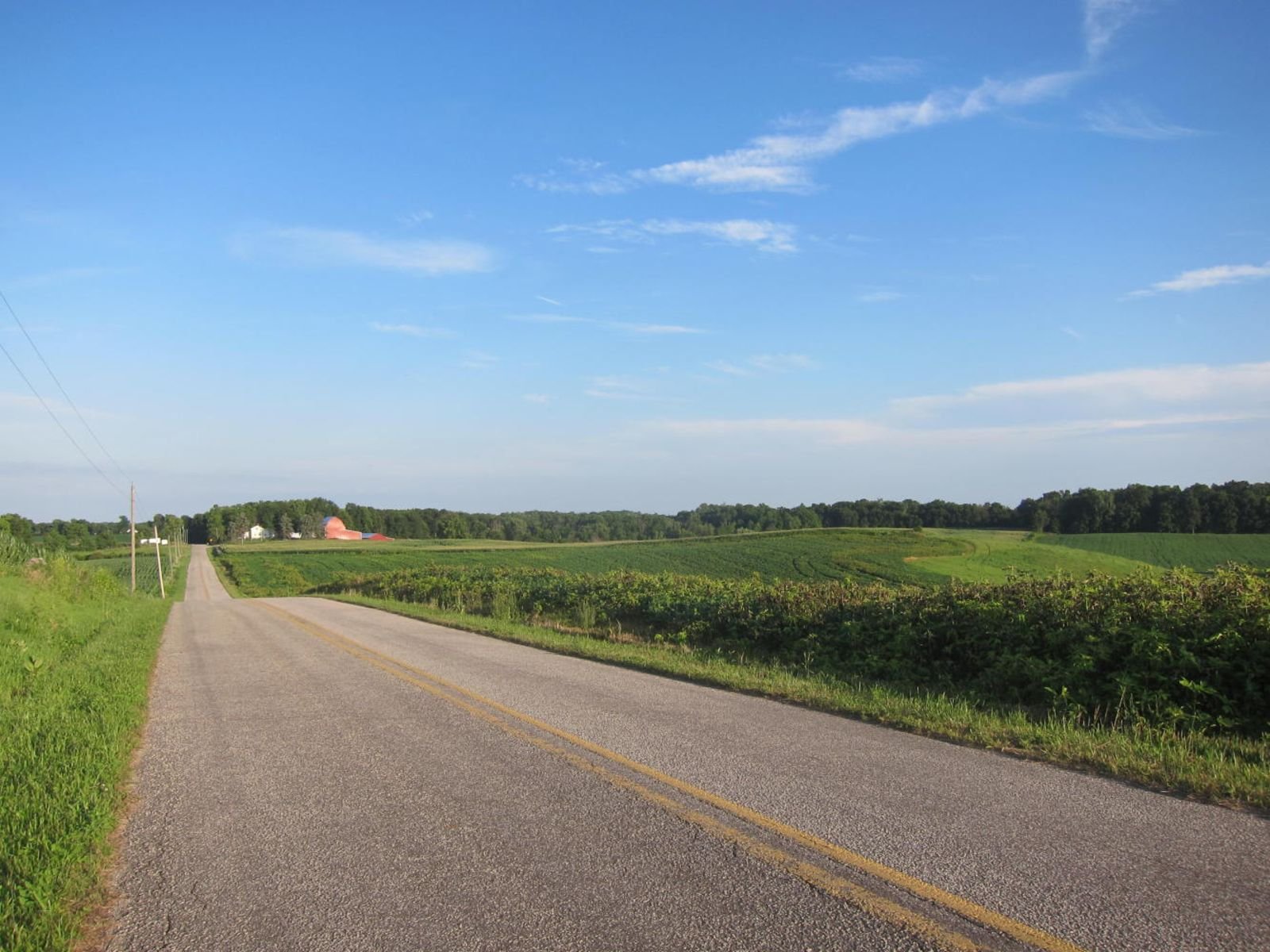
Finally, in northern Indiana there are miles and miles of paved county roads with little traffic.
Equidistant from Chicago, Detroit or Indy, newer riders can feel safe on these back roads that also have low speed limits.
Unlike further west, there are more towns along the way with services.
And a number of lovely state parks with camping or cabins.
<<<>>>
Adventure Cycling could serve as a clearing house for a network of these routes - available for free.
(ACA has made a start in this area, but nothing comparable to what it put into the Golden Gravel Route.)
Weekend and weeklong - beginner, intermediate, and advanced.
But the real key for expanding engagement and membership is to bring inexperienced people into touring.
And, more than likely, on pavement.
One major stumbling block that keeps people away from touring, especially young people, is the cost.
The founders of Bikecentennial toured on a shoestring budget and many young boomers did so as well.
When campsites are $30-40 and motels $150-200, young people are increasingly priced out. T
he Sebree Hostel in Kentucky and Twin Bridges Camp in Montana need to be replicated -
something that mapping apps like Google Maps or Garmin can’t offer.
If Adventure Cycling seeks to continue into the future as just another high-end cycling organization, then it has lost its mission.
There was a need for Bikecentennial in 1976 and that need remains today.
thus the need for the sale of its headquarters in Missoula, is the following:
“We are not bringing in enough new members because Adventure Cycling’s brand is perceived as older and pavement-centric
and our programming is not well aligned with growing bike travel types (e.g. gravel, trail) and event trends (e.g. meet-ups and bike summits).”
Pavement-centric? Huh?!?
At no time over the past six months has the leadership attempted to explain how ACA lost more than half of its members - 50,000 down to 18,000 - since 2020.
Other than blaming the boomers for getting too old. Well, I am unconvinced that there is any huge membership pool waiting in the gravel.
Safe, convenient pavement riding is far more likely to attract new and former cyclists. Of course, there’s nothing wrong with doing both.
But if they think gravel is the golden goose, they are grasping at straws.
It doesn’t take a rocket scientist to figure out that the two most likely demographics for bike touring are:
a) Younger people who are not into career tracks or starting a family and
b) Older people who are winding down careers and have empty nests.
If the goal of ACA is to expand bicycle touring, what kind of riding might these two groups prefer?
Gravel is not at the top of the list.
Boomer cyclists grew up in an era when every kid rode a bicycle. Remember “E.T.”?
Elementary and middle schools had dozens of packed bike racks.
Many school districts only allowed seniors to drive to high school.
Boomer kids also biked to the store and to baby-sitting jobs and paper routes.
But changes in parenting and perceptions of risk altered that dramatically by the early 2000s.
And the internet. And the internet.
Now there is a single, near-empty bike rack at school - while lines of cars drop off their kids at the school drive-up.
An extremely concerning article in The Atlantic this past July provided stark data.
In the 1990s, 20 million kids rode a bike at least 6 times a year.
Now, that figure is just 10 million and only a half million kids ride frequently.
Let me repeat this for the ACA management - -
It is much, much more than the boomer generation ageing out.
What that means is that most young people nowadays have far less cycling experience than earlier generations. And far fewer skills.
It would seem that the potential pool of young cyclists with the requisite skills as well as the time and funds to do long-distance off-road touring is quite small.
Likewise, the 55+ crowd may be less than mesmerized by the possibility of scraped knees and pushing loaded bikes up 18% gravel grades or down muddy ranch roads.
Although what’s done is done.
Still, ACA can partner with the League of American Bicyclists and with state Bike/Ped programs to increase the number of children bicycling.
It may not mean more members - then again, it may - but it will assure a healthier life for the generation coming up.
Plus, ACA can partner to get former riders, whether college-aged or retired, back on bicycles.
The biggest hurdle is getting on the bike for the first time in a long time.
The gap between the experience level of potential riders and the skills needed for gravel routing is huge.
A viable alternative may be paved roads that have very little traffic.
Some of the ACA routes are simply unpleasant.
The Southern Tier needs a complete redo for multiple reasons.
Most people don’t want to embark on a dream trip just to ride for hundreds of miles on I-8 or I-10.
Similarly, Bicycle Route 66 frequently uses Interstates or has the rider on service roads chock-a-block next to them.
Since the Golden Gravel Route basically goes from noplace to noplace, then the same logic can be applied to paved routes.
Offer short, safe, interesting routes that are on pavement and doable for people who are not buff and gnarly - young or old.
Expand the meaning of bicycle touring in a direction where far more people can engage.
That is what will reinvigorate Adventure Cycling.
<<<>>>
For example, the Palouse region of Washington state is gorgeous in spring and fall. Kinda hot in the middle of the summer.
There are miles and miles of paved roads that are practically empty.
Hwy 23, a state highway, has an AADT of 270 near Rock Lake. And paved county roads have even less traffic.
Folks from Seattle could drive over to Sprague and do a sweet weekend loop with an overnight in St. John.
Not to mention that new riders who encounter trouble will discover that the first pick-up coming by will stop to help.
Similarly, the Nebraska Sandhills in the very middle of the country have gorgeous scenery and absolutely empty paved roads.
Hwy 61 has an AADT of 180. Most roads have AADTs below 500.
Again, people from Omaha could drive out for a weekend and a night camping or at a tiny motel.
Start small.
Finally, in northern Indiana there are miles and miles of paved county roads with little traffic.
Equidistant from Chicago, Detroit or Indy, newer riders can feel safe on these back roads that also have low speed limits.
Unlike further west, there are more towns along the way with services.
And a number of lovely state parks with camping or cabins.
<<<>>>
Adventure Cycling could serve as a clearing house for a network of these routes - available for free.
(ACA has made a start in this area, but nothing comparable to what it put into the Golden Gravel Route.)
Weekend and weeklong - beginner, intermediate, and advanced.
But the real key for expanding engagement and membership is to bring inexperienced people into touring.
And, more than likely, on pavement.
One major stumbling block that keeps people away from touring, especially young people, is the cost.
The founders of Bikecentennial toured on a shoestring budget and many young boomers did so as well.
When campsites are $30-40 and motels $150-200, young people are increasingly priced out. T
he Sebree Hostel in Kentucky and Twin Bridges Camp in Montana need to be replicated -
something that mapping apps like Google Maps or Garmin can’t offer.
If Adventure Cycling seeks to continue into the future as just another high-end cycling organization, then it has lost its mission.
There was a need for Bikecentennial in 1976 and that need remains today.
 12-28-25 | 05:50 AM
#3
Senior Member


Joined: Aug 2010
Posts: 12,712
Likes: 2,100
From: Madison, WI
Bikes: 1961 Ideor, 1966 Perfekt 3 Speed AB Hub, 1994 Bridgestone MB-6, 2006 Airnimal Joey, 2009 Thorn Sherpa, 2013 Thorn Nomad MkII, 2015 VO Pass Hunter, 2017 Lynskey Backroad, 2017 Raleigh Gran Prix, 1980s Bianchi Mixte on a trainer. Others are now gone.
Is this decline in youth cycling specific to USA? How does this compare with other advanced economies, such as western Europe or UK?
When I was a child, a bicycle was a means of transportation. As a pre-teen and early teen there were very few activities to keep me home and busy during the day time when school was out, the black and white tv had a dozen channels, most of them were static. Thus, a bicycle was important to me. Now with electronics to compete with bicycles for the attention of America's youth, ... ...
12-28-25 | 06:53 AM
#4

Senior Member

Joined: Jan 2010
Posts: 45,082
Likes: 23,289
Actually, from what I’ve seen and heard from people in PA is that trails, even if gravel, are much preferred by older people these days. (PA has an older population, due in part to Social Security, pension payments, and 401(k) withdrawals being free from state income and local income taxes.). I have even met older folks who say they won’t ride on roads anymore because of crazy traffic.
I experienced what they perceive earlier this year, when I reprised some of a route I did during the same time back in 2017. The roads were far busier this year than they had been. I was actually shocked and was glad I had changed the route in places to included some dirt roads that paralleled the paved roads I had ridden before.
The same sentiments dominate the Facebook PA rail-trail group I am a member of. Lots of questions about short trips (With indoor accommodations) on the state’s longer trails such as the GAP, D&L, and Pine Creek trails.
While I don’t think it explains all the large drop in memberships, I believe it is a contributory factor.
I experienced what they perceive earlier this year, when I reprised some of a route I did during the same time back in 2017. The roads were far busier this year than they had been. I was actually shocked and was glad I had changed the route in places to included some dirt roads that paralleled the paved roads I had ridden before.
The same sentiments dominate the Facebook PA rail-trail group I am a member of. Lots of questions about short trips (With indoor accommodations) on the state’s longer trails such as the GAP, D&L, and Pine Creek trails.
While I don’t think it explains all the large drop in memberships, I believe it is a contributory factor.
12-28-25 | 07:13 AM
#5
Highly Enriched Driftium

Joined: Apr 2017
Posts: 6,588
Likes: 2,119
I was shocked to learn in the past year that both of my nephews, one early 20s and one a senior in high school, do not know how to ride a bicycle. Biking was never big with my brother and he never prioritized them learning. So that should tell you a lot about dwindling numbers.
My priority at next visit is to get the younger a bike, either I bring an old but quality MTB that I rehabbed for a friend's son in college, who has long since graduated, as dad just gave him a disc 'cross bike he no longer uses, or, rehab a 20" wheel folder I got cheap. The MTB has better lower gears, but the folder might be good for college if the town is flat. Either one, I'll take the pedals off, teach him to balance on it as a glider, then put the pedals back on and teach him how to actually ride.
For me, this is like growing up not knowing how to swing a hammer or use a hand saw, or do long division without a calculator. Academically, he's way better than I was, I barely graduated high school, worked labor a couple years, then recovered, went to community college, then a university, and had a good career. I also knew how to repair my own car, even doing an engine change, repair my own bike, etc. Young folks now just don't know how to do things, how to use tools, how to repair things.
I just helped my neighbor set up an ebike that he was given, which is a big help for him, elderly, low income and in a city, no vehicle. Will be easier than the bike he had picked up cheap, but the ebike weights a ton to be hauling up and down 2 flights of stairs.
I think the problems in the manual bike world are much larger than ACA.
My priority at next visit is to get the younger a bike, either I bring an old but quality MTB that I rehabbed for a friend's son in college, who has long since graduated, as dad just gave him a disc 'cross bike he no longer uses, or, rehab a 20" wheel folder I got cheap. The MTB has better lower gears, but the folder might be good for college if the town is flat. Either one, I'll take the pedals off, teach him to balance on it as a glider, then put the pedals back on and teach him how to actually ride.
For me, this is like growing up not knowing how to swing a hammer or use a hand saw, or do long division without a calculator. Academically, he's way better than I was, I barely graduated high school, worked labor a couple years, then recovered, went to community college, then a university, and had a good career. I also knew how to repair my own car, even doing an engine change, repair my own bike, etc. Young folks now just don't know how to do things, how to use tools, how to repair things.
I just helped my neighbor set up an ebike that he was given, which is a big help for him, elderly, low income and in a city, no vehicle. Will be easier than the bike he had picked up cheap, but the ebike weights a ton to be hauling up and down 2 flights of stairs.
I think the problems in the manual bike world are much larger than ACA.
12-28-25 | 07:16 AM
#6
bicycle tourist
Joined: Dec 2007
Posts: 2,622
Likes: 464
From: Austin, Texas, USA
Bikes: Trek 520, Lightfoot Ranger, Trek 4500
One of the many questionable rationales that the current leadership of Adventure Cycling offered for membership and financial losses,
thus the need for the sale of its headquarters in Missoula, is the following:
“We are not bringing in enough new members because Adventure Cycling’s brand is perceived as older and pavement-centric
and our programming is not well aligned with growing bike travel types (e.g. gravel, trail) and event trends (e.g. meet-ups and bike summits).”
...
But the real key for expanding engagement and membership is to bring inexperienced people into touring.
And, more than likely, on pavement.
thus the need for the sale of its headquarters in Missoula, is the following:
“We are not bringing in enough new members because Adventure Cycling’s brand is perceived as older and pavement-centric
and our programming is not well aligned with growing bike travel types (e.g. gravel, trail) and event trends (e.g. meet-ups and bike summits).”
...
But the real key for expanding engagement and membership is to bring inexperienced people into touring.
And, more than likely, on pavement.
One was their "bike travel weekend" where a particular weekend was designated and people could post their ride and include others. I believe the last of those was in 2022.
Another was where life members could gift a year membership to someone.
When you think of bringing more inexperienced people into touring there is the early part of the funnel with youth (*) but there are also much later parts where someone might be a regular rider with a club or group.
When I was part of such a group in Colorado with a schedule of weekend rides, I organized and promoted "three day rides" about once per year where we essentially did a mini-tour, some were camping, some were motels. Often someone's partner might even SAG the ride. It took folks who never had toured and let them try it in the small.
I also gifted a few memberships, with an encouragement towards those who would continue after the year.
Early June is not an ideal time in Central Texas for a bike travel weekend, though I posted one year (no takers) and still like the general weekend idea.
I like the idea of a meetup - though a regular club ride makes more sense. Rather than bemoan the switch to such forums I wonder if ACA could empower/encourage/support existing members to host a one-time meetup with core materials that then get enhanced/customized with the local circumstances.
As a practical matter I am skeptical that an infusion of money (from a building sale) is as big a factor to increase membership as engaging existing members more.
(*) As far as engaging cyclists earlier in the funnel such as youth - I agree that can be important. I commute to work and was pleased to see my local elementary school have a periodic "bike bus" as an organized ride with kids + parents on a ride to school as a fun / periodic event.
The issue I see with engaging earlier in the funnel is it might be harder to justify spending too much of ACA organizational resources. I have cycling friends engaged with teaching kids bike safety and others involved with bike coops. Those are excellent efforts and I applaud their passion for doing them. So I like it but also wouldn't spend much of ACA's budget here.
I also wouldn't spend huge amounts of ACA's budget on the late part of the funnel (existing active cyclists into touring) but would see where one could harness passion of existing members into encouraging others ...
Most of that is pretty independent of gravel vs pavement.
12-28-25 | 07:50 AM
#7
Thread Starter
Hooked on Touring
Joined: Mar 2004
Posts: 3,020
Likes: 355
From: Wyoming
12 blocks in a small town in Wyoming - with at least half the school year snow-free.
Her mom said it was too dangerous.
Of course, now that she's a teenager, a few years shy of getting her own driver's license,
she wouldn't be caught dead reading a bicycle.
Those are the two factors that have hammered youth bicycling in the U.S.
Parents who think it's too dangerous and kids who think it's uncool.
Europeans view cycling completely differently.
But a similar pattern is emerging in Europe.
Including - of all places - the Netherlands.
And e-bikes, e-scooters everywhere.
https://nltimes.nl/2025/11/08/declin...20five%20years.
12-28-25 | 10:46 AM
#8
Full Member
Joined: Jul 2017
Posts: 406
Likes: 163
Cycling, unfortunately, is seeing a decline in several western countries. And I think the decline is multifaceted. I have lived in the UK for close to 15 years now, having moved from the US. Apart from riding a bike as a kid, and some cycling during my uni years, I didn't really ride a bike in the US. Whereas, it's been my main mode of transport for the past 10 years in the UK. And while cycling is pretty popular here, it's no where on the scale of some European countries.
Unfortunately, as time ticks on, the UK is becoming more car-centric, our cars are getting bigger (nevermind the size of cars these days not being suitable for the size of UK roads), and the standard of driving is getting worse. Combine that with right wing media making cyclists the enemy, and you can see why some people don't want to ride their bikes. Very little of my leisure cycling is on roads these days- I would rather go off-road. My commute is mainly on shared path that runs along the railway line until I get in the city- but I can't avoid the major trunk road that connects Bristol and Bath. It's not a great road at rush hour, but at least there's a bus lane I can use to avoid the cars.
British Cycling has reported a large decline in membership over the past several years- i'm no longer racing so have become a Cycling UK member this year as it's mission aligns more with my current cycling style (leisure, family, and bikepacking/touring). Individual membership is about £5/month (just under)- and while there are some perks (magazine, discounts to various places, etc), I'm really only a member for the 3rd party insurance. I would say that Cycling UK is the equivalent to the ACA.
But they also do a lot for cycling in the UK. They advocate for safer routes for all, making cycling accessible for more people through programs like e-bike or adaptive bike loaner programs, community activities for families to get involved in across the country, etc. Plus they create and put our new long distance routes every year, that are mainly off-road and of varying difficulty. There is a bit of grump from some people that they are gravel/MTB focused, but they are extremely popular routes overall. And most of them can be done over 2-7 days. I don't get to go on as many trips as I would like to, or for as long as I would like, or even in places I would like to. Even with 28 days paid holiday per year, as well as several days of time off in lieu accrued, I am a time poor millennial. I have a wife and a young child I want to spend a majority of my time off with. My wife has no interest in bikepacking/touring, and my son just turned 4. While we go on a little bikepacking adventure every summer, it's not very far from home, a fairly flat route, and more about us spending quality time together. Now, I'm hoping in about 4-5 years, we can explore the wilds of Dartmoor together. But until then, it's down the Strawberry Line we go (which, incidentally, is a family friendly, mostly gravel path, with a few quiet roads).
But these routes are free for anyone to download. Through these and other initiatives, Cycling UK's membership base is growing, despite the number of cyclists declining overall.
Unfortunately, as time ticks on, the UK is becoming more car-centric, our cars are getting bigger (nevermind the size of cars these days not being suitable for the size of UK roads), and the standard of driving is getting worse. Combine that with right wing media making cyclists the enemy, and you can see why some people don't want to ride their bikes. Very little of my leisure cycling is on roads these days- I would rather go off-road. My commute is mainly on shared path that runs along the railway line until I get in the city- but I can't avoid the major trunk road that connects Bristol and Bath. It's not a great road at rush hour, but at least there's a bus lane I can use to avoid the cars.
British Cycling has reported a large decline in membership over the past several years- i'm no longer racing so have become a Cycling UK member this year as it's mission aligns more with my current cycling style (leisure, family, and bikepacking/touring). Individual membership is about £5/month (just under)- and while there are some perks (magazine, discounts to various places, etc), I'm really only a member for the 3rd party insurance. I would say that Cycling UK is the equivalent to the ACA.
But they also do a lot for cycling in the UK. They advocate for safer routes for all, making cycling accessible for more people through programs like e-bike or adaptive bike loaner programs, community activities for families to get involved in across the country, etc. Plus they create and put our new long distance routes every year, that are mainly off-road and of varying difficulty. There is a bit of grump from some people that they are gravel/MTB focused, but they are extremely popular routes overall. And most of them can be done over 2-7 days. I don't get to go on as many trips as I would like to, or for as long as I would like, or even in places I would like to. Even with 28 days paid holiday per year, as well as several days of time off in lieu accrued, I am a time poor millennial. I have a wife and a young child I want to spend a majority of my time off with. My wife has no interest in bikepacking/touring, and my son just turned 4. While we go on a little bikepacking adventure every summer, it's not very far from home, a fairly flat route, and more about us spending quality time together. Now, I'm hoping in about 4-5 years, we can explore the wilds of Dartmoor together. But until then, it's down the Strawberry Line we go (which, incidentally, is a family friendly, mostly gravel path, with a few quiet roads).
But these routes are free for anyone to download. Through these and other initiatives, Cycling UK's membership base is growing, despite the number of cyclists declining overall.
12-28-25 | 10:59 AM
#9
Senior Member
Joined: May 2006
Posts: 859
Likes: 56
From: Reno, NV
ACA also just released the Klamath Mountains Loop, which is 2/3 paved and 330 miles. This route looks fantastic. I like a mix of quiet paved and dirt roads. Keeps things interesting.
I agree that Boomers aging out aren't the sole cause of ACA's woes. I think the main problem is that fewer people are doing paved riding or are doing far less paved riding than they used to. I think I rode my road bike once or twice in 2025. I mostly ride off-road, where motor vehicles are few or non-existent. It's so much more pleasant to not be buzzed and bullied while on a ride.
Of the ACA routes that I've ridden my favorites were the Great Divide and the Idaho Hot Springs Loop. No surprise that those are some of the few off-road routes that ACA offers. The Pacific Coast route and Sierra Cascades route were mostly unpleasant highway riding with pockets of quiet roads. I modified the heck out of the Green Mountains Loop to get off pavement as much as possible.
I think that if ACA focuses on developing shorter routes with an emphasis on quiet paved and dirt roads then they can change their perception as an organization that makes highway routes.
I agree that Boomers aging out aren't the sole cause of ACA's woes. I think the main problem is that fewer people are doing paved riding or are doing far less paved riding than they used to. I think I rode my road bike once or twice in 2025. I mostly ride off-road, where motor vehicles are few or non-existent. It's so much more pleasant to not be buzzed and bullied while on a ride.
Of the ACA routes that I've ridden my favorites were the Great Divide and the Idaho Hot Springs Loop. No surprise that those are some of the few off-road routes that ACA offers. The Pacific Coast route and Sierra Cascades route were mostly unpleasant highway riding with pockets of quiet roads. I modified the heck out of the Green Mountains Loop to get off pavement as much as possible.
I think that if ACA focuses on developing shorter routes with an emphasis on quiet paved and dirt roads then they can change their perception as an organization that makes highway routes.
12-28-25 | 11:06 AM
#10

Senior Member
Joined: Mar 2009
Posts: 6,626
Likes: 1,054
From: Oregon
I believe the folks who said there are less kids riding bikes, and more kids not even knowing how to ride.
My wife and I are involved with the Safe Routes to School program. We also teach bike safety to the 5th grade classes in our school district. It is a 10 hour program taught in two weeks. It is amazing how many 5th graders don't know how to ride a bike. My job is teaching those kids to ride. I usually get from 2 to 5 kids per class. It is pretty sad.
My wife and I are involved with the Safe Routes to School program. We also teach bike safety to the 5th grade classes in our school district. It is a 10 hour program taught in two weeks. It is amazing how many 5th graders don't know how to ride a bike. My job is teaching those kids to ride. I usually get from 2 to 5 kids per class. It is pretty sad.
12-28-25 | 11:20 AM
#11
Senior Member
Joined: Aug 2010
Posts: 12,712
Likes: 2,100
From: Madison, WI
Bikes: 1961 Ideor, 1966 Perfekt 3 Speed AB Hub, 1994 Bridgestone MB-6, 2006 Airnimal Joey, 2009 Thorn Sherpa, 2013 Thorn Nomad MkII, 2015 VO Pass Hunter, 2017 Lynskey Backroad, 2017 Raleigh Gran Prix, 1980s Bianchi Mixte on a trainer. Others are now gone.
.
- Traffic, as you cited.
- Rail trails are often flatter than roads. The railroad locomotives could not climb more than very shallow grades. Busy roads with the wider shoulders often have some of the hills excavated and valleys built up to lessen the grades, but still can be quite steep. The low budget rural roads with minimal traffic were built on the cheap and often have the same slopes as the ground, often double digit in percent grade. Tow paths are even flatter than rail trails.
- Often more direct routing on a rail trail.
- About six years ago I had a long distance to ride that day, a bit of fog and drizzle, was on a holiday weekend. I also chose the rail trail that day because I was afraid in the weather conditions that the visibility would be poor on a more busy road with holiday travelers that were not used to that road, thus less safe than on a dry day. In this case, I chose to ride on the gravel and mud trail for perceived better safety. But this is unusual.
That said, I usually assume that when on gravel, my speed is reduced by 10 to 20 percent, so that can be a factor if I am in a hurry.
I recently turned 72, but I might have chosen the gravel trails for the above reasons if I was half my age.
My above comments are for loaded touring with camping gear, in my case with 40 to 57mm wide tires. But if I was credit card touring on 28 or 32mm tires, I might instead prefer the pavement over rail trails.
 12-28-25 | 04:57 PM
#14

Rider. Wanderer. Creator.
Joined: May 2007
Posts: 2,892
Likes: 4,115
From: New Jersey
Bikes: Bike Friday All-Packa, Zizzo Liberte, Ozark Trail G.1 Explorer
One of the many questionable rationales that the current leadership of Adventure Cycling offered for membership and financial losses,
thus the need for the sale of its headquarters in Missoula, is the following:
“We are not bringing in enough new members because Adventure Cycling’s brand is perceived as older and pavement-centric
and our programming is not well aligned with growing bike travel types (e.g. gravel, trail) and event trends (e.g. meet-ups and bike summits).”
Pavement-centric? Huh?!?
At no time over the past six months has the leadership attempted to explain how ACA lost more than half of its members - 50,000 down to 18,000 - since 2020.
Other than blaming the boomers for getting too old. Well, I am unconvinced that there is any huge membership pool waiting in the gravel.
Safe, convenient pavement riding is far more likely to attract new and former cyclists. Of course, there’s nothing wrong with doing both.
But if they think gravel is the golden goose, they are grasping at straws.
It doesn’t take a rocket scientist to figure out that the two most likely demographics for bike touring are:
a) Younger people who are not into career tracks or starting a family and
b) Older people who are winding down careers and have empty nests.
If the goal of ACA is to expand bicycle touring, what kind of riding might these two groups prefer?
Gravel is not at the top of the list.
Boomer cyclists grew up in an era when every kid rode a bicycle. Remember “E.T.”?
Elementary and middle schools had dozens of packed bike racks.
Many school districts only allowed seniors to drive to high school.
Boomer kids also biked to the store and to baby-sitting jobs and paper routes.
But changes in parenting and perceptions of risk altered that dramatically by the early 2000s.
And the internet. And the internet.
Now there is a single, near-empty bike rack at school - while lines of cars drop off their kids at the school drive-up.
An extremely concerning article in The Atlantic this past July provided stark data.
In the 1990s, 20 million kids rode a bike at least 6 times a year.
Now, that figure is just 10 million and only a half million kids ride frequently.
Let me repeat this for the ACA management - -
It is much, much more than the boomer generation ageing out.
What that means is that most young people nowadays have far less cycling experience than earlier generations. And far fewer skills.
It would seem that the potential pool of young cyclists with the requisite skills as well as the time and funds to do long-distance off-road touring is quite small.
Likewise, the 55+ crowd may be less than mesmerized by the possibility of scraped knees and pushing loaded bikes up 18% gravel grades or down muddy ranch roads.
Although what’s done is done.
Still, ACA can partner with the League of American Bicyclists and with state Bike/Ped programs to increase the number of children bicycling.
It may not mean more members - then again, it may - but it will assure a healthier life for the generation coming up.
Plus, ACA can partner to get former riders, whether college-aged or retired, back on bicycles.
The biggest hurdle is getting on the bike for the first time in a long time.
The gap between the experience level of potential riders and the skills needed for gravel routing is huge.
A viable alternative may be paved roads that have very little traffic.
Some of the ACA routes are simply unpleasant.
The Southern Tier needs a complete redo for multiple reasons.
Most people don’t want to embark on a dream trip just to ride for hundreds of miles on I-8 or I-10.
Similarly, Bicycle Route 66 frequently uses Interstates or has the rider on service roads chock-a-block next to them.
Since the Golden Gravel Route basically goes from noplace to noplace, then the same logic can be applied to paved routes.
Offer short, safe, interesting routes that are on pavement and doable for people who are not buff and gnarly - young or old.
Expand the meaning of bicycle touring in a direction where far more people can engage.
That is what will reinvigorate Adventure Cycling.
<<<>>>
For example, the Palouse region of Washington state is gorgeous in spring and fall. Kinda hot in the middle of the summer.
There are miles and miles of paved roads that are practically empty.
Hwy 23, a state highway, has an AADT of 270 near Rock Lake. And paved county roads have even less traffic.
Folks from Seattle could drive over to Sprague and do a sweet weekend loop with an overnight in St. John.
Not to mention that new riders who encounter trouble will discover that the first pick-up coming by will stop to help.
Similarly, the Nebraska Sandhills in the very middle of the country have gorgeous scenery and absolutely empty paved roads.
Hwy 61 has an AADT of 180. Most roads have AADTs below 500.
Again, people from Omaha could drive out for a weekend and a night camping or at a tiny motel.
Start small.
Finally, in northern Indiana there are miles and miles of paved county roads with little traffic.
Equidistant from Chicago, Detroit or Indy, newer riders can feel safe on these back roads that also have low speed limits.
Unlike further west, there are more towns along the way with services.
And a number of lovely state parks with camping or cabins.
<<<>>>
Adventure Cycling could serve as a clearing house for a network of these routes - available for free.
(ACA has made a start in this area, but nothing comparable to what it put into the Golden Gravel Route.)
Weekend and weeklong - beginner, intermediate, and advanced.
But the real key for expanding engagement and membership is to bring inexperienced people into touring.
And, more than likely, on pavement.
One major stumbling block that keeps people away from touring, especially young people, is the cost.
The founders of Bikecentennial toured on a shoestring budget and many young boomers did so as well.
When campsites are $30-40 and motels $150-200, young people are increasingly priced out. T
he Sebree Hostel in Kentucky and Twin Bridges Camp in Montana need to be replicated -
something that mapping apps like Google Maps or Garmin can’t offer.
If Adventure Cycling seeks to continue into the future as just another high-end cycling organization, then it has lost its mission.
There was a need for Bikecentennial in 1976 and that need remains today.
thus the need for the sale of its headquarters in Missoula, is the following:
“We are not bringing in enough new members because Adventure Cycling’s brand is perceived as older and pavement-centric
and our programming is not well aligned with growing bike travel types (e.g. gravel, trail) and event trends (e.g. meet-ups and bike summits).”
Pavement-centric? Huh?!?
At no time over the past six months has the leadership attempted to explain how ACA lost more than half of its members - 50,000 down to 18,000 - since 2020.
Other than blaming the boomers for getting too old. Well, I am unconvinced that there is any huge membership pool waiting in the gravel.
Safe, convenient pavement riding is far more likely to attract new and former cyclists. Of course, there’s nothing wrong with doing both.
But if they think gravel is the golden goose, they are grasping at straws.
It doesn’t take a rocket scientist to figure out that the two most likely demographics for bike touring are:
a) Younger people who are not into career tracks or starting a family and
b) Older people who are winding down careers and have empty nests.
If the goal of ACA is to expand bicycle touring, what kind of riding might these two groups prefer?
Gravel is not at the top of the list.
Boomer cyclists grew up in an era when every kid rode a bicycle. Remember “E.T.”?
Elementary and middle schools had dozens of packed bike racks.
Many school districts only allowed seniors to drive to high school.
Boomer kids also biked to the store and to baby-sitting jobs and paper routes.
But changes in parenting and perceptions of risk altered that dramatically by the early 2000s.
And the internet. And the internet.
Now there is a single, near-empty bike rack at school - while lines of cars drop off their kids at the school drive-up.
An extremely concerning article in The Atlantic this past July provided stark data.
In the 1990s, 20 million kids rode a bike at least 6 times a year.
Now, that figure is just 10 million and only a half million kids ride frequently.
Let me repeat this for the ACA management - -
It is much, much more than the boomer generation ageing out.
What that means is that most young people nowadays have far less cycling experience than earlier generations. And far fewer skills.
It would seem that the potential pool of young cyclists with the requisite skills as well as the time and funds to do long-distance off-road touring is quite small.
Likewise, the 55+ crowd may be less than mesmerized by the possibility of scraped knees and pushing loaded bikes up 18% gravel grades or down muddy ranch roads.
Although what’s done is done.
Still, ACA can partner with the League of American Bicyclists and with state Bike/Ped programs to increase the number of children bicycling.
It may not mean more members - then again, it may - but it will assure a healthier life for the generation coming up.
Plus, ACA can partner to get former riders, whether college-aged or retired, back on bicycles.
The biggest hurdle is getting on the bike for the first time in a long time.
The gap between the experience level of potential riders and the skills needed for gravel routing is huge.
A viable alternative may be paved roads that have very little traffic.
Some of the ACA routes are simply unpleasant.
The Southern Tier needs a complete redo for multiple reasons.
Most people don’t want to embark on a dream trip just to ride for hundreds of miles on I-8 or I-10.
Similarly, Bicycle Route 66 frequently uses Interstates or has the rider on service roads chock-a-block next to them.
Since the Golden Gravel Route basically goes from noplace to noplace, then the same logic can be applied to paved routes.
Offer short, safe, interesting routes that are on pavement and doable for people who are not buff and gnarly - young or old.
Expand the meaning of bicycle touring in a direction where far more people can engage.
That is what will reinvigorate Adventure Cycling.
<<<>>>
For example, the Palouse region of Washington state is gorgeous in spring and fall. Kinda hot in the middle of the summer.
There are miles and miles of paved roads that are practically empty.
Hwy 23, a state highway, has an AADT of 270 near Rock Lake. And paved county roads have even less traffic.
Folks from Seattle could drive over to Sprague and do a sweet weekend loop with an overnight in St. John.
Not to mention that new riders who encounter trouble will discover that the first pick-up coming by will stop to help.
Similarly, the Nebraska Sandhills in the very middle of the country have gorgeous scenery and absolutely empty paved roads.
Hwy 61 has an AADT of 180. Most roads have AADTs below 500.
Again, people from Omaha could drive out for a weekend and a night camping or at a tiny motel.
Start small.
Finally, in northern Indiana there are miles and miles of paved county roads with little traffic.
Equidistant from Chicago, Detroit or Indy, newer riders can feel safe on these back roads that also have low speed limits.
Unlike further west, there are more towns along the way with services.
And a number of lovely state parks with camping or cabins.
<<<>>>
Adventure Cycling could serve as a clearing house for a network of these routes - available for free.
(ACA has made a start in this area, but nothing comparable to what it put into the Golden Gravel Route.)
Weekend and weeklong - beginner, intermediate, and advanced.
But the real key for expanding engagement and membership is to bring inexperienced people into touring.
And, more than likely, on pavement.
One major stumbling block that keeps people away from touring, especially young people, is the cost.
The founders of Bikecentennial toured on a shoestring budget and many young boomers did so as well.
When campsites are $30-40 and motels $150-200, young people are increasingly priced out. T
he Sebree Hostel in Kentucky and Twin Bridges Camp in Montana need to be replicated -
something that mapping apps like Google Maps or Garmin can’t offer.
If Adventure Cycling seeks to continue into the future as just another high-end cycling organization, then it has lost its mission.
There was a need for Bikecentennial in 1976 and that need remains today.
__________________
Rider. Wanderer. Creator.
JohnMFlores.com | YouTube: JohnMFlores
Insta: JohnMichaelFlores | Substack: https://followingwyman.substack.com/
Rider. Wanderer. Creator.
JohnMFlores.com | YouTube: JohnMFlores
Insta: JohnMichaelFlores | Substack: https://followingwyman.substack.com/
12-28-25 | 05:07 PM
#15
Junior Member
Joined: Dec 2016
Posts: 78
Likes: 25
From: Huntington Beach, CA
Bikes: 2025 Montague Paratrooper Express, 2011 Giant Defy 1, 1989 Schwinn Impact, 1985 Asahi 790, 1974 Schwinn Continental, 2021 SE Lager
"Safe, convenient pavement riding is far more likely to attract new and former cyclists."
That is absolutely true. The problem ACA faces is that many of their 38 routes do not offer safe, convenient pavement riding for their entirety.
There is a kind of dogged absolutism to ACA routes, born of the epic cross-country vision and mission of the organization. If you go to the ACA website and read the Riding Conditions tabs for assorted routes (Sierra Cascades, Southern Tier, Bicycle Route 66, you name it), there is constant messaging that goes, "be very careful on the stretch between ____ and _____." Basically, this is ACA saying "X miles of this route put you in danger."
I mean ...
Are you #@^)#)& kidding me?
I would not ride these roads if my life depended on it. Actually, my life could depend on not riding these roads.
Jamawani, as your original post suggests, ACA would benefit from developing shorter, less ambitious and less dangerous routes that focus on a special region or micro-region of the U.S. ACA's new Klamath Mountains Loop (admittedly part gravel) is an intriguing example, and I bet we see several others like it in the next few years, presuming a financially healthier ACA.
Yes - I realize that on every long/epic bike tour, you are going to end up riding some potentially dangerous or less-than-ideal miles. It comes with the territory.
But, a better, safer, shorter tour that covers less territory might provide a better experience.
That is absolutely true. The problem ACA faces is that many of their 38 routes do not offer safe, convenient pavement riding for their entirety.
There is a kind of dogged absolutism to ACA routes, born of the epic cross-country vision and mission of the organization. If you go to the ACA website and read the Riding Conditions tabs for assorted routes (Sierra Cascades, Southern Tier, Bicycle Route 66, you name it), there is constant messaging that goes, "be very careful on the stretch between ____ and _____." Basically, this is ACA saying "X miles of this route put you in danger."
I mean ...
- CA 120 from Lee Vining to Tioga Pass?
- AZ 89 between Prescott and Wickenburg?
- Rim Drive in Crater Lake National Park?
Are you #@^)#)& kidding me?
I would not ride these roads if my life depended on it. Actually, my life could depend on not riding these roads.
Jamawani, as your original post suggests, ACA would benefit from developing shorter, less ambitious and less dangerous routes that focus on a special region or micro-region of the U.S. ACA's new Klamath Mountains Loop (admittedly part gravel) is an intriguing example, and I bet we see several others like it in the next few years, presuming a financially healthier ACA.
Yes - I realize that on every long/epic bike tour, you are going to end up riding some potentially dangerous or less-than-ideal miles. It comes with the territory.
But, a better, safer, shorter tour that covers less territory might provide a better experience.
12-28-25 | 06:02 PM
#16

Cantilever believer
Joined: Nov 2021
Posts: 3,052
Likes: 4,659
From: Phoenix, AZ
"Safe, convenient pavement riding is far more likely to attract new and former cyclists."
That is absolutely true. The problem ACA faces is that many of their 38 routes do not offer safe, convenient pavement riding for their entirety.
There is a kind of dogged absolutism to ACA routes, born of the epic cross-country vision and mission of the organization. If you go to the ACA website and read the Riding Conditions tabs for assorted routes (Sierra Cascades, Southern Tier, Bicycle Route 66, you name it), there is constant messaging that goes, "be very careful on the stretch between ____ and _____." Basically, this is ACA saying "X miles of this route put you in danger."
I mean ...
I would not ride these roads if my life depended on it. Actually, my life could depend on not riding these roads.
That is absolutely true. The problem ACA faces is that many of their 38 routes do not offer safe, convenient pavement riding for their entirety.
There is a kind of dogged absolutism to ACA routes, born of the epic cross-country vision and mission of the organization. If you go to the ACA website and read the Riding Conditions tabs for assorted routes (Sierra Cascades, Southern Tier, Bicycle Route 66, you name it), there is constant messaging that goes, "be very careful on the stretch between ____ and _____." Basically, this is ACA saying "X miles of this route put you in danger."
I mean ...
- CA 120 from Lee Vining to Tioga Pass?
- AZ 89 between Prescott and Wickenburg?
- Rim Drive in Crater Lake National Park?
I would not ride these roads if my life depended on it. Actually, my life could depend on not riding these roads.
And that gets to the bigger issue: in many ares of the western US, there are only one or two ways to get from point A to point B without extraordinary detouring. The networks of secondary roads described in other states in earlier posts just don't exist due to mountains, deserts, or other factors. For this reason, Arizona has always allowed bicyclists to use all non-freeways, and allowed bike travel on most rural freeway shoulders for almost 50 years. Looking at the freeway shoulders, every so often someone says that this must be banned "because it's clearly dangerous". But the actual number of reported crashes have been remarkably low, and some of those involving impaired riders. So they remain open.
We ran into this in the development of the USBRS. For the foreseeable future, you can have all preferable riding experiences, or you can have a connected network. If you don't connect the segments or wait until every segment is updated to create a desirable riding experience, there will never be a network. And designation can create an incentive for improving segments that didn't exist before.
If you don't want to ride a segment due to perceived threat, don't ride it. But don't make that decision on behalf of other experienced cyclists.
__________________
Richard C. Moeur, PE - Phoenix AZ, USA
https://www.richardcmoeur.com/bikestuf.html
Richard C. Moeur, PE - Phoenix AZ, USA
https://www.richardcmoeur.com/bikestuf.html
12-28-25 | 06:37 PM
#17
Senior Member

Joined: Dec 2015
Posts: 910
Likes: 463
From: San Diego
Bikes: 1978 Bruce Gordon, 1977 Lippy, 199? Lippy tandem, Bike Friday NWT, 1982 Trek 720, 2012 Rivendell Atlantis, 1983 Bianchi Specialissima? 1998 Serotta Atlanta, 1981 Dave Moulton
I'm puzzled. I've been commuting and touring by bike off and on for 60 years. Commuting has been in LA, SF Bay Area, St Louis, San Diego. I feel no more at risk (maybe safer) on the roads now than I did 60 years ago. On the whole, I feel motorist these days are more aware and more respectful of cyclists now vs then. Naturally, if one wants to get from point A to point B one is usually going to have to navigate sections of the route one would rather not be on. I experienced this also on a recent tour on Eurovelo 15. This is true if riding, walking or driving. My feeling is rather than things being more dangerous, people are becoming more and more and more risk averse, entertaining some fantasy that life should be risk free. If we want more people to tour, ride, commute we have to convince them that it is actually quite safe to do if one is respectful of the risks. The current drum beat that it is too dangerous isn't going to convince many people to try or actually LEARN how to ride safely.
12-28-25 | 07:12 PM
#18
Thread Starter
Hooked on Touring
Joined: Mar 2004
Posts: 3,020
Likes: 355
From: Wyoming
Zero traffic roads don't have shoulders.
Zero traffic roads are way safer than busy roads with shoulders.
At least, that has been my experience.
12-28-25 | 10:02 PM
#19
Rider. Wanderer. Creator.
Joined: May 2007
Posts: 2,892
Likes: 4,115
From: New Jersey
Bikes: Bike Friday All-Packa, Zizzo Liberte, Ozark Trail G.1 Explorer
If anything, I've long suspected that distracted driving happens more frequently on the roads depicted. After all, nobody's around
__________________
Rider. Wanderer. Creator.
JohnMFlores.com | YouTube: JohnMFlores
Insta: JohnMichaelFlores | Substack: https://followingwyman.substack.com/
Rider. Wanderer. Creator.
JohnMFlores.com | YouTube: JohnMFlores
Insta: JohnMichaelFlores | Substack: https://followingwyman.substack.com/
 12-28-25 | 10:19 PM
#20
Senior Member
Joined: May 2021
Posts: 3,122
Likes: 2,334
From: San Francisco
Bikes: addict, aethos, creo, vanmoof, sirrus, public ...
personally, i think the absolute single biggest reason for the decline of cycling in the united states (if it is declining) is the absolute tyranny of the automobile in infrastructure, urban planning, societal mores, and behaviors. the only places that seem to have significant cycling activity across all the types (mountain, gravel, road, commute, utility) are those which also are at least trying to reject said tyranny - new york, san francisco, portland, etc etc. the usual suspects. in those places cycling is alive, but still only a tiny fraction of trips. i live in san francisco proper and the single most common reason i hear that people only do MTB or gravel (and %*$)%(*$# drive their bike to the trailhead) is "i'm terrified of cars." this in a place with a long culture of road cycling, bike lanes up the wazoo, generally slow speed and good roads, etc. i'd probably be terrified to try and ride across texas or georgia.
12-28-25 | 10:57 PM
#21
Cantilever believer
Joined: Nov 2021
Posts: 3,052
Likes: 4,659
From: Phoenix, AZ
The current culture prioritizes emotional responses over rational ones. And this has emboldened the voices who say "I wouldn't feel safe doing that, so you should be prevented from doing that."
Then also factor in the mismatches in perception of risk in peoples' lives. For example, there are countless people who feel unsafe aboard commercial air transportation, but will hold their phone gabbing or texting away while behind the wheel on a busy urban arterial street.
I could say more, but I'll save it for now.
Then also factor in the mismatches in perception of risk in peoples' lives. For example, there are countless people who feel unsafe aboard commercial air transportation, but will hold their phone gabbing or texting away while behind the wheel on a busy urban arterial street.
I could say more, but I'll save it for now.
__________________
Richard C. Moeur, PE - Phoenix AZ, USA
https://www.richardcmoeur.com/bikestuf.html
Richard C. Moeur, PE - Phoenix AZ, USA
https://www.richardcmoeur.com/bikestuf.html
 12-29-25 | 05:53 AM
#22
bicycle tourist
Joined: Dec 2007
Posts: 2,622
Likes: 464
From: Austin, Texas, USA
Bikes: Trek 520, Lightfoot Ranger, Trek 4500
If 1000 cars pass me and two drivers are jerks, I will remember the two more than the 998. That was true in 1992 and still true in 2023. I'm not sure there are more jerks but circumstances can vary how often I meet them.
My first trip across the US was in 1992 and I can still recall a few spots with jerks (near Lolo Pass, near Detroit). My last trip across the US was 2023 and the biggest difference was that I took more routes on longer bike paths that came into cities (e.g. Erie Canal, OTET, Chicago, Seattle) rather than the suburban roads.
Typically I haven't had much difficulty with the urban core where speeds are slow, nor the rural areas with little traffic. It was more the areas around cities with both a higher traffic density but still high speeds that I found more challenging. This was where shoulders matter and/or sometimes more infrastructure that lets me get through those zones without as much traffic. Hence my perception that 2023 felt less risky than 1992 because I had better alternatives through those zones and less opportunity to come across jerks.
At the same time it is also my perception that around Austin the last 15 years the population has significantly increased but some of the suburban roads haven't kept pace so roads I felt more comfortable riding in 2012 now the lack of shoulders is a bigger deal with a lot of suburban development and thus a lot more traffic. I still ride them (planning a short tour from Austin to Houston after New Year's) but the risk perception shifts.
In any case bringing back to ACA and pavementality, I agree it can be useful to continue to evolve/adapt their routes (my understanding was in 2001 trip the Southern Tier bypassed Austin to the south, after that a route was made going via heart of Austin and now I would pick some roads/trails bypassing to the south again - some because of increased population/traffic and some because of construction).
12-29-25 | 06:35 AM
#23
Senior Member
Joined: Feb 2010
Posts: 1,132
Likes: 256
From: NH
Jamawani posted photos of idyllic low traffic country roads perfect for road touring, albeit with minimal shoulders, as a suggested direction for ACA to take with future routes. If these would threaten your sense of safety on a bicycle road trip you need to find a new sport!
Knock Europe off your bucket list also. Most of their backroads away from the EuroVelo path network are charming, twisty, shoulderless country lanes.
Knock Europe off your bucket list also. Most of their backroads away from the EuroVelo path network are charming, twisty, shoulderless country lanes.
Last edited by BobG; 12-30-25 at 05:02 AM.
12-29-25 | 07:13 AM
#24
Senior Member
Joined: Aug 2010
Posts: 12,712
Likes: 2,100
From: Madison, WI
Bikes: 1961 Ideor, 1966 Perfekt 3 Speed AB Hub, 1994 Bridgestone MB-6, 2006 Airnimal Joey, 2009 Thorn Sherpa, 2013 Thorn Nomad MkII, 2015 VO Pass Hunter, 2017 Lynskey Backroad, 2017 Raleigh Gran Prix, 1980s Bianchi Mixte on a trainer. Others are now gone.
The comment below was in reference to rarely used rural roads with minimal traffic and no shoulders.
I sort of agree, but also disagree. The drivers often are ones that drive that road almost daily, thus they are used to where the bumps are, etc. So they are more relaxed and less attentive. But on the other hand, if there is a change, they may be more inclined to notice the change.
That is where high visibility clothing and flashing taillights in daytime have a role. I think those drivers are more likely to see someone that was not there on previous drives. Two examples are below, these are of my touring buddy on Natchez Trace. This was an unusually safe road, administered by the National Park Service, no commercial traffic, but my point is the high vis clothing on a road with no shoulder.


I do not use the super bright flashers that some feel are necessary, mine are powered by a pair of AAA batteries, but I am convinced that they are adequate for that sort of riding.
Most of my tour in Iceland a decade ago was on roads just like that, such as below:

That is where high visibility clothing and flashing taillights in daytime have a role. I think those drivers are more likely to see someone that was not there on previous drives. Two examples are below, these are of my touring buddy on Natchez Trace. This was an unusually safe road, administered by the National Park Service, no commercial traffic, but my point is the high vis clothing on a road with no shoulder.
I do not use the super bright flashers that some feel are necessary, mine are powered by a pair of AAA batteries, but I am convinced that they are adequate for that sort of riding.
Most of my tour in Iceland a decade ago was on roads just like that, such as below:
12-29-25 | 07:58 AM
#25

Mad bike riding scientist
Joined: Nov 2004
Posts: 29,114
Likes: 6,149
From: Denver, CO
Bikes: Some silver ones, a red one, a black and orange one, and a few titanium ones
My last couple tours, there were some days that I had planned to ride on roads, but when there was a rail trail that was nearby, I chose to ride that instead. Couple of reasons:
- Rail trails are often flatter than roads. The railroad locomotives could not climb more than very shallow grades. Busy roads with the wider shoulders often have some of the hills excavated and valleys built up to lessen the grades, but still can be quite steep. The low budget rural roads with minimal traffic were built on the cheap and often have the same slopes as the ground, often double digit in percent grade. Tow paths are even flatter than rail trails.
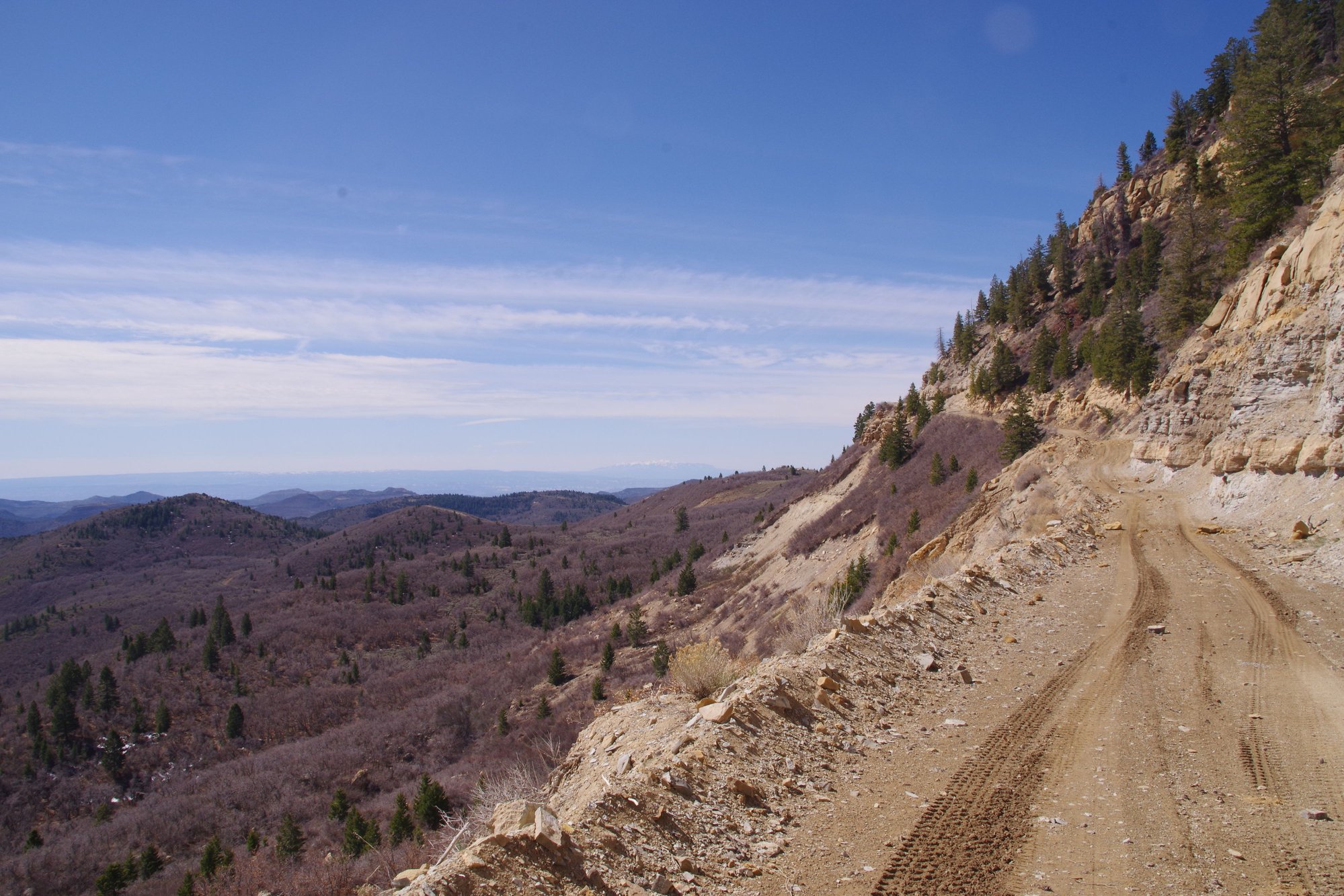
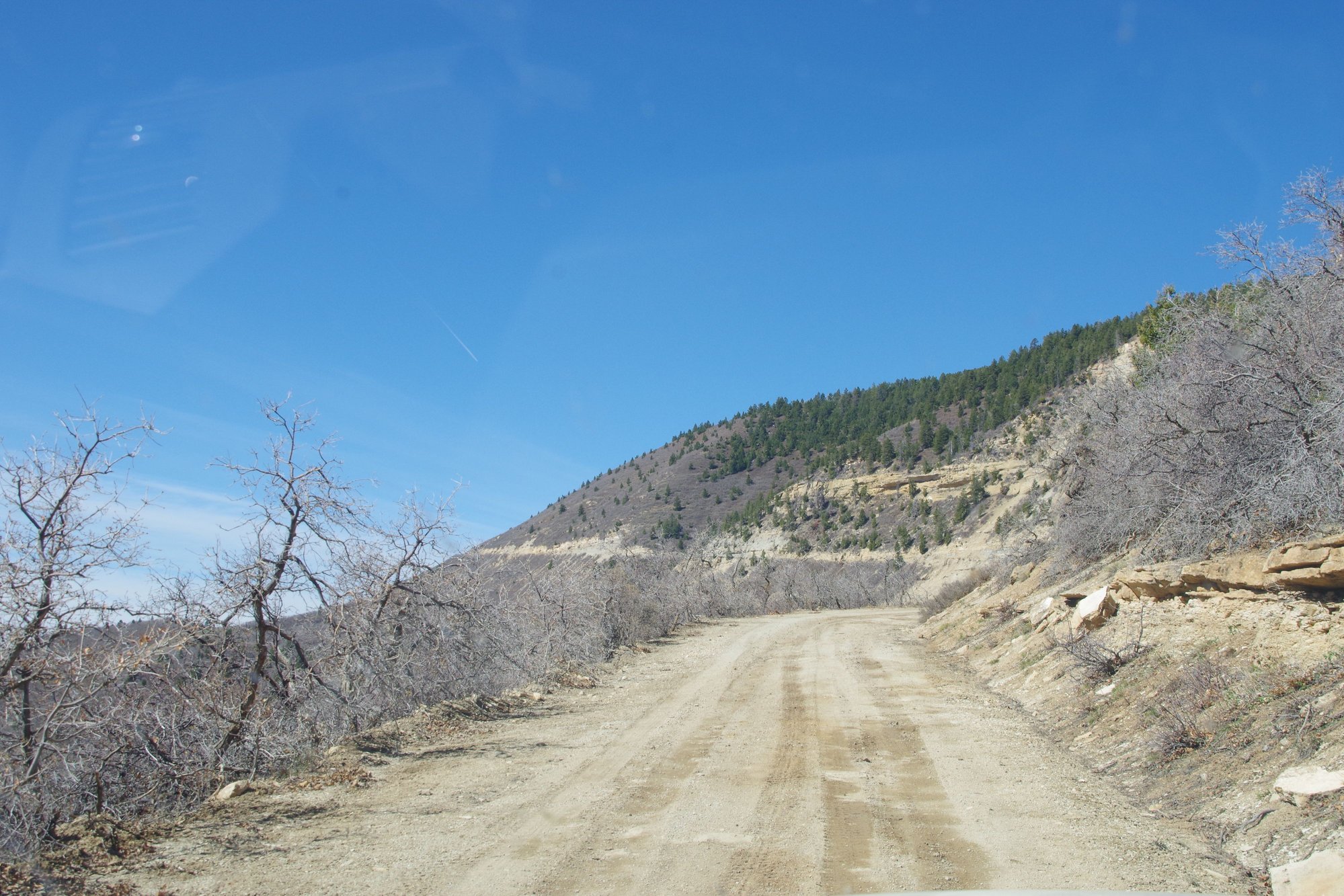
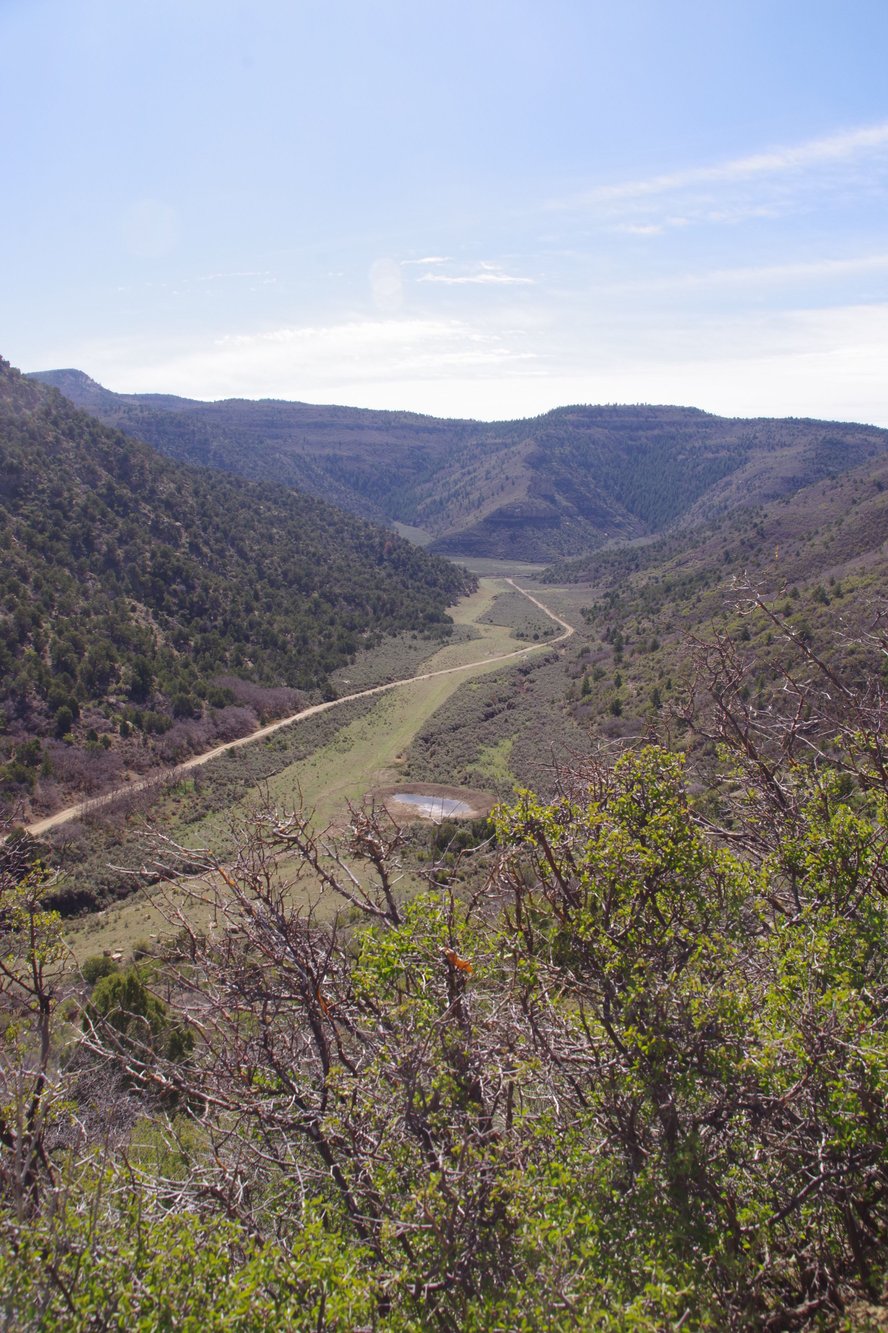
The view down valley from the first turn.
- Often more direct routing on a rail trail.
Glad you said “often”. Colorado’s old railroads tend to wander a whole lot. They dug a 6 mile tunnel under a mountain to avoid the 23 miles of Rollins Pass which included a loop to get the train down off the mountain.
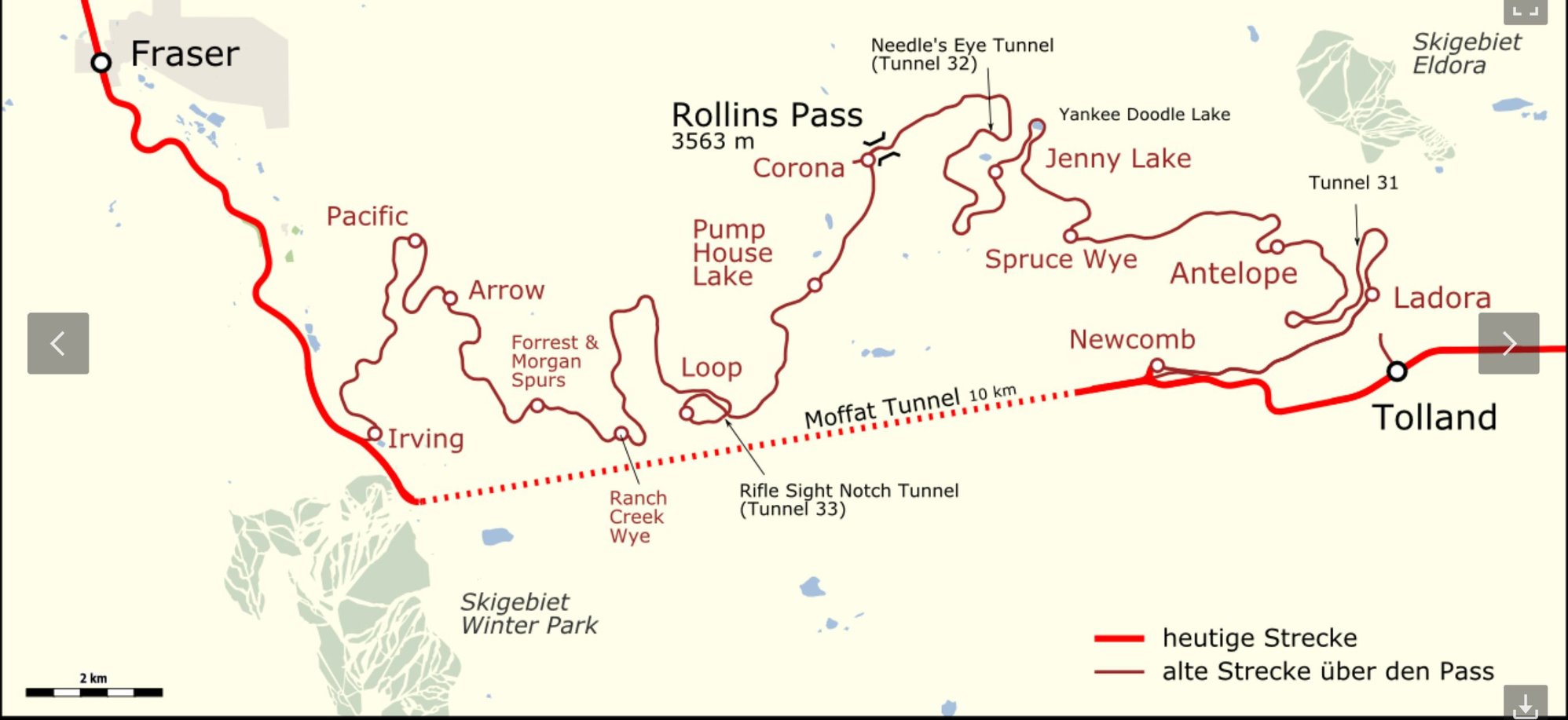
By the way, if you were to go to Winter Park, CO from Idaho Springs via Rollins Pass, it’s 57 miles. The same route over Berthod Pass (paved) is 37 miles. I’d probably still do Rollins Pass because it’s more historic (and cooler) but it isn’t direct. That’s true for most any of Colorado’s abandoned railroads.
I will agree, however, that out where you can breathe, rail trails can be more direct.
__________________
Stuart Black
Dreamin' of Bemidji Down the Mississippi (in part)
Plan Epsilon Around Lake Michigan in the era of Covid
Gold Fever Three days of dirt in Colorado
Pokin' around the Poconos A cold ride around Lake Erie
Dinosaurs in Colorado A mountain bike guide to the Purgatory Canyon dinosaur trackway
Solo Without Pie. The search for pie in the Midwest.
Picking the Scablands. Washington and Oregon, 2005. Pie and spiders on the Columbia River!
Stuart Black
Dreamin' of Bemidji Down the Mississippi (in part)
Plan Epsilon Around Lake Michigan in the era of Covid
Gold Fever Three days of dirt in Colorado
Pokin' around the Poconos A cold ride around Lake Erie
Dinosaurs in Colorado A mountain bike guide to the Purgatory Canyon dinosaur trackway
Solo Without Pie. The search for pie in the Midwest.
Picking the Scablands. Washington and Oregon, 2005. Pie and spiders on the Columbia River!