


Balaclava first
 10-07-18 | 07:11 AM
#1
Thread Starter
Full Member

Joined: Jan 2017
Posts: 479
Likes: 35
Balaclava first
I’ve never worn a balaclava, but I might try one out as it does sound like a nice solution in deep winter. Kinda curious.
I know very little about these balaclavas. There sure seem to be a lot of types, brands I notice ...
I was wondering how you ended up with the ‘right’ balaclava, how your search went.
How or why did you start wearing one? Do you have different items for different situations, weather types? What are your experiences? ... What to look out for? Materials? Any disappointments you may want to share? And do they work comfortably wearing regular glasses? Maybe you went back to wearing separate pieces? ...
Bye the bye, a nice tip perhaps for in between seasons (autumn):
Wear a tube as a neck gaiter first, then grab the scarf by the back and pull it over the back of your head to cover your ears & neck; the tube ending halfway your skull (or slightly back). Loosen up things a little for comfort (chin). And, if you want, you can easily pull up/down the scarf to cover your chin / mouth / nose. (Maybe you even want to fold things for extra warmth or more stretch towards your skin.)
Next: To protect your front head, you could add a lightweight headband. Or ... pull something like a Castelli summer skullcap over your head! One of the extra advantages is that it will keep the tube more in place, securing your ear protection.
I know very little about these balaclavas. There sure seem to be a lot of types, brands I notice ...
I was wondering how you ended up with the ‘right’ balaclava, how your search went.
How or why did you start wearing one? Do you have different items for different situations, weather types? What are your experiences? ... What to look out for? Materials? Any disappointments you may want to share? And do they work comfortably wearing regular glasses? Maybe you went back to wearing separate pieces? ...
Bye the bye, a nice tip perhaps for in between seasons (autumn):
Wear a tube as a neck gaiter first, then grab the scarf by the back and pull it over the back of your head to cover your ears & neck; the tube ending halfway your skull (or slightly back). Loosen up things a little for comfort (chin). And, if you want, you can easily pull up/down the scarf to cover your chin / mouth / nose. (Maybe you even want to fold things for extra warmth or more stretch towards your skin.)
Next: To protect your front head, you could add a lightweight headband. Or ... pull something like a Castelli summer skullcap over your head! One of the extra advantages is that it will keep the tube more in place, securing your ear protection.
Last edited by Bikewolf; 10-07-18 at 02:24 PM.
 10-07-18 | 08:05 AM
#2
Banned
Joined: Feb 2008
Posts: 8,701
Likes: 2,506
From: Mississauga/Toronto, Ontario canada
Bikes: I have 3 singlespeed/fixed gear bikes
Most balaclavas made from stretchy material and are "one size fits all "...I get my balaclavas at a industrial clothing supply store... Black colour, made from lightweight fleece, they are very warm, dry fast, comfortable to wear... They have a lot of stretch in them, so you can pull it your mouth or leave your mouth uncovered., and they are long enough to cover the neck/throat area.
10-07-18 | 02:14 PM
#3

vespertine member
Joined: Jul 2013
Posts: 2,473
Likes: 223
From: Land of Angora, Turkey
Bikes: Yes
My favorite one is a thin merino wool balaclava, which also covers my head and can be worn with or without covering the face/mouth/nose. For my purposes, it's worked better than the fleece or rib knit poly blends.
In warmer winter, I wear it over ear warmers with a normal helmet (I have ear issues in the cold). For colder weather, I wear it alone with a snowboard helmet. For extreme cold (like 0F and below), I have a homemade thick wool face cover that goes over the top.
My balaclava doesn't really cover the neck, other than the very top, but my winter outer layers do that.
In warmer winter, I wear it over ear warmers with a normal helmet (I have ear issues in the cold). For colder weather, I wear it alone with a snowboard helmet. For extreme cold (like 0F and below), I have a homemade thick wool face cover that goes over the top.
My balaclava doesn't really cover the neck, other than the very top, but my winter outer layers do that.
10-07-18 | 02:16 PM
#4
Senior Member

Joined: Jul 2008
Posts: 6,431
Likes: 44
From: Minneapolis, MN
Balaclava's work very well when they're open faced and the temp isn't low enough to need your nose and mouth covered.
Problem is that as soon as you cover your nose and mouth, the air you're breathing in and out goes by your nose and glasses and fogs up your glasses.
I haven't found a perfect solution for that other than wearing contacts. I got a balaclava that has a straight piece that you can put over your nose but leaves your mouth open and it works ok but not great, it's kind of a pain and isn't trustworthy when the temp drops to the point where you want no exposed skin.
I've seen ones that look hilarious that have a separate channel for air from your nose and mouth to go in and out through, but by that point I realized I'd rather just take my car when it's so cold I would need one biking wasn't much fun at those temps anyways.
Problem is that as soon as you cover your nose and mouth, the air you're breathing in and out goes by your nose and glasses and fogs up your glasses.
I haven't found a perfect solution for that other than wearing contacts. I got a balaclava that has a straight piece that you can put over your nose but leaves your mouth open and it works ok but not great, it's kind of a pain and isn't trustworthy when the temp drops to the point where you want no exposed skin.
I've seen ones that look hilarious that have a separate channel for air from your nose and mouth to go in and out through, but by that point I realized I'd rather just take my car when it's so cold I would need one biking wasn't much fun at those temps anyways.
10-07-18 | 02:33 PM
#5
Thread Starter
Full Member
Joined: Jan 2017
Posts: 479
Likes: 35
Balaclava's work very well when they're open faced and the temp isn't low enough to need your nose and mouth covered.
Problem is that as soon as you cover your nose and mouth, the air you're breathing in and out goes by your nose and glasses and fogs up your glasses.
I haven't found a perfect solution for that other than wearing contacts.
Problem is that as soon as you cover your nose and mouth, the air you're breathing in and out goes by your nose and glasses and fogs up your glasses.
I haven't found a perfect solution for that other than wearing contacts.
10-07-18 | 10:28 PM
#6
Senior Member
Joined: Jul 2008
Posts: 6,431
Likes: 44
From: Minneapolis, MN
Problem is, that covers a narrow range of maybe 5-15f. Once you get to 5-10f you get into the range where any exposed skin is vulnerable to frostbite. Keep in mind you're riding into the wind of course. So having something that might leave some skin exposed is...iffy.
I don't recall the exact temps any more, just because like I said I realized it wasn't a lot of fun riding below 15f so I stopped doing it. Others who ride in those temps regularly for transporation might have better experience than I do.
10-08-18 | 11:34 AM
#8
Thread Starter
Full Member
Joined: Jan 2017
Posts: 479
Likes: 35
Yeah, the one I had that worked relatively well, the piece was like a headband that went over your nose/mouth.
Problem is, that covers a narrow range of maybe 5-15f. Once you get to 5-10f you get into the range where any exposed skin is vulnerable to frostbite. Keep in mind you're riding into the wind of course. So having something that might leave some skin exposed is...iffy.
Problem is, that covers a narrow range of maybe 5-15f. Once you get to 5-10f you get into the range where any exposed skin is vulnerable to frostbite. Keep in mind you're riding into the wind of course. So having something that might leave some skin exposed is...iffy.
10-08-18 | 12:52 PM
#9

Senior Member

Joined: Jul 2008
Posts: 30,465
Likes: 4,547
From: 25 miles northwest of Boston
Bikes: Bottecchia Sprint, GT Timberline 29r, Marin Muirwoods 29er, Trek FX Alpha 7.0
started wearing one for bike commuting because my face was too cold on brutal days. I eventually settled on one that covered the bridge of my nose but I had to cut a larger opening for my mouth. I wear safety glasses when it is very cold. this is fine except when I stop. the moisture from my eye sockets will fog them. so when I stop & there is no airflow, I have to take them off

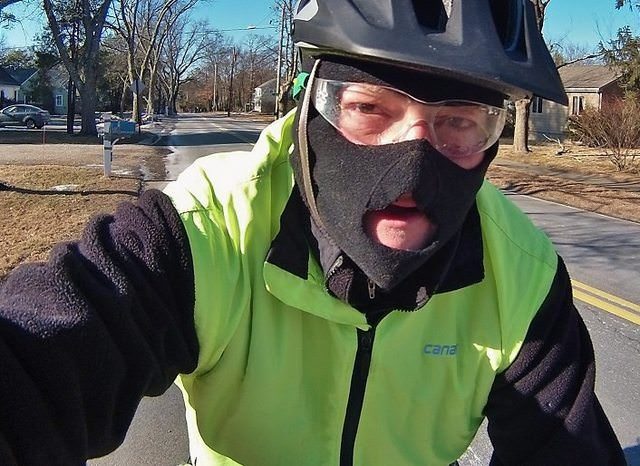
when it is not brutal out I have another I like with most of the face open but still covers everything else.
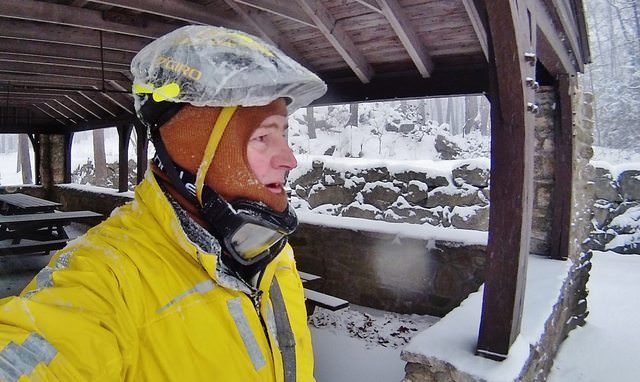
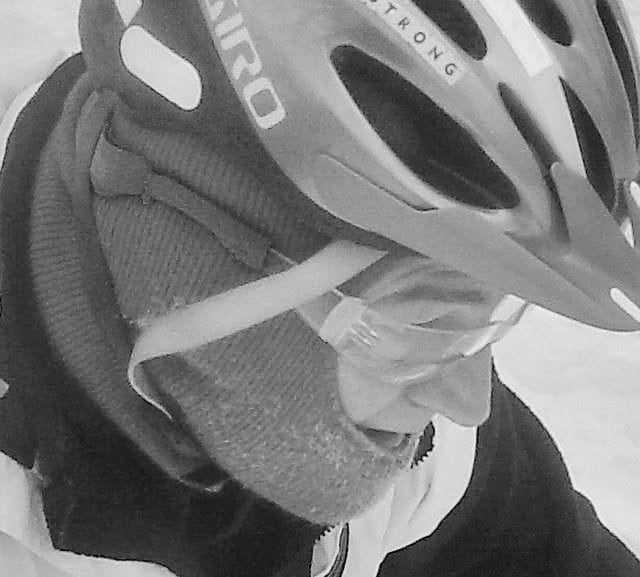
when it is just "cold" I use use a variety of other head warming options, often changing them at 1/2 way points on joy rides, such as a thin beanie, or knit hat w/o brim or a simple thin hooded sweatshirt. funny how useful a thin sweathsirt can be. you can layer under it & you can flip the hood down periodically for cooling, or back up for chills
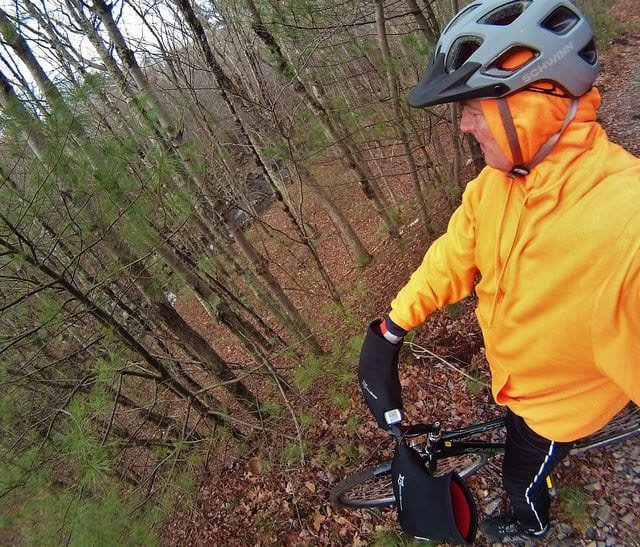
when it is not brutal out I have another I like with most of the face open but still covers everything else.
when it is just "cold" I use use a variety of other head warming options, often changing them at 1/2 way points on joy rides, such as a thin beanie, or knit hat w/o brim or a simple thin hooded sweatshirt. funny how useful a thin sweathsirt can be. you can layer under it & you can flip the hood down periodically for cooling, or back up for chills
10-08-18 | 01:01 PM
#10

Member
Joined: Jul 2017
Posts: 31
Likes: 3
Bikes: Colnago ACR
Balaclavas in Tennessee
I’ve never worn a balaclava, but I might try one out as it does sound like a nice solution in deep winter. Kinda curious.
I know very little about these balaclavas. There sure seem to be a lot of types, brands I notice ...
I was wondering how you ended up with the ‘right’ balaclava, how your search went.
How or why did you start wearing one? Do you have different items for different situations, weather types? What are your experiences? ... What to look out for? Materials? Any disappointments you may want to share? And do they work comfortably wearing regular glasses? Maybe you went back to wearing separate pieces? ...
Bye the bye, a nice tip perhaps for in between seasons (autumn):
Wear a tube as a neck gaiter first, then grab the scarf by the back and pull it over the back of your head to cover your ears & neck; the tube ending halfway your skull (or slightly back). Loosen up things a little for comfort (chin). And, if you want, you can easily pull up/down the scarf to cover your chin / mouth / nose. (Maybe you even want to fold things for extra warmth or more stretch towards your skin.)
Next: To protect your front head, you could add a lightweight headband. Or ... pull something like a Castelli summer skullcap over your head! One of the extra advantages is that it will keep the tube more in place, securing your ear protection.
I know very little about these balaclavas. There sure seem to be a lot of types, brands I notice ...
I was wondering how you ended up with the ‘right’ balaclava, how your search went.
How or why did you start wearing one? Do you have different items for different situations, weather types? What are your experiences? ... What to look out for? Materials? Any disappointments you may want to share? And do they work comfortably wearing regular glasses? Maybe you went back to wearing separate pieces? ...
Bye the bye, a nice tip perhaps for in between seasons (autumn):
Wear a tube as a neck gaiter first, then grab the scarf by the back and pull it over the back of your head to cover your ears & neck; the tube ending halfway your skull (or slightly back). Loosen up things a little for comfort (chin). And, if you want, you can easily pull up/down the scarf to cover your chin / mouth / nose. (Maybe you even want to fold things for extra warmth or more stretch towards your skin.)
Next: To protect your front head, you could add a lightweight headband. Or ... pull something like a Castelli summer skullcap over your head! One of the extra advantages is that it will keep the tube more in place, securing your ear protection.
10-08-18 | 02:25 PM
#11
Senior Member
Joined: Jul 2008
Posts: 6,431
Likes: 44
From: Minneapolis, MN
25f+: Headband and helmet was enough
15-25f: Open face balaclava worked well
5f-15f: Nose covering piece plus balaclava worked well
5f and below: It leaves to much exposed skin and I felt it was to risky because of the low temp and frostbite.
If you regularly bike in a range you feel it would be enough for I'd say your plan is a good one. It's also cheap and easy to do with little risk or extra gear.
I'm winter biking in Minnesota, so the temps I ran into may be a bit different than the ones you run into...
Last edited by PaulRivers; 10-08-18 at 02:36 PM.
10-08-18 | 02:47 PM
#12

meh

Joined: Jul 2014
Posts: 4,742
Likes: 1,129
From: Hopkins, MN
Bikes: 23 Cutthroat, 21 CoMotion Java; 21 Bianchi Infinito; 15 Surly Pugsley; 11 Globe Daily; 09 Kona Dew Drop; 96 Mondonico
I'm a freak ... any balaclava that covers my mouth and I'm too hot... even when the temps are sub-zero (F).
The pic below was the 2018 Fat Tire Loppet in Minneapolis on the same day as the coldest Super Bowl ever (those wimpy football players, they played inside). Temps were between -5 and 0F and I rode the race (22 miles) and rode the 11 miles home after the race. I focus on wool: 45NRTH Toaster Fork, Smartwool skull cap, wool buff. If I'm struggling to keep my face warm enough, I can pull up the buff ... typically do this if I have to stop for a few minutes or riding into a wind.

Photo credit TMB Images
The pic below was the 2018 Fat Tire Loppet in Minneapolis on the same day as the coldest Super Bowl ever (those wimpy football players, they played inside). Temps were between -5 and 0F and I rode the race (22 miles) and rode the 11 miles home after the race. I focus on wool: 45NRTH Toaster Fork, Smartwool skull cap, wool buff. If I'm struggling to keep my face warm enough, I can pull up the buff ... typically do this if I have to stop for a few minutes or riding into a wind.
Photo credit TMB Images
Last edited by Hypno Toad; 10-09-18 at 06:38 AM. Reason: Just fixing my typical typos & errors
10-08-18 | 02:58 PM
#13
- Soli Deo Gloria -
Joined: Aug 2015
Posts: 14,779
Likes: 743
From: Northwest Georgia
Bikes: 2018 Rodriguez Custom Fixed Gear, 2017 Niner RLT 9 RDO, 2015 Bianchi Pista, 2002 Fuji Robaix
My advice is to get one with a form fitting neck.
One with a baggy neck will bunch up under the jacket collar and be uncomfortable.
-Tim-
One with a baggy neck will bunch up under the jacket collar and be uncomfortable.
-Tim-
10-09-18 | 08:38 AM
#14
Newbie
Joined: Jan 2016
Posts: 59
Likes: 7
Balaclava's work very well when they're open faced and the temp isn't low enough to need your nose and mouth covered.
Problem is that as soon as you cover your nose and mouth, the air you're breathing in and out goes by your nose and glasses and fogs up your glasses.
I haven't found a perfect solution for that other than wearing contacts. I got a balaclava that has a straight piece that you can put over your nose but leaves your mouth open and it works ok but not great, it's kind of a pain and isn't trustworthy when the temp drops to the point where you want no exposed skin.
I've seen ones that look hilarious that have a separate channel for air from your nose and mouth to go in and out through, but by that point I realized I'd rather just take my car when it's so cold I would need one biking wasn't much fun at those temps anyways.
Problem is that as soon as you cover your nose and mouth, the air you're breathing in and out goes by your nose and glasses and fogs up your glasses.
I haven't found a perfect solution for that other than wearing contacts. I got a balaclava that has a straight piece that you can put over your nose but leaves your mouth open and it works ok but not great, it's kind of a pain and isn't trustworthy when the temp drops to the point where you want no exposed skin.
I've seen ones that look hilarious that have a separate channel for air from your nose and mouth to go in and out through, but by that point I realized I'd rather just take my car when it's so cold I would need one biking wasn't much fun at those temps anyways.
10-09-18 | 11:19 AM
#15
Senior Member
Joined: Apr 2015
Posts: 223
Likes: 10
From: NW, WI
Bikes: Salsa Fargo, Surly Disc Trucker, Surly ECR, Cannondale Cujo, Rocky Mountain Blizzard
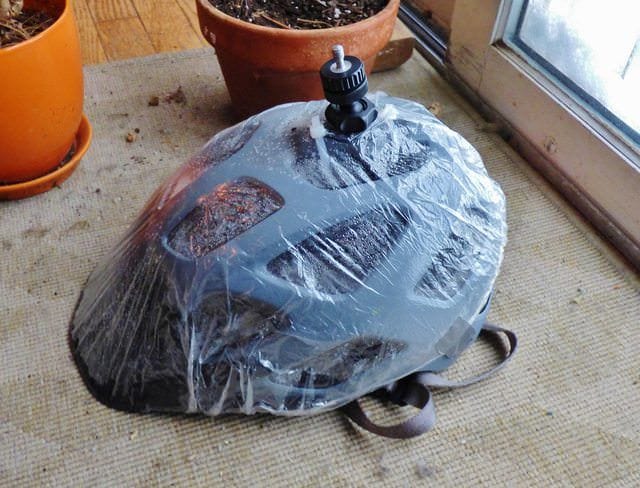
I have a couple different ones I wear on my commutes. Down to 0 degrees F I wear a thinner one from carhartt. Below zero I switch to a rag wool one. To help with heat retention I use a cheap shower cap and punch a hole in the top to fit over the mounting bracket for my helmet light. 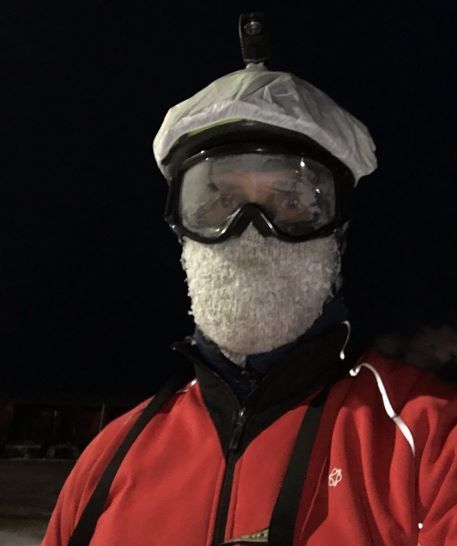
10-09-18 | 12:03 PM
#16
Senior Member
Joined: Jul 2008
Posts: 30,465
Likes: 4,547
From: 25 miles northwest of Boston
Bikes: Bottecchia Sprint, GT Timberline 29r, Marin Muirwoods 29er, Trek FX Alpha 7.0

 10-11-18 | 12:29 PM
#17
Thread Starter
Full Member
Joined: Jan 2017
Posts: 479
Likes: 35
Thanks for the tips.
I’ve noticed some do and some don’t protect your forehead as well. It’s similar with skull caps. So, something to pay attention to.
Love how I see some D-I-Y here, because cycling doesn’t have to be all that expensive.
One of my D-I-Y tips is, when your frontwheel fork is too thick or has a somewhat difficult shape. You can use plastic straps to add a piece of an electricity tube or simular to the fork. That way it may be easier to attach lights or mirrors etc.
I’ve noticed some do and some don’t protect your forehead as well. It’s similar with skull caps. So, something to pay attention to.
Love how I see some D-I-Y here, because cycling doesn’t have to be all that expensive.
One of my D-I-Y tips is, when your frontwheel fork is too thick or has a somewhat difficult shape. You can use plastic straps to add a piece of an electricity tube or simular to the fork. That way it may be easier to attach lights or mirrors etc.
10-14-18 | 05:18 PM
#19
Senior Member
Joined: Jul 2008
Posts: 30,465
Likes: 4,547
From: 25 miles northwest of Boston
Bikes: Bottecchia Sprint, GT Timberline 29r, Marin Muirwoods 29er, Trek FX Alpha 7.0
10-24-18 | 01:04 PM
#21

Senior Member
Joined: Jul 2014
Posts: 6,228
Likes: 440
From: Toronto, CANADA
Bikes: ...a few.
Mine is medium thickness made from technical fibers. It works well down to about -5*C. Below that I will need second layer on my head, as well as something to cover up my exposed facial area. Also, at 5*C or colder I'll go with bigger goggles as opposed to visors or glasses. The extra protection for the eyes and surrounding area is important when you generate your own windchill.
10-24-18 | 01:15 PM
#22

Senior Member
Joined: Dec 2015
Posts: 914
Likes: 25
From: ALASKA , SoCal
Bikes: /Skye/ Torker mt, Sirrus flat bar
Icing & fogging up issues for me too.
I used goggles , but the type I have cause
tunnle vision.
Any out there that have a good side view.
Saw some glasses with removable foam eye socket
seals.
Not sure how well those work
look up “anti fog safety glasses”

I used goggles , but the type I have cause
tunnle vision.
Any out there that have a good side view.
Saw some glasses with removable foam eye socket
seals.
Not sure how well those work
look up “anti fog safety glasses”
Last edited by bogydave; 10-24-18 at 01:24 PM.
10-29-18 | 02:52 PM
#23

Senior Member
Joined: Jan 2009
Posts: 6,643
Likes: 2,368
From: Colorado Springs, CO
Bikes: 2015 Charge Plug, 2007 Dahon Boardwalk, 1997 Specialized Rockhopper, 1984 Nishiki International, 2006 Felt F65, 1989 Dahon Getaway V
My face was cold and a scarf was too bulky and sweaty. I read about blaclavas here on bikeforums years ago. Not knowing anything I bought a thin nylon one. It worked well and still works well for me down to my limit of 10F. It seems for me blocking the wind is more important than insulation. Below 10F I'm sure insulation is more important.
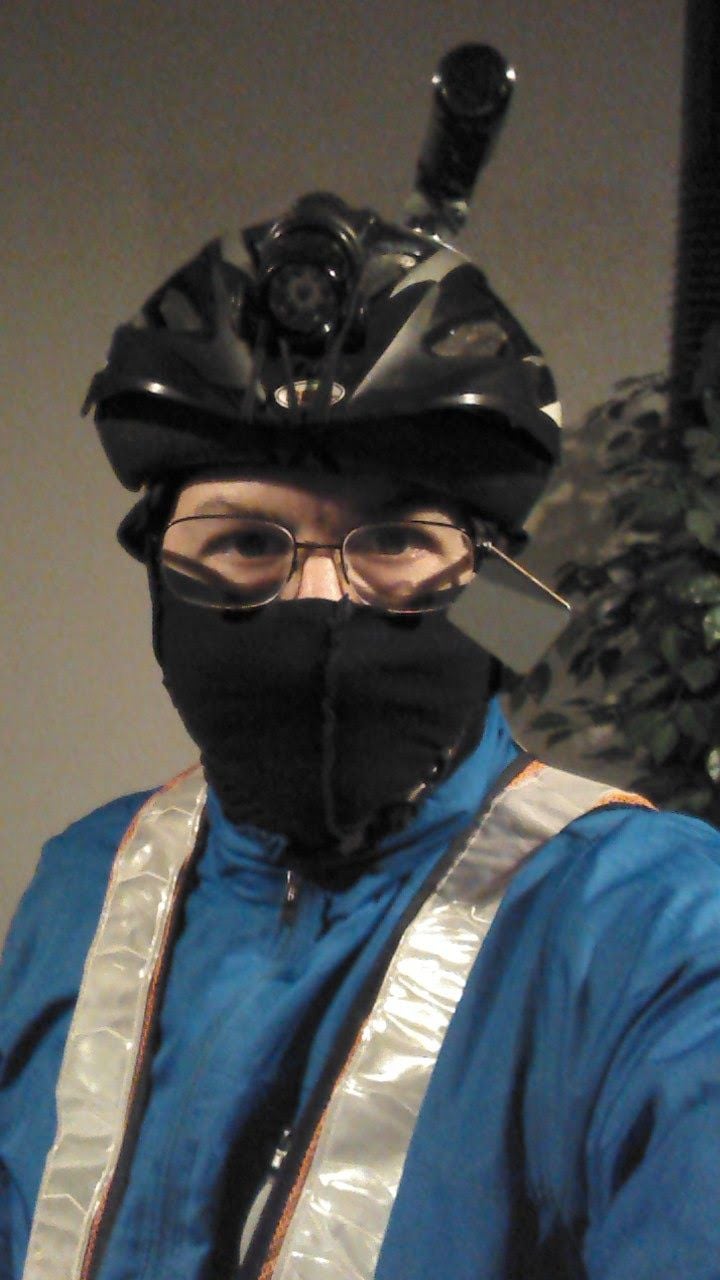
As far as glasses fogging up, that was always a problem until I began cleaning my glasses with hand soap and warm water, then blow drying them with by mouth through an empty pen tube, or pursed lips. It works in the dry altitude of Colorado. What I discovered is a thin, invisible soap film is left on the lenses which helps prevent fogging. This is how anti-fogging agents like rain-X work.
Being thin and stretchy the balaclava can be worn as a cap only, a cap and chin cover (tucked under my bottom lip), over my mouth, or over my mouth and nose. Over my nose will lead to fogging sometimes which can be somewhat avoided by breathing though my mouth and affecting and overbite to direct the breath down and away.
Also, being bald, I wear it inside out so the seam doesn't leave an indentation on my bare scalp, which makes it look like I had my head split in two.
Anyways...that's what works for me.
As far as glasses fogging up, that was always a problem until I began cleaning my glasses with hand soap and warm water, then blow drying them with by mouth through an empty pen tube, or pursed lips. It works in the dry altitude of Colorado. What I discovered is a thin, invisible soap film is left on the lenses which helps prevent fogging. This is how anti-fogging agents like rain-X work.
Being thin and stretchy the balaclava can be worn as a cap only, a cap and chin cover (tucked under my bottom lip), over my mouth, or over my mouth and nose. Over my nose will lead to fogging sometimes which can be somewhat avoided by breathing though my mouth and affecting and overbite to direct the breath down and away.
Also, being bald, I wear it inside out so the seam doesn't leave an indentation on my bare scalp, which makes it look like I had my head split in two.
Anyways...that's what works for me.
10-29-18 | 04:21 PM
#24
2-Wheeled Fool
Joined: Sep 2016
Posts: 2,346
Likes: 680
From: New Hampshire
Bikes: Surly Ogre, Brompton
Going to address a couple things in your post, Bobby.
My face was cold and a scarf was too bulky and sweaty. I read about balaclavas here on bikeforums years ago. Not knowing anything I bought a thin nylon one. It worked well and still works well for me down to my limit of 10F. It seems for me blocking the wind is more important than insulation. Below 10F I'm sure insulation is more important.
As far as glasses fogging up, that was always a problem until I began cleaning my glasses with hand soap and warm water, then blow drying them with by mouth through an empty pen tube, or pursed lips. It works in the dry altitude of Colorado. What I discovered is a thin, invisible soap film is left on the lenses which helps prevent fogging. This is how anti-fogging agents like rain-X work.
As a diver, I've used various methods of de-fogging my mask over the years, and your method sounds similar to some techniques I use. First and foremost, and I can't stress this enough. CLEAN CLEAN CLEAN. If your goggles/glasses are clean, they are less-likely to fog. A clean lens will also promote adhesion of whatever fog-prevention agent you are using. Check out any local dive shops. There's a half-hundred different brands of mask cleaners and defoggers out there. Ask the owner which ones are best for your application.
Being thin and stretchy the balaclava can be worn as a cap only, a cap and chin cover (tucked under my bottom lip), over my mouth, or over my mouth and nose. Over my nose will lead to fogging sometimes which can be somewhat avoided by breathing though my mouth and affecting and overbite to direct the breath down and away.
Also, being bald, I wear it inside out so the seam doesn't leave an indentation on my bare scalp, which makes it look like I had my head split in two. I know, right! I'm not bald, but I hate it when manufacturers do a lousy job of sewing seams - especially socks!
As far as glasses fogging up, that was always a problem until I began cleaning my glasses with hand soap and warm water, then blow drying them with by mouth through an empty pen tube, or pursed lips. It works in the dry altitude of Colorado. What I discovered is a thin, invisible soap film is left on the lenses which helps prevent fogging. This is how anti-fogging agents like rain-X work.
As a diver, I've used various methods of de-fogging my mask over the years, and your method sounds similar to some techniques I use. First and foremost, and I can't stress this enough. CLEAN CLEAN CLEAN. If your goggles/glasses are clean, they are less-likely to fog. A clean lens will also promote adhesion of whatever fog-prevention agent you are using. Check out any local dive shops. There's a half-hundred different brands of mask cleaners and defoggers out there. Ask the owner which ones are best for your application.
Being thin and stretchy the balaclava can be worn as a cap only, a cap and chin cover (tucked under my bottom lip), over my mouth, or over my mouth and nose. Over my nose will lead to fogging sometimes which can be somewhat avoided by breathing though my mouth and affecting and overbite to direct the breath down and away.
Also, being bald, I wear it inside out so the seam doesn't leave an indentation on my bare scalp, which makes it look like I had my head split in two. I know, right! I'm not bald, but I hate it when manufacturers do a lousy job of sewing seams - especially socks!
10-29-18 | 08:12 PM
#25
Senior Member
Joined: Jun 2007
Posts: 317
Likes: 7
From: Calgary, Alberta
An alternative to a balaclava that I greatly prefer is a merino beanie and neck tube. You can pull the neck tube up the back of your head and across your face so that it covers either just the chin or all the way up to your nose, or you can pull it down on warmer days to just cover your neck. Or on really warm days, just wear the beanie. Much more adjustable than a balaclava, especially the loose-fitting ones that tend to be sold.