I've encountered the overly-stiff return springs on many different calipers, just modified a pair of 1985 Weinmanns but have also modified Campy and Modolo calipers on several occasions.
Bending the springs
symmetrically is the challenge, but reduces the spring pre-load and improves ease of generating braking power seemingly disproportionately! I get great results doing this after confirming that the caliper main pivot is adjusted to move freely.
With the caliper in one hand, and with a big pair of pliers in the other, grip end of the spring closest to your "pliers" hand, just upward of the stop peg, and twist to release it from the groove in the peg.
Then re-grip the free end of the spring with the pliers nearer to the end, and use your "caliper" hand to grip the "pliers"-side brake pad, and twist the end of the spring inward. The other end of the spring should remain stuck against it's stop peg, and the twisting force keeps the caliper fully open as the twisting force is forcing it in that direction.
After a twist effort or two, observe how far outward from the peg that the free end of the spring is now positioned away from the peg. It should now be somewhat closer to the peg as the spring has been bent several mm inward.
This process is then repeated with the other end of the spring, and with hand positions switched so as to provide effective leverage and grip with the pliers.
The idea is to bend in each side roughly equally, such that neither side of the spring nearer to the centerbolt stands proud of either arm. It should look stock in other words.
The first time that I did this, I had already gone through doing new cabling and lubing and adjusting the centerbolt with very little improvement noticed.
But after slackening the spring preload I experienced braking ease that I just about couldn't believe.
Note that the minimum spring tension should still be sufficient to keep the levers from "clacking" when the front wheel hits normal bumps in the road.
And, as is the case with ALL cable-operated brakes, there must always be enough tension to prevent any cable housing end (or cable end) from becoming dislodged from it's stop or anchor point!
Note that spring preload increases as the pads wear, so in some cases it may be better to replace pads with newer, full-thickness pads before proceeding with any spring modifications, or the spring tension may later be found to be insufficient when new pads are installed.
Lastly, any degradation in the condition of cables/housing, as when a housing becomes sharply bent, crushed or contaminated, may necessitate additional return spring tension so as to keep those cable and housing ends secure from loose movement at their points of termination. That's why the manufacturers probably gave the calipers so much spring preload tension in the first place(?).
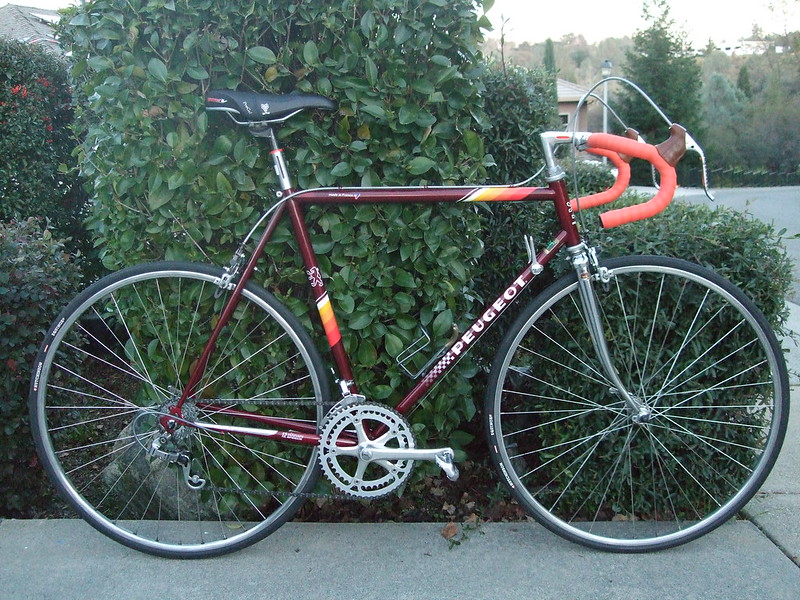
Here's my PH501 that I fully rebuilt last weekend while recovering from a bad cold. I am still using the stock, scratchy-sounding Weinman pads but have achieved strong-enough braking using the spring-relaxation method.
The bike's 42-24t low gear is a little "stiff" as they say (it's hilly here), but the brakes feel nice now and I just need to replace the front pads mainly to reduce the noises.