
Senior Member
I have a nice vintage set of Campagnolo Nuovo Record brakes, but I removed them and went to dual pivots a decade ago due to the hand fatigue of the high tension brake spring and the fact that I do not ride in the drops, upper bar and hoods now.
I have heard that someone may be making reduced tension springs for the Nuovo Record brake which would really be nice as I could then use these brakes on a vintage bike rebuild, otherwise I will look at the SunTour Superbe brake but therein lies the problem of do they have enough reach (the Nuovo Record are of long reach design).
Thanks for any help suggestion is finding these springs, if they exist, or if there are other ways to modify the Nuovo Record spring to reduce spring tension.
I have heard that someone may be making reduced tension springs for the Nuovo Record brake which would really be nice as I could then use these brakes on a vintage bike rebuild, otherwise I will look at the SunTour Superbe brake but therein lies the problem of do they have enough reach (the Nuovo Record are of long reach design).
Thanks for any help suggestion is finding these springs, if they exist, or if there are other ways to modify the Nuovo Record spring to reduce spring tension.

Senior Member
I don't know of anyone specifically making lower tension springs, but it isn't much trouble to remove the spring, and carefully bend it so there is a bit more bend / rotation in the circular loop at the "shoulder". Just make sure both sides are even, and you should be good to go.
(I haven't actually done this to a Campy spring, but I've done several Shimano and Dia Compe springs from what are essentially Campy Record clones. No trouble with any of them.)
(I haven't actually done this to a Campy spring, but I've done several Shimano and Dia Compe springs from what are essentially Campy Record clones. No trouble with any of them.)

noglider
aka Tom Reingold
close


05-28-26
- Join DateJan 2009
- LocationNew York, NY, and High Falls, NY, USA
- Posts:44,299
-
iTrader Positive Feedback0
-
iTrader Feedback Score(0)
-
Likes:7,319
-
Liked:6,556 Times in 3,510 Posts
The spring tension isn't the only thing that makes these brakes require a lot of hand pressure. They have less leverage than dual pivot brakes. If you were to weaken the springs, which should be fairly easy to do, you might not find much relief.
Senior Member
Quote:
Given that information, a logical thing you can do is to get some modern brake levers. (edit) Also, they are likely to be designed to be operated more effectively from the hoods. Originally Posted by since6
I have a nice vintage set of Campagnolo Nuovo Record brakes, but I removed them and went to dual pivots a decade ago due to the hand fatigue of the high tension brake spring and the fact that I do not ride in the drops, upper bar and hoods now.
I'm sure I sound like a broken record by now, but campy record brakes are not designed to be operated from the hoods for anything besides casual braking and feathering. If you don't ride in the drops Record brakes are not the ones for you.
Banned
Start squeezing tennis balls to make your hand stronger... fresh out of the can they're, firmer, can is pressurized..
Senior Member
What modern levers with return spring would be recommended, these would need to not be brake/shifter levers as I will be using down tube shifters and would prefer non-areo, but areo will do too.
So it's a combination of a stiff spring, lack of leverage in the single pivot design and no return spring in the brake lever? More things than I had originally thought, but all make sense, as there's no comparison in hand effort to brake between my Record brake/shifter levers with dual pivot brakes and the single pivot brake with the same brake/shifter levers.
So it's a combination of a stiff spring, lack of leverage in the single pivot design and no return spring in the brake lever? More things than I had originally thought, but all make sense, as there's no comparison in hand effort to brake between my Record brake/shifter levers with dual pivot brakes and the single pivot brake with the same brake/shifter levers.
Senior Member
Maybe look at the Tektro RL340? I haven't used them but they look like will do what you need. Perhaps someone who has tried them can provide some feedback? I have TRP RRL levers on one bike, but they don't have a return spring. In retrospect this may be better.
https://www.amazon.com/Tektro-RL340-.../dp/B003U9PYZY
I'm sure there are other candidates as well. All modern levers are aero. If you use silver ones, they won't look too out of place on a vintage bike.
Campy Record brakes were famous for their stiff strong springs. It was seen as a mark of quality at the time. You might be able to find a compatible weaker spring from one of the many clones, but I would recommend against that. A modern lever with a counter-spring will lessen the apparent force more effectively anyway.
CORRECTION: After thinking about this, I realize it was the total design of a weak spring in the caliper and a weak spring in the lever that helped reduce total spring force.
Older brakes did use a different leverage ratio, usually referred to as mechanical advantage or MA. The calipers moved more for the same amount of brake lever movement. They took more handforce, but the calipers could be set more open too, so you could get home with a broken spoke or whatever.
Also check your brakepads. Old dried out pads won't stop well and should be replaced.
https://www.amazon.com/Tektro-RL340-.../dp/B003U9PYZY
I'm sure there are other candidates as well. All modern levers are aero. If you use silver ones, they won't look too out of place on a vintage bike.
Campy Record brakes were famous for their stiff strong springs. It was seen as a mark of quality at the time. You might be able to find a compatible weaker spring from one of the many clones, but I would recommend against that. A modern lever with a counter-spring will lessen the apparent force more effectively anyway.
CORRECTION: After thinking about this, I realize it was the total design of a weak spring in the caliper and a weak spring in the lever that helped reduce total spring force.
Quote:
So it's a combination of a stiff spring, lack of leverage in the single pivot design and no return spring in the brake lever?
More or less, yeah. I'd say different leverage ratio rather than lack of leverage myself. So it's a combination of a stiff spring, lack of leverage in the single pivot design and no return spring in the brake lever?
Older brakes did use a different leverage ratio, usually referred to as mechanical advantage or MA. The calipers moved more for the same amount of brake lever movement. They took more handforce, but the calipers could be set more open too, so you could get home with a broken spoke or whatever.
Also check your brakepads. Old dried out pads won't stop well and should be replaced.

RiddleOfSteel
Master Parts Rearranger
close

05-28-26
- Join DateMar 2015
- LocationPortlandia's Kuiper Belt, OR
- Posts:4,849
-
iTrader Positive Feedback0
-
iTrader Feedback Score(0)
-
Likes:4,418
-
Liked:2,820 Times in 1,292 Posts
As far as I understand, the springs in the brake levers were to expedite the calipers opening back up as well as the lever to go to their rest state, not to ease brake caliper spring loads. Suntour had their BRS system (brake return spring/system?) and Shimano their SLR. I've run Superbe Pro BRS levers without their spring, hooked to Superbe Pro hidden spring calipers and the spring effort was very little, thanks in part to the lack of return spring in the lever, as well as the exquisitely light and smooth caliper spring action. In both these cases, Suntour and Shimano eased up their caliper spring rates with these new systems, changed lever geometry, and put some of the lost spring rate into the levers themselves (sorta zero-sum).
Shimano 600 brake calipers of the 6200 generation have very strong springs. The next 600 generation, '6400', had noticeably reduced spring rates. This conclusion is easily ascertained by squeezing both caliper arms of each brake unit with one's hands. Most dual pivots have this reduced spring rate, except for maybe SRAM as they don't spring their levers, only their calipers (and I've felt their calipers...no thanks).
Brake lever body shape and MA or leverage changed (really, improved) as time went on, particularly in the '80s. Riding on the hoods was more comfortable. Cable routing and the resulting lever pivot to cable anchor point allowed for easier application of braking force via one's hands when riding on the hoods. It seems to me that, new levers or old, braking from the drops allows one to easily apply the same amount clamping force as the other, with similar results. I wonder how many people have given thought to the fact that when braking from the hoods, one is applying a (clamp) force 45° to normal (the lever's orientation), and that braking from the drops is the most ideal as the applied force is normal to the lever. Flat bar bikes with regular brake levers (like MTB bikes) have the user applying force normal to the lever. No wonder it's so easy! The entire road bike world is designed around a compromised leverage situation! Well, at least on the hoods. It's fine in the drops, and that's the gig: usability in two positions instead of only one.
Really, for me, with old Campagnolo brakes, it is a bad combination of 1) super strong caliper springs 2) a non-inviting hood shape (for riding on the hoods, as opposed to the drops) with old leverage geometry, and ALSO 3) Campy brake levers (or blades) themselves had a (IMO) crappy shape (or profile) for on-the-hoods braking. Suntour/Dia Compe had really nice shapes on their nicer offerings during the late '70s and into the '80s. Shimano took until the mid to late '80s to get really nice lever body shapes, though by the mid '80s their lever/blade profiles were very similar to that of Suntour/DC. The Campy shape just bulged, and that disallowed someone on the hoods to grab 'a handful of brake.'
Bending an existing spring could work, though it will require some effort. If you have access to a set of 1050-era Shimano 105 calipers or late '80s Exage calipers, their springs are nice and soft. They are also in the universal brake spring coiled shape, and should be a straightforward swap. Your move to dual pivot calipers and better levers was smart, as technology has improved many things. I understand the desire to make the old stuff perform more closely to the modern stuff, or at least be as convenient. I think a destination on your quest is possible.
Shimano 600 brake calipers of the 6200 generation have very strong springs. The next 600 generation, '6400', had noticeably reduced spring rates. This conclusion is easily ascertained by squeezing both caliper arms of each brake unit with one's hands. Most dual pivots have this reduced spring rate, except for maybe SRAM as they don't spring their levers, only their calipers (and I've felt their calipers...no thanks).
Brake lever body shape and MA or leverage changed (really, improved) as time went on, particularly in the '80s. Riding on the hoods was more comfortable. Cable routing and the resulting lever pivot to cable anchor point allowed for easier application of braking force via one's hands when riding on the hoods. It seems to me that, new levers or old, braking from the drops allows one to easily apply the same amount clamping force as the other, with similar results. I wonder how many people have given thought to the fact that when braking from the hoods, one is applying a (clamp) force 45° to normal (the lever's orientation), and that braking from the drops is the most ideal as the applied force is normal to the lever. Flat bar bikes with regular brake levers (like MTB bikes) have the user applying force normal to the lever. No wonder it's so easy! The entire road bike world is designed around a compromised leverage situation! Well, at least on the hoods. It's fine in the drops, and that's the gig: usability in two positions instead of only one.
Really, for me, with old Campagnolo brakes, it is a bad combination of 1) super strong caliper springs 2) a non-inviting hood shape (for riding on the hoods, as opposed to the drops) with old leverage geometry, and ALSO 3) Campy brake levers (or blades) themselves had a (IMO) crappy shape (or profile) for on-the-hoods braking. Suntour/Dia Compe had really nice shapes on their nicer offerings during the late '70s and into the '80s. Shimano took until the mid to late '80s to get really nice lever body shapes, though by the mid '80s their lever/blade profiles were very similar to that of Suntour/DC. The Campy shape just bulged, and that disallowed someone on the hoods to grab 'a handful of brake.'
Bending an existing spring could work, though it will require some effort. If you have access to a set of 1050-era Shimano 105 calipers or late '80s Exage calipers, their springs are nice and soft. They are also in the universal brake spring coiled shape, and should be a straightforward swap. Your move to dual pivot calipers and better levers was smart, as technology has improved many things. I understand the desire to make the old stuff perform more closely to the modern stuff, or at least be as convenient. I think a destination on your quest is possible.
Senior Member
Quote:
Originally Posted by RiddleOfSteel
As far as I understand, the springs in the brake levers were to expedite the calipers opening back up as well as the lever to go to their rest state, not to ease brake caliper spring loads. Suntour had their BRS system (brake return spring/system?) and Shimano their SLR. I've run Superbe Pro BRS levers without their spring, hooked to Superbe Pro hidden spring calipers and the spring effort was very little, thanks in part to the lack of return spring in the lever, as well as the exquisitely light and smooth caliper spring action. In both these cases, Suntour and Shimano eased up their caliper spring rates with these new systems, changed lever geometry, and put some of the lost spring rate into the levers themselves (sorta zero-sum).
Yeah, you're right. See my corrected responses above. The lever springs were to meant to make up for weaker springs in the calipers and improve 'feel'. Must have had distracted brain yesterday.
I still feel strongly that the OP should go to modern levers. I'm going to revise my recommendation to the TRP RRL levers. I've met people that were using them with campy NR calipers with success.
AFA the springs, I still think messing with them is asking for trouble. I'd adjust them close to the rims, put new koolstops on, and call it a day.
Superbe brakes were more or less clones, and IIRC they had weaker springs, so if you really wanted to find a weak 'campy' type spring, that's where to start. However, I seem to recall there was something slightly different about them that made them not fit Record calipers. Maybe it was the other way around. Been decades and I can't really remember to be honest, but I do recall there was something that made it not that simple.
RiddleOfSteel
Master Parts Rearranger
close
05-28-26
- Join DateMar 2015
- LocationPortlandia's Kuiper Belt, OR
- Posts:4,849
-
iTrader Positive Feedback0
-
iTrader Feedback Score(0)
-
Likes:4,418
-
Liked:2,820 Times in 1,292 Posts
Quote:
I still feel strongly that the OP should go to modern levers. I'm going to revise my recommendation to the TRP RRL levers. I've met people that were using them with campy NR calipers with success.
AFA the springs, I still think messing with them is asking for trouble. I'd adjust them close to the rims, put new koolstops on, and call it a day.
Superbe brakes were more or less clones, and IIRC they had weaker springs, so if you really wanted to find a weak 'campy' type spring, that's where to start. However, I seem to recall there was something slightly different about them that made them not fit Record calipers. Maybe it was the other way around. Been decades and I can't really remember to be honest, but I do recall there was something that made it not that simple.
The dual spring thing, yeah, better feel, perhaps more linear? Originally Posted by Salamandrine
Yeah, you're right. See my corrected responses above. The lever springs were to meant to make up for weaker springs in the calipers and improve 'feel'. Must have had distracted brain yesterday.I still feel strongly that the OP should go to modern levers. I'm going to revise my recommendation to the TRP RRL levers. I've met people that were using them with campy NR calipers with success.
AFA the springs, I still think messing with them is asking for trouble. I'd adjust them close to the rims, put new koolstops on, and call it a day.
Superbe brakes were more or less clones, and IIRC they had weaker springs, so if you really wanted to find a weak 'campy' type spring, that's where to start. However, I seem to recall there was something slightly different about them that made them not fit Record calipers. Maybe it was the other way around. Been decades and I can't really remember to be honest, but I do recall there was something that made it not that simple.
Hand fatigue is a real thing, and I do think that modern levers would work well, especially as the OP rides on the hoods primarily. The TRP levers can be had in drillium style and with tan hoods--definitely an older look, albeit with a very modern lever and hood shape. I still like Tektro R200s with their newer Campy 9/10s Ergo copying shape and lever geometry. They're not as visually shouty as the TRPs, are comfortable, and make nice angles with either classic drop bars or compact drop bars. As always, personal preference in both looks and feel.
I know I'd at least use calipers to look at the Campy vs. Superbe/Shimano spring diameters in addition to confirming shape similarities, but since I have several 105 groups, it's easy for me to do. Asking for trouble in general? Certainly possible, but that has not seemed to deter us, has it?
 The two-edged sword of disaster/dead end or triumph. My ~1980 Superbe standard reach calipers do have a weaker spring, and I really like it! I've never understood why a braking system would resist my efforts to stop safely?!?
 If the cables and housings are old, new quality ones help immensely, for cheap. Kool Stops and close adjustment as you said. That gets most everyone 'right there' for best performance with a given system. It's how I set up my bikes.
repechage
Senior Member
close
05-29-26
- Join DateJun 2006
- Posts:21,861
-
iTrader Positive Feedback0
-
iTrader Feedback Score(0)
-
Likes:860
-
Liked:3,748 Times in 2,577 Posts
I would do some exchanging, new fresh pads and holders on the vintage well adjusted calipers, including a touch of grease on the spring caliper interface. While they will not be up to the lower effort of dual pivots, they probably will stop with less ultimate effort.
The levers with springs were designed for calipers with less spring tension, so while the mechanical advantage may be better that is balanced by an extra spring. The lever spring does a small amount of pushing the cable through the housing upon release IF the cable end has an interference fit in the lever.
Hard to beat dual pivots, Campagnolo Record dual pivot calipers use ball bearings instead of bushings, to provide the least friction.
I have been impressed by the Campagnolo monoplaner calipers, they are probably the best single pivot set they made. Note I wrote set, as they also made a Record single pivot in the dual pivot era.
Want less effort? Campagnolo discs... But now you are mod.
Trying to come up with an excuse to buy a Full Campagnolo disc bike
The levers with springs were designed for calipers with less spring tension, so while the mechanical advantage may be better that is balanced by an extra spring. The lever spring does a small amount of pushing the cable through the housing upon release IF the cable end has an interference fit in the lever.
Hard to beat dual pivots, Campagnolo Record dual pivot calipers use ball bearings instead of bushings, to provide the least friction.
I have been impressed by the Campagnolo monoplaner calipers, they are probably the best single pivot set they made. Note I wrote set, as they also made a Record single pivot in the dual pivot era.
Want less effort? Campagnolo discs... But now you are mod.
Trying to come up with an excuse to buy a Full Campagnolo disc bike

steelbikeguy
Senior Member
close
05-29-26
- Join DateFeb 2008
- LocationPeoria, IL
- Posts:5,319
-
iTrader Positive Feedback0
-
iTrader Feedback Score(0)
-
Likes:7,700
-
Liked:4,828 Times in 2,126 Posts
Quote:
"linear"... interesting choice of words, since I believe Shimano called their brakes "SLR" for "Shimano Linear Response". Makes no sense to me, but who am I to question the marketing guys??Originally Posted by RiddleOfSteel
The dual spring thing, yeah, better feel, perhaps more linear?
My recollection of Shimano's SLR brakes when they came out is that they made a number of improvements. The ones that I recall are:
1. added ball bearing pivots to the calipers
2. added sliding plastic bits on the caliper springs to reduce friction from the spring sliding against the stop on the caliper arms
3. used teflon lined cable housing (still a relatively new thing)
4. added the springs in the brake levers. The springs helped return the levers to the "closed" position (i.e. the non-activated position). This meant that the brake caliper springs didn't have to provide all of the force needed to return the levers to the closed position, so the caliper springs were made weaker. This reduced the tension on the cable, which reduced the cable friction, which reduced the overall force required to activate the brakes.
I'm still using the Shimano Ultegra single pivot brakes that I bought in 1989, which was the first Shimano SLR brake that I used. They are still a great brake requiring much less effort than my vintage Campy Record sidepulls or Weinmann centerpulls. I've never used dual pivot brakes, so can't make any comparisons to them.
Going back to the Campy sidepulls... I used some advice from others and added a bit of teflon sleeving to the caliper springs of my Campy Record brakes. Like the Shimano SLR single pivots, this reduces the friction that normally occurs when the spring slides against the stop on the caliper arms. I got the sleeving from McMaster-Carr, but some folks use teflon lining scavenged from cable housing.
Steve in Peoria

John E
feros ferio
close

05-26-26
- Join DateJul 2000
- Locationwww.ci.encinitas.ca.us
- Posts:22,410
-
iTrader Positive Feedback0
-
iTrader Feedback Score(0)
-
Likes:9,882
-
Liked:1,876 Times in 1,147 Posts
My Bianchi came with Modolo Speedy calipers, which I replaced with a Campag. set I found cheaply at a yard sale. My solution to inadequate braking was to replace the brake pads with KoolStop salmons, grease the cables, and replace the Modolo (Campag. clone) levers with Shimano aeros (they and the SunTour freewheel are the only Japanese parts I have on that bike). These changes made a huge difference. My finger reach and grip strength are both below average, and I do fine with the Shimano levers, just as I do with old Weinmann Vainqueurs.
RiddleOfSteel
Master Parts Rearranger
close
05-28-26
- Join DateMar 2015
- LocationPortlandia's Kuiper Belt, OR
- Posts:4,849
-
iTrader Positive Feedback0
-
iTrader Feedback Score(0)
-
Likes:4,418
-
Liked:2,820 Times in 1,292 Posts
Quote:
My recollection of Shimano's SLR brakes when they came out is that they made a number of improvements. The ones that I recall are:
1. added ball bearing pivots to the calipers
2. added sliding plastic bits on the caliper springs to reduce friction from the spring sliding against the stop on the caliper arms
3. used teflon lined cable housing (still a relatively new thing)
4. added the springs in the brake levers. The springs helped return the levers to the "closed" position (i.e. the non-activated position). This meant that the brake caliper springs didn't have to provide all of the force needed to return the levers to the closed position, so the caliper springs were made weaker. This reduced the tension on the cable, which reduced the cable friction, which reduced the overall force required to activate the brakes.
I'm still using the Shimano Ultegra single pivot brakes that I bought in 1989, which was the first Shimano SLR brake that I used. They are still a great brake requiring much less effort than my vintage Campy Record sidepulls or Weinmann centerpulls. I've never used dual pivot brakes, so can't make any comparisons to them.
Going back to the Campy sidepulls... I used some advice from others and added a bit of teflon sleeving to the caliper springs of my Campy Record brakes. Like the Shimano SLR single pivots, this reduces the friction that normally occurs when the spring slides against the stop on the caliper arms. I got the sleeving from McMaster-Carr, but some folks use teflon lining scavenged from cable housing.
Steve in Peoria
Thank you, Steve, for that explanation. Really cool to know! 6400 / SLR era brakes (and their Super SLR successors) are some of my favorites as well. It's telling when Shimano, after going full STI for their road groups, offer BL R400 and BL R600 levers with bodies that are still stamped "6403." Good stuff! The 6400 calipers are good too (love the look), as are the 7402 calipers. A good single pivot setup will still work well. A good dual pivot setup (same levers) IMO is even stronger. My current favorite combination is the aforementioned BL R400/600 levers with 7800 Dura-Ace dual pivot calipers. Lots of power, plenty of modulation, very confident feeling.Originally Posted by steelbikeguy
"linear"... interesting choice of words, since I believe Shimano called their brakes "SLR" for "Shimano Linear Response". Makes no sense to me, but who am I to question the marketing guys??My recollection of Shimano's SLR brakes when they came out is that they made a number of improvements. The ones that I recall are:
1. added ball bearing pivots to the calipers
2. added sliding plastic bits on the caliper springs to reduce friction from the spring sliding against the stop on the caliper arms
3. used teflon lined cable housing (still a relatively new thing)
4. added the springs in the brake levers. The springs helped return the levers to the "closed" position (i.e. the non-activated position). This meant that the brake caliper springs didn't have to provide all of the force needed to return the levers to the closed position, so the caliper springs were made weaker. This reduced the tension on the cable, which reduced the cable friction, which reduced the overall force required to activate the brakes.
I'm still using the Shimano Ultegra single pivot brakes that I bought in 1989, which was the first Shimano SLR brake that I used. They are still a great brake requiring much less effort than my vintage Campy Record sidepulls or Weinmann centerpulls. I've never used dual pivot brakes, so can't make any comparisons to them.
Going back to the Campy sidepulls... I used some advice from others and added a bit of teflon sleeving to the caliper springs of my Campy Record brakes. Like the Shimano SLR single pivots, this reduces the friction that normally occurs when the spring slides against the stop on the caliper arms. I got the sleeving from McMaster-Carr, but some folks use teflon lining scavenged from cable housing.
Steve in Peoria
Senior Member
So much good information, very much appreciated. Wow the TRP drilled levers with tan hoods look nice, but then so do a nice set of SunTour Superbe, particularly the slotted brake levers (believe first edition?).
Considering what you have all shared, maybe I'm going about this all wrong? There are some very nice, vintage looking dual pivot brakes available. I am currently using the Velo Orange Grand Cru Long Reach brake set which solved my single pivot Campagnolo Record hand fatigue issue. Ascetically they have the lovely silver polish, and still do many years later, and the long reach allows for larger 28cm tires. They also have a cam opener like that of the Campagnolo Record a very useful thing which I’ve had to use on a few occasions to ride home with an out of whack rim, accomplished by opening up the brake enough to clear the “wow” in the rim but still have some braking. These brakes have worked well for me for years.
So why brake (pun intended) what isn’t broken?
Sometimes you forget the trees for the forest. So I get lost in the vintage build. Components for the vintage build are following a line of SunTour classic parts: Superbe bottom bracket (used but near new condition), Cyclone MK II GT rear derailleur (NOS), Cyclone MkII front derailleur (NOS), Sunshine Pro/Am 36h hub set (NOS), Sprint-9000 headset (NOS). So would adding two sets of new parts to the mix in the form of Grand Cru Long Reach brakes and René Herse Double Crank set (and yes I know $$$, but this is kind of a grail rebuild) ruin the picture?
I am beginning to think no, as the goal is to capture the vintage nature of this bike, but also to make it a good ride too, and good brakes really do make a good ride. Especially when a jack rabbit runs in front of your wheel, which every summer is part of the thrill of riding our trails late on a summer afternoon.
So, I think this make sense, vintage levers, modern but not garish dual pivot brakes?
Oh, and never leave home with out the Kool Stop pads.
Considering what you have all shared, maybe I'm going about this all wrong? There are some very nice, vintage looking dual pivot brakes available. I am currently using the Velo Orange Grand Cru Long Reach brake set which solved my single pivot Campagnolo Record hand fatigue issue. Ascetically they have the lovely silver polish, and still do many years later, and the long reach allows for larger 28cm tires. They also have a cam opener like that of the Campagnolo Record a very useful thing which I’ve had to use on a few occasions to ride home with an out of whack rim, accomplished by opening up the brake enough to clear the “wow” in the rim but still have some braking. These brakes have worked well for me for years.
So why brake (pun intended) what isn’t broken?
Sometimes you forget the trees for the forest. So I get lost in the vintage build. Components for the vintage build are following a line of SunTour classic parts: Superbe bottom bracket (used but near new condition), Cyclone MK II GT rear derailleur (NOS), Cyclone MkII front derailleur (NOS), Sunshine Pro/Am 36h hub set (NOS), Sprint-9000 headset (NOS). So would adding two sets of new parts to the mix in the form of Grand Cru Long Reach brakes and René Herse Double Crank set (and yes I know $$$, but this is kind of a grail rebuild) ruin the picture?
I am beginning to think no, as the goal is to capture the vintage nature of this bike, but also to make it a good ride too, and good brakes really do make a good ride. Especially when a jack rabbit runs in front of your wheel, which every summer is part of the thrill of riding our trails late on a summer afternoon.
So, I think this make sense, vintage levers, modern but not garish dual pivot brakes?
Oh, and never leave home with out the Kool Stop pads.

dddd
Ride, Wrench, Swap, Race
close
05-29-26
- Join DateJan 2010
- LocationNorthern California
- Posts:9,831
-
iTrader Positive Feedback0
-
iTrader Feedback Score(0)
-
Likes:206
-
Liked:1,809 Times in 1,185 Posts
I've encountered the overly-stiff return springs on many different calipers, just modified a pair of 1985 Weinmanns but have also modified Campy and Modolo calipers on several occasions.
Bending the springs symmetrically is the challenge, but reduces the spring pre-load and improves ease of generating braking power seemingly disproportionately! I get great results doing this after confirming that the caliper main pivot is adjusted to move freely.
With the caliper in one hand, and with a big pair of pliers in the other, grip end of the spring closest to your "pliers" hand, just upward of the stop peg, and twist to release it from the groove in the peg.
Then re-grip the free end of the spring with the pliers nearer to the end, and use your "caliper" hand to grip the "pliers"-side brake pad, and twist the end of the spring inward. The other end of the spring should remain stuck against it's stop peg, and the twisting force keeps the caliper fully open as the twisting force is forcing it in that direction.
After a twist effort or two, observe how far outward from the peg that the free end of the spring is now positioned away from the peg. It should now be somewhat closer to the peg as the spring has been bent several mm inward.
This process is then repeated with the other end of the spring, and with hand positions switched so as to provide effective leverage and grip with the pliers.
The idea is to bend in each side roughly equally, such that neither side of the spring nearer to the centerbolt stands proud of either arm. It should look stock in other words.
The first time that I did this, I had already gone through doing new cabling and lubing and adjusting the centerbolt with very little improvement noticed.
But after slackening the spring preload I experienced braking ease that I just about couldn't believe.
Note that the minimum spring tension should still be sufficient to keep the levers from "clacking" when the front wheel hits normal bumps in the road.
And, as is the case with ALL cable-operated brakes, there must always be enough tension to prevent any cable housing end (or cable end) from becoming dislodged from it's stop or anchor point!
Note that spring preload increases as the pads wear, so in some cases it may be better to replace pads with newer, full-thickness pads before proceeding with any spring modifications, or the spring tension may later be found to be insufficient when new pads are installed.
Lastly, any degradation in the condition of cables/housing, as when a housing becomes sharply bent, crushed or contaminated, may necessitate additional return spring tension so as to keep those cable and housing ends secure from loose movement at their points of termination. That's why the manufacturers probably gave the calipers so much spring preload tension in the first place(?).
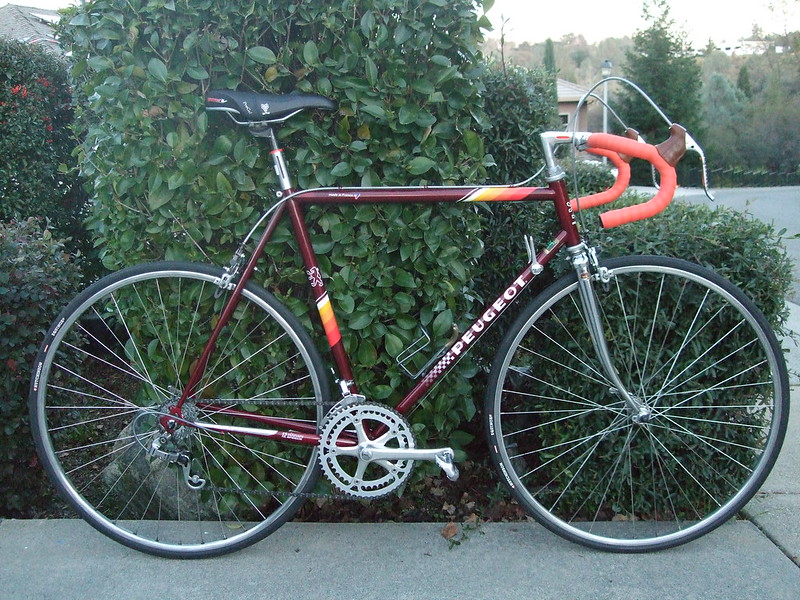
Here's my PH501 that I fully rebuilt last weekend while recovering from a bad cold. I am still using the stock, scratchy-sounding Weinman pads but have achieved strong-enough braking using the spring-relaxation method.
The bike's 42-24t low gear is a little "stiff" as they say (it's hilly here), but the brakes feel nice now and I just need to replace the front pads mainly to reduce the noises.
Bending the springs symmetrically is the challenge, but reduces the spring pre-load and improves ease of generating braking power seemingly disproportionately! I get great results doing this after confirming that the caliper main pivot is adjusted to move freely.
With the caliper in one hand, and with a big pair of pliers in the other, grip end of the spring closest to your "pliers" hand, just upward of the stop peg, and twist to release it from the groove in the peg.
Then re-grip the free end of the spring with the pliers nearer to the end, and use your "caliper" hand to grip the "pliers"-side brake pad, and twist the end of the spring inward. The other end of the spring should remain stuck against it's stop peg, and the twisting force keeps the caliper fully open as the twisting force is forcing it in that direction.
After a twist effort or two, observe how far outward from the peg that the free end of the spring is now positioned away from the peg. It should now be somewhat closer to the peg as the spring has been bent several mm inward.
This process is then repeated with the other end of the spring, and with hand positions switched so as to provide effective leverage and grip with the pliers.
The idea is to bend in each side roughly equally, such that neither side of the spring nearer to the centerbolt stands proud of either arm. It should look stock in other words.
The first time that I did this, I had already gone through doing new cabling and lubing and adjusting the centerbolt with very little improvement noticed.
But after slackening the spring preload I experienced braking ease that I just about couldn't believe.
Note that the minimum spring tension should still be sufficient to keep the levers from "clacking" when the front wheel hits normal bumps in the road.
And, as is the case with ALL cable-operated brakes, there must always be enough tension to prevent any cable housing end (or cable end) from becoming dislodged from it's stop or anchor point!
Note that spring preload increases as the pads wear, so in some cases it may be better to replace pads with newer, full-thickness pads before proceeding with any spring modifications, or the spring tension may later be found to be insufficient when new pads are installed.
Lastly, any degradation in the condition of cables/housing, as when a housing becomes sharply bent, crushed or contaminated, may necessitate additional return spring tension so as to keep those cable and housing ends secure from loose movement at their points of termination. That's why the manufacturers probably gave the calipers so much spring preload tension in the first place(?).
Here's my PH501 that I fully rebuilt last weekend while recovering from a bad cold. I am still using the stock, scratchy-sounding Weinman pads but have achieved strong-enough braking using the spring-relaxation method.
The bike's 42-24t low gear is a little "stiff" as they say (it's hilly here), but the brakes feel nice now and I just need to replace the front pads mainly to reduce the noises.
Senior Member
Thanks dddd, very good advice and detail on how to do this process. I am still thinking about going with vintage levers and dual pivot, but Record springs can be found so I could try the process you describe and then see how it works in practice. Thanks again for advice.