Originally Posted by
Andrew R Stewart
My experience with fixed gear bikes and rear axle position/tightening is that when used on a track the challenges that fixies have, when used on open roads, are largely non existent. Axle slippage isn't an issue as skidding doesn't happen very often, if at all, on the track. Mere forward pedaling forces rarely are enough to budge a well secured axle.
I'll also add (and I'll not direct this at the OP) that many road fixies run the chain WAY too tight. Too tight a chain, besides wearing hub nd BB bearings at a fast clip, can produce very high forces on the axle securement (as well as ring bolts). Andy
To Andrew's point, part of the program is mechanics and they show how to tell if the chain is too loose by holding the bike up horizontal and spinning the rear wheel and then sort of shaking the bike. If they chain comes off, it's too loose.
I agree there are few instances on the track that you're putting out high torque where a wheel might slip - assuming the wheel is tightened properly. These won't be adjusted much. Junior gearing is limited (as for road racing) and it doesn't get changed frequently like a normal track bike might. I was able to visit the track on Friday and measured the current bikes and looked them over. I'm glad I did! They have quick release seatpost clamps. I had considered that might be the case but was going to use my standard braze-on clamp. I'm looking for quick release clamps now! There didn't seem to be really any wear on the ends- even after 15 years of use - confirming that the gears aren't changed much.
It's a bit of a moot point as the ends are prepped and ready to braze. I'm hoping to have forks and chainstays complete by the time I go back to work on Tuesday.
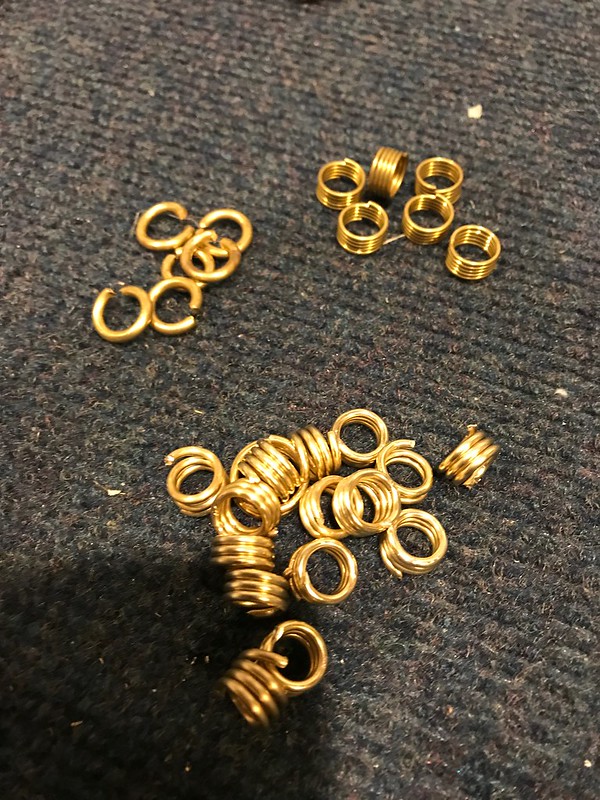
I don't use plug type fittings much but, I decided to use the LAN wishbone stay (beautifully cast!) so now each bike will have 9 joints requiring preforms. I'm doing a lot of testing with preforms including how to make them. They have to be tight fitting in the tube otherwise, heat doesn't transfer as well and the joint has to be hotter running the risk of cooking the flux inside the joint. I used hex wrenches of various sizes to make just the right size for the forks and chainstays. Andy provides rings with the wishbone casting. I will braze up another 5-10 test joints today just to check that I've got it down and then dive into the fork/chainstays. I like to practice a few before I work on the actual bike - it builds my confidence.
The small ones in the top right are from Ceeway, the others are mine.
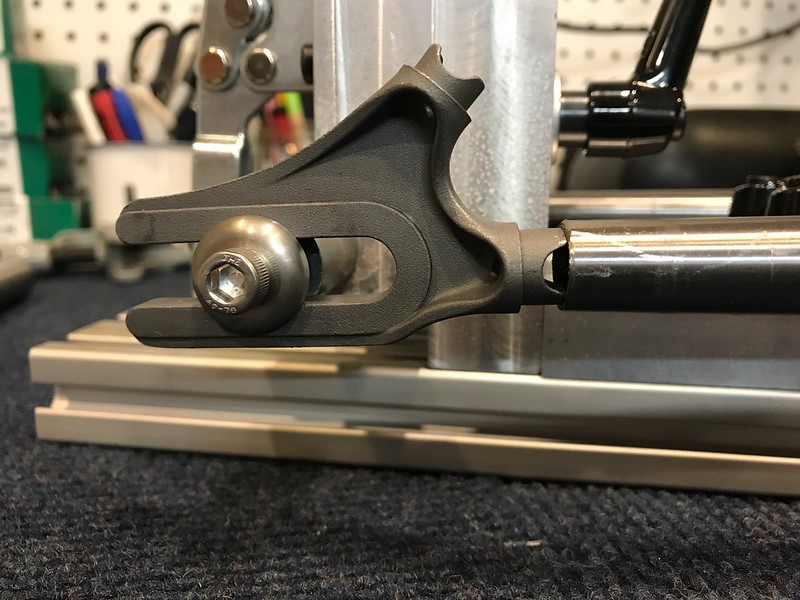
Normally, I would make the slots horizontal when installed but with these plug style ends, that requires removing too much material from the plug. These won't be horizontal. The gearing won't get changed much so that is a tradeoff I made to avoid having to do the slotting operation. If the bike was for a more typical user where they would put on warm up gearing and then change to mass start gearing and then to match sprint gearing, we wouldn't want the geometry changing for each ride so, the slots would be horizontal.
I will have to dimple the stays to comfortably fit a 23mm tire.