Originally Posted by
chelvel
Well... If something is not tight it rattles. If the fork blades are not aligned it's hard to make the system tight. What you've observed is a rattle noise spectrum.
Where do we go from here?
Well, in this case the QR skewer was tight, as it's pretty easy to tighten it down so that it pulls the DO's into at least being parallel. Two other factors argue against that explanation. You can usually hear something rattling or buzzing, but this was quiet. If something distorts a plain harmonic oscillation it typically modifies the waveform to produce harmonic partials with frequencies which are integer multiples of the fundamental. That isn't what the original spectrum showed.
So what comes next? I think the PFN10 question has been answered. But there is more to be done w.r.t. frame dynamics. I want to repeat my bump experiments, comparing accelerometer data from the front axle to data from the headset or stem. Not sure what happens after that.
As a quick review, here is some stuff from the previous posting. First, three fork measurements from the Bianchi.
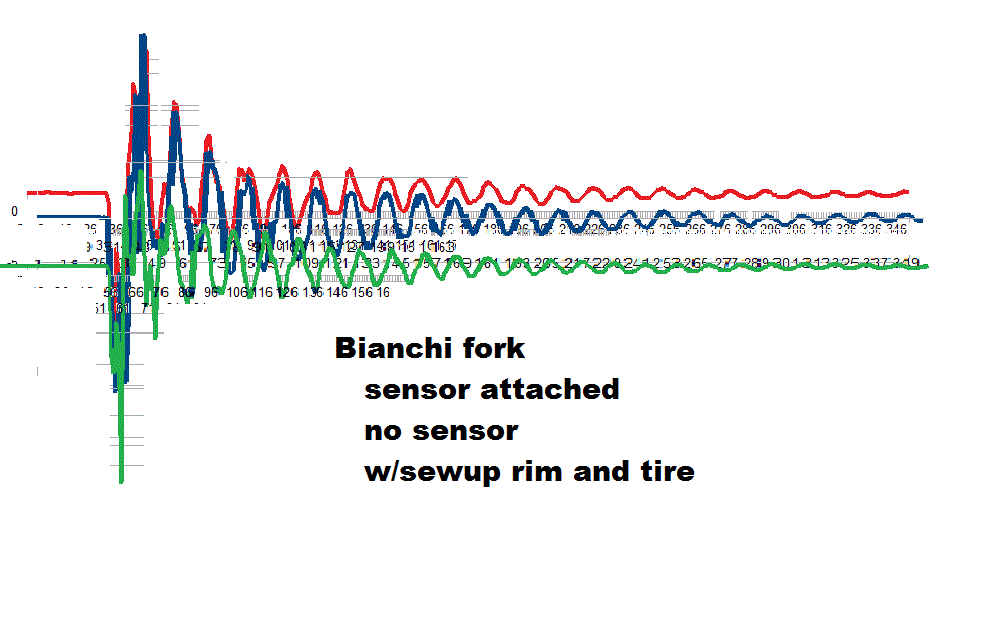
The top line line is the fork resonance with a Pocketlab Voyager (accelerometer) attached to the axle, and second line is the same but with the Pocketlab removed. The point is that the extra mass of the Pocketlab had no effect on the fork's behavior, not surprising since it is so light. The bottom line is the same measurement but with the clincher wheel and tire replaced with a sew-up wheel and tire. The frequency is visibly faster, an expected result from having a lighter mass on the same fork.
For comparison, here is my UO-8 with 32mm 27" clincher tire on alloy rim.
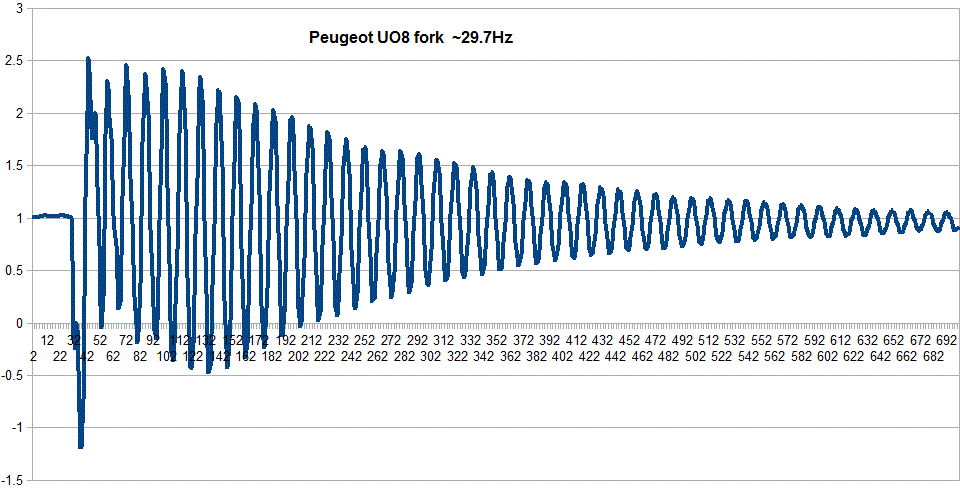
The fundamental frequency is a bit lower, characteristic of having a heavier wheel and possibly a more softly sprung fork. It would interesting to do this again with a 25mm or 23mm 700c wheel, to see if the frequency more closely matches the other bikes. If so it would suggest the fork isn't all that different from the higher-end bikes.