Originally Posted by
SurferRosa
I don't think so. I believe the only full 531 GRs were in '76 and '77. The Bulgier catalogs also reflect this.
Nope: From 1973 on Motobecane Grand Records had all Reynolds 531 frames... well not all Reynolds tubes, the fork steerers, brake bridges and chain stay bridges were made of gas pipe carbon steel!
In 1977-78 they switched to French made Vitus 172 butted tubes on the Grand Records (the tubing cost was less than 1/3rd of 531 with about the same weight and strength).
1970-72 Catalog Spec Sheet
 1973 Catalog Spec Sheet
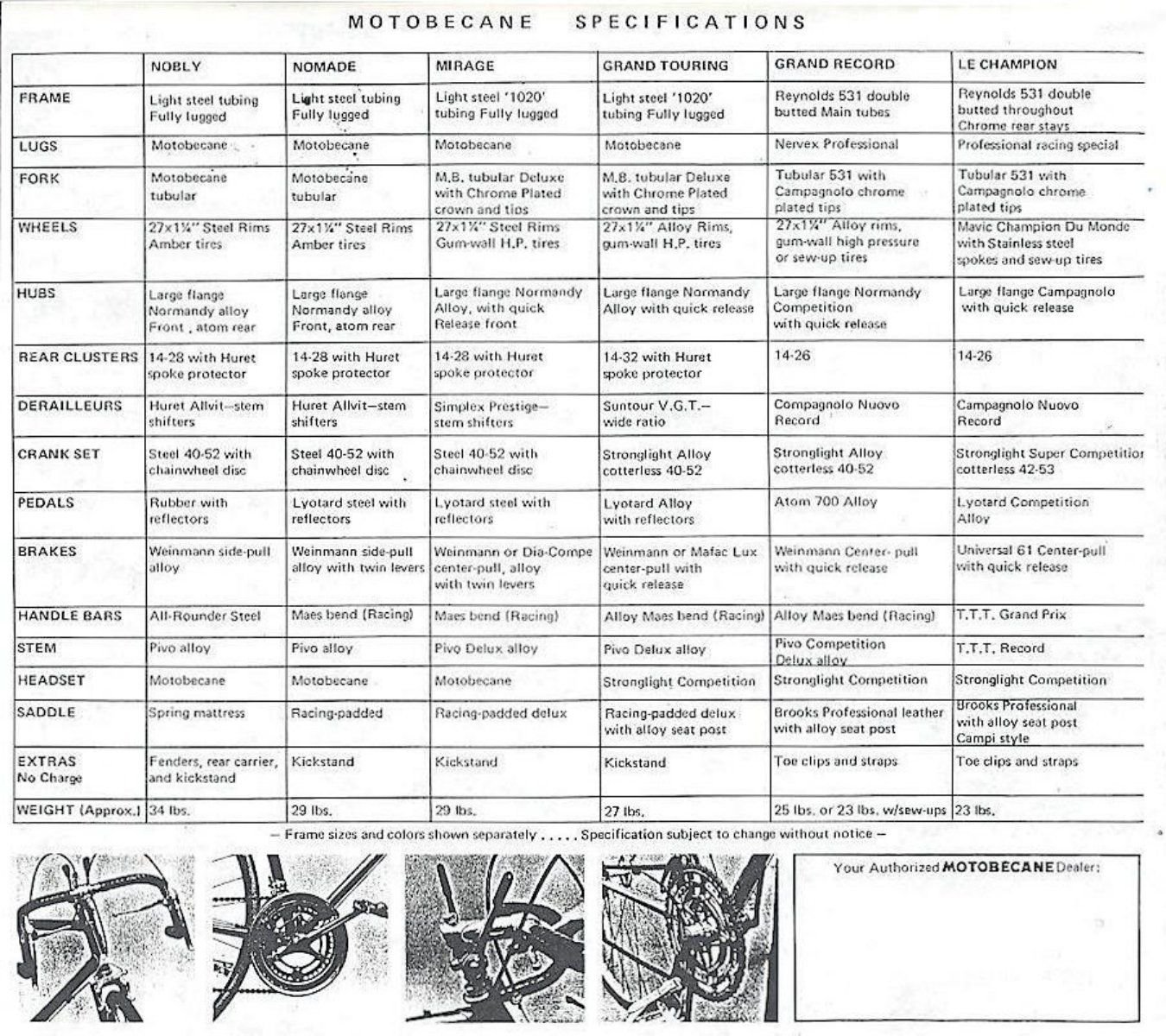
1974 Catalog Spec Sheet
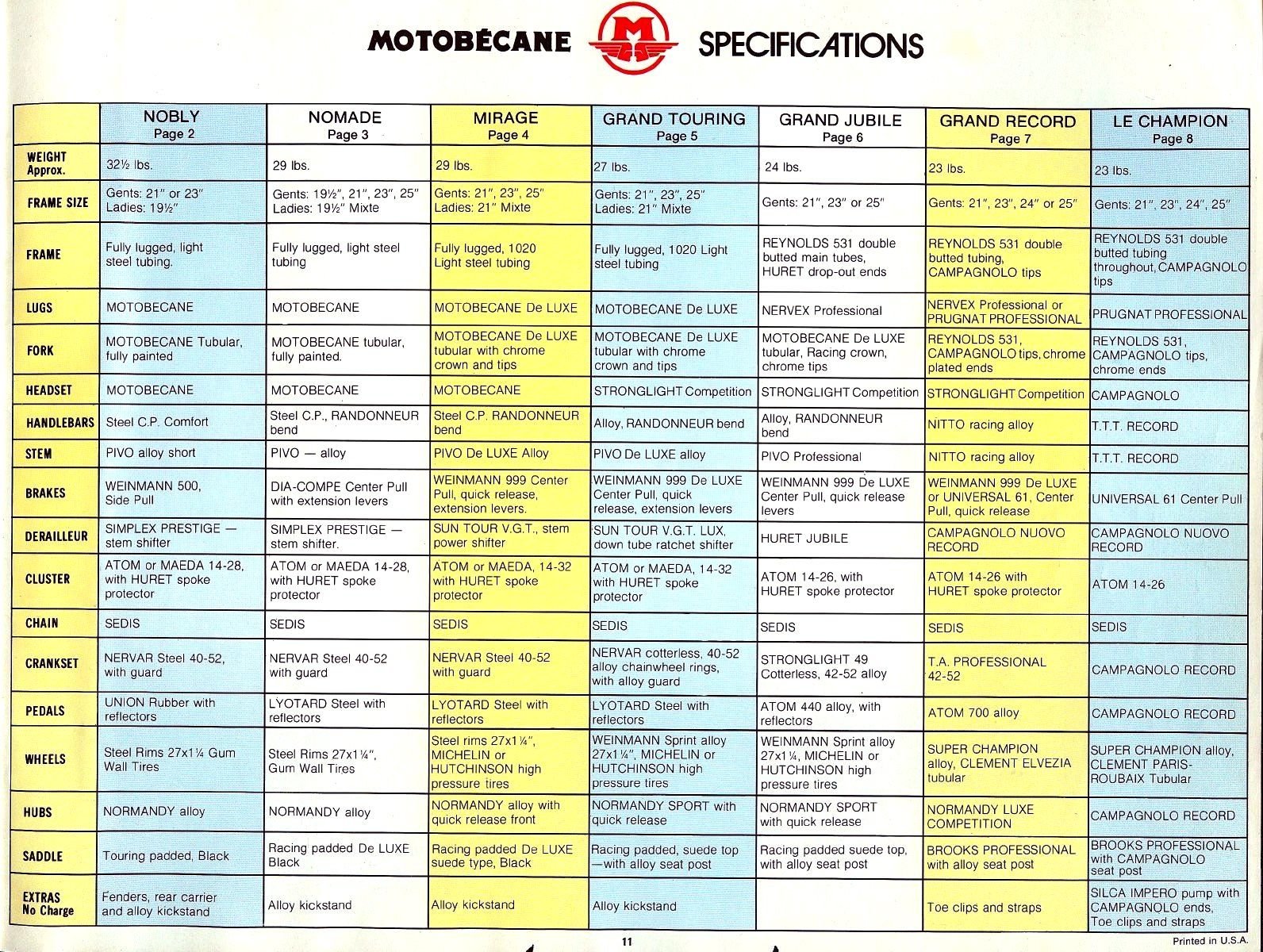
1975 Catalog Spec Sheet
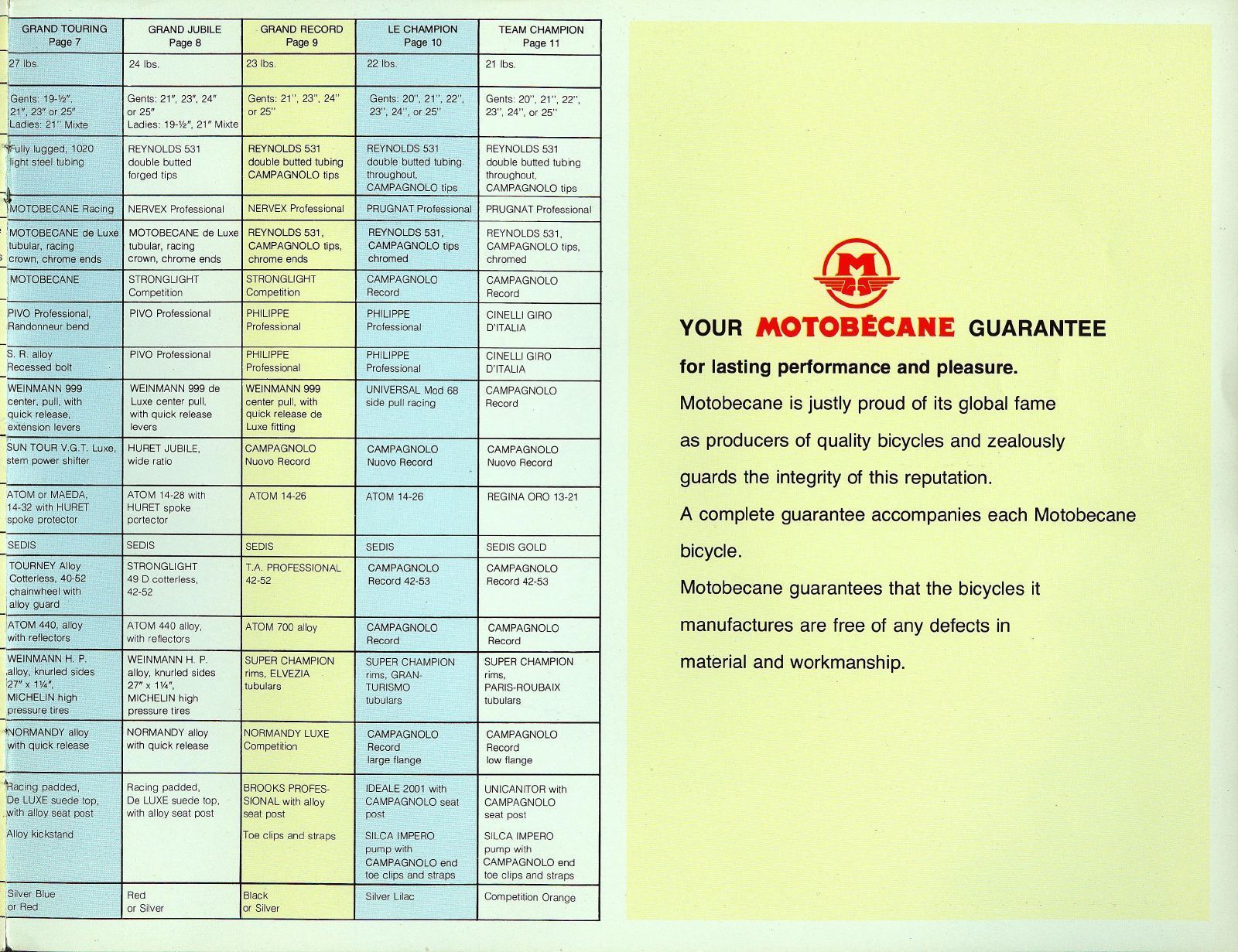
1976 Catalog Spec Sheet
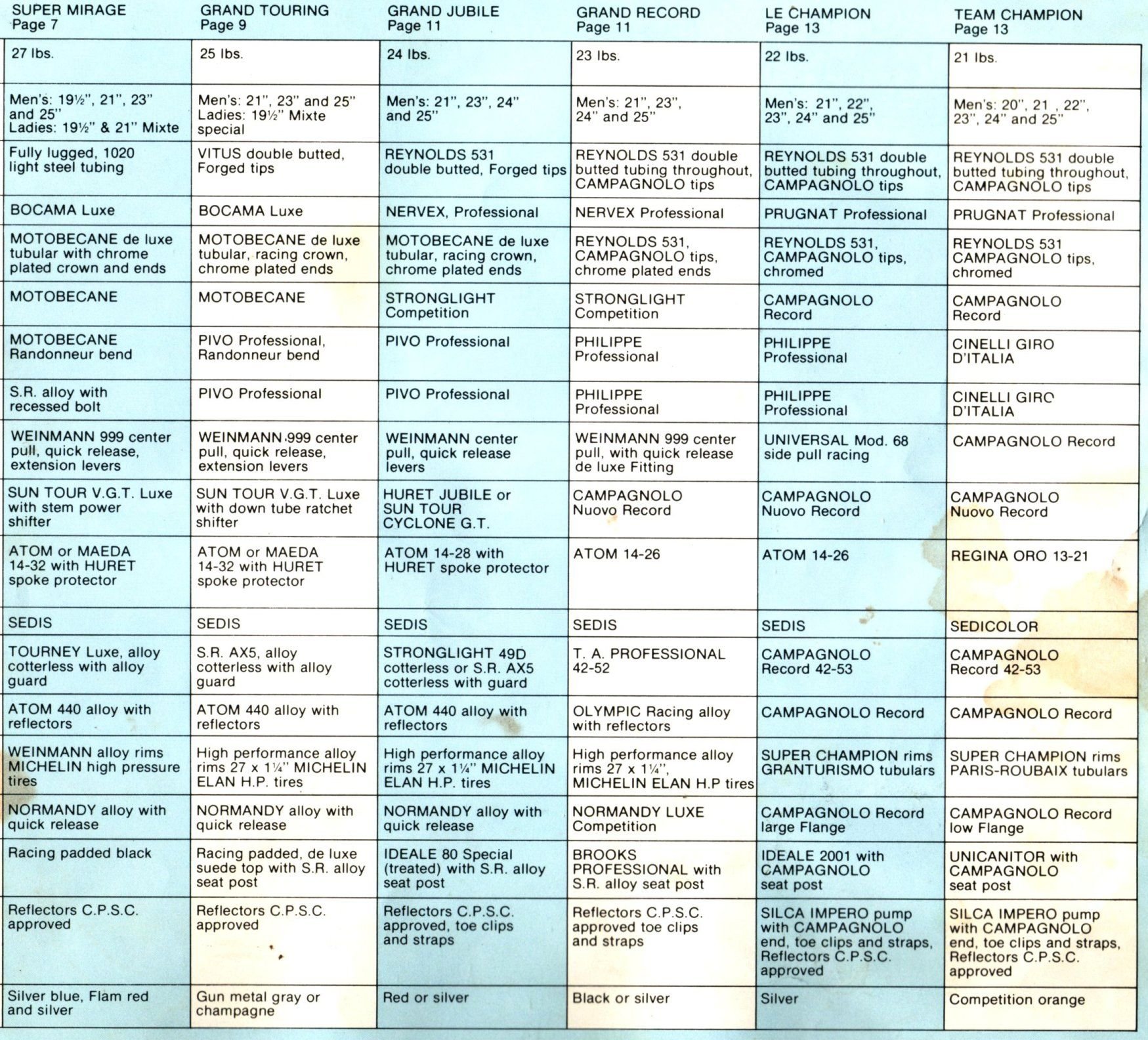
1977 Catalog Spec Sheet

Originally Posted by
SurferRosa
I have a '75, and I can tell the rear stays feel "heavier" than any of my other 531c bikes.
Having built frames and worked on many pro bikes over the past 45 years it's hard to tell what most frames are made of just by feel...
For example, most French, Italian, Dutch and so on PRODUCTION frames made with Reynolds 531 tubing had main tubes with 1.0mm wall thickness in the butted ends and 0.7mm thick in the thinner sections. Schwinn Paramounts were made with those tubes. Even a lot of Pro Team Bikes used that tubing up into the 1980's.
One reason was that the thicker tubes allowed for the use of lower skilled employees because over heating the tubes was less of an issue.
There were several reasons for Pro Team Bikes being made of the thicker tubes: crash survival, resistance to denting by rough handling by the support folks and more importantly, Team bikes were handed down to lesser riders after the end of the race season so the were used for multiple years.
Only the top riders got new bikes every year! After the early 80's, with the likes of high $$$ riders like Greg Lemond, things changed a little.
Used team bikes were also passed down to the young riders on the pro development teams (farm teams).
A lot of Brit frames were made with lighter gauge Reynolds tubing but that was different story.
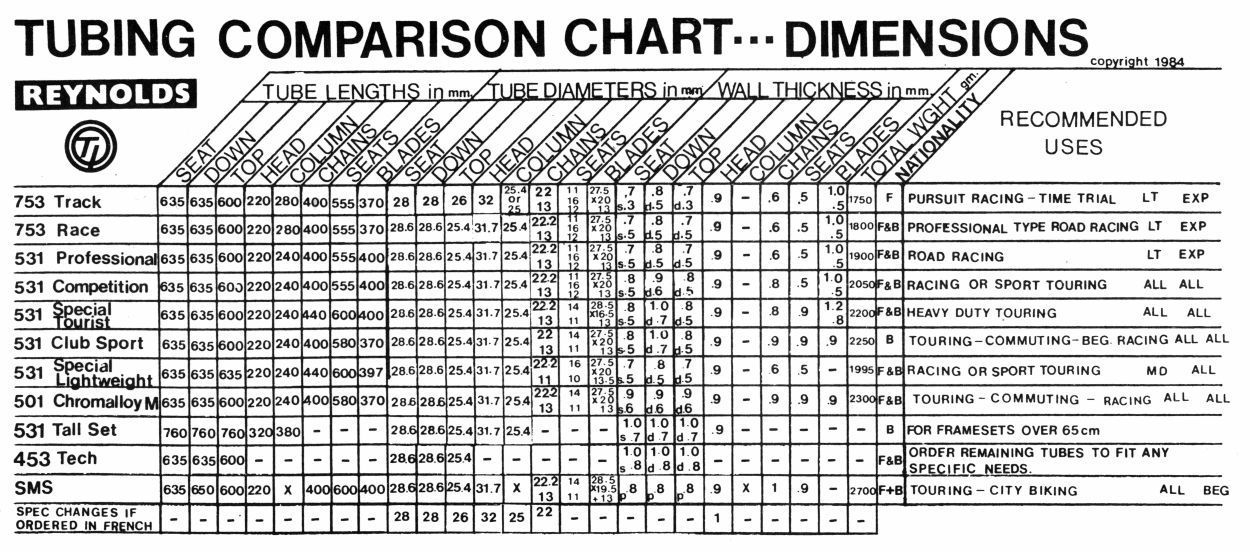
Reynolds 531c (Competition) was a lighter tubing set. It wasn't introduced under that name until 1982. Prior to that it was called 531SL or 531 Special Light Weight (EXTRA LEGER in French/metric diameter tubes).
The seat and top tubes were butted 0.8mm x 0.5mm and the down tubes were 0.9mm x 0.6mm. The forks and stays were also thinner gauge.
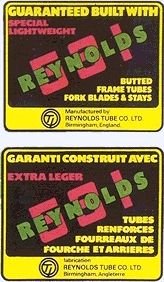
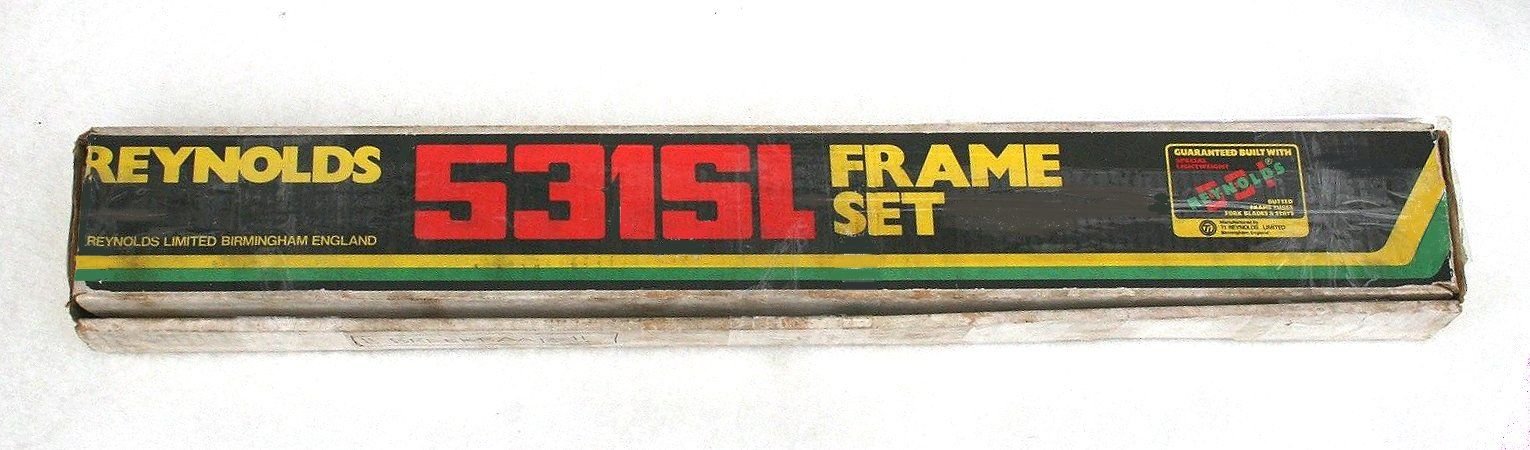
1984 Reynolds Tubing Spec Sheet.
I used some 531SL tubing back in the mid 70's and it was noticeably lighter than the standard 1.0mm x 0.9mm tubing but then I was working with the stuff.
My 1972 Le Champion was made with the lighter gauge 531 main tubes but it was the top of the line model. It takes a 26.6mm seatpost rather than the standard 26.4mm posts used on the 1.0mm x .07mm metric tube production bikes.
verktyg
