Originally Posted by
dddd
For example, on a couple of recent vintage builds, I added some plastic noodle material at the metal cable guide above the bb. I then cemented it in place with enough glue to retain the short noodle in a fixed position. This had an out-sized effect on shifting feel, helping to get rid of the "elastic cable" sort of feel while shifting.
Huh? I don't understand why "plastic noodle" would result in "less elastic". If by that, you mean that you used teflon tubing to reduce friction at the cable guide, then say no more -- maybe that's it.
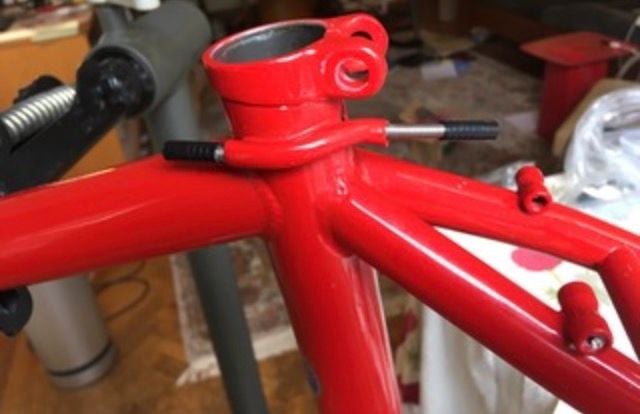
I've been refurbishing a mid-late-90s Specialized Hard Rock lately and, despite being very practical in most respects, it had a rather stupid design for the routing of the rear brake cable -- the brake housing from the handlebar lever stopped at a braze-on just behind the headset, with a
long length of teflon tube extending from there, all the way through a steel tube brazed to and sort of wrapped around the seat tube, whence the cable emerged to pull on the yoke. Despite that bike not having been used that much in its life, the teflon was chewed through by the original cable chafing where it went around the seat tube. I was able to fit a piece of spiral stainless (bare) housing (SunTour type typically used for bar-end shifters and the loop from the rear derailleur to chain stay stop) through the tube, and silicone it in place. The replacement brake cable (slick Jagwire burnished stainless type)
barely fit through the housing bent like that, and had a bit of resistance, but the brake springs pull it through just fine in practice, and it feels like nothing when braking. I wouldn't want teflon in that spot anymore. Moral of the story: check it once in awhile.