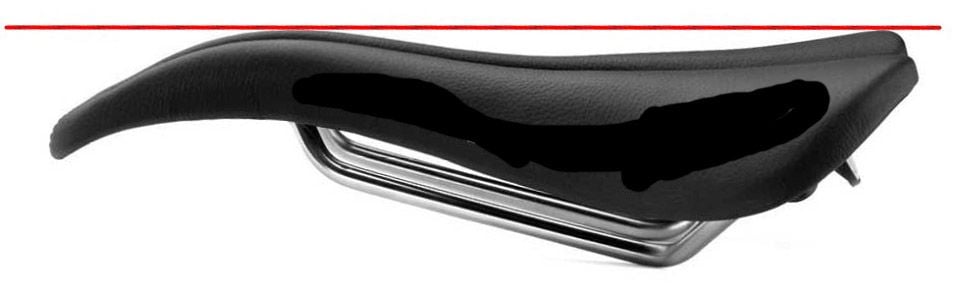
I think the concept of “level saddle” is not clearly defined, especially for the modern saddle shapes built during the last 5-10 years. That is because many saddles are far from being plane, so they have no level base to measure the tilting angle. Example below: a road saddle shape preferred by many producers:
1. With below definition of “level saddle”, it is obvious that the saddle has a higher lever around groin area, than the level at the sit bones. I think that many riders would have unacceptable pressure over groin area, especially if the handlebar is lower than the saddle, and despite the cut off and curved down “nose”.
2. With below definition of “level saddle”, the above groin issue should disappear for most riders; further 1-2 degrees “nose down” would be a “safety margin” – which I use to take. But you can see that visually, it looks rather like a “tilted down” than "level" position.
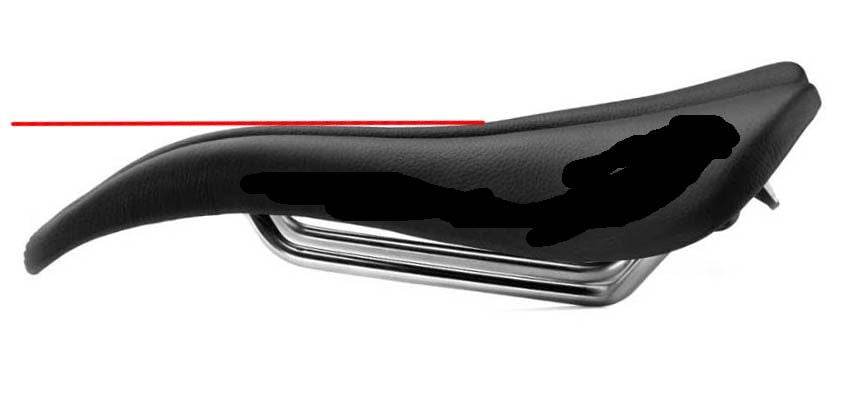
Overall, I think that this shape is good for performance but cannot be very comfortable (even when perineal issue is avoided) because it will always pass a little more pressure on arms and back. But this pressure and the eventual little tendency to move the sit bones forward should be alleviated by bigger pedaling force – which is supposed to be the case for riders who follow a more vigorous training programme – or by a small program of strengthening arms and back.