Originally Posted by
bamboobike4
I'd like to see those spec sheets, both pre-Series and during, then after.
While it would not surprise me, I'd sure like to see it in Schwinn's writing.
It would add to the knowledge base, for sure.
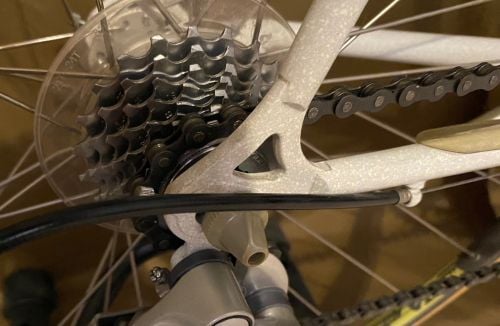
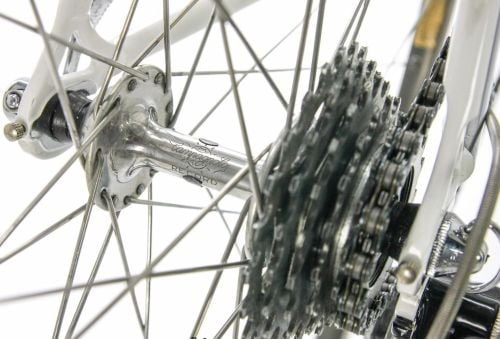
You don't need to see the spec sheets. All you have to do if compare pictures of Waterford built Paramounts with those of the subject bicycle. For instance, if you look at the junction of the rear dropouts and stays, the subject bicycle exhibits clear lines of demarcation betwee the dropouts and stays. You can see the slots cut into the stays that the dropouts plug into before they are brazed. Had this been a Waterford built Paramount, you would not be able tell where the droputs stopped and the stays started. They would look like they are one piece.
Now, this is not to say that the workmanship on these joints are poor. They are tidy and perfectly functional but built to a lower standard. They are quality, joints typical of mid-range, mass production, bicycles but not the high grade joints of a Waterford build. The difference is primarily cosmetic but these are types of details that you paid for on a high grade bicycle of the era. Schwinn was not willing to pay for the extra time and labour that it takes to fill and file these joints so they look seamless. It's one of the cost concessions that the Paramount Design Group approved to be able to offer a Paramount in the targeted sub-$1000 market.