Originally Posted by
tgot
Ooh, you sweet summer child.
Have you never read the hundreds of posts on rec.bike.tech by Jobst Brandt, declaring again and again that a bicycle wheel under load stands on the lower spokes, between the hub and contact patch?
When challenged sufficiently to give up, he would occasionally fall back to "I guess you just don't understand prestressed structures."
Oh, I’ve seen them and he was wrong. He, and others, consider tension and compression to be forces with a different sign, i.e. decreasing tension results in increasing compression. That is completely incorrect, especially in a spoked wired wheel. At no point does a wire spoke undergo compression during the tensioning/detensioning cycle. It reduces in tension and other spokes increase in tension to take up the slack but none of them are ever “compressed”. In fact wire spokes
can’t compress. They will bend at the slightest compression. The rim can compress but the spoke isn’t attached to the rim and it can only undergo a decrease in tension.
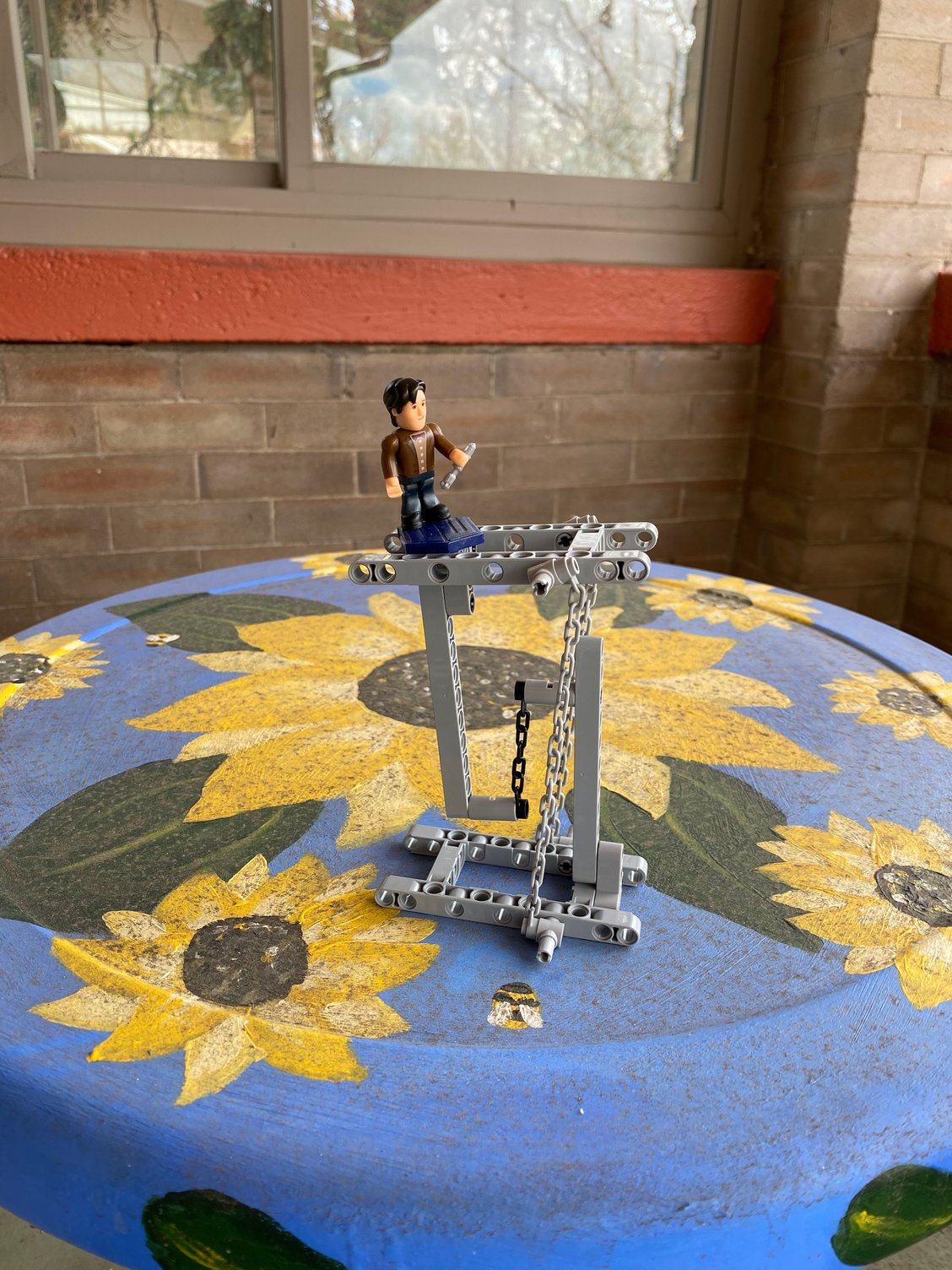
As to the wheel “standing” on the spokes, I guess he didn’t understand tensegrity structures. For example the Lego tensegrity structure illustrates how tension alone holds up the upper part of the structure. The black chain is the carrying the load while the gray chains only serve to stabilize the structure below.
Now let’s look at how the wire spoke works using a simplified wheel of 2 spokes, a hub, and a bit of rim. This picture models the wheel “standing” on the spokes.
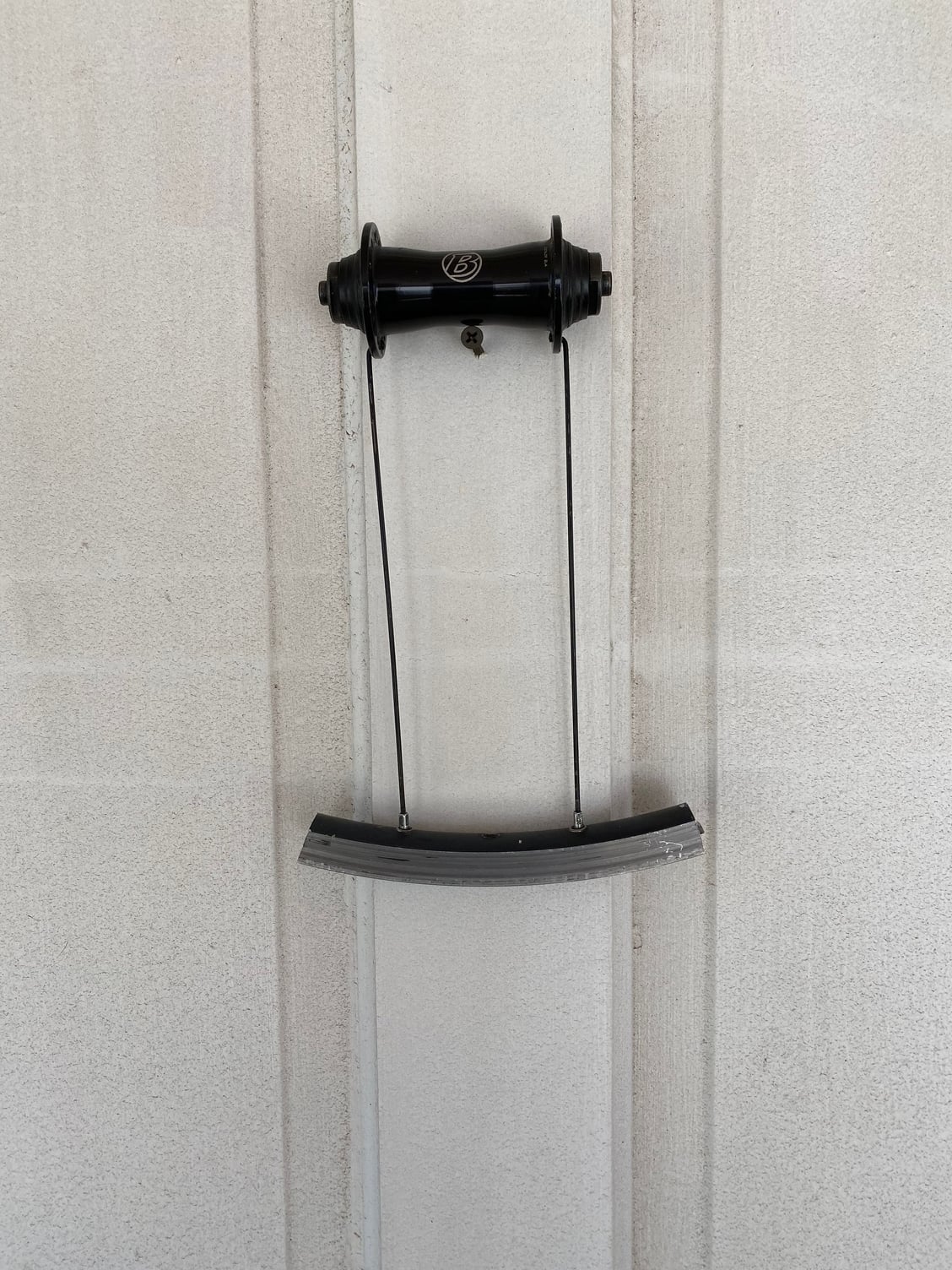
But turn the picture upside down and the hub is now hanging from the rim.

Now isolate the hub like it would be in a frame and the rim slides down the spoke. There is no attachment between the spoke and the rim so the rim is free to move on the spoke.
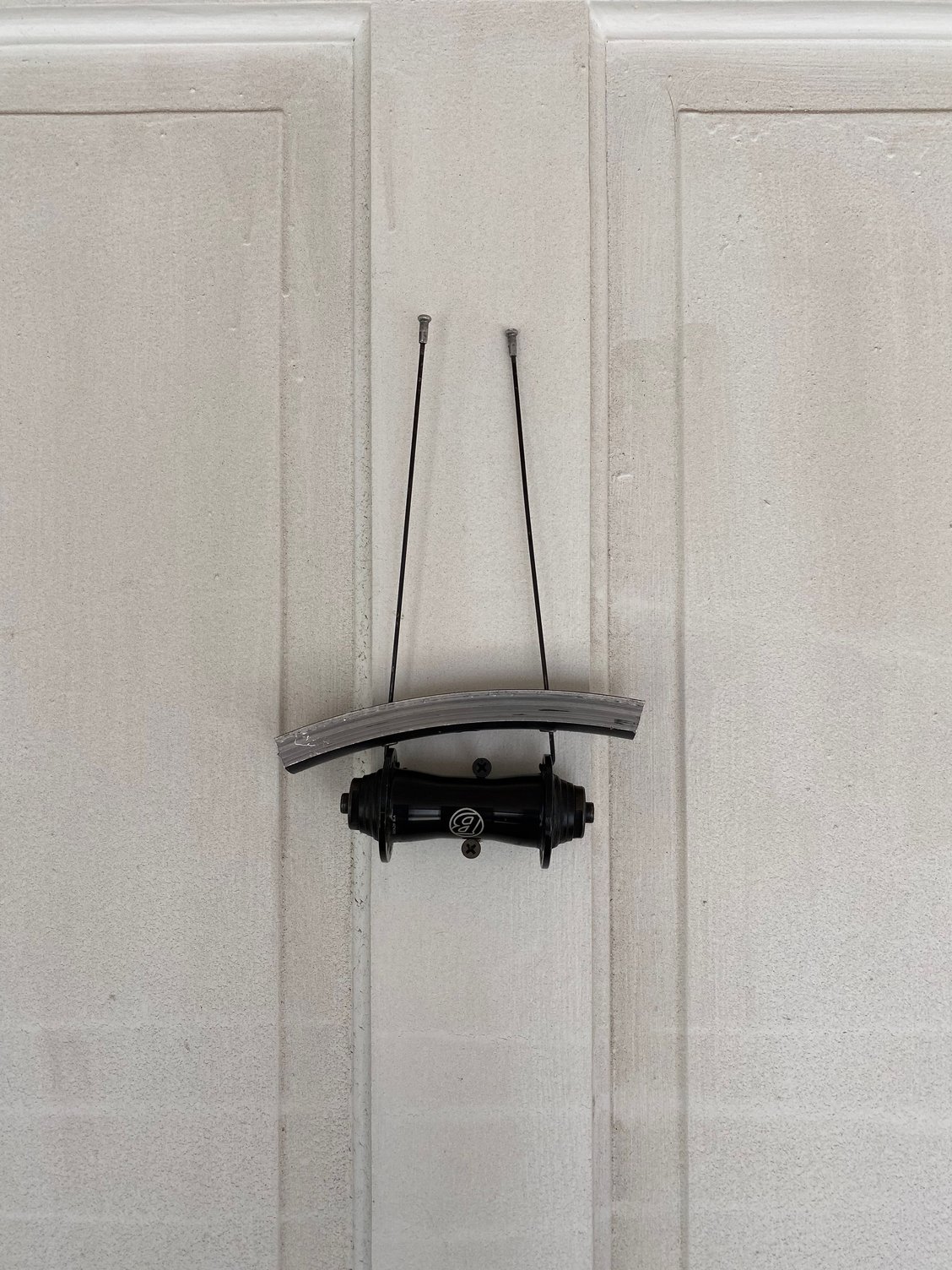
If we hold up the rim section, you can, again, that the rim is free to move on the spokes. If we were to put the spokes in contact with the ground, the spoke would collapse under the slightest weight placed on it.

Taking this illustration further, we can use a real wheel. I removed spokes from half of the wheel. You can see that the hub is hanging from the spokes. If I were braver, I’d put this is a frame and have some confidence that I could get on the bike and the bike wheel would not collapse (as long as it doesn’t rotate). In that case there would be tension on the spokes from the weight of the bicycle and rider. The structure wouldn’t be sound but it would hold under static load.
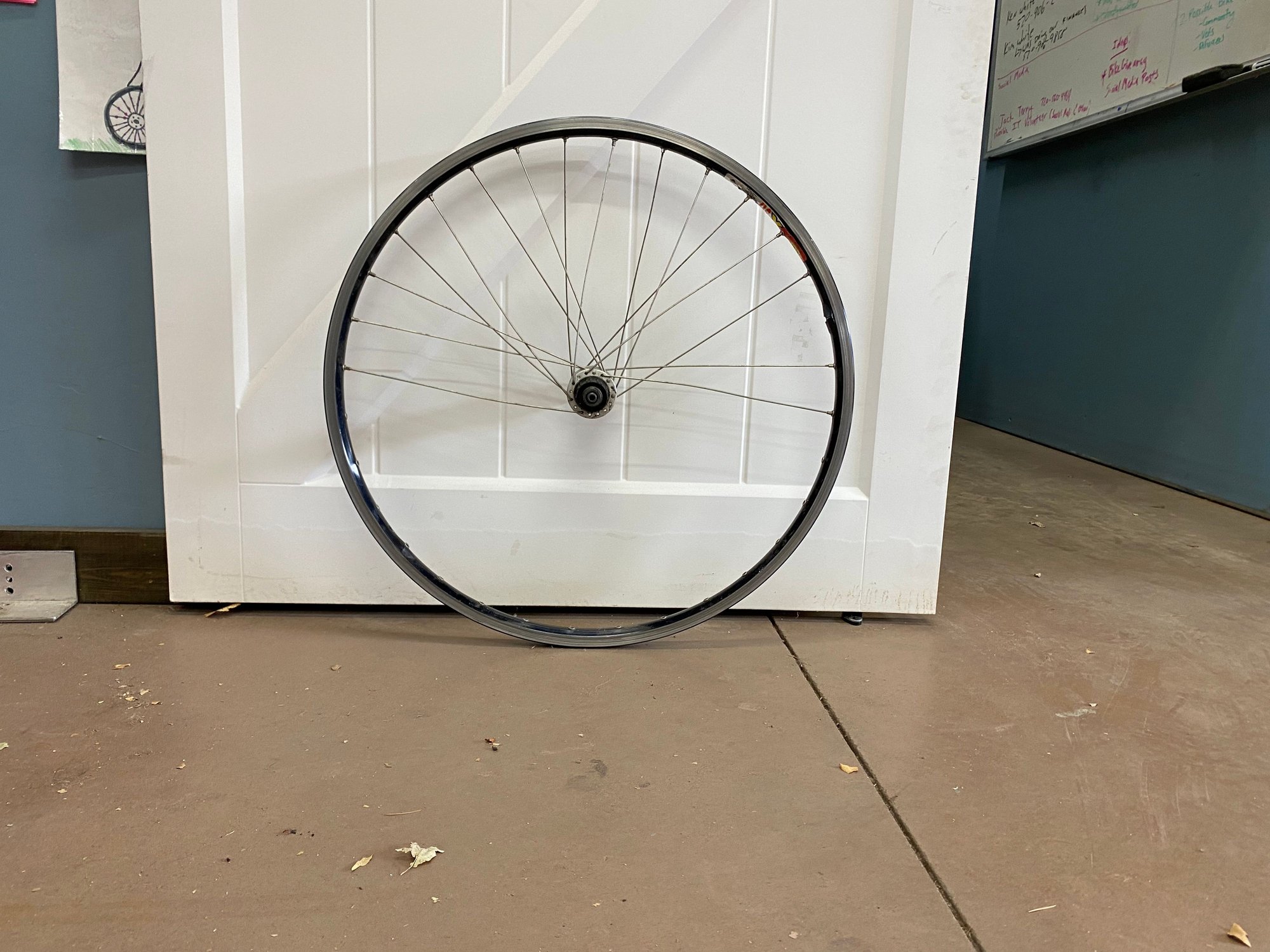
Spin the wheel 90° and it’s easy to see that the wheel can’t “stand” on the spokes because there is nothing to stand on. Put weight on the structure and it will collapse like a house of cards.
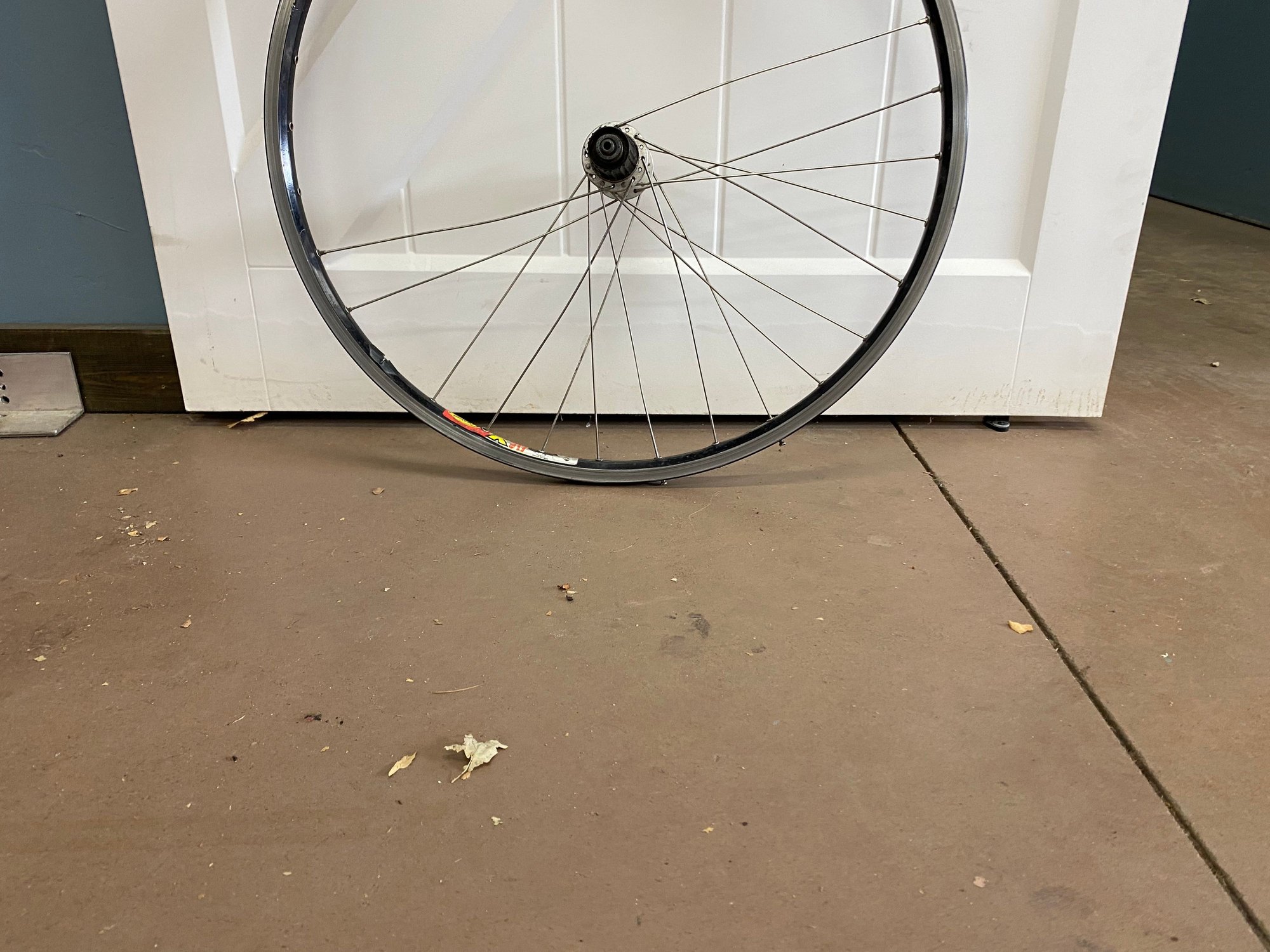
This close up even shows how the spokes are now in contact with the ground and would bend under slight weight. I’m not brave…nor dumb…enough to try to put a load on the wheel with the spoke at the bottom of the wheel.

This clearly shows that the wheel doesn’t “stand” on anything but rather
hangs from the rim.
Originally Posted by
79pmooney
The only force may be tension but what breaks spokes is not force but stress. The stress at both the bend and the head includes shear. Tension and shear add up but not simply. (Sophomore engineering, Morh's Circle where they weed out those who aren't up to it.) The two stresses love to hang out at stress risers. The straight portion of the spoke is in pretty close to pure tension and the after Mohr's Circle total stress is virtually the very easy to calculate average tension across the spoke section.
Here’s a definition of stress.
Mechanical Stress is a measure of internal resistance exhibited by a body or material when an external force is applied to it.
The only applied stress in a spoke is tension. Yes, the head breaks because of shear but that shear is induced by the tension on the spoke. Pillar’s tension testing of the spokes may not be a perfect model but I suspect that the failure of the spoke is probably not midshaft but the head shears off. And, as I stated in a previous post, the Pillar testing is the only testing of spoke strength of any kind I’ve ever found.
Originally Posted by
Bad Lag
Yes, however, the idea is that they do not fail in use because of excessive tensile loading but due to fatigue from repetitive cyclic tensile loading.
If it were a simple tensile strength issue, the spokes would fail as soon as you sat on the seat or hit your first bump.
Rather, it is that initial pre-load overlaid with the successive stress reduction/relaxation and re-application of the load as the wheel rotates that causes eventual fatigue life failure (look up S-N curves).
While all of that is true, it’s not something that has been measured or, if it has been measured, it has not been reported. On the other hand, real world use illustrates that butted spokes are “stronger” (or “more durable” if you prefer) than unbutted spokes. I’m not saying that Pillar’s testing is the end all and be all to spoke testing nor that more testing can’t (or shouldn’t) be done. It’s a starting point with actual results. Having actual measurements is very rare indeed. It also happens to match advice from others as well as real world results.