Well.... tyre rolling-resistance is measured in grams of drag (or milli-Newtons). Not much of a milli-wattage difference between the fastest and slowest tyres in terms of rolling-resistance. Their aerodynamic profile is a bigger contributing factor to speed and narrow tyres block less wind, and weigh less for hillclimbs. Jobst Brandt, the granddaddy of biking physics did a study on rolling-resistance decades ago. As well as Damon Rinard. I'll look for some graphs somewhere.
Meanwhile, power-required to overcome rolling-resistance remains fairly constant relative to speed due to the low-RPMs of bike wheels, while power-required to overcome wind-resistance goes up to the
3rd-power of speed. What this means is that the grams of rolling-resistance doesn't really increase much when you double your speed. However, aero-drag is measured in
kilograms of drag and you need
8 TIMES more power to overcome aero-drag at twice the speed (or use Newtons pushing you back):
Check out this site where Damon Rinard graphs rolling-resistance versus aero-drag relative to speed:
http://www.sheldonbrown.com/rinard/aero/formulas.htm
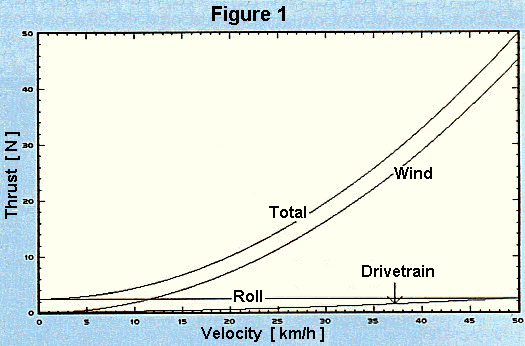
Basically the faster you go, the less and less drivetrain/rolling-resistance contributes to total-drag while aero-drag becomes much, much more important. For beginners who want to get faster, the most dramatic increases will come from learning an efficient pedaling-motion and getting the flexibily to generate high-wattage while tucked down in an aero position with flat back and horizontal forearms. This will easily give you +5-7mph or more for the same power-output.