


Carbon assembly paste- what does it do?
 10-10-17 | 07:18 PM
#1

Thread Starter
Senior Member
Joined: Dec 2013
Posts: 493
Likes: 0
From: Southern Colorado
Bikes: General 80's MTB "Icebreaker", Motobecane Grand Jubilee (vintage mint), Trek 1.1, 2014 Motobecane Mirage (steel) Trek 3500 MTB
Carbon assembly paste- what does it do?
Curious about the stuff. Owners manual says to always use it when installing seat post, but doesn't say why. Had to order a packet of it as none was included with the bike.
 10-10-17 | 07:27 PM
#3


Senior Member

Joined: May 2004
Posts: 12,103
Likes: 96
From: Wilmington, DE
Bikes: 2016 Hong Fu FM-079-F, 1984 Trek 660, 2005 Iron Horse Warrior Expert, 2009 Pedal Force CX1, 2016 Islabikes Beinn 20 (son's)
And the grease part of it to helps act a barrier between the post and frame and deter water ingress preventing corrosion from forming as quickly as it otherwise might.
10-10-17 | 07:43 PM
#4

Senior Member


Joined: Jul 2015
Posts: 7,379
Likes: 3,221
From: NW Oregon
Bikes: 1982 Trek 930R Custom, '91 Diamondback Ascent w/ XT, XTR updates, Fuji Team Pro CF road flyer, Specialized Sirrus Gravel Convert, '09 Comencal Meta 5.5 XC, '02 Marin MBX500, '84 Gitane Criterium bike

 10-10-17 | 08:17 PM
#8

Senior Member
Joined: Jul 2015
Posts: 1,616
Likes: 4
From: North East Tennessee
Bikes: Basso Luguna, Fuji Nevada
He said the recommendation was in the owner manual, sounded to me like he had bought a new CF bike but possibly just a frameset.
In case you are building a frame be sure to use a clamp that's not wider than the slot of the seat post tube. I made that mistake and ended up cracking a CF seat post.
In case you are building a frame be sure to use a clamp that's not wider than the slot of the seat post tube. I made that mistake and ended up cracking a CF seat post.
10-10-17 | 09:06 PM
#9
Senior Member
Joined: May 2004
Posts: 12,103
Likes: 96
From: Wilmington, DE
Bikes: 2016 Hong Fu FM-079-F, 1984 Trek 660, 2005 Iron Horse Warrior Expert, 2009 Pedal Force CX1, 2016 Islabikes Beinn 20 (son's)
10-10-17 | 11:38 PM
#10
Senior Member
Joined: Jul 2015
Posts: 7,379
Likes: 3,221
From: NW Oregon
Bikes: 1982 Trek 930R Custom, '91 Diamondback Ascent w/ XT, XTR updates, Fuji Team Pro CF road flyer, Specialized Sirrus Gravel Convert, '09 Comencal Meta 5.5 XC, '02 Marin MBX500, '84 Gitane Criterium bike
so... it sounds like bike frames made of aluminum/magnesium will be the most affected by the galvanic process... and most aluminum(if not ALL) bicycle frames are an aluminum/magnesium alloy...
and the best choice for a "grease" in the CF paste would be... dilectric grease... commonly used to protect electrical connections from oxidation... sticky, similar to vaseline from petroleum oil, but a bit thicker...
the grease also makes an excellent medium for applying the grit, eh? kinda hard to get an easy, even, application without it!
cool article... thank you!
i bet that bridge was EXPEN.......SIVE!
and any bike running Di2 will be more rapidly effected by the corrosion... as will any bike with lights on it... grounded to the frame, or not... electron flow creates an electro-magnetic field, and that field extends past the conductors/insulation... that field will begin electron flow in the adjacent materials... and sweaty humans make good capacitors...... the salt in sweat will exacerbate things...
i wonder how the alloy steel Chrome Moly is effected by the CF contact.... hmmmmmmm....
pretty sure the higher chrome contents present would slow galv. corrosion way down... sure slows down rust, and that is a form of oxidation.... slow fire, actually... ever noticed how rusty steel is warmer to the touch? that may just be an effect of decreased conductivity of heat though....
Last edited by maddog34; 10-10-17 at 11:55 PM.
10-10-17 | 11:56 PM
#11
Senior Member
Joined: Jul 2015
Posts: 7,379
Likes: 3,221
From: NW Oregon
Bikes: 1982 Trek 930R Custom, '91 Diamondback Ascent w/ XT, XTR updates, Fuji Team Pro CF road flyer, Specialized Sirrus Gravel Convert, '09 Comencal Meta 5.5 XC, '02 Marin MBX500, '84 Gitane Criterium bike
now... what happens when epoxy is heated?
it gets sticky.... compressing, and friction via movement, creates heat....
it gets sticky.... compressing, and friction via movement, creates heat....
10-11-17 | 06:21 AM
#12
- Soli Deo Gloria -
Joined: Aug 2015
Posts: 14,779
Likes: 743
From: Northwest Georgia
Bikes: 2018 Rodriguez Custom Fixed Gear, 2017 Niner RLT 9 RDO, 2015 Bianchi Pista, 2002 Fuji Robaix
The primary purpose of carbon assembly paste is to prevent the parts from moving during assembly, so that the parts don't slip prior to tightening or as the bolts are tightened. This is why it is called assembly paste.
After the bolts are tightened then clamping force should hold the part, not grit in the paste.
-Tim-
After the bolts are tightened then clamping force should hold the part, not grit in the paste.
-Tim-
10-11-17 | 06:54 AM
#13

Old fart

Joined: Nov 2004
Posts: 26,350
Likes: 5,258
From: Appleton WI
Bikes: Several, mostly not name brands.
That would depend on the electrical potentials of the steel and carbon material. But galvanic corrosion does occur with steel; that's the reason they make "anti-seize paste," which is grease and a colloidal suspension of a sacrificial anode like copper or aluminum.
10-11-17 | 07:38 AM
#14
Senior Member
Joined: May 2004
Posts: 12,103
Likes: 96
From: Wilmington, DE
Bikes: 2016 Hong Fu FM-079-F, 1984 Trek 660, 2005 Iron Horse Warrior Expert, 2009 Pedal Force CX1, 2016 Islabikes Beinn 20 (son's)
and the best choice for a "grease" in the CF paste would be... dilectric grease... commonly used to protect electrical connections from oxidation... sticky, similar to vaseline from petroleum oil, but a bit thicker...
the grease also makes an excellent medium for applying the grit, eh? kinda hard to get an easy, even, application without it!
the grease also makes an excellent medium for applying the grit, eh? kinda hard to get an easy, even, application without it!
and any bike running Di2 will be more rapidly effected by the corrosion... as will any bike with lights on it... grounded to the frame, or not... electron flow creates an electro-magnetic field, and that field extends past the conductors/insulation... that field will begin electron flow in the adjacent materials... and sweaty humans make good capacitors...... the salt in sweat will exacerbate things...
i wonder how the alloy steel Chrome Moly is effected by the CF contact.... hmmmmmmm....
pretty sure the higher chrome contents present would slow galv. corrosion way down... sure slows down rust, and that is a form of oxidation.... slow fire, actually... ever noticed how rusty steel is warmer to the touch? that may just be an effect of decreased conductivity of heat though....
pretty sure the higher chrome contents present would slow galv. corrosion way down... sure slows down rust, and that is a form of oxidation.... slow fire, actually... ever noticed how rusty steel is warmer to the touch? that may just be an effect of decreased conductivity of heat though....
10-11-17 | 07:40 AM
#15
Senior Member
Joined: May 2004
Posts: 12,103
Likes: 96
From: Wilmington, DE
Bikes: 2016 Hong Fu FM-079-F, 1984 Trek 660, 2005 Iron Horse Warrior Expert, 2009 Pedal Force CX1, 2016 Islabikes Beinn 20 (son's)
The primary purpose of carbon assembly paste is to prevent the parts from moving during assembly, so that the parts don't slip prior to tightening or as the bolts are tightened. This is why it is called assembly paste.
After the bolts are tightened then clamping force should hold the part, not grit in the paste.
-Tim-
After the bolts are tightened then clamping force should hold the part, not grit in the paste.
-Tim-
10-11-17 | 08:15 AM
#16
- Soli Deo Gloria -
Joined: Aug 2015
Posts: 14,779
Likes: 743
From: Northwest Georgia
Bikes: 2018 Rodriguez Custom Fixed Gear, 2017 Niner RLT 9 RDO, 2015 Bianchi Pista, 2002 Fuji Robaix
I realize that people use assembly paste to hold parts together after assembly which would not hold together otherwise or which would require too high a clamping force to hold together otherwise. This is clearly how some use it.
My point is that holding parts together is not the primary purpose of assembly paste and the only place I have used grit paste on any of my bikes is to prevent the handlebar from slipping while I tighten the faceplate on the stem.
All the parts on my bikes are held together with by the clamping force of the bolts or parts themselves. Lubes are used to prevent corrosion, aid in disassembly, etc. but not to hold parts together. I would have little confidence in a bike (or boat, or plane) where critical parts required grit paste to be held together.
-Tim-
10-11-17 | 08:30 AM
#17

Calamari Marionette Ph.D
Joined: Dec 2013
Posts: 7,861
Likes: 41
From: Coeur d' Alene
Bikes: 3 Chinese Gas Pipe Nerdcycles and 2 Chicago Electroforged Boat Anchors
The primary purpose of carbon assembly paste is to prevent the parts from moving during assembly, so that the parts don't slip prior to tightening or as the bolts are tightened. This is why it is called assembly paste.
After the bolts are tightened then clamping force should hold the part, not grit in the paste.
-Tim-
After the bolts are tightened then clamping force should hold the part, not grit in the paste.
-Tim-
This is what Finish Line says about their assembly paste.
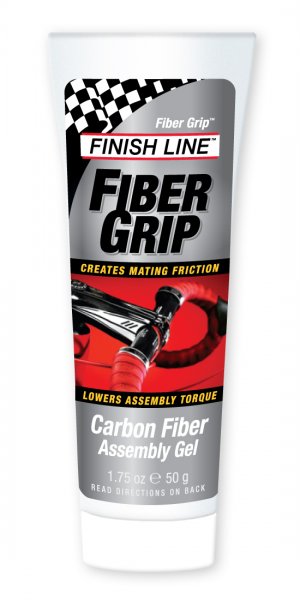
FSA calls their product "Installation compound" and lists reduced torque requirements, preventing slippage and creaking as the reasons for use.
Last edited by SquidPuppet; 10-11-17 at 08:44 AM.
10-11-17 | 08:49 AM
#18
Senior Member

Joined: Jun 2008
Posts: 9,201
Likes: 289
From: Vancouver, BC
The paste doesn't hold anything together, it adds friction to keep parts from slipping. That is it's primary purpose. No one needed any paste for assembly before carbon because clamping forces could be higher than what's feasible with lightweight carbon.
10-11-17 | 11:42 AM
#19
- Soli Deo Gloria -
Joined: Aug 2015
Posts: 14,779
Likes: 743
From: Northwest Georgia
Bikes: 2018 Rodriguez Custom Fixed Gear, 2017 Niner RLT 9 RDO, 2015 Bianchi Pista, 2002 Fuji Robaix
I'm not challenging whether manufacturers market the stuff for holding parts together and to keeping them from slipping after installation. I understand that many do and I understand that many mechanics use it for exactly that purpose.
I'm saying that this is not what the stuff was designed for. It is for assembly. Installation. After installation it should not be needed. I understand that many do feel it is needed and that many cases it is needed to prevent parts exposed to shear forces from slipping. I'm simply suggesting that it should not be needed and point to my own bikes where it was not used except on one bike to hold the handlebar from rotating during assembly.
Ask yourself if you would get into an aircraft which needed grit paste to hold parts together or to keep from slipping because the bolts holding the part together were not sufficient.
-Tim-
I'm saying that this is not what the stuff was designed for. It is for assembly. Installation. After installation it should not be needed. I understand that many do feel it is needed and that many cases it is needed to prevent parts exposed to shear forces from slipping. I'm simply suggesting that it should not be needed and point to my own bikes where it was not used except on one bike to hold the handlebar from rotating during assembly.
Ask yourself if you would get into an aircraft which needed grit paste to hold parts together or to keep from slipping because the bolts holding the part together were not sufficient.
-Tim-
10-11-17 | 11:51 AM
#20
Senior Member
Joined: Jul 2015
Posts: 7,379
Likes: 3,221
From: NW Oregon
Bikes: 1982 Trek 930R Custom, '91 Diamondback Ascent w/ XT, XTR updates, Fuji Team Pro CF road flyer, Specialized Sirrus Gravel Convert, '09 Comencal Meta 5.5 XC, '02 Marin MBX500, '84 Gitane Criterium bike
fenders were made of steel then... no need for a separate ground wire.
electrical, in this case..... not electronic.
WiFi generates an electro-magnetic field... as do cell phones.... and then, there's static electricity... nylon and most plastics(in all their many forms) can create static electricity.... carbon based materials.... it likes to discharge to ground, and large bodies with capacitance, eh?
Last edited by maddog34; 10-11-17 at 11:57 AM.
10-11-17 | 12:04 PM
#21
Senior Member
Joined: Jul 2015
Posts: 7,379
Likes: 3,221
From: NW Oregon
Bikes: 1982 Trek 930R Custom, '91 Diamondback Ascent w/ XT, XTR updates, Fuji Team Pro CF road flyer, Specialized Sirrus Gravel Convert, '09 Comencal Meta 5.5 XC, '02 Marin MBX500, '84 Gitane Criterium bike
I'm not challenging whether manufacturers market the stuff for holding parts together and to keeping them from slipping after installation. I understand that many do and I understand that many mechanics use it for exactly that purpose.
I'm saying that this is not what the stuff was designed for. It is for assembly. Installation. After installation it should not be needed. I understand that many do feel it is needed and that many cases it is needed to prevent parts exposed to shear forces from slipping. I'm simply suggesting that it should not be needed and point to my own bikes where it was not used except on one bike to hold the handlebar from rotating during assembly.
Ask yourself if you would get into an aircraft which needed grit paste to hold parts together or to keep from slipping because the bolts holding the part together were not sufficient.
-Tim-
I'm saying that this is not what the stuff was designed for. It is for assembly. Installation. After installation it should not be needed. I understand that many do feel it is needed and that many cases it is needed to prevent parts exposed to shear forces from slipping. I'm simply suggesting that it should not be needed and point to my own bikes where it was not used except on one bike to hold the handlebar from rotating during assembly.
Ask yourself if you would get into an aircraft which needed grit paste to hold parts together or to keep from slipping because the bolts holding the part together were not sufficient.
-Tim-
and i think you're getting engine assembly lube mixed up with the CF intended products... they are quite different. the engine assembly lube provides lubricant to critical engine parts at first starting btw... it does not aid assembly, but will provide lube DURING assembly, ergo the name... the CF grit paste provides traction between the mated surfaces AFTER assembly, but is used during assembly because that is when it is applied... if they'd called it "post assembly traction paste" some genius would try putting it on his/hers tires.... or smearing on brake tracks, or on the OUTSIDE of the seat tube/frame joint..... etc.
i watched a proud young crotch rocket owner coat his tires, seat, grips, and foot pegs, with armorall once... the bike shot out from under him as he left the dealership, once the rear tire burned off the slippery stuff...... it went through the window of an insurance agency across the highway.... we warned him.......
and CF paste is meant to stay in place while the parts are assembled, not to hold the parts in place during assy....... although that tiny bit of sticky will help in the way you mentioned... incidental assist...
Last edited by maddog34; 10-11-17 at 12:24 PM.
10-11-17 | 01:29 PM
#23
Calamari Marionette Ph.D
Joined: Dec 2013
Posts: 7,861
Likes: 41
From: Coeur d' Alene
Bikes: 3 Chinese Gas Pipe Nerdcycles and 2 Chicago Electroforged Boat Anchors
Tim, it was literally invented for the post assembly problems. It's creation had nothing to do with facilitating the assembly process. It provides no benefits for the assembly process. It makes a mess and scratches things. People only use it if they have to.
10-11-17 | 05:49 PM
#24
Senior Member
Joined: Oct 2013
Posts: 1,492
Likes: 109
From: Oahu, HI
Bikes: 89 Paramount OS 84 Fuji Touring Series III New! 2013 Focus Izalco Ergoride
you should meet my next door neighbor some time... he's a mechanic for Alaska Airlines...
and i think you're getting engine assembly lube mixed up with the CF intended products... they are quite different. the engine assembly lube provides lubricant to critical engine parts at first starting btw... it does not aid assembly, but will provide lube DURING assembly, ergo the name... the CF grit paste provides traction between the mated surfaces AFTER assembly, but is used during assembly because that is when it is applied... if they'd called it "post assembly traction paste" some genius would try putting it on his/hers tires.... or smearing on brake tracks, or on the OUTSIDE of the seat tube/frame joint..... etc.
i watched a proud young crotch rocket owner coat his tires, seat, grips, and foot pegs, with armorall once... the bike shot out from under him as he left the dealership, once the rear tire burned off the slippery stuff...... it went through the window of an insurance agency across the highway.... we warned him.......
and CF paste is meant to stay in place while the parts are assembled, not to hold the parts in place during assy....... although that tiny bit of sticky will help in the way you mentioned... incidental assist...
and i think you're getting engine assembly lube mixed up with the CF intended products... they are quite different. the engine assembly lube provides lubricant to critical engine parts at first starting btw... it does not aid assembly, but will provide lube DURING assembly, ergo the name... the CF grit paste provides traction between the mated surfaces AFTER assembly, but is used during assembly because that is when it is applied... if they'd called it "post assembly traction paste" some genius would try putting it on his/hers tires.... or smearing on brake tracks, or on the OUTSIDE of the seat tube/frame joint..... etc.
i watched a proud young crotch rocket owner coat his tires, seat, grips, and foot pegs, with armorall once... the bike shot out from under him as he left the dealership, once the rear tire burned off the slippery stuff...... it went through the window of an insurance agency across the highway.... we warned him.......
and CF paste is meant to stay in place while the parts are assembled, not to hold the parts in place during assy....... although that tiny bit of sticky will help in the way you mentioned... incidental assist...
scott s.
.
10-11-17 | 08:53 PM
#25
Senior Member
Joined: Jun 2008
Posts: 9,201
Likes: 289
From: Vancouver, BC
I'm not challenging whether manufacturers market the stuff for holding parts together and to keeping them from slipping after installation. I understand that many do and I understand that many mechanics use it for exactly that purpose.
I'm saying that this is not what the stuff was designed for.
I'm saying that this is not what the stuff was designed for.
 And you're still mistaken.
From a manufacturer of paste:
- Fiber Grip(TM): Carbon Fiber Assembly Gel is specially designed to reduce slippage between clamped carbon fiber surfaces. Fiber Grip eliminates the need to over tighten clamps to achieve secure connections.
- Apply Fiber Grip in a thin film to clamping areas of stems, handlebars, seat posts, and seat tubes to eliminate the need for over tightening, which can cause internal fractures and fatigue of carbon fiber parts.
Loctite.