


Tight tires, grind down tight rim to decrease diameter?
 12-05-19 | 12:43 PM
#26

Senior Member


Joined: Jul 2006
Posts: 11,474
Likes: 4,878
From: San Jose (Willow Glen) Ca
Bikes: Kirk Custom JK Special, 86 De Rosa Pro, '84 Team Miyata,(dura ace old school) 80?? SR Semi-Pro 600 Arabesque
previously noted, but still good tire jack
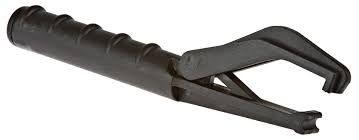
__________________
Life is too short not to ride the best bike you have, as much as you can.
Life is too short not to ride the best bike you have, as much as you can.
 12-05-19 | 11:31 PM
#27

Insane Bicycle Mechanic

Joined: Mar 2008
Posts: 10,153
Likes: 1,120
From: other Vancouver
I'm using Schwalbe Marathon road tires. Those tires are already tighter than usual, so the combination was brutal. I used to use Maxxis Gypsies, which were still unreasonable.
People are saying to guide the bead into the central depression. Does it not do that automatically when you pull on it when flipping tire levers?
People are saying to guide the bead into the central depression. Does it not do that automatically when you pull on it when flipping tire levers?
If you watch them change car tires at a auto shop you'll see that the principal is the same- they just have big hydraulic machines to do the prying and lifting of the bead.
__________________
Jeff Wills
Comcast nuked my web page. It will return soon..
Jeff Wills
Comcast nuked my web page. It will return soon..
12-06-19 | 02:38 AM
#28
Senior Member

Joined: Jul 2004
Posts: 8,162
Likes: 647
From: Brooklyn NY
Bikes: Kuota Kredo/Chorus, Trek 7000 commuter, Trek 8000 MTB and a few others
The trick I use is to put the bead in the center channel as suggested but then to do the last difficult bit at 90 degrees from the stem, not 180. This way the opposite side sit entirely in the channel. Tires that I couldn't otherwise get on have slipped right on this way.
 12-06-19 | 05:29 AM
#29
Senior Member
Joined: Jul 2010
Posts: 13,903
Likes: 1,241
From: Montreal Canada
Yes and no. As above, thicker tires and sidewalls are harder to keep pushed into the center well. With a lighter standard bicycle tire it's easy to get the beads to stay there. The heavier tire just requires more effort to maintain the slack in the bead that's needed to pull it over the rim's wall.
.
.
I've seen some continental touring plus tires that are like this, very stiff sidewalls, throw in a certain rim combo and its been a real bugger.
decades ago I had some specialized city nimbus something tires that were like this also.
12-08-19 | 10:01 PM
#30

Senior Member
Joined: Jul 2005
Posts: 4,985
Likes: 709
From: Boulder County, CO
Bikes: '80 Masi Gran Criterium, '12 Trek Madone, early '60s Frejus track
I'm using Schwalbe Marathon road tires. Those tires are already tighter than usual, so the combination was brutal. I used to use Maxxis Gypsies, which were still unreasonable.
People are saying to guide the bead into the central depression. Does it not do that automatically when you pull on it when flipping tire levers?
People are saying to guide the bead into the central depression. Does it not do that automatically when you pull on it when flipping tire levers?
26x2.00 is a wide rim so your tire choices are limited.
12-08-19 | 10:49 PM
#31

Senior Member


Joined: Nov 2014
Posts: 27,576
Likes: 5,451
From: Eugene, Oregon, USA
Second, there is no way to do the grinding with sufficient precision, without removing the rim and mounting it on a lathe face plate. Precision metal cutting requires tools and jigs and fixtures that are exceptionally rigid and a spoked bike wheel doesn't qualify.
So, I suspect that you'd end up with an aesthetically unsatisfactory wheel with really uneven grinding marks that would break prematurely.
So, I suspect that you'd end up with an aesthetically unsatisfactory wheel with really uneven grinding marks that would break prematurely.

If one trued the wheel, very true, say 1/4mm wobble/hop, then one might be able to use the wheel as a lathe of sorts. And, build a jig to do the work.
Where to take the material off? In the bead seat, or the valley between bead seats, and it severely reduces the strength of the wheel, and a E-Bike wheel at that!!!
One could grind off the hooks. It might help with mounting slightly, but risk blowouts. Or, the hooks may also contribute strength to the sides of the rims.
Aestetics won't be an issue as the grinding would be mostly hidden.
Anyway, I agree that this is a very bad idea, and one needs to further diagnose the problem/solution.
12-08-19 | 11:11 PM
#32
Senior Member
Joined: Nov 2014
Posts: 27,576
Likes: 5,451
From: Eugene, Oregon, USA
If your rim has a thick cloth tape such as Velox, you could try a thinner tape such as Continental Easy Tape or a layer of filament-reinforced packing tape or Kapton tape. The thinner tape should make tire mounting easier by allowing you to get the bead deeper into the center of the rim channel.
I'd also look at the tape.
Another option are veloplugs. On occasion, I've gone over the veloplugs with a thin layer of tape like electrical tape (or stronger tape).
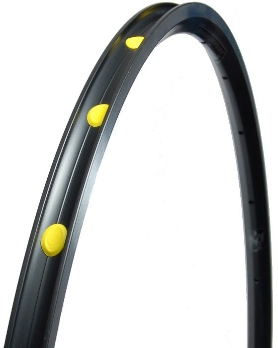
The veloplugs provide the strength, and the tape keeps them from moving, and keeps the tube inside.
12-08-19 | 11:26 PM
#33

Generally bewildered
Joined: Aug 2015
Posts: 3,038
Likes: 344
From: Eastern PA, USA
Bikes: 2014 Trek Domane 6.9, 1999 LeMond Zurich, 1978 Schwinn Superior
A spoked wheel has a very high strength to weight ratio, but is not nearly as rigid as a faceplate that is 2 inches thick and made of heat-treated tool steel. For one thing, transmitting adequate power from a hub to the wheel rim would likely break spokes. A bike hub has superb strength for handling a cyclist's weight, but bike bearings don't really come anywhere near the rigidity of that lathe spindle which are gonna have perhaps 6 inch id, tapered roller bearings in double sets fore and aft.
Not saying it couldn't be done with some clever McGyvering and by suspending normal rules of safety and risk avoidance.
 But we agree:
 12-09-19 | 05:34 AM
#34
Senior Member
Joined: Nov 2014
Posts: 27,576
Likes: 5,451
From: Eugene, Oregon, USA
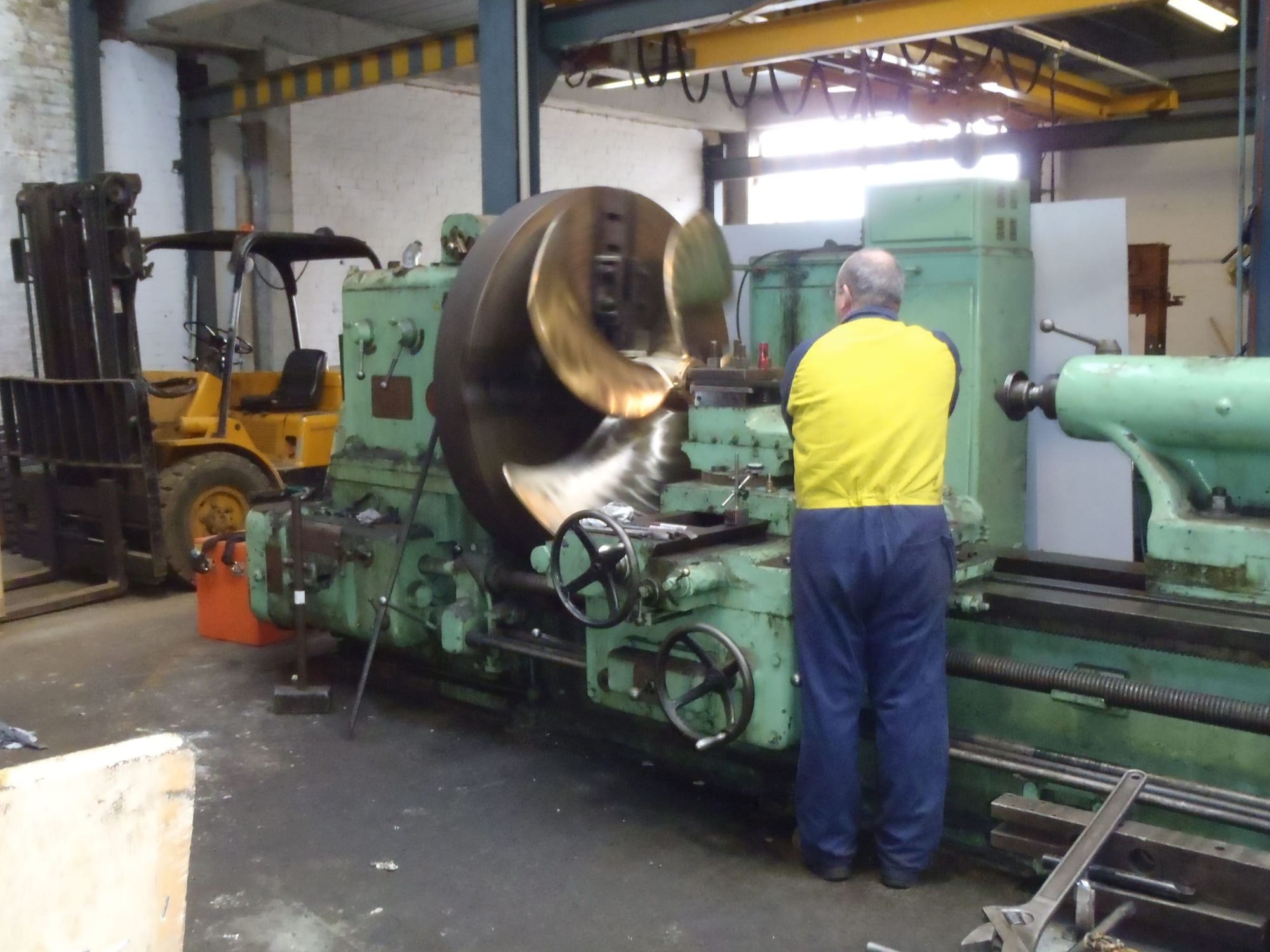
I grew up working in a machine shop. Modern metalworking doctrine is that you use an extremely rigid machine to cut metal, with a rigid fixture holding the workpiece. Else you get chatter, grabbing and gouging, the workpiece breaking, or (worse of all) the workpiece or parts of it flying off the lathe and killing someone. Thus, you'd use a lathe with the rim fastened to a faceplate. Given the rim diameter, you'd need a pretty massive lathe (a 30" swing). The pic below is a 42 inch lathe with a propeller mounted to the faceplate.
A spoked wheel has a very high strength to weight ratio, but is not nearly as rigid as a faceplate that is 2 inches thick and made of heat-treated tool steel. For one thing, transmitting adequate power from a hub to the wheel rim would likely break spokes. A bike hub has superb strength for handling a cyclist's weight, but bike bearings don't really come anywhere near the rigidity of that lathe spindle which are gonna have perhaps 6 inch id, tapered roller bearings in double sets fore and aft.
Not saying it couldn't be done with some clever McGyvering and by suspending normal rules of safety and risk avoidance. But we agree:
Your advice is IMHO golden and is really what the OP should be doing. Observe, think, and test different methods of solving the problem before getting out the angle grinder, I always say.
A spoked wheel has a very high strength to weight ratio, but is not nearly as rigid as a faceplate that is 2 inches thick and made of heat-treated tool steel. For one thing, transmitting adequate power from a hub to the wheel rim would likely break spokes. A bike hub has superb strength for handling a cyclist's weight, but bike bearings don't really come anywhere near the rigidity of that lathe spindle which are gonna have perhaps 6 inch id, tapered roller bearings in double sets fore and aft.
Not saying it couldn't be done with some clever McGyvering and by suspending normal rules of safety and risk avoidance.
But we agree:Your advice is IMHO golden and is really what the OP should be doing. Observe, think, and test different methods of solving the problem before getting out the angle grinder, I always say.
If using a fixed cutter, then yes, "rigid". But, one could likely break some of the rules if using a rotary cutter (grinder) (noting, of course, potential issues with grinding aluminum).
I have no doubt it would be possible to do with a cheap apparatus if one was slow and cautious. But it still wouldn't be my choice of remedies.
12-09-19 | 05:49 AM
#35

Senior Member
Joined: Jul 2017
Posts: 680
Likes: 50
From: East Tennessee
Bikes: 2017 Trek Domane SL6 Disc, 1990 Schwinn Crosscut Frankenroadbike, 2015 KHS Team 29 FS, 2000 Gary Fisher Tassajara--gone but not forgotten
If you are at home and have the time, leave the tire in the sun for an hour or so to make it more pliable...you may have to wear gloves as they can get quite hot. After mounting/dismounting a couple of times, it should become easier. That said, get the tools mentioned above and pay attention to centering the sidewalls when mounting (also mentioned above). Tools and technique. Cheers!
12-09-19 | 08:51 AM
#36
Generally bewildered
Joined: Aug 2015
Posts: 3,038
Likes: 344
From: Eastern PA, USA
Bikes: 2014 Trek Domane 6.9, 1999 LeMond Zurich, 1978 Schwinn Superior
If you have a 42" lathe (horizontal or vertical), then one should be able to chuck up the fully built wheel, although the rim will still have to run straight (no taco).
If using a fixed cutter, then yes, "rigid". But, one could likely break some of the rules if using a rotary cutter (grinder) (noting, of course, potential issues with grinding aluminum).
I have no doubt it would be possible to do with a cheap apparatus if one was slow and cautious. But it still wouldn't be my choice of remedies.
If using a fixed cutter, then yes, "rigid". But, one could likely break some of the rules if using a rotary cutter (grinder) (noting, of course, potential issues with grinding aluminum).
I have no doubt it would be possible to do with a cheap apparatus if one was slow and cautious. But it still wouldn't be my choice of remedies.
But in my experience, if something doesn't work that should work then I'm not using the proper technique or tool. The suggestions above (soapy water to lube the tire and rim, get the tire bead in the center of the well in the rim) allowed me to go from "I can't mount this d**m tire! It's too tight! It's a bad design poorly implemented!" to "Gee, that wasn't so hard".
12-09-19 | 09:41 AM
#37

Senior Member
Joined: Apr 2010
Posts: 6,341
Likes: 326
From: Mountain View, CA USA and Golden, CO USA
Bikes: 97 Litespeed, 50-39-30x13-26 10 cogs, Campagnolo Ultrashift, retroreflective rims on SON28/PowerTap hubs
Originally Posted by CliffordK;21238469
Another option are [url=https://veloplug.com/en/
Another option are [url=https://veloplug.com/en/
veloplugs.[/url] On occasion, I've gone over the veloplugs with a thin layer of tape like electrical tape (or stronger tape).
12-09-19 | 03:39 PM
#38

It's MY mountain
Joined: Sep 2006
Posts: 10,168
Likes: 4,204
From: Mt.Diablo
Bikes: Klein, Merckx, Trek
 12-09-19 | 04:42 PM
#39

Senior Member
Joined: Aug 2011
Posts: 22,676
Likes: 2,642
From: CID
Bikes: 1991 Bianchi Eros, 1964 Armstrong, 1988 Diamondback Ascent, 1988 Bianchi Premio, 1987 Bianchi Sport SX, 1980s Raleigh mixte (hers), All-City Space Horse (hers)
^ Some people may be so conditioned to use tire levers during every install/removal that it may not occur to them to try without. But I think you learn valuable insights when attempting to guide the beads over the rim while keeping the slack in the bottom of the well, all by hand. Even if you do go back to using levers.
I'm firmly convinced that some people make the job way harder than it needs to be, by using levers for brute force and not understanding how slack works.
I'm firmly convinced that some people make the job way harder than it needs to be, by using levers for brute force and not understanding how slack works.
Last edited by ThermionicScott; 12-09-19 at 04:45 PM.
12-09-19 | 05:02 PM
#40
Senior Member
Joined: Nov 2014
Posts: 27,576
Likes: 5,451
From: Eugene, Oregon, USA
If you can get one side of the tire on without the tube, then you can get the second side on with the tube.
Also beware of getting the tube pinched between the tire beads and the rim (which effectively makes the rim larger).
I'm not a big fan of the thornproof tubes, but they may be harder to trap than the regular tubes.
Also beware of getting the tube pinched between the tire beads and the rim (which effectively makes the rim larger).
I'm not a big fan of the thornproof tubes, but they may be harder to trap than the regular tubes.
12-14-19 | 03:16 PM
#41

Senior member
Joined: Oct 2004
Posts: 8,366
Likes: 882
From: Oakville Ontario
"Tight tolerances require the use of a low profile rim tape like Velotape to avoid tire installation issues. Veloplugs are not recommended on A23 or A23 OC rims."
12-14-19 | 03:19 PM
#42
Senior member
Joined: Oct 2004
Posts: 8,366
Likes: 882
From: Oakville Ontario
I have one of those, but since I switched to Schwalbe tire levers, I've never used it.
