


wheel alignment in frame question?
 10-09-22 | 07:10 AM
#1

Thread Starter
Senior Member
Joined: Mar 2022
Posts: 1,975
Likes: 2,220
From: Missoula MT
Bikes: Handsome xoxo, Serotta atx, Canyon Endurace CF8
wheel alignment in frame question?
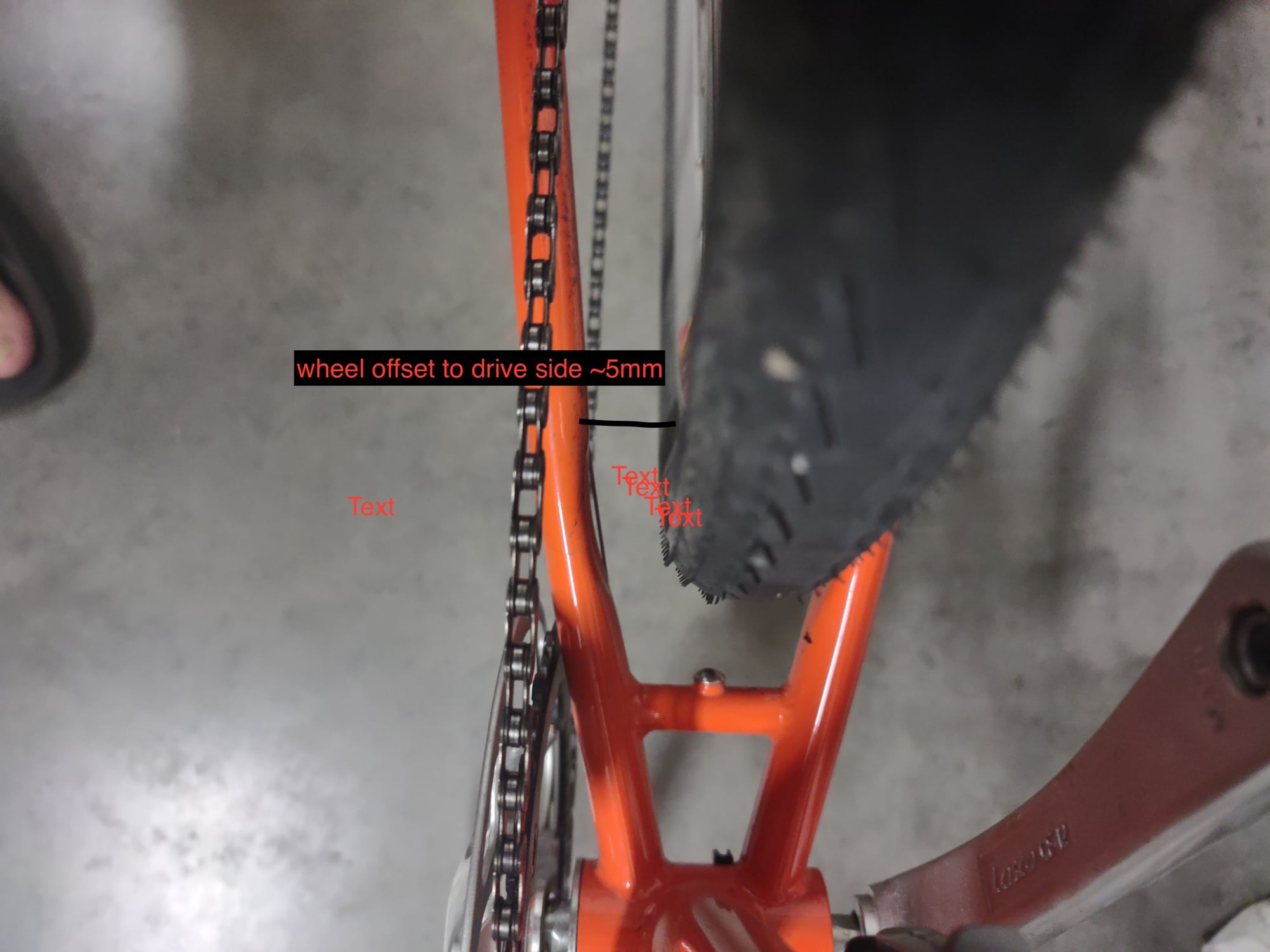
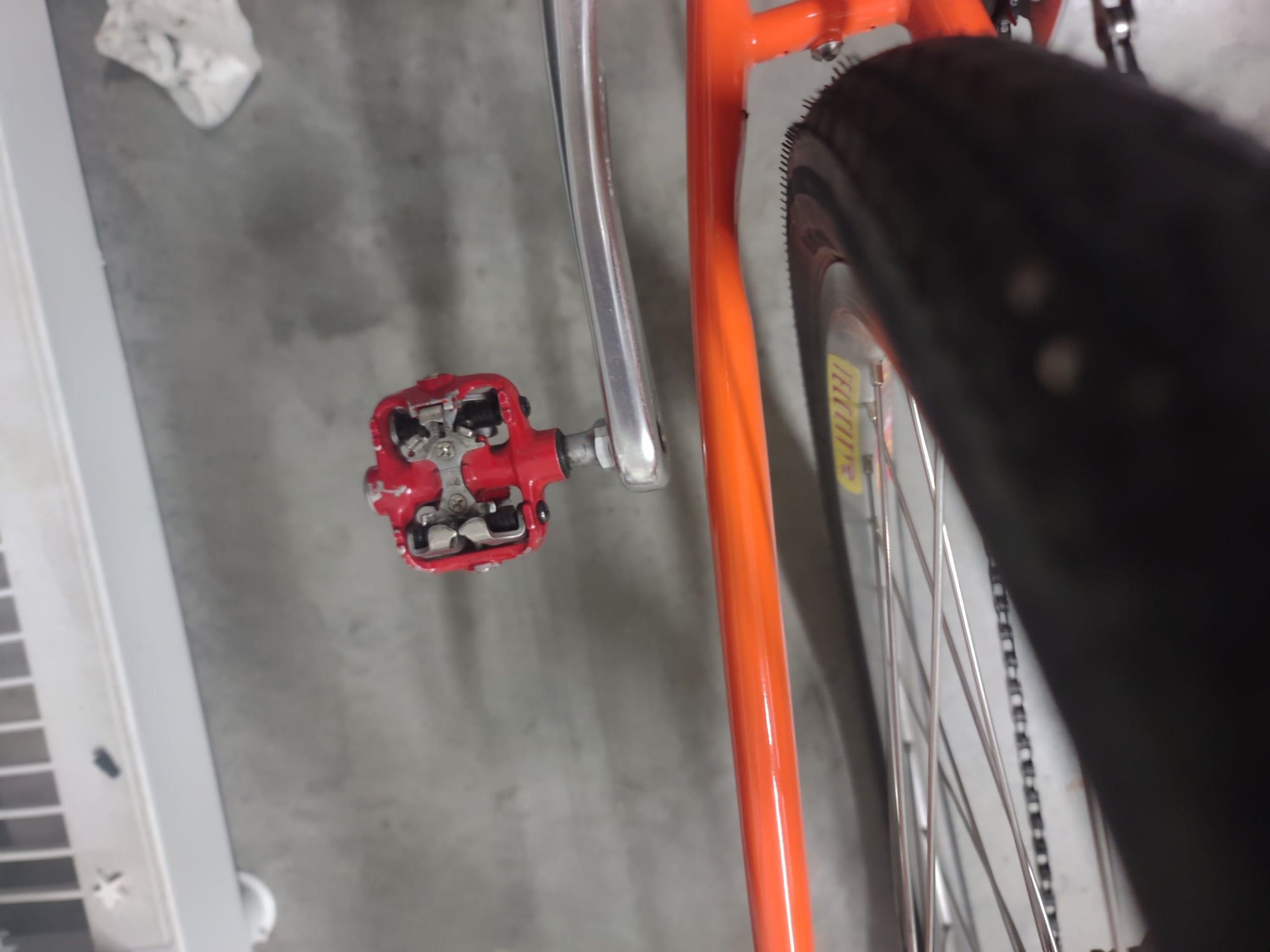
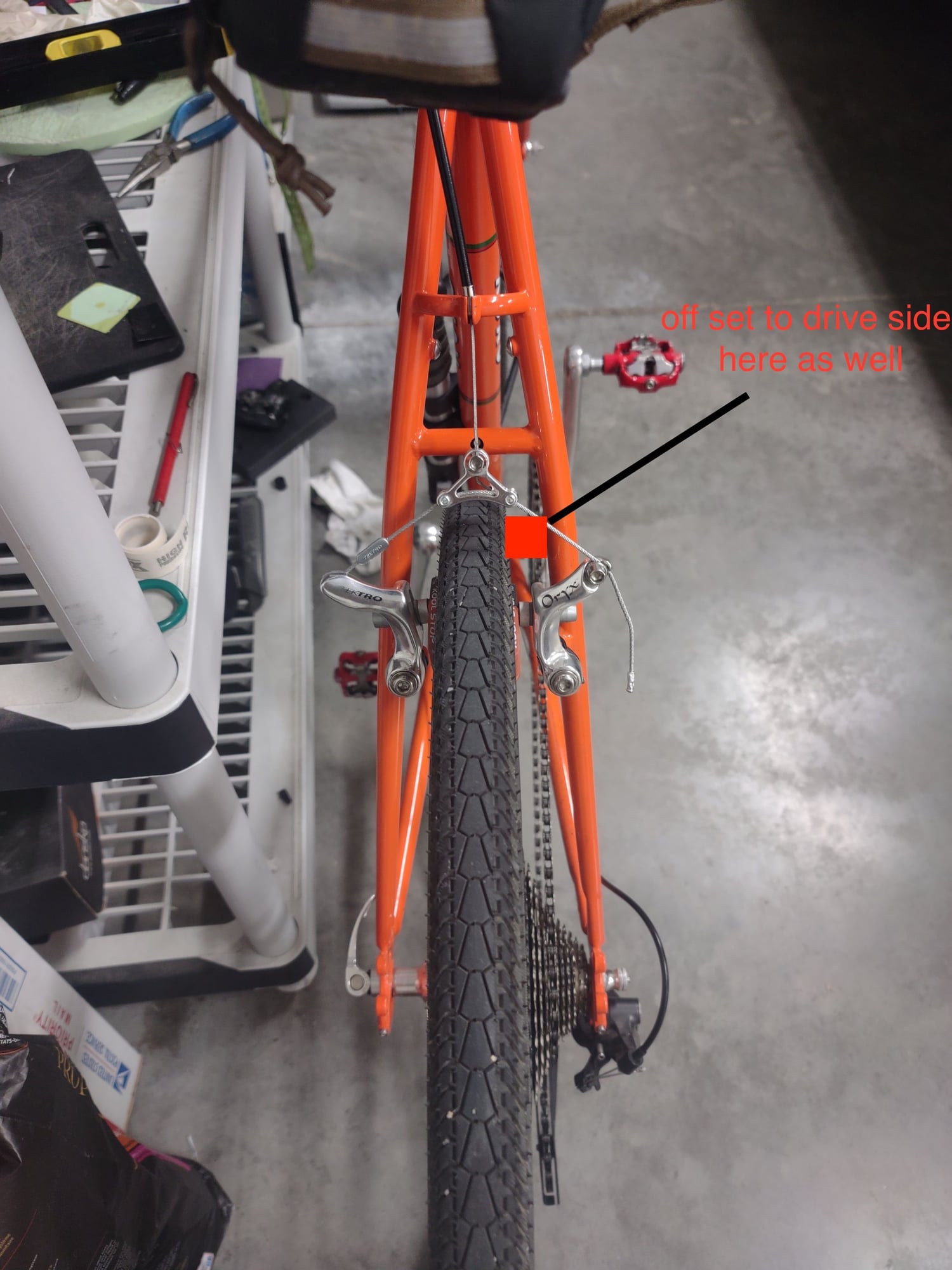
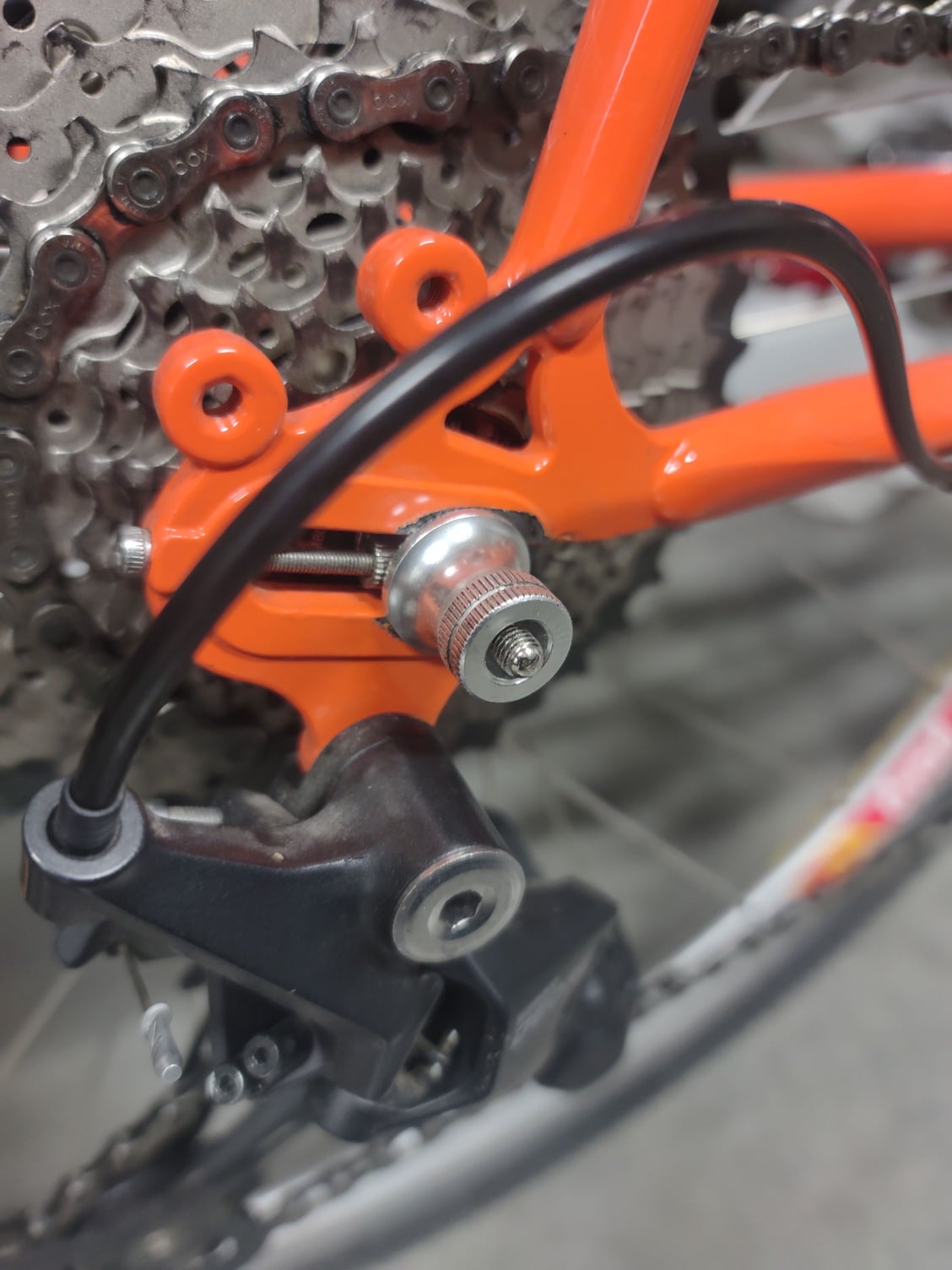
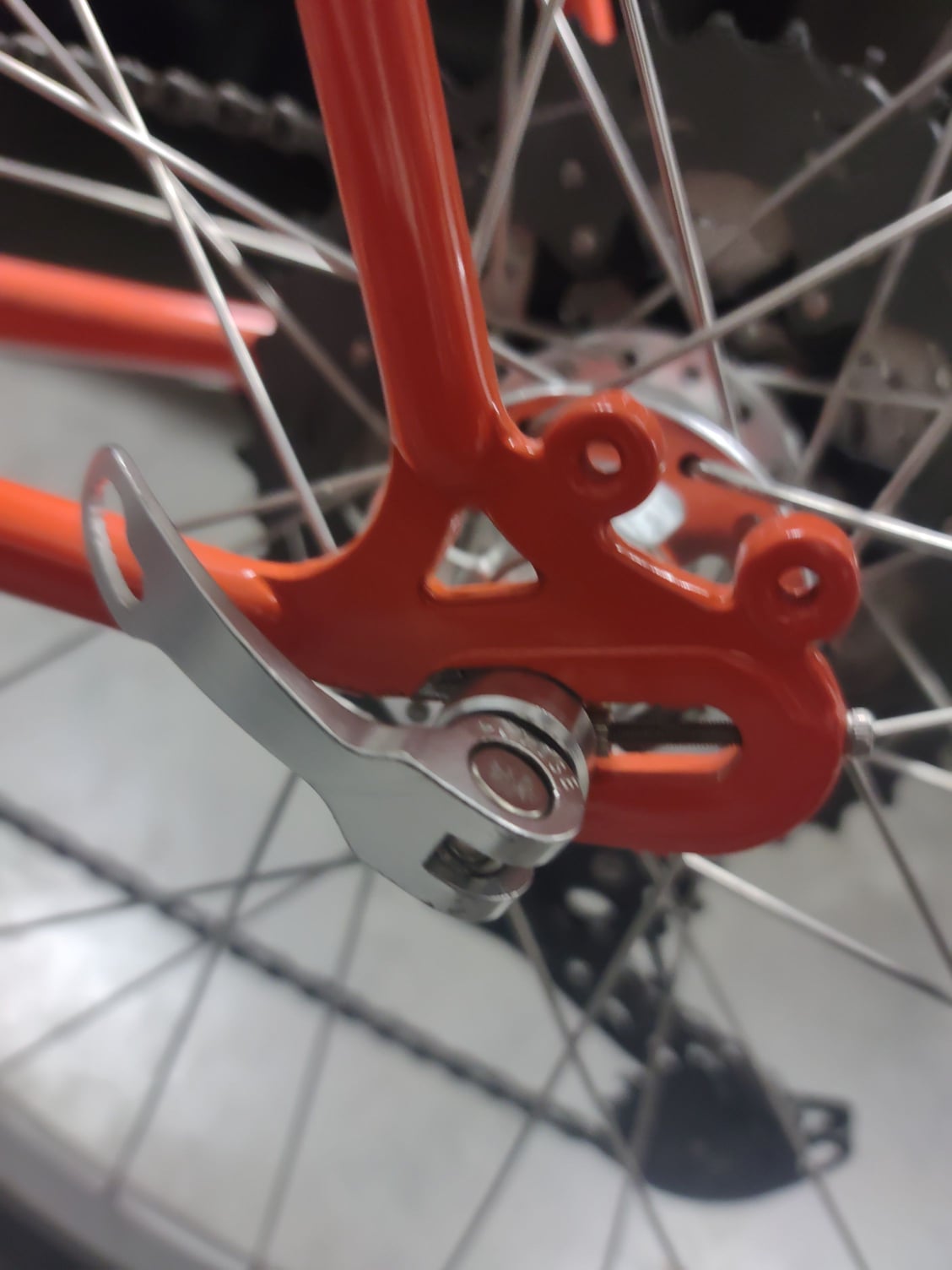
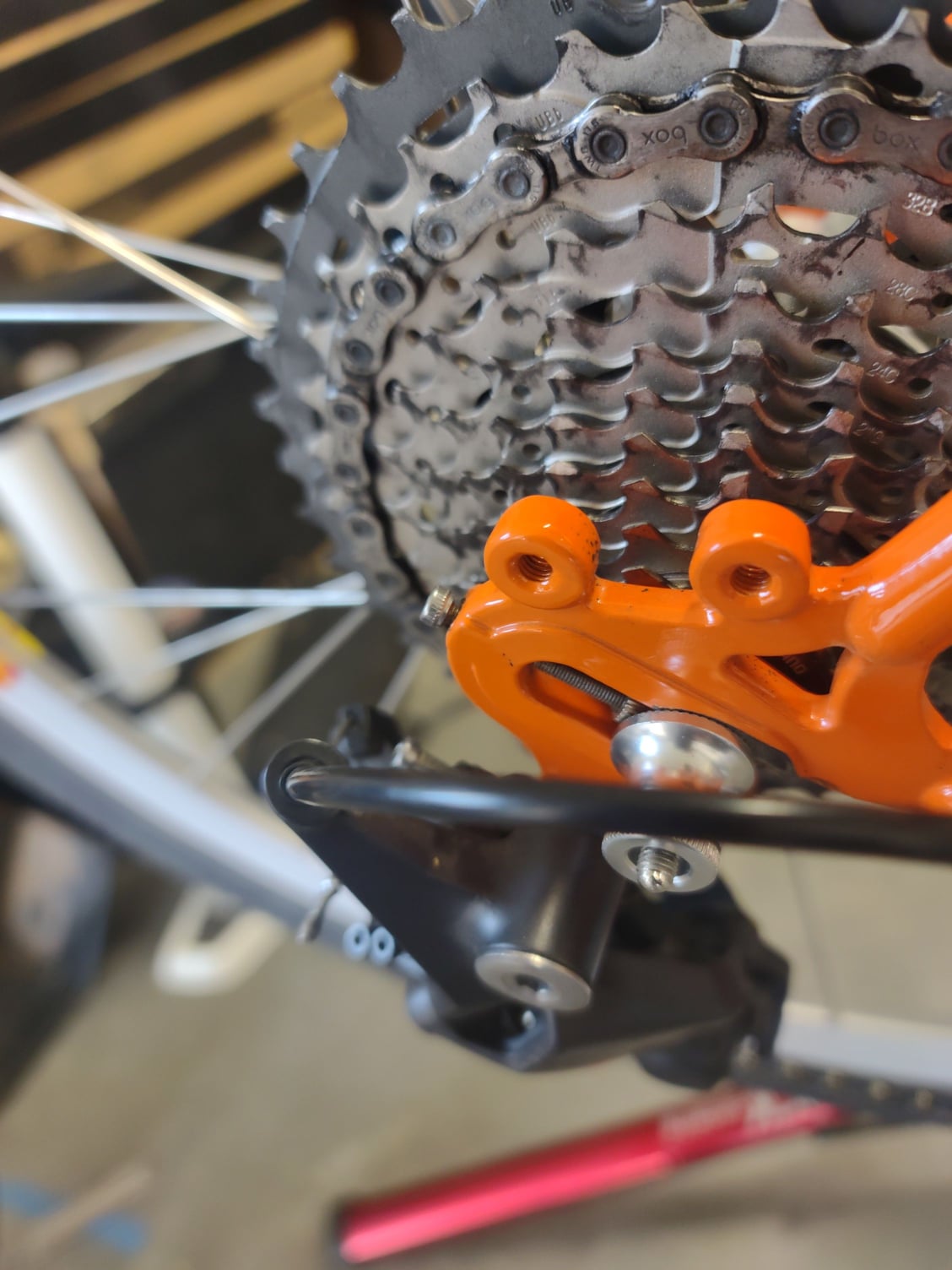
Not sure if this is an issue or not? bike tracks straight and rim spins true through the brake pads equal amounts of gap on each pad and that does not change when spinning wheel. visually don't notice the gap visually as much with 1.5" tires but with 2.3" tires definitely notice the tire sitting closer visually to the non drive side. the dropouts have the adjustment screws but not sure if backing off the screw on the driveside is the answer or if that would just cause other problems, right now and from the start the screws have been turned all the way in and the axle is solid against them on both sides. Maybe it is a frame that is not aligned, it is a new frame and I have put about 1500 miles on it in the last 2 months and don't feel anything weird riding it but it does bug me looking at it. Maybe it is normal with a frame in this price range, quality range. I know my 1993 MTB is spot on in this area. thanks for any help or thoughts on the matter.
 10-09-22 | 07:48 AM
#2
Senior Member

Joined: Jan 2009
Posts: 4,377
Likes: 1,656
From: San Diego, CA
Could be that the frame is tweeked a bit but have you checked if the wheel is dished properly? Flip the wheel around and check if it sits in the frame the same. This is an easy way to check the dishing.
 10-09-22 | 08:59 AM
#3
Thread Starter
Senior Member
Joined: Mar 2022
Posts: 1,975
Likes: 2,220
From: Missoula MT
Bikes: Handsome xoxo, Serotta atx, Canyon Endurace CF8
ok I just flipped the wheel and the gap follows the cassette. does this indicate a dishing issue? It was built by the company that built the bike ie Handsome bikes and is a handsome xoxo. they claim the wheel is built for the bike. thanks.
10-09-22 | 09:43 AM
#4

Mad bike riding scientist


Joined: Nov 2004
Posts: 29,156
Likes: 6,216
From: Denver, CO
Bikes: Some silver ones, a red one, a black and orange one, and a few titanium ones
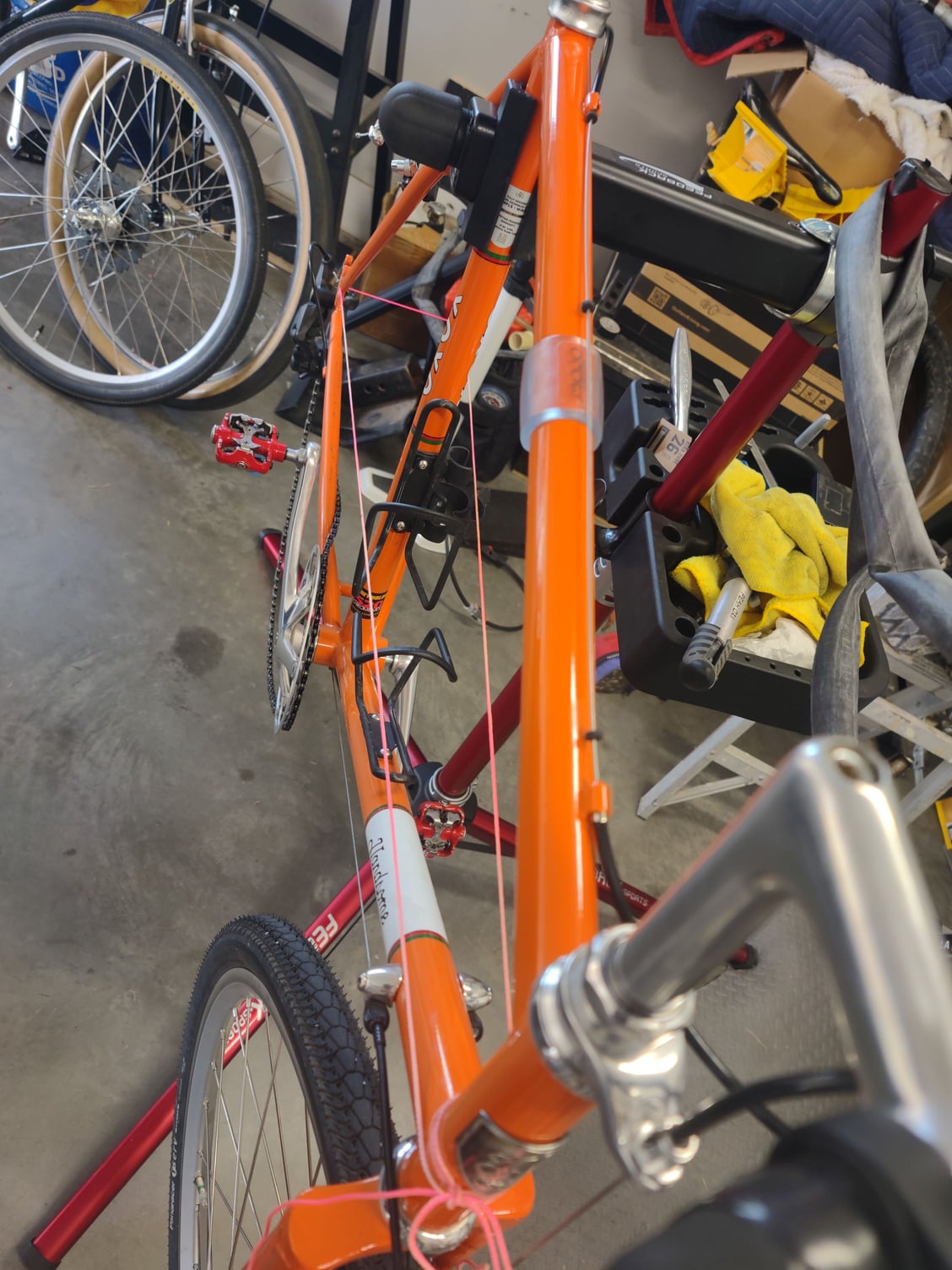
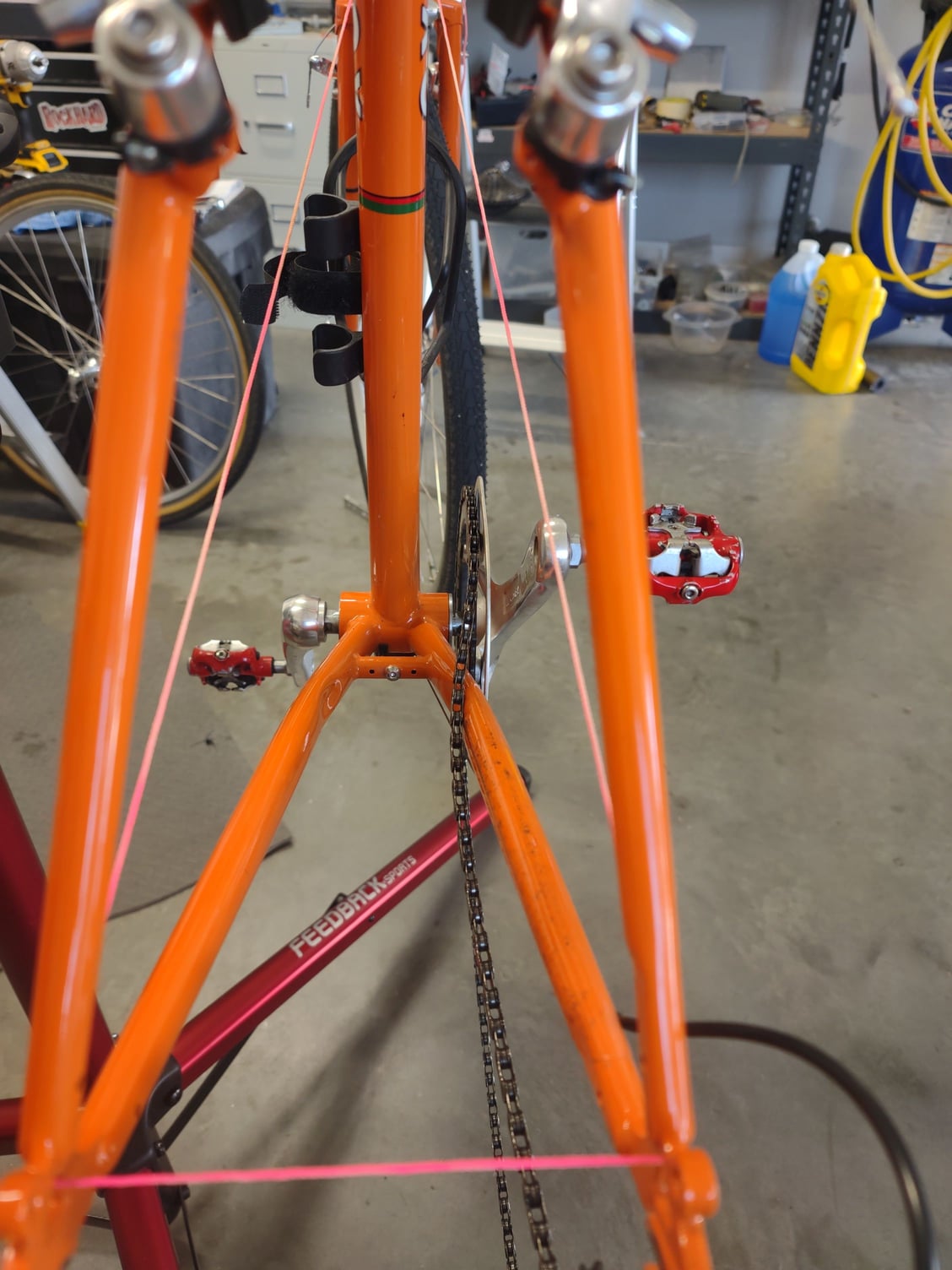
If you have another wheel, put that in the frame to make sure that the frame isn’t off. Or you can use the string method (see “checking frame alignment” section)
Since you have flipped the wheel around and it is off to the same side, it is most likely a dishing issue. It’s fixable but not simple. If you have access to a wheel truing stand, the job is easier but you can do it with your bike frame. Use your brake calipers as the feelers if you don’t have a brake stand. You can also add zip ties as the feelers if you have to.
Remove the tire first. Put a drop of oil on the threads of each spoke. Any oil will do. 3-in-One or Triflow works well. It looks like the spoke tension on the driveside are low. You need to pull the rim towards the driveside. You will do that by tightening the spokes on the driveside but you will probably need to loosen the nondriveside as well. Start by loosening the nondrive spokes…all of them…no more than 1/2 turn. A 1/4 turn may be better.
Now tighten the spokes on the driveside by the same amount you loosened the nondrive side. Check the spacing after you are done and do another round if needed. You can check this post for making a dishing tool if you like. If you don’t want to make one, you can use Andrew Stewart’s method. You can also turn the wheel around in the frame to check the dish.
Keep loosening and tightening until you are as close as you want to be.
Since you have flipped the wheel around and it is off to the same side, it is most likely a dishing issue. It’s fixable but not simple. If you have access to a wheel truing stand, the job is easier but you can do it with your bike frame. Use your brake calipers as the feelers if you don’t have a brake stand. You can also add zip ties as the feelers if you have to.
Remove the tire first. Put a drop of oil on the threads of each spoke. Any oil will do. 3-in-One or Triflow works well. It looks like the spoke tension on the driveside are low. You need to pull the rim towards the driveside. You will do that by tightening the spokes on the driveside but you will probably need to loosen the nondriveside as well. Start by loosening the nondrive spokes…all of them…no more than 1/2 turn. A 1/4 turn may be better.
Now tighten the spokes on the driveside by the same amount you loosened the nondrive side. Check the spacing after you are done and do another round if needed. You can check this post for making a dishing tool if you like. If you don’t want to make one, you can use Andrew Stewart’s method. You can also turn the wheel around in the frame to check the dish.
Keep loosening and tightening until you are as close as you want to be.
__________________
Stuart Black
Dreamin' of Bemidji Down the Mississippi (in part)
Plan Epsilon Around Lake Michigan in the era of Covid
Gold Fever Three days of dirt in Colorado
Pokin' around the Poconos A cold ride around Lake Erie
Dinosaurs in Colorado A mountain bike guide to the Purgatory Canyon dinosaur trackway
Solo Without Pie. The search for pie in the Midwest.
Picking the Scablands. Washington and Oregon, 2005. Pie and spiders on the Columbia River!
Stuart Black
Dreamin' of Bemidji Down the Mississippi (in part)
Plan Epsilon Around Lake Michigan in the era of Covid
Gold Fever Three days of dirt in Colorado
Pokin' around the Poconos A cold ride around Lake Erie
Dinosaurs in Colorado A mountain bike guide to the Purgatory Canyon dinosaur trackway
Solo Without Pie. The search for pie in the Midwest.
Picking the Scablands. Washington and Oregon, 2005. Pie and spiders on the Columbia River!
 10-09-22 | 10:03 AM
#6

Senior Member
Joined: Mar 2007
Posts: 9,182
Likes: 5,366
From: SF Bay Area, East bay
Bikes: Miyata 618 GT, Marinoni, Kestral 200, Soma double cross 2002 Trek 5200, KHS Flite, Koga Miyata, Schwinn Spitfire 5, Mondia Special, Univega Alpina, Miyata team Ti, Santa Cruz Highball, Waterford rs11
I'd check the dish before going through all that. Looks like you just need to back out the drive side adjuster a little.
10-09-22 | 10:08 AM
#7
Thread Starter
Senior Member
Joined: Mar 2022
Posts: 1,975
Likes: 2,220
From: Missoula MT
Bikes: Handsome xoxo, Serotta atx, Canyon Endurace CF8
I bought another set of xoxo wheels right after getting the bike so I could easily run two sets of tires. both rear wheels are the same no difference. these are the wheels.
https://handsomecycles.com/products/...ed-bearing-11s
https://handsomecycles.com/products/...ed-bearing-11s
10-09-22 | 10:10 AM
#8
Thread Starter
Senior Member
Joined: Mar 2022
Posts: 1,975
Likes: 2,220
From: Missoula MT
Bikes: Handsome xoxo, Serotta atx, Canyon Endurace CF8
 10-09-22 | 10:13 AM
#9
Thread Starter
Senior Member
Joined: Mar 2022
Posts: 1,975
Likes: 2,220
From: Missoula MT
Bikes: Handsome xoxo, Serotta atx, Canyon Endurace CF8
10-09-22 | 10:35 AM
#10
Senior Member
Joined: Jun 2002
Posts: 3,924
Likes: 589
From: San Jose, CA
Bikes: Too many bikes, too little time to ride
I get that there is asymmetry in the clearance gaps, but what about if you look at the wheel compared to the seat tube? Does it line up with the seat tube?
Your comment "it follows the cassette", refers to the fact that if you flip the wheel, it's now the drive side (not the cassette side) with the greater clearance? Or did you mean the opposite? If the wider gap is on the crank side after you flipped the wheel, then it's a wheel dish issue. If it's still on the non-drive side after flipping the wheel, then it's the frame.
Fwiw, I seem to have slight asymmetries in nearly all of my frames; this becomes more apparent (as you pointed out) when you push the limits with wider tires. It's almost always asymmetric by a couple to a few mm, in my experience. (If I'm wrong then uh-oh I need to check all my wheels and frames.)
Your comment "it follows the cassette", refers to the fact that if you flip the wheel, it's now the drive side (not the cassette side) with the greater clearance? Or did you mean the opposite? If the wider gap is on the crank side after you flipped the wheel, then it's a wheel dish issue. If it's still on the non-drive side after flipping the wheel, then it's the frame.
Fwiw, I seem to have slight asymmetries in nearly all of my frames; this becomes more apparent (as you pointed out) when you push the limits with wider tires. It's almost always asymmetric by a couple to a few mm, in my experience. (If I'm wrong then uh-oh I need to check all my wheels and frames.)
10-09-22 | 10:52 AM
#11
Thread Starter
Senior Member
Joined: Mar 2022
Posts: 1,975
Likes: 2,220
From: Missoula MT
Bikes: Handsome xoxo, Serotta atx, Canyon Endurace CF8
I get that there is asymmetry in the clearance gaps, but what about if you look at the wheel compared to the seat tube? Does it line up with the seat tube?
Your comment "it follows the cassette", refers to the fact that if you flip the wheel, it's now the drive side (not the cassette side) with the greater clearance? Or did you mean the opposite? If the wider gap is on the crank side after you flipped the wheel, then it's a wheel dish issue. If it's still on the non-drive side after flipping the wheel, then it's the frame.
Fwiw, I seem to have slight asymmetries in nearly all of my frames; this becomes more apparent (as you pointed out) when you push the limits with wider tires. It's almost always asymmetric by a couple to a few mm, in my experience. (If I'm wrong then uh-oh I need to check all my wheels and frames.)
Your comment "it follows the cassette", refers to the fact that if you flip the wheel, it's now the drive side (not the cassette side) with the greater clearance? Or did you mean the opposite? If the wider gap is on the crank side after you flipped the wheel, then it's a wheel dish issue. If it's still on the non-drive side after flipping the wheel, then it's the frame.
Fwiw, I seem to have slight asymmetries in nearly all of my frames; this becomes more apparent (as you pointed out) when you push the limits with wider tires. It's almost always asymmetric by a couple to a few mm, in my experience. (If I'm wrong then uh-oh I need to check all my wheels and frames.)
10-09-22 | 11:11 AM
#12


Over the hill
Joined: Mar 2006
Posts: 24,602
Likes: 1,364
From: Los Angeles, CA
Bikes: Pinarello Nytro, Momentum Transend
Sounds like the wheels were not dished properly. My suggestion is to find a competent wheel builder, have them properly dish and tension the wheel(s), and ask the manufacturer to reimburse you for the cost.
__________________
It's like riding a bicycle
It's like riding a bicycle
10-09-22 | 11:22 AM
#13

Facts just confuse people

Joined: Jul 2017
Posts: 19,341
Likes: 7,059
From: Mississippi
Bikes: Tarmac Disc Comp Di2 - 2020
Might be the wheels not properly dished for that bike or you have a spacer on the wrong side if there is a spacer involved.
However I once had a wheel wonky in the dropouts and it seemed centered between the seat stays and brakes, but I failed to notice it wasn't between the chain stays. I rode it for probably weeks to a month or more like that and had quite a bit of tire wear.
I was able to see the error and apparently on that bike it was the slop in the slot in the drops being a tad wider than the axle that helped make the error. They were also horizontal drops similar to yours.
Also, I've never had my alignment screws in the drops screwed all the way in. I suppose if that puts your cassette optimum for the DR and your drops are actually in perfect alignment with each other then that works. But maybe check to see that isn't an issue.
Never seen so much room on the left of the hub. Is this same frame also for bikes spec'd with disc brakes?
However I once had a wheel wonky in the dropouts and it seemed centered between the seat stays and brakes, but I failed to notice it wasn't between the chain stays. I rode it for probably weeks to a month or more like that and had quite a bit of tire wear.
I was able to see the error and apparently on that bike it was the slop in the slot in the drops being a tad wider than the axle that helped make the error. They were also horizontal drops similar to yours.
Also, I've never had my alignment screws in the drops screwed all the way in. I suppose if that puts your cassette optimum for the DR and your drops are actually in perfect alignment with each other then that works. But maybe check to see that isn't an issue.
Never seen so much room on the left of the hub. Is this same frame also for bikes spec'd with disc brakes?
Last edited by Iride01; 10-09-22 at 11:45 AM.
10-09-22 | 11:33 AM
#14

Senior Member

Joined: Oct 2014
Posts: 14,164
Likes: 5,295
From: Portland, OR
Bikes: (2) ti TiCycles, 2007 w/ triple and 2011 fixed, 1979 Peter Mooney, ~1983 Trek 420 now fixed and ~1973 Raleigh Carlton Competition gravel grinder
General comments here. 1) Horizontal dropouts like yours stuck around for so long in part because it made the frames easier to build and align. Only the vertical is critical. Variances in the horizontal can be easily taken up with the adjustment screws. So, yes, using those screws to correct for minor alignment issues with the tire at the chainstays is to only OK but even (at least in the old days of hand built for profit) expected. In fact, no one expected that a wheel would sit straight with the wheel pushed all the way back, no screws or with the screws in all the way (as you have done).
2) Dish. Flipping the wheel is a good way to see it IF you can seat the wheel reliable to be the same inside the dropouts either way.
2) OCD (not OLD! Obsessive Compulsive Disorder vs Over Locknut Distance) Small variances in either dish, frame alignment or both can add up to visual issues that will drive you nuts but if the bike rides fine and rides no-handed straight on level roads and no wind; it simply doesn't matter except between the rider's ears.
If I were in your shoes, I'd first check dish very carefully. Note how far off the rim is from center between the locknuts. (Say 3mm.) Next, I would put the wheel in, pushed back against the screws. Sight along the tire centerline. Does it line up with 3mm off the seat tube? Adjust the dropout screws until it does. Now, sight again, but looking beyond the seat tube to the head tube. Same 3mm? Good, the frame is overall straight by crude check. If not, probably time to run a string check which I will not describe here but is easily found. And note where the rim sits between the seatstays. This is governed mostly by the height of the dropouts, something you cannot change without moving metal and your wheel's dish. As long as the wheel sits roughly near the center, I wouldn't sweat it. (You never see it riding; just those riding behind you.) Adjusting brakes for out-of-center rims is usually very easy.
Dish - yes, perfect, centered wheels are nice but a few mms are very hard to detect riding. If your wheel has dish, think long and hard about the need to remove it. (I'm using "dish" in the context of the rim being centered on the bike, not where it sits relative to the hub flanges.) Re-dishing a wheel looks simple but if some spoke nipples refuse to turn, it can get messy fast. You are dealing with fully tensioned spokes. Re-truing will be needed, How much depends on your accuracy with your turns of the nipples and how well the wheel was built to begin with. You are doing all of this at full spoke tension where rounding off spoke nipples can happen. (Start with some new ones of the correct threads on hand.)
So, in short, perfect dish is the best but less than (if your brain can accept it) is often the much wiser course. Now, when you build/get new your next wheel, get that one right. (And in the meantime, don't bend or file your frame to correct issues caused by your current lack of proper dish.)
2) Dish. Flipping the wheel is a good way to see it IF you can seat the wheel reliable to be the same inside the dropouts either way.
2) OCD (not OLD! Obsessive Compulsive Disorder vs Over Locknut Distance) Small variances in either dish, frame alignment or both can add up to visual issues that will drive you nuts but if the bike rides fine and rides no-handed straight on level roads and no wind; it simply doesn't matter except between the rider's ears.
If I were in your shoes, I'd first check dish very carefully. Note how far off the rim is from center between the locknuts. (Say 3mm.) Next, I would put the wheel in, pushed back against the screws. Sight along the tire centerline. Does it line up with 3mm off the seat tube? Adjust the dropout screws until it does. Now, sight again, but looking beyond the seat tube to the head tube. Same 3mm? Good, the frame is overall straight by crude check. If not, probably time to run a string check which I will not describe here but is easily found. And note where the rim sits between the seatstays. This is governed mostly by the height of the dropouts, something you cannot change without moving metal and your wheel's dish. As long as the wheel sits roughly near the center, I wouldn't sweat it. (You never see it riding; just those riding behind you.) Adjusting brakes for out-of-center rims is usually very easy.
Dish - yes, perfect, centered wheels are nice but a few mms are very hard to detect riding. If your wheel has dish, think long and hard about the need to remove it. (I'm using "dish" in the context of the rim being centered on the bike, not where it sits relative to the hub flanges.) Re-dishing a wheel looks simple but if some spoke nipples refuse to turn, it can get messy fast. You are dealing with fully tensioned spokes. Re-truing will be needed, How much depends on your accuracy with your turns of the nipples and how well the wheel was built to begin with. You are doing all of this at full spoke tension where rounding off spoke nipples can happen. (Start with some new ones of the correct threads on hand.)
So, in short, perfect dish is the best but less than (if your brain can accept it) is often the much wiser course. Now, when you build/get new your next wheel, get that one right. (And in the meantime, don't bend or file your frame to correct issues caused by your current lack of proper dish.)
10-09-22 | 12:23 PM
#15
Thread Starter
Senior Member
Joined: Mar 2022
Posts: 1,975
Likes: 2,220
From: Missoula MT
Bikes: Handsome xoxo, Serotta atx, Canyon Endurace CF8
Might be the wheels not properly dished for that bike or you have a spacer on the wrong side if there is a spacer involved.
However I once had a wheel wonky in the dropouts and it seemed centered between the seat stays and brakes, but I failed to notice it wasn't between the chain stays. I rode it for probably weeks to a month or more like that and had quite a bit of tire wear.
I was able to see the error and apparently on that bike it was the slop in the slot in the drops being a tad wider than the axle that helped make the error. They were also horizontal drops similar to yours.
Also, I've never had my alignment screws in the drops screwed all the way in. I suppose if that puts your cassette optimum for the DR and your drops are actually in perfect alignment with each other then that works. But maybe check to see that isn't an issue.
Never seen so much room on the left of the hub. Is this same frame also for bikes spec'd with disc brakes?
However I once had a wheel wonky in the dropouts and it seemed centered between the seat stays and brakes, but I failed to notice it wasn't between the chain stays. I rode it for probably weeks to a month or more like that and had quite a bit of tire wear.
I was able to see the error and apparently on that bike it was the slop in the slot in the drops being a tad wider than the axle that helped make the error. They were also horizontal drops similar to yours.
Also, I've never had my alignment screws in the drops screwed all the way in. I suppose if that puts your cassette optimum for the DR and your drops are actually in perfect alignment with each other then that works. But maybe check to see that isn't an issue.
Never seen so much room on the left of the hub. Is this same frame also for bikes spec'd with disc brakes?
10-09-22 | 01:25 PM
#16

Senior Member
Joined: Feb 2015
Posts: 6,006
Likes: 2,286
From: Mission Viejo
Bikes: 1986 Cannondale SR400 (Flat bar commuter), 1988 Cannondale Criterium XTR, 1992 Serotta T-Max, 1995 Trek 970
The first step, as others have noted, it to check the dish. The best way is to use a dishing tool.
You “might” be able check it if you have the plastic axle protectors that allow you to “balance” the wheel against the locknuts on a table top. Actually anything the allows you to set the wheel axle into and fiddle with it so you can get a pretty consistent measurement from the table top to 4 places on the wheel.
Flip the wheel over and take 4 measurements at about the same spots. The wheel does need to balance so the measurements are “relatively the same” (within wheel trueness) around the wheel. And you need to remove the tire first.
If, as an example only, the measurements are about 2-1/4” on one side, and the other side is closer to 2-3/8” or 2-1/8” then the dish is off. But if the measurements are pretty close, then the frame “might” be off.
Handsome, like many bike retailers, has had a really tough time getting frames and components and are woefully behind in their shipments. I ordered a mixte frame 8 months ago and I’m still waiting. I do have some concerns about the build quality, and anticipate having to do some alignment if and when it finally arrives.
John
You “might” be able check it if you have the plastic axle protectors that allow you to “balance” the wheel against the locknuts on a table top. Actually anything the allows you to set the wheel axle into and fiddle with it so you can get a pretty consistent measurement from the table top to 4 places on the wheel.
Flip the wheel over and take 4 measurements at about the same spots. The wheel does need to balance so the measurements are “relatively the same” (within wheel trueness) around the wheel. And you need to remove the tire first.
If, as an example only, the measurements are about 2-1/4” on one side, and the other side is closer to 2-3/8” or 2-1/8” then the dish is off. But if the measurements are pretty close, then the frame “might” be off.
Handsome, like many bike retailers, has had a really tough time getting frames and components and are woefully behind in their shipments. I ordered a mixte frame 8 months ago and I’m still waiting. I do have some concerns about the build quality, and anticipate having to do some alignment if and when it finally arrives.
John
Last edited by 70sSanO; 10-09-22 at 01:31 PM.
10-09-22 | 01:32 PM
#17
Thread Starter
Senior Member
Joined: Mar 2022
Posts: 1,975
Likes: 2,220
From: Missoula MT
Bikes: Handsome xoxo, Serotta atx, Canyon Endurace CF8
General comments here. 1) Horizontal dropouts like yours stuck around for so long in part because it made the frames easier to build and align. Only the vertical is critical. Variances in the horizontal can be easily taken up with the adjustment screws. So, yes, using those screws to correct for minor alignment issues with the tire at the chainstays is to only OK but even (at least in the old days of hand built for profit) expected. In fact, no one expected that a wheel would sit straight with the wheel pushed all the way back, no screws or with the screws in all the way (as you have done).
2) Dish. Flipping the wheel is a good way to see it IF you can seat the wheel reliable to be the same inside the dropouts either way.
2) OCD (not OLD! Obsessive Compulsive Disorder vs Over Locknut Distance) Small variances in either dish, frame alignment or both can add up to visual issues that will drive you nuts but if the bike rides fine and rides no-handed straight on level roads and no wind; it simply doesn't matter except between the rider's ears.
If I were in your shoes, I'd first check dish very carefully. Note how far off the rim is from center between the locknuts. (Say 3mm.) Next, I would put the wheel in, pushed back against the screws. Sight along the tire centerline. Does it line up with 3mm off the seat tube? Adjust the dropout screws until it does. Now, sight again, but looking beyond the seat tube to the head tube. Same 3mm? Good, the frame is overall straight by crude check. If not, probably time to run a string check which I will not describe here but is easily found. And note where the rim sits between the seatstays. This is governed mostly by the height of the dropouts, something you cannot change without moving metal and your wheel's dish. As long as the wheel sits roughly near the center, I wouldn't sweat it. (You never see it riding; just those riding behind you.) Adjusting brakes for out-of-center rims is usually very easy.
Dish - yes, perfect, centered wheels are nice but a few mms are very hard to detect riding. If your wheel has dish, think long and hard about the need to remove it. (I'm using "dish" in the context of the rim being centered on the bike, not where it sits relative to the hub flanges.) Re-dishing a wheel looks simple but if some spoke nipples refuse to turn, it can get messy fast. You are dealing with fully tensioned spokes. Re-truing will be needed, How much depends on your accuracy with your turns of the nipples and how well the wheel was built to begin with. You are doing all of this at full spoke tension where rounding off spoke nipples can happen. (Start with some new ones of the correct threads on hand.)
So, in short, perfect dish is the best but less than (if your brain can accept it) is often the much wiser course. Now, when you build/get new your next wheel, get that one right. (And in the meantime, don't bend or file your frame to correct issues caused by your current lack of proper dish.)
2) Dish. Flipping the wheel is a good way to see it IF you can seat the wheel reliable to be the same inside the dropouts either way.
2) OCD (not OLD! Obsessive Compulsive Disorder vs Over Locknut Distance) Small variances in either dish, frame alignment or both can add up to visual issues that will drive you nuts but if the bike rides fine and rides no-handed straight on level roads and no wind; it simply doesn't matter except between the rider's ears.
If I were in your shoes, I'd first check dish very carefully. Note how far off the rim is from center between the locknuts. (Say 3mm.) Next, I would put the wheel in, pushed back against the screws. Sight along the tire centerline. Does it line up with 3mm off the seat tube? Adjust the dropout screws until it does. Now, sight again, but looking beyond the seat tube to the head tube. Same 3mm? Good, the frame is overall straight by crude check. If not, probably time to run a string check which I will not describe here but is easily found. And note where the rim sits between the seatstays. This is governed mostly by the height of the dropouts, something you cannot change without moving metal and your wheel's dish. As long as the wheel sits roughly near the center, I wouldn't sweat it. (You never see it riding; just those riding behind you.) Adjusting brakes for out-of-center rims is usually very easy.
Dish - yes, perfect, centered wheels are nice but a few mms are very hard to detect riding. If your wheel has dish, think long and hard about the need to remove it. (I'm using "dish" in the context of the rim being centered on the bike, not where it sits relative to the hub flanges.) Re-dishing a wheel looks simple but if some spoke nipples refuse to turn, it can get messy fast. You are dealing with fully tensioned spokes. Re-truing will be needed, How much depends on your accuracy with your turns of the nipples and how well the wheel was built to begin with. You are doing all of this at full spoke tension where rounding off spoke nipples can happen. (Start with some new ones of the correct threads on hand.)
So, in short, perfect dish is the best but less than (if your brain can accept it) is often the much wiser course. Now, when you build/get new your next wheel, get that one right. (And in the meantime, don't bend or file your frame to correct issues caused by your current lack of proper dish.)
 10-09-22 | 02:26 PM
#18
Senior Member
Joined: Jun 2002
Posts: 3,924
Likes: 589
From: San Jose, CA
Bikes: Too many bikes, too little time to ride
Sounds like it's a wheel issue (dish, axle spacers, etc) and not the frame. The reason I suggested comparing to the seat tube and not the stays is because some bikes have asymmetric stays that can trick the eyes and mind.
10-09-22 | 02:48 PM
#19

Senior Member
Joined: Feb 2012
Posts: 19,354
Likes: 5,473
From: Rochester, NY
Bikes: Stewart S&S coupled sport tourer, Stewart Sunday light, Stewart Commuting, Stewart Touring, Co Motion Tandem, Stewart 3-Spd, Stewart Track, Fuji Finest, Mongoose Tomac ATB, GT Bravado ATB, JCP Folder, Stewart 650B ATB
I only glanced at the replies. did someone mention the open cam QR and horizontal drop outs? Just because a set of wheels sits well centered between the blades and stays does not make the bike also track straight. Andy
__________________
AndrewRStewart
AndrewRStewart
10-09-22 | 02:52 PM
#20

Senior Member
Joined: Jul 2013
Posts: 3,767
Likes: 2,940
From: Nor-Cal
Bikes: lots
Holy crap, do the easiest thing first. Check that the rim is centered over the hub (dished, although I hate that term nearly as much as the'b' word). It's a rim brake frame, follow the previous advice and put the wheel in the frame backwards. If it's now off center to the other side it's not centered and that's what needs to be fixed. If the rim is centered over the hub properly then you have a frame problem or your hub isn't in the dropouts correctly. Always start with the easiest/most likely thing first. It's wayyyyyy more likely that a wheel isn't centered than a frame isn't aligned correctly.
10-09-22 | 04:18 PM
#21
Thread Starter
Senior Member
Joined: Mar 2022
Posts: 1,975
Likes: 2,220
From: Missoula MT
Bikes: Handsome xoxo, Serotta atx, Canyon Endurace CF8
The first step, as others have noted, it to check the dish. The best way is to use a dishing tool.
You “might” be able check it if you have the plastic axle protectors that allow you to “balance” the wheel against the locknuts on a table top. Actually anything the allows you to set the wheel axle into and fiddle with it so you can get a pretty consistent measurement from the table top to 4 places on the wheel.
Flip the wheel over and take 4 measurements at about the same spots. The wheel does need to balance so the measurements are “relatively the same” (within wheel trueness) around the wheel. And you need to remove the tire first.
If, as an example only, the measurements are about 2-1/4” on one side, and the other side is closer to 2-3/8” or 2-1/8” then the dish is off. But if the measurements are pretty close, then the frame “might” be off.
Handsome, like many bike retailers, has had a really tough time getting frames and components and are woefully behind in their shipments. I ordered a mixte frame 8 months ago and I’m still waiting. I do have some concerns about the build quality, and anticipate having to do some alignment if and when it finally arrives.
John
You “might” be able check it if you have the plastic axle protectors that allow you to “balance” the wheel against the locknuts on a table top. Actually anything the allows you to set the wheel axle into and fiddle with it so you can get a pretty consistent measurement from the table top to 4 places on the wheel.
Flip the wheel over and take 4 measurements at about the same spots. The wheel does need to balance so the measurements are “relatively the same” (within wheel trueness) around the wheel. And you need to remove the tire first.
If, as an example only, the measurements are about 2-1/4” on one side, and the other side is closer to 2-3/8” or 2-1/8” then the dish is off. But if the measurements are pretty close, then the frame “might” be off.
Handsome, like many bike retailers, has had a really tough time getting frames and components and are woefully behind in their shipments. I ordered a mixte frame 8 months ago and I’m still waiting. I do have some concerns about the build quality, and anticipate having to do some alignment if and when it finally arrives.
John
10-09-22 | 05:45 PM
#22
Senior Member
Joined: Feb 2015
Posts: 6,006
Likes: 2,286
From: Mission Viejo
Bikes: 1986 Cannondale SR400 (Flat bar commuter), 1988 Cannondale Criterium XTR, 1992 Serotta T-Max, 1995 Trek 970
The 1mm on the string test does translate to more as you move to toward the rim.
Your options are take it to a shop to see if it can get closer or keep it as is with the adjusted axle stops. I would opt for the latter and call it a day if it rides well.
Going back in time, this was a more common event.
John
10-10-22 | 08:43 AM
#24
Thread Starter
Senior Member
Joined: Mar 2022
Posts: 1,975
Likes: 2,220
From: Missoula MT
Bikes: Handsome xoxo, Serotta atx, Canyon Endurace CF8
Well if it was balanced on the locknut and not the axle end, it makes sense since both wheels were off center by the same amount.
The 1mm on the string test does translate to more as you move to toward the rim.
Your options are take it to a shop to see if it can get closer or keep it as is with the adjusted axle stops. I would opt for the latter and call it a day if it rides well.
Going back in time, this was a more common event.
John
The 1mm on the string test does translate to more as you move to toward the rim.
Your options are take it to a shop to see if it can get closer or keep it as is with the adjusted axle stops. I would opt for the latter and call it a day if it rides well.
Going back in time, this was a more common event.
John
10-10-22 | 08:44 AM
#25
Thread Starter
Senior Member
Joined: Mar 2022
Posts: 1,975
Likes: 2,220
From: Missoula MT
Bikes: Handsome xoxo, Serotta atx, Canyon Endurace CF8