


Strange frame alignment problem
 04-29-23 | 06:13 PM
#26

Senior Member


Joined: Nov 2014
Posts: 27,576
Likes: 5,454
From: Eugene, Oregon, USA
Here are a few other things you can check:
- Check the dish of the wheel: Make sure that the wheel is properly dished, meaning that the rim is centered between the hub locknuts. If the wheel is not properly dished, it can cause it to sit off-center in the frame.
- Check the axle spacers: Make sure that the spacers on the axle are symmetrical and that the wheel is centered between them. If one spacer is thicker than the other, it can cause the wheel to sit off-center.
Just make sure the wheel is properly dished.
[MENTION=493423]Karri_R[/MENTION] apparently did the flip the wheel backward test, and the error was to the same side indicating it is probably not a wheel dishing problem.
 04-29-23 | 06:14 PM
#27
Senior Member
Joined: Nov 2014
Posts: 27,576
Likes: 5,454
From: Eugene, Oregon, USA
https://www.bikeforums.net/g/user/493423
Did you answer if you had horizontal dropouts or vertical dropouts?
Perhaps some close-up photos of the dropouts (right and left ones) without the wheel installed.
It may or may not be informative to viewers. Somewhere you missed something.
04-29-23 | 11:12 PM
#28
Thread Starter
Newbie

Joined: Dec 2018
Posts: 8
Likes: 0
The chainstays are only tubes with lugged joints. All other tubes are welded. Crank-side lug is farther from the side of the BB. Maybe because of chainring clearance? Chainstays are not dimpled. Left-side lug starts from the edge of the BB. The difference is max. 1.5 mm.
I will try to align rear triangle couple of millimeter to left and share the outcome after that.
04-30-23 | 08:22 AM
#29
Senior Member
Joined: Sep 2021
Posts: 1,596
Likes: 864
From: SW Florida, USA
Bikes: Yes
If you post photos to your personal album, someone here will give a pic assist and post them to this thread on your behalf.
04-30-23 | 08:46 AM
#30

Senior Member

Joined: Jul 2005
Posts: 4,987
Likes: 709
From: Boulder County, CO
Bikes: '80 Masi Gran Criterium, '12 Trek Madone, early '60s Frejus track
Most shops have a frame alignment gauge. They can check if for you. Or you can use the string test. Loop a string around the head tube at various heights and tie the ends to the rear dropouts. Measure the distance from the string to the seat tube on both sides.
04-30-23 | 09:20 AM
#31

Senior Member


Joined: Aug 2009
Posts: 4,266
Likes: 3,679
That sounds like a bad idea. You are intentionally misaligning the frame now. A lot of classic frames cannot accommodate 28mm tires. That’s just the way there were designed. It makes no sense to misalign the frame to jam a 28mm tire in there.
04-30-23 | 10:32 AM
#32
Full Member
Joined: Aug 2014
Posts: 286
Likes: 57
I went and did what mr. 66 said. Tubes are align to my eye, but I found out something else.
The chainstays are only tubes with lugged joints. All other tubes are welded. Crank-side lug is farther from the side of the BB. Maybe because of chainring clearance? Chainstays are not dimpled. Left-side lug starts from the edge of the BB. The difference is max. 1.5 mm.
I will try to align rear triangle couple of millimeter to left and share the outcome after that.
The chainstays are only tubes with lugged joints. All other tubes are welded. Crank-side lug is farther from the side of the BB. Maybe because of chainring clearance? Chainstays are not dimpled. Left-side lug starts from the edge of the BB. The difference is max. 1.5 mm.
I will try to align rear triangle couple of millimeter to left and share the outcome after that.
04-30-23 | 10:43 AM
#33

Senior Member
Joined: Aug 2015
Posts: 4,173
Likes: 2,917
When I measure I use a 4' level and a thickness spacer fixed to the level. I place the level with thickness on the bb face with the spacer at the base of the seatube and then compare at the top of the seatube with spacer and level on the bb face.. I'll do the same with the he downtube. I'll then adjust as needed with bb isolated and secured.
Last edited by Mr. 66; 04-30-23 at 10:51 AM.
04-30-23 | 10:02 PM
#34

Senior Member
Joined: Nov 2010
Posts: 22,994
Likes: 10,496
From: Sacramento, CA
Bikes: old ones
.
...rarely, but still sometimes, a bicycle frame gets constructed with seat stays that are either uneven in length, or warped.
This results in a frame where one dropout is slightly higher than the other one. So when you insert the rear wheel, it tilts a little bit.
This can cause the problem you are observing. Have you actually measured both seat stays for length and straightness ?
It's not always noticeable to the naked eye, and it doesn't take much off level in the dropouts to cause the wheel to tilt. It's not something I would expect to see in Japanese built frame, but it does happen. Sometimes you can find one spot where the effect is minimized, by sliding your rear wheel back and forth in the horizontal dropouts. If your frame has vertical dropouts, and this is the problem, you're kind of stuck with it. It's not an easy problem to correct, if that's what it is.
...rarely, but still sometimes, a bicycle frame gets constructed with seat stays that are either uneven in length, or warped.
This results in a frame where one dropout is slightly higher than the other one. So when you insert the rear wheel, it tilts a little bit.
This can cause the problem you are observing. Have you actually measured both seat stays for length and straightness ?
It's not always noticeable to the naked eye, and it doesn't take much off level in the dropouts to cause the wheel to tilt. It's not something I would expect to see in Japanese built frame, but it does happen. Sometimes you can find one spot where the effect is minimized, by sliding your rear wheel back and forth in the horizontal dropouts. If your frame has vertical dropouts, and this is the problem, you're kind of stuck with it. It's not an easy problem to correct, if that's what it is.
04-30-23 | 10:19 PM
#35

Senior Member
Joined: Feb 2012
Posts: 19,349
Likes: 5,466
From: Rochester, NY
Bikes: Stewart S&S coupled sport tourer, Stewart Sunday light, Stewart Commuting, Stewart Touring, Co Motion Tandem, Stewart 3-Spd, Stewart Track, Fuji Finest, Mongoose Tomac ATB, GT Bravado ATB, JCP Folder, Stewart 650B ATB
.
...rarely, but still sometimes, a bicycle frame gets constructed with seat stays that are either uneven in length, or warped.
This results in a frame where one dropout is slightly higher than the other one. So when you insert the rear wheel, it tilts a little bit.
This can cause the problem you are observing. Have you actually measured both seat stays for length and straightness ?
It's not always noticeable to the naked eye, and it doesn't take much off level in the dropouts to cause the wheel to tilt. It's not something I would expect to see in Japanese built frame, but it does happen. Sometimes you can find one spot where the effect is minimized, by sliding your rear wheel back and forth in the horizontal dropouts. If your frame has vertical dropouts, and this is the problem, you're kind of stuck with it. It's not an easy problem to correct, if that's what it is.
...rarely, but still sometimes, a bicycle frame gets constructed with seat stays that are either uneven in length, or warped.
This results in a frame where one dropout is slightly higher than the other one. So when you insert the rear wheel, it tilts a little bit.
This can cause the problem you are observing. Have you actually measured both seat stays for length and straightness ?
It's not always noticeable to the naked eye, and it doesn't take much off level in the dropouts to cause the wheel to tilt. It's not something I would expect to see in Japanese built frame, but it does happen. Sometimes you can find one spot where the effect is minimized, by sliding your rear wheel back and forth in the horizontal dropouts. If your frame has vertical dropouts, and this is the problem, you're kind of stuck with it. It's not an easy problem to correct, if that's what it is.
It is exactly this type of possible misalignment that I was alluding to when I said I would want to see the bike before making and claims as to what is going on. Andy
__________________
AndrewRStewart
AndrewRStewart







 05-01-23 | 04:41 AM
#39
Senior Member
Joined: Sep 2021
Posts: 1,596
Likes: 864
From: SW Florida, USA
Bikes: Yes
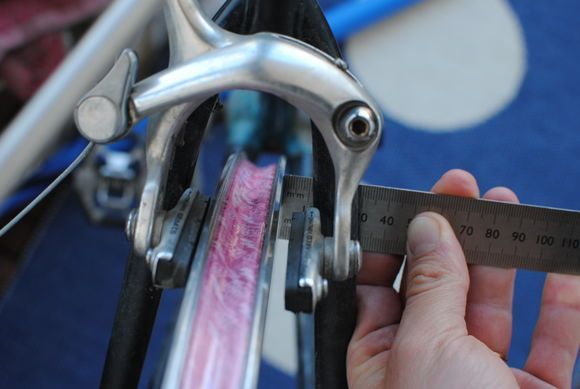
Pic Assist 3:


OK, I think these are all of them. Done before coffee, so I might have missed something.
Higher resolution images may be available in the original gallery, URL:
https://www.bikeforums.net/g/album/28904983
OK, I think these are all of them. Done before coffee, so I might have missed something.
Higher resolution images may be available in the original gallery, URL:
https://www.bikeforums.net/g/album/28904983
05-01-23 | 04:54 AM
#40
Senior Member
Joined: Sep 2021
Posts: 1,596
Likes: 864
From: SW Florida, USA
Bikes: Yes
05-01-23 | 05:20 AM
#41
Senior Member
Joined: Sep 2021
Posts: 1,596
Likes: 864
From: SW Florida, USA
Bikes: Yes
I'm wondering if perhaps the BB shell or (more likely) chainstays were replaced at some point. I'd expect those joints to be welded too if the other joints were welded. But I guess it's also possible that the OP's frame was from a transitional period where some joints were brazed and the rest were welded.
Last edited by Hondo6; 05-01-23 at 03:58 PM. Reason: Add info, correct typo.
05-01-23 | 07:54 AM
#42
Senior Member
Joined: Nov 2010
Posts: 22,994
Likes: 10,496
From: Sacramento, CA
Bikes: old ones
I've heard about people bending one or the other seat stays, to bring the dropouts more into alignment, but I've never tried that myself.
 05-01-23 | 09:15 AM
#44
Senior Member
Joined: Feb 2012
Posts: 19,349
Likes: 5,466
From: Rochester, NY
Bikes: Stewart S&S coupled sport tourer, Stewart Sunday light, Stewart Commuting, Stewart Touring, Co Motion Tandem, Stewart 3-Spd, Stewart Track, Fuji Finest, Mongoose Tomac ATB, GT Bravado ATB, JCP Folder, Stewart 650B ATB
05-01-23 | 09:46 AM
#45
Senior Member
Joined: Feb 2012
Posts: 19,349
Likes: 5,466
From: Rochester, NY
Bikes: Stewart S&S coupled sport tourer, Stewart Sunday light, Stewart Commuting, Stewart Touring, Co Motion Tandem, Stewart 3-Spd, Stewart Track, Fuji Finest, Mongoose Tomac ATB, GT Bravado ATB, JCP Folder, Stewart 650B ATB
...yes, certainly the commonest workaround for this is filing the one of the dropouts to allow the rim to center in the frame. Still not ideal, but certainly cheap enough.
I've heard about people bending one or the other seat stays, to bring the dropouts more into alignment, but I've never tried that myself.
I've heard about people bending one or the other seat stays, to bring the dropouts more into alignment, but I've never tried that myself.
There's about a 3:1 ratio of stay displacement to amount filed off. To attain a 1mm centering of the wheel about .3mm needs removing (or about 0.012"). I have wood tube blocks to hold the frame in a vise close to the dropout to reduce the "file's song". A 10" rat tail (bastard or medium cut) file is about the perfect fit. One could Dremel the slot but with power comes bigger oops moments...
Besides the wheel needing to be dished and true, to use as a gage, it's axle needs to be straight. This is easily overlooked if it's a minor (remember that .3mm) amount. When placing the wheel in the dropouts I have the frame upside down so gravity will settle it. If you rotate the axle, and it's bent, you can watch the rim shift side to side as the bent axle pushes the hub shell around. Andy
__________________
AndrewRStewart
AndrewRStewart
05-03-23 | 04:20 AM
#46
Senior Member
Joined: Sep 2017
Posts: 2,155
Likes: 829
From: Eastern Shore, MD
Bikes: Road ready: 1993 Koga Miyata City Liner Touring Hybrid, 1989 Centurion Sport DLX, "I Blame GP" Bridgestone CB-1. Projects: Yea, I got a problem....
I picked up a magnetic digital level a while back. I dont trust it absolutely, but its been useful for determining things like whether a head tube and seat are parallel enough to use as a reference to check the drop outs alignment.
Another check you could try is using your frame gauge to check the wheels alignment to the head and seat tube, in a similar manor to checking a derailleur hanger. If you trust the head and seat tube alignment, this would give better references than a tape measure between the rim and the stays and eyeballing it.
Another check you could try is using your frame gauge to check the wheels alignment to the head and seat tube, in a similar manor to checking a derailleur hanger. If you trust the head and seat tube alignment, this would give better references than a tape measure between the rim and the stays and eyeballing it.
Last edited by bark_eater; 05-03-23 at 04:44 AM.
05-03-23 | 01:12 PM
#48
Senior Member
Joined: Nov 2010
Posts: 22,994
Likes: 10,496
From: Sacramento, CA
Bikes: old ones
05-03-23 | 03:09 PM
#49
Senior Member
Joined: Feb 2012
Posts: 19,349
Likes: 5,466
From: Rochester, NY
Bikes: Stewart S&S coupled sport tourer, Stewart Sunday light, Stewart Commuting, Stewart Touring, Co Motion Tandem, Stewart 3-Spd, Stewart Track, Fuji Finest, Mongoose Tomac ATB, GT Bravado ATB, JCP Folder, Stewart 650B ATB
Because it's an effective way to correct for some types of misalignment and has been proven over hundred+ years bikes have used dropouts.
I admit to being a bit careful to first suggest a method that is not easily reversable One could file the other dropout after finding that their assumption of needing to file the first one was wrong. This stuff sometimes reminds me of internet medical diagnosis. Without more data mistaken advice can cause more trouble then help. As the OP offered up more info the time for me to feel good about talking about a specific approach came to be.
I will give an example of why I can be hesitant to suggest filing drop outs. It was stated early on that for a 3mm rim shifting the dropout would be filed just under a .5mm. This is about half the amount that will do the job, thankfully the mistake was on the side of the "fence" that wasn't too far/much. But if the poster had said a different mistake and if the OP thought "hey the internet said to file off 1.X mm, I'll just go ahead" they wouldn't be happy to see the rim end up on the other side of the centerline.
But your post (#8) had what is now the likely technique of correction. Andy
I admit to being a bit careful to first suggest a method that is not easily reversable One could file the other dropout after finding that their assumption of needing to file the first one was wrong. This stuff sometimes reminds me of internet medical diagnosis. Without more data mistaken advice can cause more trouble then help. As the OP offered up more info the time for me to feel good about talking about a specific approach came to be.
I will give an example of why I can be hesitant to suggest filing drop outs. It was stated early on that for a 3mm rim shifting the dropout would be filed just under a .5mm. This is about half the amount that will do the job, thankfully the mistake was on the side of the "fence" that wasn't too far/much. But if the poster had said a different mistake and if the OP thought "hey the internet said to file off 1.X mm, I'll just go ahead" they wouldn't be happy to see the rim end up on the other side of the centerline.
But your post (#8) had what is now the likely technique of correction. Andy
__________________
AndrewRStewart
AndrewRStewart
05-03-23 | 05:27 PM
#50

Senior Member
Joined: Apr 2011
Posts: 12,648
Likes: 4,791
Because it's an effective way to correct for some types of misalignment and has been proven over hundred+ years bikes have used dropouts.
I admit to being a bit careful to first suggest a method that is not easily reversable One could file the other dropout after finding that their assumption of needing to file the first one was wrong. This stuff sometimes reminds me of internet medical diagnosis. Without more data mistaken advice can cause more trouble then help. As the OP offered up more info the time for me to feel good about talking about a specific approach came to be.
I will give an example of why I can be hesitant to suggest filing drop outs. It was stated early on that for a 3mm rim shifting the dropout would be filed just under a .5mm. This is about half the amount that will do the job, thankfully the mistake was on the side of the "fence" that wasn't too far/much. But if the poster had said a different mistake and if the OP thought "hey the internet said to file off 1.X mm, I'll just go ahead" they wouldn't be happy to see the rim end up on the other side of the centerline.
But your post (#8) had what is now the likely technique of correction. Andy
I admit to being a bit careful to first suggest a method that is not easily reversable One could file the other dropout after finding that their assumption of needing to file the first one was wrong. This stuff sometimes reminds me of internet medical diagnosis. Without more data mistaken advice can cause more trouble then help. As the OP offered up more info the time for me to feel good about talking about a specific approach came to be.
I will give an example of why I can be hesitant to suggest filing drop outs. It was stated early on that for a 3mm rim shifting the dropout would be filed just under a .5mm. This is about half the amount that will do the job, thankfully the mistake was on the side of the "fence" that wasn't too far/much. But if the poster had said a different mistake and if the OP thought "hey the internet said to file off 1.X mm, I'll just go ahead" they wouldn't be happy to see the rim end up on the other side of the centerline.
But your post (#8) had what is now the likely technique of correction. Andy

The most you would need to do is a little over .5mm a side. I've done this a couple times and it never took many passes with the round file to get the wheel centered.
Last edited by Kontact; 05-03-23 at 06:38 PM.