


>10mm headset spacer.
 02-19-13 | 02:53 PM
#1
Thread Starter
Senior Member
Joined: Dec 2012
Posts: 117
Likes: 0
>10mm headset spacer.
What are the structural and practical implications of changing the std. 2mm spacer for a bigger one in a 1" threaded headset? Would that effectively raise the bar hgt. by leaving more of the steerer in place?
 02-19-13 | 03:07 PM
#2

Senior Member


Joined: Feb 2012
Posts: 19,373
Likes: 5,515
From: Rochester, NY
Bikes: Stewart S&S coupled sport tourer, Stewart Sunday light, Stewart Commuting, Stewart Touring, Co Motion Tandem, Stewart 3-Spd, Stewart Track, Fuji Finest, Mongoose Tomac ATB, GT Bravado ATB, JCP Folder, Stewart 650B ATB
The top nut of a threaded headset needs to engage the steerer by enough threads to allow proper tightening. The spacer between the top nut and the threaded bearing cone/cup is usually just thick enough to achieve the top nut's tightening need. If too big a spacer is installed the top nut will not have enough threads to tighten on or allow a high enough torque (without stripping the threads).
The bar height is a function of the stem and not the steerer. The stem needs a minimal amount left in the steerer to be safe (usually around 2.5") and the bottom of the stem should be below the threaded portion of the steerer. There should be a bit of vertical range (of the stem in the steerer). But for higher bar heights then what the stock stem allows for the stem needs to be replaced with a taller or more highly angled one.
This is not the area to fudge things. Under braking there is a lot of force on the handlebars. Have you ever seen the results of sudden failure of the stem/bars? I have. Andy.
The bar height is a function of the stem and not the steerer. The stem needs a minimal amount left in the steerer to be safe (usually around 2.5") and the bottom of the stem should be below the threaded portion of the steerer. There should be a bit of vertical range (of the stem in the steerer). But for higher bar heights then what the stock stem allows for the stem needs to be replaced with a taller or more highly angled one.
This is not the area to fudge things. Under braking there is a lot of force on the handlebars. Have you ever seen the results of sudden failure of the stem/bars? I have. Andy.
02-19-13 | 07:01 PM
#3

Bianchi Goddess


Joined: Apr 2009
Posts: 28,962
Likes: 4,231
From: Shady Pines Retirement Fort Wayne, In
Bikes: Too many to list here check my signature.
Sounds like great idea let me know how it works out.
__________________
“One morning you wake up, the girl is gone, the bikes are gone, all that's left behind is a pair of old tires and a tube of tubular glue, all squeezed out"
Sugar "Kane" Kowalczyk
“One morning you wake up, the girl is gone, the bikes are gone, all that's left behind is a pair of old tires and a tube of tubular glue, all squeezed out"
Sugar "Kane" Kowalczyk
02-19-13 | 07:37 PM
#4
Senior Member
Joined: Dec 2010
Posts: 6,682
Likes: 4
From: Above ground, Walnut Creek, Ca
Bikes: 8 ss bikes, 1 5-speed touring bike
if you really meant "threaded headset" you will find that most steerer tubes were cut to within one or two millimeters of optimal length. there is little to play with on them. it was the nature of the beast. height adjustment was usually accomplished via the stem hosel. although i once was testing out a slightly too long threaded one inch fork and had to add something to add a little space. once fitted it worked fine that way while i was testing it.
02-19-13 | 09:38 PM
#6
Banned
Joined: Jun 2010
Posts: 43,586
Likes: 1,380
From: NW,Oregon Coast
Bikes: 8
I found taller top nuts for a threaded headset, 20 years ago.
some improved support. if on the upper end of adjustment range.
But, it is still best to have the wedge of the quill stem
below the portion of the steerer that the threads are cut from.
Nitto Technomic , is a popular long quill stem , currently made.
now if the fork is left long enough that the locknut bottoms out on the end of the fork steerer,
before making contact, with the top of the adjustable bearing race of the headset,
so it wont stay in adjustment, then you add a spacer between the two.
you wont get the lock nut on top to engage enough , if any threads on the steerer ,
then the headset will stay too loose.
some improved support. if on the upper end of adjustment range.
But, it is still best to have the wedge of the quill stem
below the portion of the steerer that the threads are cut from.
Nitto Technomic , is a popular long quill stem , currently made.
now if the fork is left long enough that the locknut bottoms out on the end of the fork steerer,
before making contact, with the top of the adjustable bearing race of the headset,
so it wont stay in adjustment, then you add a spacer between the two.
What are the structural and practical implications of changing the std. 2mm spacer for a bigger one in a 1" threaded headset? Would that effectively raise the bar hgt. by leaving more of the steerer in place?
then the headset will stay too loose.
Last edited by fietsbob; 02-19-13 at 09:48 PM.
02-20-13 | 08:56 AM
#7
Thread Starter
Senior Member
Joined: Dec 2012
Posts: 117
Likes: 0
I'm not sure how to respond to all of the responses. It sounds like everyone is saying the same things. What I didn't make clear and should have is that I am changing th fork and will need to cut the steerer tube. I know that 10mm or 20mm doesn't sound like much but when coupled with a 25deg riser stem that it's the hossle inserted the required 2.5" by cutting the steerer to accomodate a tasller spacer I would effectively raise the bar 3/8" w/a 10mm spacer and 3/4' with 20mm. If I cut the tube to accomodate a taller spacer Wouldn't I overcome the thread deficiencies and have the lock not with the proper amount of engagment?
02-20-13 | 10:35 AM
#8
Banned
Joined: Jun 2010
Posts: 43,586
Likes: 1,380
From: NW,Oregon Coast
Bikes: 8
I had the fork steerer threaded down further ,
but that is before the Threadless headsets became dominant.
There are 1" threadless headsets.. now.. I would have taken a different approach.
Sheldon had a hybrid threadless/threaded headset scheme,
held down by the combination of a through threaded nut
(or a pinch bolt spacer would do) and the top nut
so as to use a quill stem. and the spacer in between.
Un cut without threads is stronger than having the metal removed to thread .
but that is before the Threadless headsets became dominant.
There are 1" threadless headsets.. now.. I would have taken a different approach.
Sheldon had a hybrid threadless/threaded headset scheme,
held down by the combination of a through threaded nut
(or a pinch bolt spacer would do) and the top nut
so as to use a quill stem. and the spacer in between.
Un cut without threads is stronger than having the metal removed to thread .
Last edited by fietsbob; 02-20-13 at 10:42 AM.
02-20-13 | 10:50 AM
#9

Zip tie Karen
Joined: Aug 2009
Posts: 7,005
Likes: 1,546
From: Fair Oaks Ranch, TX
Bikes: '13 Motobecane Fantom29 HT, '16 Motobecane Turino Pro Disc, '18 Velobuild VB-R-022, '21 Tsunami SNM-100
^What fietsbob said. Have the steerer threaded further down by a competent shop. Place threaded compression nut on and screw down to beneath the cut point. Cut off the unneeded threaded part. Back out the nut to chase the threads. Reassemble headset and insert quill stem...
02-20-13 | 10:56 AM
#10
Senior Member
Joined: Feb 2012
Posts: 19,373
Likes: 5,515
From: Rochester, NY
Bikes: Stewart S&S coupled sport tourer, Stewart Sunday light, Stewart Commuting, Stewart Touring, Co Motion Tandem, Stewart 3-Spd, Stewart Track, Fuji Finest, Mongoose Tomac ATB, GT Bravado ATB, JCP Folder, Stewart 650B ATB
I'm not sure how to respond to all of the responses. It sounds like everyone is saying the same things. What I didn't make clear and should have is that I am changing th fork and will need to cut the steerer tube. I know that 10mm or 20mm doesn't sound like much but when coupled with a 25deg riser stem that it's the hossle inserted the required 2.5" by cutting the steerer to accomodate a tasller spacer I would effectively raise the bar 3/8" w/a 10mm spacer and 3/4' with 20mm. If I cut the tube to accomodate a taller spacer Wouldn't I overcome the thread deficiencies and have the lock not with the proper amount of engagement?
The replacement fork will be threaded, you want a high bar position, you want proper head set lock nut engagement AND you want the stem's wedge to be located below the threaded portion of the steerer. If the stem is higher up in the steerer then this the wedge will tighten amongst the threads and the potential of the steerer cracking at this point is REAL and if not noticed before complete failure will result in a "thinning of the herd".
Is that plain enough? You have to work out the actual dimensions to get there, as you're the one with the parts in hand. Andy.
02-20-13 | 11:21 AM
#11

Old fart

Joined: Nov 2004
Posts: 26,402
Likes: 5,333
From: Appleton WI
Bikes: Several, mostly not name brands.
 02-20-13 | 07:24 PM
#12
Thread Starter
Senior Member
Joined: Dec 2012
Posts: 117
Likes: 0
So if I understand your situation right this time around... (and say three "Hail Bicycles" for withholding information)
The replacement fork will be threaded, you want a high bar position, you want proper head set lock nut engagement AND you want the stem's wedge to be located below the threaded portion of the steerer. If the stem is higher up in the steerer then this the wedge will tighten amongst the threads and the potential of the steerer cracking at this point is REAL and if not noticed before complete failure will result in a "thinning of the herd".
Is that plain enough? You have to work out the actual dimensions to get there, as you're the one with the parts in hand. Andy.
The replacement fork will be threaded, you want a high bar position, you want proper head set lock nut engagement AND you want the stem's wedge to be located below the threaded portion of the steerer. If the stem is higher up in the steerer then this the wedge will tighten amongst the threads and the potential of the steerer cracking at this point is REAL and if not noticed before complete failure will result in a "thinning of the herd".
Is that plain enough? You have to work out the actual dimensions to get there, as you're the one with the parts in hand. Andy.
The replacement fork IS threaded! As much as a higher bar position, I want the additional "mass" of a bigger spacer. It's an appearance thing!
I definitley don't want to be "thinning the herd." So...I will work out the dimensions and maintain the wedge BELOW the threaded section of the fork!
Thanks...!
02-20-13 | 07:31 PM
#13
Thread Starter
Senior Member
Joined: Dec 2012
Posts: 117
Likes: 0
If your goal is to raise the handlebars, why not just use e.g. a Nitto "Technomic" stem?
02-21-13 | 07:55 AM
#14

Senior Member
Joined: Feb 2004
Posts: 30,225
Likes: 649
From: St Peters, Missouri
Bikes: Catrike 559 I own some others but they don't get ridden very much.
At least 20 years ago I bought a Bridgestone RB-2. It came from the factory with about a 5mm spacer under the threaded headset lock nut. I've completely rebuilt that bike several times over the years but, since the headtube length and steerer tube length haven't changed, the spacer remains (I just checked).
I don't think I would use a spacer much wider than 5mm on a threaded steertube. It's different from threadless spacer stacks because the steerer tube has threads. It looks to me like the nifty little thread grooves might provide a weak area to concentrate all the stress and snap off. It might be fine but, since there's other ways of adjusting handlebar height, I'd stick with the conventional.
I don't think I would use a spacer much wider than 5mm on a threaded steertube. It's different from threadless spacer stacks because the steerer tube has threads. It looks to me like the nifty little thread grooves might provide a weak area to concentrate all the stress and snap off. It might be fine but, since there's other ways of adjusting handlebar height, I'd stick with the conventional.
02-21-13 | 08:07 AM
#15
Bianchi Goddess
Joined: Apr 2009
Posts: 28,962
Likes: 4,231
From: Shady Pines Retirement Fort Wayne, In
Bikes: Too many to list here check my signature.
I am really suprised no one bashed me about my earlier smart remark.
As for your post #7 I am loathe to cut a steerer too short. Unless a customer demenads it I seldome cut a stem shorter than a 5mm or spacer to gove flexibility on HS changes.
On my own bikes I have 3 steerers/HS stacked between 18 and 22mm and have had no ill effect after miles and miles of use.
As for your post #7 I am loathe to cut a steerer too short. Unless a customer demenads it I seldome cut a stem shorter than a 5mm or spacer to gove flexibility on HS changes.
On my own bikes I have 3 steerers/HS stacked between 18 and 22mm and have had no ill effect after miles and miles of use.
__________________
“One morning you wake up, the girl is gone, the bikes are gone, all that's left behind is a pair of old tires and a tube of tubular glue, all squeezed out"
Sugar "Kane" Kowalczyk
“One morning you wake up, the girl is gone, the bikes are gone, all that's left behind is a pair of old tires and a tube of tubular glue, all squeezed out"
Sugar "Kane" Kowalczyk
02-21-13 | 10:16 AM
#16
Old fart
Joined: Nov 2004
Posts: 26,402
Likes: 5,333
From: Appleton WI
Bikes: Several, mostly not name brands.
02-21-13 | 10:28 AM
#17
Thread Starter
Senior Member
Joined: Dec 2012
Posts: 117
Likes: 0
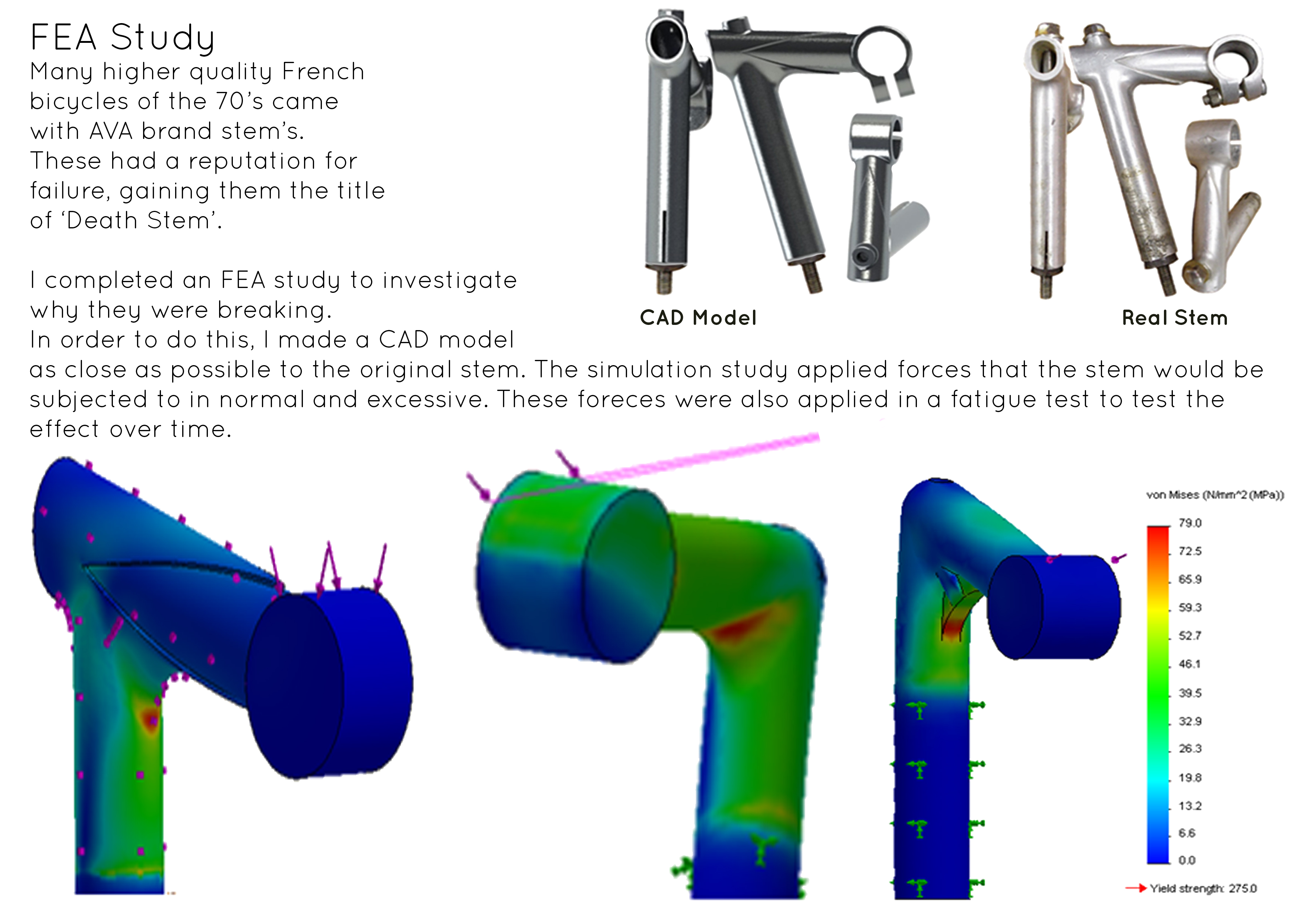
The death stem?! 
[/QUOTE]The stem needs a minimal amount left in the steerer to be safe (usually around 2.5") and the bottom of the stem should be below the threaded portion of the steerer.[/QUOTE]
02-21-13 | 11:18 AM
#18
Old fart
Joined: Nov 2004
Posts: 26,402
Likes: 5,333
From: Appleton WI
Bikes: Several, mostly not name brands.
 02-21-13 | 03:03 PM
#20
Old fart
Joined: Nov 2004
Posts: 26,402
Likes: 5,333
From: Appleton WI
Bikes: Several, mostly not name brands.
 02-21-13 | 04:46 PM
#23

S'Cruzer
Joined: Jun 2010
Posts: 2,445
Likes: 19
From: 122W 37N
Bikes: too many
true that. my crummy plastic dial caliper says my Philippe is 0.86" which is 21.85mm ... there's only about 1" of clear stem showing between the elbow and headset.
(I wish I could find my steel digital caliper).
I do remember, headset, stem, BB on that motobecane are all whack sizes. I had a pair of nice Cinelli bars I wanted to use, but they didn't fit. my Atax Philippe Professional bars on that Philippe stem have been slightly bent ever since a high speed wipeout circa 1979. I just put up with it, hah!
(I wish I could find my steel digital caliper).
I do remember, headset, stem, BB on that motobecane are all whack sizes. I had a pair of nice Cinelli bars I wanted to use, but they didn't fit. my Atax Philippe Professional bars on that Philippe stem have been slightly bent ever since a high speed wipeout circa 1979. I just put up with it, hah!
02-22-13 | 10:56 AM
#24
Senior Member
Joined: Sep 2007
Posts: 3,741
Likes: 16
From: Gaseous Cloud around Uranus
If your fork tube is way long,you can leave enough room for your spacers if you want,Just leave an extra 1/4" when you chase the threads down.Nothing changes strenght wise.He wants to raise the nut 1/4".....so what.
You can put an inch spacer in if you want......but you need to have the wedge and a little stem below the top bearing.You need the stress to be on both the stem and the fork tube.....not the fork tube alone.
You can't have the wedge on/above the nut and expect the fork tube to survive.....along with your front teeth...
I don't see a problem with an extra 5mm.....
My old Shogun has more than that on it with the factory headset.It has a spacer AND 2 fine toothed spacer/nuts for setting the preload.....it's at least 20mm,not counting the nut.
You can put an inch spacer in if you want......but you need to have the wedge and a little stem below the top bearing.You need the stress to be on both the stem and the fork tube.....not the fork tube alone.
You can't have the wedge on/above the nut and expect the fork tube to survive.....along with your front teeth...
I don't see a problem with an extra 5mm.....
My old Shogun has more than that on it with the factory headset.It has a spacer AND 2 fine toothed spacer/nuts for setting the preload.....it's at least 20mm,not counting the nut.
Last edited by Booger1; 02-22-13 at 11:13 AM.
02-22-13 | 04:02 PM
#25
Senior Member
Joined: Sep 2012
Posts: 1,751
Likes: 7
I'm not sure how to respond to all of the responses. It sounds like everyone is saying the same things. What I didn't make clear and should have is that I am changing th fork and will need to cut the steerer tube. I know that 10mm or 20mm doesn't sound like much but when coupled with a 25deg riser stem that it's the hossle inserted the required 2.5" by cutting the steerer to accomodate a tasller spacer I would effectively raise the bar 3/8" w/a 10mm spacer and 3/4' with 20mm. If I cut the tube to accomodate a taller spacer Wouldn't I overcome the thread deficiencies and have the lock not with the proper amount of engagment?
 ! That should work.
Now to the revised problem; Unless you have a need to maintain a classic & vintage look...Since you plan to get a new fork, I wouldn't even look back at a threaded configuration. Just switch to a threadless headset and threadless stem as part of the fork up and get on with it. Cut the new steerer to fit whatever height you want the cross bar to be at. I did a fork change about 3 weeks back and the parts were cheap as was the fork... and given that the steerer is un-threaded it is a lot stronger. And its now down to a couple of hex keys instead of trying to find the various wrenches to snug things up with...
Hope that helps. Post or PM if there are any able-to-do gaps remaining...and the secret handshake is that if you get help here that actually helps for real...kinda should post a couple of pix of the before and after.
/K

Thread
Thread Starter
Forum
Replies
Last Post
motorapido
Bicycle Mechanics
5
07-11-14 05:43 AM
hillzofvalp
Bicycle Mechanics
50
03-08-11 08:35 PM
