


How to fix a saddle?
 06-04-15 | 08:40 PM
#1

Thread Starter
Senior Member
Joined: Sep 2013
Posts: 3,455
Likes: 76
From: Chicago area
How to fix a saddle?
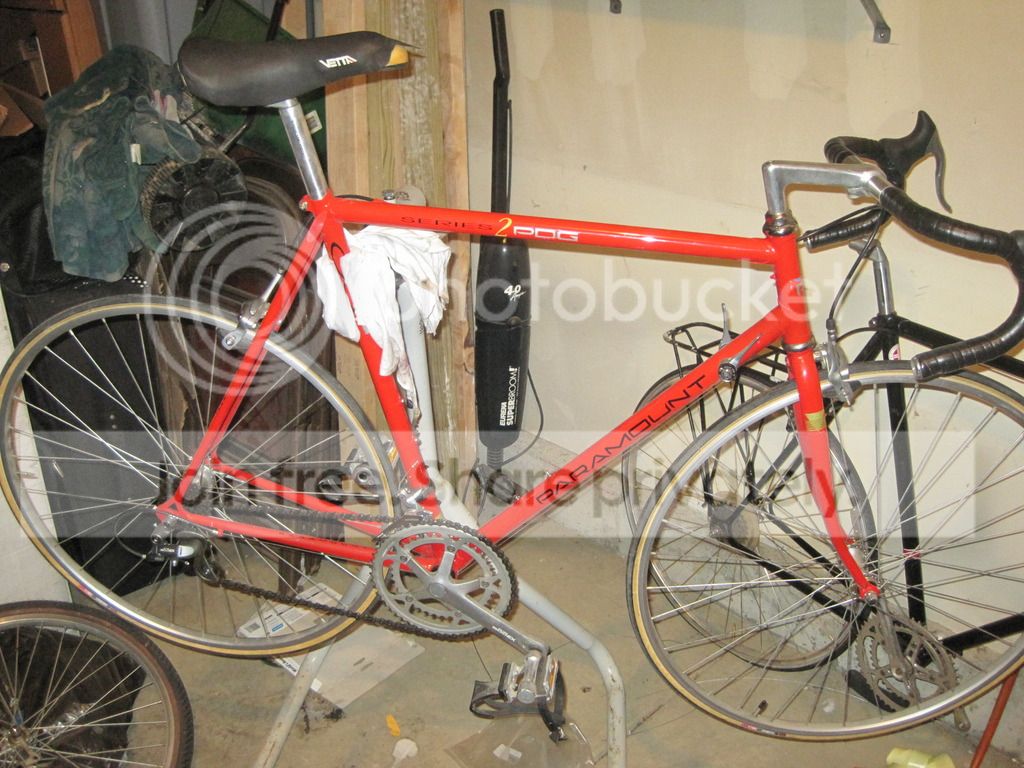
I picked up a garage queen 1992 Paramount PDG Series 2 bike tonight. All original, even the bar tape. Tires still have the rubber prongs sticking out of the sides. The saddle does not look like it was used but the glue seems to have just given out. What kind of glue do you use to fix a saddle? Is this something a shoe repair shop can handle or is it something a novice can fix? It is not the best saddle but is original to the bike.

__________________
My bikes: 1970`s Roberts - 1981 Miyata 912 - 1980`s Ocshner (Chrome) - 1987 Schwinn Circuit - 1987 Schwinn Prologue - 1992 Schwinn Crosspoint - 1999 Schwinn Circuit - 2014 Cannondale Super Six EVO
My bikes: 1970`s Roberts - 1981 Miyata 912 - 1980`s Ocshner (Chrome) - 1987 Schwinn Circuit - 1987 Schwinn Prologue - 1992 Schwinn Crosspoint - 1999 Schwinn Circuit - 2014 Cannondale Super Six EVO
 06-04-15 | 09:17 PM
#2
I AM AI
Joined: Aug 2013
Posts: 4,287
Likes: 1,165
From: Tucson, AZ
Bikes: 2008 S-Works Roubaix SL, 1979 Raleigh Comp GS, 1978 Schwinn Volare
When I see that on a saddle I just let it go. Can't imagine anything holding that vinyl back where it ought to be.
Maybe I'm wrong. We'll see soon enough.
Maybe I'm wrong. We'll see soon enough.
__________________
A race bike in any era is a highly personal choice that at its "best" balances the requirements of fit, weight, handling, durability and cost tempered by the willingness to toss it and oneself down the pavement at considerable speed. ~Bandera
A race bike in any era is a highly personal choice that at its "best" balances the requirements of fit, weight, handling, durability and cost tempered by the willingness to toss it and oneself down the pavement at considerable speed. ~Bandera
06-04-15 | 09:48 PM
#3
Thread Starter
Senior Member
Joined: Sep 2013
Posts: 3,455
Likes: 76
From: Chicago area
Well I can always buy a new one. Just thought I might be able to spend $5 on some glue and be done.
__________________
My bikes: 1970`s Roberts - 1981 Miyata 912 - 1980`s Ocshner (Chrome) - 1987 Schwinn Circuit - 1987 Schwinn Prologue - 1992 Schwinn Crosspoint - 1999 Schwinn Circuit - 2014 Cannondale Super Six EVO
My bikes: 1970`s Roberts - 1981 Miyata 912 - 1980`s Ocshner (Chrome) - 1987 Schwinn Circuit - 1987 Schwinn Prologue - 1992 Schwinn Crosspoint - 1999 Schwinn Circuit - 2014 Cannondale Super Six EVO
06-04-15 | 09:57 PM
#4

Senior Member
Joined: Nov 2010
Posts: 22,994
Likes: 10,497
From: Sacramento, CA
Bikes: old ones
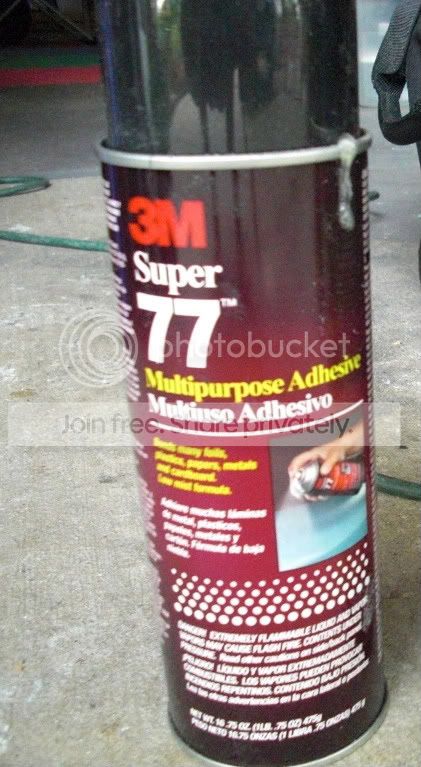
...it's a contact cement, so spray onto both surfaces and let dry before attaching the saddle covering.
You will probably have some issues with overspray, until you've done a few saddles and get the knack of masking.
Keep a rag with mineral spirits handy. You need to remove anything that is not under the covering.
I've done 30 or 40 saddles with this stuff, and they are all holding up fine in use.
06-04-15 | 10:06 PM
#5
Thread Starter
Senior Member
Joined: Sep 2013
Posts: 3,455
Likes: 76
From: Chicago area
...it's a contact cement, so spray onto both surfaces and let dry before attaching the saddle covering.
You will probably have some issues with overspray, until you've done a few saddles and get the knack of masking.
Keep a rag with mineral spirits handy. You need to remove anything that is not under the covering.
I've done 30 or 40 saddles with this stuff, and they are all holding up fine in use.

__________________
My bikes: 1970`s Roberts - 1981 Miyata 912 - 1980`s Ocshner (Chrome) - 1987 Schwinn Circuit - 1987 Schwinn Prologue - 1992 Schwinn Crosspoint - 1999 Schwinn Circuit - 2014 Cannondale Super Six EVO
My bikes: 1970`s Roberts - 1981 Miyata 912 - 1980`s Ocshner (Chrome) - 1987 Schwinn Circuit - 1987 Schwinn Prologue - 1992 Schwinn Crosspoint - 1999 Schwinn Circuit - 2014 Cannondale Super Six EVO
06-05-15 | 12:17 AM
#6

Senior Member
Joined: Jul 2009
Posts: 11,128
Likes: 39
Bikes: 1986 Alan Record Carbonio, 1985 Vitus Plus Carbone 7, 1984 Peugeot PSV, 1972 Line Seeker, 1986(est.) Medici Aerodynamic (Project), 1985(est.) Peugeot PY10FC
3M 77 spray-on glue quite strong, but not really strong enough for keeping saddle skins on, especially if the saddle is ever exposed to heat/sun. Best to use in this case is contact cement, which you apply to the cover and what you are adhering it to and let it dry to full tackiness before you glue them together. You have to get it lined up correctly though, as once it's stuck together, it will be really stuck together.......instantly, and pretty much permaneently (as you have to pretty much destroy the cover to get it off the saddle)!
06-05-15 | 01:29 AM
#7

Senior Member

Joined: Aug 2014
Posts: 540
Likes: 761
From: Los Angeles, CA
Bikes: None in ridable condition
Funny, I have a 1992 Paramount PDG Series 5 (purple slime) which is also a garage queen (original, practically unused tires, original bar tape), and a Vetta saddle which came unglued at the tip in the same way yours did (don't know if they are identical models).
This is good info I'll need when I get around to that project.
This is good info I'll need when I get around to that project.
 06-05-15 | 03:50 AM
#9

spondylitis.org

Joined: Mar 2013
Posts: 1,053
Likes: 128
From: Fleetwood, PA, USA
Bikes: '84 Colnago Super; '90 Bridgestone MB-1; '81 Trek 930; '01 Cinelli Supercorsa; '62 Ideor Asso; '87 Tommasini Super Prestige; '13 Lynskey R2300; '84 Serotta Nova Special; '94 Litespeed Catalyst; etc.
There's always Shoe Goo - it's worked for me on a few saddles already. There is no overspray to deal with, either - just the standard nausea from mixed toluene/MEK solvents (mainly the toluene).
Are you flipping this bike, or riding it?
Are you flipping this bike, or riding it?
06-05-15 | 05:37 AM
#10
Thread Starter
Senior Member
Joined: Sep 2013
Posts: 3,455
Likes: 76
From: Chicago area
It`s red, could be my size and it is mint. There is a war going on for my soul right now. My good half says flip it, you already have 3 race bikes. The bad side is telling me keep it, hoard it, love it. Why does it always have to be so hard? LOL
__________________
My bikes: 1970`s Roberts - 1981 Miyata 912 - 1980`s Ocshner (Chrome) - 1987 Schwinn Circuit - 1987 Schwinn Prologue - 1992 Schwinn Crosspoint - 1999 Schwinn Circuit - 2014 Cannondale Super Six EVO
My bikes: 1970`s Roberts - 1981 Miyata 912 - 1980`s Ocshner (Chrome) - 1987 Schwinn Circuit - 1987 Schwinn Prologue - 1992 Schwinn Crosspoint - 1999 Schwinn Circuit - 2014 Cannondale Super Six EVO
06-05-15 | 05:45 AM
#11
Thread Starter
Senior Member
Joined: Sep 2013
Posts: 3,455
Likes: 76
From: Chicago area
Funny, I have a 1992 Paramount PDG Series 5 (purple slime) which is also a garage queen (original, practically unused tires, original bar tape), and a Vetta saddle which came unglued at the tip in the same way yours did (don't know if they are identical models).
This is good info I'll need when I get around to that project.
This is good info I'll need when I get around to that project.
__________________
My bikes: 1970`s Roberts - 1981 Miyata 912 - 1980`s Ocshner (Chrome) - 1987 Schwinn Circuit - 1987 Schwinn Prologue - 1992 Schwinn Crosspoint - 1999 Schwinn Circuit - 2014 Cannondale Super Six EVO
My bikes: 1970`s Roberts - 1981 Miyata 912 - 1980`s Ocshner (Chrome) - 1987 Schwinn Circuit - 1987 Schwinn Prologue - 1992 Schwinn Crosspoint - 1999 Schwinn Circuit - 2014 Cannondale Super Six EVO
Last edited by Steve Whitlatch; 06-05-15 at 05:49 AM.
 06-05-15 | 06:05 AM
#13
Senior Member
Joined: Nov 2013
Posts: 2,399
Likes: 1,572
From: Near Pottstown, PA: 30 miles NW of Philadelphia
Bikes: 2 Trek Mtn, Cannondale R600 road, 6 vintage road bikes
I do clean the seat pan real well - remove all old adhesive, clean with mineral spirits then again with isopropyl alcohol. Apply the cement, wait 15 minutes then carefully press the cover into place. No clamps or wait time required. I've been using these saddles 'in the wild' for several years now, all year long in Pennsylvania, and they're doing just great. I do not let the saddles get wet.
If'n I were you, I'd use the contact cement for your vinyl cover fix. Good luck.
06-05-15 | 07:02 AM
#14
Senior Member
Joined: Nov 2010
Posts: 22,994
Likes: 10,497
From: Sacramento, CA
Bikes: old ones
3M 77 spray-on glue quite strong, but not really strong enough for keeping saddle skins on, especially if the saddle is ever exposed to heat/sun. Best to use in this case is contact cement, which you apply to the cover and what you are adhering it to and let it dry to full tackiness before you glue them together. You have to get it lined up correctly though, as once it's stuck together, it will be really stuck together.......instantly, and pretty much permaneently (as you have to pretty much destroy the cover to get it off the saddle)!
[h=4]Benefits[/h]
[h=4]Extended Description[/h]Bonds quickly in 15 seconds. Versatile. Securely bonds many lightweight materials. Low soak-in for long lasting bond. Long bonding range. For permanently attaching foils, carpeting, lightweight foams, paper, cardboard, felt and, cloth to painted or unpainted metals, wood and hardboard.
Super 77 Multipurpose Adhesive Aerosol, 24 fl oz Net Wt 16 3/4 oz - Shop3M
- High coverage and aggressive tack
- Bonds quickly in 15 seconds
- Markets: General industrial, packaging, infusion molding, dry lay-up, dry wall, wood working, furniture, specialty vehicles, marine and heating ventilation and air condition (HVAC)
- Applications: Bonding, attaching, adhering, fastening, securing, gluing, tacking, sticking, gripping, and hanging
[h=4]Extended Description[/h]Bonds quickly in 15 seconds. Versatile. Securely bonds many lightweight materials. Low soak-in for long lasting bond. Long bonding range. For permanently attaching foils, carpeting, lightweight foams, paper, cardboard, felt and, cloth to painted or unpainted metals, wood and hardboard.
Super 77 Multipurpose Adhesive Aerosol, 24 fl oz Net Wt 16 3/4 oz - Shop3M
So while I have no doubt that Weldwood and a number of other contact cements will work, I would ask you why you think this one will not ?
I don't want to get into some long exchange here, but if you've used it and it's actually failed in use, it would help me to move on. If not, why state an opinion based on speculation ?
06-05-15 | 07:09 AM
#15

Senior Member
Joined: Nov 2011
Posts: 1,337
Likes: 6
From: Rochester, NY
Bikes: 1962 Carlton Franco-Suisse Custom,1968 Raleigh DL-1/Tourist, 1971 Holdsworth Professional, 1973 Holdsworth Mistral,1973 Raleigh Gran Sport,1974 Raleigh Grand Prix, 1993 Trek 2200 Composite, 2011 Trek 7.3FX
there was a thread on here about somebody restoring old vetta nylon saddles. pretty neat, they would purchase thrift store leather jackets, cut out a form and glue it with the 3M stuff, Turned out pretty nice.
found the thread:
Recover your saddle
found the thread:
Recover your saddle
Last edited by GordoTrek; 06-05-15 at 07:19 AM.
06-05-15 | 07:20 AM
#16

Senior Member
Joined: Oct 2013
Posts: 4,513
Likes: 42
From: The Great Pacific Northwest
I can tell you what not to use - Gorilla Glue. It held but I forgot that it expands as it dries and expanded from under the edge of the saddle. I used some strong clips - like clips used to keep bags closed- all around the edge of the saddle once the glue was applied.
06-05-15 | 08:48 AM
#17
Senior Member
Joined: Jul 2009
Posts: 11,128
Likes: 39
Bikes: 1986 Alan Record Carbonio, 1985 Vitus Plus Carbone 7, 1984 Peugeot PSV, 1972 Line Seeker, 1986(est.) Medici Aerodynamic (Project), 1985(est.) Peugeot PY10FC
...while I suppose you might be correct, I wonder if you've ever used it for this ? Because it has seemed quite permanent in a number of saddle applications for a number of years, all in use, and all exposed to the sun. It is, as stated, another form of a contact cement, in a spray can, and as such, while it is listed as low strength, in this application it is quite strong enough.
So while I have no doubt that Weldwood and a number of other contact cements will work, I would ask you why you think this one will not ?
I don't want to get into some long exchange here, but if you've used it and it's actually failed in use, it would help me to move on. If not, why state an opinion based on speculation ?
So while I have no doubt that Weldwood and a number of other contact cements will work, I would ask you why you think this one will not ?
I don't want to get into some long exchange here, but if you've used it and it's actually failed in use, it would help me to move on. If not, why state an opinion based on speculation ?
My experience had been that 3M77 spray is mostly like "Spray Mount" on steroids. Used it for many years at school, then at work, building architectural models and at home for light duty bonding for items that stay inside the house, and yes, I have had the stuff fail its bond when exposed to heat, while contact cement is permanent glue, by definition.
If you look at the bottoms of many, if not most plastic based, padded saddles you will usually see evidence of manufacturers using some type of contact cement, which presents itself as brownish, hardened material at the edge where the saddle cover material meets the saddles, plastic base, especially at the nose and tail areas.....
So, at least these most critical high stress areas, contact cement would be the best to use. As already noted, use the 3M77 only at the top, foam padding/cover interface, but not at the bottom edges at the nose tail and sides, under the saddle.
Last edited by Chombi; 06-05-15 at 10:07 AM.
06-05-15 | 09:28 AM
#19

Ride, Wrench, Swap, Race

Joined: Jan 2010
Posts: 9,815
Likes: 1,790
From: Northern California
Bikes: Cheltenham-Pedersen racer, Boulder F/S Paris-Roubaix, Varsity racer, '52 Christophe, '62 Continental, '92 Merckx, '75 Limongi, '76 Presto, '72 Gitane SC, '71 Schwinn SS, etc.
When in doubt, whether it's glue or degreaser, lube, etc., I always start by making aerosol products my last choice.
Not to go all "greenie" here, but there's issues with quantity purchased (thus cost), overspray/messiness, cans that go "flat" or otherwise leave unused product behind in the can, clogged spray tips, broken nozzle or spray head, and so on.
To the plus side, where an even application over a large area is really needed, sprays can be the most convenient way to apply a substance.
I have to say that I see so many (many good) things today that I think should never have been put in a spray can...
Very informative thread so far.
Not to go all "greenie" here, but there's issues with quantity purchased (thus cost), overspray/messiness, cans that go "flat" or otherwise leave unused product behind in the can, clogged spray tips, broken nozzle or spray head, and so on.
To the plus side, where an even application over a large area is really needed, sprays can be the most convenient way to apply a substance.
I have to say that I see so many (many good) things today that I think should never have been put in a spray can...
Very informative thread so far.
06-05-15 | 10:19 AM
#20
Senior Member
Joined: Nov 2010
Posts: 22,994
Likes: 10,497
From: Sacramento, CA
Bikes: old ones
Used both contact cement and 3M77 glue on all sorts of things through the years. Not specifically on saddles, but leather and fabric item like leather motorcycling boots, backpacks, bags, suitcases.....
My experience had been that 3M77 spray is mostly like "Spray Mount" on steroids. Used it for many years at school, then at work, building architectural models and at home for light duty bonding for items that stay inside the house, and yes, I have had the stuff fail its bond when exposed to heat, while contact cement is permanent glue, by definition.
If you look at the bottoms of many, if not most plastic based, padded saddles you will usually see evidence of manufacturers using some type of contact cement, which presents itself as brownish, hardened material at the edge where the saddle cover material meets the saddles, plastic base, especially at the nose and tail areas.....
So, at least these most critical high stress areas, contact cement would be the best to use. As already noted, use the 3M77 only at the top, foam padding/cover interface, but not at the bottom edges at the nose tail and sides, under the saddle.
My experience had been that 3M77 spray is mostly like "Spray Mount" on steroids. Used it for many years at school, then at work, building architectural models and at home for light duty bonding for items that stay inside the house, and yes, I have had the stuff fail its bond when exposed to heat, while contact cement is permanent glue, by definition.
If you look at the bottoms of many, if not most plastic based, padded saddles you will usually see evidence of manufacturers using some type of contact cement, which presents itself as brownish, hardened material at the edge where the saddle cover material meets the saddles, plastic base, especially at the nose and tail areas.....
So, at least these most critical high stress areas, contact cement would be the best to use. As already noted, use the 3M77 only at the top, foam padding/cover interface, but not at the bottom edges at the nose tail and sides, under the saddle.
Certainly they offer a number of adhesives. Something called Hi-Strength 90 is offered, but a little harder to find. A slightly less strong adhesive allows for the occasional adjustment immediately after mating, which turns out to be important when doing this repair.
Again, not to make too much of this, but my suspicion is that maybe you think that more is required in this particular usage in terms of strength than my own experience has led me to believe. If the issue is one of ease of application and use, I simply find that with proper care and masking, it is easier for me to apply and even coat of this contact cement to the irregular surfaces along the edge and underside that have come loose. I rarely remove the entire covering and start from scratch, because it seems like unnecessary work to me. And also once again, I've been using this stuff for at least six or eight years without any failures of the mating of the surfaces between cover and saddle.......you do need to make certain that the old adhesive is removed if it is too thick on the surfaces to be joined, but other than that, I don't see the problem here ?
Last edited by 3alarmer; 06-05-15 at 10:39 AM.
06-05-15 | 10:41 AM
#21

Freshman Member

Joined: Mar 2014
Posts: 5,870
Likes: 4,161
From: City of Angels
Bikes: A few too many
I use what the auto upholsters use and what some others have said...contact cement in a can ( try to find the older formula) keep it away from foam as it has a tendency to melt low density stuff. The 3m spray in my opinion is not strong enough to hold over the long haul and should be used on low stress areas door panels, kick panels....IMO not bike seats
Coat both the saddle cover and the saddles base, if the base is shiny then scotch pad it a little to give the glue something to bond on,
let dry (I always apply a second coat). Lift the lining up to clear the contact on the saddle base, stretch up and over then pull down and clamp (only one shot to get this right as it will be hard to pull and reposition, if in doubt do a "dry run")....let it set up.
Yes I have used it....Good Luck
Jm2c, Ben
Coat both the saddle cover and the saddles base, if the base is shiny then scotch pad it a little to give the glue something to bond on,
let dry (I always apply a second coat). Lift the lining up to clear the contact on the saddle base, stretch up and over then pull down and clamp (only one shot to get this right as it will be hard to pull and reposition, if in doubt do a "dry run")....let it set up.
Yes I have used it....Good Luck
Jm2c, Ben
__________________
"EVERY PERSON IS GUILTY OF ALL THE GOOD THEY DID NOT DO"
Voltaire
Voice recognition may sometimes create odd spelling and grammatical errors
"EVERY PERSON IS GUILTY OF ALL THE GOOD THEY DID NOT DO"
Voltaire
Voice recognition may sometimes create odd spelling and grammatical errors
06-05-15 | 11:32 AM
#22
Senior Member
Joined: Jul 2009
Posts: 11,128
Likes: 39
Bikes: 1986 Alan Record Carbonio, 1985 Vitus Plus Carbone 7, 1984 Peugeot PSV, 1972 Line Seeker, 1986(est.) Medici Aerodynamic (Project), 1985(est.) Peugeot PY10FC
...what sort of failure ? What sort of heat ? If it genuinely does not work, I would like to know. When I look at the saddle covering failures, I see only a failed adhesive bond, most likely due to aging. How can i tell what this is, exactly ? Brownish hardened material seems to cover a lot of ground with regard to aged adhesives. While nothing is forever, 3M advertises #77 as a permanent adhesive. I take them at their word.
Certainly they offer a number of adhesives. Something called Hi-Strength 90 is offered, but a little harder to find. A slightly less strong adhesive allows for the occasional adjustment immediately after mating, which turns out to be important when doing this repair.
Again, not to make too much of this, but my suspicion is that maybe you think that more is required in this particular usage in terms of strength than my own experience has led me to believe. If the issue is one of ease of application and use, I simply find that with proper care and masking, it is easier for me to apply and even coat of this contact cement to the irregular surfaces along the edge and underside that have come loose. I rarely remove the entire covering and start from scratch, because it seems like unnecessary work to me. And also once again, I've been using this stuff for at least six or eight years without any failures of the mating of the surfaces between cover and saddle.......you do need to make certain that the old adhesive is removed if it is too thick on the surfaces to be joined, but other than that, I don't see the problem here ?
Certainly they offer a number of adhesives. Something called Hi-Strength 90 is offered, but a little harder to find. A slightly less strong adhesive allows for the occasional adjustment immediately after mating, which turns out to be important when doing this repair.
Again, not to make too much of this, but my suspicion is that maybe you think that more is required in this particular usage in terms of strength than my own experience has led me to believe. If the issue is one of ease of application and use, I simply find that with proper care and masking, it is easier for me to apply and even coat of this contact cement to the irregular surfaces along the edge and underside that have come loose. I rarely remove the entire covering and start from scratch, because it seems like unnecessary work to me. And also once again, I've been using this stuff for at least six or eight years without any failures of the mating of the surfaces between cover and saddle.......you do need to make certain that the old adhesive is removed if it is too thick on the surfaces to be joined, but other than that, I don't see the problem here ?
06-05-15 | 12:44 PM
#23
I AM AI
Joined: Aug 2013
Posts: 4,287
Likes: 1,165
From: Tucson, AZ
Bikes: 2008 S-Works Roubaix SL, 1979 Raleigh Comp GS, 1978 Schwinn Volare
Man, I'm pretty stoked after reading this thread.
It can be done!
It can be done!
__________________
A race bike in any era is a highly personal choice that at its "best" balances the requirements of fit, weight, handling, durability and cost tempered by the willingness to toss it and oneself down the pavement at considerable speed. ~Bandera
A race bike in any era is a highly personal choice that at its "best" balances the requirements of fit, weight, handling, durability and cost tempered by the willingness to toss it and oneself down the pavement at considerable speed. ~Bandera
 06-05-15 | 01:04 PM
#25
Senior Member
Joined: Nov 2010
Posts: 22,994
Likes: 10,497
From: Sacramento, CA
Bikes: old ones
One case of a major 3M77 failure I had was when I applied thin padded velour upholstery on a custom center console I built for my Honda car. Followed the instructions and really "soaked" the glue into the material and on the surfaces I was adhering it on with the spray. It was OK for about two years, but during one particularly hot summer, the glue started to soften and the edges of the upholstery started lifting off. the lifting and peeling at the edges got so bad eventually that I just pulled off the console from the car out of frustration as even touching up with more 3M77 was not working and was just causing a mess. I think it is after that that I decided never to use 3M77 for any kind of heavy duty bonding. I also noticed the architexctural models I built in school where I and my classmates used 3M77 to bond plastic and paper textured finishes to building model walls, eventually started to fall/peel apart just sitting on a shelf in my apartment for a few years. They were always indoors, but I think the very dry heat in my apartment eventually affected the spray-on glue's bond.
Not certain where you are getting the "really soaked into the material according to manfr's instructions", because they go out of their way to emphasize that this is a surface bonding agent, and works better than the competition exactly because it does not soak into the material...........which is why I prefer it for saddle leathers.