


Geometry
 09-23-18 | 10:17 AM
#1


Thread Starter
Senior Member

Joined: Jul 2006
Posts: 5,720
Likes: 100
From: Katy Texas
Bikes: Specialized Roubaix
Geometry
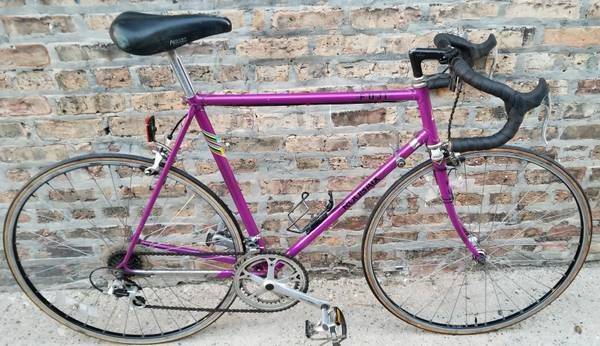
I wonder what vintage bike would have a similar geometry to the Specialized Roubaix. I’m looking at the Ironman bike ,but I’m thinking it may be to aggressive. I’m a older person and I’m looking for a relaxed ride.
Thanks for any replies.
Thanks for any replies.
__________________
George
George
 09-23-18 | 11:12 AM
#2

multimodal commuter
Joined: Nov 2006
Posts: 19,810
Likes: 597
From: NJ, NYC, LI
Bikes: 1940s Fothergill, 1959 Allegro Special, 1963? Claud Butler Olympic Sprint, Lambert 'Clubman', 1974 Fuji "the Ace", 1976 Holdsworth 650b conversion rando bike, 1983 Trek 720 tourer, 1984 Counterpoint Opus II, 1993 Basso Gap, 2010 Downtube 8h, and...
I'm not familiar with the Roubaix, and Googling it suggests there are more than one version. Which version do you have in mind, and in what size?
09-23-18 | 11:26 AM
#3

Ride, Wrench, Swap, Race
Joined: Jan 2010
Posts: 9,809
Likes: 1,783
From: Northern California
Bikes: Cheltenham-Pedersen racer, Boulder F/S Paris-Roubaix, Varsity racer, '52 Christophe, '62 Continental, '92 Merckx, '75 Limongi, '76 Presto, '72 Gitane SC, '71 Schwinn SS, etc.
If you are still positioning yourself as a racer, then the quicker-handling geometry should work well, but if you will be needing a relatively short stem and rearward saddle, then I believe the handling would feel flighty and nervous. This because of the transferring of weight to the front wheel tends to calm the handling, and vice-versa.
I prefer a short wheelbase, the front tire nearly touching my toes, but mainly for more safely drafting without touching a lead rider's rear tire.
I often see riders positioning their saddle and handlebars rearward as the years go by, but for this it is better to use a frame with relaxed geometry.
Some of the older Centurions like my Semi-Pro featured very relaxed frame angles btw. These look like racing bikes but handle/fit somewhat like touring bikes imo.
A forward positioning, on the other hand, positions the rider's weight for a more effortless and frequent transition out of the saddle to a standing position, which can make for much easier riding in the hills, and getting by with taller gearing as well. FWIW, I'm 58, riding in hilly terrain, and still preferring the racier bikes with 10-12cm stem length.
I prefer a short wheelbase, the front tire nearly touching my toes, but mainly for more safely drafting without touching a lead rider's rear tire.
I often see riders positioning their saddle and handlebars rearward as the years go by, but for this it is better to use a frame with relaxed geometry.
Some of the older Centurions like my Semi-Pro featured very relaxed frame angles btw. These look like racing bikes but handle/fit somewhat like touring bikes imo.
A forward positioning, on the other hand, positions the rider's weight for a more effortless and frequent transition out of the saddle to a standing position, which can make for much easier riding in the hills, and getting by with taller gearing as well. FWIW, I'm 58, riding in hilly terrain, and still preferring the racier bikes with 10-12cm stem length.
.JPG) 09-23-18 | 11:33 AM
09-23-18 | 11:33 AM
#5

Senior Member


Joined: Oct 2014
Posts: 14,153
Likes: 5,275
From: Portland, OR
Bikes: (2) ti TiCycles, 2007 w/ triple and 2011 fixed, 1979 Peter Mooney, ~1983 Trek 420 now fixed and ~1973 Raleigh Carlton Competition gravel grinder
Ben
 09-23-18 | 11:51 AM
#6
Ride, Wrench, Swap, Race
Joined: Jan 2010
Posts: 9,809
Likes: 1,783
From: Northern California
Bikes: Cheltenham-Pedersen racer, Boulder F/S Paris-Roubaix, Varsity racer, '52 Christophe, '62 Continental, '92 Merckx, '75 Limongi, '76 Presto, '72 Gitane SC, '71 Schwinn SS, etc.
At least within the middle-to-large frame sizes, most of today's endurance and race bikes are featuring geometry very near 73.5-degrees seattube and 72.5-degrees headtube, for best all-around handling and performance. I suspect the Specialized Roubaix frames are no exception.
This geometry tolerates a wide range of stem lengths well and works well with today's often-taller headtubes.
There are many vintage bikes with similar geometry, the golden key is to have ridden bikes with known geometry, and so then having some preference for which direction to change angles from there.
Note that frame angles affect fit as much as they affect handling, and that the two are intertwined:
--Seattube angle affects the frame's (forward) reach dimension and thus affects the stem and toptube length that will be needed to position the handlebars optimally (fore and aft).
--Headtube angle affects steering response, so a steeper headtube angle tends to work better with a longer stem length.
0.9cm per degree seems like a good rough estimate for adjusting either/both of the above.^^^
Note also that certain brands of vintage bikes made huge-swing changes to their familiar bike's geometry from one year to another, as when Peugeot changed their nice, calm PX10 geometry from ~72-degrees to ~75-degrees around 1973. So know what you are buying or you may go through the sort of countless frame-change experiments that many of us have endured (and made a habitual routine of).
This geometry tolerates a wide range of stem lengths well and works well with today's often-taller headtubes.
There are many vintage bikes with similar geometry, the golden key is to have ridden bikes with known geometry, and so then having some preference for which direction to change angles from there.
Note that frame angles affect fit as much as they affect handling, and that the two are intertwined:
--Seattube angle affects the frame's (forward) reach dimension and thus affects the stem and toptube length that will be needed to position the handlebars optimally (fore and aft).
--Headtube angle affects steering response, so a steeper headtube angle tends to work better with a longer stem length.
0.9cm per degree seems like a good rough estimate for adjusting either/both of the above.^^^
Note also that certain brands of vintage bikes made huge-swing changes to their familiar bike's geometry from one year to another, as when Peugeot changed their nice, calm PX10 geometry from ~72-degrees to ~75-degrees around 1973. So know what you are buying or you may go through the sort of countless frame-change experiments that many of us have endured (and made a habitual routine of).
09-23-18 | 12:01 PM
#7
Thread Starter
Senior Member
Joined: Jul 2006
Posts: 5,720
Likes: 100
From: Katy Texas
Bikes: Specialized Roubaix
At least within the middle-to-large frame sizes, most of today's endurance and race bikes are featuring geometry very near 73.5-degrees seattube and 72.5-degrees headtube, for best all-around handling and performance. I suspect the Specialized Roubaix frames are no exception.
This geometry tolerates a wide range of stem lengths well and works well with today's often-taller headtubes.
There are many vintage bikes with similar geometry, the golden key is to have ridden bikes with known geometry, and so then having some preference for which direction to change angles from there.
Note that frame angles affect fit as much as they affect handling, and that the two are intertwined:
--Seattube angle affects the frame's (forward) reach dimension and thus affects the stem and toptube length that will be needed to position the handlebars optimally (fore and aft).
--Headtube angle affects steering response, so a steeper headtube angle tends to work better with a longer stem length.
0.9cm per degree seems like a good rough estimate for adjusting either/both of the above.^^^
Note also that certain brands of vintage bikes made huge-swing changes to their familiar bike's geometry from one year to another, as when Peugeot changed their nice, calm PX10 geometry from ~72-degrees to ~75-degrees around 1973. So know what you are buying or you may go through the sort of countless frame-change experiments that many of us have endured (and made a habitual routine of).
This geometry tolerates a wide range of stem lengths well and works well with today's often-taller headtubes.
There are many vintage bikes with similar geometry, the golden key is to have ridden bikes with known geometry, and so then having some preference for which direction to change angles from there.
Note that frame angles affect fit as much as they affect handling, and that the two are intertwined:
--Seattube angle affects the frame's (forward) reach dimension and thus affects the stem and toptube length that will be needed to position the handlebars optimally (fore and aft).
--Headtube angle affects steering response, so a steeper headtube angle tends to work better with a longer stem length.
0.9cm per degree seems like a good rough estimate for adjusting either/both of the above.^^^
Note also that certain brands of vintage bikes made huge-swing changes to their familiar bike's geometry from one year to another, as when Peugeot changed their nice, calm PX10 geometry from ~72-degrees to ~75-degrees around 1973. So know what you are buying or you may go through the sort of countless frame-change experiments that many of us have endured (and made a habitual routine of).
Thanks for the replies everyone.
__________________
George
George


 09-23-18 | 03:01 PM
#9
Senior Member
Joined: Jul 2013
Posts: 2,587
Likes: 909
From: So Cal, for now
Bikes: 1974 Bob Jackson - Nuovo Record, Brooks Pro, Clips & Straps
If you want a relaxed ride, how about a Raleigh International. They are expensive but are a road bike at heart.
If you want a used mountain bike (no suspension front or rear). They are available everywhere. They are inexpensive (~$200-$300), easy to ride, comfortable to ride road bike. Put some Schwalbe KOJAKs on it and ride to your heart's content.
The frame geometry is stable and twitch-less. The tires can be "cushy" at low pressure (40-50 psi) or fast and road-like at high pressure (70 psi). Cantilever brakes are powerful and controllable. Saddles either fit or are easily changed.
If you want a used mountain bike (no suspension front or rear). They are available everywhere. They are inexpensive (~$200-$300), easy to ride, comfortable to ride road bike. Put some Schwalbe KOJAKs on it and ride to your heart's content.
The frame geometry is stable and twitch-less. The tires can be "cushy" at low pressure (40-50 psi) or fast and road-like at high pressure (70 psi). Cantilever brakes are powerful and controllable. Saddles either fit or are easily changed.
09-23-18 | 04:07 PM
#10
Banned
Joined: Jun 2010
Posts: 43,586
Likes: 1,380
From: NW,Oregon Coast
Bikes: 8
Measure, buy an angle finder too you can measure that too.
09-23-18 | 09:45 PM
#11
Ride, Wrench, Swap, Race
Joined: Jan 2010
Posts: 9,809
Likes: 1,783
From: Northern California
Bikes: Cheltenham-Pedersen racer, Boulder F/S Paris-Roubaix, Varsity racer, '52 Christophe, '62 Continental, '92 Merckx, '75 Limongi, '76 Presto, '72 Gitane SC, '71 Schwinn SS, etc.
Measuring frame angles can be tricky, especially with today's molded frames, where seattube angle measurements might be effectively altered by any offset at the bb shell, or by shaping/tapering or even curvature of the seattube.
And headtube angle measurements are made impossible when the headtube is tapered.
Even with traditional frames made from straight, round tubing, subtle sloping of the toptube must be accounted for.
I measure frame angles from one side of the bike, then point the bike in the other direction with the tires resting on the same two spots on the ground, and then measure from the other side of the bike while keeping my same static position.
Averaging each of the resulting pairs of angle measurements will then cancel out any slope of the ground and/or any slope or the bike's toptube!
Lastly, electronic angle-finders usually have some "hysteresis error" to their measurement, such that measurements taken after the instrument is tilted/rotated in one direction from the "zero" reference (usually the toptube) are different from measurements taken after the instrument is rotated in the opposite direction from the "zero" reference. So again, pairs of each of now four measurements need to be taken, rotating the instrument in both directions from zero, meaning that a total of eight measurements will need to be taken in order for the seattube and headtube angles to be accurately documented. I do this all the time, and at least it goes pretty quickly by now.
At least with most modern bikes, geometry data can usually be found online, though it takes some effort to be sure to find the actual geometry for the exact model year.
And headtube angle measurements are made impossible when the headtube is tapered.
Even with traditional frames made from straight, round tubing, subtle sloping of the toptube must be accounted for.
I measure frame angles from one side of the bike, then point the bike in the other direction with the tires resting on the same two spots on the ground, and then measure from the other side of the bike while keeping my same static position.
Averaging each of the resulting pairs of angle measurements will then cancel out any slope of the ground and/or any slope or the bike's toptube!
Lastly, electronic angle-finders usually have some "hysteresis error" to their measurement, such that measurements taken after the instrument is tilted/rotated in one direction from the "zero" reference (usually the toptube) are different from measurements taken after the instrument is rotated in the opposite direction from the "zero" reference. So again, pairs of each of now four measurements need to be taken, rotating the instrument in both directions from zero, meaning that a total of eight measurements will need to be taken in order for the seattube and headtube angles to be accurately documented. I do this all the time, and at least it goes pretty quickly by now.
At least with most modern bikes, geometry data can usually be found online, though it takes some effort to be sure to find the actual geometry for the exact model year.
Last edited by dddd; 09-23-18 at 09:58 PM.
09-24-18 | 08:06 AM
#12

Senior Member

Joined: Dec 2006
Posts: 7,472
Likes: 549
OP has been somewhat vague about riding style, experience, goals, length of rides, etc. That said, queries like this always make me think sport tourer. The International already mentioned would be a great choice, but there are gobs of more affordable options out there, including other Raleighs like Gran Sport or Super Course. And lots of Japanese bikes. I have bad luck posting thread links from my mobile device, but if you google ‘sport tourer bike forum’ you will surely find a useful thread with loads of good examples.
09-24-18 | 10:56 PM
#13

Senior Member
Joined: Apr 2014
Posts: 1,619
Likes: 385
From: Back in Lincoln Sq, Chicago...🙄
Bikes: '84 Miyata 610 ‘91 Cannondale ST600,'83 Trek 720 ‘84 Trek 520, 620, ‘91 Miyata 1000LT, '79 Trek 514, '78 Trek 706, '73 Raleigh Int. frame.
 09-25-18 | 11:25 PM
#14

Senior Member
Joined: May 2015
Posts: 4,048
Likes: 124
Bikes: 2015 22 Speed
For bikes with a relatively longer head tube, wheelbase, chain stays and usually a downward sloping top tube that nowadays are often called endurance bikes date back to Trek's Pilot around 2005, called 'comfort' geo. So vintage is less than 15 years ago. Planning on putting on some clip-on aerobars?

Thread
Thread Starter
Forum
Replies
Last Post
hobkirk
Road Cycling
86
11-02-10 08:29 PM
hobkirk
Road Cycling
32
07-15-10 09:38 PM
