


Can someone please explain why tubulars?
 03-22-19 | 07:18 AM
#1

Thread Starter
Senior Member


Joined: Apr 2016
Posts: 851
Likes: 70
Can someone please explain why tubulars?
Ok ,
I know one point tubulars were the only way to go , but as clinchers have improved significantly over time there seems to be no point to running them. I've been told they had a good ride, but they are messy, complicated and not as easy to change as a clincher . They also seem to be very expensive, so please can someone tell me why anyone still uses them other than they like being very old school?
I know one point tubulars were the only way to go , but as clinchers have improved significantly over time there seems to be no point to running them. I've been told they had a good ride, but they are messy, complicated and not as easy to change as a clincher . They also seem to be very expensive, so please can someone tell me why anyone still uses them other than they like being very old school?
 03-22-19 | 07:33 AM
#2

Señor Member


Joined: Oct 2004
Posts: 18,485
Likes: 1,565
From: Hardy, VA
Bikes: Mostly English - predominantly Raleighs
Tubulars eliminate the occurrence of pinch flats. They are also lighter, and the construction of the tires allowed the sidewalls to be more supple.
You are correct that clinchers have improved greatly, but for some, tubulars still have appeal. Pro racers especially tend to use them (apparently because they are less prone to pinch flats, and because the mechanics deal with the hassle of set up and mounting).
You are correct that clinchers have improved greatly, but for some, tubulars still have appeal. Pro racers especially tend to use them (apparently because they are less prone to pinch flats, and because the mechanics deal with the hassle of set up and mounting).
__________________
In search of what to search for.
In search of what to search for.
03-22-19 | 07:34 AM
#3

Senior Member
Joined: Dec 2014
Posts: 82
Likes: 10
From: MidWest USA
Bikes: Colnago Super, Giant, Waterford X11, Look 785 Huez, Merlin Titanium, in past times...Gitane Super Corsa, Ron Stout, Ciocc San Cristabal, Ciocc CX, Colnago Master, Pogliaghi TT, Crescent
I like how they ride.
03-22-19 | 07:44 AM
#4

Senior Member
Joined: Dec 2016
Posts: 2,982
Likes: 1,851
From: Long Island, NY
Bikes: Trek 800 x 2, Schwinn Heavy Duti, Schwinn Traveler, Schwinn Le Tour Luxe, Schwinn Continental, Cannondale M400 and Lambert, Schwinn Super Sport
Clinchers rely on the bead of the rim to contain the pressure of the tube and tire. This is not much of an issue at 30psi. When we get to 100psi, the rim designers must beef up the rim to handle these forces. Since tubulars are kind of "self contained" and the rim is not responsible for containing the pressure inside the tire, the rim can be made lighter.
 03-22-19 | 07:55 AM
#5
Senior Member

Joined: Sep 2011
Posts: 3,372
Likes: 598
From: Baltimore MD
Bikes: '72 Motobecane Grand Record, '72 Gitane tandem, '72 Raleigh Super Course, '73 Raleigh Gran Sport, '73 Colnago Super, '76 Fiorelli Coppi, '78 Raleigh SBDU Team Pro, '78 Trek 930, '81 Holdsworth Special 650B, '86 Masi GC, ’94 Bridgestone RB-T
For me, it's clinchers for all-rounders, and touring bikes, but for a vintage racing bike, it's gotta be tubulars on skinny rims. (And I love the way they ride). Also, with tape they are not much of a hassle to mount anymore.
__________________
The man who dies with the most toys…is dead. - Rootboy
The man who dies with the most toys…is dead. - Rootboy
03-22-19 | 07:57 AM
#6
Full Member
Joined: Mar 2018
Posts: 463
Likes: 160
From: Los Angeles
Bikes: 02 Litespeed Ultimate, 84 & 85 Raleigh Grand Prix, '84 Raleigh Prestige, 85 Raleigh 555 RSL, '20 Raleigh Tamland, 38 Raleigh, 85 Landshark "Raleigh", '84 Marinoni Levi's Raleigh, SB4484, SB7979, Raleigh SSCXWC, 87 Raleigh USA 531 Prototype
Plus, they stay on the rim if you have a high speed flat. Horror stories on here about downhill clincher experiences...
03-22-19 | 08:20 AM
#7

It's MY mountain

Joined: Sep 2006
Posts: 10,186
Likes: 4,255
From: Mt.Diablo
Bikes: Klein, Merckx, Trek
03-22-19 | 08:24 AM
#8
Senior Member

Joined: Dec 2005
Posts: 18,827
Likes: 11,704
I think for many here, it's C&V nostalgia, given the current technology of clinchers (whether from Compass, Vittoria, Challenge, or others). I have one bike set up with tubulars just because; they're the tubular versions of a Challenge tire (can't remember the model at the moment). I have the same tire in clincher version. I really can't tell the difference in ride, even on the same bike. But, then again, I tend to like my tires fat and lower pressure, and that's a much narrower range of available tubulars.
03-22-19 | 08:41 AM
#9

Senior Member
Joined: Feb 2008
Posts: 5,321
Likes: 4,832
From: Peoria, IL
I just enjoy the confused looks of friends when I change a flat tubular. 
Steve in Peoria
(plus, I get to maintain some old skills when I get home... how to glue a tire on, and how to patch a tubular)
Steve in Peoria
(plus, I get to maintain some old skills when I get home... how to glue a tire on, and how to patch a tubular)
03-22-19 | 08:59 AM
#10

Senior Member
Joined: Jan 2009
Posts: 537
Likes: 47
From: Mt. Horeb, Wisconsin
There is just no comparison for me to the ride quality of a light, high quality rim and tire. I purchase the widest tubulars that will fit my road bikes, somewhere in the 25-28mm range. Tubeless clinchers come pretty close - I've got one road set I really like. But guess what, by the time you deal with rim taping, compatibility, and sealant, tubeless clinchers are just as big a hassle. They are necessary however on good MTB setups for flat protection.
03-22-19 | 09:05 AM
#11
Senior Member
Joined: Jan 2015
Posts: 5,847
Likes: 3,431
From: Los Angeles
Bikes: 82 Medici, 85 Ironman, 2011 Richard Sachs
Tubulars are cool AND practical. I try not to ride them in the rain but I will have a fresh set glued up for EroicaCA because it might not rain. For fast event tires where there are very rough/dirt/washed out/rocky roads mixed with lots of pavement, tubulars will get fewer flats than clinchers.
03-22-19 | 09:23 AM
#13


Senior Member
Joined: Apr 2005
Posts: 17,196
Likes: 761
From: Ann Arbor, MI
Bikes: 1980 Masi, 1984 Mondonico, 1984 Trek 610, 1980 Woodrup Giro, 2005 Mondonico Futura Leggera ELOS, 1967 PX10E, 1971 Peugeot UO-8
Ok ,
I know one point tubulars were the only way to go , but as clinchers have improved significantly over time there seems to be no point to running them. I've been told they had a good ride, but they are messy, complicated and not as easy to change as a clincher . They also seem to be very expensive, so please can someone tell me why anyone still uses them other than they like being very old school?
I know one point tubulars were the only way to go , but as clinchers have improved significantly over time there seems to be no point to running them. I've been told they had a good ride, but they are messy, complicated and not as easy to change as a clincher . They also seem to be very expensive, so please can someone tell me why anyone still uses them other than they like being very old school?
Considering Michelin and Continental top-line tires pricing, then adding in tubes, rim strips, and sealant, I'm not sure there is such a price difference as long as you're not buying at $200/tire.
03-22-19 | 09:31 AM
#14
Banned
Joined: Jun 2010
Posts: 43,586
Likes: 1,380
From: NW,Oregon Coast
Bikes: 8
alternatives from the Czech company Tufo are a Tubular made to use a self sealing compound ...
they make a tubular to go on clincher rims too .. 2 channels on the casing grip the edges of the clincher rim..
...
they make a tubular to go on clincher rims too .. 2 channels on the casing grip the edges of the clincher rim..
...
03-22-19 | 09:32 AM
#15

Senior Member


Joined: Nov 2014
Posts: 27,576
Likes: 5,479
From: Eugene, Oregon, USA
I rode tubulars for quite some time in the 80's and early 90's.
But, have been mostly on clinchers since then.
Tubulars were good for changing flats. Not bad for gluing and mounting. But, actually patching tubes was a pain.
I'm doing some experiments with tubulars once again.
A couple of things to consider.
Tubulars are some of the lightest tires/wheels. Clincher rims tend to be heavier. Clincher tires are often heavier. Plus, are you using the lightest tubes?
The new sealants are supposed to help reduce the need for changing flats. Especially the brands like Tufo without stitching.
Pinch flats were mentioned, and I believe they still occur, as there is a tube that can be pinched between the tire and rim.
But, have been mostly on clinchers since then.
Tubulars were good for changing flats. Not bad for gluing and mounting. But, actually patching tubes was a pain.
I'm doing some experiments with tubulars once again.
A couple of things to consider.
Tubulars are some of the lightest tires/wheels. Clincher rims tend to be heavier. Clincher tires are often heavier. Plus, are you using the lightest tubes?
The new sealants are supposed to help reduce the need for changing flats. Especially the brands like Tufo without stitching.
Pinch flats were mentioned, and I believe they still occur, as there is a tube that can be pinched between the tire and rim.
03-22-19 | 09:49 AM
#16

Senior Member
Joined: Nov 2015
Posts: 4,900
Likes: 1,125
The best quality tubulars can be $200 each, last time I looked. Good ones are in the range $100 - $200 (keep in mind these are very loose ranges. But you can also get a very decent tire for 3 for $50, from Yellow Jersey. They don't feel as good as my Gommitalia Espressos (maybe 10 years old, so I don't know current pricing), but they do give the tubular experience and hold at least 120 psi.
Considering Michelin and Continental top-line tires pricing, then adding in tubes, rim strips, and sealant, I'm not sure there is such a price difference as long as you're not buying at $200/tire.
Considering Michelin and Continental top-line tires pricing, then adding in tubes, rim strips, and sealant, I'm not sure there is such a price difference as long as you're not buying at $200/tire.
the Corsa G's developed a big following very quickly because of the excellent performance you get from them and the reasonable pricing.
03-22-19 | 10:00 AM
#17

Senior Member
Joined: Apr 2017
Posts: 2,248
Likes: 845
From: Los Angeles, CA
Bikes: 1964 Legnano Roma Olympiade, 1973 Raleigh Super Course, 1978 Raleigh Super Course, 1978 Peugeot PR10, 2002 Specialized Allez, 2007 Specialized Roubaix, 2013 Culprit Croz Blade
I raced on tubulars back in the 60s. We had a bike shop sponsor, so most maintenance issues were handled by them. On training rides, we had to deal with flats once in a while, not a big deal to change with tubulars, except a PITA to patch. My best friend and team member had a tubular roll off the rim at 30 + mph on a race, and that was ugly. I still ride the same bike now, a '64 Legnano. I hung the tubular wheels on the garage wall 20 years ago, when I began riding seriously again, because I had discovered how good clinchers are these days. I bought a mismatched set of clincher wheels. I rode them on Pasadena vintage rides, and Eroica too. Finally, after 20 years, I got the old tubular wheelset down, took out the Legnano branded Campy hubs, and had them laced to a nice shiny set of clincher rims. Maybe its just me, but I don't remember that much difference in speed or ride quality, though it was a long gime ago. I know that now I don't worry as much about road debris with either Gatorskins or Pasela PTs. In the old days we carried our tubular equipped bikes over gravel or dirt bits, now we ride right over them. Also nobody I regularly ride with uses tubulars, but if I need to borrow a tube, somebody always has an extra one. Factoring in cost and ease of repair, I'm now a clincher guy.
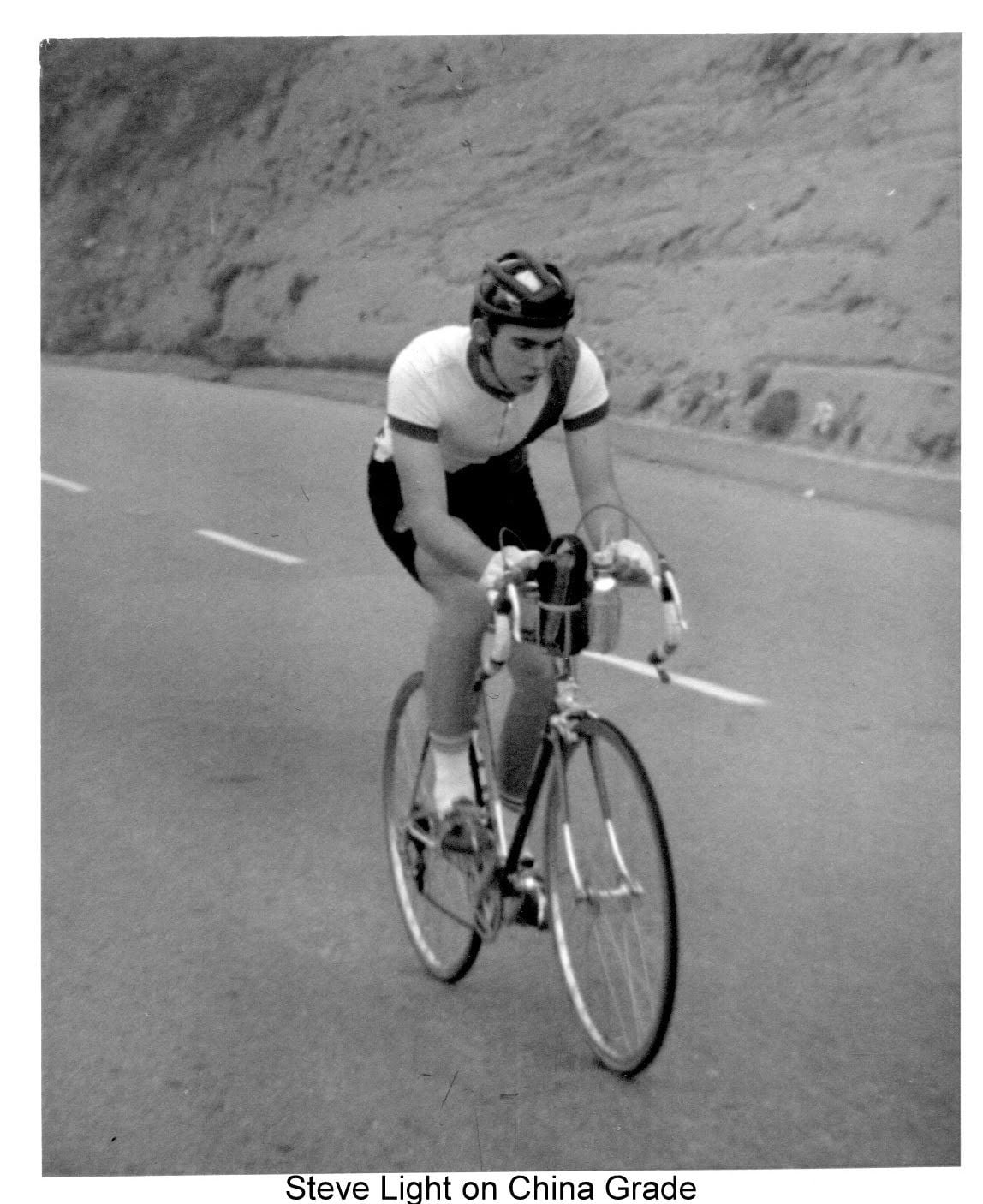
My skinny self on tubulars, 1964.
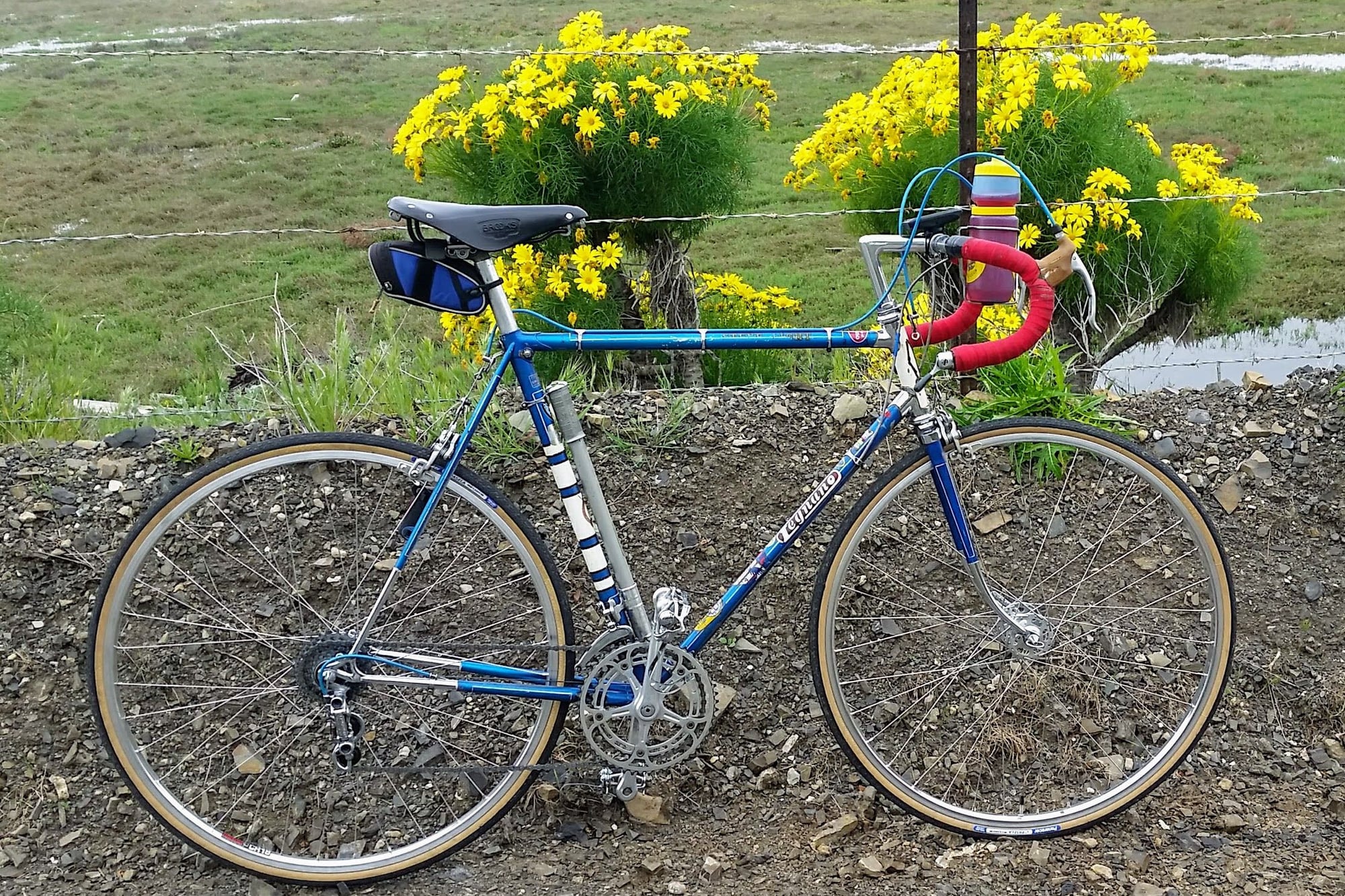
My shiny new clincher rims and new Paselas.
My skinny self on tubulars, 1964.
My shiny new clincher rims and new Paselas.
03-22-19 | 10:02 AM
#18
Newbie
Joined: Feb 2015
Posts: 53
Likes: 1
From: near Afton, Wisc
Bikes: Colin Laing
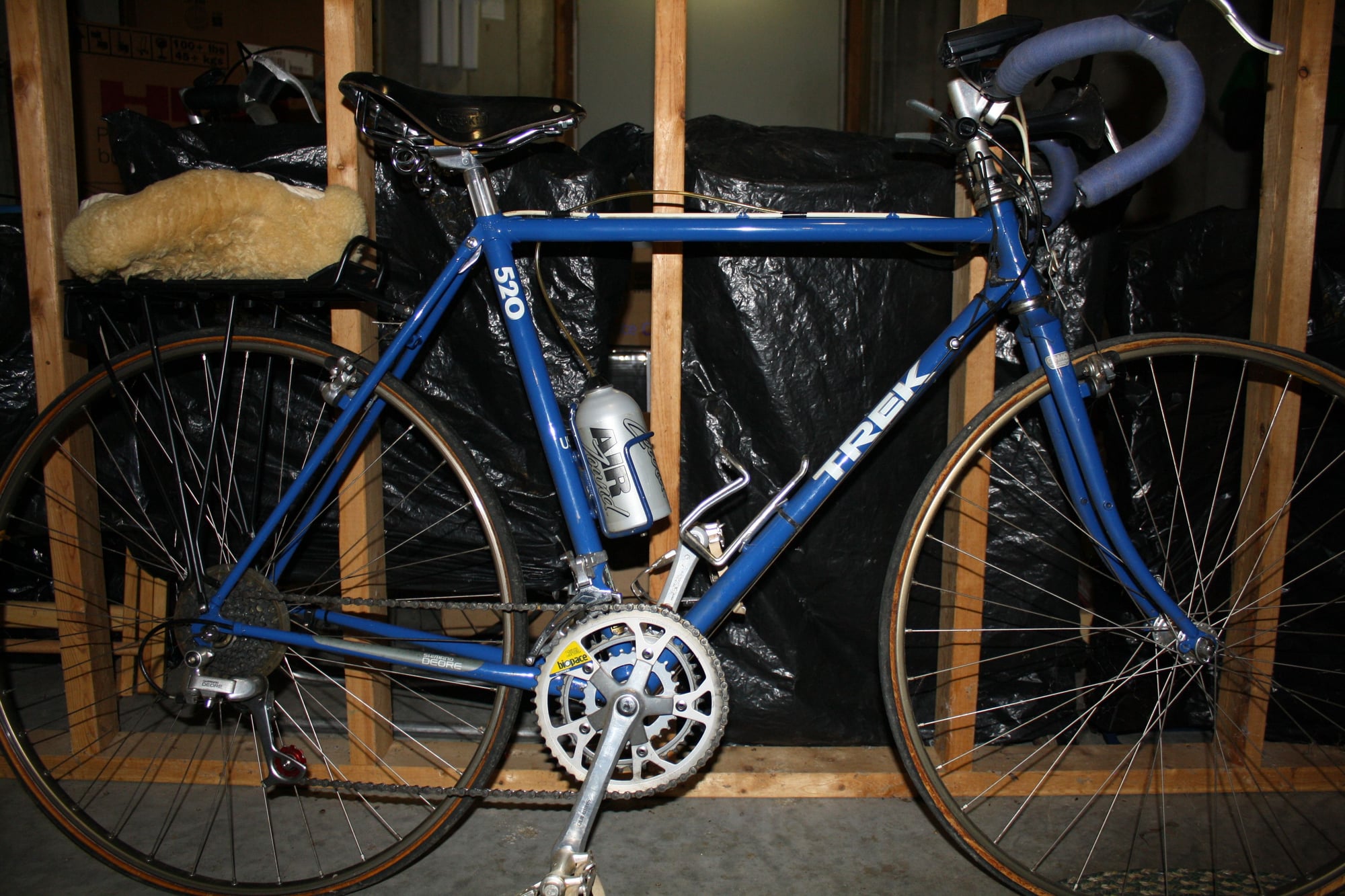
Greetings Guys; I got $.02 cents worth. If you're a small person OK even if you're a large person the reduced weight makes the bike Way more Responsive. And if ya do get a flat way faster to change than a wire on (some call them clinchers). Ya just carry a spare tire NO tire irons needed (less weight). You're carrying a spare tube, right? Now the second flat will be a bigger problem. The wire on guy has to patch a tube, the tubular guy has to cut, patch & sew, but how often do ya get 2 flats on the same ride? Take care Ole' Bob.
03-22-19 | 10:05 AM
#19

Senior Member
Joined: Oct 2014
Posts: 14,182
Likes: 5,314
From: Portland, OR
Bikes: (2) ti TiCycles, 2007 w/ triple and 2011 fixed, 1979 Peter Mooney, ~1983 Trek 420 now fixed and ~1973 Raleigh Carlton Competition gravel grinder
This has been discussed to death several times recently.
My reasons why tubulars are superior:
You can corner harder on them. Look at the banking angles of bikes in old racing photos. We all did that. We took corners insanely fast and it worked.
Flats, even full blowouts at high speed aren't a big deal. I've blown tubulars at 45+. Hit the brakes, came to a stop and changed the tire. (Blew an old clincher at 25 and it came off. Broken collarbone, cracked ribs, an acre of road rash ans a hard helmet hit. All because I was trying to keep the bike off the adjacent curb riding a bare rim. Like riding on ice. I was completely unprepared when the tire jammed in the seatstay. On a tubular, this would have been a 5 minute tire change and dirty hands.)
If you have your gluing right, you can do reliable tire changes in 5 minutes every time. In the dark. In the rain. After more than a few beers. In places that are scary to hang out. (You may well be riding off on a very crooked tire, but neither the bike or tire will care.) Oh, and the reason for the flat doesn't matter. The cause, even if not addressed, will never flat the spare.
Then there is the touchy-feely aspect. Good tubulars are magic carpets. Until you have ridden a magic carpet, you just don't know. Same with tubulars. I won't try to describe it.
Edit: Weight. I raced 250 gm Setas glued to 290 gm rims laced to the hubs with 36 15-17 ga spokes. (There were lighter options on the tires that worked just as well depending on what tread you wanted. I rode the Maine International on 220 gm tires and a 260 gm front rim.) On poor New England roads, not all paved. Try beating that for rolling inertia with a modern clincher rim and tire.
Ben
My reasons why tubulars are superior:
You can corner harder on them. Look at the banking angles of bikes in old racing photos. We all did that. We took corners insanely fast and it worked.
Flats, even full blowouts at high speed aren't a big deal. I've blown tubulars at 45+. Hit the brakes, came to a stop and changed the tire. (Blew an old clincher at 25 and it came off. Broken collarbone, cracked ribs, an acre of road rash ans a hard helmet hit. All because I was trying to keep the bike off the adjacent curb riding a bare rim. Like riding on ice. I was completely unprepared when the tire jammed in the seatstay. On a tubular, this would have been a 5 minute tire change and dirty hands.)
If you have your gluing right, you can do reliable tire changes in 5 minutes every time. In the dark. In the rain. After more than a few beers. In places that are scary to hang out. (You may well be riding off on a very crooked tire, but neither the bike or tire will care.) Oh, and the reason for the flat doesn't matter. The cause, even if not addressed, will never flat the spare.
Then there is the touchy-feely aspect. Good tubulars are magic carpets. Until you have ridden a magic carpet, you just don't know. Same with tubulars. I won't try to describe it.
Edit: Weight. I raced 250 gm Setas glued to 290 gm rims laced to the hubs with 36 15-17 ga spokes. (There were lighter options on the tires that worked just as well depending on what tread you wanted. I rode the Maine International on 220 gm tires and a 260 gm front rim.) On poor New England roads, not all paved. Try beating that for rolling inertia with a modern clincher rim and tire.
Ben
Last edited by 79pmooney; 03-22-19 at 10:19 AM.
03-22-19 | 10:15 AM
#20

aka Tom Reingold
Joined: Jan 2009
Posts: 44,320
Likes: 6,603
From: New York, NY, and High Falls, NY, USA
Bikes: 1962 Rudge Sports, 1971 Raleigh Super Course, 1971 Raleigh Pro Track, 1974 Raleigh International, 1975 Viscount Fixie, 1982 McLean, 1996 Lemond (Ti), 2002 Burley Zydeco tandem
[MENTION=435212]SamSpade1941[/MENTION], 30 years ago, people said the same thing you're saying, that clinchers had improved so there wasn't much point in riding tubulars. So the argument for clinchers should be even greater now that they've improved so much. Still, some ride tubulars.
I think reduced weight of tires and rims is probably the biggest. Some say the feel of tubulars is best, and I'll bet the biggest contributor to that feel is weight.
Oddly enough, even though repairing a puncture is complicated, and even though mounting a tire properly is involved, changing a flat on the road is actually easier and faster. You don't need a lever. You just pull the tire off and put your spare on without using glue. At least that's what I did when I rode tubulars long ago. In theory, the risk of rolling a tire off is greater when you don't apply new glue is increased, but I never rolled a tire. If you change a front flat, you really should ride carefully.
I think reduced weight of tires and rims is probably the biggest. Some say the feel of tubulars is best, and I'll bet the biggest contributor to that feel is weight.
Oddly enough, even though repairing a puncture is complicated, and even though mounting a tire properly is involved, changing a flat on the road is actually easier and faster. You don't need a lever. You just pull the tire off and put your spare on without using glue. At least that's what I did when I rode tubulars long ago. In theory, the risk of rolling a tire off is greater when you don't apply new glue is increased, but I never rolled a tire. If you change a front flat, you really should ride carefully.
__________________
Tom Reingold, tom@noglider.com
New York City and High Falls, NY
Blogs: The Experienced Cyclist; noglider's ride blog
“When man invented the bicycle he reached the peak of his attainments.” — Elizabeth West, US author
Please email me rather than PM'ing me. Thanks.
Tom Reingold, tom@noglider.com
New York City and High Falls, NY
Blogs: The Experienced Cyclist; noglider's ride blog
“When man invented the bicycle he reached the peak of his attainments.” — Elizabeth West, US author
Please email me rather than PM'ing me. Thanks.
03-22-19 | 10:23 AM
#21
Plus, you get to accumulate a pile of flatted tubulars during the riding season that you plan to repair during the winter but then toss out en masse in December (speaking from personal experience).
03-22-19 | 10:31 AM
#22
Senior Member
Joined: Apr 2005
Posts: 17,196
Likes: 761
From: Ann Arbor, MI
Bikes: 1980 Masi, 1984 Mondonico, 1984 Trek 610, 1980 Woodrup Giro, 2005 Mondonico Futura Leggera ELOS, 1967 PX10E, 1971 Peugeot UO-8
Have you tried out the Vittoria Corsa G Graphene tubs yet? They ride really nice and FAST. I think they are normally priced at just above $100, but you can get them for as low as 88 bucks at Ebay. The Graphene composition really works! Now have them on two bikes and my present build will surely have them too.
the Corsa G's developed a big following very quickly because of the excellent performance you get from them and the reasonable pricing.
the Corsa G's developed a big following very quickly because of the excellent performance you get from them and the reasonable pricing.
03-22-19 | 10:32 AM
#23
Junior Member
Joined: Oct 2017
Posts: 144
Likes: 23
Have you tried out the Vittoria Corsa G Graphene tubs yet? They ride really nice and FAST. I think they are normally priced at just above $100, but you can get them for as low as 88 bucks at Ebay. The Graphene composition really works! Now have them on two bikes and my present build will surely have them too.
the Corsa G's developed a big following very quickly because of the excellent performance you get from them and the reasonable pricing.
the Corsa G's developed a big following very quickly because of the excellent performance you get from them and the reasonable pricing.
03-22-19 | 10:36 AM
#24
Senior Member
Joined: Apr 2005
Posts: 17,196
Likes: 761
From: Ann Arbor, MI
Bikes: 1980 Masi, 1984 Mondonico, 1984 Trek 610, 1980 Woodrup Giro, 2005 Mondonico Futura Leggera ELOS, 1967 PX10E, 1971 Peugeot UO-8
Greetings Guys; I got $.02 cents worth. If you're a small person OK even if you're a large person the reduced weight makes the bike Way more Responsive. And if ya do get a flat way faster to change than a wire on (some call them clinchers). Ya just carry a spare tire NO tire irons needed (less weight). You're carrying a spare tube, right? Now the second flat will be a bigger problem. The wire on guy has to patch a tube, the tubular guy has to cut, patch & sew, but how often do ya get 2 flats on the same ride? Take care Ole' Bob.
03-22-19 | 10:44 AM
#25
Full Member
Joined: May 2016
Posts: 242
Likes: 70
From: Duluth, Minnesota, USA
Reduced weight - less rotating mass on the largest diameter "flywheel" - and there are two on every bicycle.
The reduced weight comes from 1. No need for 4 steel hoops in the tires and their inertia 2. No need for 4 flanges on the rims and their inertia 3. The tires tended toward the thin and light end of the spectrum.
The reduced weight comes from 1. No need for 4 steel hoops in the tires and their inertia 2. No need for 4 flanges on the rims and their inertia 3. The tires tended toward the thin and light end of the spectrum.