


Suntour Barcons Very tight
 03-18-20 | 11:54 AM
#1

Thread Starter
Full Member


Joined: Oct 2017
Posts: 424
Likes: 175
From: Rotterdam, The Netherlands
Suntour Barcons Very tight
I am rebuilding my Gazelle CM Semi Race and trying Suntour barcons for the first time. I decided to run the cable housing under the bar tape and I actually went ahead and wrapped the bars even before checking how the shifters gonna work, my bad, shouldn't have done that. 
So once I installed the shifters and inner cables, I realized that the shifters (or cables?) are very tight. I have to pull the right-hand shifter with a lot of force to move the rear derailleur. That doesn't seem right. Loosing the little nut doesn't help because the shifter won't hold the spring of the derailleur anymore. Also, when I move the shifter it feels a bit gritty, not very smooth and the cable actually makes some noise. But of course the ammount of force I have to apply is a bit too much..
The left-hand shifter is acceptable but also a bit on a tight side.
I am running Campagnolo NR derailleurs, by the way.
So what do you reckon the problem is? Cable housing routing? I am using brake cable housing, by the way. The shifters? I haven't rebuilt them, I just splashed some WD40 in them and that's it. They ratchet nicely without cables installed. Derailleurs? Shifting was quite good before with NR shifters.
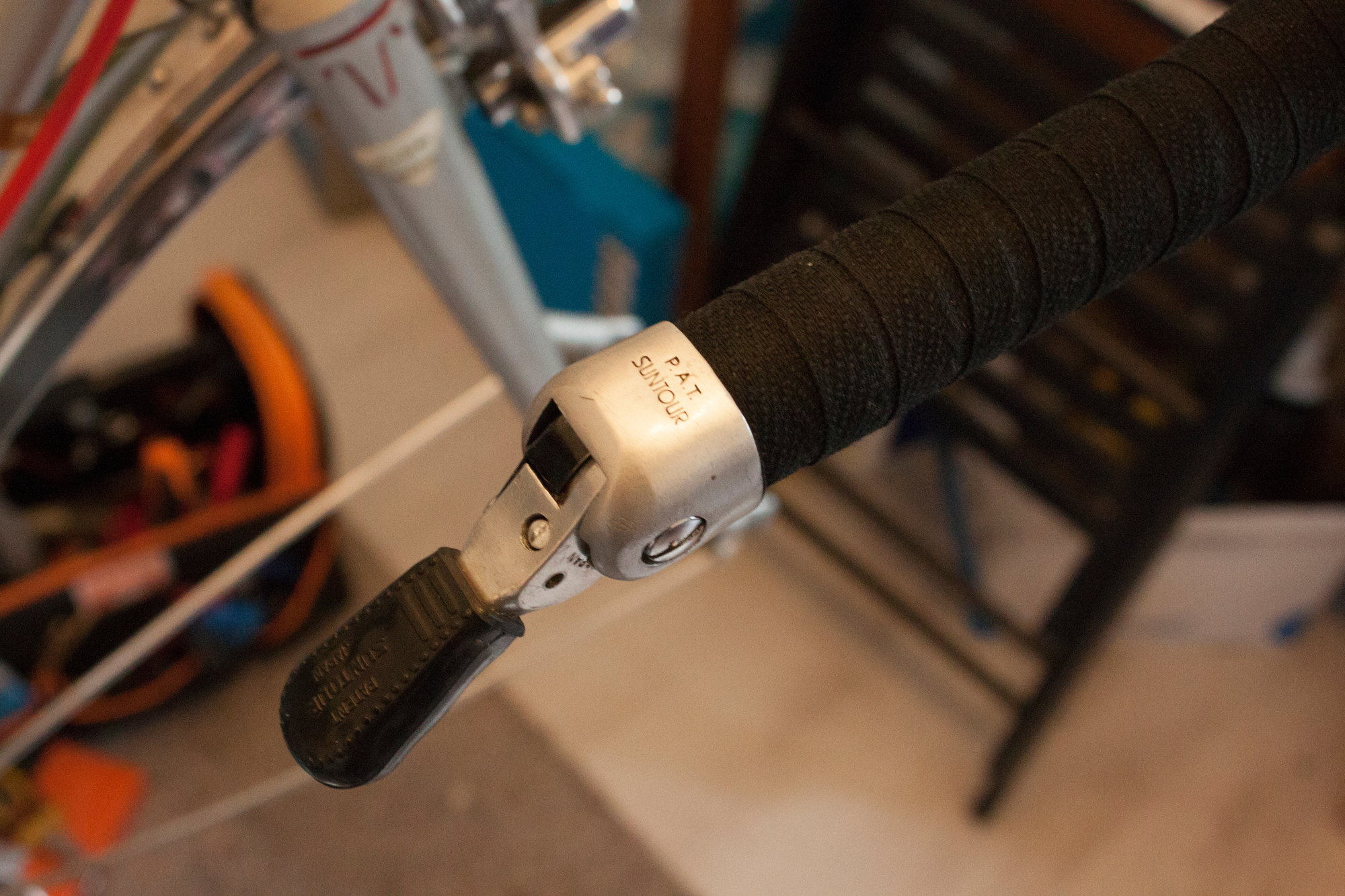
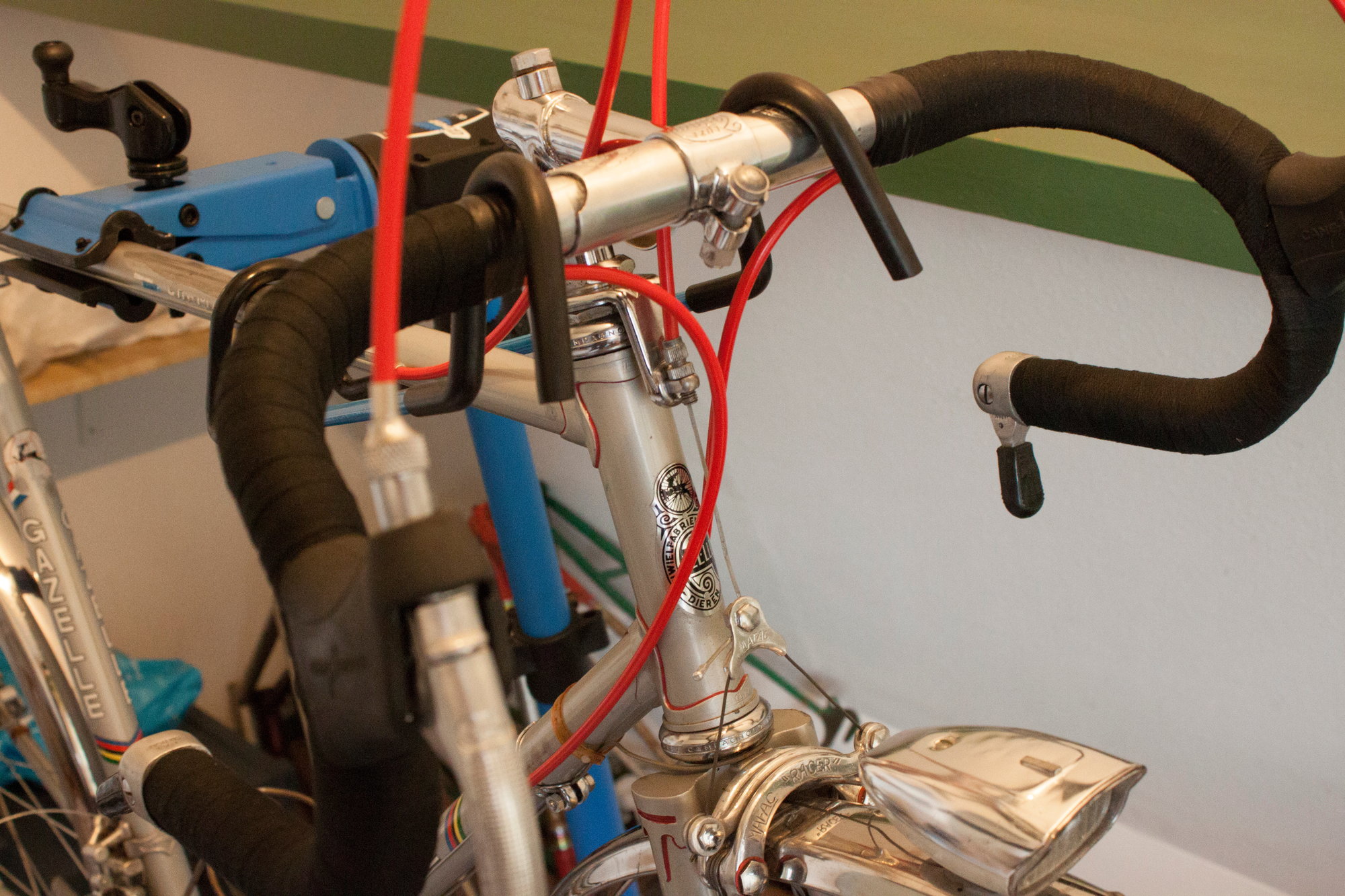
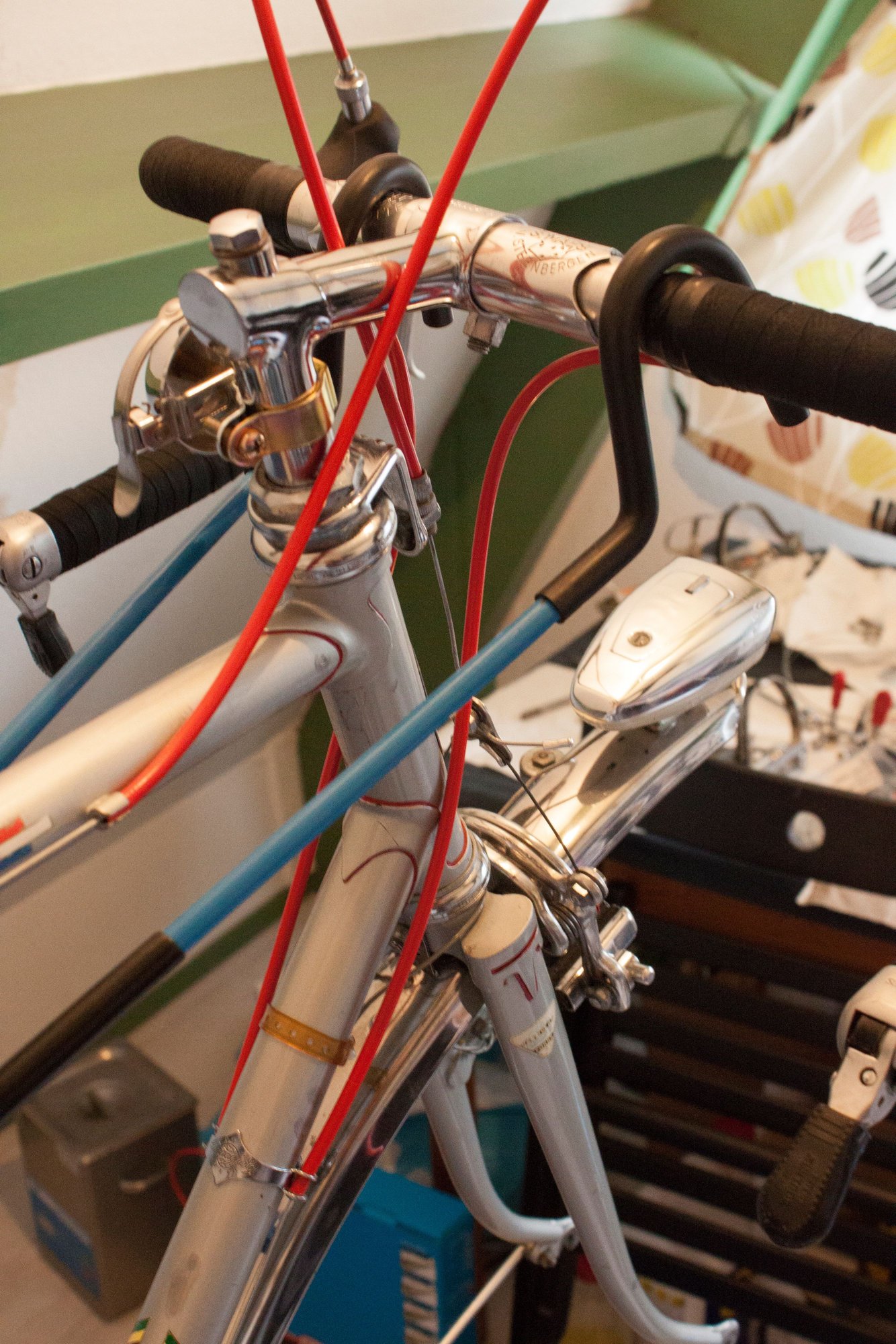
So once I installed the shifters and inner cables, I realized that the shifters (or cables?) are very tight. I have to pull the right-hand shifter with a lot of force to move the rear derailleur. That doesn't seem right. Loosing the little nut doesn't help because the shifter won't hold the spring of the derailleur anymore. Also, when I move the shifter it feels a bit gritty, not very smooth and the cable actually makes some noise. But of course the ammount of force I have to apply is a bit too much..
The left-hand shifter is acceptable but also a bit on a tight side.
I am running Campagnolo NR derailleurs, by the way.
So what do you reckon the problem is? Cable housing routing? I am using brake cable housing, by the way. The shifters? I haven't rebuilt them, I just splashed some WD40 in them and that's it. They ratchet nicely without cables installed. Derailleurs? Shifting was quite good before with NR shifters.
 03-18-20 | 12:25 PM
#2

Senior Member

Joined: Dec 2006
Posts: 7,474
Likes: 559
Sorry but I would unwrap the bars. If you use a short piece of dowel, you should be able to wrap the tape onto that, and re-use.
File all the ends of the housing and squirt a little tri-flow on the cables. And of course don’t re-wrap until all is reconnected and performance is satisfactory. Even then, I like to ride a few miles and zero in the lever placement before wrapping.
File all the ends of the housing and squirt a little tri-flow on the cables. And of course don’t re-wrap until all is reconnected and performance is satisfactory. Even then, I like to ride a few miles and zero in the lever placement before wrapping.
03-18-20 | 12:31 PM
#3

Senior Member
Joined: Jul 2018
Posts: 1,325
Likes: 357
From: Eugene, OR
Ran mine under the tape too. Gave the cable/housing as much slack as I could between where they leave the bars near the stem and travel towards the downtube.
The cable/housing is from Porkchops, “vintage style.” I’ve never used it before, so I’m not sure what type of performance to expect from it. Also, never used barcons before, so once again, not sure what they’re “supposed” to feel like.
I did disassemble the levers first cleaning and lube prior to installing them.
That said, the shifters do feel tighter than any downtube shifter I’ve ever used. Takes a bit of force to move them, but not so much that I find it problematic. And like you, I have the friction adjustment set so that it’s as slack as can be while still holding it’s place in gear without slipping.
The cable/housing is from Porkchops, “vintage style.” I’ve never used it before, so I’m not sure what type of performance to expect from it. Also, never used barcons before, so once again, not sure what they’re “supposed” to feel like.
I did disassemble the levers first cleaning and lube prior to installing them.
That said, the shifters do feel tighter than any downtube shifter I’ve ever used. Takes a bit of force to move them, but not so much that I find it problematic. And like you, I have the friction adjustment set so that it’s as slack as can be while still holding it’s place in gear without slipping.
03-18-20 | 12:41 PM
#4
Thread Starter
Full Member
Joined: Oct 2017
Posts: 424
Likes: 175
From: Rotterdam, The Netherlands
Sorry but I would unwrap the bars. If you use a short piece of dowel, you should be able to wrap the tape onto that, and re-use.
File all the ends of the housing and squirt a little tri-flow on the cables. And of course don’t re-wrap until all is reconnected and performance is satisfactory. Even then, I like to ride a few miles and zero in the lever placement before wrapping.
File all the ends of the housing and squirt a little tri-flow on the cables. And of course don’t re-wrap until all is reconnected and performance is satisfactory. Even then, I like to ride a few miles and zero in the lever placement before wrapping.
03-18-20 | 12:47 PM
#5
Thread Starter
Full Member
Joined: Oct 2017
Posts: 424
Likes: 175
From: Rotterdam, The Netherlands
Ran mine under the tape too. Gave the cable/housing as much slack as I could between where they leave the bars near the stem and travel towards the downtube.
The cable/housing is from Porkchops, “vintage style.” I’ve never used it before, so I’m not sure what type of performance to expect from it. Also, never used barcons before, so once again, not sure what they’re “supposed” to feel like.
I did disassemble the levers first cleaning and lube prior to installing them.
That said, the shifters do feel tighter than any downtube shifter I’ve ever used. Takes a bit of force to move them, but not so much that I find it problematic. And like you, I have the friction adjustment set so that it’s as slack as can be while still holding it’s place in gear without slipping.
The cable/housing is from Porkchops, “vintage style.” I’ve never used it before, so I’m not sure what type of performance to expect from it. Also, never used barcons before, so once again, not sure what they’re “supposed” to feel like.
I did disassemble the levers first cleaning and lube prior to installing them.
That said, the shifters do feel tighter than any downtube shifter I’ve ever used. Takes a bit of force to move them, but not so much that I find it problematic. And like you, I have the friction adjustment set so that it’s as slack as can be while still holding it’s place in gear without slipping.
The fact that you say that they're tighter than DT shifters does make sense because the levers are shorter than the ones on typical DT shifters.
By the way, I really like Simplex Retrofriction shifters on my other bike, so let's see..
03-18-20 | 01:13 PM
#7
Senior Member
Joined: Jul 2018
Posts: 1,325
Likes: 357
From: Eugene, OR
It may or may not make a difference for you. Even though I didn’t use mine prior to cleaning/lubing, I do believe it was helpful. Primarily because I discovered a lot of internal grime upon disassembly which I’m certain would have been felt in operation. I’d recommend rebuilding. If there’s no benefit, at least there’d be no harm either.
03-18-20 | 02:18 PM
#8

Senior Member
Joined: Apr 2017
Posts: 2,248
Likes: 845
From: Los Angeles, CA
Bikes: 1964 Legnano Roma Olympiade, 1973 Raleigh Super Course, 1978 Raleigh Super Course, 1978 Peugeot PR10, 2002 Specialized Allez, 2007 Specialized Roubaix, 2013 Culprit Croz Blade
I have Suntour bar cons on two different Raleigh Super Courses. One shifts very smooth and easy, yet still holds gear position, the other is tight and sticky. Both have Pork Chop cables and housings wrapped under the bar tape. Let us know what you find out. Its been bugging me too.
03-18-20 | 02:23 PM
#9
Thread Starter
Full Member
Joined: Oct 2017
Posts: 424
Likes: 175
From: Rotterdam, The Netherlands
I have Suntour bar cons on two different Raleigh Super Courses. One shifts very smooth and easy, yet still holds gear position, the other is tight and sticky. Both have Pork Chop cables and housings wrapped under the bar tape. Let us know what you find out. Its been bugging me too.
03-18-20 | 02:30 PM
#10
Thread Starter
Full Member
Joined: Oct 2017
Posts: 424
Likes: 175
From: Rotterdam, The Netherlands
Okay, I disassembled one of the shifters and I am a bit confused. It seems that there is an extra spacer (6) which is not shown in the scheme I found on the internet. I have three of those instead of two, I mean. Also, bushing 5, which sits on part 4, is different from the other two bushings. It has larger inner diameter.
Strange...

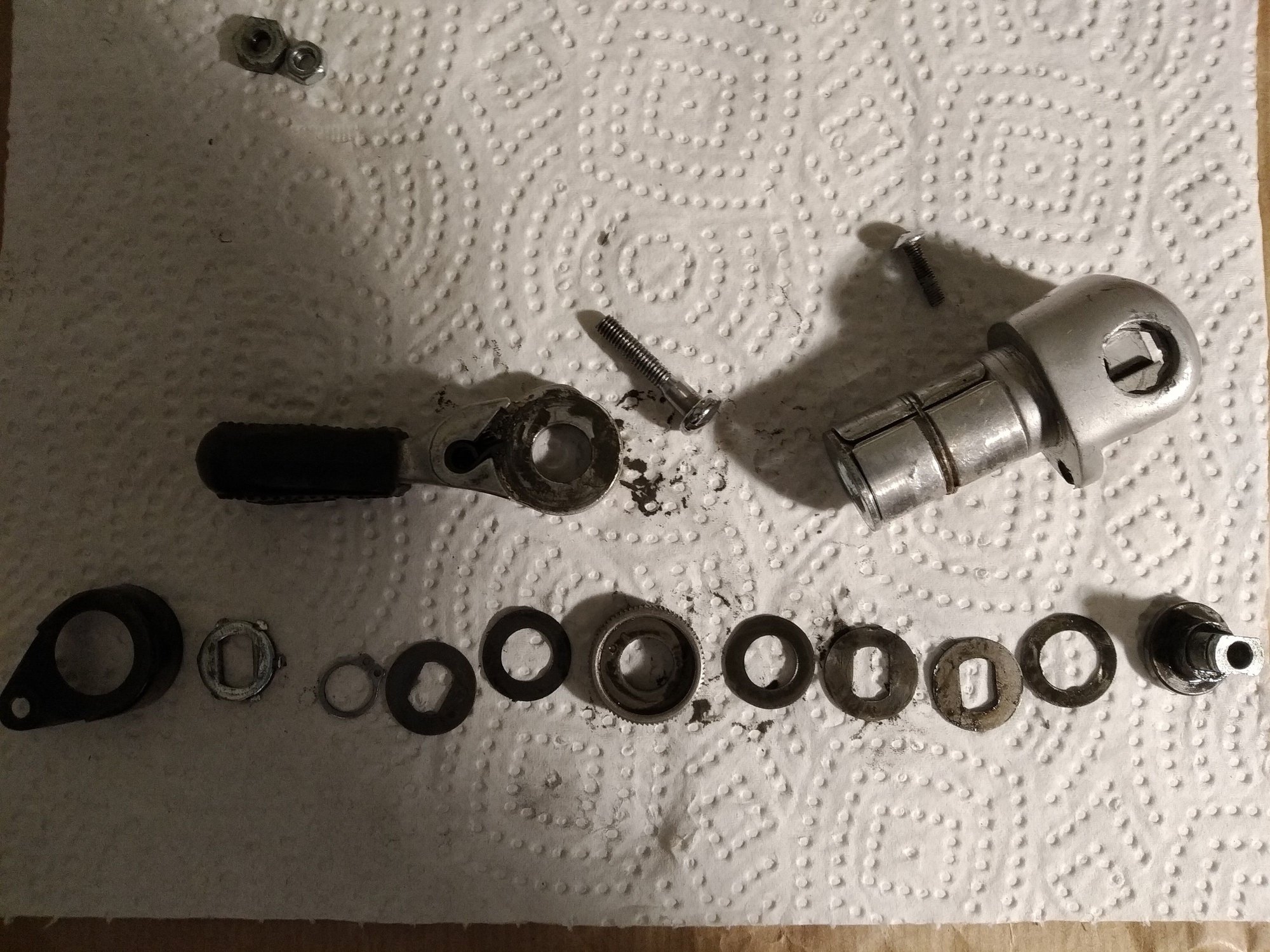
Strange...

 03-18-20 | 04:03 PM
#13
Thread Starter
Full Member
Joined: Oct 2017
Posts: 424
Likes: 175
From: Rotterdam, The Netherlands
Yeah, I know! The one which I put on the left in the first place operated way better. I rebuilt it now I put on the right and it's an improvement! Much less force needed to move the rear derailleur.
Gonna rebuild the other one and put it back.
They are quite straightforward to overhaul, by the way. Good to know for future tinkering.
Gonna rebuild the other one and put it back.
They are quite straightforward to overhaul, by the way. Good to know for future tinkering.
03-18-20 | 04:09 PM
#14

Senior Member
Joined: Jul 2011
Posts: 3,477
Likes: 385
From: NE Ohio
Bikes: A few...
I've never run the cables on any of my bikes with SunTour barcons under the tape all the way to the handlebar stem. I attempted that method once, and there was just too much friction, so I unwrapped the bars and did it 'classic style' -- looping out of the tape at the front of the drops before the bars start to bend upwards. I never tried it with Teflon-lined housing. Oh, and I am still using the original SunTour bare coiled stainless steel housing. Even at that, I use slick stainless inner wire, and sometimes they'll need a drop or two of 'dry lube' (high VOC graphite/teflon lube) to make them slide easier.
Installed on the '86 Miyata 710
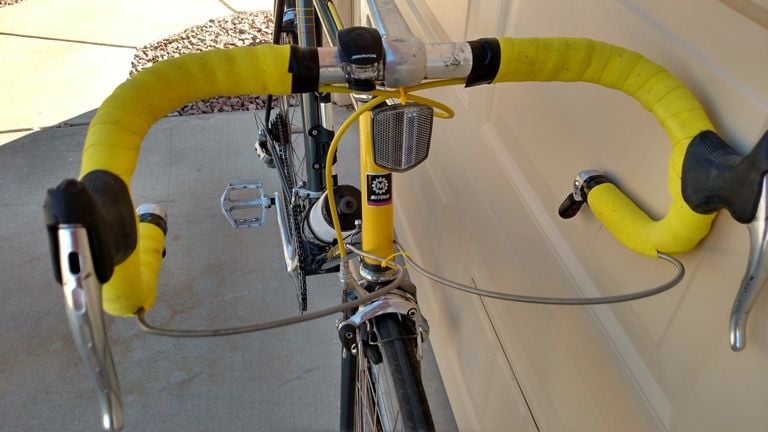
And an older photo of the Fuji. Since this photo, the bars were re-wrapped and the cable loop is a bit higher - straighter to the downtube stop
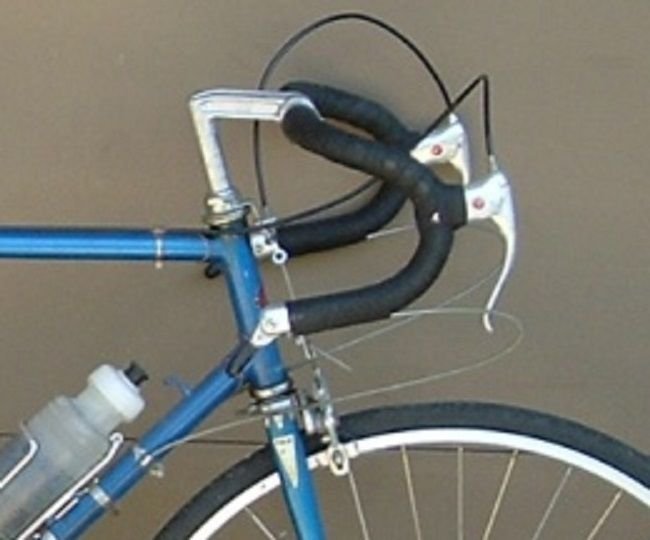
No good pics of the installation on either of the Univegas...
Installed on the '86 Miyata 710
And an older photo of the Fuji. Since this photo, the bars were re-wrapped and the cable loop is a bit higher - straighter to the downtube stop
No good pics of the installation on either of the Univegas...
__________________
'75 Fuji S-10S bought new, 52k+ miles and still going!
'84 Univega Gran Tourismo
'84 Univega Viva Sport
'86 Miyata 710
'90 Schwinn Woodlands
Unknown brand MTB of questionable lineage aka 'Mutt Trail Bike'
Plus or minus a few others from time-to-time
'75 Fuji S-10S bought new, 52k+ miles and still going!
'84 Univega Gran Tourismo
'84 Univega Viva Sport
'86 Miyata 710
'90 Schwinn Woodlands
Unknown brand MTB of questionable lineage aka 'Mutt Trail Bike'
Plus or minus a few others from time-to-time
03-18-20 | 04:16 PM
#15

Bike Butcher of Portland

Joined: Jul 2014
Posts: 12,487
Likes: 8,057
From: Portland, OR
Bikes: It's complicated.
Looks like you're well on the way to fixing your issue, but I have an old cyclocross trick to offer.
I see you've got the right shifter going to the right side cable stop (drive side). That gives the housing a pretty tight radius bend, which results in more friction. Instead, reverse them, so right goes to the left side, and left to the right side, then cross them back over under the down tube. Even though the two cables are now rubbing, the overall effect is less cable friction.
Of course, this assumes that you have under the bottom bracket cable guides. If you don't, it's a simple matter to drill and tap an M5 hole in the bottom bracket and put a plastic under the bottom bracket cable guide in.
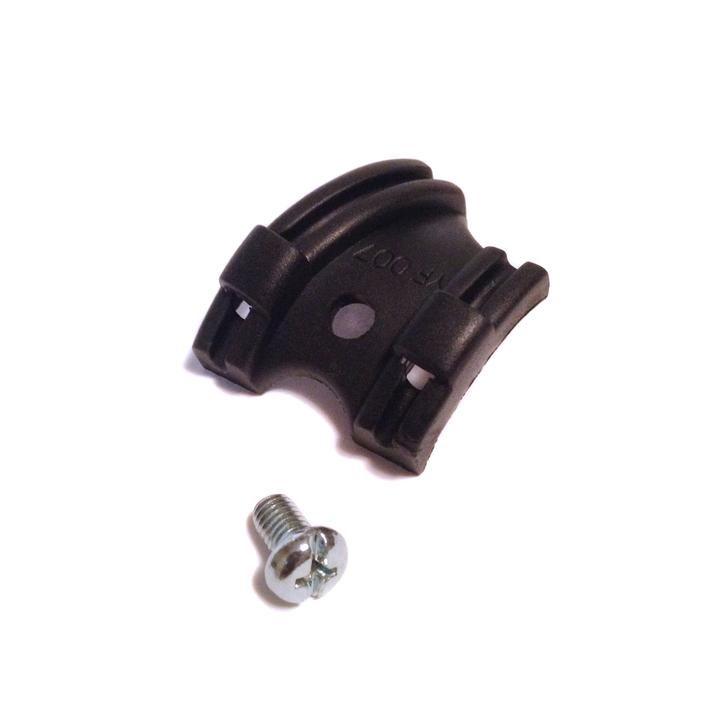
I see you've got the right shifter going to the right side cable stop (drive side). That gives the housing a pretty tight radius bend, which results in more friction. Instead, reverse them, so right goes to the left side, and left to the right side, then cross them back over under the down tube. Even though the two cables are now rubbing, the overall effect is less cable friction.
Of course, this assumes that you have under the bottom bracket cable guides. If you don't, it's a simple matter to drill and tap an M5 hole in the bottom bracket and put a plastic under the bottom bracket cable guide in.
__________________
If someone tells you that you have enough bicycles and you don't need any more, stop talking to them. You don't need that kind of negativity in your life.
If someone tells you that you have enough bicycles and you don't need any more, stop talking to them. You don't need that kind of negativity in your life.
 03-18-20 | 04:31 PM
#16

Ride, Wrench, Swap, Race
Joined: Jan 2010
Posts: 9,834
Likes: 1,809
From: Northern California
Bikes: Cheltenham-Pedersen racer, Boulder F/S Paris-Roubaix, Varsity racer, '52 Christophe, '62 Continental, '92 Merckx, '75 Limongi, '76 Presto, '72 Gitane SC, '71 Schwinn SS, etc.
The worst cable friction problems I've encountered weren't the ends of the housings but instead were cases where stainless inner wire was used in the stainless housings and/or run across a stainless cable guide under the bb shell (Trek's big mistake on early OCLV frames).
Stainless steel microscopically cold-welds to itself, producing the highest coefficient of static friction imaginable!
The old stainless housings also are quite elastic in compression, which only further degrades friction or indexed shifting.
Choice of lubrication will be optimal with plastic-lined housings with a non-petroleum Silicone/PTFE grease applied. The very best housings from Shimano and Yokozuna are pre-lubricated along their entire length with low-viscosity Silicone/PTFE grease. SRAM's Jonnisnot cable lubricant is similarly a Silicone/PTFE formulation, but made for localized cable path guides found in GripShift and DoubleTap shifters. But it is also really excellent applied lightly to the entire inner wire, especially after perhaps having scrubbed out the old housings using PTFE/solvent-based Dri-Lube spray, a bent-up cable and compressed air. I still use this (my old self-taught method) to refurb vintage bike's original housings because the SRAM grease is so very slippery inside of a clean, plastic-lined housing.
One more thing about silicone-based lubes is that they do not evaporate, oxidize, thicken or permeate the housing's plastic liner. So the cable housings that you tune up using silicone grease should still feel tuned up thirty years later after sitting all that time in your garage.

Lastly, after refurbing my dumpster-sourced Pro-Tour in December, and after having worked on and ridden it almost every day since then, I finally realized that in order to get the smoothest shifting that I was after using the bar-cons, in addition to my other cabling efforts, I had to put a piece of plastic tubing into the groove of the clamped-on cable guide at the bottom bracket. I used an inch of housing liner tubing and after fitting up the cables I put a dab of epoxy glue in the groove to keep the housing liner segment from sliding out. After doing this and completely removing the Suntour rear derailer's B-tension adjustment screw, the shifting finally is quite good enough for sporting use in our rolling foothills environment!
Bar end shifters will always benefit (per Gugie's advice above) from any extra bit of setup care especially because the cable to the rear derailer is so very long. Friction forces effectively are multiplied by the long cable's (and housing's) elasticity to produce high error between shifter and derailer movements (i.e. vague shifting response) unless real effort is made to improve the housings and overall cable path.
(cable + housing elasticity) X (bi-directional friction force along the cable's path) = (hysteresis or motion error between shifter and derailer)

Stainless steel microscopically cold-welds to itself, producing the highest coefficient of static friction imaginable!
The old stainless housings also are quite elastic in compression, which only further degrades friction or indexed shifting.
Choice of lubrication will be optimal with plastic-lined housings with a non-petroleum Silicone/PTFE grease applied. The very best housings from Shimano and Yokozuna are pre-lubricated along their entire length with low-viscosity Silicone/PTFE grease. SRAM's Jonnisnot cable lubricant is similarly a Silicone/PTFE formulation, but made for localized cable path guides found in GripShift and DoubleTap shifters. But it is also really excellent applied lightly to the entire inner wire, especially after perhaps having scrubbed out the old housings using PTFE/solvent-based Dri-Lube spray, a bent-up cable and compressed air. I still use this (my old self-taught method) to refurb vintage bike's original housings because the SRAM grease is so very slippery inside of a clean, plastic-lined housing.
One more thing about silicone-based lubes is that they do not evaporate, oxidize, thicken or permeate the housing's plastic liner. So the cable housings that you tune up using silicone grease should still feel tuned up thirty years later after sitting all that time in your garage.
Lastly, after refurbing my dumpster-sourced Pro-Tour in December, and after having worked on and ridden it almost every day since then, I finally realized that in order to get the smoothest shifting that I was after using the bar-cons, in addition to my other cabling efforts, I had to put a piece of plastic tubing into the groove of the clamped-on cable guide at the bottom bracket. I used an inch of housing liner tubing and after fitting up the cables I put a dab of epoxy glue in the groove to keep the housing liner segment from sliding out. After doing this and completely removing the Suntour rear derailer's B-tension adjustment screw, the shifting finally is quite good enough for sporting use in our rolling foothills environment!
Bar end shifters will always benefit (per Gugie's advice above) from any extra bit of setup care especially because the cable to the rear derailer is so very long. Friction forces effectively are multiplied by the long cable's (and housing's) elasticity to produce high error between shifter and derailer movements (i.e. vague shifting response) unless real effort is made to improve the housings and overall cable path.
(cable + housing elasticity) X (bi-directional friction force along the cable's path) = (hysteresis or motion error between shifter and derailer)
Last edited by dddd; 03-18-20 at 04:59 PM.
 03-18-20 | 04:37 PM
#17
Senior Member
Joined: Oct 2010
Posts: 8,841
Likes: 2,859
Do you have the cables taped to the bars under the wrap? When you get the wrap off and the cables are free, take a ride. If the shifting is still bad with everything loose and free, then the problem is in the shifters/cable. If the shifting is great with no bar tape, then it's your wrapping job.
03-18-20 | 04:55 PM
#18
Thread Starter
Full Member
Joined: Oct 2017
Posts: 424
Likes: 175
From: Rotterdam, The Netherlands
Looks like you're well on the way to fixing your issue, but I have an old cyclocross trick to offer.
I see you've got the right shifter going to the right side cable stop (drive side). That gives the housing a pretty tight radius bend, which results in more friction. Instead, reverse them, so right goes to the left side, and left to the right side, then cross them back over under the down tube. Even though the two cables are now rubbing, the overall effect is less cable friction.
Of course, this assumes that you have under the bottom bracket cable guides. If you don't, it's a simple matter to drill and tap an M5 hole in the bottom bracket and put a plastic under the bottom bracket cable guide in.
I see you've got the right shifter going to the right side cable stop (drive side). That gives the housing a pretty tight radius bend, which results in more friction. Instead, reverse them, so right goes to the left side, and left to the right side, then cross them back over under the down tube. Even though the two cables are now rubbing, the overall effect is less cable friction.
Of course, this assumes that you have under the bottom bracket cable guides. If you don't, it's a simple matter to drill and tap an M5 hole in the bottom bracket and put a plastic under the bottom bracket cable guide in.
03-18-20 | 05:01 PM
#19
Thread Starter
Full Member
Joined: Oct 2017
Posts: 424
Likes: 175
From: Rotterdam, The Netherlands
The worst cable friction problems I've encountered weren't the ends of the housings but instead were cases where stainless inner wire was used in the stainless housings and/or run across a stainless cable guide under the bb shell (Trek's big mistake on early OCLV frames).
Stainless steel microscopically cold-welds to itself, producing the highest coefficient of static friction imaginable!
The old stainless housings also are quite elastic in compression, which only further degrades friction or indexed shifting.
Choice of lubrication will be optimal with plastic-lined housings with a non-petroleum Silicone/PTFE grease applied. The very best housings from Shimano and Yokozuna are pre-lubricated along their entire length with low-viscosity Silicone/PTFE grease. SRAM's Jonnisnot cable lubricant is similarly a Silicone/PTFE formulation, but made for localized cable path guides found in GripShift and DoubleTap shifters. But it is also really excellent applied lightly to the entire inner wire, especially after perhaps having scrubbed out the old housings using PTFE/solvent-based Dri-Lube spray, a bent-up cable and compressed air. I still use this (my old self-taught method) to refurb vintage bike's original housings because the SRAM grease is so very slippery inside of a clean, plastic-lined housing.
One more thing about silicone-based lubes is that they do not evaporate, oxidize, thicken or permeate the housing's plastic liner. So the cable housings that you tune up using silicone grease should still feel tuned up thirty years later after sitting all that time in your garage.
Lastly, after refurbing my dumpster-sourced Pro-Tour in December, and after having worked on and ridden it since then, I finally realized that to get the smoothest shifting I was after using the bar-cons, that in addition to my other cabling efforts I had to put a piece of plastic tubing into the groove of the clamped-on cable guide at the bottom bracket. I used an inch of housing liner tubing and after fitting up the cables I put a dab of epoxy glue in the groove to keep the housing liner segment from sliding out. After doing this and completely removing the Suntour B-tension adjustment screw, the shifting is quite good enough for sporting use in our rolling foothills environment!
Bar end shifters will always benefit (per Gugie's advice above) from any extra bit of setup care especially because the cable to the rear derailer is so very long. Friction forces effectively are multiplied by the long cable's (and housing's) elasticity to produce high error between shifter and derailer movements (i.e. vague shifting response) unless real effort is made to improve the housings and overall cable path.
(cable + housing elasticity) X (bi-directional friction force along the cable's path) = (hysteresis or motion error between shifter and derailer)
Stainless steel microscopically cold-welds to itself, producing the highest coefficient of static friction imaginable!
The old stainless housings also are quite elastic in compression, which only further degrades friction or indexed shifting.
Choice of lubrication will be optimal with plastic-lined housings with a non-petroleum Silicone/PTFE grease applied. The very best housings from Shimano and Yokozuna are pre-lubricated along their entire length with low-viscosity Silicone/PTFE grease. SRAM's Jonnisnot cable lubricant is similarly a Silicone/PTFE formulation, but made for localized cable path guides found in GripShift and DoubleTap shifters. But it is also really excellent applied lightly to the entire inner wire, especially after perhaps having scrubbed out the old housings using PTFE/solvent-based Dri-Lube spray, a bent-up cable and compressed air. I still use this (my old self-taught method) to refurb vintage bike's original housings because the SRAM grease is so very slippery inside of a clean, plastic-lined housing.
One more thing about silicone-based lubes is that they do not evaporate, oxidize, thicken or permeate the housing's plastic liner. So the cable housings that you tune up using silicone grease should still feel tuned up thirty years later after sitting all that time in your garage.
Lastly, after refurbing my dumpster-sourced Pro-Tour in December, and after having worked on and ridden it since then, I finally realized that to get the smoothest shifting I was after using the bar-cons, that in addition to my other cabling efforts I had to put a piece of plastic tubing into the groove of the clamped-on cable guide at the bottom bracket. I used an inch of housing liner tubing and after fitting up the cables I put a dab of epoxy glue in the groove to keep the housing liner segment from sliding out. After doing this and completely removing the Suntour B-tension adjustment screw, the shifting is quite good enough for sporting use in our rolling foothills environment!
Bar end shifters will always benefit (per Gugie's advice above) from any extra bit of setup care especially because the cable to the rear derailer is so very long. Friction forces effectively are multiplied by the long cable's (and housing's) elasticity to produce high error between shifter and derailer movements (i.e. vague shifting response) unless real effort is made to improve the housings and overall cable path.
(cable + housing elasticity) X (bi-directional friction force along the cable's path) = (hysteresis or motion error between shifter and derailer)
For now after rebuilding the shifters, the shifting seems to be quite acceptable. I'll have to check it on the road.
03-18-20 | 05:03 PM
#20

Senior Member
Joined: Sep 2017
Posts: 781
Likes: 398
From: Centennial, CO
Bikes: ‘85 Trek 760, ‘77/‘78 Trek 304, ‘74 Raleigh International
03-18-20 | 05:05 PM
#21
Thread Starter
Full Member
Joined: Oct 2017
Posts: 424
Likes: 175
From: Rotterdam, The Netherlands
I've never run the cables on any of my bikes with SunTour barcons under the tape all the way to the handlebar stem. I attempted that method once, and there was just too much friction, so I unwrapped the bars and did it 'classic style' -- looping out of the tape at the front of the drops before the bars start to bend upwards. I never tried it with Teflon-lined housing. Oh, and I am still using the original SunTour bare coiled stainless steel housing. Even at that, I use slick stainless inner wire, and sometimes they'll need a drop or two of 'dry lube' (high VOC graphite/teflon lube) to make them slide easier.
Installed on the '86 Miyata 710
And an older photo of the Fuji. Since this photo, the bars were re-wrapped and the cable loop is a bit higher - straighter to the downtube stop
No good pics of the installation on either of the Univegas...
Installed on the '86 Miyata 710
And an older photo of the Fuji. Since this photo, the bars were re-wrapped and the cable loop is a bit higher - straighter to the downtube stop
No good pics of the installation on either of the Univegas...
03-18-20 | 05:07 PM
#22
Thread Starter
Full Member
Joined: Oct 2017
Posts: 424
Likes: 175
From: Rotterdam, The Netherlands
Do you have the cables taped to the bars under the wrap? When you get the wrap off and the cables are free, take a ride. If the shifting is still bad with everything loose and free, then the problem is in the shifters/cable. If the shifting is great with no bar tape, then it's your wrapping job.
Yeah, they were quite dirty so it was a good idea!
03-18-20 | 05:10 PM
#23
Thread Starter
Full Member
Joined: Oct 2017
Posts: 424
Likes: 175
From: Rotterdam, The Netherlands
Okay, I disassembled one of the shifters and I am a bit confused. It seems that there is an extra spacer (6) which is not shown in the scheme I found on the internet. I have three of those instead of two, I mean. Also, bushing 5, which sits on part 4, is different from the other two bushings. It has larger inner diameter.
Strange...
Strange...
03-18-20 | 05:15 PM
#24
Bike Butcher of Portland
Joined: Jul 2014
Posts: 12,487
Likes: 8,057
From: Portland, OR
Bikes: It's complicated.
It's probably the easiest frame mode one can do, and it's out of sight, out of mind.
__________________
If someone tells you that you have enough bicycles and you don't need any more, stop talking to them. You don't need that kind of negativity in your life.
If someone tells you that you have enough bicycles and you don't need any more, stop talking to them. You don't need that kind of negativity in your life.