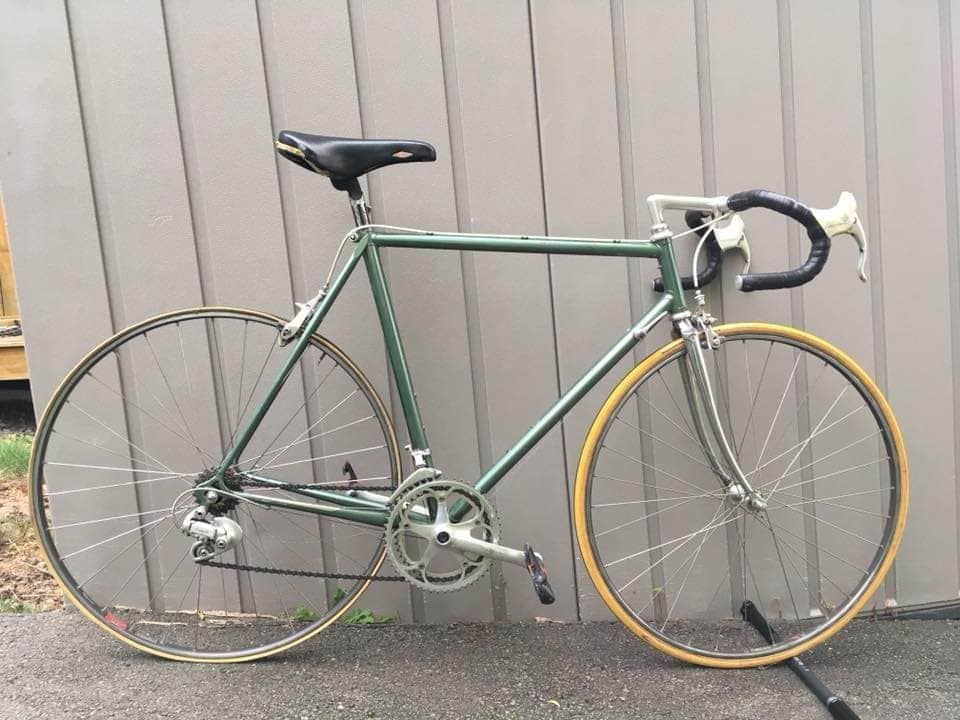
Frame identification
 07-01-22 | 10:58 AM
#26
Senior Member

Joined: Nov 2004
Posts: 23,212
Likes: 3,122
I still have a bunch of 1" threaded steerers that came from Miele. They include several brands including several with internal ribbing. Columbus steerers are easy to identify because they are spiral. I haven't bothered to identify the Japanese ribbed steerers but my recollection (without going to check) is that there are 2 kinds. They are vertical instead of spiral. I also have some steerers without any reinforcing ribs. All of these steerers came from Miele. It appears to me that what brand of steerer they used was related to frame size...
 07-01-22 | 09:33 PM
#27

Senior Member

Joined: Jul 2014
Posts: 1,232
Likes: 903
From: New Zealand
Bikes: 1963? Anquetil , 1973 PX10,1979 PX10,1984 PX10, VITUS 979 PX10DU,1970S ALAN,1985 PSV10,1980s PY10FC,1978 bERTIN,ALAN carbon

 07-04-22 | 03:09 PM
#29

Thread Starter
Newbie
Joined: Jun 2022
Posts: 18
Likes: 0
From: Moncton, New Brunswick, Canada
Bikes: 1986 Marinoni Special, Marinoni Pista Crono, Cinelli Gazzetta, Gardin Unknown
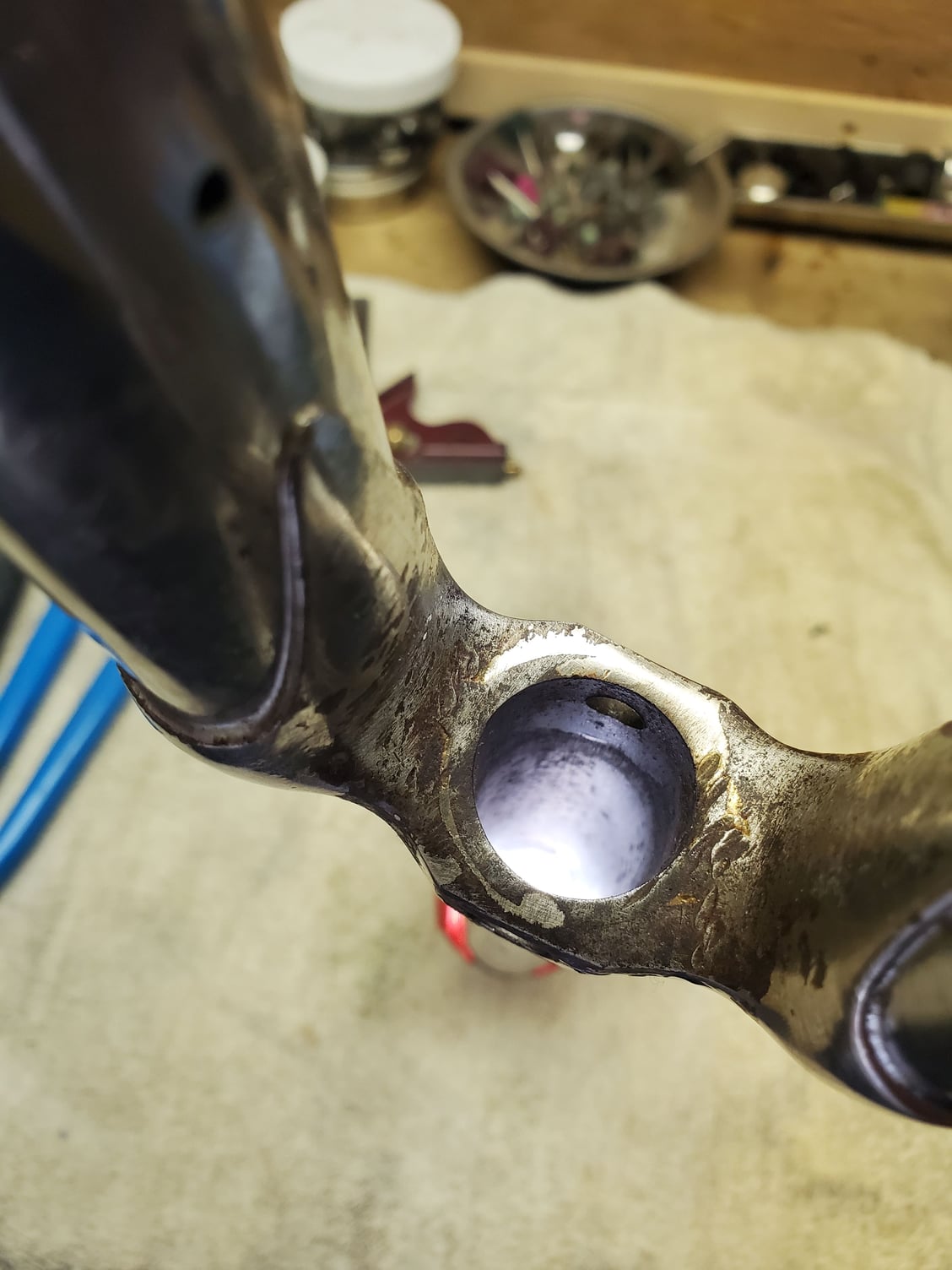
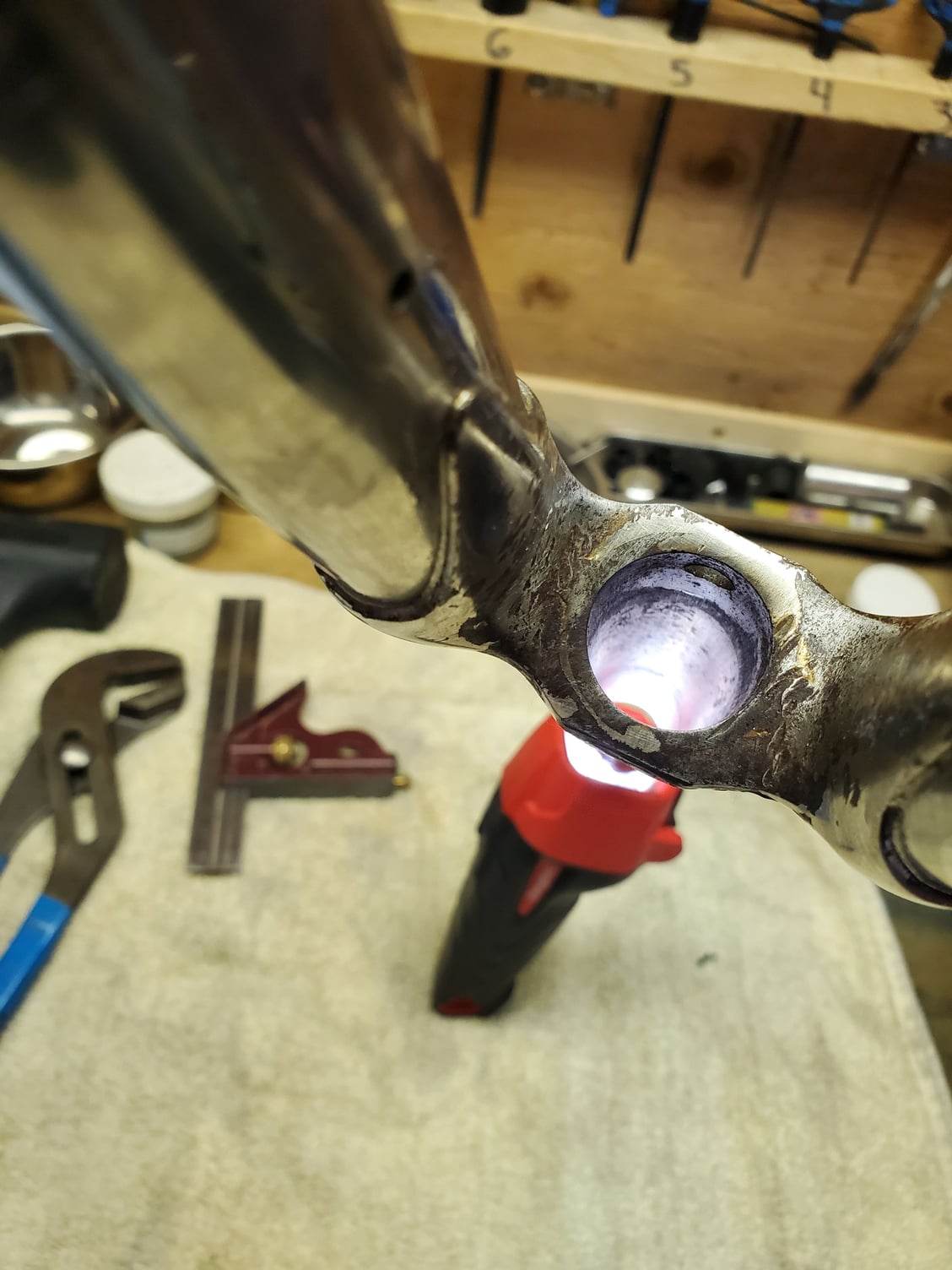
Miele models were built with Columbus, Ishiwata and Tange tubesets. Columbus' butted and spline reinforced steering column employed five helical ridges. Ishiwata's version used five straight ridges, while Tange's version used six, helical ridges. All three, should have external logos, which the OP did not see. It could be a non-spline version or the logo impression could be faint or inadvertently missing. Of the three, a Columbus steerer tube is the most likely to suffer a quality lapse with the logo stamp. Regardless, if it splined, the number and style of the ridges, will identify the manufacturer.
07-04-22 | 03:35 PM
#30
Thread Starter
Newbie
Joined: Jun 2022
Posts: 18
Likes: 0
From: Moncton, New Brunswick, Canada
Bikes: 1986 Marinoni Special, Marinoni Pista Crono, Cinelli Gazzetta, Gardin Unknown
07-04-22 | 03:54 PM
#31
Thread Starter
Newbie
Joined: Jun 2022
Posts: 18
Likes: 0
From: Moncton, New Brunswick, Canada
Bikes: 1986 Marinoni Special, Marinoni Pista Crono, Cinelli Gazzetta, Gardin Unknown
Miele models were built with Columbus, Ishiwata and Tange tubesets. Columbus' butted and spline reinforced steering column employed five helical ridges. Ishiwata's version used five straight ridges, while Tange's version used six, helical ridges. All three, should have external logos, which the OP did not see. It could be a non-spline version or the logo impression could be faint or inadvertently missing. Of the three, a Columbus steerer tube is the most likely to suffer a quality lapse with the logo stamp. Regardless, if it splined, the number and style of the ridges, will identify the manufacturer.

 07-05-22 | 03:59 AM
#33
Thread Starter
Newbie
Joined: Jun 2022
Posts: 18
Likes: 0
From: Moncton, New Brunswick, Canada
Bikes: 1986 Marinoni Special, Marinoni Pista Crono, Cinelli Gazzetta, Gardin Unknown
From older forum threads i've gone through, apparently the absence of steerer tube rifling does not necessarily mean it is NOT Columbus (lower en tubes perhaps?). I've also heard of Cromor steerers without rifling. The blades have the correct dimensions for Columbus oval at 28mm x19mm but apparently blades from other manufacturers had these same dimensions as well.
07-05-22 | 07:10 AM
#34

Old fart


Joined: Nov 2004
Posts: 26,324
Likes: 5,233
From: Appleton WI
Bikes: Several, mostly not name brands.
I still have a bunch of 1" threaded steerers that came from Miele. They include several brands including several with internal ribbing. Columbus steerers are easy to identify because they are spiral. I haven't bothered to identify the Japanese ribbed steerers but my recollection (without going to check) is that there are 2 kinds.
 07-05-22 | 09:29 AM
#35
framebuilder

Joined: Dec 2009
Posts: 1,786
Likes: 2,703
From: Niles, Michigan
Thanks John for providing me inside steerer reinforcement information so I can now identify the manufacturer of some the steerers I got from Miele. In that supply are steerers that are plain on the inside (no reinforcements either helical or straight) and have no identifying marks (like the Columbus dove) on the outside either so I know who made them.
In this picture is a fork made by Miele. I brought it home straight from the factory. It is using the same fork crown and plain steerer as the OP's but does have Columbus forged dropouts. I gathered from my bins other frame materials I brought back from Miele that was also used on the frame in the original pictures.
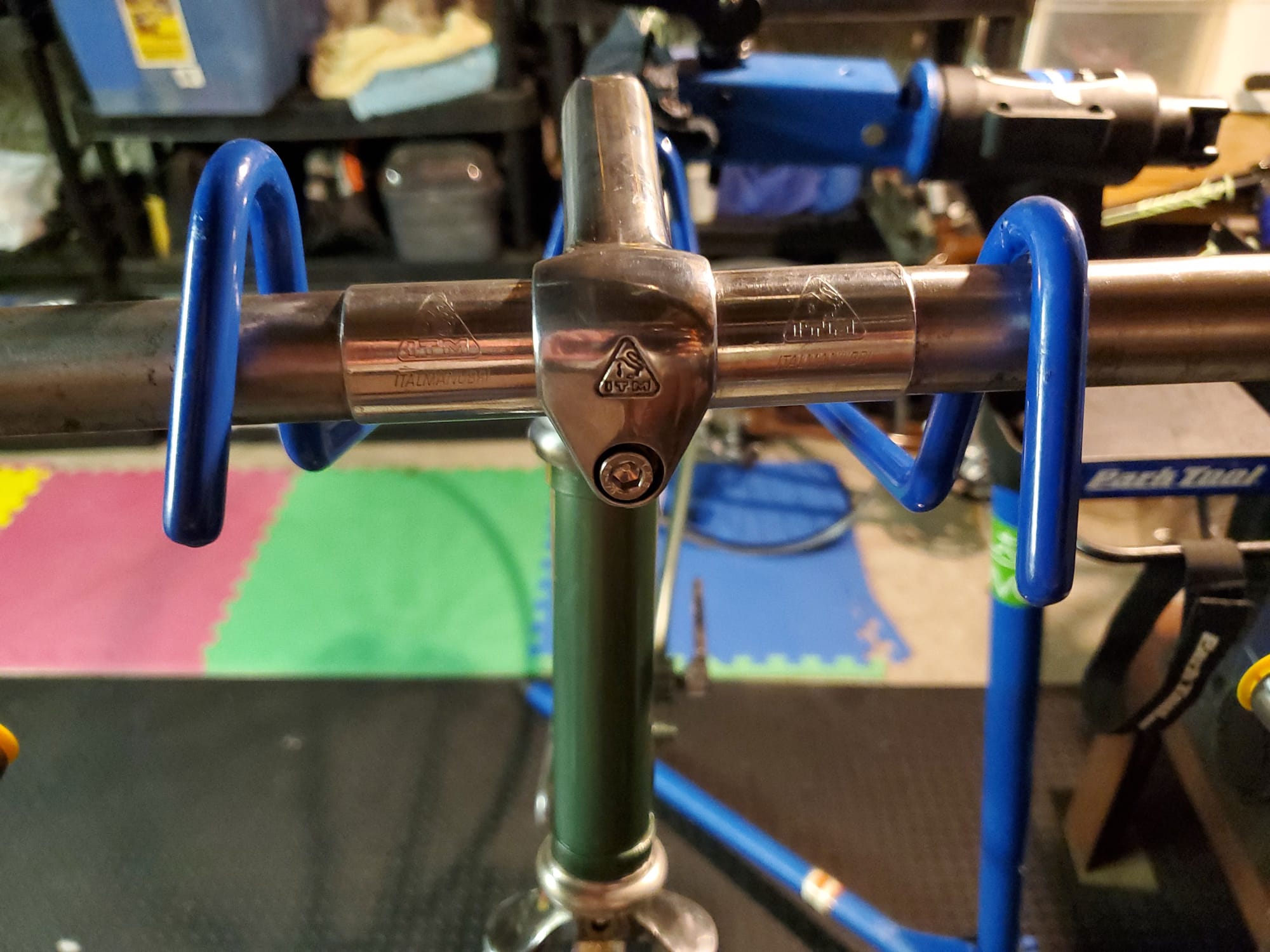
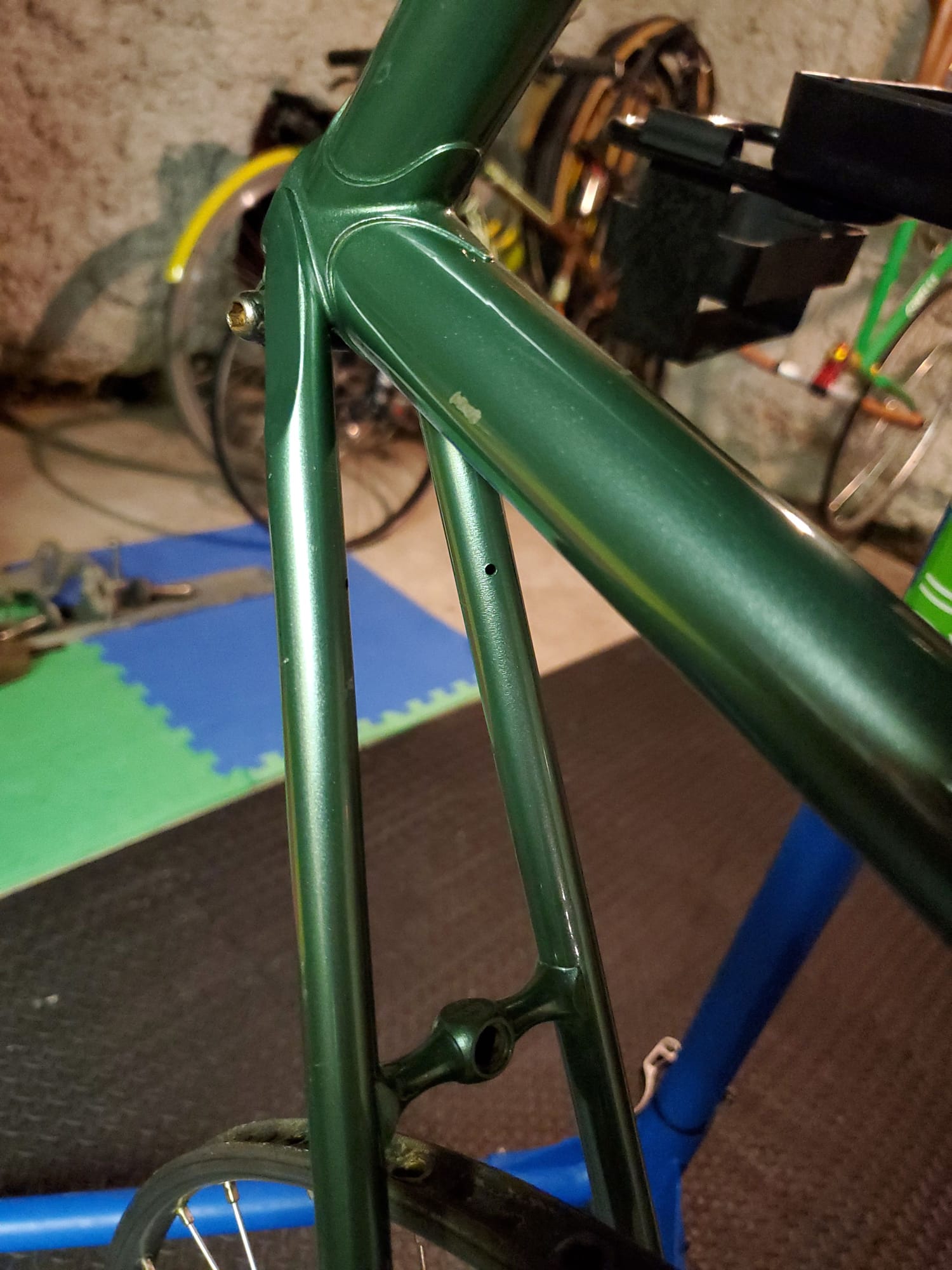
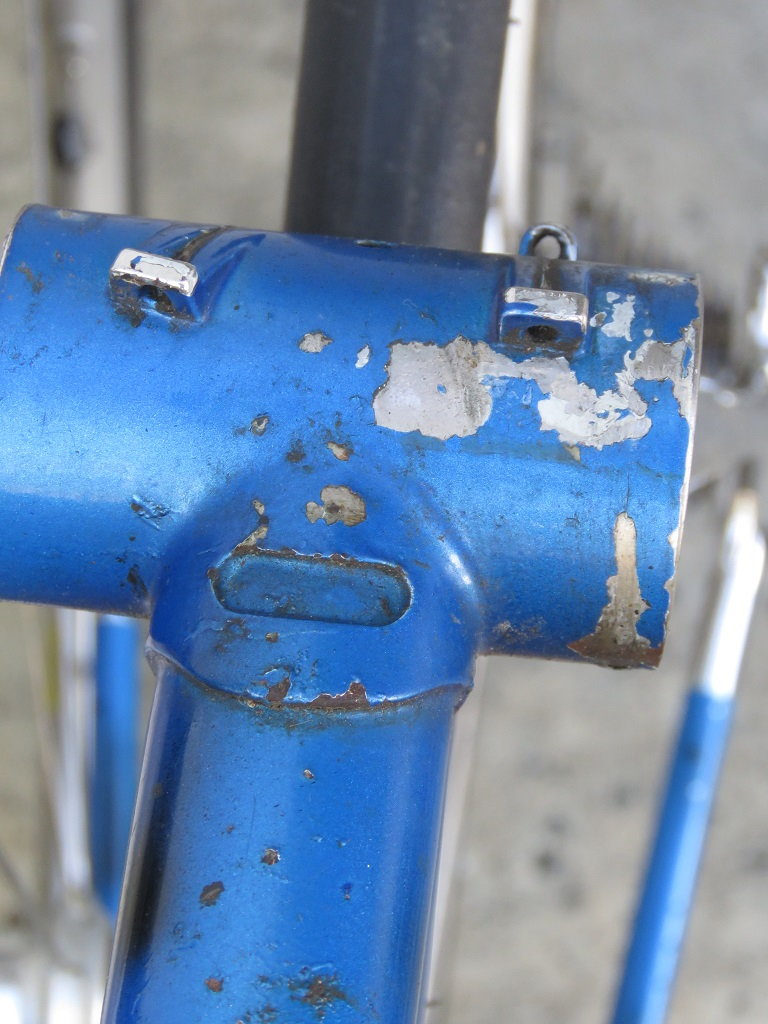
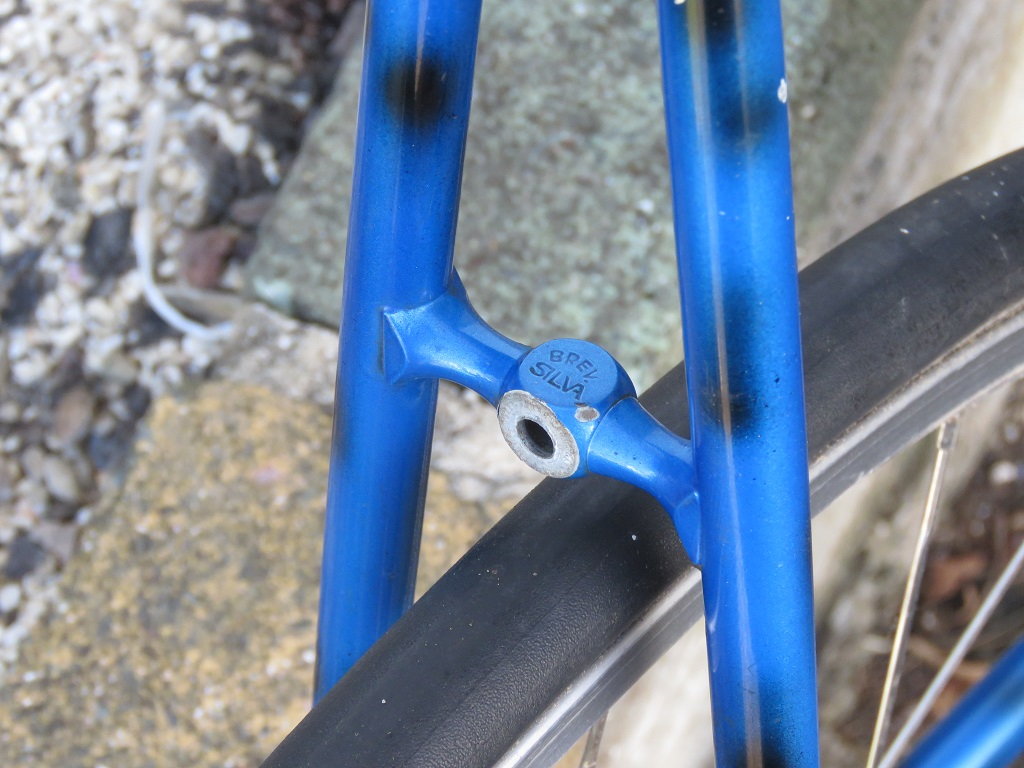
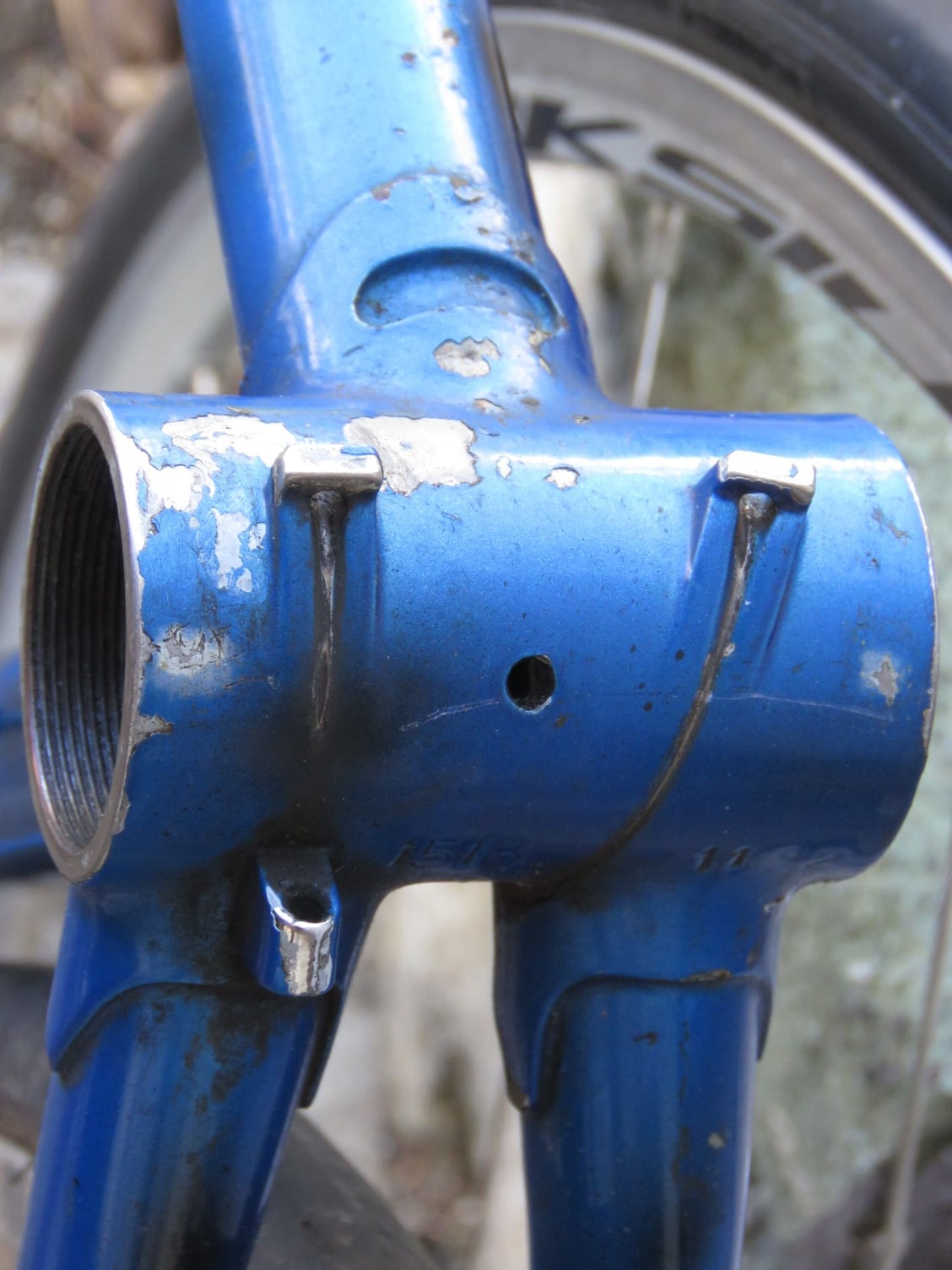
One of the most diagnostic identifying frame maker characteristics is the treatment used to join the dropouts to the blades and stays. The treatment in the OP's is exactly the same as all the Miele's I have observed. It is quite possible that his frame was made by Miele but sold under another brand name. Or maybe it is just a Miele.
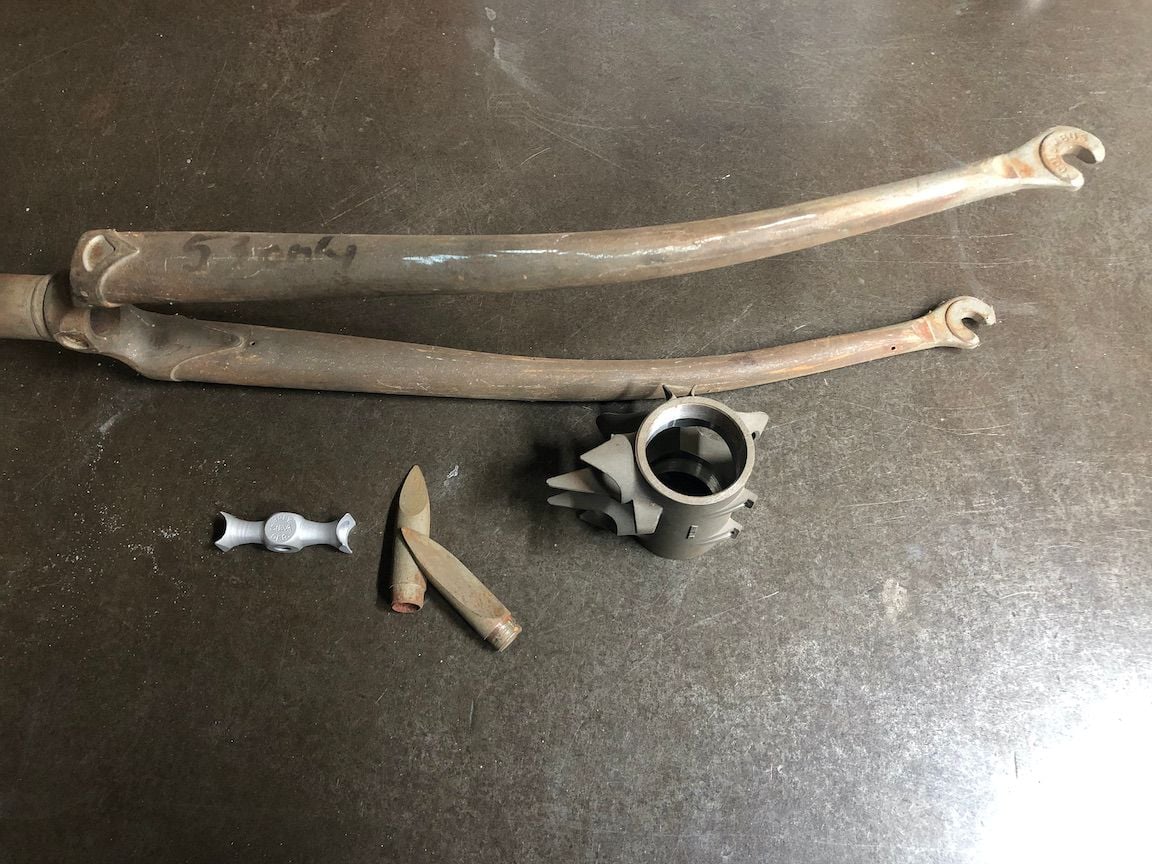
A Miele made fork and other frame materials that came from their factory.
In this picture is a fork made by Miele. I brought it home straight from the factory. It is using the same fork crown and plain steerer as the OP's but does have Columbus forged dropouts. I gathered from my bins other frame materials I brought back from Miele that was also used on the frame in the original pictures.
One of the most diagnostic identifying frame maker characteristics is the treatment used to join the dropouts to the blades and stays. The treatment in the OP's is exactly the same as all the Miele's I have observed. It is quite possible that his frame was made by Miele but sold under another brand name. Or maybe it is just a Miele.
A Miele made fork and other frame materials that came from their factory.

 07-06-22 | 05:48 AM
#37
Thread Starter
Newbie
Joined: Jun 2022
Posts: 18
Likes: 0
From: Moncton, New Brunswick, Canada
Bikes: 1986 Marinoni Special, Marinoni Pista Crono, Cinelli Gazzetta, Gardin Unknown
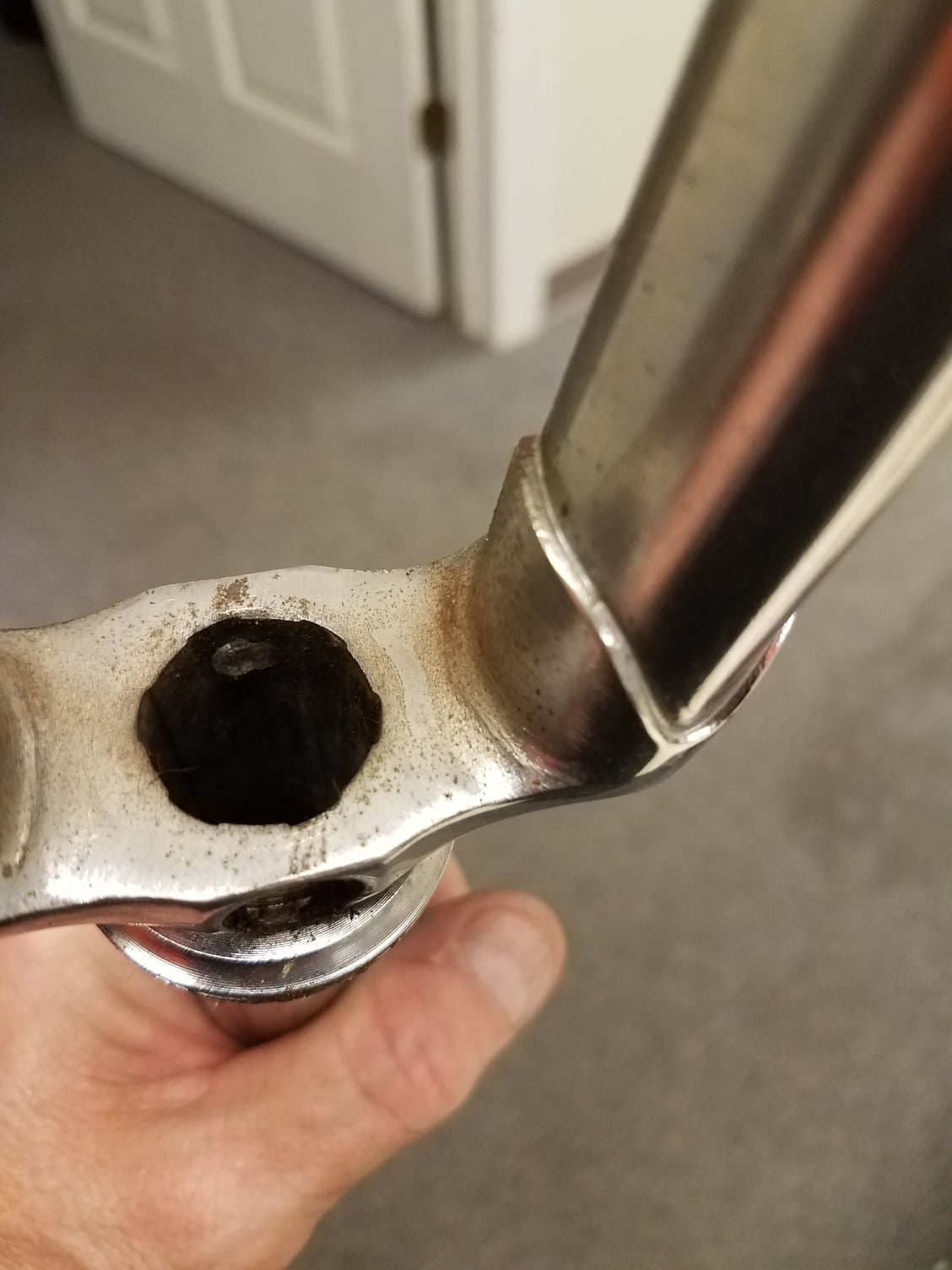
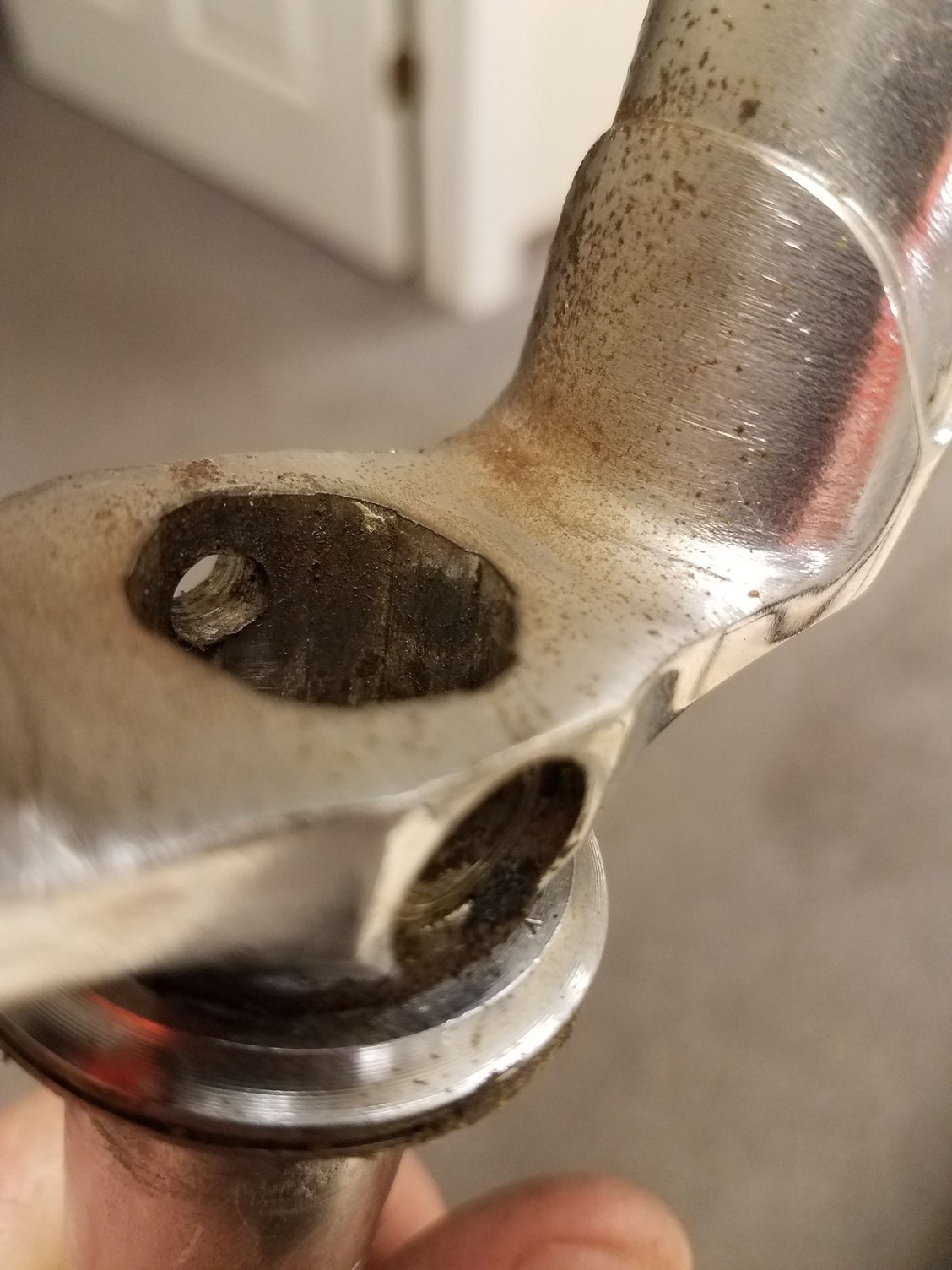
Thanks John for providing me inside steerer reinforcement information so I can now identify the manufacturer of some the steerers I got from Miele. In that supply are steerers that are plain on the inside (no reinforcements either helical or straight) and have no identifying marks (like the Columbus dove) on the outside either so I know who made them.
In this picture is a fork made by Miele. I brought it home straight from the factory. It is using the same fork crown and plain steerer as the OP's but does have Columbus forged dropouts. I gathered from my bins other frame materials I brought back from Miele that was also used on the frame in the original pictures.
One of the most diagnostic identifying frame maker characteristics is the treatment used to join the dropouts to the blades and stays. The treatment in the OP's is exactly the same as all the Miele's I have observed. It is quite possible that his frame was made by Miele but sold under another brand name. Or maybe it is just a Miele.
A Miele made fork and other frame materials that came from their factory.
In this picture is a fork made by Miele. I brought it home straight from the factory. It is using the same fork crown and plain steerer as the OP's but does have Columbus forged dropouts. I gathered from my bins other frame materials I brought back from Miele that was also used on the frame in the original pictures.
One of the most diagnostic identifying frame maker characteristics is the treatment used to join the dropouts to the blades and stays. The treatment in the OP's is exactly the same as all the Miele's I have observed. It is quite possible that his frame was made by Miele but sold under another brand name. Or maybe it is just a Miele.
A Miele made fork and other frame materials that came from their factory.

 07-06-22 | 07:59 AM
#38
framebuilder
Joined: Dec 2009
Posts: 1,786
Likes: 2,703
From: Niles, Michigan
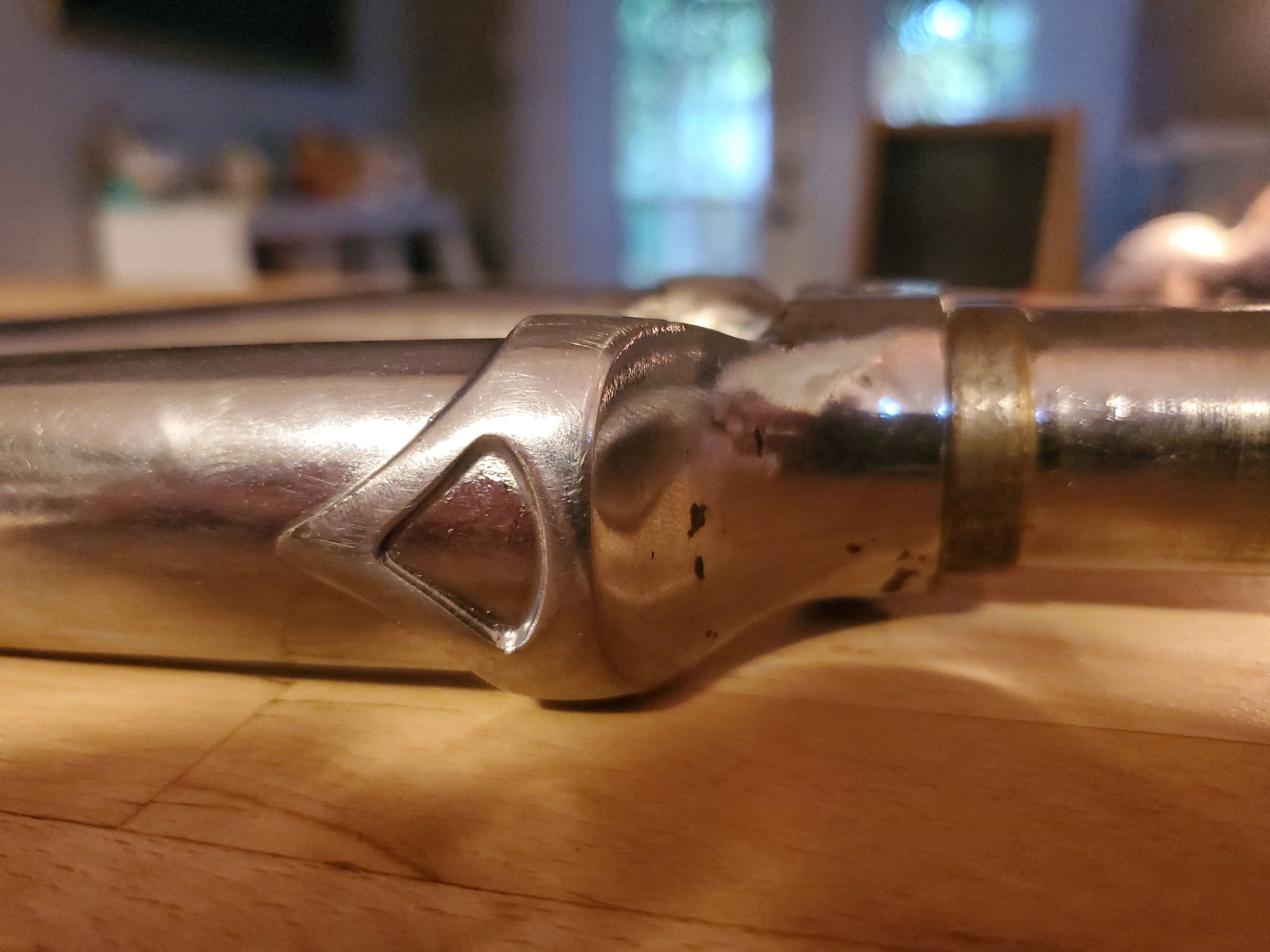
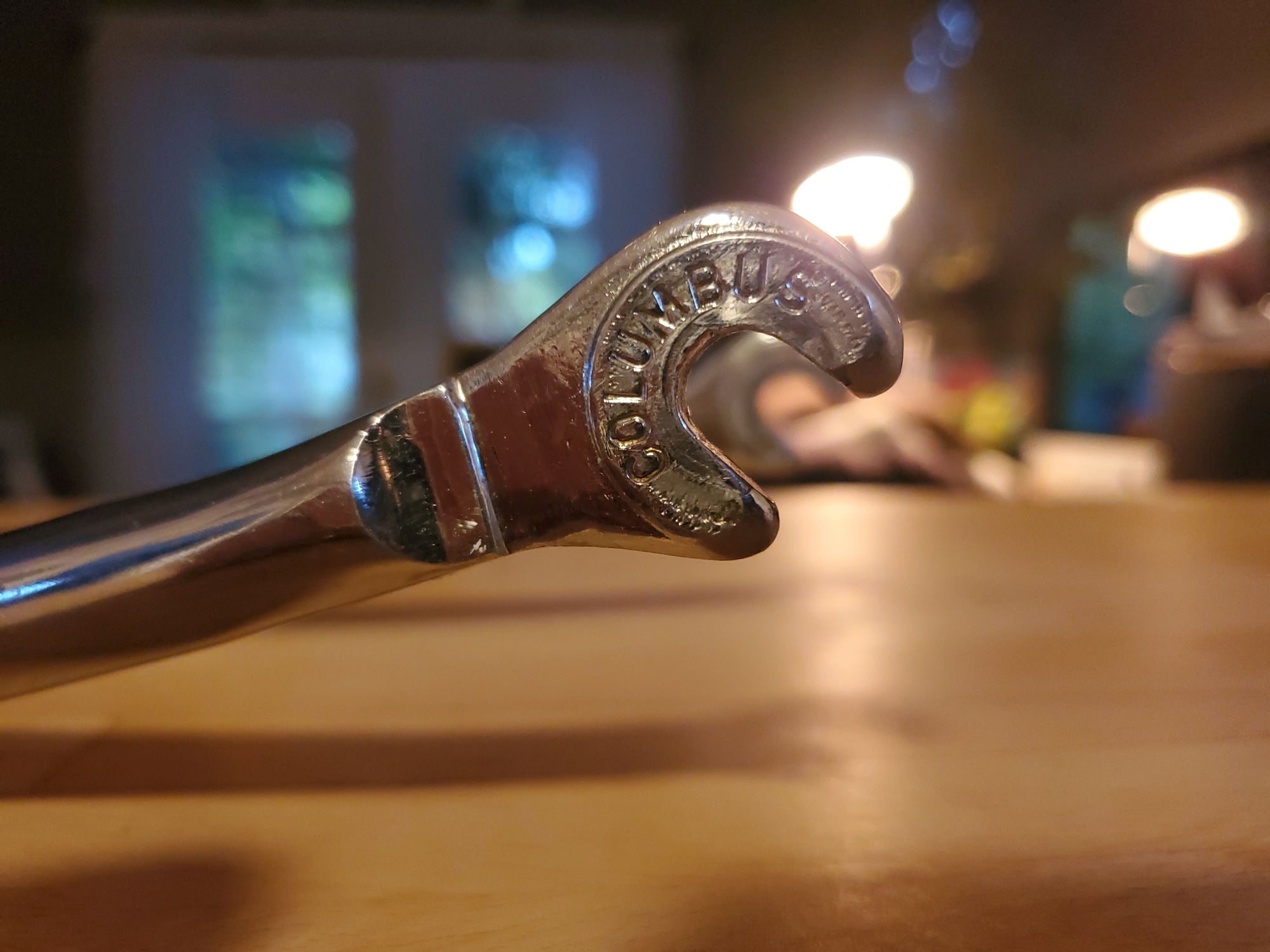
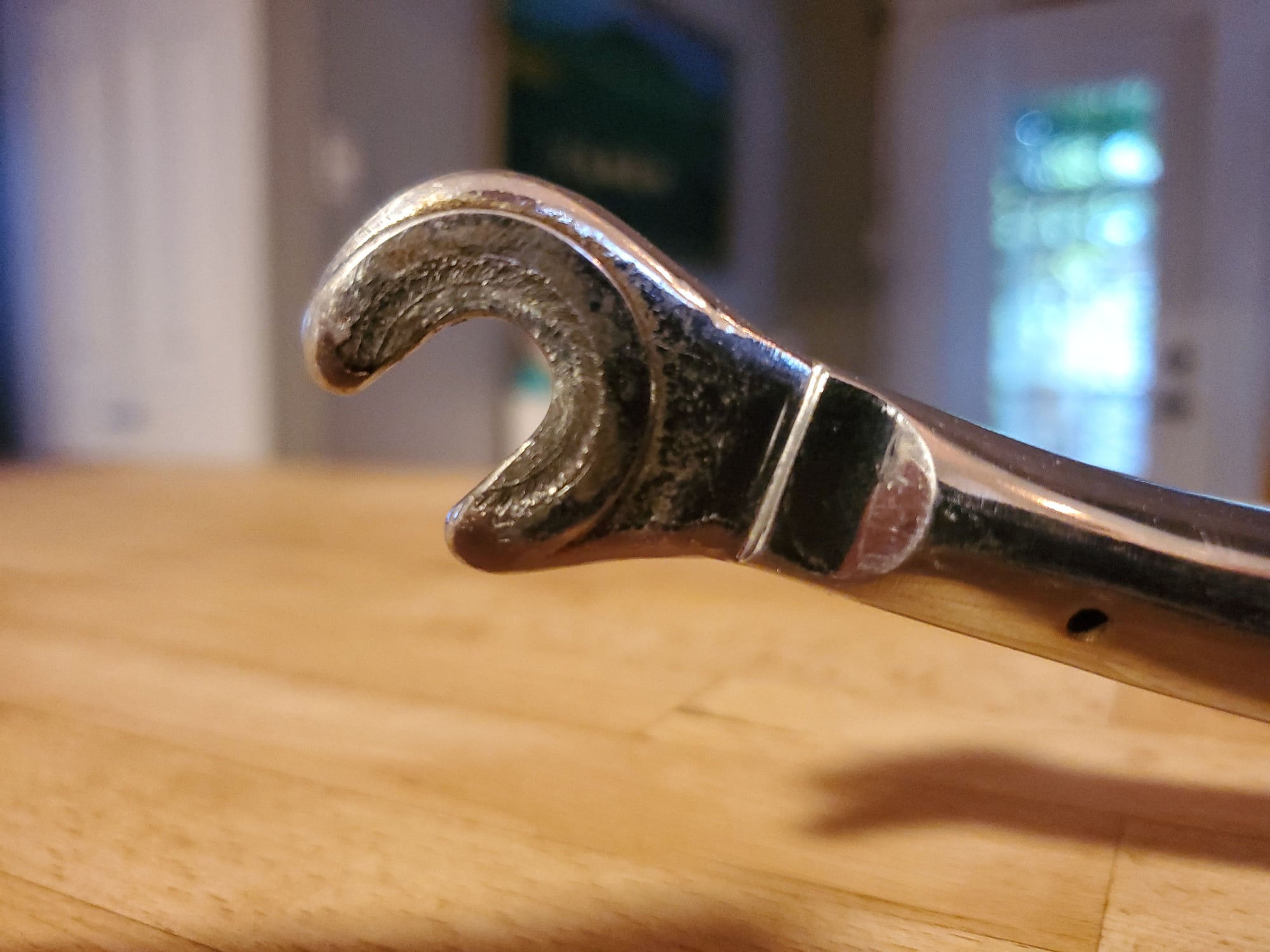
Now that you show a picture with the Columbus front dropout and the treatment between it and the fork blade, there can be no doubt your fork was made by Miele. Another strong indicator is the position and size of the breathing hole to let hot air out when it is brazed. The one on your fork and my fork are exactly the same. Miele did chrome plating too.
However I don't know if Miele subcontracted frames to other sellers that used a different brand name. I'm not familiar with the different Miele models either. Just like all the different brands of steerers I got from their factory when it closed, so did they have all kinds of different brands of tubing too. I didn't get at their auction much tubing but what I did get was Tange #1.
I measured my fork and from the center of the brake hole to the center of a front axle = 360mm. If you subtract a 700C rim diameter of 311, that leaves 49mm for brake clearance. That means the brakes shoes have to be set at the bottom of a 39/49 or 50 short reach brake. That leave the most space for a tire. In other words a 28m tire will fit (that wouldn't fit if the fork was designed to the brake shoes to be in the middle of the slot.
The fork rake was 43mm.
However I don't know if Miele subcontracted frames to other sellers that used a different brand name. I'm not familiar with the different Miele models either. Just like all the different brands of steerers I got from their factory when it closed, so did they have all kinds of different brands of tubing too. I didn't get at their auction much tubing but what I did get was Tange #1.
I measured my fork and from the center of the brake hole to the center of a front axle = 360mm. If you subtract a 700C rim diameter of 311, that leaves 49mm for brake clearance. That means the brakes shoes have to be set at the bottom of a 39/49 or 50 short reach brake. That leave the most space for a tire. In other words a 28m tire will fit (that wouldn't fit if the fork was designed to the brake shoes to be in the middle of the slot.
The fork rake was 43mm.
 07-06-22 | 04:06 PM
#39
Thread Starter
Newbie
Joined: Jun 2022
Posts: 18
Likes: 0
From: Moncton, New Brunswick, Canada
Bikes: 1986 Marinoni Special, Marinoni Pista Crono, Cinelli Gazzetta, Gardin Unknown
Now that you show a picture with the Columbus front dropout and the treatment between it and the fork blade, there can be no doubt your fork was made by Miele. Another strong indicator is the position and size of the breathing hole to let hot air out when it is brazed. The one on your fork and my fork are exactly the same. Miele did chrome plating too.
However I don't know if Miele subcontracted frames to other sellers that used a different brand name. I'm not familiar with the different Miele models either. Just like all the different brands of steerers I got from their factory when it closed, so did they have all kinds of different brands of tubing too. I didn't get at their auction much tubing but what I did get was Tange #1.
I measured my fork and from the center of the brake hole to the center of a front axle = 360mm. If you subtract a 700C rim diameter of 311, that leaves 49mm for brake clearance. That means the brakes shoes have to be set at the bottom of a 39/49 or 50 short reach brake. That leave the most space for a tire. In other words a 28m tire will fit (that wouldn't fit if the fork was designed to the brake shoes to be in the middle of the slot.
The fork rake was 43mm.
However I don't know if Miele subcontracted frames to other sellers that used a different brand name. I'm not familiar with the different Miele models either. Just like all the different brands of steerers I got from their factory when it closed, so did they have all kinds of different brands of tubing too. I didn't get at their auction much tubing but what I did get was Tange #1.
I measured my fork and from the center of the brake hole to the center of a front axle = 360mm. If you subtract a 700C rim diameter of 311, that leaves 49mm for brake clearance. That means the brakes shoes have to be set at the bottom of a 39/49 or 50 short reach brake. That leave the most space for a tire. In other words a 28m tire will fit (that wouldn't fit if the fork was designed to the brake shoes to be in the middle of the slot.
The fork rake was 43mm.
07-06-22 | 04:27 PM
#40
framebuilder
Joined: Dec 2009
Posts: 1,786
Likes: 2,703
From: Niles, Michigan
I get the same measurement, ~360mm from brake hole to center of hub. I measured a rake of 41.5mm but my technique is quite rudimentary. The brake reach has indeed made finding suitable brakes a bit more complicated. I tried a 50mm reach Modolo caliper I have and it's just a bit short. Some older standard reach calipers have a 52mm reach and should work. Considering a set of Grand Cru long reach as well.
07-06-22 | 05:21 PM
#41
Thread Starter
Newbie
Joined: Jun 2022
Posts: 18
Likes: 0
From: Moncton, New Brunswick, Canada
Bikes: 1986 Marinoni Special, Marinoni Pista Crono, Cinelli Gazzetta, Gardin Unknown
There are several things you can do to help make a 40/50 Campy brake to work wth your fork. Many brakes come with a kind of spacer that holds out the brake a little further from the fork crown. I'm not talking about the star washer although a couple of them might work too. It is thicker. This is usually to get the brake away from hitting the lower headset. If the brake goes out a bit, the blocks have to be set a bit higher in the slot because the rim is rising up. It works in reverse in the rear. You can also safely file use a title on the brakes slots to length them a little. The best way to do this is to remove the brake blocks of course and then use a round file the same diameter as the slot and place it across both slots to help keep it oriented. Of course there are many 47/57 brakes both vintage and modern dual pivots (that brake even better) that will work.
08-08-22 | 08:24 PM
#42
Thread Starter
Newbie
Joined: Jun 2022
Posts: 18
Likes: 0
From: Moncton, New Brunswick, Canada
Bikes: 1986 Marinoni Special, Marinoni Pista Crono, Cinelli Gazzetta, Gardin Unknown
Now that you show a picture with the Columbus front dropout and the treatment between it and the fork blade, there can be no doubt your fork was made by Miele. Another strong indicator is the position and size of the breathing hole to let hot air out when it is brazed. The one on your fork and my fork are exactly the same. Miele did chrome plating too.
However I don't know if Miele subcontracted frames to other sellers that used a different brand name. I'm not familiar with the different Miele models either. Just like all the different brands of steerers I got from their factory when it closed, so did they have all kinds of different brands of tubing too. I didn't get at their auction much tubing but what I did get was Tange #1.
I measured my fork and from the center of the brake hole to the center of a front axle = 360mm. If you subtract a 700C rim diameter of 311, that leaves 49mm for brake clearance. That means the brakes shoes have to be set at the bottom of a 39/49 or 50 short reach brake. That leave the most space for a tire. In other words a 28m tire will fit (that wouldn't fit if the fork was designed to the brake shoes to be in the middle of the slot.
The fork rake was 43mm.
However I don't know if Miele subcontracted frames to other sellers that used a different brand name. I'm not familiar with the different Miele models either. Just like all the different brands of steerers I got from their factory when it closed, so did they have all kinds of different brands of tubing too. I didn't get at their auction much tubing but what I did get was Tange #1.
I measured my fork and from the center of the brake hole to the center of a front axle = 360mm. If you subtract a 700C rim diameter of 311, that leaves 49mm for brake clearance. That means the brakes shoes have to be set at the bottom of a 39/49 or 50 short reach brake. That leave the most space for a tire. In other words a 28m tire will fit (that wouldn't fit if the fork was designed to the brake shoes to be in the middle of the slot.
The fork rake was 43mm.