Shellac, revisited (I think)
 09-18-23 | 01:05 PM
#51
Junior Member

Joined: May 2012
Posts: 167
Likes: 89
From: Ontario
Bikes: Road: 1972 Raleigh Competition,1989 Marinoni, 1990 Limongi. MTN: 1990 GT Team Avalanche, 1991 Rocky Mountain Blizzard, GT Team RTS , Rocky Mountain MSL 50 Element, CCM fat bike
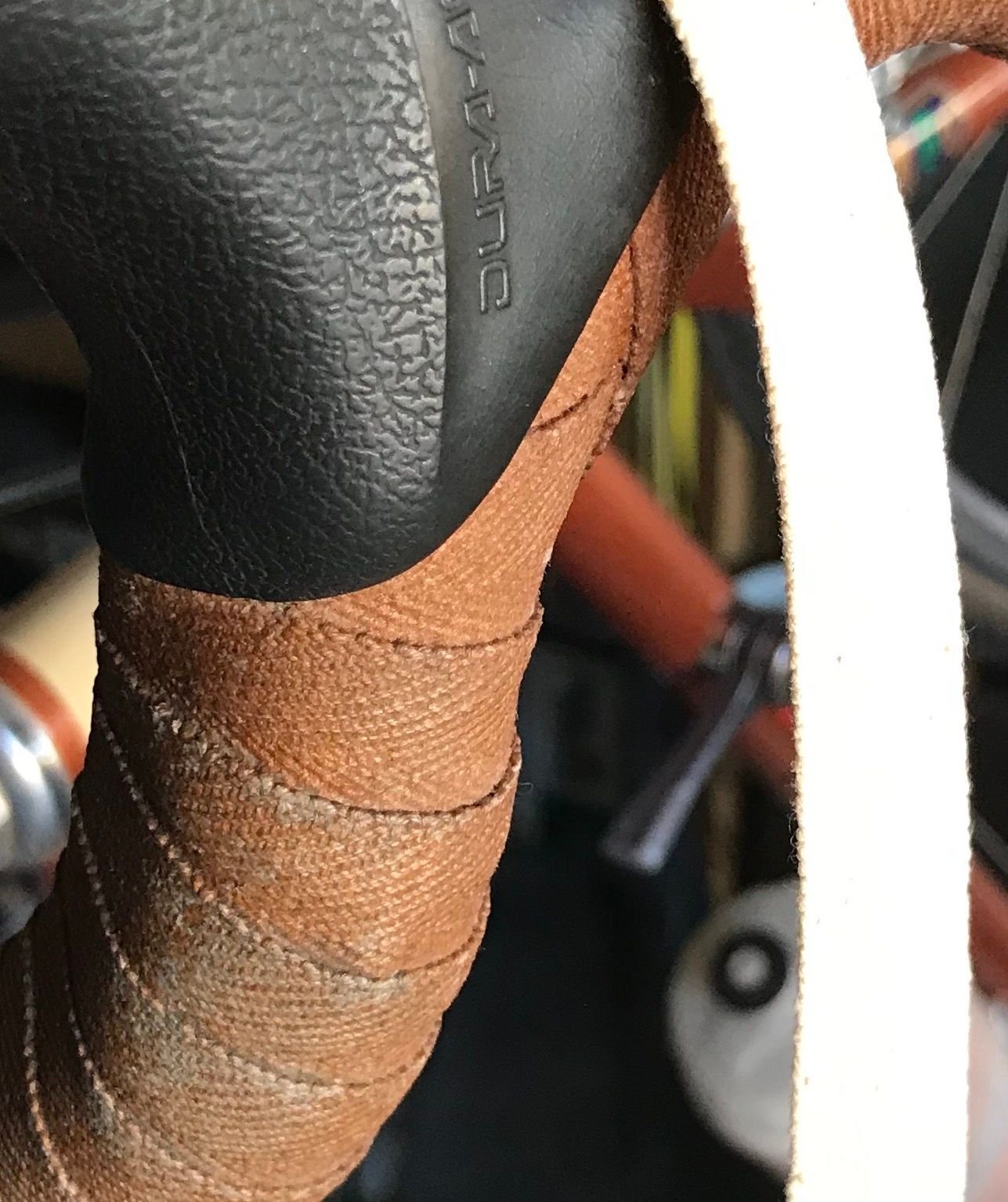
I started with a wrap of white hockey tape and two strips of 2 mm thick bar tape parallel to to length of the bar at the top to the hoods. I then wrapped with white Newbaums from the bar ends. Before using the shellac I tried to tint the tape with coffee and some diluted brown craft paint. four coats of amber shellac was applied.
The thickened bar above the hoods adds to comfort, but there is minimal padding. The final result has more amber in it than I had hoped, but in most lighting it looks fine.
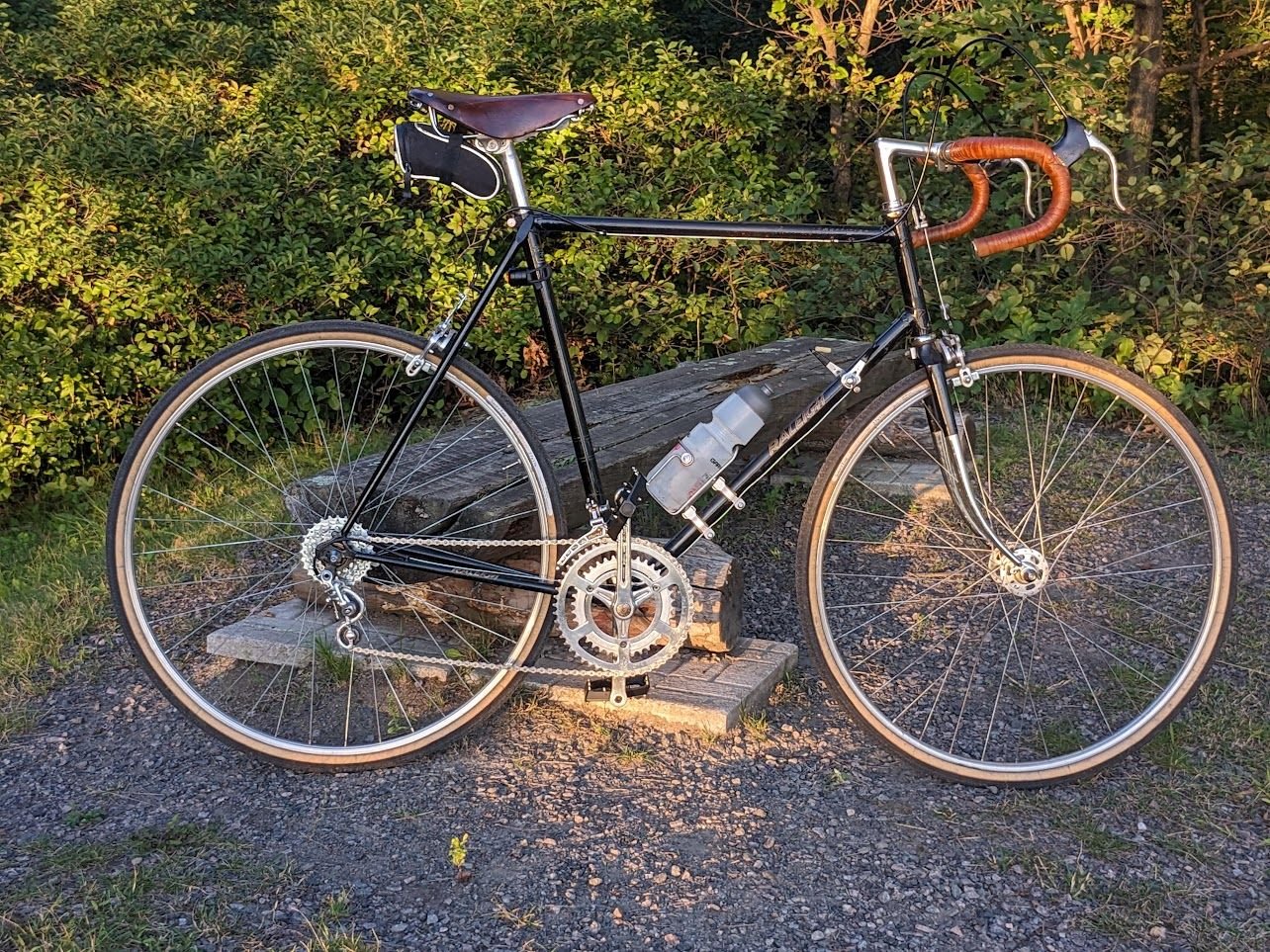

The thickened bar above the hoods adds to comfort, but there is minimal padding. The final result has more amber in it than I had hoped, but in most lighting it looks fine.
Last edited by Paul Waque; 09-18-23 at 01:13 PM. Reason: detail added.

 09-18-23 | 05:56 PM
#52

Senior Member

Joined: May 2012
Posts: 5,058
Likes: 4,926
From: Point Reyes Station, California
Bikes: Indeed!
Mine originally looked like this:

Four long rides in the bright sun later it looked like this:

The shellac will, however, keep it from accumulating the embedded dirt in the second photo.
Brent
__________________
"I have a tendency to meander sometimes." B.G.
"I have a tendency to meander sometimes." B.G.
09-18-23 | 06:18 PM
#53

Senior Member


Joined: Sep 2013
Posts: 2,799
Likes: 3,827
From: Chicago
Bikes: '69 Raleigh Sports '72 Cinelli Super Corsa '78 Motobecane Le Champion '84 Schwinn High Sierra '85 Trek 830 '88 Merckx Team ADR Corsa Extra
The purple Newbaums, even without shellac, will mellow a lot all by itself with several hours of sun exposure.
Mine originally looked like this:
Four long rides in the bright sun later it looked like this:
The shellac will, however, keep it from accumulating the embedded dirt in the second photo.
Brent
Mine originally looked like this:
Four long rides in the bright sun later it looked like this:
The shellac will, however, keep it from accumulating the embedded dirt in the second photo.
Brent
__________________
09-18-23 | 07:30 PM
#54
Senior Member

Joined: Oct 2020
Posts: 1,529
Likes: 1,198
From: Phoenix, AZ
Bikes: 1964(?) Frejus Tour de France, 1967(?) Dawes Double Blue, 1979 Trek 710, 1982 Claud Butler Dalesman, 1983 Schwinn Paramount Elite, 1984 Miyata 1000, 2014 Brompton, maybe a couple more
Technical note: The photo of the experimental bars above includes a strip of the amber tape that was removed from the Peugeot.
I've been using the Bullseye straight out of the can without dilution. The shellac seems to seep in very readily when you are applying it, but the shellac obviously did not seep in all the way, so the covered half of the tape is still basically naked. On the plus side, it was not terribly difficult to remove. On the minus side, it is probably not as bullet-proof as if the shellac had been absorbed all the way through. Also, if you double wrap and use the full strength shellac, you probably have a layer and a half of plain cloth tape under the shellac. I imagine that would eventually compress and provide the shellac layer with less support, leading to cracking and deterioration.
Would be interested to hear observations of long-time shellac-ers on whether diluted shellac for the first application seeps in better, and whether an untreated layer of cloth underneath affects durability.
I've been using the Bullseye straight out of the can without dilution. The shellac seems to seep in very readily when you are applying it, but the shellac obviously did not seep in all the way, so the covered half of the tape is still basically naked. On the plus side, it was not terribly difficult to remove. On the minus side, it is probably not as bullet-proof as if the shellac had been absorbed all the way through. Also, if you double wrap and use the full strength shellac, you probably have a layer and a half of plain cloth tape under the shellac. I imagine that would eventually compress and provide the shellac layer with less support, leading to cracking and deterioration.
Would be interested to hear observations of long-time shellac-ers on whether diluted shellac for the first application seeps in better, and whether an untreated layer of cloth underneath affects durability.
09-19-23 | 06:57 AM
#55
Senior Member
Joined: Jan 2013
Posts: 3,151
Likes: 887
Bikes: too many sparkly Italians, some sweet Americans and a couple interesting Japanese
Technical note: The photo of the experimental bars above includes a strip of the amber tape that was removed from the Peugeot.
I've been using the Bullseye straight out of the can without dilution. The shellac seems to seep in very readily when you are applying it, but the shellac obviously did not seep in all the way, so the covered half of the tape is still basically naked. On the plus side, it was not terribly difficult to remove. On the minus side, it is probably not as bullet-proof as if the shellac had been absorbed all the way through. Also, if you double wrap and use the full strength shellac, you probably have a layer and a half of plain cloth tape under the shellac. I imagine that would eventually compress and provide the shellac layer with less support, leading to cracking and deterioration.
Would be interested to hear observations of long-time shellac-ers on whether diluted shellac for the first application seeps in better, and whether an untreated layer of cloth underneath affects durability.
I've been using the Bullseye straight out of the can without dilution. The shellac seems to seep in very readily when you are applying it, but the shellac obviously did not seep in all the way, so the covered half of the tape is still basically naked. On the plus side, it was not terribly difficult to remove. On the minus side, it is probably not as bullet-proof as if the shellac had been absorbed all the way through. Also, if you double wrap and use the full strength shellac, you probably have a layer and a half of plain cloth tape under the shellac. I imagine that would eventually compress and provide the shellac layer with less support, leading to cracking and deterioration.
Would be interested to hear observations of long-time shellac-ers on whether diluted shellac for the first application seeps in better, and whether an untreated layer of cloth underneath affects durability.