


Shellac, revisited (I think)
 09-06-22 | 05:31 PM
#1

Thread Starter
Senior Member


Joined: Dec 2004
Posts: 15,400
Likes: 8,319
From: Seattle area
Bikes: Bikes??? Thought this was social media?!?
Shellac, revisited (I think)
Not sure I have seen a shellac thread in ages.
But here is the twist - anybody ever used a spray-on can of shellac?
Share your shellac experiences.
I will post spray-on results after the deed is done.
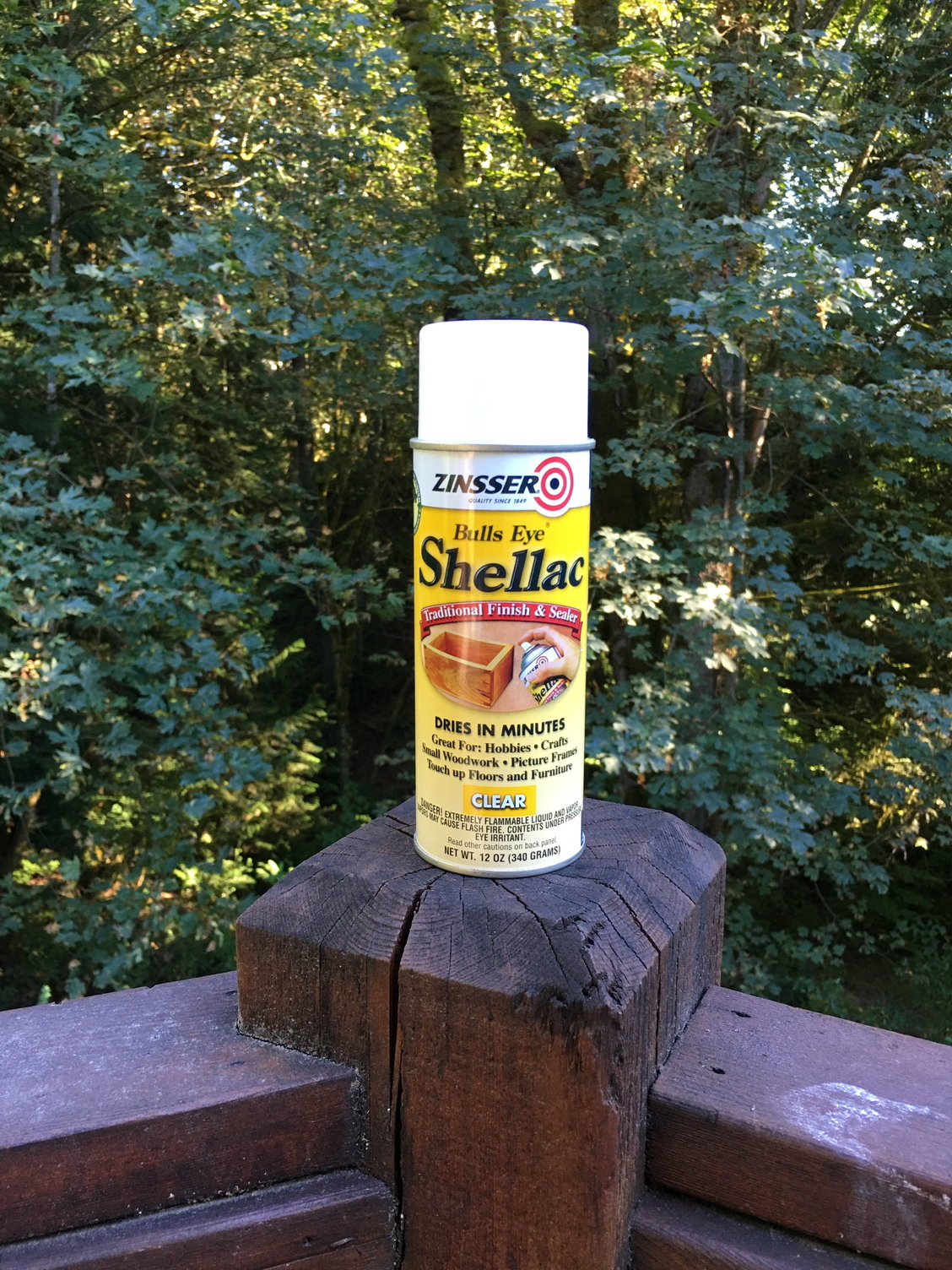
the ‘59 Rickert needs a touch of old fashioned. Besides the bar tape is too yellow, so maybe the clear shellac will darken it. No chance to add a few flakes of Amber. But oh the spray on ease and lack of prep.
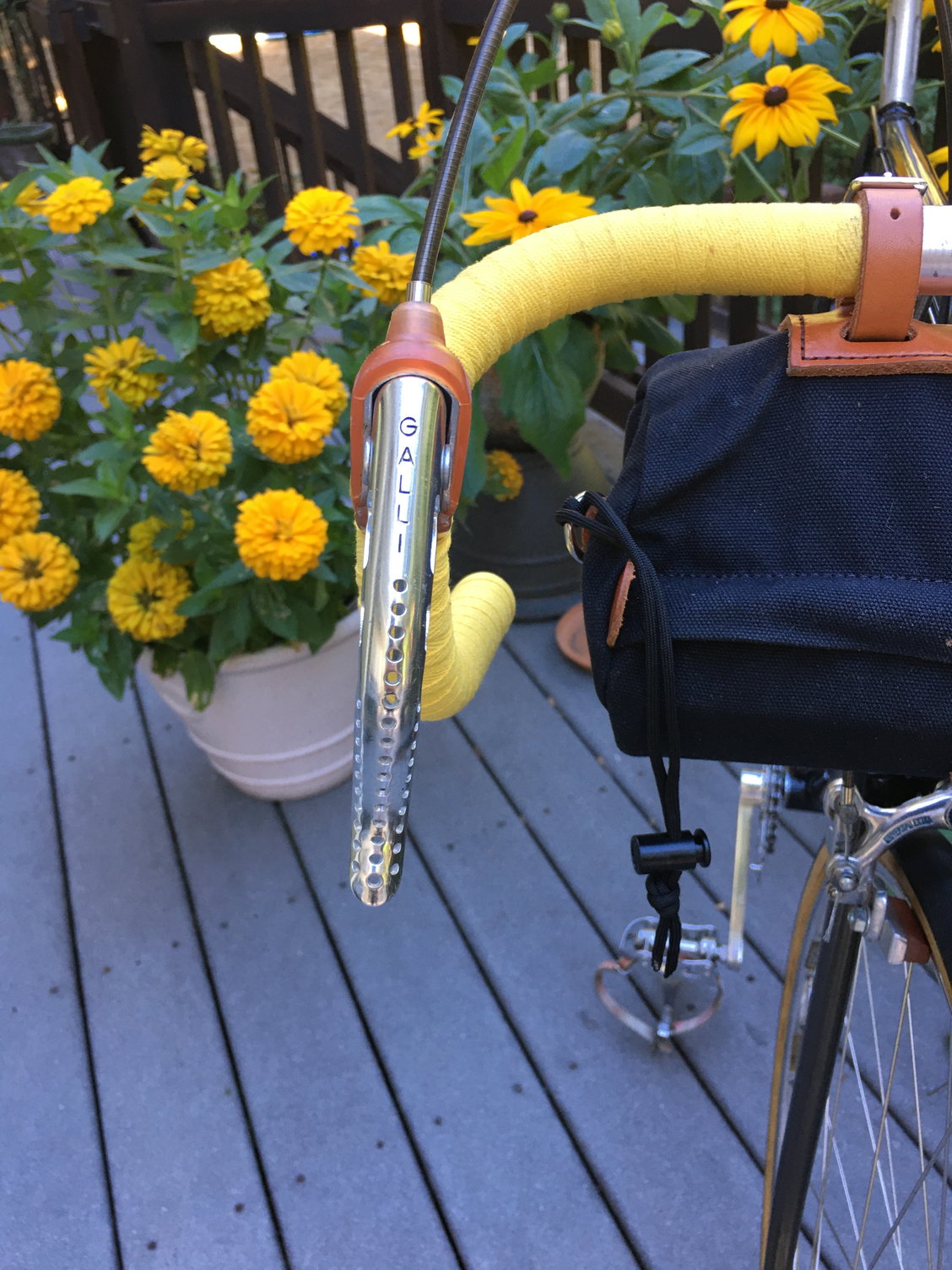
But here is the twist - anybody ever used a spray-on can of shellac?
Share your shellac experiences.
I will post spray-on results after the deed is done.
the ‘59 Rickert needs a touch of old fashioned. Besides the bar tape is too yellow, so maybe the clear shellac will darken it. No chance to add a few flakes of Amber. But oh the spray on ease and lack of prep.
__________________
Vintage, modern, e-road. It is a big cycling universe.
Vintage, modern, e-road. It is a big cycling universe.

 09-06-22 | 06:09 PM
#2

Abuse Magnet
Joined: Jun 2012
Posts: 1,881
Likes: 188
From: Colorado
Bikes: '91 Mtn Tek Vertical, '74 Raleigh Sports, '72 Raleigh Twenty, '84 Univega Gran Turismo, '09 Surly Karate Monkey, '92 Burley Rock-n-Roll, '86 Miyata 310, '76 Raleigh Shopper
I wouldn't use spray shellac on bar tape. The spray will get all over everything.
 09-06-22 | 07:33 PM
#3


I use spray shellac on all kinds of wood finishing projects but no reason to spray when brush-painting the same Bullseye "blond" shellac is much more controllable (on handlebar tape or hemp twine).
Or you can make your own with pure alcohol and super blond shellac flakes
Or you can make your own with pure alcohol and super blond shellac flakes
09-06-22 | 08:05 PM
#4

Bike Butcher of Portland

Joined: Jul 2014
Posts: 12,486
Likes: 8,054
From: Portland, OR
Bikes: It's complicated.
No spray.
Brush the shellac.
Brush the shellac.
__________________
If someone tells you that you have enough bicycles and you don't need any more, stop talking to them. You don't need that kind of negativity in your life.
If someone tells you that you have enough bicycles and you don't need any more, stop talking to them. You don't need that kind of negativity in your life.


 09-06-22 | 08:23 PM
#6

Senior Member
Joined: Jan 2015
Posts: 5,836
Likes: 3,421
From: Los Angeles
Bikes: 82 Medici, 85 Ironman, 2011 Richard Sachs
Even with a brush, I get all over everything.
__________________
I don't do: disks, tubeless, e-shifting, or bead head nymphs. But I do hate all e-bikes.
I don't do: disks, tubeless, e-shifting, or bead head nymphs. But I do hate all e-bikes.
 09-06-22 | 11:11 PM
#7

Banned.
Joined: Jul 2009
Posts: 12,292
Likes: 4,863
From: PAZ
For sure, if using spray, the easiest (not to mention, least-messy) method would be to remove the bar/stem combo from the bike, pull out the cables, remove the brake levers, then mask the stem and bars. A PITA, to be sure, but if not, that stuff's gonna get everywhere.
Even being careful while brushing the stuff on, you will still likely notice little dried flecks on your frame later on - it's just an occupational hazard. I used the brush technique with denatured alcohol and shellac flakes supplied by the late Scott Gabriel / rootboy :
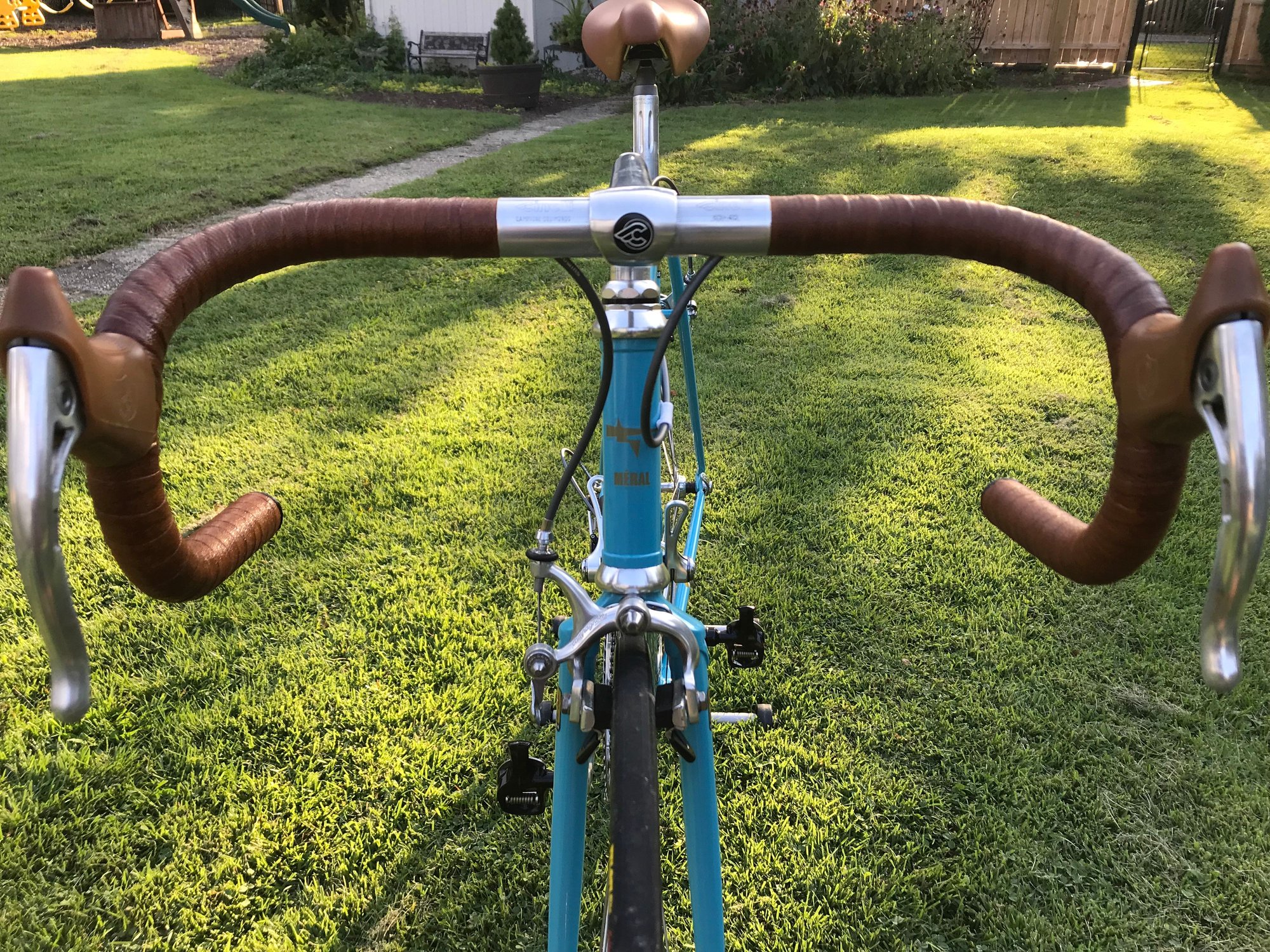
Before:
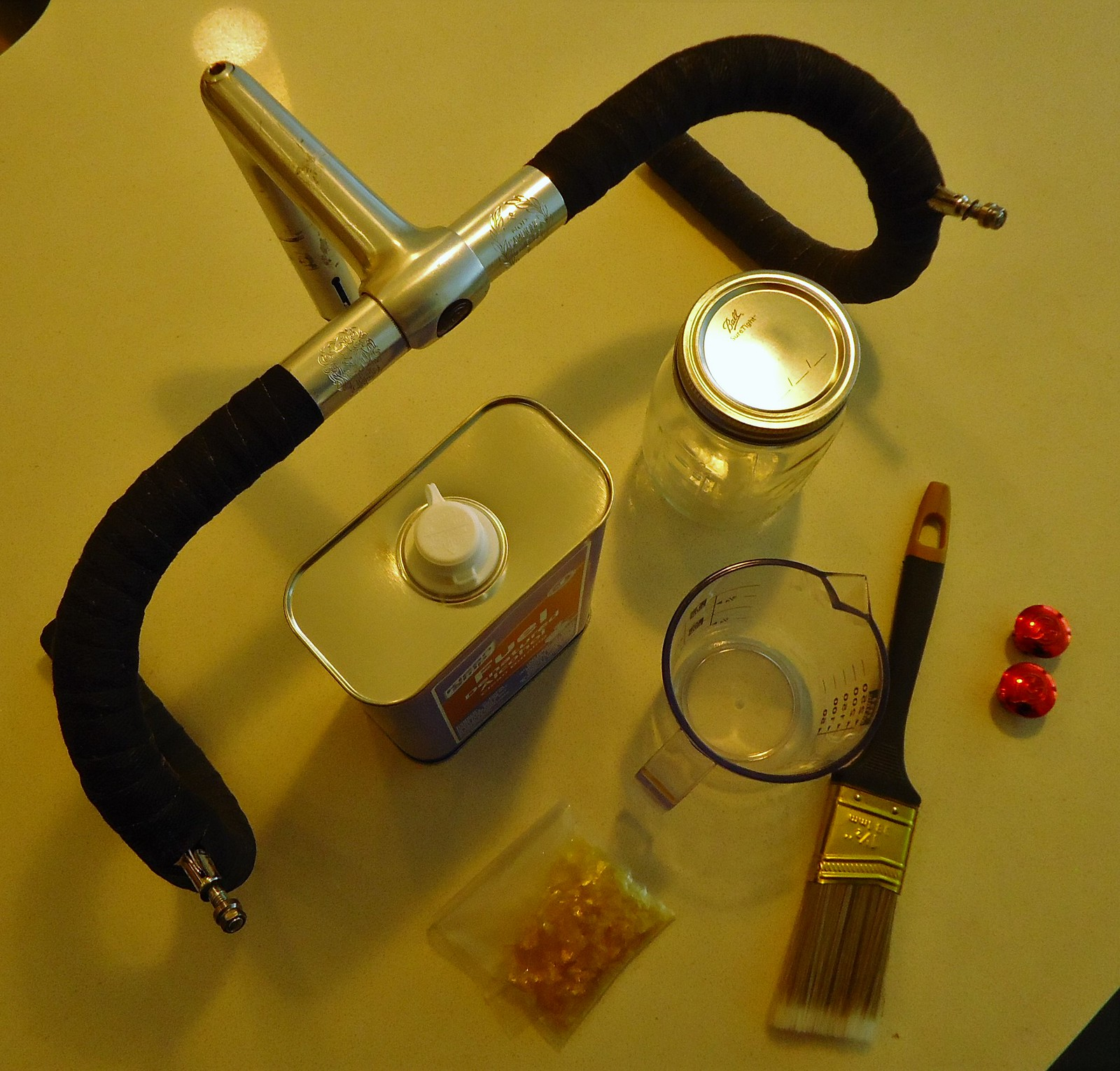
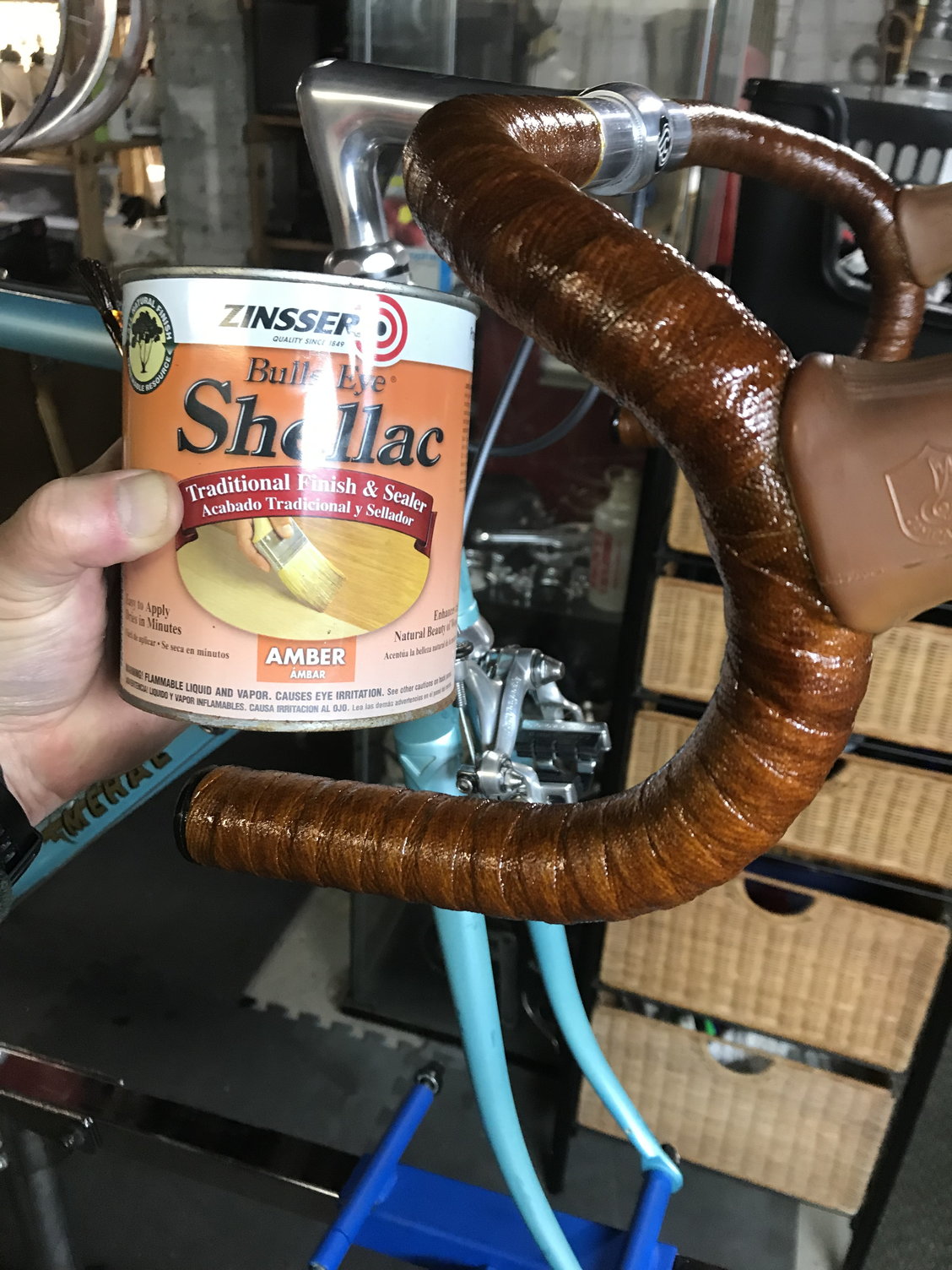
After:

Worked as advertised and has held up well over the years. Glad I finally gave it a go - my bar finish maintenance has been reduced to pretty much zero as a result.
DD
Even being careful while brushing the stuff on, you will still likely notice little dried flecks on your frame later on - it's just an occupational hazard. I used the brush technique with denatured alcohol and shellac flakes supplied by the late Scott Gabriel / rootboy :
Before:
After:
Worked as advertised and has held up well over the years. Glad I finally gave it a go - my bar finish maintenance has been reduced to pretty much zero as a result.
DD
 09-06-22 | 11:20 PM
#8
Thread Starter
Senior Member
Joined: Dec 2004
Posts: 15,400
Likes: 8,319
From: Seattle area
Bikes: Bikes??? Thought this was social media?!?
Nice pics, as usual, Drillium Dude
__________________
Vintage, modern, e-road. It is a big cycling universe.
Vintage, modern, e-road. It is a big cycling universe.
09-07-22 | 06:09 AM
#9
Senior Member

Joined: Dec 2016
Posts: 830
Likes: 1,235
I like shellacked bar tape, but it does limit your use of many modern gloves with a fabric-type palm as they can be quite slippery….That sort of negates the purpose of the bar tape…right? Leather and fake leather gloves seem to be fine, in my experience. Shellac is also very forgiving so as your shellac gets a little worn, you can always touch it up with another coat as the new shellac will solve the old and form a nice new coating. At some point we should have a discussion about another cycling related use for shellac…and one almost forgotten. That is the shellacking of tubular tires as a substitute for cement to fix the tire to the rim. It was primarily used for track tires, but also sometimes for time trial tires.



 09-07-22 | 08:43 AM
#10

Señor Member

Joined: Oct 2004
Posts: 18,481
Likes: 1,565
From: Hardy, VA
Bikes: Mostly English - predominantly Raleighs
I have purchased a number of bags of shellac flakes of various colors from Wellermart. I've used it on bar tape and some wood finishing products. It isn't difficult to adjust the color to what you want (within the boundaries of chemistry and physics), and painting it over bar tape of different colors is not difficult. My experience with applying shellac to bar tape... It will eat the cheap foam brushes, but they do a reasonable job of applying it. Good brushes can be better BUT, the shellac tends to form a gazillion tiny driplets EVERYWHERE if you don't take it super-slow. Also, you need to thoroughly clean the brush immediately afterward, or face a choice between spending an hour cleaning it later, or simply pitching the brush.
Oh... pictures... Silly me.
My first attempt. Clear from a can over red bar tape. I had this on the Hetchin's I used to have, but sold it on as a frame and fork and kept this. Now on Loki - the Single-speed Viking. It could use a refresh.

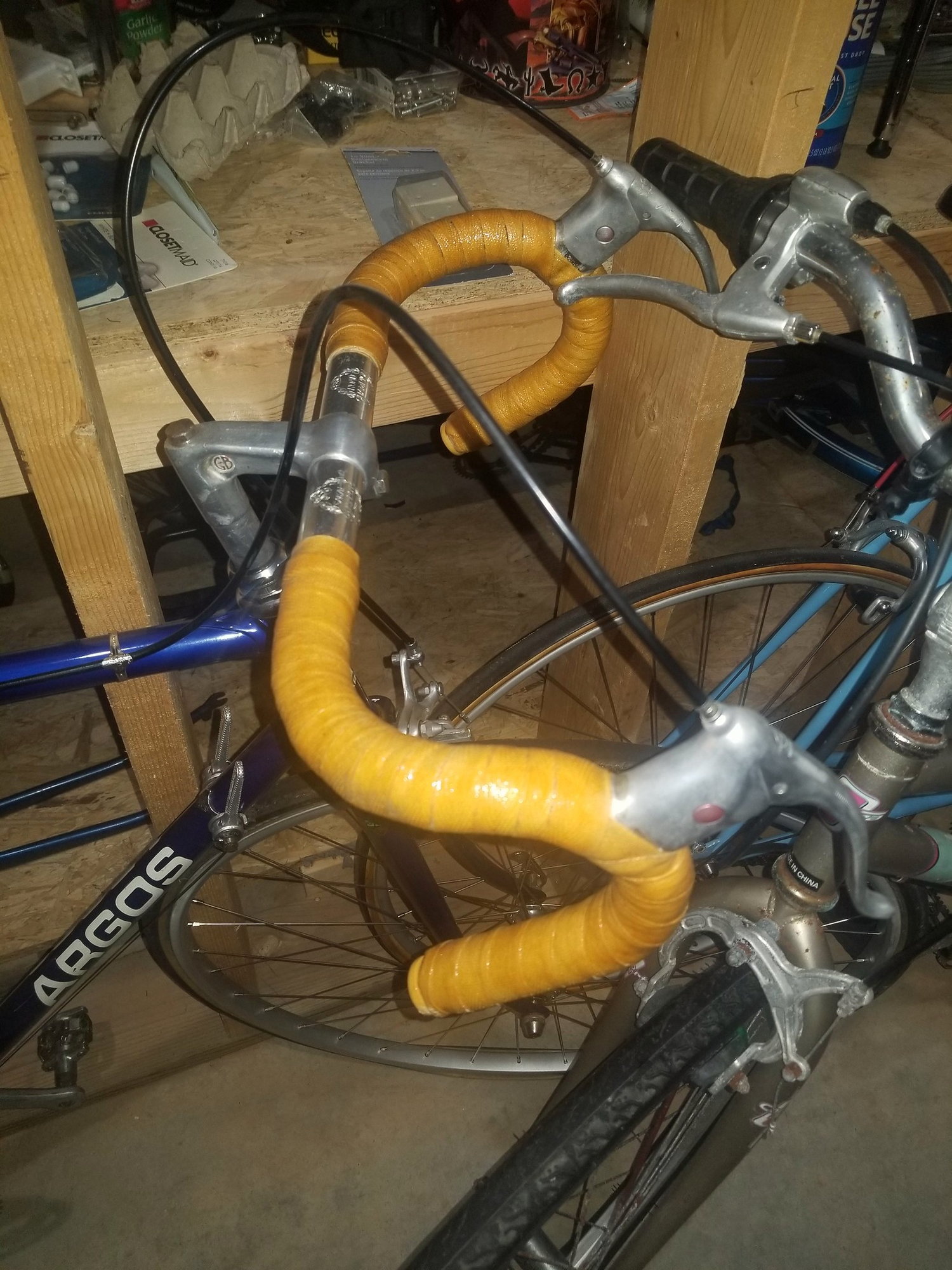
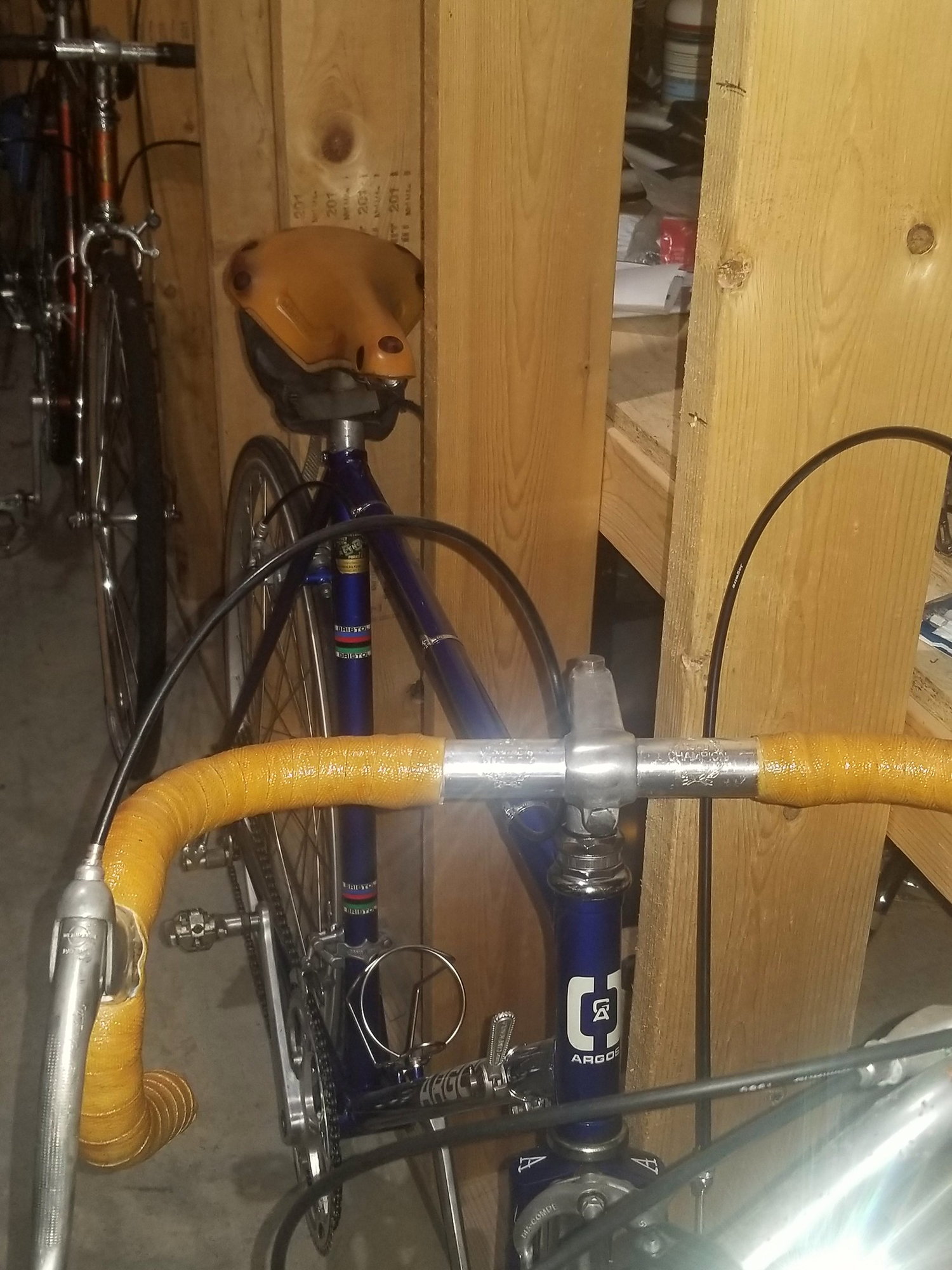
I initially had this blonde blend (and the same saddle - an limited run ochre Brooks Pro) on my 1972 Competition when it was the original and scraped to crap black paint (prior to it's gugification). It is now on the "no hills, please" Argos.
The colors match a bit better in daylight.
And a darker mix on the Grand Sports. I believe I was attempting to match an older Ideale saddle with this, but have since swapped it out with a "cushier" saddle that's a couple shades different.

I have another one a few places down the build queue that I intend to treat with shellac. No telling how long it will take the glacier to arrive there though.
One last consideration to throw out there. Unless you have stems with removable face plates, bars with shellac are essentially married to the stem. Choose wisely, or face the prospect of tossing all that effort away.
Oh... pictures... Silly me.
My first attempt. Clear from a can over red bar tape. I had this on the Hetchin's I used to have, but sold it on as a frame and fork and kept this. Now on Loki - the Single-speed Viking. It could use a refresh.
I initially had this blonde blend (and the same saddle - an limited run ochre Brooks Pro) on my 1972 Competition when it was the original and scraped to crap black paint (prior to it's gugification). It is now on the "no hills, please" Argos.
The colors match a bit better in daylight.
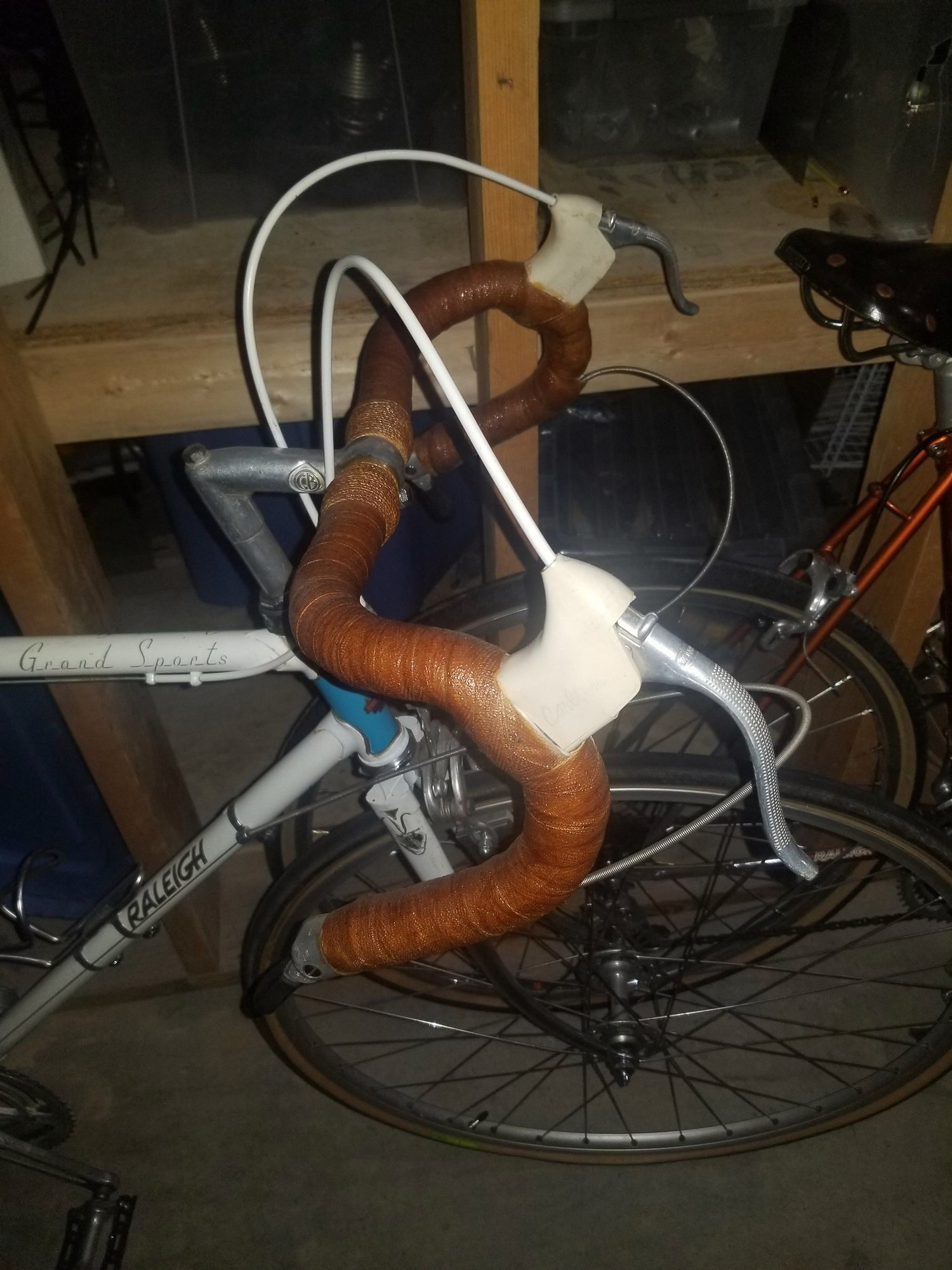
And a darker mix on the Grand Sports. I believe I was attempting to match an older Ideale saddle with this, but have since swapped it out with a "cushier" saddle that's a couple shades different.
I have another one a few places down the build queue that I intend to treat with shellac. No telling how long it will take the glacier to arrive there though.
One last consideration to throw out there. Unless you have stems with removable face plates, bars with shellac are essentially married to the stem. Choose wisely, or face the prospect of tossing all that effort away.
__________________
In search of what to search for.
In search of what to search for.
09-07-22 | 12:05 PM
#11
since I have used it a lot over many years, but primarily for wood (furniture) finishing, allow me to share some shellac tips and trivia.
I prefer to make my own "cuts" which is just lingo for the ratio of solids to solvent and is described in "pounds" with is dry weight per a gallon of solvent.
You buy the solids in various forms (flakes, seeds or buttons are typical) and shades (orange, amber, blond or "super blond" which is what Bullseye/Zinnzer sells as "clear", but it has some straw color).
Solvent should be as close to pure water-free alcohol as you can legally obtain: 99% pure used to be typical, I try to find ethyl or methyl "wood alcohol" versus Isopropyl but these days (and in California) you take what you can get.
Shellac, even in dry form but especially when prepared in a solution, has a limited "useful life", it will eventually go bad. True even of the cans of Bullseye or the rattlecans, so mark the date you bought it on the can or jar. With experience you can judge the condition by sight and sniff before using and don't use expired shellac on anything "important". I was told rule of thumb is nothing over 6 months old for "quality" projects, but if a year old "it's expired". YMMV.
But removal or "bad shellac" with alcohol is sometimes easily done, depends on the application. Some grades of dry shellac contains a percentage of wax, the most refined grades are "de-waxed".
Brushing: we were taught to use a pure China bristle brush for shellac, nothing else (but I know conservationists who use MUCH pricier brushes, they can afford those) A really good quality China bristle brush costs a bit but the cheapest "chip brushes" are also China bristle and can work ok and be used and tossed, but expect some bristles to pullout. if you spent money on a good brush then clean it after each use with alcohol, then soap and water, rinse very well and form the bristles to air dry. Don't use a wet brush with shellac, it must be dry of water, damp with alcohol is "OK" but it will dilute the solution to some degree.
We were also taught to brush shellac out quickly, in one direction (with the grain if on wood), overlap strokes just enough to coat evenly then DON'T try to coat again until that coat is dry). Don't brush "back-n-forth". If any "sanding" is needed between coats use fine steelwool, but tack cloth that thoroughly to pick up any residue, especially steel particles. if you use synthetic scratchy-pads you won't have steel particles to worry about, but you will have plastic bits.
Shellac is considered a nearly "universal undercoating", nearly compatible with anything except it will not stick to wax! So very versatile as a inter-layer between old and new finishes and can be a barrier, too. Pigmented shellac can seal knots in wood, cover and hide stained surfaces and you can add colorants yourself to created tinted shellac. I like Mixol tints for this, myself, but don't use any solvent-based UTCs with shellac: check the labels!
Much more info than anybody asked for, I know....you're welcome!
I prefer to make my own "cuts" which is just lingo for the ratio of solids to solvent and is described in "pounds" with is dry weight per a gallon of solvent.
You buy the solids in various forms (flakes, seeds or buttons are typical) and shades (orange, amber, blond or "super blond" which is what Bullseye/Zinnzer sells as "clear", but it has some straw color).
Solvent should be as close to pure water-free alcohol as you can legally obtain: 99% pure used to be typical, I try to find ethyl or methyl "wood alcohol" versus Isopropyl but these days (and in California) you take what you can get.
Shellac, even in dry form but especially when prepared in a solution, has a limited "useful life", it will eventually go bad. True even of the cans of Bullseye or the rattlecans, so mark the date you bought it on the can or jar. With experience you can judge the condition by sight and sniff before using and don't use expired shellac on anything "important". I was told rule of thumb is nothing over 6 months old for "quality" projects, but if a year old "it's expired". YMMV.
But removal or "bad shellac" with alcohol is sometimes easily done, depends on the application. Some grades of dry shellac contains a percentage of wax, the most refined grades are "de-waxed".
Brushing: we were taught to use a pure China bristle brush for shellac, nothing else (but I know conservationists who use MUCH pricier brushes, they can afford those) A really good quality China bristle brush costs a bit but the cheapest "chip brushes" are also China bristle and can work ok and be used and tossed, but expect some bristles to pullout. if you spent money on a good brush then clean it after each use with alcohol, then soap and water, rinse very well and form the bristles to air dry. Don't use a wet brush with shellac, it must be dry of water, damp with alcohol is "OK" but it will dilute the solution to some degree.
We were also taught to brush shellac out quickly, in one direction (with the grain if on wood), overlap strokes just enough to coat evenly then DON'T try to coat again until that coat is dry). Don't brush "back-n-forth". If any "sanding" is needed between coats use fine steelwool, but tack cloth that thoroughly to pick up any residue, especially steel particles. if you use synthetic scratchy-pads you won't have steel particles to worry about, but you will have plastic bits.
Shellac is considered a nearly "universal undercoating", nearly compatible with anything except it will not stick to wax! So very versatile as a inter-layer between old and new finishes and can be a barrier, too. Pigmented shellac can seal knots in wood, cover and hide stained surfaces and you can add colorants yourself to created tinted shellac. I like Mixol tints for this, myself, but don't use any solvent-based UTCs with shellac: check the labels!
Much more info than anybody asked for, I know....you're welcome!
Last edited by unworthy1; 09-09-22 at 10:17 AM.


 09-07-22 | 04:52 PM
#13
Banned.
Joined: Jul 2009
Posts: 12,292
Likes: 4,863
From: PAZ
DD
09-07-22 | 05:02 PM
#14
Bike Butcher of Portland
Joined: Jul 2014
Posts: 12,486
Likes: 8,054
From: Portland, OR
Bikes: It's complicated.
Kinda reminds me of someone who was complaining about powder coating a frame - you can't media blast it off, unlike wet paint. Hmm, hard to remove finish, isn't that a feature?

__________________
If someone tells you that you have enough bicycles and you don't need any more, stop talking to them. You don't need that kind of negativity in your life.
If someone tells you that you have enough bicycles and you don't need any more, stop talking to them. You don't need that kind of negativity in your life.
09-07-22 | 07:42 PM
#15

Senior Member
Joined: Jun 2018
Posts: 1,845
Likes: 723
From: The Urban Shores Of Michigami
Bikes: ........................................ .....Holdsworth "Special"..... .......Falcon "Special".......... .........Miyata 912........... ........................................
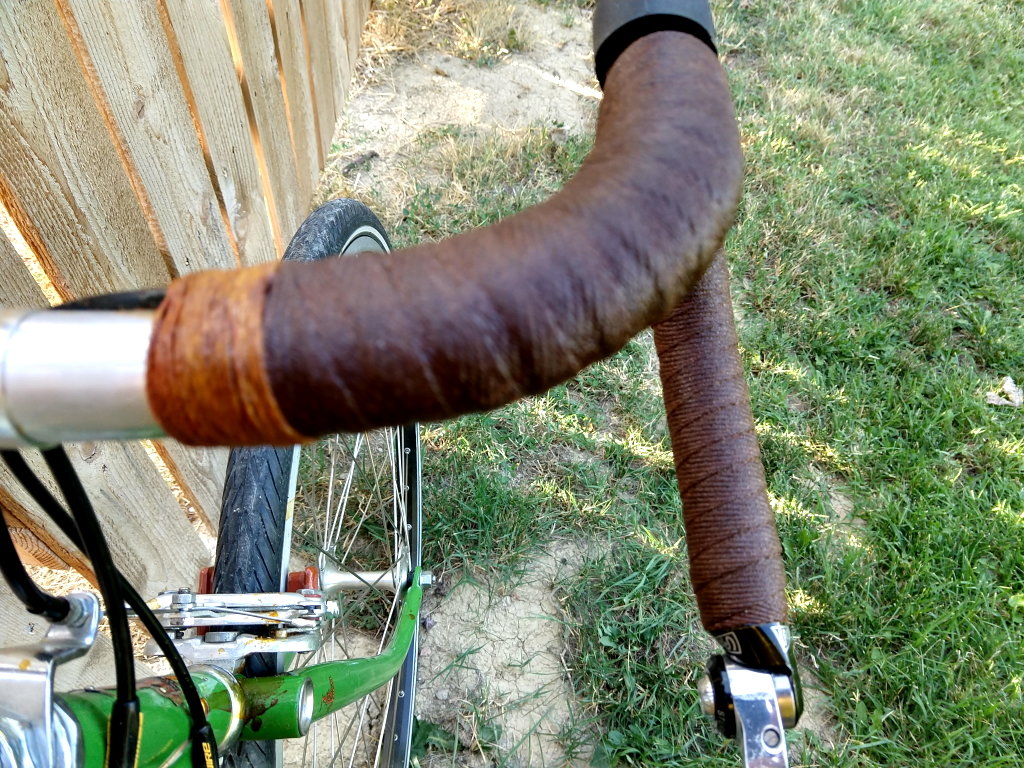
I'm looking at the amber colored bar tape on the white & blue Carlton and wondering if anyone has ever wrapped their bars with thin rope and then applied shellac ?
 09-07-22 | 08:11 PM
#17
Senior Member
Joined: Sep 2015
Posts: 1,685
Likes: 103
From: New Jersey
since I have used it a lot over many years, but primarily for wood (furniture) finishing, allow me to share some shellac tips and trivia.
I prefer to make my own "cuts" which is just lingo for the ratio of solids to solvent and is described in "pounds" with is dry weight per a gallon of solvent.
You buy the solids in various forms (flakes, seeds or buttons are typical) and shades (orange, amber, blond or "super blond" which is what Bullseye/Zinnzer sells as "clear", but it has some straw color).
Solvent should be as close to pure water-free alcohol as you can legally obtain: 99% pure used to be typical, I try to find "wood alcohol" versus ISO-propol but these days (and in California) you take what you can get.
Shellac, even in dry form but especially when prepared in a solution, has a limited "useful life", it will eventually go bad. True even of the cans of Bullseye or the rattlecans, so mark the date you bought it on the can or jar. With experience you can judge the condition by sight and sniff before using and don't use expired shellac on anything "important". I was told rule of thumb is nothing over 6 months old for "quality" projects, but if a year old "it's expired". YMMV.
But removal or "bad shellac" with alcohol is sometimes easily done, depends on the application. Some grades of dry shellac contains a percentage of wax, the most refined grades are "de-waxed".
Brushing: we were taught to use a pure China bristle brush for shellac, nothing else (but I know conservationists who use MUCH pricier brushes, they can afford those) A really good quality China bristle brush costs a bit but the cheapest "chip brushes" are also China bristle and can work ok and be used and tossed, but expect some bristles to pullout. if you spent money on a good brush then clean it after each use with alcohol, then soap and water, rinse very well and form the bristles to air dry. Don't use a wet brush with shellac, it must be dry of water, damp with alcohol is "OK" but it will dilute the solution to some degree.
We were also taught to brush shellac out quickly, in one direction (with the grain if on wood), overlap strokes just enough to coat evenly then DON'T try to coat again until that coat is dry). Don't brush "back-n-forth". If any "sanding" is needed between coats use fine steelwool, but tack cloth that thoroughly to pick up any residue, especially steel particles. if you use synthetic scratchy-pads you won't have steel particles to worry about, but you will have plastic bits.
Shellac is considered a nearly "universal undercoating", nearly compatible with anything except it will not stick to wax! So very versatile as a inter-layer between old and new finishes and can be a barrier, too. Pigmented shellac can seal knots in wood, cover and hide stained surfaces and you can add colorants yourself to created tinted shellac. I like Mixol tints for this, myself, but don't use any solvent-based UTCs with shellac: check the labels!
Much more info than anybody asked for, I know....you're welcome!
I prefer to make my own "cuts" which is just lingo for the ratio of solids to solvent and is described in "pounds" with is dry weight per a gallon of solvent.
You buy the solids in various forms (flakes, seeds or buttons are typical) and shades (orange, amber, blond or "super blond" which is what Bullseye/Zinnzer sells as "clear", but it has some straw color).
Solvent should be as close to pure water-free alcohol as you can legally obtain: 99% pure used to be typical, I try to find "wood alcohol" versus ISO-propol but these days (and in California) you take what you can get.
Shellac, even in dry form but especially when prepared in a solution, has a limited "useful life", it will eventually go bad. True even of the cans of Bullseye or the rattlecans, so mark the date you bought it on the can or jar. With experience you can judge the condition by sight and sniff before using and don't use expired shellac on anything "important". I was told rule of thumb is nothing over 6 months old for "quality" projects, but if a year old "it's expired". YMMV.
But removal or "bad shellac" with alcohol is sometimes easily done, depends on the application. Some grades of dry shellac contains a percentage of wax, the most refined grades are "de-waxed".
Brushing: we were taught to use a pure China bristle brush for shellac, nothing else (but I know conservationists who use MUCH pricier brushes, they can afford those) A really good quality China bristle brush costs a bit but the cheapest "chip brushes" are also China bristle and can work ok and be used and tossed, but expect some bristles to pullout. if you spent money on a good brush then clean it after each use with alcohol, then soap and water, rinse very well and form the bristles to air dry. Don't use a wet brush with shellac, it must be dry of water, damp with alcohol is "OK" but it will dilute the solution to some degree.
We were also taught to brush shellac out quickly, in one direction (with the grain if on wood), overlap strokes just enough to coat evenly then DON'T try to coat again until that coat is dry). Don't brush "back-n-forth". If any "sanding" is needed between coats use fine steelwool, but tack cloth that thoroughly to pick up any residue, especially steel particles. if you use synthetic scratchy-pads you won't have steel particles to worry about, but you will have plastic bits.
Shellac is considered a nearly "universal undercoating", nearly compatible with anything except it will not stick to wax! So very versatile as a inter-layer between old and new finishes and can be a barrier, too. Pigmented shellac can seal knots in wood, cover and hide stained surfaces and you can add colorants yourself to created tinted shellac. I like Mixol tints for this, myself, but don't use any solvent-based UTCs with shellac: check the labels!
Much more info than anybody asked for, I know....you're welcome!
You've just made burnt shellac, which is a low tack adhesive that can be used in woodworking to join things that aren't wood or leather onto your project. Common use would be in lining a box/drawer with paper. The advantage is that it is easy to remove whatever you put on (as far as adhesives go), and is also reasonably easy to remove in conservation/restoration.
09-07-22 | 08:16 PM
#18
Señor Member
Joined: Oct 2004
Posts: 18,481
Likes: 1,565
From: Hardy, VA
Bikes: Mostly English - predominantly Raleighs
 09-07-22 | 09:27 PM
#19
Don't throw it out! Pour it into a larger can with at least 1/2 the volume empty, then put it on the stove, and light it on fire (yes, on fire!). Using an oven mitt/pot holder, swirl occasionally, until it thickens and begins to smell like caramel apples. Snuff with a tight metal lid, and allow to cool. Pour into an airtight vessel/bottle.
You've just made burnt shellac, which is a low tack adhesive that can be used in woodworking to join things that aren't wood or leather onto your project. Common use would be in lining a box/drawer with paper. The advantage is that it is easy to remove whatever you put on (as far as adhesives go), and is also reasonably easy to remove in conservation/restoration.
You've just made burnt shellac, which is a low tack adhesive that can be used in woodworking to join things that aren't wood or leather onto your project. Common use would be in lining a box/drawer with paper. The advantage is that it is easy to remove whatever you put on (as far as adhesives go), and is also reasonably easy to remove in conservation/restoration.
I think a good idea to keep the fire extinguisher close at hand when you try this at home...
09-07-22 | 11:26 PM
#20

Senior Member

Joined: Sep 2009
Posts: 1,504
Likes: 497
From: Corvallis, OR
Like Drillium Dude, USAZorro and others, I too have started mixing my own in small batches. All products, even in a sealed can, have a shelf life and the ability to retain water, ruining the product. Mixing in a small batch with denatured alcohol or food grade (I use Everclear!) to reduce the fumes, is perfect for a small batch that you have control over for both color and shellac/alcohol ratio. It stays good for 6-months. I never feel bad about throwing out 1/2 a cup of shellac when I used to have to dump 3/4 of a can of tainted Bullseye.
__________________
The Simplicity of Vintage Cycles
The Simplicity of Vintage Cycles
09-08-22 | 06:54 AM
#21
Senior Member
Joined: Jan 2013
Posts: 3,151
Likes: 886
Bikes: too many sparkly Italians, some sweet Americans and a couple interesting Japanese
I hate cleaning brushes and could see that given the way the shellac wears on my bikes I could easily mask the shifters and bar end plugs, spray outside with a mask on me and I still would not do it.
09-08-22 | 08:05 AM
#22
Senior Member
Joined: Jun 2021
Posts: 2,037
Likes: 2,029
Bikes: '38 Schwinn New World, '72 Peugeot PX-10, 78 Raleigh Comp GS, ’80 Peugeot TH-8 tandem
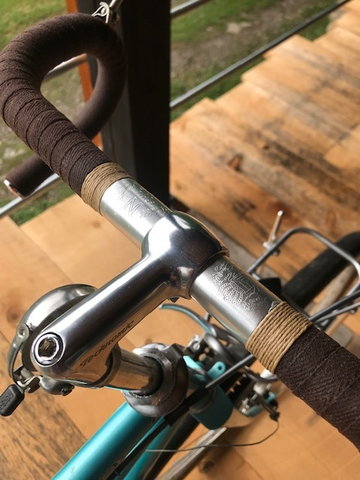
Timely thread! I'm 5 or so coats in with the bars on my Peugeot tandem rehab... Clear over Newbaum's dark brown & hemp twine.
09-08-22 | 10:07 AM
#23

Extraordinary Magnitude
Joined: Aug 2009
Posts: 14,085
Likes: 2,140
From: Waukesha WI
Bikes: 1978 Trek TX700; 1978/79 Trek 736; 1984 Specialized Stumpjumper Sport; 1984 Schwinn Voyageur SP; 1985 Trek 620; 1985 Trek 720; 1986 Trek 400 Elance; 1987 Schwinn High Sierra; 1990 Miyata 1000LT
It makes a mess.
__________________
*Recipient of the 2006 Time Magazine "Person Of The Year" Award*
Commence to jigglin’ huh?!?!
"But hey, always love to hear from opinionated amateurs." -says some guy to Mr. Marshall.
Commence to jigglin’ huh?!?!
"But hey, always love to hear from opinionated amateurs." -says some guy to Mr. Marshall.
09-08-22 | 10:19 AM
#24

Senior Member
Joined: Sep 2020
Posts: 836
Likes: 1,630
From: Sacramento, CA
Bikes: 2017 Sage Skyline, 2015 Co-Motion Periscope Tandem, 2006 Kona Jake, 1978 Richard Sachs, 1977 Peugeot PRN10, 1974 Allegro Schweitzermeister Model 76, 1972 Hugo Rickert Spezial, 1971 Fuji Finest
I’m writing this as I’m looking at a smoke filled Auburn, CA sky
09-08-22 | 11:18 AM
#25

Senior Member
Joined: Jun 2008
Posts: 13,769
Likes: 3,941
From: Louisville, KY