


Patching Butyl Tubes - Problems
 02-17-24 | 07:17 AM
#26

Senior Member

Joined: Nov 2003
Posts: 5,366
Likes: 629
From: Soviet of Oregon or Pensacola FL
Bikes: Still have a few left!
Yes, very encouraging posts. With my advancing age, I'm seeing more failures. Not so frugal as in prior years, now toss tubes after only 5 OR 6 patches. Size of my herd means consumables are ageing out despite light use

 02-17-24 | 07:19 AM
#27

Senior Member


Joined: Jan 2015
Posts: 5,836
Likes: 3,421
From: Los Angeles
Bikes: 82 Medici, 85 Ironman, 2011 Richard Sachs
I always pump up a newly patched butyl tube and if all seems well, I leave it pumped up and don’t fold it and place it back in a baby-powdered ziplock unless it is still plump the following day.
__________________
I don't do: disks, tubeless, e-shifting, or bead head nymphs. But I do hate all e-bikes.
I don't do: disks, tubeless, e-shifting, or bead head nymphs. But I do hate all e-bikes.
 02-17-24 | 08:37 AM
#28


Real sandpaper!
That cheap square of sandpaper that comes in a patch kit is not very fast or effective.
I always substitute a cut strip of hardware store sandpaper -- it's much longer for better grip, and the grit works fast. I probably use 100 or 120 grit.
I use a silver sharpie pen to draw a very large cross hair "X" at the puncture, so it's edges are far past the sanded area. Otherwise I can lose track of the tiny puncture location.
The crimped end of the tube of glue makes a great glue spreader for an even coat on the tube.
After carefully pressing the patch (using plastic patch kit box, or screwdriver end) I've clamped the new patch between two scraps of wood, held with a carpenter clamp. No idea if it's helpful, but it's easy to do anyway.
It's been a couple of years since I patched a batch of punctures with a fresh patch kit's tube of glue. (the goal is to use up the opened tube of glue.) There's a lot less debris now on country roads.
Some years ago, a jar of rubber cement from Staples office supply didn't work at all for me.
That cheap square of sandpaper that comes in a patch kit is not very fast or effective.
I always substitute a cut strip of hardware store sandpaper -- it's much longer for better grip, and the grit works fast. I probably use 100 or 120 grit.
I use a silver sharpie pen to draw a very large cross hair "X" at the puncture, so it's edges are far past the sanded area. Otherwise I can lose track of the tiny puncture location.
The crimped end of the tube of glue makes a great glue spreader for an even coat on the tube.
After carefully pressing the patch (using plastic patch kit box, or screwdriver end) I've clamped the new patch between two scraps of wood, held with a carpenter clamp. No idea if it's helpful, but it's easy to do anyway.
It's been a couple of years since I patched a batch of punctures with a fresh patch kit's tube of glue. (the goal is to use up the opened tube of glue.) There's a lot less debris now on country roads.
Some years ago, a jar of rubber cement from Staples office supply didn't work at all for me.
Last edited by rm -rf; 02-17-24 at 08:43 AM.
02-17-24 | 09:14 AM
#29

Mad bike riding scientist

Joined: Nov 2004
Posts: 29,183
Likes: 6,261
From: Denver, CO
Bikes: Some silver ones, a red one, a black and orange one, and a few titanium ones
That is often the reason patches fail. While the patch will adhere to the tube instantly if the vulcanizing fluid is dry, it takes some time for the bond between the tube/patch/vulcanizing fluid to form. Stressing it just after application can cause the bond to fail. Leaving the tube flat for at least a few days will reduce the chances of pulling the patch off the tube.
__________________
Stuart Black
Dreamin' of Bemidji Down the Mississippi (in part)
Plan Epsilon Around Lake Michigan in the era of Covid
Gold Fever Three days of dirt in Colorado
Pokin' around the Poconos A cold ride around Lake Erie
Dinosaurs in Colorado A mountain bike guide to the Purgatory Canyon dinosaur trackway
Solo Without Pie. The search for pie in the Midwest.
Picking the Scablands. Washington and Oregon, 2005. Pie and spiders on the Columbia River!
Stuart Black
Dreamin' of Bemidji Down the Mississippi (in part)
Plan Epsilon Around Lake Michigan in the era of Covid
Gold Fever Three days of dirt in Colorado
Pokin' around the Poconos A cold ride around Lake Erie
Dinosaurs in Colorado A mountain bike guide to the Purgatory Canyon dinosaur trackway
Solo Without Pie. The search for pie in the Midwest.
Picking the Scablands. Washington and Oregon, 2005. Pie and spiders on the Columbia River!
02-17-24 | 10:11 AM
#30
Full Member
Joined: May 2016
Posts: 496
Likes: 312
Bikes: 83 Schwinn Superior, 86 Paramount,86 Madison,87 Cimeron,86 Nishiki Linear
Go to your local NAPA store ask for, tire repair valcanizing crment for comercial use. Comes in a 4 oz can, works great. Store the can upside down after opening.

 02-17-24 | 10:41 AM
#31

Senior Member

Joined: May 2010
Posts: 5,626
Likes: 2,497
From: Bastrop Texas
Bikes: Univega, Peu P6, Peu PR-10, Ted Williams, Peu UO-8, Peu UO-18 Mixte, Peu Dolomites
I noticed that none of us has mentioned that the surface of the tube needs to be cleaned of any lubricants or silicone products. Often soap, tire foam, or butyl rubber preservative is on the surface of the tube.
What ever you use to clean the tube it should not have any lubricant left over after evaporation. I have used Simple Green with water, Denatured alcohol, Acohol pads, Gasoline and others.
If on the road I will put a thin layer of vulcanizing cement in the area of the patch then wipe it off using the cement as its own cleaner. I then apply the patch normally.
Further note that I put vulcanizing cement on both the tube and the patch. Many of my patches are pretty much died out and need to be revitalized by the cement.
It might seem like a waste of cement that I carry in my little kit but I consider the little tubes one ride use cause when once opened they are usually done for.
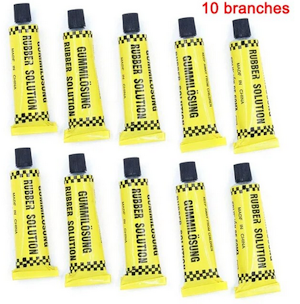
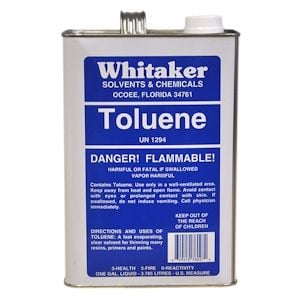
AliExpress 5 USD (Contain Toluene)
What ever you use to clean the tube it should not have any lubricant left over after evaporation. I have used Simple Green with water, Denatured alcohol, Acohol pads, Gasoline and others.
If on the road I will put a thin layer of vulcanizing cement in the area of the patch then wipe it off using the cement as its own cleaner. I then apply the patch normally.
Further note that I put vulcanizing cement on both the tube and the patch. Many of my patches are pretty much died out and need to be revitalized by the cement.
It might seem like a waste of cement that I carry in my little kit but I consider the little tubes one ride use cause when once opened they are usually done for.
AliExpress 5 USD (Contain Toluene)
__________________
 No matter where you're at... There you are... Δf:=f(1/2)-f(-1/2)
02-17-24 | 11:04 AM
#32

Senior Member
Joined: Mar 2007
Posts: 9,203
Likes: 5,402
From: SF Bay Area, East bay
Bikes: Miyata 618 GT, Marinoni, Kestral 200, Soma double cross 2002 Trek 5200, KHS Flite, Koga Miyata, Schwinn Spitfire 5, Mondia Special, Univega Alpina, Miyata team Ti, Santa Cruz Highball, Waterford rs11
I noticed that none of us has mentioned that the surface of the tube needs to be cleaned of any lubricants or silicone products. Often soap, tire foam, or butyl rubber preservative is on the surface of the tube.
What ever you use to clean the tube it should not have any lubricant left over after evaporation. I have used Simple Green with water, Denatured alcohol, Acohol pads, Gasoline and others.
If on the road I will put a thin layer of vulcanizing cement in the area of the patch then wipe it off using the cement as its own cleaner. I then apply the patch normally.
Further note that I put vulcanizing cement on both the tube and the patch. Many of my patches are pretty much died out and need to be revitalized by the cement.
It might seem like a waste of cement that I carry in my little kit but I consider the little tubes one ride use cause when once opened they are usually done for.
AliExpress 5 USD (Contain Toluene)
What ever you use to clean the tube it should not have any lubricant left over after evaporation. I have used Simple Green with water, Denatured alcohol, Acohol pads, Gasoline and others.
If on the road I will put a thin layer of vulcanizing cement in the area of the patch then wipe it off using the cement as its own cleaner. I then apply the patch normally.
Further note that I put vulcanizing cement on both the tube and the patch. Many of my patches are pretty much died out and need to be revitalized by the cement.
It might seem like a waste of cement that I carry in my little kit but I consider the little tubes one ride use cause when once opened they are usually done for.
AliExpress 5 USD (Contain Toluene)
02-17-24 | 12:40 PM
#33

Senior Member
Joined: Nov 2005
Posts: 4,066
Likes: 2,153
From: NW Ohio
Bikes: 1984 Miyata 310, 1986 Schwinn Sierra, 1987 Ross Mt. Hood, 1988 Schwinn LeTour, 1988 Trek 400T, 1981 Fuji S12-1977 Univega Grand Rally, S LTD, 1973 Sears Free Spirit 531, 197? FW Evans
Something I have noticed, is that matching the tube size to the tire helps reduce the number of failed patches. When the tube has to stretch to fill the inside of the tire, it puts more stress on the patch and they start to pull away. I use the skinny tubes in my 25 mm tires and wider ones in the 28 and 32 mm tires.
I always use a kitchen timer to make sure the glue in thoroughly dry. I have also made patches out of old tubes, as well as rejoining the ends of a rubber rim strip. When gluing two pieces of rubber (vs. a patch), I put glue on both surfaces and let it dry before joining them together.
Those old Camel heat vulcanizing patches were the best, although I don't think they made any small enough for bike tires. My parents owned a truck stop in the 1970s and I put a lot of them on truck inner tubes. The second-hand smoke from one patch was probably equivalent to a pack of cigarettes.
I always use a kitchen timer to make sure the glue in thoroughly dry. I have also made patches out of old tubes, as well as rejoining the ends of a rubber rim strip. When gluing two pieces of rubber (vs. a patch), I put glue on both surfaces and let it dry before joining them together.
Those old Camel heat vulcanizing patches were the best, although I don't think they made any small enough for bike tires. My parents owned a truck stop in the 1970s and I put a lot of them on truck inner tubes. The second-hand smoke from one patch was probably equivalent to a pack of cigarettes.
02-17-24 | 03:34 PM
#34

Senior Member
Joined: Aug 2011
Posts: 22,676
Likes: 2,643
From: CID
Bikes: 1991 Bianchi Eros, 1964 Armstrong, 1988 Diamondback Ascent, 1988 Bianchi Premio, 1987 Bianchi Sport SX, 1980s Raleigh mixte (hers), All-City Space Horse (hers)
I do this, too, but only with enough air for the tube to resemble a slightly-limp donut. That way, it's not placing any shear stress on the patch. With how lazy I am, it might be a week or longer before I take the tube off the peg and deflate it for storage. If it still feels about the same after that time, I feel pretty good about the patch job.
02-17-24 | 03:54 PM
#35

Cantilever believer
Joined: Nov 2021
Posts: 3,197
Likes: 4,948
From: Phoenix, AZ

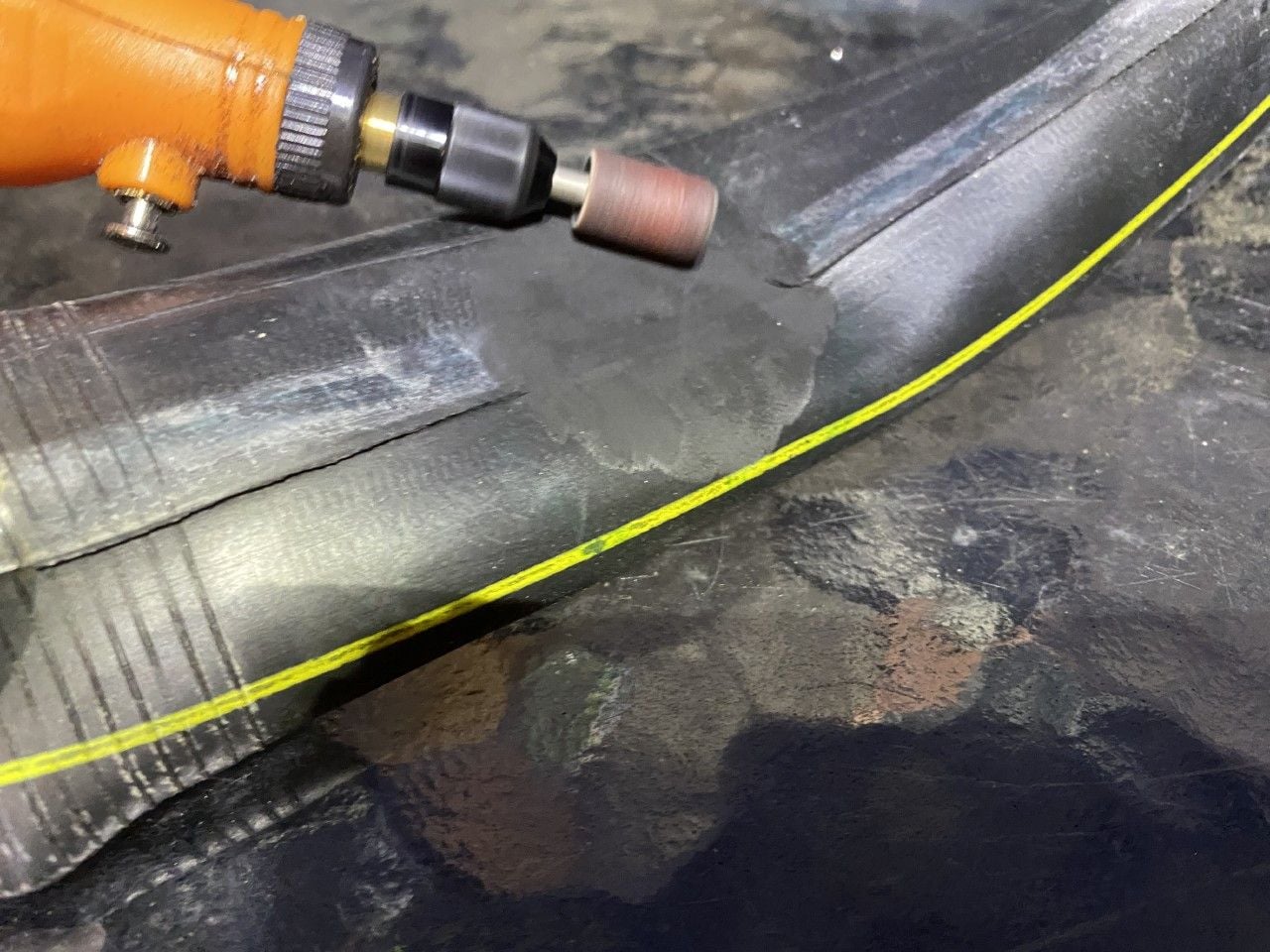
I use a sanding drum on a cordless dremel-type multi-tool for surface prep. Takes only a few seconds to get a nice clean area of virgin rubber. Using this, my patch success rate is 95+ % using Rema fluid & patches, even with the newer tubes.
__________________
Richard C. Moeur, PE - Phoenix AZ, USA
https://www.richardcmoeur.com/bikestuf.html
Richard C. Moeur, PE - Phoenix AZ, USA
https://www.richardcmoeur.com/bikestuf.html
Last edited by RCMoeur; 02-17-24 at 04:00 PM.
 02-17-24 | 03:59 PM
#36
Cantilever believer
Joined: Nov 2021
Posts: 3,197
Likes: 4,948
From: Phoenix, AZ
__________________
Richard C. Moeur, PE - Phoenix AZ, USA
https://www.richardcmoeur.com/bikestuf.html
Richard C. Moeur, PE - Phoenix AZ, USA
https://www.richardcmoeur.com/bikestuf.html
02-17-24 | 04:07 PM
#37

aged to perfection
Joined: Jun 2009
Posts: 2,242
Likes: 1,660
From: PacNW
Bikes: Dinucci Allez 2.0, Richard Sachs, Alex Singer, Serotta, Masi GC, Raleigh Pro Mk.1, Hetchins, etc
I think is has to do with "toluene". The newer vulcanizing cement often does not even smell the same as it used to. Ha... Ask any Huffer. Other solvents and adhesives that use aromatic solvents for their bond are suffering too. Note that Testors styrene model cement and even plumbing PVC Cement is nothing like it was 8 years ago.
What you can do is go on ebay and buy tire patch solvent FROM CHINA, wait 3 weeks, and then what you are getting is the "good old stuff"
guaranteed knock a buzzard off a S**T wagon at 50 meters.
/markp
02-17-24 | 05:19 PM
#38

Passista
Joined: Jul 2005
Posts: 8,258
Likes: 1,218
Bikes: 1998 Pinarello Asolo, 1992 KHS Montaña pro, 1980 Raleigh DL-1, IGH Hybrid, IGH Utility
Not a lot of work if you cheat.
I use a sanding drum on a cordless dremel-type multi-tool for surface prep. Takes only a few seconds to get a nice clean area of virgin rubber. Using this, my patch success rate is 95+ % using Rema fluid & patches, even with the newer tubes.
I use a sanding drum on a cordless dremel-type multi-tool for surface prep. Takes only a few seconds to get a nice clean area of virgin rubber. Using this, my patch success rate is 95+ % using Rema fluid & patches, even with the newer tubes.
I've seen people rubbing tubes on a concrete curb or wall as abrasive too.
02-17-24 | 06:03 PM
#39

Senior Member
Joined: Sep 2010
Posts: 631
Likes: 277
From: South Jersey near PHL
Bikes: Frequently
After I patch, I put the tube inside a tire/wheel combination kept on hand for such purposes. I then air it up to typical-use psi, and if it holds overnite, then the tube is good to pack in my saddle bag.
I found that just airing up a patched tube outside a tire/wheel only lets you put in ~5psi, which is not enough for a real-world test.
*******
www.https://njgreyheadbikes.blogspot.com
I found that just airing up a patched tube outside a tire/wheel only lets you put in ~5psi, which is not enough for a real-world test.
*******
www.https://njgreyheadbikes.blogspot.com
02-17-24 | 09:40 PM
#40

Senior Member
Joined: Oct 2012
Posts: 2,722
Likes: 1,698
From: Berkeley CA
Bikes: 1981 Ron Cooper, 1974 Cinelli Speciale Corsa, 1975 Alex Singer, 2000 Gary Fisher Sugar 1, 1986 Miyata 710, 1982 Raleigh "International", 1985 Trek 720
IMHO, this is the primary reason why many people have trouble patching tubes and many don't understand that this is the primary reason for sanding. You MUST get that compound off or your patch job WILL fail. I always aggressively sand the tube all the way to, and beyond, where the patch edge will be using sandpaper, not those worthless metal scratch thingies that come in some patch kits. The second reason that patches fail is that folks don't wait long enough until the vulcanizing fluid skins over. I have noticed zero difference in recent vs prior patch job experiences. They all work perfectly as long as you do it properly.
02-19-24 | 06:54 AM
#41

I don't know.
Joined: May 2003
Posts: 2,370
Likes: 1,233
From: South Meriden, CT
Bikes: '90 B'stone RB-1, '92 B'stone RB-2, '89 SuperGo Access Comp, '03 Access 69er, '23 Trek 520, '14 Ritchey Road Logic, '09 Kestrel Evoke, '08 Windsor Tourist, '17 Surly Wednesday, '89 Centurion Accordo, '15 CruX, '17 Ridley X-Night, '89 Marinoni
02-21-24 | 04:27 PM
#42
Senior Member
Joined: May 2010
Posts: 5,626
Likes: 2,497
From: Bastrop Texas
Bikes: Univega, Peu P6, Peu PR-10, Ted Williams, Peu UO-8, Peu UO-18 Mixte, Peu Dolomites
 02-21-24 | 06:26 PM
#43

Thread Starter
Should Be More Popular
Joined: Dec 2007
Posts: 46,274
Likes: 11,795
From: Malvern, PA (20 miles West of Philly)
Bikes: 1986 Alpine (steel road bike), 2009 Ti Habenero, 2013 Specialized Roubaix
In case you are wondering.... https://youtu.be/r9hMSVQcDSA
Do they make small ones for bicycle tubes??
02-21-24 | 10:09 PM
#44
Senior Member
Joined: May 2010
Posts: 5,626
Likes: 2,497
From: Bastrop Texas
Bikes: Univega, Peu P6, Peu PR-10, Ted Williams, Peu UO-8, Peu UO-18 Mixte, Peu Dolomites
No... I can't even find the big ones. They still make Heat Vulcanizing devices that you plug in and electrically bond Raw Rubber patches to tires.
Think I'll try a few experiments and see if Heat can be used to bond one of our regular bicycle patches...
Think I'll try a few experiments and see if Heat can be used to bond one of our regular bicycle patches...
__________________
No matter where you're at... There you are... Δf:=f(1/2)-f(-1/2)
02-22-24 | 07:45 AM
#45
Mad bike riding scientist
Joined: Nov 2004
Posts: 29,183
Likes: 6,261
From: Denver, CO
Bikes: Some silver ones, a red one, a black and orange one, and a few titanium ones
If it's not a roadside repair, I'll wait 15-30 minutes. I'll inflate them, run them through the bucket again for bubble-check, and leave them for 48-72 hours to check a) for patch integrity and b) to see if there are any other holes or slow leaks in the tube (which can often be the case, especially with salvaged bikes).
 Every patch job I do I bubble check, mark the first one, and continue on. I check the entire tube…which had been inflated to quite a bit larger than it would be in the tire…sometimes twice.
I really do think that a lot of the problem that people have with a patch job is the “checking your work” step. I’ve seen lots and lots of people pull the new patch off by over inflating the tube right after the patch job. If they had left it to cure for that 48 hours and then checked the patch, they would be less likely to pull the patch off the tube.
__________________
Stuart Black
Dreamin' of Bemidji Down the Mississippi (in part)
Plan Epsilon Around Lake Michigan in the era of Covid
Gold Fever Three days of dirt in Colorado
Pokin' around the Poconos A cold ride around Lake Erie
Dinosaurs in Colorado A mountain bike guide to the Purgatory Canyon dinosaur trackway
Solo Without Pie. The search for pie in the Midwest.
Picking the Scablands. Washington and Oregon, 2005. Pie and spiders on the Columbia River!
Stuart Black
Dreamin' of Bemidji Down the Mississippi (in part)
Plan Epsilon Around Lake Michigan in the era of Covid
Gold Fever Three days of dirt in Colorado
Pokin' around the Poconos A cold ride around Lake Erie
Dinosaurs in Colorado A mountain bike guide to the Purgatory Canyon dinosaur trackway
Solo Without Pie. The search for pie in the Midwest.
Picking the Scablands. Washington and Oregon, 2005. Pie and spiders on the Columbia River!
02-22-24 | 07:53 AM
#46
Mad bike riding scientist
Joined: Nov 2004
Posts: 29,183
Likes: 6,261
From: Denver, CO
Bikes: Some silver ones, a red one, a black and orange one, and a few titanium ones
I think this is right. the stuff that comes in patch kits now is so de-natured / watered down that it won't vulcanize the tube.
What you can do is go on ebay and buy tire patch solvent FROM CHINA, wait 3 weeks, and then what you are getting is the "good old stuff"
guaranteed knock a buzzard off a S**T wagon at 50 meters.
/markp
What you can do is go on ebay and buy tire patch solvent FROM CHINA, wait 3 weeks, and then what you are getting is the "good old stuff"
guaranteed knock a buzzard off a S**T wagon at 50 meters.
/markp
The vast majority of patch kits have rubber cement and a rubber patch which make an adhesive bond but they don’t do the same chemistry as REMA. The patch fails because it is just a contact adhesive.
__________________
Stuart Black
Dreamin' of Bemidji Down the Mississippi (in part)
Plan Epsilon Around Lake Michigan in the era of Covid
Gold Fever Three days of dirt in Colorado
Pokin' around the Poconos A cold ride around Lake Erie
Dinosaurs in Colorado A mountain bike guide to the Purgatory Canyon dinosaur trackway
Solo Without Pie. The search for pie in the Midwest.
Picking the Scablands. Washington and Oregon, 2005. Pie and spiders on the Columbia River!
Stuart Black
Dreamin' of Bemidji Down the Mississippi (in part)
Plan Epsilon Around Lake Michigan in the era of Covid
Gold Fever Three days of dirt in Colorado
Pokin' around the Poconos A cold ride around Lake Erie
Dinosaurs in Colorado A mountain bike guide to the Purgatory Canyon dinosaur trackway
Solo Without Pie. The search for pie in the Midwest.
Picking the Scablands. Washington and Oregon, 2005. Pie and spiders on the Columbia River!
02-22-24 | 08:00 AM
#47
Cantilever believer
Joined: Nov 2021
Posts: 3,197
Likes: 4,948
From: Phoenix, AZ
I was describing the follow-up post-patching check, not the initial bubble check. On the first pass, yes, I go all the way around and clearly mark every discovered hole. If a tube has more than two holes, I usually discard it as the economics of patching goes way down (I consider Slime a hole for this evaluation, as it can temporarily mask holes and gum up valves). Exceptions can be made for uncommon or hard-to-find tubes.
__________________
Richard C. Moeur, PE - Phoenix AZ, USA
https://www.richardcmoeur.com/bikestuf.html
Richard C. Moeur, PE - Phoenix AZ, USA
https://www.richardcmoeur.com/bikestuf.html
02-22-24 | 08:37 AM
#48

aka Tom Reingold
Joined: Jan 2009
Posts: 44,299
Likes: 6,556
From: New York, NY, and High Falls, NY, USA
Bikes: 1962 Rudge Sports, 1971 Raleigh Super Course, 1971 Raleigh Pro Track, 1974 Raleigh International, 1975 Viscount Fixie, 1982 McLean, 1996 Lemond (Ti), 2002 Burley Zydeco tandem
My experience has shown that all of [MENTION=21724]cyccommute[/MENTION]'s advice in this thread is dead on. Do everything he says. Rema glue is expensiver than the others but worth it. I experimented with other glues and came back. I keep a can with a lid with a built-in lid. I also keep the little tubes in my seat-bag toolkit. Once I open it, it starts drying out, so I check the tube periodically. Since I generally patch tubes in batches, opening a little tube might allow me to fix only one inner tube before it dries out. Hmm, maybe next time, I should use up the glue in the already-open little tubes before I open my can.
__________________
Tom Reingold, tom@noglider.com
New York City and High Falls, NY
Blogs: The Experienced Cyclist; noglider's ride blog
“When man invented the bicycle he reached the peak of his attainments.” — Elizabeth West, US author
Please email me rather than PM'ing me. Thanks.
Tom Reingold, tom@noglider.com
New York City and High Falls, NY
Blogs: The Experienced Cyclist; noglider's ride blog
“When man invented the bicycle he reached the peak of his attainments.” — Elizabeth West, US author
Please email me rather than PM'ing me. Thanks.
02-22-24 | 10:35 AM
#49
Cantilever believer
Joined: Nov 2021
Posts: 3,197
Likes: 4,948
From: Phoenix, AZ
When a tube of vulcanizing fluid is opened and used on the road, I typically will replace it in the bike's patch kit with an unopened tube when I get home, and place the opened tube in the home patching supplies for use.
__________________
Richard C. Moeur, PE - Phoenix AZ, USA
https://www.richardcmoeur.com/bikestuf.html
Richard C. Moeur, PE - Phoenix AZ, USA
https://www.richardcmoeur.com/bikestuf.html
02-22-24 | 01:38 PM
#50
Senior Member
Joined: May 2010
Posts: 5,626
Likes: 2,497
From: Bastrop Texas
Bikes: Univega, Peu P6, Peu PR-10, Ted Williams, Peu UO-8, Peu UO-18 Mixte, Peu Dolomites
Better get a can as quick as ya can...
__________________
No matter where you're at... There you are... Δf:=f(1/2)-f(-1/2)