Hi-E











 12-26-22 | 04:03 PM
#78

Senior Member


Joined: Apr 2009
Posts: 3,703
Likes: 5,487
From: Seattle
I thought my Hi-E rims were also epoxied at the lap joint, not just riveted. There was some kinda spooge evident there, though maybe just accumulated grime? But my guess was epoxy.

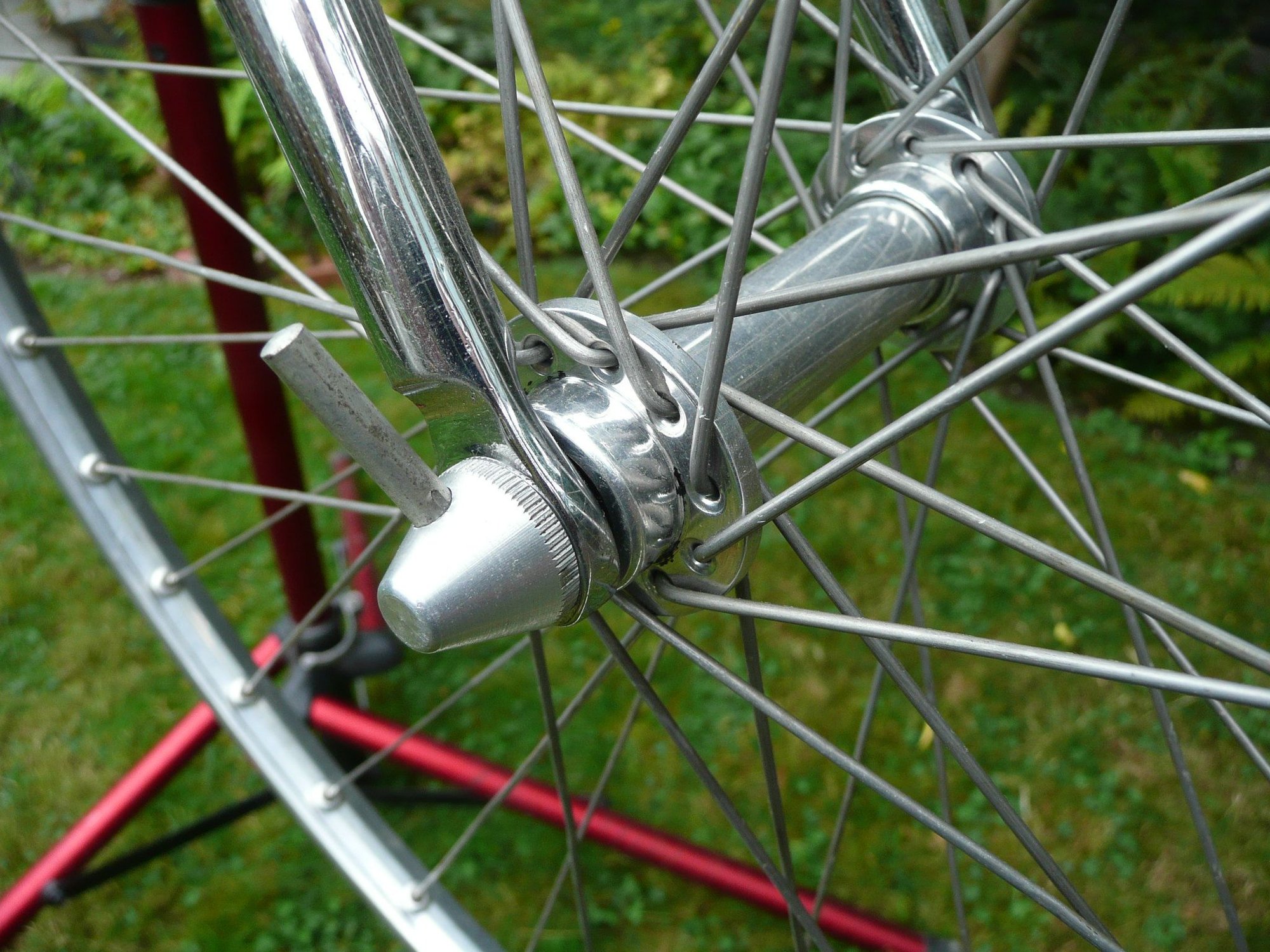
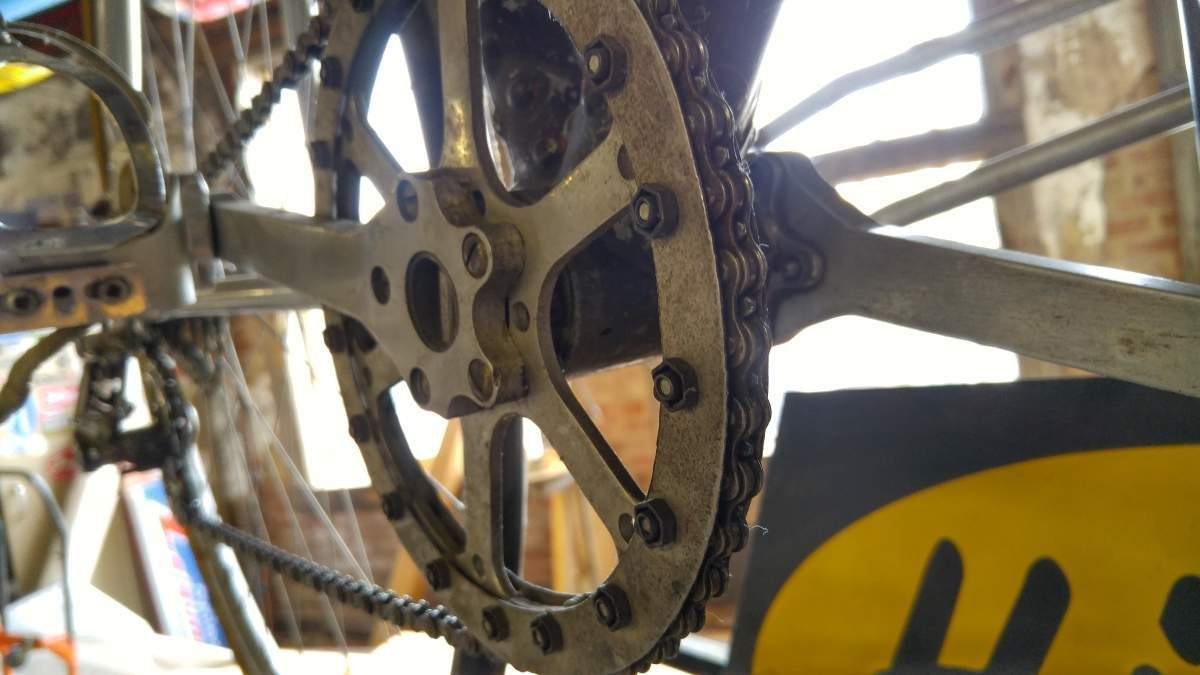
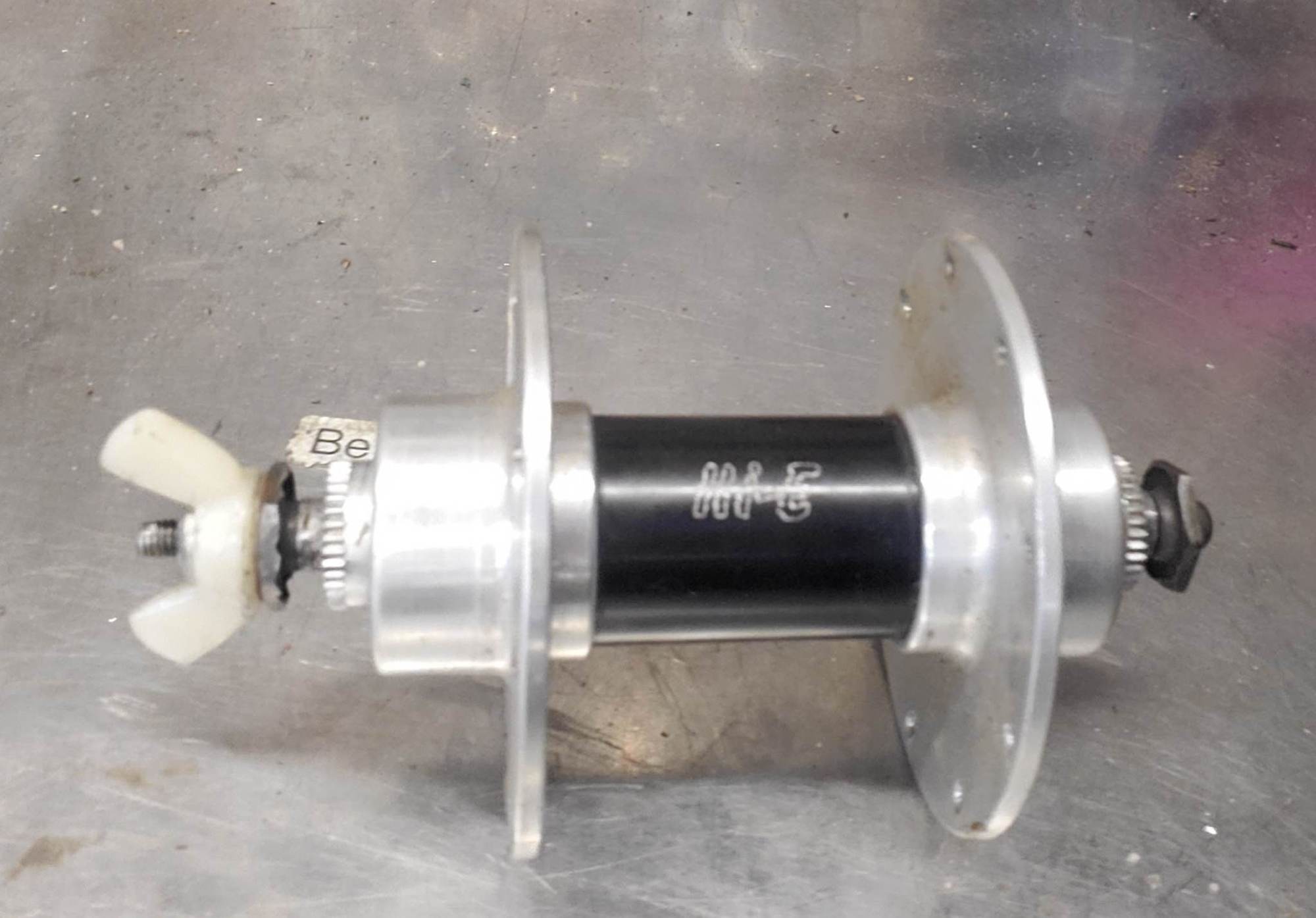
I don't have the wheels anymore, they went with my Exxon Graftek bike that I sold. It also had Hi-E pedals, and the front wheel has aluminum spokes that were threaded on both ends. The spokes went from one side of the rim, through the hub with a dog-leg bend, and on to the other side of the rim. So this 36-hole rim only needed 18 spokes. (He called those "Siamese" spokes, before that term came to be thought of as offensive when used to mean "conjoined".) Hi-E Superlight timetrial hub of course, with aluminum-shaft skewer. Man that was a light wheel. I never rode on it, too scary at my, um, ample weight.
Rear rim was 36 hole too, but with 12 spokes left and 24 spokes right. Normal steel J-bend spokes.
Anyone ever used the spot-facer for dropouts, to make the slow-release skewers safer? I have the facing tool and have used it only once. Sort of makes "lawyer lips" in any front dropout.

I also have a scan of the spot-facer instructions, which I can upload if anyone needs it, but it's all greasy-grimy, not a clean scan. I haven't read this whole thread so apologies if it's been covered already.
I don't have the wheels anymore, they went with my Exxon Graftek bike that I sold. It also had Hi-E pedals, and the front wheel has aluminum spokes that were threaded on both ends. The spokes went from one side of the rim, through the hub with a dog-leg bend, and on to the other side of the rim. So this 36-hole rim only needed 18 spokes. (He called those "Siamese" spokes, before that term came to be thought of as offensive when used to mean "conjoined".) Hi-E Superlight timetrial hub of course, with aluminum-shaft skewer. Man that was a light wheel. I never rode on it, too scary at my, um, ample weight.
Rear rim was 36 hole too, but with 12 spokes left and 24 spokes right. Normal steel J-bend spokes.
Anyone ever used the spot-facer for dropouts, to make the slow-release skewers safer? I have the facing tool and have used it only once. Sort of makes "lawyer lips" in any front dropout.
I also have a scan of the spot-facer instructions, which I can upload if anyone needs it, but it's all greasy-grimy, not a clean scan. I haven't read this whole thread so apologies if it's been covered already.
Last edited by bulgie; 12-26-22 at 04:06 PM.
12-26-22 | 04:36 PM
#80

Steel is real

Joined: Mar 2013
Posts: 4,480
Likes: 2,578
From: Not far from Paris
Bikes: 93GiantTourer,92MeridaAlbon,96Scapin,98KonaKilaueua,93Peugeot Prestige,05CasatiClipper,98Jamis Dragon,95Tange Prestige(to be built),98VettaTeam,95Coppi,93Grandis,Daccordi x3(in build),98Piton(in build),99Trek SLR2300
Very interesting thanks for sharing
12-26-22 | 08:05 PM
#81
Hi-E high-low hub
Joined: Dec 2022
Posts: 2
Likes: 4
From: Massachusetts then, New Mexico now.
Bikes: Raleigh Competition 1973
Stripped threads on a Normandy Lux (destroyed with pride!)
Hi Bob and Folks--
The problem was indeed stripped alloy threads on the stock Normandy Lux rear hub. The rear cluster didn't have a brand name that I remember. Consistent with that is how the 1973 Raleigh catalog that I see on-line doesn't specify the maker of the 14-24 rear cluster supplied stock on the Competition model. Indeed, I continued to use the same (working) cluster on the Hi-E wheel, at least as I recall, until I replaced it with a 14-18 that I bought second-hand from another kid at snotty boarding school. (It was nice and flat in Southeastern Massachusetts where I grew up!)
Those were the days! I was lucky to discover road-racing bikes and sew-up tires as early as I did. Hi-end bikes are SO much more common now -- it's quite amazing how things have changed for cycling technology and performance, at least in small-town USA since the early 1970s. I had sew-up tires when all my hometown rat-pack friends had Schwinn Varsities. My gosh almighty, what a step up was the modest Raleigh Competition -- compared to that Iron Dog beast Schwinn Varsity! I'm sure there are a few others here who can relate to this nostalgia.... ;-)
Cheers--
--JWB.
PS: I've learned that I can't post pictures here until I make eight more postings. My Hi-Lo wheel is unusual but clearly not super-rare. If anyone is especially interested to see pictures, I'll generate some blather or something, and get pictures posted. It was fun riding such an unusual wheel -- and it worked for me!!
 04-18-24 | 08:00 PM
#83

Senior Member
Joined: Mar 2007
Posts: 9,167
Likes: 5,350
From: SF Bay Area, East bay
Bikes: Miyata 618 GT, Marinoni, Kestral 200, Soma double cross 2002 Trek 5200, KHS Flite, Koga Miyata, Schwinn Spitfire 5, Mondia Special, Univega Alpina, Miyata team Ti, Santa Cruz Highball, Waterford rs11
https://www.bikeforums.net/members/hazetguy-20876.html
hazetguy bought out his old stock. He may still have some.
hazetguy bought out his old stock. He may still have some.
04-19-24 | 05:46 AM
#85

Senior Member
Joined: Feb 2008
Posts: 5,305
Likes: 4,801
From: Peoria, IL
The rims were likely riveted to be able to use sheet stock instead of investing in an extrusion die like most rim manufacturers.
Another factor might be that Harlan Meyer came from the aerospace world, and may have been more familiar with riveting as a construction method.
It's worth checking out the Classic Rendezvous page on Hi-E to get a look at the full range of Hi-E products.
edit: wow... I forgot how old this thread is!
Steve in Peoria
Last edited by steelbikeguy; 04-19-24 at 05:50 AM.
04-19-24 | 06:10 AM
#86

I Talk To My Haircut
Joined: Nov 2004
Posts: 135
Likes: 3,008
https://www.bikeforums.net/members/hazetguy-20876.html
hazetguy bought out his old stock. He may still have some.
hazetguy bought out his old stock. He may still have some.
99.9% of what i bought has been moved on to other homes.
see post #50 in this thread.
 07-25-24 | 05:39 PM
#88

Full Member
Joined: Aug 2014
Posts: 228
Likes: 190
From: San Quentin California
Bikes: https://www.fattiretrading.com/collection.html
07-25-24 | 06:07 PM
#89

Senior Member

Joined: Apr 2011
Posts: 12,629
Likes: 4,783
Dumb question - a friend who was in the middle of all of this kind of development told me about a wheel design that used thin piano wire and tension bales like a stringed instrument for spokes. Was that a different Harlan design or something else?
10-07-24 | 12:17 PM
#90
Newbie
Joined: Oct 2024
Posts: 30
Likes: 47
From: Indianapolis
Bikes: N-1, 1975 Paramount, Hi-E Cosmopolitan, Argon 18 Electron Pro track, Parlee RZ-7, State 4130 and others
Restoring Cosmo #11
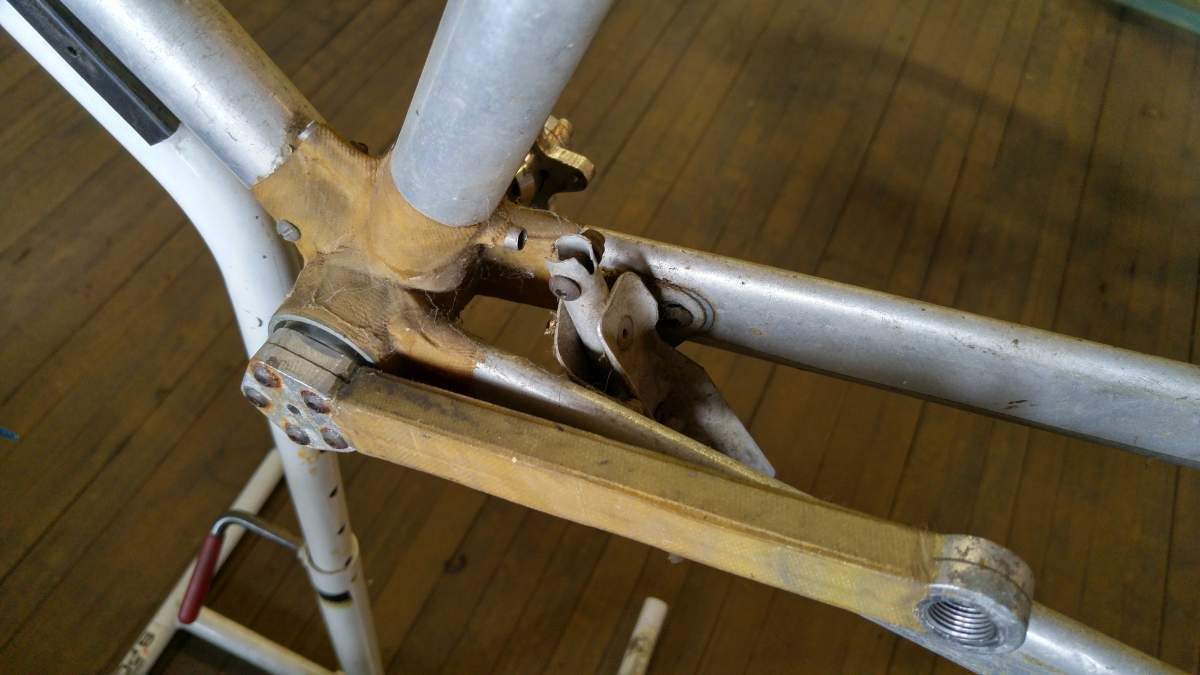
Hi, new poster here. I raced starting in the early 70s in Indianapolis and Hi-e products were quite well known. I recently picked up Cosmopolitan #11 from the original owner in pretty bad shape, but I’m hoping to resurrect it. It had been painted orange, but much of that paint is flaking away. If I were to have it repainted, I would lose/ need to replace the original stickers. Not sure whether perhaps to strip it and leave bare aluminum, etc. Before I tear into the parts, I’d like to know what is truly “unobtainium” and what stuff might still be out there. Any contact is appreciated.
10-07-24 | 01:09 PM
#91
Senior Member
Joined: Jan 2023
Posts: 816
Likes: 826
Hi, new poster here. I raced starting in the early 70s in Indianapolis and Hi-e products were quite well known. I recently picked up Cosmopolitan #11 from the original owner in pretty bad shape, but I’m hoping to resurrect it. It had been painted orange, but much of that paint is flaking away. If I were to have it repainted, I would lose/ need to replace the original stickers. Not sure whether perhaps to strip it and leave bare aluminum, etc. Before I tear into the parts, I’d like to know what is truly “unobtainium” and what stuff might still be out there. Any contact is appreciated.
Parts have really dwindled and dispersed in the past decade. The CR list (classic rendezvous / google group) will probably trigger leads. Rims, hubs, skewers and pedals occasionally are found on eBay.
10-07-24 | 01:38 PM
#92
Newbie
Joined: Oct 2024
Posts: 30
Likes: 47
From: Indianapolis
Bikes: N-1, 1975 Paramount, Hi-E Cosmopolitan, Argon 18 Electron Pro track, Parlee RZ-7, State 4130 and others
Thank you for the reply. It is quite rough right now, and I need to patiently free nuts, bolts, and cotters that haven’t moved in half a century. Oozing character is apt. I actually rode on training rides with the original owner of this bike (1971 US National Road Champion Steve Dayton). It creaked like crazy due to the riveted frame, and he had the shift levers mounted where? Down tube? No. Bar ends? Nope. Stem? Strike three. Seat tube is the correct answer due to oversized down tube and weight savings, and it wasn’t as bad as it sounds. Once I have posted enough, I can upload some pix.
Neat history. As for restoration vs. preservation, these bikes are now extraordinary rare. As the saying 'they're only original once' so in this case, I would lean towards preservation. Oozes character and more interesting. If you need decals, reach out to Gus Salmon (Winter Park, FL).
Parts have really dwindled and dispersed in the past decade. The CR list (classic rendezvous / google group) will probably trigger leads. Rims, hubs, skewers and pedals occasionally are found on eBay.
Parts have really dwindled and dispersed in the past decade. The CR list (classic rendezvous / google group) will probably trigger leads. Rims, hubs, skewers and pedals occasionally are found on eBay.
10-11-24 | 11:20 AM
#93

Junior Wingnut

Joined: Nov 2020
Posts: 192
Likes: 120
From: Portland, or
Bikes: 1988 Litespeed first model (only survivor?), Teledyne Titan, Performance MT1000, Casati Perfection, Slingshot 650c


The hi-e system wheel that I have uses
Last edited by 3dvvitch; 10-11-24 at 11:25 AM.
10-11-24 | 11:29 AM
#95
Junior Wingnut
Joined: Nov 2020
Posts: 192
Likes: 120
From: Portland, or
Bikes: 1988 Litespeed first model (only survivor?), Teledyne Titan, Performance MT1000, Casati Perfection, Slingshot 650c
https://pardo.net/bike/pic/mobi/d.hi-...kes/index.html
This has pictures of the spokes where a different threading system was used plus commentary. I think my example with the spokes themselves being threaded is a prototype or later modification.
This has pictures of the spokes where a different threading system was used plus commentary. I think my example with the spokes themselves being threaded is a prototype or later modification.
Last edited by 3dvvitch; 10-11-24 at 11:32 AM.
10-11-24 | 12:04 PM
#96
Senior Member
Joined: Feb 2008
Posts: 5,305
Likes: 4,801
From: Peoria, IL
Their marketing literature did mention them (circa 1992)....

It mentions a large weight savings, compared to conventional spokes. It's not clear exactly how the weight is saved. Are the spokes made of aluminum??
Steve in Peoria
(a fan of some Hi-E products, but not all of them)
10-11-24 | 12:04 PM
#97
Senior Member
Joined: Jan 2023
Posts: 816
Likes: 826
Ironic and seems all wrong but today I have a modern US made White Industries Mi5 hubs (large diam flanged) that are 40 hole, though laced only 20 spoke, 2 cross, tied and soldered to all carbon plastic deep rims for tubular. Fast, super reliable strong and freakishly lightweight.
10-11-24 | 12:14 PM
#98
Junior Wingnut
Joined: Nov 2020
Posts: 192
Likes: 120
From: Portland, or
Bikes: 1988 Litespeed first model (only survivor?), Teledyne Titan, Performance MT1000, Casati Perfection, Slingshot 650c
"Meyer bought 1.27 mm (0.050 inch) wire, of a sort suitable for spokes. He formed threads on the outside of brass(?) tubing, which he slid on and then silver-brazed to the wire. He formed heads by... doing away with the head entirely, and replacing each pair of spokes (and heads!) with one long spoke, run rim-to-hub-to-rim.
Half of a Hi-E spoke (equivalent to a single conventional spoke) is 3.65 g for 311 mm equivalent, which would make a 260 mm equivalent about 3.05 g. In comparison, Sapim lists their Super Spoke as 3.61 g for 260 mm, or about 18% heavier than a Hi-E spoke."
But that description applies to a slightly different version (maybe the standard version) where the spoke thread section are a separate piece attached to the spoke wire (see below). I'll update once I get calipers on the spokes on my version of the wheel and weigh it. I'm curious now to see if my version is any lighter than normal.
 10-11-24 | 12:53 PM
#99
Senior Member
Joined: Feb 2008
Posts: 5,305
Likes: 4,801
From: Peoria, IL
That pardo website I linked to (which may or may not actually work very well) says the following:
"Meyer bought 1.27 mm (0.050 inch) wire, of a sort suitable for spokes. He formed threads on the outside of brass(?) tubing, which he slid on and then silver-brazed to the wire. He formed heads by... doing away with the head entirely, and replacing each pair of spokes (and heads!) with one long spoke, run rim-to-hub-to-rim.
Half of a Hi-E spoke (equivalent to a single conventional spoke) is 3.65 g for 311 mm equivalent, which would make a 260 mm equivalent about 3.05 g. In comparison, Sapim lists their Super Spoke as 3.61 g for 260 mm, or about 18% heavier than a Hi-E spoke."
But that description applies to a slightly different version (maybe the standard version) where the spoke thread section are a separate piece attached to the spoke wire (see below). I'll update once I get calipers on the spokes on my version of the wheel and weigh it. I'm curious now to see if my version is any lighter than normal.
"Meyer bought 1.27 mm (0.050 inch) wire, of a sort suitable for spokes. He formed threads on the outside of brass(?) tubing, which he slid on and then silver-brazed to the wire. He formed heads by... doing away with the head entirely, and replacing each pair of spokes (and heads!) with one long spoke, run rim-to-hub-to-rim.
Half of a Hi-E spoke (equivalent to a single conventional spoke) is 3.65 g for 311 mm equivalent, which would make a 260 mm equivalent about 3.05 g. In comparison, Sapim lists their Super Spoke as 3.61 g for 260 mm, or about 18% heavier than a Hi-E spoke."
But that description applies to a slightly different version (maybe the standard version) where the spoke thread section are a separate piece attached to the spoke wire (see below). I'll update once I get calipers on the spokes on my version of the wheel and weigh it. I'm curious now to see if my version is any lighter than normal.
I didn't see a mention of "aluminum", so I'm guessing the diameter is smaller?
Steve in Peoria
10-11-24 | 01:28 PM
#100
Senior Member
Joined: Apr 2009
Posts: 3,703
Likes: 5,487
From: Seattle
- the super-thin high-strength steel with brazed-on threads
- thicker aluminum wire with threads cut into the alu