


Hi-E
 12-15-24 | 04:52 PM
#151

Senior Member
Joined: Sep 2021
Posts: 1,108
Likes: 501
I had that same question a while ago, and got an answer here: Hi-E
There's two tapered roll pins on each side that affix the crank arm to the tube/axle.
The pin that is oriented perpendicular to the crank arm is just shoved through from one side to the other.
The other pin is installed inline with the crank arm. I'm not sure how you get it back out.
It's not the worst way to be able to use a hollow tube for the axle, but I have questions about how well it held up. Harlan seemed to be designing with low weight as the top priority, and with durability way down the list.
Steve in Peoria
(but my Heavy Duty Hi-E hub is still being used)
There's two tapered roll pins on each side that affix the crank arm to the tube/axle.
The pin that is oriented perpendicular to the crank arm is just shoved through from one side to the other.
The other pin is installed inline with the crank arm. I'm not sure how you get it back out.
It's not the worst way to be able to use a hollow tube for the axle, but I have questions about how well it held up. Harlan seemed to be designing with low weight as the top priority, and with durability way down the list.
Steve in Peoria
(but my Heavy Duty Hi-E hub is still being used)
 12-16-24 | 09:05 AM
#152
Junior Member

Joined: Apr 2019
Posts: 142
Likes: 24
gorgeous bike! Love the box lining, the racks, the fenders, etc! So nice!
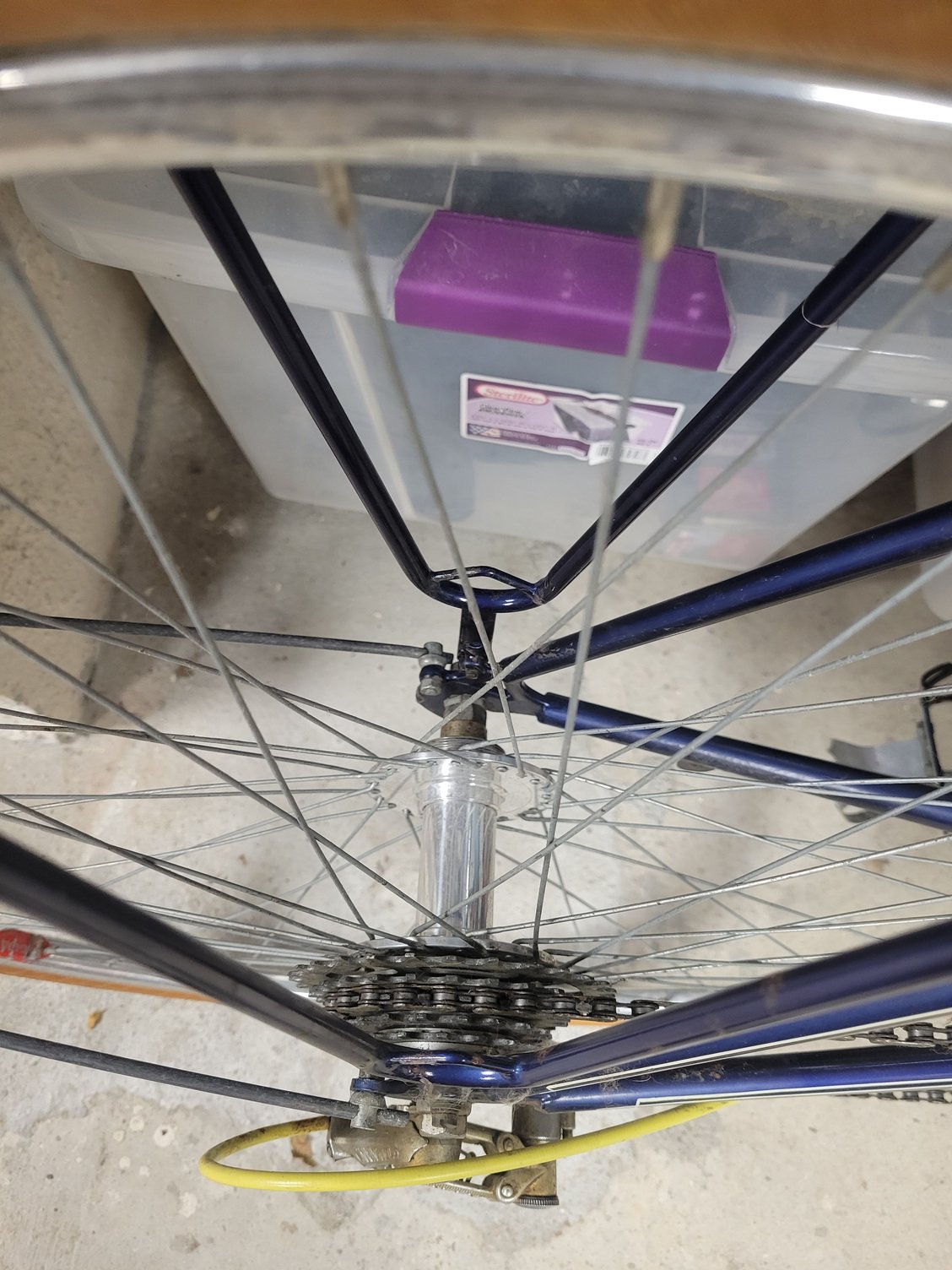
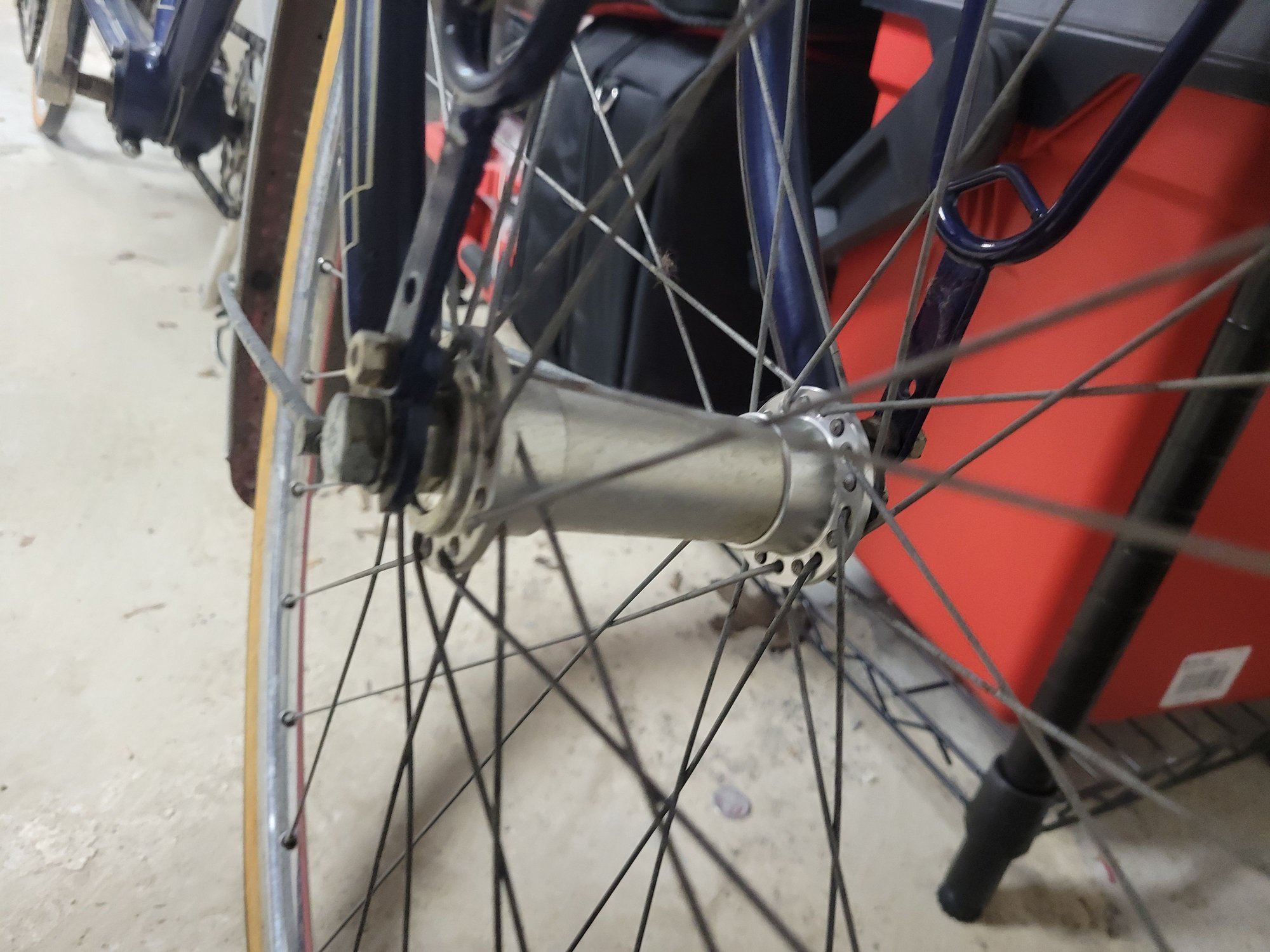
I was trying to see the details of the hubs, and didn't see anything that struck me as being unique to Hi-E. My own Hi-E hub doesn't have any markings on it, so it can be ambiguous. I have seen photos of Hi-E hubs with some adhesive labels, though.
Those aren't Phil Wood hubs on the JT, because they were well marked.
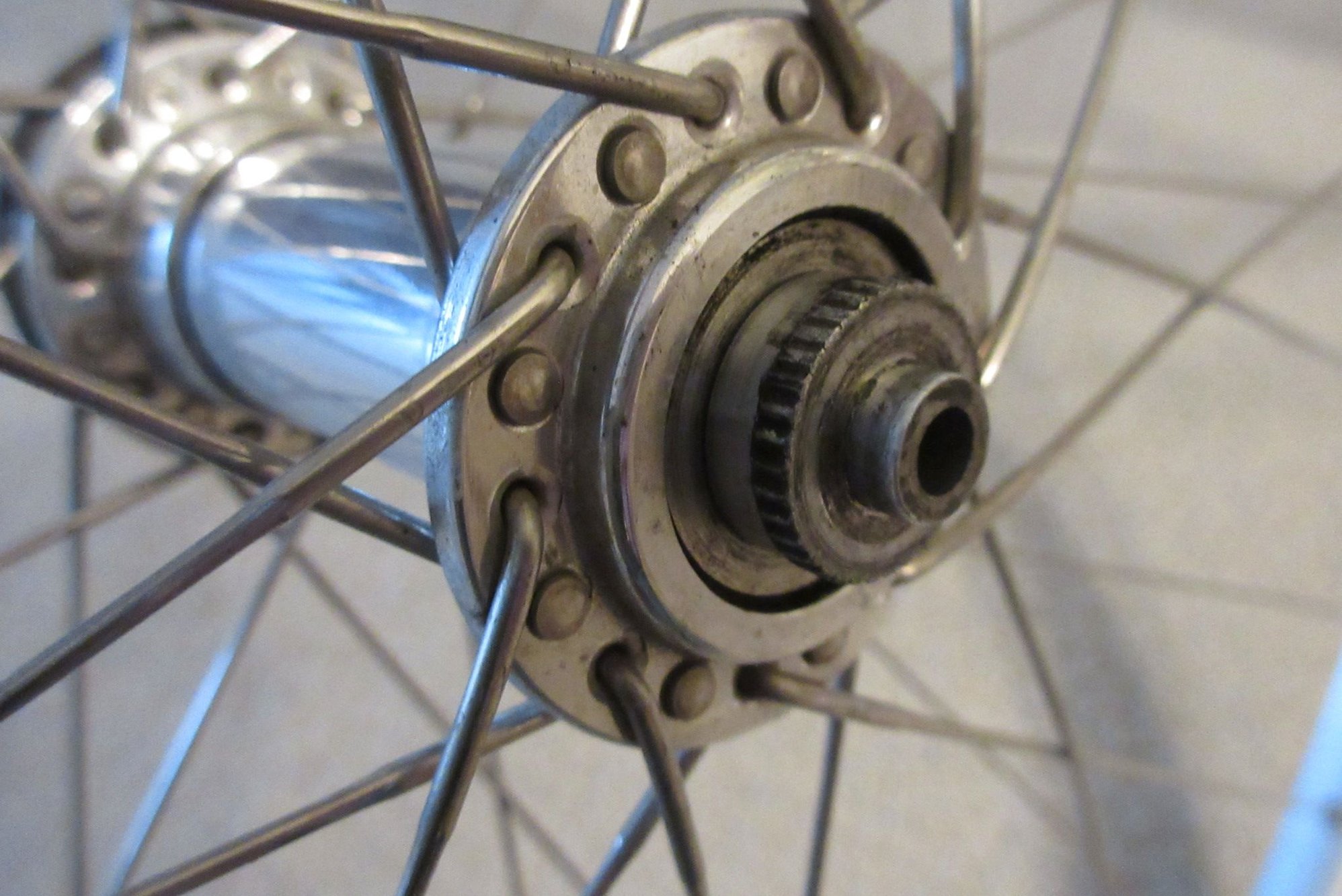
They might be Bullseye hubs?? I had one rear Bullseye hub, and I think it had a sticker on it. What was unique was that the axle was modular. The was a spacer with a set screw that allowed you to remove the axle. The axle was threaded too, to allow just using a bolt instead of a QR to attach the wheel to the bike.
Here's an old shot of the Bullseye hub that I had...

Regardless of who made the hubs, I'm intrigued by the method holding the hub to the dropouts. Some sort of "slow release" with a threaded rod that passes through the hub axle? I've got a Hi-E version of this, but it uses the standard Hi-E cone shape for the end pieces.
Steve in Peoria
I was trying to see the details of the hubs, and didn't see anything that struck me as being unique to Hi-E. My own Hi-E hub doesn't have any markings on it, so it can be ambiguous. I have seen photos of Hi-E hubs with some adhesive labels, though.
Those aren't Phil Wood hubs on the JT, because they were well marked.
They might be Bullseye hubs?? I had one rear Bullseye hub, and I think it had a sticker on it. What was unique was that the axle was modular. The was a spacer with a set screw that allowed you to remove the axle. The axle was threaded too, to allow just using a bolt instead of a QR to attach the wheel to the bike.
Here's an old shot of the Bullseye hub that I had...
Regardless of who made the hubs, I'm intrigued by the method holding the hub to the dropouts. Some sort of "slow release" with a threaded rod that passes through the hub axle? I've got a Hi-E version of this, but it uses the standard Hi-E cone shape for the end pieces.
Steve in Peoria



 12-16-24 | 11:13 AM
#153

Senior Member


Joined: Mar 2007
Posts: 9,175
Likes: 5,355
From: SF Bay Area, East bay
Bikes: Miyata 618 GT, Marinoni, Kestral 200, Soma double cross 2002 Trek 5200, KHS Flite, Koga Miyata, Schwinn Spitfire 5, Mondia Special, Univega Alpina, Miyata team Ti, Santa Cruz Highball, Waterford rs11
 12-16-24 | 11:49 AM
#154

Senior Member
Joined: Feb 2008
Posts: 5,309
Likes: 4,809
From: Peoria, IL
There's no reason to think that those aren't Hi-E hubs, but.... there is some weird stuff going on.
On both hubs, there is a large bolt head on the right (drive) side. My hub only has a 5mm hole through the axle, and this bolt looks too large to pass through a 5mm hole.
On the rear hub, the left (non-drive) side has some extra nuts or washers in line with the axle.
I'm starting to wonder if someone modified the hub to allow a shaft larger than 5mm to pass through the axle? The 5mm hole is just part of the "end caps" that fit onto the shaft that passes through the hub and bearing.... at least that's how it looks in the drawings.
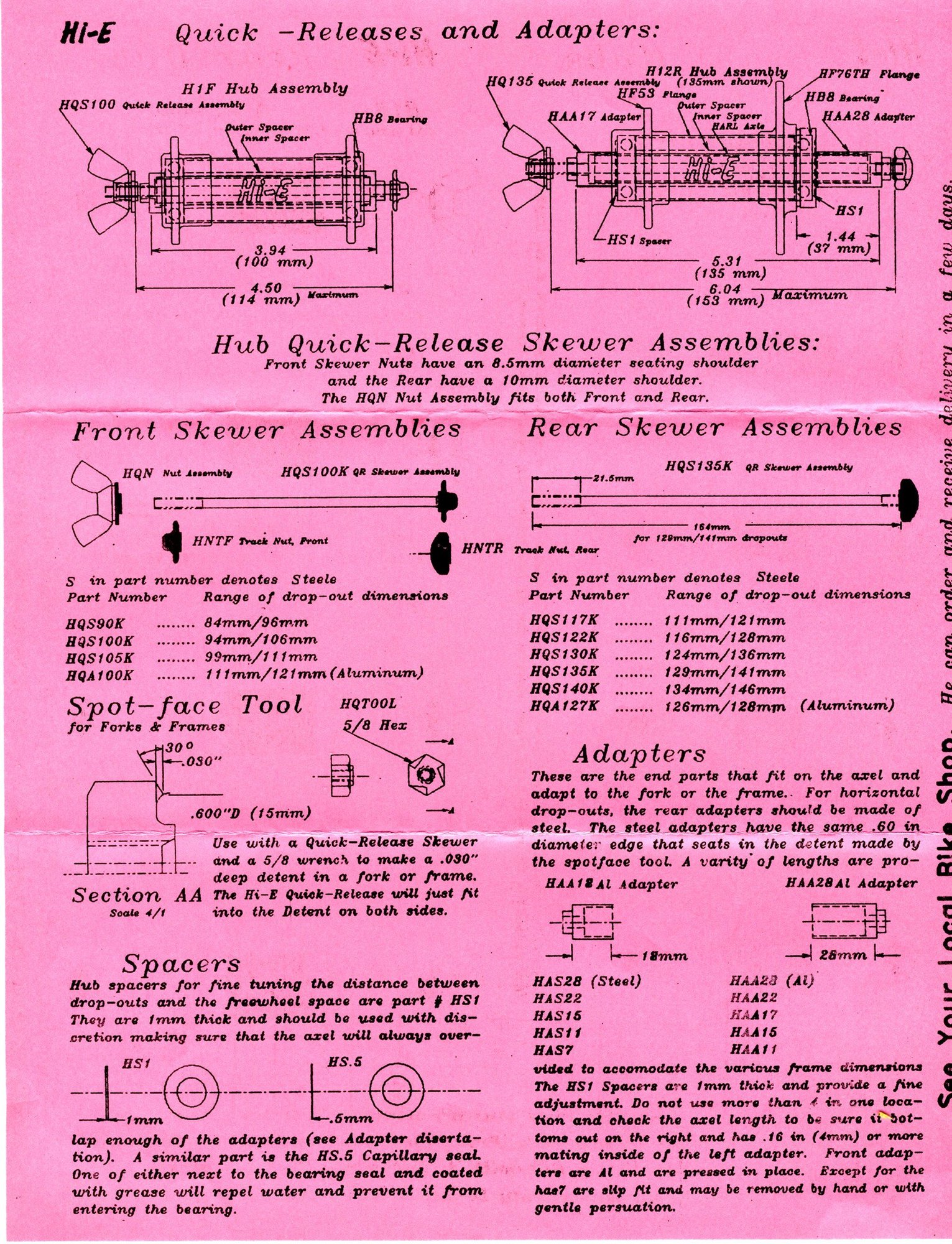
It might be fun (or frightening) to pull off the wheels and get a good look at what is going on.
Steve in Peoria
On both hubs, there is a large bolt head on the right (drive) side. My hub only has a 5mm hole through the axle, and this bolt looks too large to pass through a 5mm hole.
On the rear hub, the left (non-drive) side has some extra nuts or washers in line with the axle.
I'm starting to wonder if someone modified the hub to allow a shaft larger than 5mm to pass through the axle? The 5mm hole is just part of the "end caps" that fit onto the shaft that passes through the hub and bearing.... at least that's how it looks in the drawings.
It might be fun (or frightening) to pull off the wheels and get a good look at what is going on.
Steve in Peoria

 12-17-24 | 06:23 PM
#157
Newbie
Joined: Oct 2024
Posts: 30
Likes: 47
From: Indianapolis
Bikes: N-1, 1975 Paramount, Hi-E Cosmopolitan, Argon 18 Electron Pro track, Parlee RZ-7, State 4130 and others
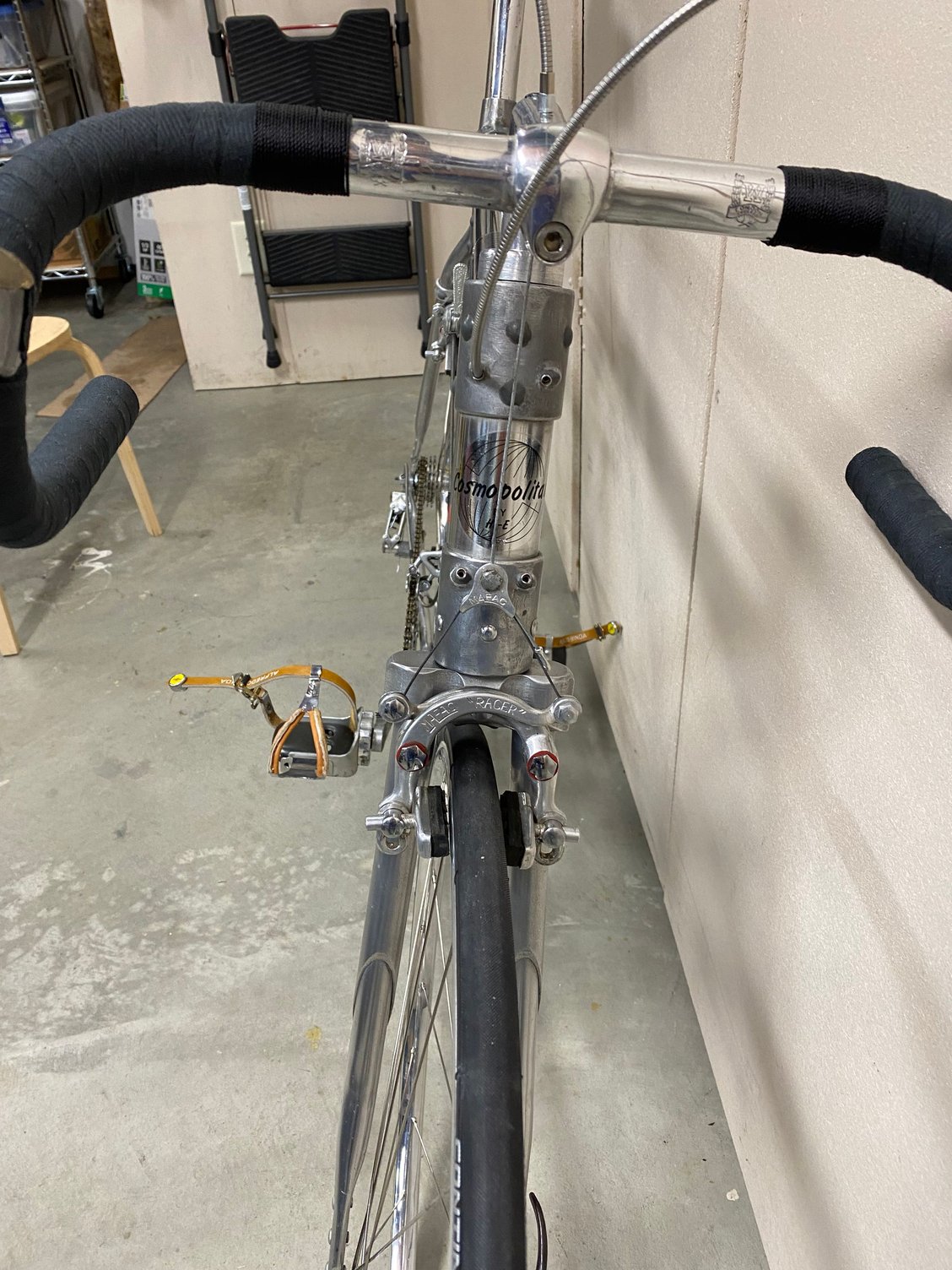
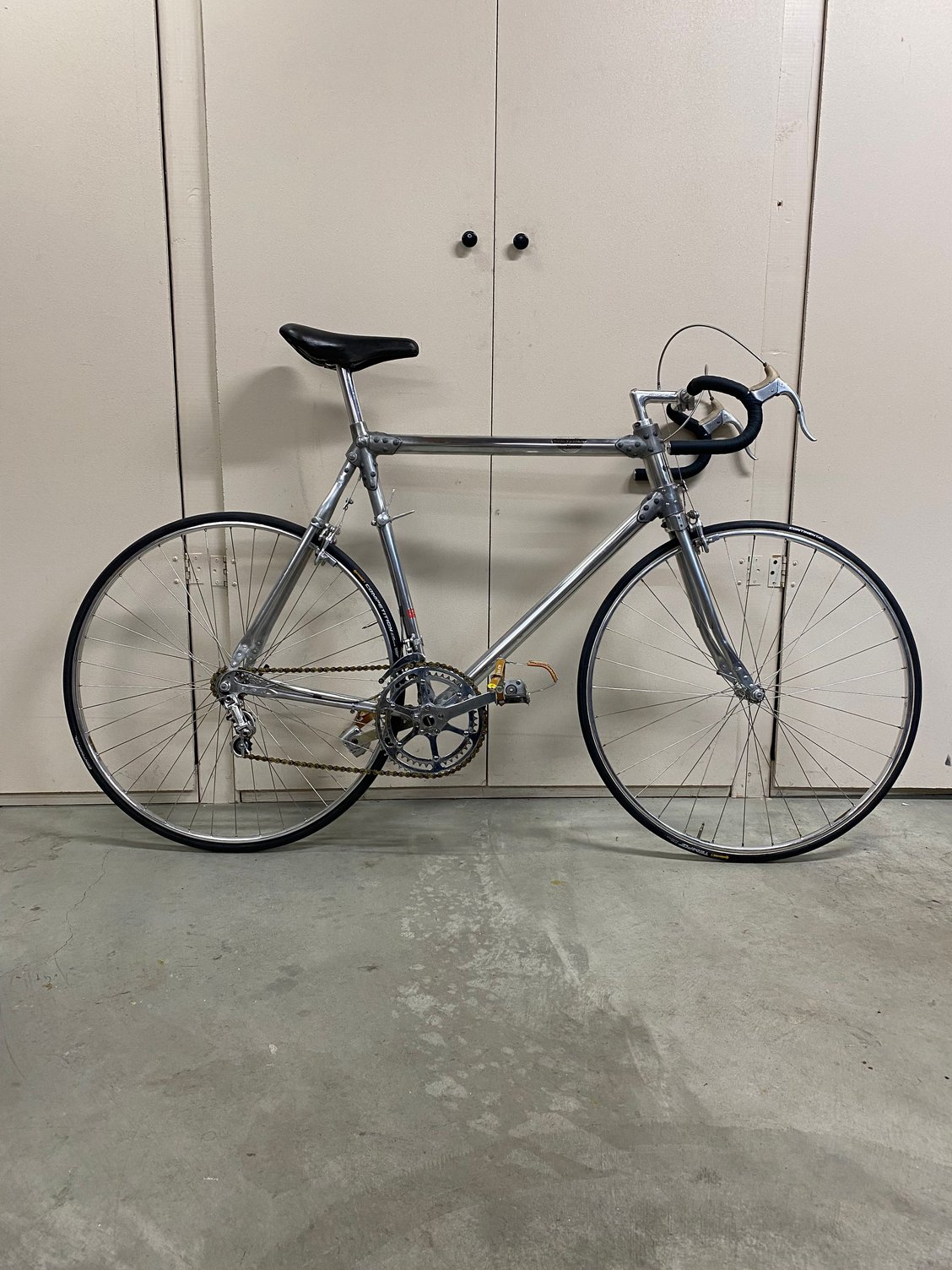
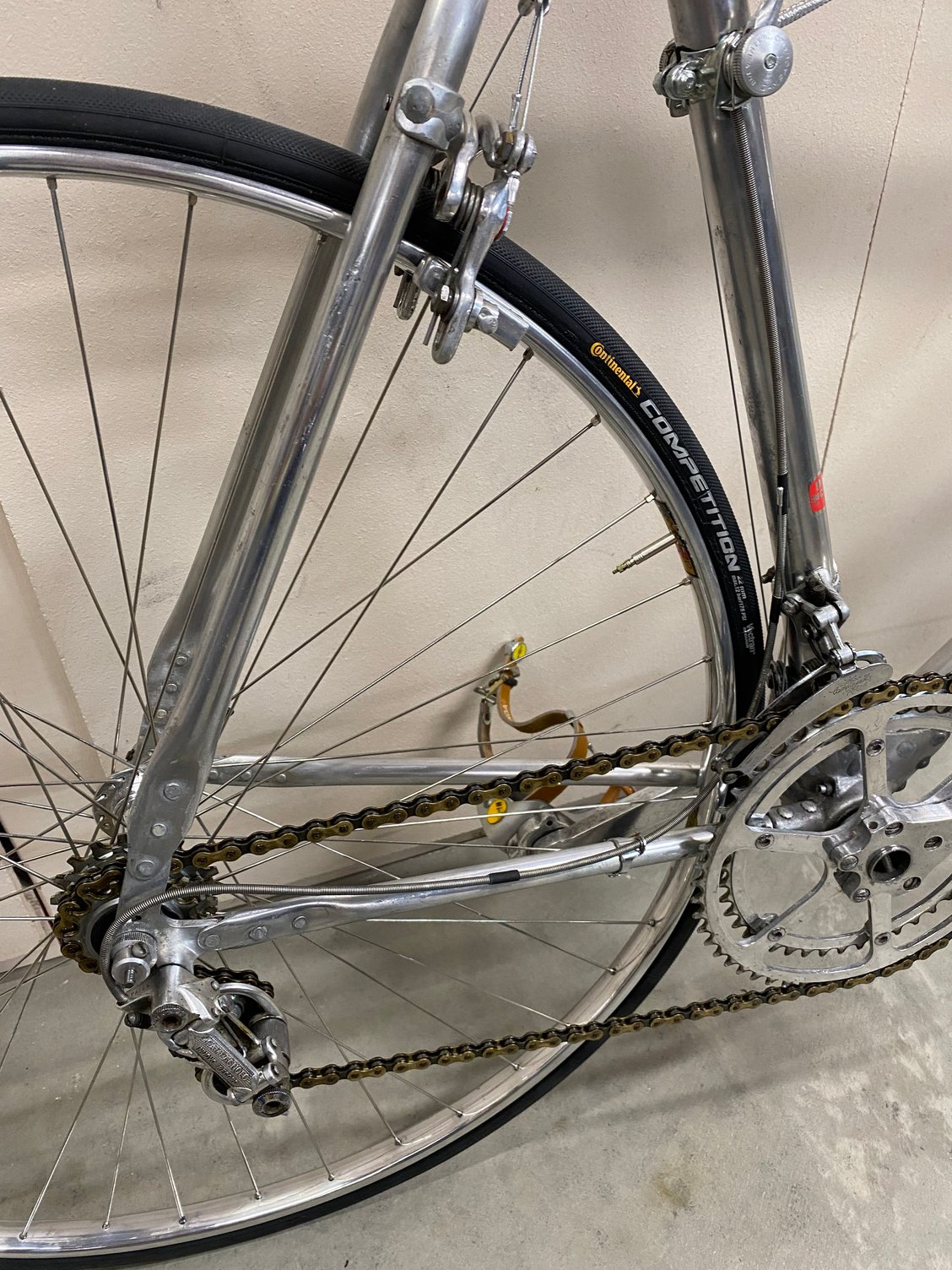
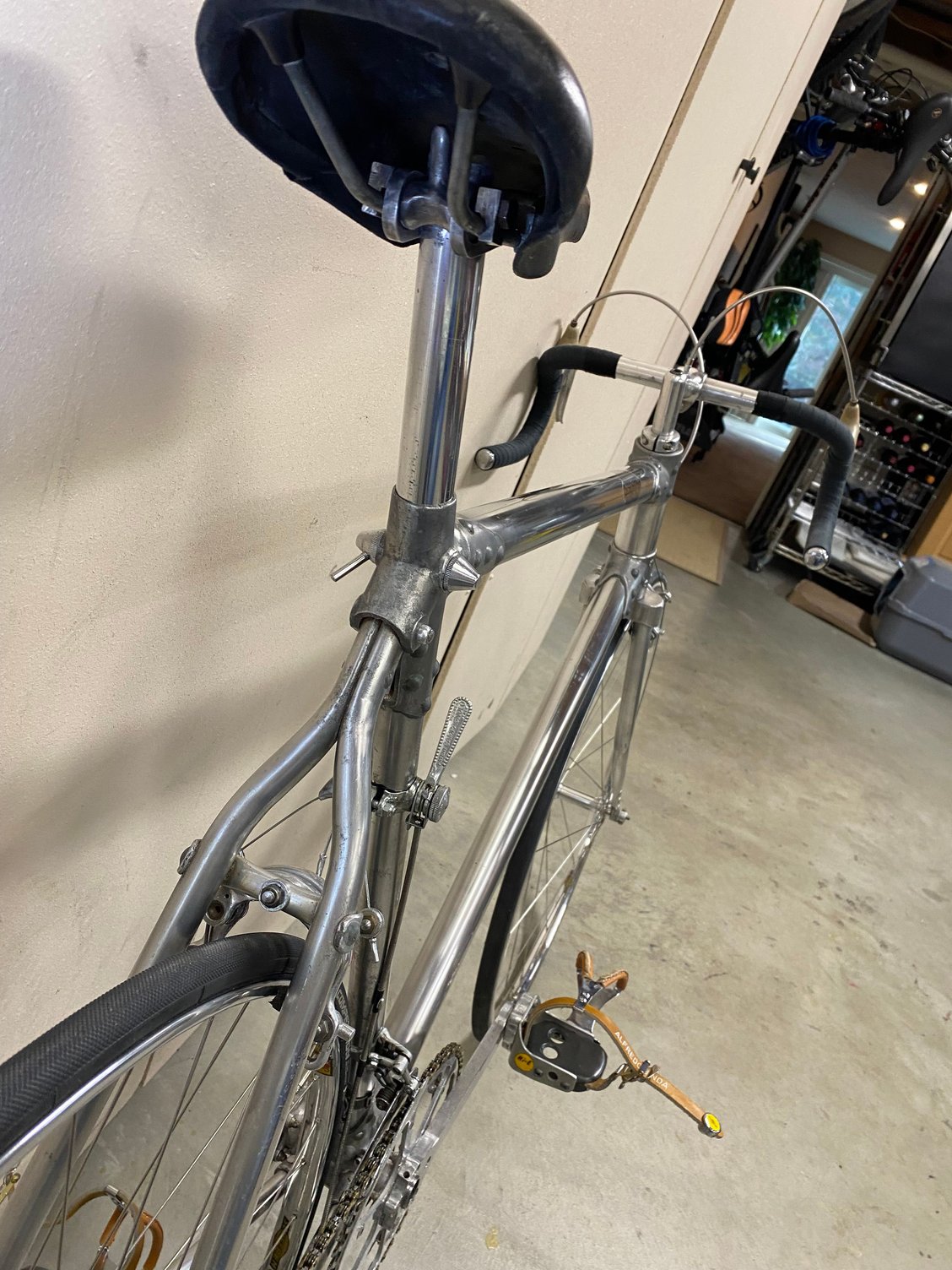
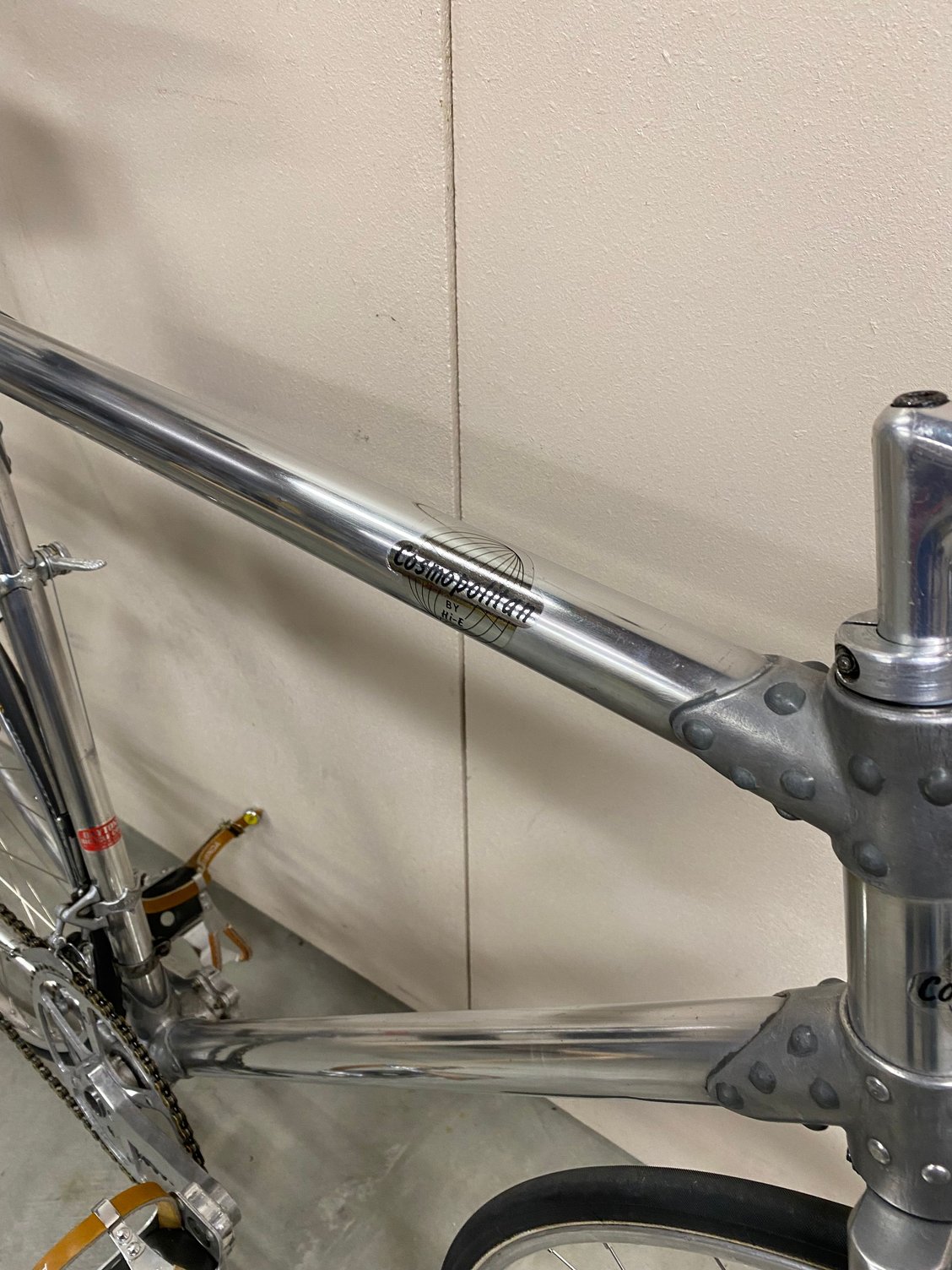
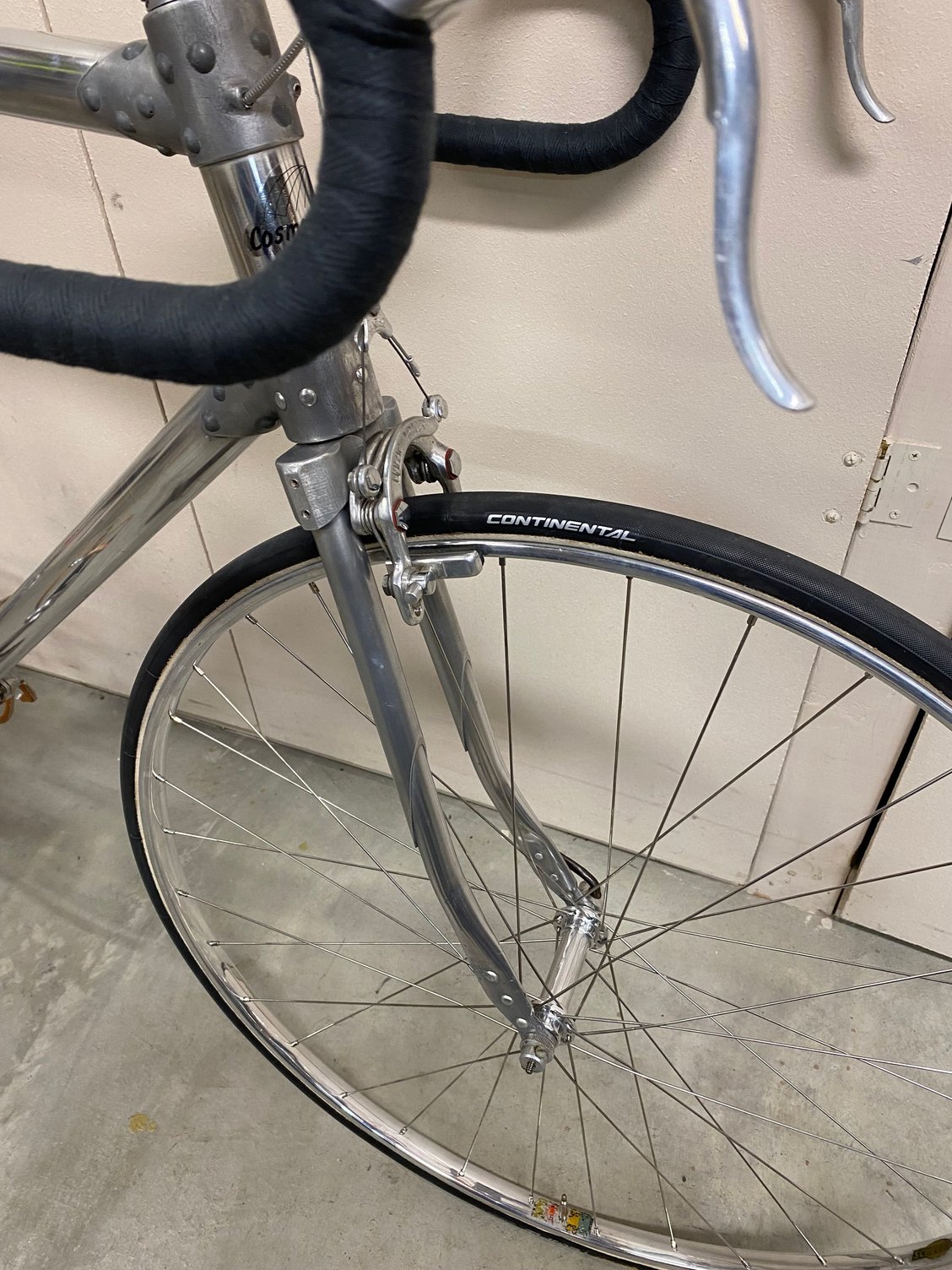
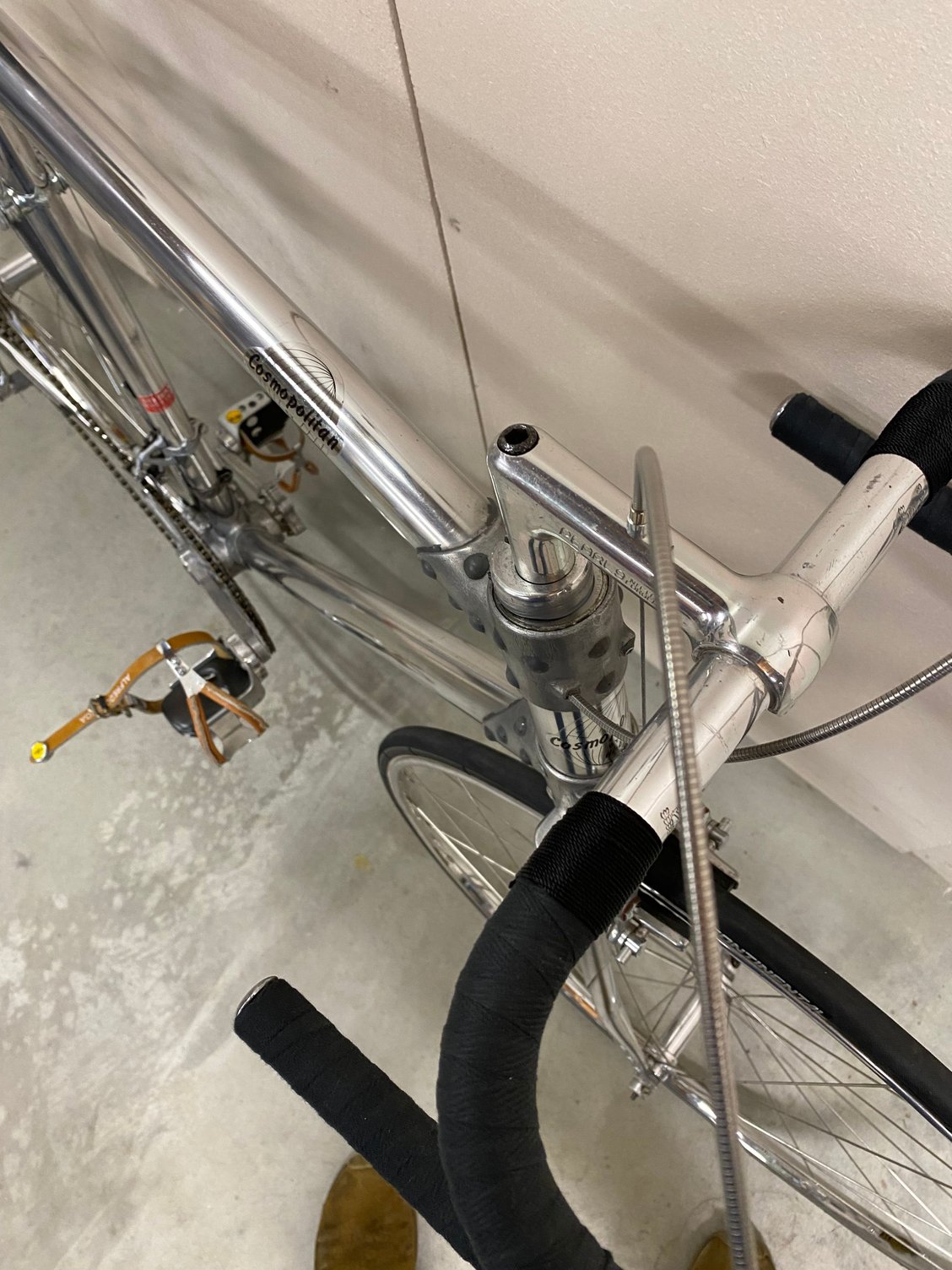
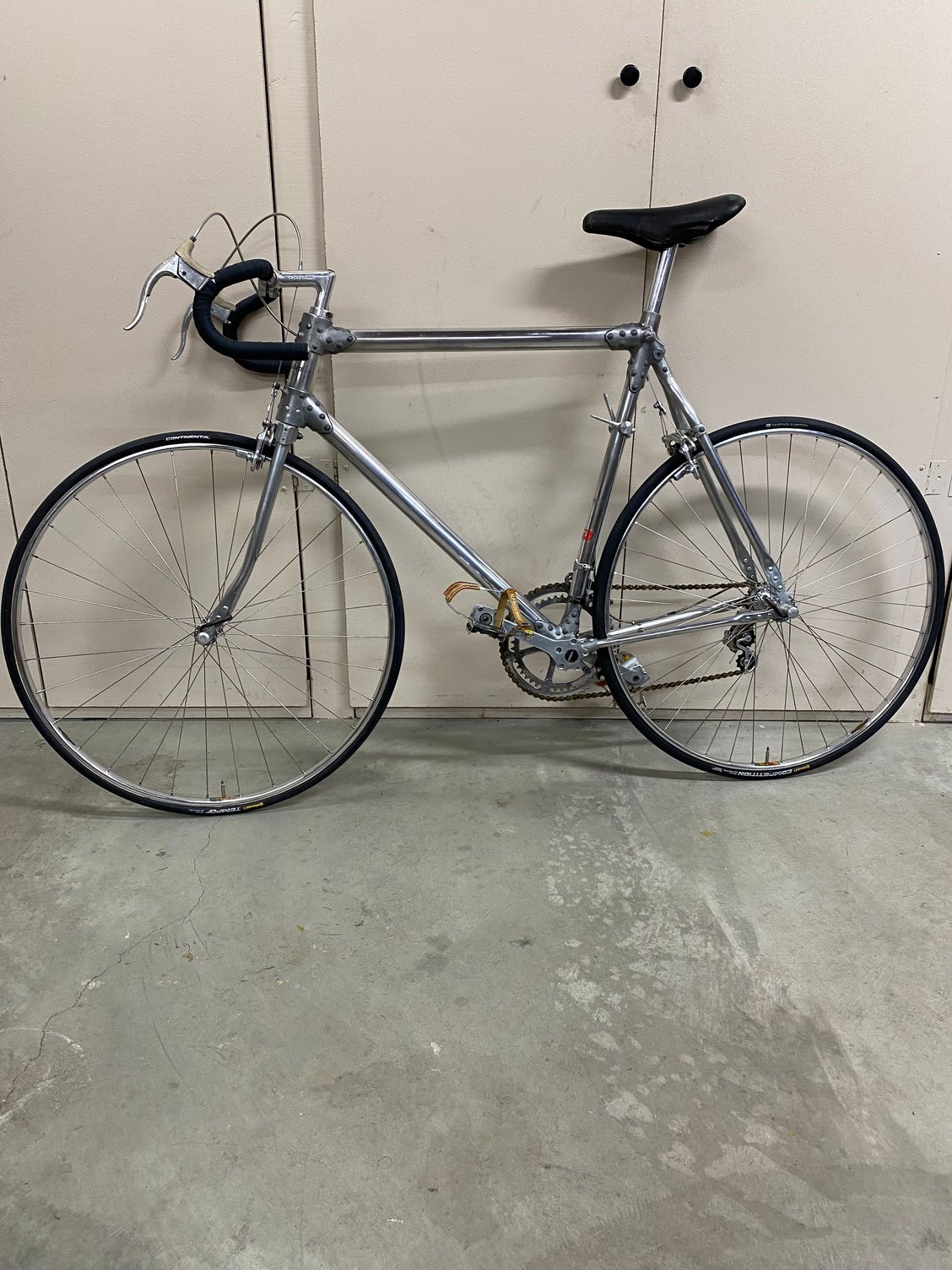
17.9 pounds. For comparison, my 1975 P13 Paramount (admittedly with heavy Brooks Pro saddle) weighs 23.5.
12-19-24 | 07:17 AM
#158

Freewheel Medic


Joined: Oct 2005
Posts: 13,556
Likes: 3,300
From: An Island on the Coast of GA!
Bikes: Snazzy* Schwinns, Classy Cannondales & a Super Pro Aero Lotus (* Ed.)
Stunning! Fantastic work 3xLittle500  You deserve the Restoration of the Year award for 2024.
How is the ride and confidence in shifting from the seat tube?
You deserve the Restoration of the Year award for 2024. How is the ride and confidence in shifting from the seat tube?
__________________
Bob
Enjoying the GA coast all year long!
Thanks for visiting my website: www.freewheelspa.com
Bob
Enjoying the GA coast all year long!
Thanks for visiting my website: www.freewheelspa.com
12-19-24 | 01:28 PM
#159
Newbie
Joined: Oct 2024
Posts: 30
Likes: 47
From: Indianapolis
Bikes: N-1, 1975 Paramount, Hi-E Cosmopolitan, Argon 18 Electron Pro track, Parlee RZ-7, State 4130 and others
Stunning! Fantastic work 3xLittle500 You deserve the Restoration of the Year award for 2024.
How is the ride and confidence in shifting from the seat tube?
You deserve the Restoration of the Year award for 2024.How is the ride and confidence in shifting from the seat tube?
12-31-24 | 01:05 PM
#160

Junior Wingnut
Joined: Nov 2020
Posts: 192
Likes: 120
From: Portland, or
Bikes: 1988 Litespeed first model (only survivor?), Teledyne Titan, Performance MT1000, Casati Perfection, Slingshot 650c
Very exciting things happening in this thread!
My humble contribution for now is a picture of a Charlie Cunningham modified Hi-E hub with very wide flange spacing. The outer lip holding the bearings has also been machined away and the flange end sections have been riveted to the main body so that the bearings can be replaced much more easily. The picture caption also says that a grease guard port has been added, although this may have been an erroneous interpretation. It's interesting to try to figure out how a grease guard system could have been added, given that it needs internal seals to direct grease only to the bearings and prevent the grease from filling the whole hub cavity in order to work as Charlie intended.

This is from the 2002 Summer issue of the Rivendell Reader, which also has pictures of Charlie Cunningham's unusual early steel folding bicycle and some other neat things. Charlie had some things in common with Harlan in terms of the will to experiment and innovate.
The whole issue can be accessed here:
https://notfine.com/rivreader/RR27.pdf
My humble contribution for now is a picture of a Charlie Cunningham modified Hi-E hub with very wide flange spacing. The outer lip holding the bearings has also been machined away and the flange end sections have been riveted to the main body so that the bearings can be replaced much more easily. The picture caption also says that a grease guard port has been added, although this may have been an erroneous interpretation. It's interesting to try to figure out how a grease guard system could have been added, given that it needs internal seals to direct grease only to the bearings and prevent the grease from filling the whole hub cavity in order to work as Charlie intended.
This is from the 2002 Summer issue of the Rivendell Reader, which also has pictures of Charlie Cunningham's unusual early steel folding bicycle and some other neat things. Charlie had some things in common with Harlan in terms of the will to experiment and innovate.
The whole issue can be accessed here:
https://notfine.com/rivreader/RR27.pdf
12-31-24 | 04:52 PM
#161

Senior Member
Joined: Apr 2009
Posts: 3,719
Likes: 5,504
From: Seattle
My humble contribution for now is a picture of a Charlie Cunningham modified Hi-E hub with very wide flange spacing. The outer lip holding the bearings has also been machined away and the flange end sections have been riveted to the main body so that the bearings can be replaced much more easily. The picture caption also says that a grease guard port has been added, although this may have been an erroneous interpretation. It's interesting to try to figure out how a grease guard system could have been added, given that it needs internal seals to direct grease only to the bearings and prevent the grease from filling the whole hub cavity in order to work as Charlie intended.
12-31-24 | 05:08 PM
#162
Senior Member
Joined: Apr 2009
Posts: 3,719
Likes: 5,504
From: Seattle
EDIT: Oops I lost track of which thread I was in (had them both open in different tabs...) I will post this in the "first titanium bicycle" thread.
On the subject of early Ti frames, have I told this story yet? I took the Ti framebuilding class at UBI taught by Gary Helfrich, in '91 or '92 (I forget). After a few long days of nonstop welding we got a rest day, a field trip to Teledyne Wah Chang in Albany OR, at that time the largest maker of Ti billets and pierced billets (from which seamless tubing is made). The operation was so gigantic we had to drive from one building to the next in cars. Forges that looked to be the size of a cruise ship, except then you find out that the thing extends two stories down below the floor, the part you see is a fraction of the total weight. But anyway, to the main point of my story:
In the company library, when the librarian was told we were bike frame builders, it jogged a memory and he was able to find a few pics of an employee-made Ti frame from way back, '60s I think. I remember at the time thinking "hey that's before the Linair Titan" but this was over 30 years ago, so don't rely on my memory.
Unlike Linair and Barry Harvey, who made many errors in judgment that doomed the Titan, this guy did it right! He used alloy tube (probably 3/2.5) instead of the pure (CP) Ti on the titan, and it was all oversized, none of that goofy necking-down for shifters etc. like on the Titan.
Not sure if Wah Chang had even been purchased by Teledyne yet at that point, but even if it had, the various branches of Teledyne were mostly unaware of what the others were doing, so there wasn't any way that Barry or Albert Eisentraut (who helped with the Titan design), ever knew about the engineer at Wah Chang. And the guy only made one, for himself. The Librarian of course had no idea what became of the bike, maybe it's still out there somewhere. In the pics, the welds looked pretty lumpy, so maybe the bike broke and got melted down. But the world of Ti bike frames might look a lot different today if the guy had decided to form a bike frame company and hire a good welder, back in the '60s.
On the subject of early Ti frames, have I told this story yet? I took the Ti framebuilding class at UBI taught by Gary Helfrich, in '91 or '92 (I forget). After a few long days of nonstop welding we got a rest day, a field trip to Teledyne Wah Chang in Albany OR, at that time the largest maker of Ti billets and pierced billets (from which seamless tubing is made). The operation was so gigantic we had to drive from one building to the next in cars. Forges that looked to be the size of a cruise ship, except then you find out that the thing extends two stories down below the floor, the part you see is a fraction of the total weight. But anyway, to the main point of my story:
In the company library, when the librarian was told we were bike frame builders, it jogged a memory and he was able to find a few pics of an employee-made Ti frame from way back, '60s I think. I remember at the time thinking "hey that's before the Linair Titan" but this was over 30 years ago, so don't rely on my memory.
Unlike Linair and Barry Harvey, who made many errors in judgment that doomed the Titan, this guy did it right! He used alloy tube (probably 3/2.5) instead of the pure (CP) Ti on the titan, and it was all oversized, none of that goofy necking-down for shifters etc. like on the Titan.
Not sure if Wah Chang had even been purchased by Teledyne yet at that point, but even if it had, the various branches of Teledyne were mostly unaware of what the others were doing, so there wasn't any way that Barry or Albert Eisentraut (who helped with the Titan design), ever knew about the engineer at Wah Chang. And the guy only made one, for himself. The Librarian of course had no idea what became of the bike, maybe it's still out there somewhere. In the pics, the welds looked pretty lumpy, so maybe the bike broke and got melted down. But the world of Ti bike frames might look a lot different today if the guy had decided to form a bike frame company and hire a good welder, back in the '60s.
Last edited by bulgie; 12-31-24 at 06:02 PM.
12-31-24 | 09:00 PM
#163
Junior Wingnut
Joined: Nov 2020
Posts: 192
Likes: 120
From: Portland, or
Bikes: 1988 Litespeed first model (only survivor?), Teledyne Titan, Performance MT1000, Casati Perfection, Slingshot 650c
Well I can't say for sure that this particular hub was GreaseGuard™, but the early GG hubs were in fact Hi-E hubs that Charlie deconstructed and modified. How the internal seal worked, I haven't a clue. But this hub could be one of those, and I'm gonna say it likely is, since the person who took the pic and wrote it up says it is. We'll probably never know.
01-01-25 | 12:07 PM
#164

Full Member

Joined: Aug 2014
Posts: 228
Likes: 190
From: San Quentin California
Bikes: https://www.fattiretrading.com/collection.html
Well I can't say for sure that this particular hub was GreaseGuard™, but the early GG hubs were in fact Hi-E hubs that Charlie deconstructed and modified. How the internal seal worked, I haven't a clue. But this hub could be one of those, and I'm gonna say it likely is, since the person who took the pic and wrote it up says it is. We'll probably never know.
01-01-25 | 02:39 PM
#165

Ride, Wrench, Swap, Race
Joined: Jan 2010
Posts: 9,813
Likes: 1,790
From: Northern California
Bikes: Cheltenham-Pedersen racer, Boulder F/S Paris-Roubaix, Varsity racer, '52 Christophe, '62 Continental, '92 Merckx, '75 Limongi, '76 Presto, '72 Gitane SC, '71 Schwinn SS, etc.
Of course the Grease Guard ports weren't like Zerks, they would be hard to see and could even be mistaken for a rivet of the type that some of these parts featured, if not hidden altogether.
And such a grease port is very lightweight, almost like the ones in Campagnolo hub bearing covers.
And such a grease port is very lightweight, almost like the ones in Campagnolo hub bearing covers.
01-01-25 | 04:14 PM
#166
Senior Member
Joined: Apr 2009
Posts: 3,719
Likes: 5,504
From: Seattle
The Hi-E hub may have been the inspiration for the WTB greaseguard hubs. Charlie may have experimented by adding grease ports to Hi-E hubs, but I don't remember ever seeing one. I worked as an apprentice for Charlie in 1983 after that, I opened the closest bicycle store to his house/shop. I have spent a lot of time over the years in his shop with him showing me his latest projects. In my opinion, the author of the article is not correct. Greaseguard happened with the WTB hubs that I think were machined by Paragon.
If my memory is a hallucination and no Hi-E hubs were ever modified with grease-guard ports, then I humbly apologize.
02-07-25 | 07:44 PM
#167
Newbie
Joined: Oct 2024
Posts: 30
Likes: 47
From: Indianapolis
Bikes: N-1, 1975 Paramount, Hi-E Cosmopolitan, Argon 18 Electron Pro track, Parlee RZ-7, State 4130 and others
I might be interested if you’d like to part with a set of hi-E hubbed/ rimmed wheels. Bonus if the Siamese spoked type.

Thread
Thread Starter
Forum
Replies
Last Post
Heatherbikes
Classic & Vintage
17
09-09-12 10:52 AM
