


2030 Frame Tubes
 03-21-09 | 11:34 AM
#1
Thread Starter
Newbie
Joined: Mar 2009
Posts: 2
Likes: 0
2030 Frame Tubes
I just picked up a "Made in England" Raleigh Grand Prix, 23-1/2".
The frame is in descent shape and I plan on restoring the bike, i.e. repacking all of the bearings, aligning the frame and fork and re-building the wheels using ss spokes and possibly alloy rims.
I'm curious about the frame. Does anyone know the specifications/characteristics of the 2030 tubing that was used for the frame and forks, such as, seamed or seamless, wall thickness, strength vs. weight, etc.?
Was the tubing used exclusively by Raleigh or was it available to other manufacturers?
Any information about the manufacturing process, lugwork, etc. would also be helpful.
The frame is in descent shape and I plan on restoring the bike, i.e. repacking all of the bearings, aligning the frame and fork and re-building the wheels using ss spokes and possibly alloy rims.
I'm curious about the frame. Does anyone know the specifications/characteristics of the 2030 tubing that was used for the frame and forks, such as, seamed or seamless, wall thickness, strength vs. weight, etc.?
Was the tubing used exclusively by Raleigh or was it available to other manufacturers?
Any information about the manufacturing process, lugwork, etc. would also be helpful.
 03-21-09 | 11:48 AM
#2
Senior Member
Joined: Apr 2007
Posts: 962
Likes: 30
Seamed mild steel. Heavy walled compared to racing tubing, but ok, not water-pipe. It was manufactured to become bike frames. No where near as strong as say Reynolds, but more than adequate. Stamped lugs made by, or for Raleigh also mild welded steel.
03-21-09 | 01:06 PM
#3
Senior Member

Joined: Nov 2004
Posts: 23,212
Likes: 3,122
Without performing destructive measurement , the only 2030 tube that you''ll get a wall thickness measurement for is the seat tube. Most of the 2030 bicycles used 25.4mm posts, if I recall correctly, so you're looking at about 1.5 mm wall thickness, versus 0.8 - 0.9mm for a CrMo or MnMo, plain gauge seat tube from the likes of Columbus, Reynolds or Tange.
Most other manufactuers used similar steels in their entry level frames, though I believe that only Raleigh used the 2030 designation.
Most other manufactuers used similar steels in their entry level frames, though I believe that only Raleigh used the 2030 designation.
03-21-09 | 01:30 PM
#4


Thrifty Bill

Joined: Jan 2008
Posts: 23,642
Likes: 1,106
From: Mans of NC & SW UT Desert
Bikes: 86 Katakura Silk, 87 Prologue X2, 88 Cimarron LE, 1975 Sekai 4000 Professional, 73 Paramount, plus more
Schwinn used 1010 on the very bottom bikes, then 1020 for bikes up a step from there. My 1981 Giant built Schwinn Traveler is 1020. Might have just been the difference between imported and US built bikes? I don't know.
Then they jumped to the 4130 cromoly or similar for the next step up.
Then they jumped to the 4130 cromoly or similar for the next step up.
Last edited by wrk101; 03-21-09 at 01:32 PM. Reason: clarification
03-21-09 | 01:39 PM
#5

Bicycle Repair Man !!!
Joined: Sep 2007
Posts: 27,266
Likes: 152
From: YEG
Bikes: See my sig...
Raleigh frames with 2030 steel are well made and were designed for decades of riding... the tubing is not as light as a butted chromoly but these are recreational, utility, and sport level frames and not full on racers.
The Grand Prix is a nice riding bicycle and with nicer alloy bits is going to curb out at around 26 pounds...it is still as strong a frame as anyone could ever want.
The Grand Prix is a nice riding bicycle and with nicer alloy bits is going to curb out at around 26 pounds...it is still as strong a frame as anyone could ever want.
03-21-09 | 01:59 PM
#6
Thread Starter
Newbie
Joined: Mar 2009
Posts: 2
Likes: 0
Thanks for your helpful responses.
You mention "stamped lugs".
Comparing the lugs of the Grand Prix to those of a Raleigh Record of the same vintage, I noticed that the Record's lugs appear to be two halves welded together, the Grand Prix has no visible welds on the lugs.
Is it possible to stamp a lug out of one piece of metal?
You mention "stamped lugs".
Comparing the lugs of the Grand Prix to those of a Raleigh Record of the same vintage, I noticed that the Record's lugs appear to be two halves welded together, the Grand Prix has no visible welds on the lugs.
Is it possible to stamp a lug out of one piece of metal?
03-21-09 | 04:34 PM
#7
Randomhead
Joined: Aug 2008
Posts: 25,930
Likes: 4,825
From: Happy Valley, Pennsylvania
almost all Raleighs can be assumed to have stamped lugs. The more expensive ones were cleaned up. There is a weld down the centerline of the lug.
I think some of the Japanese one piece head tube/lugs may have been made from tubing, but that's another story.
I think some of the Japanese one piece head tube/lugs may have been made from tubing, but that's another story.
03-21-09 | 06:53 PM
#8

Old fart


Joined: Nov 2004
Posts: 26,359
Likes: 5,271
From: Appleton WI
Bikes: Several, mostly not name brands.
Not mild steel, but generic "high carbon" (aka "high tensile") steel, which may or may not be seamed tubing.
03-21-09 | 07:00 PM
#9
Old fart
Joined: Nov 2004
Posts: 26,359
Likes: 5,271
From: Appleton WI
Bikes: Several, mostly not name brands.
Thanks for your helpful responses.
You mention "stamped lugs".
Comparing the lugs of the Grand Prix to those of a Raleigh Record of the same vintage, I noticed that the Record's lugs appear to be two halves welded together, the Grand Prix has no visible welds on the lugs.
Is it possible to stamp a lug out of one piece of metal?
You mention "stamped lugs".
Comparing the lugs of the Grand Prix to those of a Raleigh Record of the same vintage, I noticed that the Record's lugs appear to be two halves welded together, the Grand Prix has no visible welds on the lugs.
Is it possible to stamp a lug out of one piece of metal?
There's nothing wrong with stamped lugs; some custom builders prefer them because they are easier to rework than cast lugs. FWIW, cast lugs were introduced in bicycles as a labor saving invention, not because they had superior physical properties compared to stamped lugs. Cast lugs do have tighter and more consistent dimensions than stamped lugs which makes them more amenable to automation and requiring less clean-up, but a stamped lug in the hands of a competent builder is every bit as good.
03-21-09 | 07:23 PM
#10

Bike Collector
Joined: Feb 2009
Posts: 338
Likes: 0
From: Kansas
Bikes: 1983 Trek 560
I love my Grand Prix. It's noticeably heavier than chromoly, but feels very solid and is great riding bike over all. I had to basically completely restore the drive train/brakes, but I think it was completely worth it. Whenever I'm going riding in town, I grab the Grand Prix without hesitating. It still has the original steel wheels, but there is no rust and being 27" I can put wider tires on them for a more cushioned ride. It's much smoother than my Competition which has 700 x 23 tires and alloy rims. It'll do some decent speed in top gear too. Not racing speeds, but you can keep up with traffic. Well not on the highway, but you get my point. Also, the center pull brakes seem to work better than your standard brakes imo. I'm putting center pulls on all future projects. Good luck with the restoration!
03-21-09 | 07:50 PM
#11

Señor Member

Joined: Oct 2004
Posts: 18,473
Likes: 1,559
From: Hardy, VA
Bikes: Mostly English - predominantly Raleighs
 03-21-09 | 08:39 PM
#13

You gonna eat that?
Joined: Sep 2008
Posts: 14,917
Likes: 543
From: Fort Worth, Texas Church of Hopeful Uncertainty
Bikes: 1966 Raleigh DL-1 Tourist, 1973 Schwinn Varsity, 1983 Raleigh Marathon, 1994 Nishiki Sport XRS
Just sayin'.
__________________
I stop for people / whose right of way I honor / but not for no one.
 Originally Posted by bragi
  "However, it's never a good idea to overgeneralize."
I stop for people / whose right of way I honor / but not for no one.
Originally Posted by bragi "However, it's never a good idea to overgeneralize."
03-22-09 | 06:33 AM
#15
Senior Member
Joined: Apr 2007
Posts: 962
Likes: 30
I believe "almost" all Raleighs, except for the really high end models (like the Raleigh Pro.) used stamped stel lugs, and many also used stamped, not forged drop-outs. There is absolutely no reason to consider that inferiour! My DL-1 has stamped lugs, and 1020 tubing, and stamped drop-outs on the forks. It is one of my pride and joys regardless.
12-20-20 | 11:54 AM
#17
Junior Member
Joined: Nov 2004
Posts: 111
Likes: 29
Most lugs pre-1980 were stamped ...
I think all 1970's lugs were Stamped. Perhaps TREK was one of the first companies to start using investment-cast lugs circa 1983 or 1984 (I bought an investment-cast-lugs Trek 500 Bicycle in 1985). Stamped lugs are lighter and are more versatile because they make it much simpler to change the frame angles. They are mild steel and meant to be cold-worked and have inform wall thicknesses, unlike investment-cast lugs.. A series of dies is used on a flat steel plate to form the lugs, and it is eventually welded and cleaned up. Today, most lugs are investment-cast. A well-made IC lug needs almost no attention from a framebuilder, whereas a 1970s set of stamped lugs would get a lot of attention to square the edges, thin the lugs at the shorelines, and smooth the mottled surfaces, especially if they were going to be chromed.
12-20-20 | 08:26 PM
#18

Senior Member
Joined: Apr 2005
Posts: 17,196
Likes: 761
From: Ann Arbor, MI
Bikes: 1980 Masi, 1984 Mondonico, 1984 Trek 610, 1980 Woodrup Giro, 2005 Mondonico Futura Leggera ELOS, 1967 PX10E, 1971 Peugeot UO-8
Without performing destructive measurement , the only 2030 tube that you''ll get a wall thickness measurement for is the seat tube. Most of the 2030 bicycles used 25.4mm posts, if I recall correctly, so you're looking at about 1.5 mm wall thickness, versus 0.8 - 0.9mm for a CrMo or MnMo, plain gauge seat tube from the likes of Columbus, Reynolds or Tange.
Most other manufactuers used similar steels in their entry level frames, though I believe that only Raleigh used the 2030 designation.
Most other manufactuers used similar steels in their entry level frames, though I believe that only Raleigh used the 2030 designation.
12-21-20 | 08:42 AM
#19
Senior Member

Joined: Feb 2020
Posts: 4,012
Likes: 2,332
12-22-20 | 01:13 AM
#20

Senior Member
Joined: Apr 2007
Posts: 12,565
Likes: 2,740
From: Thunder Bay, Ontario, Canada - burrrrr!
Bikes: 1958 Rabeneick 120D, 1968 Legnano Gran Premio, 196? Torpado Professional, 2000 Marinoni Piuma
Stamped lug, lower end bikes...
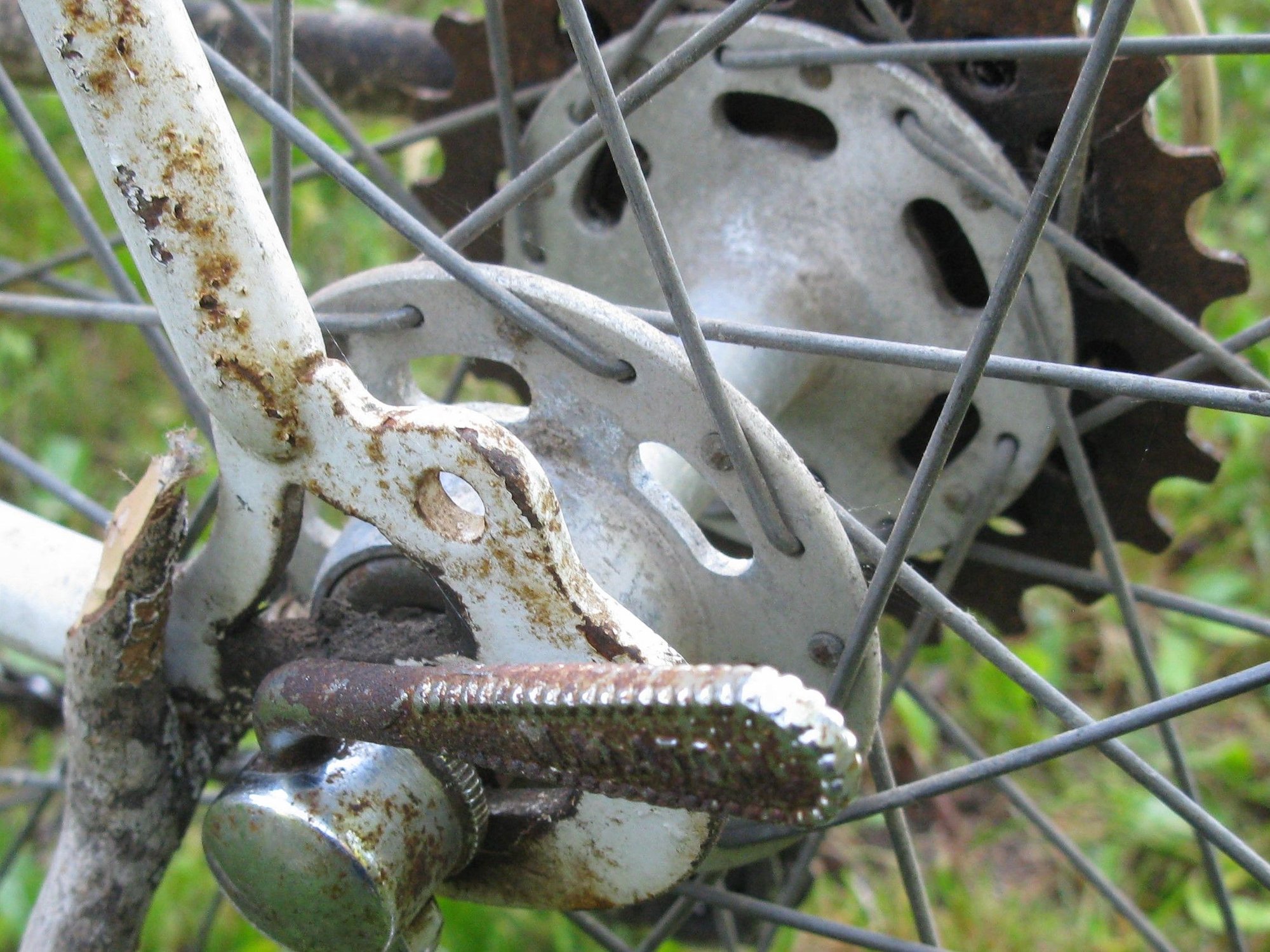
Forged drop, those with brand names stamped into them are (usually) the best quality. The first drop is an early Campagnolo drop and most forged drops are coupled with an integral rear derailleur hanger...
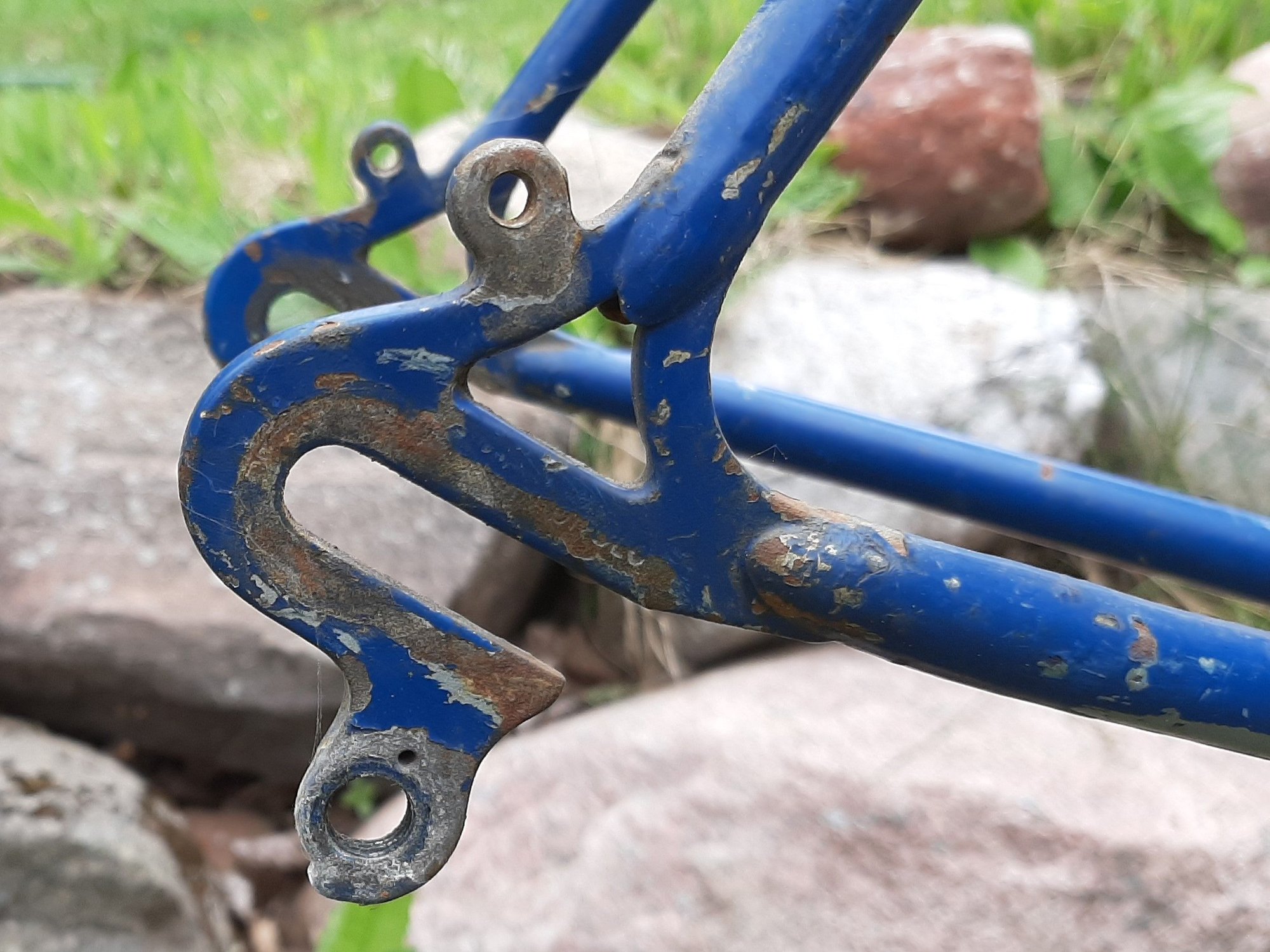
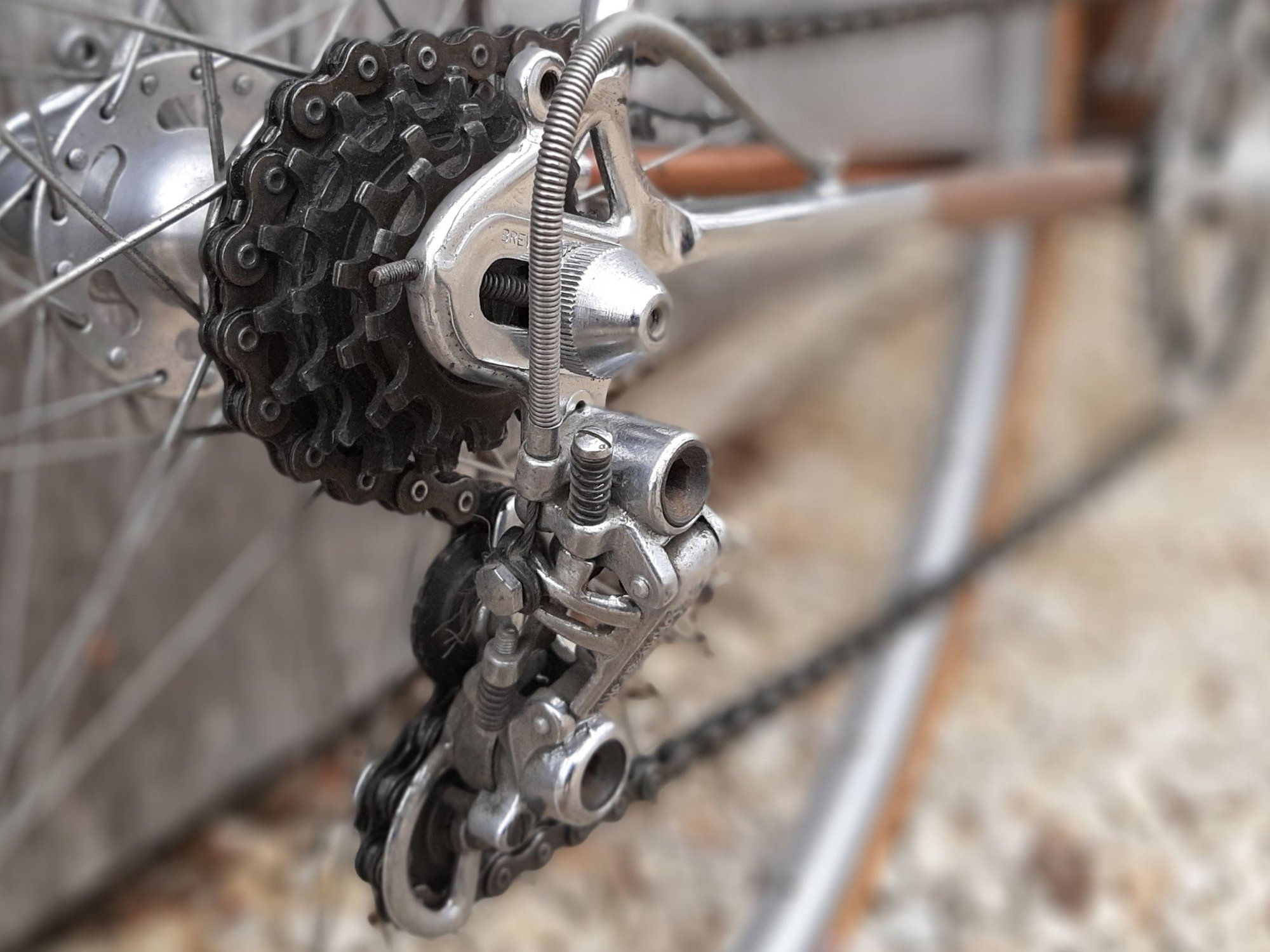
Better forged drops sport axle adjusters, as can be seen on this later forged Campagnolo drop...
Forged drop, those with brand names stamped into them are (usually) the best quality. The first drop is an early Campagnolo drop and most forged drops are coupled with an integral rear derailleur hanger...
Better forged drops sport axle adjusters, as can be seen on this later forged Campagnolo drop...
__________________
"98% of the bikes I buy are projects".
"98% of the bikes I buy are projects".
12-22-20 | 07:57 AM
#21

Senior Member
Joined: Aug 2016
Posts: 2,937
Likes: 3,623
From: Carmichael, CA
12-23-20 | 12:10 PM
#22

Senior Member
Joined: Oct 2005
Posts: 628
Likes: 139
From: Left bank, Knoxville TN
The linked video answers some questions about Raleigh manufacturing technique. The video is not the same time frame as the bike in question, but I suspect that the process was not real different in the 40s and the 70s. How a Bicycle is Made (1945) on Vimeo
