


Rim offset wheel build question?
 11-20-09 | 11:33 AM
#26

Senior Member
Joined: Aug 2006
Posts: 1,977
Likes: 5
From: Knoxville, TN
Bikes: Schwinn Paramount P15, Fisher Montare, Proteus, Rivendell Quickbeam
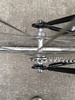
Here is a pic of the hub in it's original configuration. I will need to remove some spacers because the OLD is wider than the dropouts. It appears there are enough spacers already that I could remove enough of them to reduce the OLD and keep the hub centered so it wouldn't be dished. Is that a bad idea?
 11-20-09 | 12:58 PM
#27

Thread Starter
Senior Member
Joined: Aug 2009
Posts: 812
Likes: 3
From: Mississippi Coast
Bikes: 198? Raleigh Technium 480, 1970 Raleigh Sports, Motobecane Nomade Sprint
The OLD was 134-5mm and the dropouts are 125mm.
So you're saying that I'll be able to adjust the rim from left to right easily by changing how much I screw the spokes in on each side?
So you're saying that I'll be able to adjust the rim from left to right easily by changing how much I screw the spokes in on each side?
11-20-09 | 01:10 PM
#28

PanGalacticGargleBlaster
Joined: Apr 2009
Posts: 7,531
Likes: 9
From: Smugglers Notch, Vermont
Bikes: Upright and Recumbent....too many to list, mostly Vintage.
This is my favorite wheelbuilding reference article. I keep it on the screen everytime I lace a wheel just in case I have a brain fart. https://www.sheldonbrown.com/wheelbuild.html
read it all the way through if you haven't before, there's a lot of good tips and insight in there.
Just keep in mind. This is not difficult, you'll be fine.
11-20-09 | 01:14 PM
#29
Senior Member
Joined: Aug 2006
Posts: 1,977
Likes: 5
From: Knoxville, TN
Bikes: Schwinn Paramount P15, Fisher Montare, Proteus, Rivendell Quickbeam
11-20-09 | 01:20 PM
#30


multimodal commuter
Joined: Nov 2006
Posts: 19,810
Likes: 597
From: NJ, NYC, LI
Bikes: 1940s Fothergill, 1959 Allegro Special, 1963? Claud Butler Olympic Sprint, Lambert 'Clubman', 1974 Fuji "the Ace", 1976 Holdsworth 650b conversion rando bike, 1983 Trek 720 tourer, 1984 Counterpoint Opus II, 1993 Basso Gap, 2010 Downtube 8h, and...
Yes that is how it is done. When you tighten the spokes that go to the left flange the rim moves left, tighten the right side and it moves right. A full turn on a nipple can effect a surprisingly drastic change in the rim location.
This is my favorite wheelbuilding reference article. I keep it on the screen everytime I lace a wheel just in case I have a brain fart. https://www.sheldonbrown.com/wheelbuild.html
read it all the way through if you haven't before, there's a lot of good tips and insight in there.
Just keep in mind. This is not difficult, you'll be fine.
This is my favorite wheelbuilding reference article. I keep it on the screen everytime I lace a wheel just in case I have a brain fart. https://www.sheldonbrown.com/wheelbuild.html
read it all the way through if you haven't before, there's a lot of good tips and insight in there.
Just keep in mind. This is not difficult, you'll be fine.
11-20-09 | 11:54 PM
#31
Senior Member


Joined: Apr 2008
Posts: 795
Likes: 18
From: Chicago, IL
Bikes: Schwinn Voyageur
Just FYI, if you ended up centering both flanges between drops, you'd do better not to use an offset rim. The reason for an offset rim is to make spoke length on the left and right side more equal by compensating for the unevenness of the flange placement on the rear hub. The rim is built with the spoke bed off center, so the drive side flange is a further reach, and the non drive flange is a shorter reach for the spokes.
O/C rims are the great equalizer for the unevenness that goes on with rear wheels. Spoke tension on the non drive side is much closer to drive side tension on an o/c wheel than on a wheel with a centered rim. All new multi-speed rear wheels should use them.
But if you centered the hub flanges between the drops (not that you should), using an o/c rim would require you to build a wheel with some dish even though you could and should build it dishless.
As for spoke length, rear wheels typically have a 1-2mm difference in drive to non-drive side. With centered rims, left and right are most commonly 2mm apart in spoke length. With o/c rims, a 1mm difference between ds and nds lengths is most common, with the left still slightly longer. Calculations vary among hubs and rims. A 4mm offset is pretty typical with o/c rims. If I had to guess, I'd probably enter a three and call it a day. Other folks are right that certain dimensions don't change your spoke length all that much. ERD and flange diameter are by far the biggest determinants.
Finally, with a 1mm difference in spoke calc results you can use one length no problem. Some spoke manufacturers sell only in 2mm increments. In your case, I'd probably use 292mm on both sides.
O/C rims are the great equalizer for the unevenness that goes on with rear wheels. Spoke tension on the non drive side is much closer to drive side tension on an o/c wheel than on a wheel with a centered rim. All new multi-speed rear wheels should use them.
But if you centered the hub flanges between the drops (not that you should), using an o/c rim would require you to build a wheel with some dish even though you could and should build it dishless.
As for spoke length, rear wheels typically have a 1-2mm difference in drive to non-drive side. With centered rims, left and right are most commonly 2mm apart in spoke length. With o/c rims, a 1mm difference between ds and nds lengths is most common, with the left still slightly longer. Calculations vary among hubs and rims. A 4mm offset is pretty typical with o/c rims. If I had to guess, I'd probably enter a three and call it a day. Other folks are right that certain dimensions don't change your spoke length all that much. ERD and flange diameter are by far the biggest determinants.
Finally, with a 1mm difference in spoke calc results you can use one length no problem. Some spoke manufacturers sell only in 2mm increments. In your case, I'd probably use 292mm on both sides.
Last edited by krems81; 11-21-09 at 12:02 AM.
