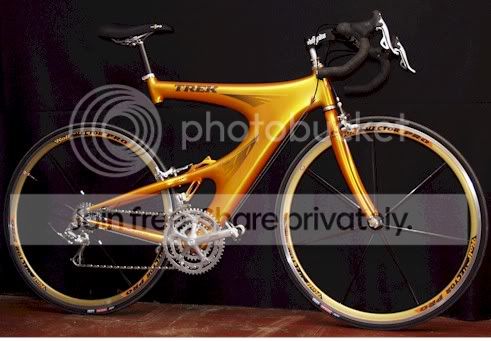
Peak of bicycle evolution?
 12-14-09 | 03:03 PM
#1
Thread Starter
Newbie
Joined: Dec 2009
Posts: 2
Likes: 0
Peak of bicycle evolution?
I tend to think that the peak of bicycle evolution occured around 1985, and that it's been pretty much downhill since then. This is my own opinion of course, and I have other opinions to back this claim up, but what do others on this forum think?
 12-14-09 | 03:07 PM
#2

Waiting for his CX
Joined: Jul 2008
Posts: 452
Likes: 1
From: Atlanta, Georgia; Lewisburg Pennsyvania
Bikes: Jamis Satellite, Motobecane Fantom Cross UNO, Fuji Team singlespeed
I think that before you can even begin to make a controversial statement like that, you must qualify it. For instance, for your personal riding style maybe the 80's style of bike is as good as it gets, and there havnt been any new developments to aid that sort of bike. For any kind of racer though? As materials continue to evolve, so will the materials used on the top end bike. I dont think any pro caliber racer would agree that a 1985 Colnago or what have you would serve them better than the current stock of bikes.
 12-14-09 | 03:15 PM
#4

real far gone
Joined: Oct 2009
Posts: 330
Likes: 5
From: Dark Hollow, Pennsylvania
Bikes: Motobécane Grand Record, Peugeot PR10, Gitane Gran Tourisme, Peugeot PX-10
Now Fredlee, everyone knows the very best bicycles start at $3500, deserve $1500 worth of upgrades within a year, and are made of CRP.

12-14-09 | 03:16 PM
#5
Buh'wah?!

Joined: Jul 2008
Posts: 2,086
Likes: 2
From: Charlottesville VA
Bikes: 2014 Giant Trance
+1 Yungburke.
And it's not just in racing bikes either. Mountain bikes today are so much more evolved than their 1985 predecessors. Suspension on those was brand new back then (and most didn't have it). Nowadays, any mountain bike has it, and the high-end ones still get modified. The suspension today can allow some riders to take some huge drops that 30 years ago would have killed a rider on a rigid bike.
For casual riding or touring, not much has changed. But on the mid-to-upper end spectrum it never really stops changing. The low-end might not see it for a while, but it's happening, and fast. And generally for the better.
You're statement fredlee is, frankly, troll-ish. And is like saying cars from 1985 are no better than cars of today, which when it comes to fuel mileage and emissions is a load of crap. Similar things were probably said back in 85' in relation to bicycles and cars and what not. Give it 30 years and somebody will say 2009/2010 was the peak.
Patience, and you will see.
-Gene-
And it's not just in racing bikes either. Mountain bikes today are so much more evolved than their 1985 predecessors. Suspension on those was brand new back then (and most didn't have it). Nowadays, any mountain bike has it, and the high-end ones still get modified. The suspension today can allow some riders to take some huge drops that 30 years ago would have killed a rider on a rigid bike.
For casual riding or touring, not much has changed. But on the mid-to-upper end spectrum it never really stops changing. The low-end might not see it for a while, but it's happening, and fast. And generally for the better.
You're statement fredlee is, frankly, troll-ish. And is like saying cars from 1985 are no better than cars of today, which when it comes to fuel mileage and emissions is a load of crap. Similar things were probably said back in 85' in relation to bicycles and cars and what not. Give it 30 years and somebody will say 2009/2010 was the peak.
Patience, and you will see.
-Gene-
12-14-09 | 03:17 PM
#6

Senior Member

Joined: May 2008
Posts: 2,497
Likes: 472
From: North, Ga.
Bikes: 3Rensho-Aerodynamics, Bernard Hinault Look - 1986 tour winner, Guerciotti, Various Klein's & Panasonic's
Nothing beats the comfort & versatility of a modern bike. Things have improved sense 1985. At the same time bikes from say 1985 have a beauty & simplicity that is unmatched. I was looking at Armstrong's new shack ride for 2010. It's one ugly machine! To me anyway. All the odd shaped tubes & busy paint do nothing for me.

 12-14-09 | 03:31 PM
#8

Fat Guy on a Little Bike
Joined: Jun 2008
Posts: 15,946
Likes: 371
From: Philadelphia, PA
Bikes: Two wheeled ones
+1 Yung...perfectly stated. Steel bikes might have peaked then, from a certain perspective, and aesthetic value may have peaked...but brifters have their place, as does carbon fiber. The place carbon fiber has isn't what I want, but I'm not a racer. Titanium certainly improved from 85', and I do love my ti. I think anyone who has ridden conventional canti's from 85' and compares them favorably to v-brakes is clinically insane. Clinchers, tires and brake pads are also all miles ahead of where we were in 85' as well.
12-14-09 | 03:33 PM
#9

Senior Member


Joined: Dec 2004
Posts: 15,367
Likes: 8,278
From: Seattle area
Bikes: Bikes??? Thought this was social media?!?
Sometimes there's a good thread when the troll bait is juicy.
From one perspective, evolution of the mainstream bicycle market pretty much slowed after 2 wheels, chain, crank and saddle were assembled. The technological refinement of materials, components, etc continues.......
YMMV
From one perspective, evolution of the mainstream bicycle market pretty much slowed after 2 wheels, chain, crank and saddle were assembled. The technological refinement of materials, components, etc continues.......
YMMV
12-14-09 | 03:38 PM
#10

Senior Member
Joined: Sep 2009
Posts: 629
Likes: 4
i haven't raced in 25 years, and however much i lust to have my 1984 all Campy Grandis back, i wouldn't dream of showing up at a criterium on one now days. they were the best there were in 1985. but you have to ask, best at what? i do agree that 1985 or so was probably the high moment of the old technology that began at the turn of the 20th century, but the paradigm has now shifted...and we can't compare the two, because they are apples and oranges
12-14-09 | 03:50 PM
#11

aka: Mike J.
Joined: Apr 2005
Posts: 3,405
Likes: 60
From: between Milwaukee and Sheboygan in Wisconsin
Bikes: 1995 Trek 520 is the current primary bike.
Sounds like someone's capstone mechanical engineering course term paper is due this week so they're scrambling for filler text to support a thesis.
But, in case the quest was true, I will first need the OP to define what they mean by:
1. "Evolution"
2. "Peaked"
Without those definitions I will simple state that bicycle design "peaked" with the first Safety Bicycle, and everything after that for the most part is evolutionary refinement with a few divergent tracks taking off.
Okay, now to see if the OP returns, or will Opie be down by the fishing hole with Andy while Barney Fife sets up a speed trap.
But, in case the quest was true, I will first need the OP to define what they mean by:
1. "Evolution"
2. "Peaked"
Without those definitions I will simple state that bicycle design "peaked" with the first Safety Bicycle, and everything after that for the most part is evolutionary refinement with a few divergent tracks taking off.
Okay, now to see if the OP returns, or will Opie be down by the fishing hole with Andy while Barney Fife sets up a speed trap.
12-14-09 | 04:32 PM
#12
Senior Member
Joined: Apr 2007
Posts: 962
Likes: 30
The best is always "yet-to-come". However the pinnacle of steel bike evolution was around 1980 or so. Really nothing much spectacular changed between 1960 and 1985. Titanium, Aluminum and Carbon fibre bikes are still evolving.
 12-14-09 | 05:24 PM
#15
Senior Member

Joined: Dec 2005
Posts: 18,757
Likes: 11,483
Neal
12-14-09 | 05:40 PM
#16

Senior Member
Joined: Aug 2003
Posts: 13,973
Likes: 145
From: Tampa, Florida
Actualy, bicycles plataued long before that. 1985 is when the revolution began to take place. Regardless of what one thinks of new ideas, from 1985 through 1992 was the revolution/evolution. Aside from new materials, new technologies have plataued since then.
 12-14-09 | 06:29 PM
#18
1985 is reasonable, as for a comprehendable bike with performance features that are reasonably close to modern.
Ask Jan Heine, and he will tell you it was in the 40's or 50's and made by a French boutique builder.
Ask Jan Heine, and he will tell you it was in the 40's or 50's and made by a French boutique builder.
12-14-09 | 07:45 PM
#19

Senior Member
Joined: Aug 2005
Posts: 2,234
Likes: 2
From: ontario
What significance happened in 1985? They got Index shifting right? big deal. Other than that only difference I can note suntours patent on the slant parallelogram ran out so other companys got to make rear derailleurs that shifted good, and the brake cables started going under the tape and it was the last years of road bikes not having eyesore miami vice paint jobs.
12-14-09 | 08:05 PM
#22

Senior Member
Joined: Feb 2004
Posts: 7,176
Likes: 56
From: Clev Oh
Bikes: Specialized, Schwinn
What significance happened in 1985? They got Index shifting right? big deal. Other than that only difference I can note suntours patent on the slant parallelogram ran out so other companys got to make rear derailleurs that shifted good, and the brake cables started going under the tape and it was the last years of road bikes not having eyesore miami vice paint jobs.
12-14-09 | 08:07 PM
#23

sultan of schwinn
Joined: Sep 2009
Posts: 3,536
Likes: 17
From: Lehigh Valley, PA
Here is my 2 cents on the topic:
- If we are talking about lugged lightweight steel bikes, I'd say that after the introduction of index shifting, not many things have changed. That said, current steel tubing is better than that in the 80s, but not necessarily lugged. Also, the addition of brifters and 10 or 11 gears in the back is a mechanical progress
- Aluminum bikes, which used to be the top of the line and demand very high prices in the 80s, have been manufactured most cost efficiently and are thought as below steel (other than boat anchors) bikes these days. In other words, the $199 X-Mart aluminum frame mountain bike would have cost about 5 times that much in the 80s.
- Carbon has been improved a lot both in strength and in originality of designs as a frame material
- Personal aesthetics and preferences are just that: personal; which means that there is not a "right" or a "wrong" answer. I personally enjoy lugged steel bikes and prefer the ride of a steel bike over that of an aluminum of CF bike, but I think that a lot of people out there are happier today because they can ride aluminum mountain bikes with suspension all over.
And, yes, bikes do evolve. Whether a particular era was the "peak", methinks we are about 200 years or so away from answering this question... subjectively
- If we are talking about lugged lightweight steel bikes, I'd say that after the introduction of index shifting, not many things have changed. That said, current steel tubing is better than that in the 80s, but not necessarily lugged. Also, the addition of brifters and 10 or 11 gears in the back is a mechanical progress
- Aluminum bikes, which used to be the top of the line and demand very high prices in the 80s, have been manufactured most cost efficiently and are thought as below steel (other than boat anchors) bikes these days. In other words, the $199 X-Mart aluminum frame mountain bike would have cost about 5 times that much in the 80s.
- Carbon has been improved a lot both in strength and in originality of designs as a frame material
- Personal aesthetics and preferences are just that: personal; which means that there is not a "right" or a "wrong" answer. I personally enjoy lugged steel bikes and prefer the ride of a steel bike over that of an aluminum of CF bike, but I think that a lot of people out there are happier today because they can ride aluminum mountain bikes with suspension all over.
And, yes, bikes do evolve. Whether a particular era was the "peak", methinks we are about 200 years or so away from answering this question... subjectively
12-14-09 | 09:17 PM
#24

Put some lights on!
Joined: Sep 2004
Posts: 146
Likes: 4
From: MPLS
Bikes: 1989 Giordana Scorpius, 1992 Trek 930 Singletrack, 1986 Raleigh Super Course, 1988 Tommaso Cromor, 1984 Sekai 2500 Grandtour, 1980 Trek 412
While I was opening this thread, I was thinking - 1984.