


Raleigh frame geometry database.
 05-18-13 | 09:41 PM
#1

Thread Starter
Senior Member
Joined: Mar 2008
Posts: 5,630
Likes: 18
From: Rhode Island (an obscure suburb of Connecticut)
Bikes: one of each
Raleigh frame geometry database.
I've been measuring my Raleighs to figure out what makes them handle the way they do. It helps me to zero in on what I like in a bike. I also measured brake bridge clearance. My measurements are all center to center. The fork is measured from the axle center to the bottom of the bearing race (is that called the bearing race land?) Wheel size listed is what Raleigh intended, not necessarily how the bike is pictured.
It dawns on me that I should include the serial number. I'll collect that info when I can. I also found that the angle finder in my wife's I-thingy is off by as much as a degree so I'm going to remeasure a couple of these that I did early on. I'll put an astrisk next to the suspect ones. I'll try to get better pictures of some of these, too.
I used the one of the diagrams on the Trek website and added a couple of things.
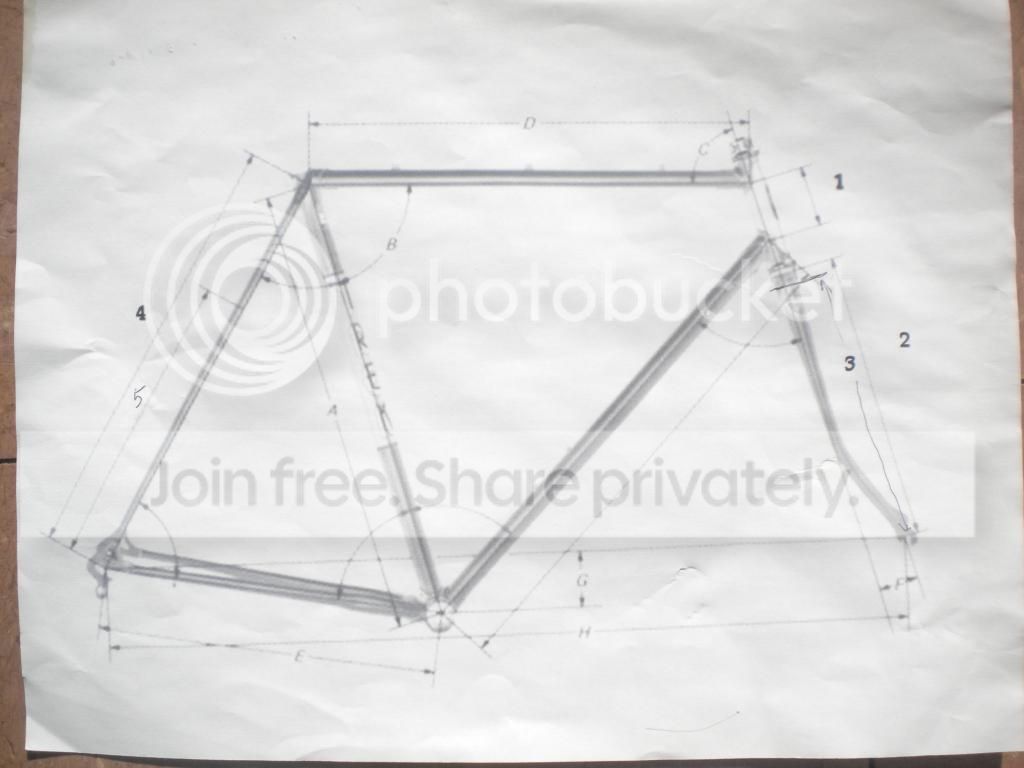
Feel free to add your data (please stick to the format laid out, incomplete info is ok) or comments (about my methods or about what kind of geometry you prefer and why).
It dawns on me that I should include the serial number. I'll collect that info when I can. I also found that the angle finder in my wife's I-thingy is off by as much as a degree so I'm going to remeasure a couple of these that I did early on. I'll put an astrisk next to the suspect ones. I'll try to get better pictures of some of these, too.
I used the one of the diagrams on the Trek website and added a couple of things.

Feel free to add your data (please stick to the format laid out, incomplete info is ok) or comments (about my methods or about what kind of geometry you prefer and why).
Last edited by sailorbenjamin; 05-18-13 at 10:25 PM.
 05-18-13 | 09:50 PM
#2
Thread Starter
Senior Member
Joined: Mar 2008
Posts: 5,630
Likes: 18
From: Rhode Island (an obscure suburb of Connecticut)
Bikes: one of each
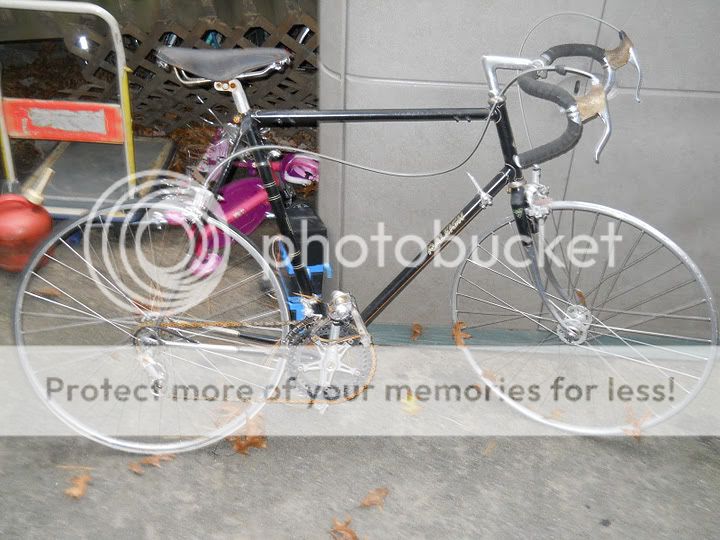
1975 Competition, 24"/61cm 700/tubular serial # WD5003187
A 24"/61
B 73
C 74
D 22"/56
E 16 5/8"/42
F 55mm (not necessarily right)
G 2 3/4"/7cm
H 40 1/2"/103
1 5 1/2"/14
2 14 5/8"/37.5
3 14 3/8"/36.5
4 22 1/4"/56.5
5 coming

A 24"/61
B 73
C 74
D 22"/56
E 16 5/8"/42
F 55mm (not necessarily right)
G 2 3/4"/7cm
H 40 1/2"/103
1 5 1/2"/14
2 14 5/8"/37.5
3 14 3/8"/36.5
4 22 1/4"/56.5
5 coming
Last edited by sailorbenjamin; 05-18-13 at 10:15 PM.
05-18-13 | 09:57 PM
#3
Thread Starter
Senior Member
Joined: Mar 2008
Posts: 5,630
Likes: 18
From: Rhode Island (an obscure suburb of Connecticut)
Bikes: one of each
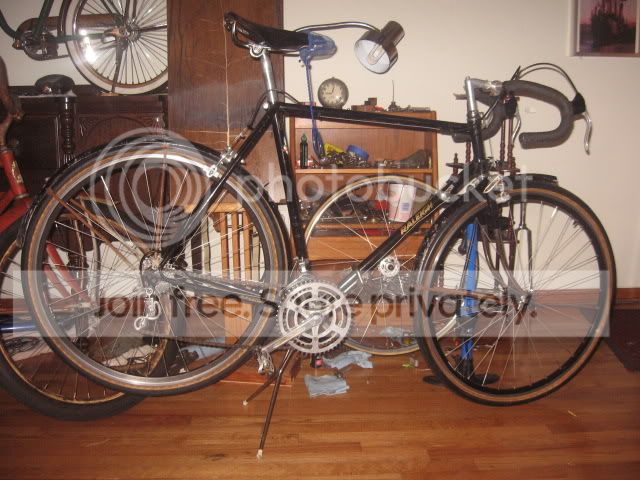
1973 or 4 Competition 23"/58cm 700/tubular serial # A4792
A 23"/58cm
B 73 1/2
C 73
D 22 1/2"/57
E 17 3/8"/44
F 2 5/8"/65mm
G 3 1/4"/83mm
H 41 3/4"/106
1 4"/10
2 15 1/8"/38.3
3 14 5/8"/37
4 21"/55
5 15"/38

A 23"/58cm
B 73 1/2
C 73
D 22 1/2"/57
E 17 3/8"/44
F 2 5/8"/65mm
G 3 1/4"/83mm
H 41 3/4"/106
1 4"/10
2 15 1/8"/38.3
3 14 5/8"/37
4 21"/55
5 15"/38
Last edited by sailorbenjamin; 05-18-13 at 10:15 PM.
05-18-13 | 10:04 PM
#4
Thread Starter
Senior Member
Joined: Mar 2008
Posts: 5,630
Likes: 18
From: Rhode Island (an obscure suburb of Connecticut)
Bikes: one of each
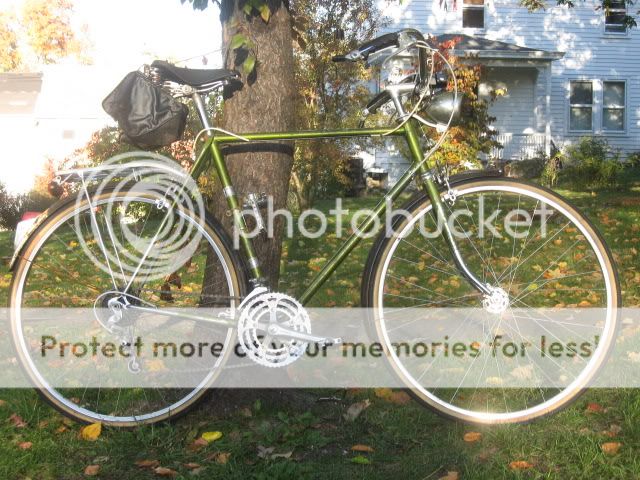
1970 or 71 Super Course 23"/58.5cm 27"
A 23"/58.5
B 73*
C 70.7
D 22 1/4"/56.5
E 17 3/4"/45
F 2"/50mm
G 2 3/4"/67mm
H 41 3/8"/105
1 4"/10
2 15.5"/39.5
3 15"/38
4 22"/56
5 15 1/4"/39

A 23"/58.5
B 73*
C 70.7
D 22 1/4"/56.5
E 17 3/4"/45
F 2"/50mm
G 2 3/4"/67mm
H 41 3/8"/105
1 4"/10
2 15.5"/39.5
3 15"/38
4 22"/56
5 15 1/4"/39
Last edited by sailorbenjamin; 05-18-13 at 10:15 PM.
05-18-13 | 10:15 PM
#5
Thread Starter
Senior Member
Joined: Mar 2008
Posts: 5,630
Likes: 18
From: Rhode Island (an obscure suburb of Connecticut)
Bikes: one of each
1959 Lenton Grand Prix 22 1/2"/57cm 27"
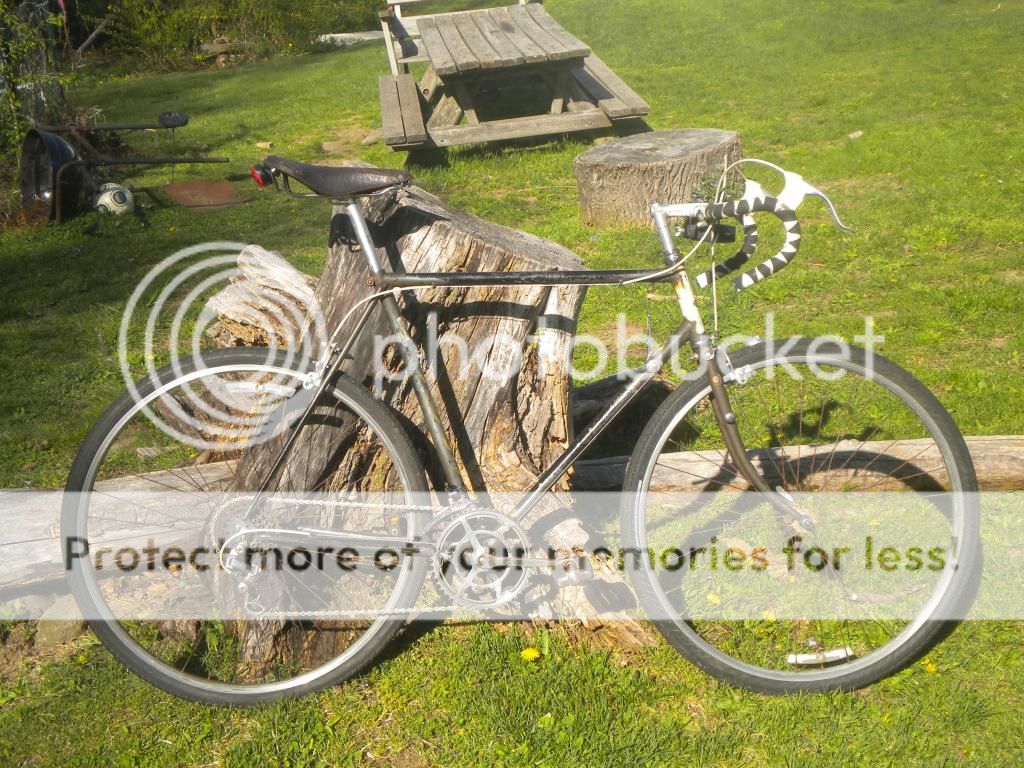
A 22 1/2"/57cm
B 71
C 73
D 22 1/2"/57
E 17 3/4"/45
F 2 7/8"/7
G 2 3/8"/6
H 42 1/4"/107
1 4"/100
2 15"/38
3 14 1/2"/37
4 21 1/2"/54.5
5 15"/38

A 22 1/2"/57cm
B 71
C 73
D 22 1/2"/57
E 17 3/4"/45
F 2 7/8"/7
G 2 3/8"/6
H 42 1/4"/107
1 4"/100
2 15"/38
3 14 1/2"/37
4 21 1/2"/54.5
5 15"/38
05-18-13 | 10:21 PM
#6
Thread Starter
Senior Member
Joined: Mar 2008
Posts: 5,630
Likes: 18
From: Rhode Island (an obscure suburb of Connecticut)
Bikes: one of each
197? Record 23"/58cm 27"

A 23"/58cm
B 72
C 73
D 22 1/2"57
E 17 1/4"/44
F 2 1/4"/58mm
G 3"/75mm
H 41 1/8"/104.5
1 4"/10
2 15 3/8"/39
3 14 7/8"/38
4 21 3/4"/55
5 15"/38

A 23"/58cm
B 72
C 73
D 22 1/2"57
E 17 1/4"/44
F 2 1/4"/58mm
G 3"/75mm
H 41 1/8"/104.5
1 4"/10
2 15 3/8"/39
3 14 7/8"/38
4 21 3/4"/55
5 15"/38
05-18-13 | 10:30 PM
#7
Thread Starter
Senior Member
Joined: Mar 2008
Posts: 5,630
Likes: 18
From: Rhode Island (an obscure suburb of Connecticut)
Bikes: one of each
1972 Sport (Triumph) 22 1/4"/56.5 26"
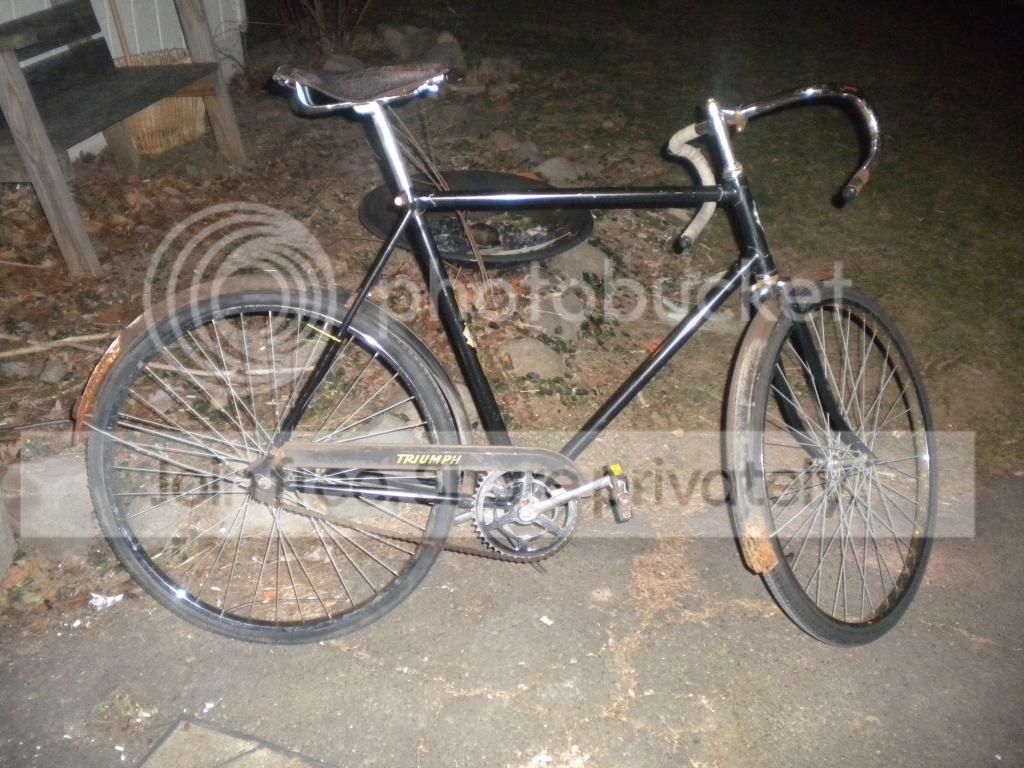
A 22 1/4"/56.5
B 72*
C 70*
D 21 3/4"/55
E 18"/46
F 2 3/8"/60mm
G 2 1/4"/55mm
H 106/41 3/4"/106
1 4 3/8"/11
2 15"/38
3 14 1/2"/37
4 21 1/2"/54.5
5 14 1/4"/36

A 22 1/4"/56.5
B 72*
C 70*
D 21 3/4"/55
E 18"/46
F 2 3/8"/60mm
G 2 1/4"/55mm
H 106/41 3/4"/106
1 4 3/8"/11
2 15"/38
3 14 1/2"/37
4 21 1/2"/54.5
5 14 1/4"/36
05-18-13 | 10:43 PM
#8


Your approach is pretty good save I would just use abbreviations instead of just letters, some of the dimensions are useful for component fitment but are not relevant to a frame's riding behavior to me letters are just too abstract, one has to keep referring to them.
I would use:
ST (ctc)
TT
HA (head angle) SA (seat angle)
WB FC (front center: BB center to front axle center directly)
Drop (bottom bracket drop below the axle centers)
CS (chain stay length BB center to forward placement of the axle in the drops)
Rake (fork rake)
The axle to crown seat dimension is a reasonable one to have.
The inclusive angles at the bottom bracket are double dimensioning to me. The lower lug angle is too.
The seat stay length is going to be what is it is, I think only significant if you are making a Hellenic stayed frame, (Hetchins, Shogun, some GT's to name a few)
I must also comment that pulling off dimensions from a frame is a harder than it appears. I have done it and when placing those dimensions in a CAD program reveals errors of measure. And I dropped the fork from the frame too.
I would use:
ST (ctc)
TT
HA (head angle) SA (seat angle)
WB FC (front center: BB center to front axle center directly)
Drop (bottom bracket drop below the axle centers)
CS (chain stay length BB center to forward placement of the axle in the drops)
Rake (fork rake)
The axle to crown seat dimension is a reasonable one to have.
The inclusive angles at the bottom bracket are double dimensioning to me. The lower lug angle is too.
The seat stay length is going to be what is it is, I think only significant if you are making a Hellenic stayed frame, (Hetchins, Shogun, some GT's to name a few)
I must also comment that pulling off dimensions from a frame is a harder than it appears. I have done it and when placing those dimensions in a CAD program reveals errors of measure. And I dropped the fork from the frame too.
05-18-13 | 10:43 PM
#9
Your approach is pretty good save I would use abbreviations instead of just letters, some of the dimensions are useful for component fitment but are not relevant to a frame's riding behavior to me letters are just too abstract, one has to keep referring to them.
I would use:
ST (ctc)
TT
HA (head angle) SA (seat angle)
WB FC (front center: BB center to front axle center directly)
Drop (bottom bracket drop below the axle centers)
CS (chain stay length BB center to forward placement of the axle in the drops)
Rake (fork rake)
The axle to crown seat dimension is a reasonable one to have.
The inclusive angles at the bottom bracket are double dimensioning to me. The lower lug angle is too.
The seat stay length is going to be what is it is, I think only significant if you are making a Hellenic stayed frame, (Hetchins, Shogun, some GT's to name a few)
I must also comment that pulling off dimensions from a frame is a harder than it appears. I have done it and when placing those dimensions in a CAD program reveals errors of measure. And I dropped the fork from the frame too.
I would use:
ST (ctc)
TT
HA (head angle) SA (seat angle)
WB FC (front center: BB center to front axle center directly)
Drop (bottom bracket drop below the axle centers)
CS (chain stay length BB center to forward placement of the axle in the drops)
Rake (fork rake)
The axle to crown seat dimension is a reasonable one to have.
The inclusive angles at the bottom bracket are double dimensioning to me. The lower lug angle is too.
The seat stay length is going to be what is it is, I think only significant if you are making a Hellenic stayed frame, (Hetchins, Shogun, some GT's to name a few)
I must also comment that pulling off dimensions from a frame is a harder than it appears. I have done it and when placing those dimensions in a CAD program reveals errors of measure. And I dropped the fork from the frame too.
05-18-13 | 11:19 PM
#10
Thread Starter
Senior Member
Joined: Mar 2008
Posts: 5,630
Likes: 18
From: Rhode Island (an obscure suburb of Connecticut)
Bikes: one of each
What sort of accuracy were you getting on length? I figure I'm within half a centimeter. Getting the angles was hard. I made a little jig. I should show it.
I did build a fork alignment jig. I've used it to measure several of these bikes. I'll get pics of that up, too.
I did build a fork alignment jig. I've used it to measure several of these bikes. I'll get pics of that up, too.
Last edited by sailorbenjamin; 05-18-13 at 11:32 PM.
05-19-13 | 03:21 PM
#11
What sort of accuracy were you getting on length? I figure I'm within half a centimeter. Getting the angles was hard. I made a little jig. I should show it.
I did build a fork alignment jig. I've used it to measure several of these bikes. I'll get pics of that up, too.
I did build a fork alignment jig. I've used it to measure several of these bikes. I'll get pics of that up, too.
Oh yeah, do not assume the top tube is level. Very often it is not.
05-20-13 | 07:20 AM
#12

Senior Member

Joined: Apr 2005
Posts: 17,195
Likes: 761
From: Ann Arbor, MI
Bikes: 1980 Masi, 1984 Mondonico, 1984 Trek 610, 1980 Woodrup Giro, 2005 Mondonico Futura Leggera ELOS, 1967 PX10E, 1971 Peugeot UO-8
To make a sketch of a frame so that the tube ends actually converge in the right places, length accuracy down to 1 mm is helpful. For drop, rake, trail, radial wheel spacing and lateral spacing between chain stays (tire clearance), millimeter accuracy is essential since these are such small numbers.
If you measure with an inch ruler, saying "23 in" for example suggests exactly 23." However the rules of rounding numbers say that it could really be between 22.5 and 23.5, for an uncertainty of 25.4 mm! Saying "22 1/4" suggests exactly 22.25" where the right way to signify that is to say 22.250."
"Right way" implying common engineering practice - engineers need to care about what the precision is and have developed ways to convey that information. If you want to use numbers to calibrate a sketch to reality, you need to be cognizant of accuracy.
If you measure with an inch ruler, saying "23 in" for example suggests exactly 23." However the rules of rounding numbers say that it could really be between 22.5 and 23.5, for an uncertainty of 25.4 mm! Saying "22 1/4" suggests exactly 22.25" where the right way to signify that is to say 22.250."
"Right way" implying common engineering practice - engineers need to care about what the precision is and have developed ways to convey that information. If you want to use numbers to calibrate a sketch to reality, you need to be cognizant of accuracy.
05-20-13 | 07:49 AM
#13

Decrepit Member
Joined: Aug 2005
Posts: 10,488
Likes: 92
From: Santa Rosa, California
Bikes: Waterford 953 RS-22, several Paramounts
For obtaining accurate angles, I've found the Wixey WR300 gives me angle measurements that are consistently within 0.1° of the frame manufacturers' published angles and the results are repeatable.
Start out by positioning the front and rear dropout centers parallel to a flat surface (I use aluminum box tubing). If the wheels have exactly the same diameter (wheels are true, same rims, same tires at the same air pressure), the dropouts will be parallel to the flat surface. By "zeroing" the WR300 while it's on the flat surface, the HTA and STA relative to the dropout centers are easily determined.
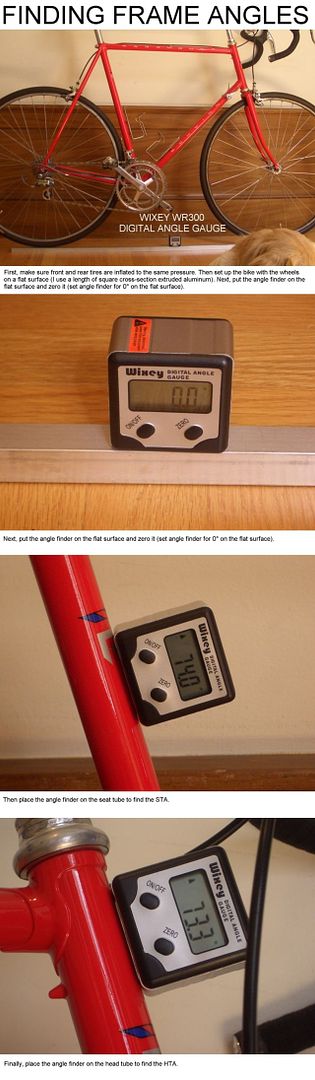
Start out by positioning the front and rear dropout centers parallel to a flat surface (I use aluminum box tubing). If the wheels have exactly the same diameter (wheels are true, same rims, same tires at the same air pressure), the dropouts will be parallel to the flat surface. By "zeroing" the WR300 while it's on the flat surface, the HTA and STA relative to the dropout centers are easily determined.

 05-20-13 | 11:09 AM
#15
Decrepit Member
Joined: Aug 2005
Posts: 10,488
Likes: 92
From: Santa Rosa, California
Bikes: Waterford 953 RS-22, several Paramounts
One more suggestion - this one regarding fork length.
Typically, the "fork length" measurement is made parallel to the steering axis (steerer tube) while the "axle to crown" measurement is made in a straight line between the axle center (center of dropout) and the crown. Unfortunately, this nomenclature is not always defined the same way, but if you use them consistently as defined in this BikeCAD drawing the results will be consistent.

Typically, the "fork length" measurement is made parallel to the steering axis (steerer tube) while the "axle to crown" measurement is made in a straight line between the axle center (center of dropout) and the crown. Unfortunately, this nomenclature is not always defined the same way, but if you use them consistently as defined in this BikeCAD drawing the results will be consistent.
05-20-13 | 05:31 PM
#16
Thread Starter
Senior Member
Joined: Mar 2008
Posts: 5,630
Likes: 18
From: Rhode Island (an obscure suburb of Connecticut)
Bikes: one of each
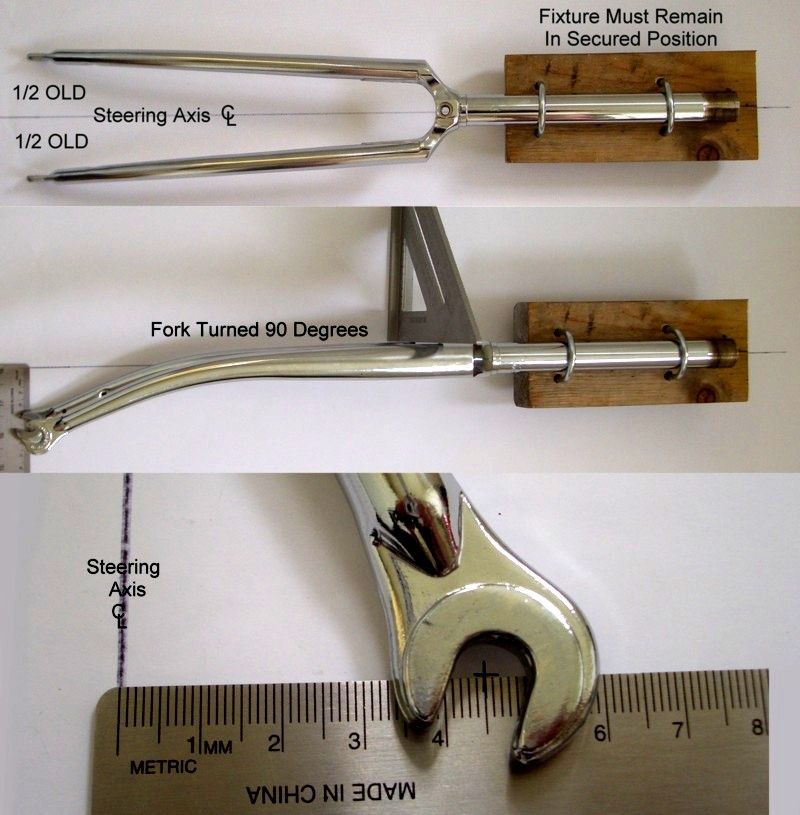
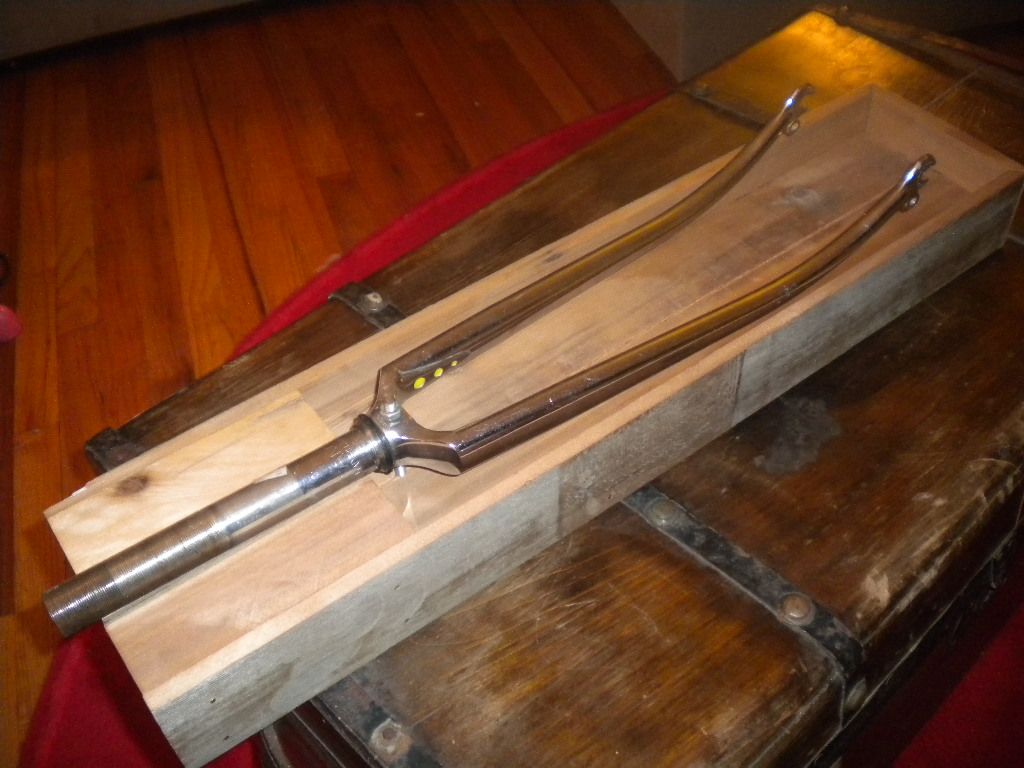
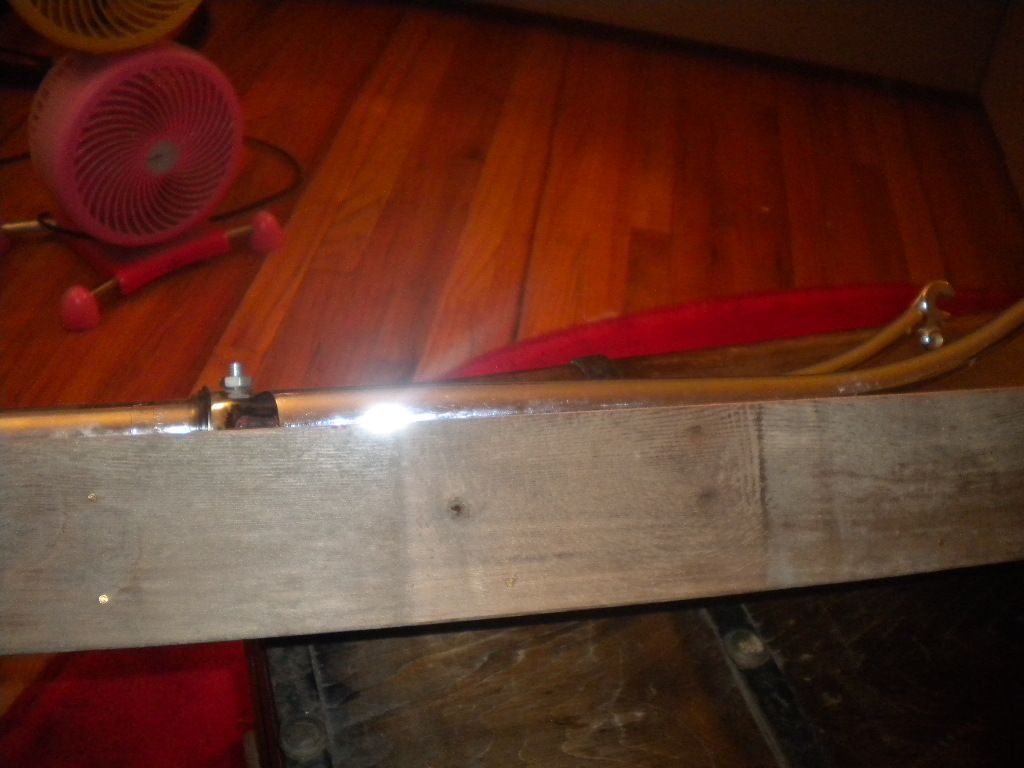
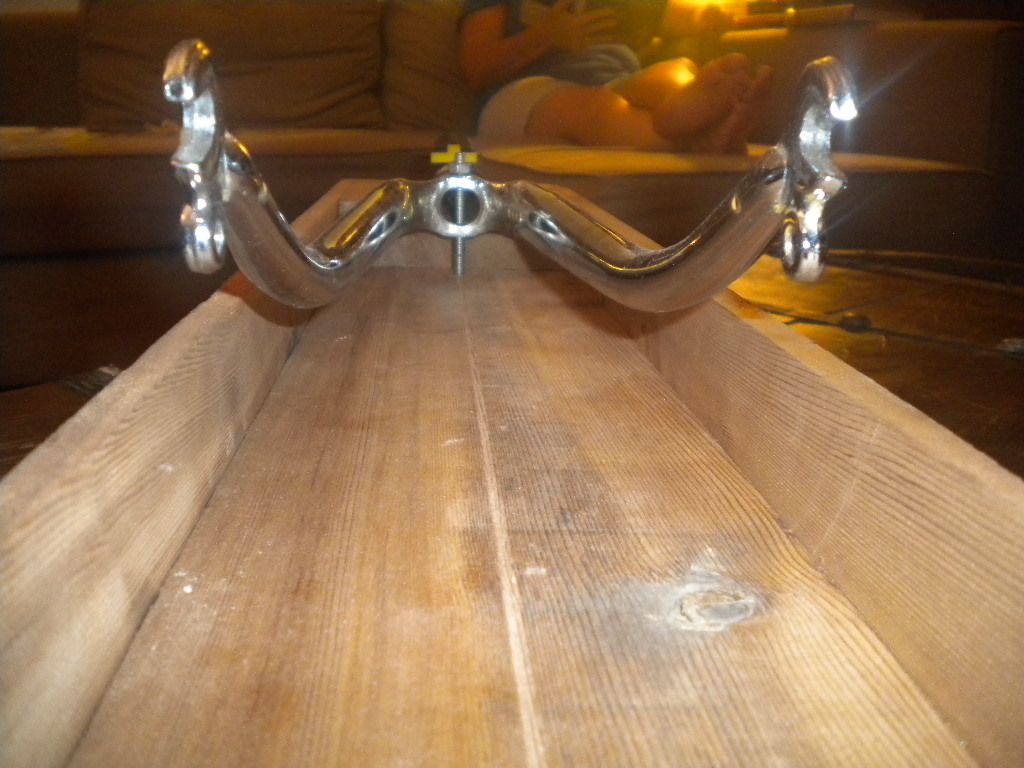
This is my fork jig. It's probably the most accurate of my measuring tools. It does allow 1mm accuracy of length and rake. I measure parallel to the steerer tube and to the center of the dropout, or axle.


 05-20-13 | 05:46 PM
#17
One more suggestion - this one regarding fork length.
Typically, the "fork length" measurement is made parallel to the steering axis (steerer tube) while the "axle to crown" measurement is made in a straight line between the axle center (center of dropout) and the crown. Unfortunately, this nomenclature is not always defined the same way, but if you use them consistently as defined in this BikeCAD drawing the results will be consistent.
Typically, the "fork length" measurement is made parallel to the steering axis (steerer tube) while the "axle to crown" measurement is made in a straight line between the axle center (center of dropout) and the crown. Unfortunately, this nomenclature is not always defined the same way, but if you use them consistently as defined in this BikeCAD drawing the results will be consistent.
05-20-13 | 05:48 PM
#18
Decrepit Member
Joined: Aug 2005
Posts: 10,488
Likes: 92
From: Santa Rosa, California
Bikes: Waterford 953 RS-22, several Paramounts
Excellent!
05-20-13 | 05:49 PM
#19
05-20-13 | 05:50 PM
#20
Decrepit Member
Joined: Aug 2005
Posts: 10,488
Likes: 92
From: Santa Rosa, California
Bikes: Waterford 953 RS-22, several Paramounts
It works great if you also measure the rake accurately.
05-20-13 | 06:07 PM
#21
Senior Member
Joined: Feb 2008
Posts: 1,115
Likes: 17
What sort of accuracy were you getting on length? I figure I'm within half a centimeter. Getting the angles was hard. I made a little jig. I should show it.
I did build a fork alignment jig. I've used it to measure several of these bikes. I'll get pics of that up, too.
I did build a fork alignment jig. I've used it to measure several of these bikes. I'll get pics of that up, too.

Last edited by 753proguy; 05-20-13 at 06:11 PM.
05-20-13 | 06:14 PM
#22
Decrepit Member
Joined: Aug 2005
Posts: 10,488
Likes: 92
From: Santa Rosa, California
Bikes: Waterford 953 RS-22, several Paramounts
One other thing that would be nice to document while you're doing this is to record the seatpost diameter, and if the quill stem isn't 22.2mm diameter, note that too.
05-20-13 | 06:34 PM
#23
Thread Starter
Senior Member
Joined: Mar 2008
Posts: 5,630
Likes: 18
From: Rhode Island (an obscure suburb of Connecticut)
Bikes: one of each

The more I think about it...I've got really good measurements of the fork and the bottom bracket drop. I'm getting good at the head tube and seat tube angles. I think those are the most important bits. I'd like to get better with the tube lengths but I don't feel that 5mm will make a huge difference unless you're gonna try to build another one. I'd like to do that sometime but since I've already got them I guess I was just thinking of a way to compare frames. Yeah, someday I'd like to build one.
05-20-13 | 07:08 PM
#24

What??? Only 2 wheels?


Joined: Apr 2010
Posts: 13,496
Likes: 936
From: Boston-ish, MA
Bikes: 72 Peugeot UO-8, 82 Peugeot TH8, 87 Bianchi Brava, 76? Masi Grand Criterium, 74 Motobecane Champion Team, 86 & 77 Gazelle champion mondial, 81? Grandis, 82? Tommasini, 83 Peugeot PF10
https://world.std.com/~muller/BikeFra...Calculator.zip
It's a fun toy (and accurate) but ultimately not very useful for that purpose.
I'd be more interested in your correlation between perceived handling and those measurements. I'd bet it isn't so cut and dry as it might first appear. If it is, then great.
__________________
Real cyclists use toe clips.
With great bikes comes great responsibility.
jimmuller
Real cyclists use toe clips.
With great bikes comes great responsibility.
jimmuller
05-20-13 | 09:17 PM
#25
Thread Starter
Senior Member
Joined: Mar 2008
Posts: 5,630
Likes: 18
From: Rhode Island (an obscure suburb of Connecticut)
Bikes: one of each
Well, the ones I really like are the ones with a 73 degree head tube. I'm getting rid of the rest of them. Then I'm gonna try them all with different wheelsets and maybe even read a little. I did read an article by a guy who talked about balancing the fork rake/headtube angle relationship with the bottom bracket drop/chainstay length relationship. The former is about how you "steer with your hands" and the latter is about "how you steer with your butt".