


Best wheels for commuting?
 12-20-19 | 02:20 AM
#1
Thread Starter
Junior Member
Joined: Dec 2019
Posts: 18
Likes: 1
From: Philadelphia
Bikes: Bianchi Volpe (Sold), Bianchi San Jose, Kona Hahanna (Sold)
Best wheels for commuting?
Hey gang, I wondering what kind of wheels you prefer for commuting? Clinchers, Tubeless, Tubular? I was also wondering if a deep rim would be best for cobblestone and crappy roads? Any help would be great, thanks.
 12-20-19 | 03:00 AM
#3

Senior Member

Joined: Dec 2006
Posts: 2,854
Likes: 849
Trick question... obviously you want to be on 1,000 gram (front and rear wheels combined) low-profile carbon tubulars mated with $150, 200 gram tires. The lowest rotating mass of any possible wheel option, almost impervious to pinch flats, and the tires stay put safely stuck tight to the rim if you have a sudden deflation.
However, if you are carrying loads, or riding in the rain over sketchy roads, you'll obviously have to ride something heavier and stronger than the dream setup I just listed.
Life is full of compromises...
However, if you are carrying loads, or riding in the rain over sketchy roads, you'll obviously have to ride something heavier and stronger than the dream setup I just listed.
Life is full of compromises...
12-20-19 | 05:50 AM
#4

Overdoing projects

Joined: Oct 2011
Posts: 2,464
Likes: 1,369
From: Rotterdam, former republic of the Netherlands
Bikes: Batavus Randonneur GL, Gazelle Orange Excellent, Gazelle Super Licht, Gazelle Grand Tourist, Gazelle Lausanne, Gazelle Tandem, Koga-Miyata SilverAce, Koga-Miyata WorldTraveller
Building a commuter around H+Son Archetype rims and hub brakes. Medium-height V-profile rims should be stiff and wide enough for some 37mm tyres.
12-20-19 | 07:30 AM
#5

Senior Member
Joined: Jul 2014
Posts: 6,228
Likes: 440
From: Toronto, CANADA
Bikes: ...a few.
The best wheels are the ones that are already on the bike and have been for a while. Anything else is going to cost extra. Mine are heavy and robust. They need to be able to be withstand the rigours of my commute--rain, snow, ice, ruts, carrying heavy loads, etc. On the road bike that I ride to work occasionally, well, that's different.
 12-20-19 | 12:15 PM
#6

Senior Member
Joined: Aug 2011
Posts: 22,676
Likes: 2,642
From: CID
Bikes: 1991 Bianchi Eros, 1964 Armstrong, 1988 Diamondback Ascent, 1988 Bianchi Premio, 1987 Bianchi Sport SX, 1980s Raleigh mixte (hers), All-City Space Horse (hers)
Just make sure that it's not too hard to fix flats on what you've got. 'Cuz you'll probably need to.


 12-20-19 | 12:29 PM
#7
Senior Member


Joined: Jan 2015
Posts: 5,788
Likes: 3,361
From: Los Angeles
Bikes: 82 Medici, 85 Ironman, 2011 Richard Sachs
I see you have a Volpe. When the roads are clear, your good to go with whatever you have. When the tires wear out, I recommend Gatorskins in 28s or 32s. The only reason for new wheels would be to put some snow tires on them and swap wheelsets for the bad days when only hardcore crazies on this sub-forum would ride to work.
 12-20-19 | 01:09 PM
#9
Senior Member
Joined: Dec 2014
Posts: 984
Likes: 226
From: Catalonia
Bikes: Canyon Grand Canyon AL SL 8.0, Triban RC520 Gravel Ltd, Btwin Ultra 520 AF GF, Triban Road 7, Benotto 850
Always clinchers. For commuting and everything else.
Tubeless is not worth the trouble IMHO. Not to mention tubulars...
Tubeless is not worth the trouble IMHO. Not to mention tubulars...
12-20-19 | 07:13 PM
#10
Banned
Joined: Feb 2008
Posts: 8,701
Likes: 2,506
From: Mississauga/Toronto, Ontario canada
Bikes: I have 3 singlespeed/fixed gear bikes
Wheels with a minimum of 32 spokes, I also have few wheels with 36 spokes. I like the simplicity of tire/tube combo...Tubeless and tubulars are just too much trouble and offer no real advantages over the traditional tube/tire combo.
12-20-19 | 11:27 PM
#11

Mad bike riding scientist


Joined: Nov 2004
Posts: 29,141
Likes: 6,201
From: Denver, CO
Bikes: Some silver ones, a red one, a black and orange one, and a few titanium ones
As for how the wheels are built, strong wheels don’t have to be heavy. In fact, heavy wheels aren’t necessarily stronger. I use very light rims on my off-road touring mountain bike wheels which get more abuse than commuting wheels do. I use either Mavic XM717 or Velocity Aeroheads for most of my builds. The key to a strong, durable wheel is the spokes. Rims add little to the strength of a wheel. My preferred spokes for all my wheels are triple butted (2.3/2.8/2.0mm spokes) from either Pillar or DT Swiss Alpine III. These wheels will carry 40 lbs of gear on rocky roads for hundreds of miles. My touring bike uses similarly built wheels and have provided great service over thousands of heavily loaded miles.
__________________
Stuart Black
Dreamin' of Bemidji Down the Mississippi (in part)
Plan Epsilon Around Lake Michigan in the era of Covid
Gold Fever Three days of dirt in Colorado
Pokin' around the Poconos A cold ride around Lake Erie
Dinosaurs in Colorado A mountain bike guide to the Purgatory Canyon dinosaur trackway
Solo Without Pie. The search for pie in the Midwest.
Picking the Scablands. Washington and Oregon, 2005. Pie and spiders on the Columbia River!
Stuart Black
Dreamin' of Bemidji Down the Mississippi (in part)
Plan Epsilon Around Lake Michigan in the era of Covid
Gold Fever Three days of dirt in Colorado
Pokin' around the Poconos A cold ride around Lake Erie
Dinosaurs in Colorado A mountain bike guide to the Purgatory Canyon dinosaur trackway
Solo Without Pie. The search for pie in the Midwest.
Picking the Scablands. Washington and Oregon, 2005. Pie and spiders on the Columbia River!
12-21-19 | 04:57 PM
#12
Thread Starter
Junior Member
Joined: Dec 2019
Posts: 18
Likes: 1
From: Philadelphia
Bikes: Bianchi Volpe (Sold), Bianchi San Jose, Kona Hahanna (Sold)
Thanks everyone for the great advice, I asked because the idea is to potentially convert my bike to single speed for commuting and city riding and just wanted to see what the best possible options may be.
12-21-19 | 09:56 PM
#13
Senior Member

Joined: Sep 2017
Posts: 10,300
Likes: 14,750
Commuting is fundamentally a utilitarian endeavor, and hence simpler is better...Hence the recommendation of standard tubed clinchers.
My only other recommendation is to just ride the wheels you have on the bike, as someone else recommended. My commuter has very cheap, nasty wheels - and they roll just fine and stay in true. I won't replace 'em until they start falling apart.
My only other recommendation is to just ride the wheels you have on the bike, as someone else recommended. My commuter has very cheap, nasty wheels - and they roll just fine and stay in true. I won't replace 'em until they start falling apart.
12-22-19 | 09:50 AM
#14

It's MY mountain
Joined: Sep 2006
Posts: 10,172
Likes: 4,229
From: Mt.Diablo
Bikes: Klein, Merckx, Trek
I have a fixed gear commuter with two sets of wheels. It's nice to have a backup pair for a quick swap in case you break a spoke or something.
Both clinchers with tubes, both aluminum, one is box section one is aero, one is a little wider, one will not take tires over 28mm. I keep 32mm on the wide ones but they don't fit under the fenders as well so I use them in the summer and the narrower ones in the Winter.
Both clinchers with tubes, both aluminum, one is box section one is aero, one is a little wider, one will not take tires over 28mm. I keep 32mm on the wide ones but they don't fit under the fenders as well so I use them in the summer and the narrower ones in the Winter.
12-22-19 | 10:20 PM
#15

Senior Member

Joined: Sep 2014
Posts: 3,902
Likes: 680
Maybe it's just familiarity, but it seems to me that clinchers are the most straightforward when dealing with problems. And with puncture resistant tires, they are virtually maintenance free until they wear out. Resistance to pinch flats doesn't seem like a big enough attraction for tubeless, when riding at fairly high pressure on pavement. Of course that's a YMMV thing.
12-25-19 | 12:31 PM
#16

Senior Member
Joined: Apr 2011
Posts: 392
Likes: 1
From: Richmond, Virginia
Bikes: 2018 Giant Stance 1, 2011 Trek Madone 3.1, 2004 LeMond Nevada City, 1980 Peugeot Course single speed, 1978 Peugeot AO-8
12-25-19 | 12:54 PM
#17
Early-onset OldFartitis


Joined: May 2014
Posts: 2,149
Likes: 745
From: USA
Bikes: 1996 Trek 970 ZX Single Track 2x11
Had a set of wheels built-up for commuting on somewhat-rougher urban pavements. Velocity Dyad, DT Swiss spokes/nipples, Continental Tour Ride 47-622 tires, on Shimano Deore XT 36H hubs. Very capable for handling the occasional pothole, lots of seams and upheaved sections, and with the tires it's plenty able to deal with light mud, gravel, sand, and other off-pavement junk. Not the lightest setup around, but quality and durable. Tires I selected exceeded Velocity's recommendation for tire sizes, though they have worked fine. Quite impressed, overall.
If I were to do it again with the same width of tires as the goal, I'd likely select the Velocity Cliffhanger rim over the Dyad.
If I were to do it again with the same width of tires as the goal, I'd likely select the Velocity Cliffhanger rim over the Dyad.
01-12-20 | 02:03 AM
#18
Junior Member
Joined: May 2013
Posts: 13
Likes: 1
Last year, all the punchers are from commuting and not weekend rides. I go with clincher, might get a bit more punchers but a lot easier to fix. Few commuters I know also switch from tubeless to clincher since they got puncher too often due to broken glasses.
 01-17-20 | 11:16 AM
#21

Very Slow Rider
Joined: Jul 2017
Posts: 1,274
Likes: 133
From: E Wa
Bikes: Jones Plus LWB, 1983 Centurion Japanese CrMo bike
Wider the better to allow more air volume in the tire, this will straighten your sidewalls and let you run fewer PSI in your tires which is beneficial to commuting.
I have run inner tube clinchers, tubulars and tubeless.
I am 100 percent tubeless now which is great because flats self-seal. Cyccocommute is correct in his analysis (per the norm) but I only have one bike to tend to, not 1/2 dozen like him
GOOD LUCK AND HAVE FUN
I have run inner tube clinchers, tubulars and tubeless.
I am 100 percent tubeless now which is great because flats self-seal. Cyccocommute is correct in his analysis (per the norm) but I only have one bike to tend to, not 1/2 dozen like him
GOOD LUCK AND HAVE FUN
Last edited by davei1980; 01-17-20 at 11:23 AM.
01-17-20 | 12:20 PM
#22
Senior Member
Joined: Dec 2014
Posts: 984
Likes: 226
From: Catalonia
Bikes: Canyon Grand Canyon AL SL 8.0, Triban RC520 Gravel Ltd, Btwin Ultra 520 AF GF, Triban Road 7, Benotto 850
I use clinchers for everything, including commuting. I think tubeless is not worth it. Maybe flats are more common with clinchers, but I can fix them in less than 10 minutes without making a mess.
About the rims, all of them work if they can carry the weight you need.
About the rims, all of them work if they can carry the weight you need.
01-17-20 | 02:10 PM
#23
Very Slow Rider
Joined: Jul 2017
Posts: 1,274
Likes: 133
From: E Wa
Bikes: Jones Plus LWB, 1983 Centurion Japanese CrMo bike
I have commuted for some time on both.
I prefer flat bars but drop bars have their advantages.
The main drawback to flatbars is the limited number of hand positions. This is a bigger problem the longer your commute is, if it's short, then maybe not a problem at all. I overcame this problem by mounting MTB bar ends on the inside of the grips to give me a secondary semi-aero position for headwinds or just a change of pace.
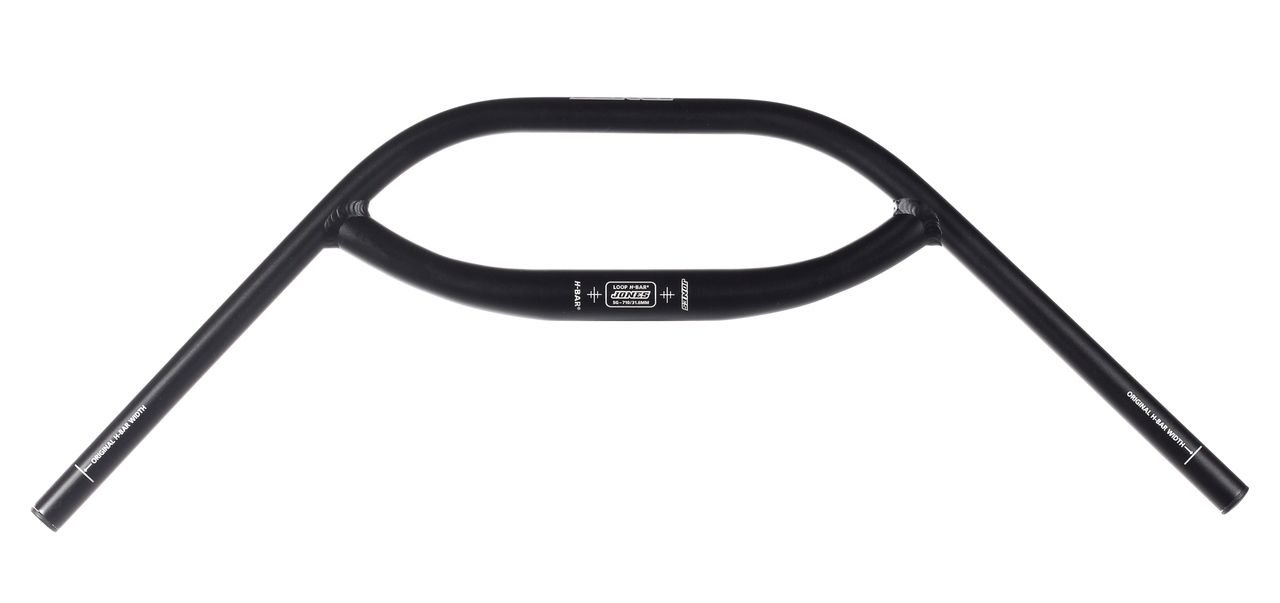
My current bike has the Jones H Loop Bar - it's a flat bar by nature but has more hand positions than drops. It's very unorthodox but I highly recommend.
 01-17-20 | 02:13 PM
#24
Very Slow Rider
Joined: Jul 2017
Posts: 1,274
Likes: 133
From: E Wa
Bikes: Jones Plus LWB, 1983 Centurion Japanese CrMo bike
Had a set of wheels built-up for commuting on somewhat-rougher urban pavements. Velocity Dyad, DT Swiss spokes/nipples, Continental Tour Ride 47-622 tires, on Shimano Deore XT 36H hubs. Very capable for handling the occasional pothole, lots of seams and upheaved sections, and with the tires it's plenty able to deal with light mud, gravel, sand, and other off-pavement junk. Not the lightest setup around, but quality and durable. Tires I selected exceeded Velocity's recommendation for tire sizes, though they have worked fine. Quite impressed, overall.
If I were to do it again with the same width of tires as the goal, I'd likely select the Velocity Cliffhanger rim over the Dyad.
If I were to do it again with the same width of tires as the goal, I'd likely select the Velocity Cliffhanger rim over the Dyad.
I am currently running 3" tires on 50mm rims, no such thing as TOO wide lol!
01-17-20 | 06:05 PM
#25
Full Member
Joined: Jun 2014
Posts: 483
Likes: 925
From: Lakeland,Fl
Bikes: 2008 Trek Police bike 2019 Jamis Coda Sport 2021 Surly Bridgeclub
That's a matter of deep controversy and personal opinion.
I have commuted for some time on both.
I prefer flat bars but drop bars have their advantages.
The main drawback to flatbars is the limited number of hand positions. This is a bigger problem the longer your commute is, if it's short, then maybe not a problem at all. I overcame this problem by mounting MTB bar ends on the inside of the grips to give me a secondary semi-aero position for headwinds or just a change of pace.
My current bike has the Jones H Loop Bar - it's a flat bar by nature but has more hand positions than drops. It's very unorthodox but I highly recommend.
I have commuted for some time on both.
I prefer flat bars but drop bars have their advantages.
The main drawback to flatbars is the limited number of hand positions. This is a bigger problem the longer your commute is, if it's short, then maybe not a problem at all. I overcame this problem by mounting MTB bar ends on the inside of the grips to give me a secondary semi-aero position for headwinds or just a change of pace.
My current bike has the Jones H Loop Bar - it's a flat bar by nature but has more hand positions than drops. It's very unorthodox but I highly recommend.