


I was pulled over by a cop this morning...
 02-27-08 | 09:53 AM
#51

Senior Member
Joined: Jan 2008
Posts: 126
Likes: 0
From: Milwaukee, WI
Bikes: Jamis crosscountry single speed with slicks; Schwin Traveller fixed gear conversion
It seems like lights never change when I'm on my motorcycle or bicycle. When I went through my motorcycle training class they stated the malfunctioning light thing, though all they could say is "wait a reasonable amount of time." So I've ended up pulling through a lot of reds. The one time I was pulled over on my motorcycle (for going 5 over. Jeez) I asked the cop about it. He just said as long as I wait over a minute or two and it's safe to drive through, I shouldn't get harassed about it. That was in Eau Claire, WI, and the cops there are pretty laid back and cool as long as you are polite and not being a smartass. There's really no reason to be a dick to the cops in that town. The only times I ever have to wait because no other cars are around are late at night. A cop watched me sit at a red for over five minutes once -I didn't want to drive through because he was watching- I got sick of waiting and drove through and he didn't come after me, so I feel pretty safe doing it. At least in WI. I haven't had to do it in Milwaukee yet, and I just blow them on my bicycle.
 02-27-08 | 10:03 AM
#52

Senior Member
Joined: Jun 2005
Posts: 848
Likes: 0
From: Minneapolis MN USA
Bikes: Trek 4300
In Minnesota, I believe (they told me this at my 55-alive refresher), a motorcycle may turn left after stopping because it might not trigger the light. I would assume a bicycle could, so I myself would, and if I got stopped I would explain that I can't trigger the light and I would ask what else I am supposed to do. I would expect that a reasonable police officer would understand that situation. If he were having a bad day and gave me a ticket, I would frame it.
However, I am developing a personal policy of not making left turns. I have run into a few situations where I am in the left lane with my arm out signaling for a left turn, and everyone STOPS as if they wonder what I am doing, even if they have the right of way. I don't know if they are trying to be nice, or if they are paralyzed with indecision, or what, but suddenly all the well-known traffic rules are thrown out and we're all playing, "no, please, after you, I insist."
Fortunately, my route to work is simple and short. Things might be different if I had to go ten miles one way in the middle of a major metropolitan area.
However, I am developing a personal policy of not making left turns. I have run into a few situations where I am in the left lane with my arm out signaling for a left turn, and everyone STOPS as if they wonder what I am doing, even if they have the right of way. I don't know if they are trying to be nice, or if they are paralyzed with indecision, or what, but suddenly all the well-known traffic rules are thrown out and we're all playing, "no, please, after you, I insist."
Fortunately, my route to work is simple and short. Things might be different if I had to go ten miles one way in the middle of a major metropolitan area.
02-27-08 | 10:31 AM
#53

Mad bike riding scientist


Joined: Nov 2004
Posts: 29,152
Likes: 6,209
From: Denver, CO
Bikes: Some silver ones, a red one, a black and orange one, and a few titanium ones
(I dont have time to read all the replies if this is stated ignore me)
You can get a very high powered magnet and place it at the bottom of your bike and sometimes that does the trip. The magnet acts as a "huge object" for the sensors underground and can sometimes help you. I know motorcycles use these all the time. Should be no different for a bike.
You can get a very high powered magnet and place it at the bottom of your bike and sometimes that does the trip. The magnet acts as a "huge object" for the sensors underground and can sometimes help you. I know motorcycles use these all the time. Should be no different for a bike.
You can reliably trigger stoplights with induction coils by rolling your wheel directly over the wire buried in the pavement for it's entire length. If the coil is a figure 8 coil, line up on the middle of the figure 8 because the coil is more sensitive due to the two wires overlapping. The trick is to find that wire because they can get buried due to repavement of the road.
It's been my experience that people who say they can't trip the light with a bicycle or motorcycle, don't know how the coils work.
__________________
Stuart Black
Dreamin' of Bemidji Down the Mississippi (in part)
Plan Epsilon Around Lake Michigan in the era of Covid
Gold Fever Three days of dirt in Colorado
Pokin' around the Poconos A cold ride around Lake Erie
Dinosaurs in Colorado A mountain bike guide to the Purgatory Canyon dinosaur trackway
Solo Without Pie. The search for pie in the Midwest.
Picking the Scablands. Washington and Oregon, 2005. Pie and spiders on the Columbia River!
Stuart Black
Dreamin' of Bemidji Down the Mississippi (in part)
Plan Epsilon Around Lake Michigan in the era of Covid
Gold Fever Three days of dirt in Colorado
Pokin' around the Poconos A cold ride around Lake Erie
Dinosaurs in Colorado A mountain bike guide to the Purgatory Canyon dinosaur trackway
Solo Without Pie. The search for pie in the Midwest.
Picking the Scablands. Washington and Oregon, 2005. Pie and spiders on the Columbia River!
02-27-08 | 10:51 AM
#54
Senior Member
Joined: Jun 2007
Posts: 684
Likes: 0
02-27-08 | 12:10 PM
#55

Señior Member
Joined: Sep 2005
Posts: 13,748
Likes: 10
From: Michigan
Bikes: Windsor Fens, Giant Seek 0 (2014, Alfine 8 + discs)
I don't think a light that is malfunctioning by not turning green for a cycle should be treated as a 4-way stop; it should be treated as a blinking red.
4 way stop assumes that the cross traffic is going to stop. That's the case if the light is totally out (like in a power failure) but if you stop at a light, then go because you were the first one to it, and there's cross traffic with the green, you're almost certainly in the wrong (also dead).
What you should do is stop, then proceed when the way is clear. That's what you do at a blinking read, not at a 4 way stop.
4 way stop assumes that the cross traffic is going to stop. That's the case if the light is totally out (like in a power failure) but if you stop at a light, then go because you were the first one to it, and there's cross traffic with the green, you're almost certainly in the wrong (also dead).
What you should do is stop, then proceed when the way is clear. That's what you do at a blinking read, not at a 4 way stop.
__________________
Work: the 8 hours that separates bike rides.
Work: the 8 hours that separates bike rides.
 02-27-08 | 12:16 PM
#57
Artful Dodger
Joined: Sep 2007
Posts: 208
Likes: 0
Oregon Bicyclist Manual
https://www.oregon.gov/ODOT/HWY/BIKEP..._manual_06.pdf
Oregon bicycle and pedestrial laws and regulations
https://www.oregon.gov/ODOT/HWY/BIKEPED/laws_regs.shtml
02-27-08 | 12:17 PM
#58
Recreational Commuter
Joined: Apr 2006
Posts: 1,024
Likes: 5
From: Central Ohio
Bikes: One brand-less build-up, and a Connondale Synapse Carbon Ultegra Disc. A nicer bike than I need, but it was a good deal, so... ;-)
Faced with this problem, I was advised by one of our friendlier cops to go ahead and use the switch that cycles the lights for pedestrians.
02-27-08 | 12:22 PM
#59

Arizona Dessert
Joined: Jun 2004
Posts: 15,029
Likes: 2,170
From: AZ
Bikes: Cannondale SuperSix, Lemond Poprad. Retired: Jamis Sputnik, Centurion LeMans Fixed, Diamond Back ascent ex
The only legal way out (if true that OR has no malfunctioning light law) is to wait for another vehicle to come behind you and trigger the light. If there are not other vehicles going in your direction, one is stuck.
Making a right turn from LTL or cutting from LTL to sidewalk are just as illegal as proceeding on a red left turn signal when the thru green is active.
Al
02-27-08 | 12:25 PM
#60
Arizona Dessert
Joined: Jun 2004
Posts: 15,029
Likes: 2,170
From: AZ
Bikes: Cannondale SuperSix, Lemond Poprad. Retired: Jamis Sputnik, Centurion LeMans Fixed, Diamond Back ascent ex
More important is that if you press the pedestrian crossing button, that will never trigger the left turn light, only a thru green light - in fact pressing the ped crossing button may force the left turn signal to stay red to protect crossing pedestrians.
Al
02-27-08 | 12:46 PM
#61
Artful Dodger
Joined: Sep 2007
Posts: 208
Likes: 0
The problem is that a cyclist can not know a sensor/light is unresponsive to their vehicle until they are already in the left turn lane.
The only legal way out (if true that OR has no malfunctioning light law) is to wait for another vehicle to come behind you and trigger the light. If there are not other vehicles going in your direction, one is stuck.
Making a right turn from LTL or cutting from LTL to sidewalk are just as illegal as proceeding on a red left turn signal when the thru green is active.
Al
The only legal way out (if true that OR has no malfunctioning light law) is to wait for another vehicle to come behind you and trigger the light. If there are not other vehicles going in your direction, one is stuck.
Making a right turn from LTL or cutting from LTL to sidewalk are just as illegal as proceeding on a red left turn signal when the thru green is active.
Al
02-27-08 | 01:17 PM
#62
Thread Starter
Eternal n00b
Joined: Jan 2008
Posts: 913
Likes: 1
From: Spokane WA
Bikes: Giant OCR3, Marin Mount Vision, '94 Bontrager Racelite, Mirraco Blink
yeah, the oregon bike manual (as posted above) states you can hit the pedestrian switch... Unless you are in the LTL, wtf, apparently there is no provision for a faulty switch.
02-27-08 | 01:41 PM
#63
Senior Member
Joined: Dec 2007
Posts: 138
Likes: 0
In Virginia the code says
B. If the traffic lights controlling an intersection are out of service because of a power failure or other event that prevents the giving of signals by the traffic lights, the drivers of vehicles approaching such an intersection shall proceed as though such intersection were controlled by a stop sign on all approaches. The provisions of this subsection shall not apply to: intersections controlled by portable stop signs, intersections with law-enforcement officers or other authorized persons directing traffic, or intersections controlled by traffic lights displaying flashing red or flashing amber lights as provided in subsection A.
I know, it is a conundrum but I would maintain that I stopped, waited for traffic to clear, and proceeded as if the light was malfunctioning. Whether or not a cop would buy it is the question, or if the cop issues a citation whether the court would convict.
B. If the traffic lights controlling an intersection are out of service because of a power failure or other event that prevents the giving of signals by the traffic lights, the drivers of vehicles approaching such an intersection shall proceed as though such intersection were controlled by a stop sign on all approaches. The provisions of this subsection shall not apply to: intersections controlled by portable stop signs, intersections with law-enforcement officers or other authorized persons directing traffic, or intersections controlled by traffic lights displaying flashing red or flashing amber lights as provided in subsection A.
I know, it is a conundrum but I would maintain that I stopped, waited for traffic to clear, and proceeded as if the light was malfunctioning. Whether or not a cop would buy it is the question, or if the cop issues a citation whether the court would convict.
02-27-08 | 02:14 PM
#64
weirdo
Joined: Jan 2008
Posts: 1,962
Likes: 5
From: Reno, NV
For my personal situation, it doesn`t really make much difference- my commute doesn`t involve any traffic lights and in my day-time wanderings through busier areas the lights are all on timers. But I`m curious about these ideas concerning stationing yourself directly on top of the sensor and rolling right up the middle of it and figure-eight coils, etc. How the hell are you supposed to know what kind of sensor it is or even WHERE it is? A major street usually has lanes what, 12 ft wide? Something like that, anyway. Ain`t no way I`m fat enough to even cover a quartert of that width. And how far back from the line? Again, most bicycles are less than half the length of a Corolla. If you don`t know where the sensors are, you`d need to wait five minutes, move over, wait five minutes again, move... No thanks- I`ll just run the light.
02-27-08 | 02:20 PM
#65
Luddite
Joined: Jan 2007
Posts: 276
Likes: 1
From: Portland, OR
Bikes: Univega Gran Turismo, Cannondale Synapse, Bianchi Aquiletta Folder
Not quite true, the inductive loop trigger senses a change in the frequency of the magnetic field. A car with enough conductive material will trip the sensor, a bike, doesn't have enough conductive material. A powerful enough magnet will trip the sensor.
There is an instructable on how to make one. It was intended for a motorcycle, buy you could easily make one for a bicycle.
Traffic Light Trigger
There is an instructable on how to make one. It was intended for a motorcycle, buy you could easily make one for a bicycle.
Traffic Light Trigger
Magnets won't do any good these days. The old style loops that detected the change in magnetic field due to the motion of the residual magnetic field in the car's frame are obsolete and never really worked that well anyway.
02-27-08 | 03:47 PM
#67


It does seem that Oregon traffic code does not contain a section on how to handle a malfunctioning traffic signal.
https://www.leg.state.or.us/ors/811.html
OR traffic code:
(Traffic Control Devices)
811.260 Appropriate driver responses to traffic control devices. This section establishes appropriate driver responses to specific traffic control devices for purposes of ORS 811.265. Authority to place traffic control devices is established under ORS 810.210. Except when acting under the direction of a police officer that contradicts this section, a driver is in violation of ORS 811.265 if the driver makes a response to traffic control devices that is not permitted under the following:
(1) Green signal. A driver facing a green light may proceed straight through or turn right or left unless a sign at that place prohibits either turn. A driver shall yield the right of way to other vehicles within the intersection at the time the green light is shown.
(2) Green arrow. A driver facing a green arrow signal light, shown alone or in combination with another signal, may cautiously enter the intersection only to make the movement indicated by such arrow or such other movement as is permitted by other signals shown at the same time.
(3) Steady circular yellow signal. A driver facing a steady circular yellow signal light is thereby warned that the related right of way is being terminated and that a red or flashing red light will be shown immediately. A driver facing the light shall stop at a clearly marked stop line, but if none, shall stop before entering the marked crosswalk on the near side of the intersection, or if there is no marked crosswalk, then before entering the intersection. If a driver cannot stop in safety, the driver may drive cautiously through the intersection.
(4) Steady yellow arrow signal. A driver facing a steady yellow arrow signal, alone or in combination with other signal indications, is thereby warned that the related right of way is being terminated. Unless entering the intersection to make a movement permitted by another signal, a driver facing a steady yellow arrow signal shall stop at a clearly marked stop line, but if none, shall stop before entering the marked crosswalk on the near side of the intersection, or if there is no marked crosswalk, then before entering the intersection. If a driver cannot stop in safety, the driver may drive cautiously through the intersection.
(5) Steady circular red signal. A driver facing a steady circular red signal light alone shall stop at a clearly marked stop line, but if none, before entering the marked crosswalk on the near side of the intersection, or if there is no marked crosswalk, then before entering the intersection. The driver shall remain stopped until a green light is shown except when the driver is permitted to make a turn under ORS 811.360.
(6) Steady red arrow signal. A driver facing a steady red arrow signal, alone or in combination with other signal indications, may not enter the intersection to make the movement indicated by the red arrow signal. Unless entering the intersection to make some other movement which is permitted by another signal, a driver facing a steady red arrow signal shall stop at a clearly marked stop line, but if none, before entering the marked crosswalk on the near side of the intersection, or if there is no marked crosswalk, then before entering the intersection. The vehicle shall remain stopped until a green light is shown except when the driver is permitted to make a turn under ORS 811.360.
(7) Traffic control devices at places other than intersections. If a traffic control device that is a signal is erected and maintained at a place other than an intersection, the provisions of this section relating to signals shall be applicable. A required stop shall be made at a sign or marking on the roadway indicating where the stop shall be made, but in the absence of such sign or marking the stop shall be made at the signal.
(8) Flashing red signal. When a driver approaches a flashing red light used in a traffic control device or with a traffic sign, the driver shall stop at a clearly marked stop line, but if none, before entering the marked crosswalk on the near side of the intersection, or if there is no marked crosswalk, then at the point nearest the intersecting roadway where the driver has a view of approaching traffic on the intersecting roadway before entering it. The right to proceed shall be subject to the rules applicable after making a stop at a stop sign. This subsection does not apply at railroad grade crossings. Conduct of a driver approaching a railroad grade crossing is governed by ORS 811.455.
(9) Flashing yellow signal. When a driver approaches a flashing yellow light used as a signal in a traffic control device or with a traffic sign, the driver may proceed through the intersection or past the signal only with caution. This subsection does not apply at railroad grade crossings. Conduct of a driver approaching a railroad grade crossing is governed by ORS 811.455.
(10) Lane direction control signals. When lane direction control signals are placed over the individual lanes of a highway, a person may drive a vehicle in any lane over which a green signal light is shown, but may not enter or travel in any lane over which a red signal light is shown.
(11) Stop signs. A driver approaching a stop sign shall stop at a clearly marked stop line, but if none, before entering the marked crosswalk on the near side of the intersection or, if there is no marked crosswalk, then at the point nearest the intersecting roadway where the driver has a view of approaching traffic on the intersecting roadway before entering it. After stopping, the driver shall yield the right of way to any vehicle in the intersection or approaching so closely as to constitute an immediate hazard during the time when the driver is moving across or within the intersection.
(12) Yield signs. A driver approaching a yield sign shall slow the driver’s vehicle to a speed reasonable for the existing conditions and if necessary for safety, shall stop at a line as required for stop signs under this section, and shall yield the right of way to any vehicles in the intersection or approaching so closely as to constitute an immediate hazard. [1983 c.338 §609; 1989 c.539 §1; 1997 c.507 §6; 2003 c.278 §6]
811.265 Failure to obey traffic control device; penalty. (1) A person commits the offense of driver failure to obey traffic control device if the person drives a vehicle and the person does any of the following:
(a) Fails to obey the directions of any traffic control device.
(b) Fails to obey any specific traffic control device described in ORS 811.260 in the manner required by that section.
(2) A person is not subject to this section if the person is doing any of the following:
(a) Following the directions of a police officer.
(b) Driving an emergency vehicle or ambulance in accordance with the privileges granted those vehicles under ORS 820.300.
(c) Properly executing a turn on a red light as authorized under ORS 811.360.
(d) Driving in a funeral procession led by a funeral lead vehicle or under the direction of the driver of a funeral escort vehicle.
(3) The offense described in this section, driver failure to obey a traffic control device, is a Class B traffic violation. [1983 c.338 §608; 1991 c.482 §13]
https://www.leg.state.or.us/ors/811.html
OR traffic code:
(Traffic Control Devices)
811.260 Appropriate driver responses to traffic control devices. This section establishes appropriate driver responses to specific traffic control devices for purposes of ORS 811.265. Authority to place traffic control devices is established under ORS 810.210. Except when acting under the direction of a police officer that contradicts this section, a driver is in violation of ORS 811.265 if the driver makes a response to traffic control devices that is not permitted under the following:
(1) Green signal. A driver facing a green light may proceed straight through or turn right or left unless a sign at that place prohibits either turn. A driver shall yield the right of way to other vehicles within the intersection at the time the green light is shown.
(2) Green arrow. A driver facing a green arrow signal light, shown alone or in combination with another signal, may cautiously enter the intersection only to make the movement indicated by such arrow or such other movement as is permitted by other signals shown at the same time.
(3) Steady circular yellow signal. A driver facing a steady circular yellow signal light is thereby warned that the related right of way is being terminated and that a red or flashing red light will be shown immediately. A driver facing the light shall stop at a clearly marked stop line, but if none, shall stop before entering the marked crosswalk on the near side of the intersection, or if there is no marked crosswalk, then before entering the intersection. If a driver cannot stop in safety, the driver may drive cautiously through the intersection.
(4) Steady yellow arrow signal. A driver facing a steady yellow arrow signal, alone or in combination with other signal indications, is thereby warned that the related right of way is being terminated. Unless entering the intersection to make a movement permitted by another signal, a driver facing a steady yellow arrow signal shall stop at a clearly marked stop line, but if none, shall stop before entering the marked crosswalk on the near side of the intersection, or if there is no marked crosswalk, then before entering the intersection. If a driver cannot stop in safety, the driver may drive cautiously through the intersection.
(5) Steady circular red signal. A driver facing a steady circular red signal light alone shall stop at a clearly marked stop line, but if none, before entering the marked crosswalk on the near side of the intersection, or if there is no marked crosswalk, then before entering the intersection. The driver shall remain stopped until a green light is shown except when the driver is permitted to make a turn under ORS 811.360.
(6) Steady red arrow signal. A driver facing a steady red arrow signal, alone or in combination with other signal indications, may not enter the intersection to make the movement indicated by the red arrow signal. Unless entering the intersection to make some other movement which is permitted by another signal, a driver facing a steady red arrow signal shall stop at a clearly marked stop line, but if none, before entering the marked crosswalk on the near side of the intersection, or if there is no marked crosswalk, then before entering the intersection. The vehicle shall remain stopped until a green light is shown except when the driver is permitted to make a turn under ORS 811.360.
(7) Traffic control devices at places other than intersections. If a traffic control device that is a signal is erected and maintained at a place other than an intersection, the provisions of this section relating to signals shall be applicable. A required stop shall be made at a sign or marking on the roadway indicating where the stop shall be made, but in the absence of such sign or marking the stop shall be made at the signal.
(8) Flashing red signal. When a driver approaches a flashing red light used in a traffic control device or with a traffic sign, the driver shall stop at a clearly marked stop line, but if none, before entering the marked crosswalk on the near side of the intersection, or if there is no marked crosswalk, then at the point nearest the intersecting roadway where the driver has a view of approaching traffic on the intersecting roadway before entering it. The right to proceed shall be subject to the rules applicable after making a stop at a stop sign. This subsection does not apply at railroad grade crossings. Conduct of a driver approaching a railroad grade crossing is governed by ORS 811.455.
(9) Flashing yellow signal. When a driver approaches a flashing yellow light used as a signal in a traffic control device or with a traffic sign, the driver may proceed through the intersection or past the signal only with caution. This subsection does not apply at railroad grade crossings. Conduct of a driver approaching a railroad grade crossing is governed by ORS 811.455.
(10) Lane direction control signals. When lane direction control signals are placed over the individual lanes of a highway, a person may drive a vehicle in any lane over which a green signal light is shown, but may not enter or travel in any lane over which a red signal light is shown.
(11) Stop signs. A driver approaching a stop sign shall stop at a clearly marked stop line, but if none, before entering the marked crosswalk on the near side of the intersection or, if there is no marked crosswalk, then at the point nearest the intersecting roadway where the driver has a view of approaching traffic on the intersecting roadway before entering it. After stopping, the driver shall yield the right of way to any vehicle in the intersection or approaching so closely as to constitute an immediate hazard during the time when the driver is moving across or within the intersection.
(12) Yield signs. A driver approaching a yield sign shall slow the driver’s vehicle to a speed reasonable for the existing conditions and if necessary for safety, shall stop at a line as required for stop signs under this section, and shall yield the right of way to any vehicles in the intersection or approaching so closely as to constitute an immediate hazard. [1983 c.338 §609; 1989 c.539 §1; 1997 c.507 §6; 2003 c.278 §6]
811.265 Failure to obey traffic control device; penalty. (1) A person commits the offense of driver failure to obey traffic control device if the person drives a vehicle and the person does any of the following:
(a) Fails to obey the directions of any traffic control device.
(b) Fails to obey any specific traffic control device described in ORS 811.260 in the manner required by that section.
(2) A person is not subject to this section if the person is doing any of the following:
(a) Following the directions of a police officer.
(b) Driving an emergency vehicle or ambulance in accordance with the privileges granted those vehicles under ORS 820.300.
(c) Properly executing a turn on a red light as authorized under ORS 811.360.
(d) Driving in a funeral procession led by a funeral lead vehicle or under the direction of the driver of a funeral escort vehicle.
(3) The offense described in this section, driver failure to obey a traffic control device, is a Class B traffic violation. [1983 c.338 §608; 1991 c.482 §13]
02-27-08 | 04:33 PM
#68
Artful Dodger
Joined: Sep 2007
Posts: 208
Likes: 0
I guess if I didn't want the possible hassle of explaining myself to law enforcement or a judge, I'd probably move to the sidewalk (after signaling for 100' if practicable of course!), trigger the pedestrian switch, and resume cycling in my intended path of travel after with the pedestrian light.
Check this page for more information on how Portland marks the exact spot to place your bike at an intersection:
https://www.portlandonline.com/shared....cfm?id=145110
Call a human (listed below) at the City of Portland Bike Program and see if they can get the device adjusted properly! Danged if I can figure out from their website who the appropriate person is.
Roger Geller
City of Portland
1120 SW 5th Ave., Room 800
Portland, OR 97204
Phone: 503-823-7671
Fax: 503-823-7576
e-mail: roger.geller@pdxtrans.org
Jeff Smith
City of Portland
1120 SW 5th Ave., Room 800
Portland, OR 97204
Phone: 503-823-7083
Fax: 503-823-9194
e-mail: jeff.smith@pdxtrans.org
Linda Ginenthal
City of Portland
1120 SW 5th Ave., Room 800
Portland, OR 97204
Phone: 503-823-5266
Fax: 503-823-9194
e-mail: linda.ginenthal@pdxtrans.org
Janis McDonald
City of Portland
1120 SW 5th Ave., Room 800
Portland, OR 97204
Phone: 503-823-5358
Fax: 503-823-9194
e-mail: janis.mcdonald@pdxtrans.org
Timo Forsberg
City of Portland
1120 SW 5th Ave., Room 800
Portland, OR 97204
Phone: 503-823-7699
Fax: 503-823-9194
e-mail: timothy.forsberg@pdxtrans.org
Check this page for more information on how Portland marks the exact spot to place your bike at an intersection:
https://www.portlandonline.com/shared....cfm?id=145110
Call a human (listed below) at the City of Portland Bike Program and see if they can get the device adjusted properly! Danged if I can figure out from their website who the appropriate person is.
Roger Geller
City of Portland
1120 SW 5th Ave., Room 800
Portland, OR 97204
Phone: 503-823-7671
Fax: 503-823-7576
e-mail: roger.geller@pdxtrans.org
Jeff Smith
City of Portland
1120 SW 5th Ave., Room 800
Portland, OR 97204
Phone: 503-823-7083
Fax: 503-823-9194
e-mail: jeff.smith@pdxtrans.org
Linda Ginenthal
City of Portland
1120 SW 5th Ave., Room 800
Portland, OR 97204
Phone: 503-823-5266
Fax: 503-823-9194
e-mail: linda.ginenthal@pdxtrans.org
Janis McDonald
City of Portland
1120 SW 5th Ave., Room 800
Portland, OR 97204
Phone: 503-823-5358
Fax: 503-823-9194
e-mail: janis.mcdonald@pdxtrans.org
Timo Forsberg
City of Portland
1120 SW 5th Ave., Room 800
Portland, OR 97204
Phone: 503-823-7699
Fax: 503-823-9194
e-mail: timothy.forsberg@pdxtrans.org
Last edited by vincentpaul; 02-27-08 at 04:46 PM.
02-27-08 | 06:49 PM
#69
Mad bike riding scientist
Joined: Nov 2004
Posts: 29,152
Likes: 6,209
From: Denver, CO
Bikes: Some silver ones, a red one, a black and orange one, and a few titanium ones
For my personal situation, it doesn`t really make much difference- my commute doesn`t involve any traffic lights and in my day-time wanderings through busier areas the lights are all on timers. But I`m curious about these ideas concerning stationing yourself directly on top of the sensor and rolling right up the middle of it and figure-eight coils, etc. How the hell are you supposed to know what kind of sensor it is or even WHERE it is? A major street usually has lanes what, 12 ft wide? Something like that, anyway. Ain`t no way I`m fat enough to even cover a quartert of that width. And how far back from the line? Again, most bicycles are less than half the length of a Corolla. If you don`t know where the sensors are, you`d need to wait five minutes, move over, wait five minutes again, move... No thanks- I`ll just run the light.
Position your bike right over the middle of the loop. If the loop has been recovered due to an overlay job, then finding the coil is nearly impossible. Those are the ones I usually can't trip.
Once you learn the trick to tripping the light, you can amaze your friends on those high speed highway crossings!
__________________
Stuart Black
Dreamin' of Bemidji Down the Mississippi (in part)
Plan Epsilon Around Lake Michigan in the era of Covid
Gold Fever Three days of dirt in Colorado
Pokin' around the Poconos A cold ride around Lake Erie
Dinosaurs in Colorado A mountain bike guide to the Purgatory Canyon dinosaur trackway
Solo Without Pie. The search for pie in the Midwest.
Picking the Scablands. Washington and Oregon, 2005. Pie and spiders on the Columbia River!
Stuart Black
Dreamin' of Bemidji Down the Mississippi (in part)
Plan Epsilon Around Lake Michigan in the era of Covid
Gold Fever Three days of dirt in Colorado
Pokin' around the Poconos A cold ride around Lake Erie
Dinosaurs in Colorado A mountain bike guide to the Purgatory Canyon dinosaur trackway
Solo Without Pie. The search for pie in the Midwest.
Picking the Scablands. Washington and Oregon, 2005. Pie and spiders on the Columbia River!
02-27-08 | 06:59 PM
#70

long time visiter
Joined: Oct 2005
Posts: 654
Likes: 1
From: in the Northern Tundra
Bikes: 2005 Trek 6700 disc 2007 Orbea Onix 2009 Raleigh One Way
So I recently started commuting to work by bicycle, I leave my house at ~4am to give me plenty of time to arrive at work with room for a flat tire and a shower when I arrive (it's a very hilly 16 mile ride).
I took a left turn through a red light, after stopping and checking for traffic, this light in particular will NOT change for a bike, trust me, I've waited.
The only car in sight was one coming in the opposite direction appr. ~200 yd's ahead, shortly after taking the left the car that was coming in the opposite direction drives up behind me, BLING BLING the red and blues light up.
Luckily no ticket, just a lecture.
How do you guys handle red lights that won't change for a bike? To my understanding some states allow you to take the left against the light if it won't change, though I am unsure if Oregon is one of them.
I took a left turn through a red light, after stopping and checking for traffic, this light in particular will NOT change for a bike, trust me, I've waited.
The only car in sight was one coming in the opposite direction appr. ~200 yd's ahead, shortly after taking the left the car that was coming in the opposite direction drives up behind me, BLING BLING the red and blues light up.
Luckily no ticket, just a lecture.
How do you guys handle red lights that won't change for a bike? To my understanding some states allow you to take the left against the light if it won't change, though I am unsure if Oregon is one of them.
02-27-08 | 07:22 PM
#71
Thread Starter
Eternal n00b
Joined: Jan 2008
Posts: 913
Likes: 1
From: Spokane WA
Bikes: Giant OCR3, Marin Mount Vision, '94 Bontrager Racelite, Mirraco Blink
02-27-08 | 08:36 PM
#73

Cat None
Joined: Aug 2005
Posts: 4,508
Likes: 0
From: San Diego
Bikes: LOOK KG 461, LeMond Zurich, Giant Talon 29er 0
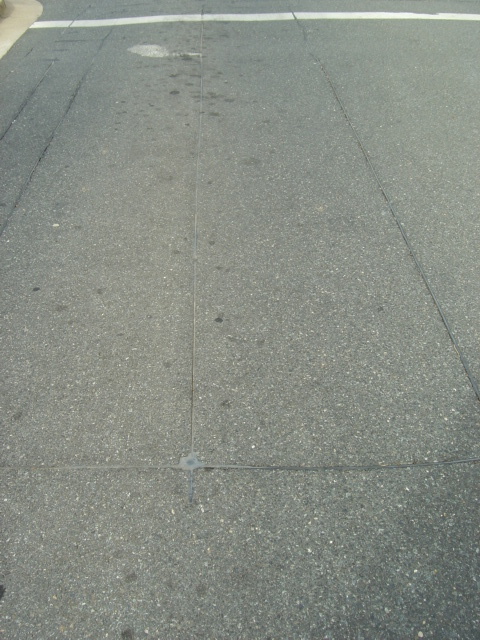
Unless the road has been repaved since installation of the loop, the location of the wires is pretty clear. The wires are installed in the ground after the pavement has been cut and the cuts filled with tar. Most of the figure 8 ones look like this
Position your bike right over the middle of the loop. If the loop has been recovered due to an overlay job, then finding the coil is nearly impossible. Those are the ones I usually can't trip.
Once you learn the trick to tripping the light, you can amaze your friends on those high speed highway crossings!
Position your bike right over the middle of the loop. If the loop has been recovered due to an overlay job, then finding the coil is nearly impossible. Those are the ones I usually can't trip.
Once you learn the trick to tripping the light, you can amaze your friends on those high speed highway crossings!
02-27-08 | 08:41 PM
#74
Cat None
Joined: Aug 2005
Posts: 4,508
Likes: 0
From: San Diego
Bikes: LOOK KG 461, LeMond Zurich, Giant Talon 29er 0
You need to read the posts...particularly CB HI's post and the related links. A magnet on a bike, motorcycle, car, head, etc. do nothing when it comes to inductions coils. Yes, they add mass to a bike but the magnetic field of a permanent magnet...even a very, very massive one that would be too big to carry on a bike...is too weak to have any effect on the induction coil unless it's in direct contact with the wires. Magnetic fields of permanent magnets decrease as a square of distance. This means that if the field has a certain strength at one distance, if you increase the distance from the magnet, the strength of the field is 1/4 as strong.
You can reliably trigger stoplights with induction coils by rolling your wheel directly over the wire buried in the pavement for it's entire length. If the coil is a figure 8 coil, line up on the middle of the figure 8 because the coil is more sensitive due to the two wires overlapping. The trick is to find that wire because they can get buried due to repavement of the road.
It's been my experience that people who say they can't trip the light with a bicycle or motorcycle, don't know how the coils work.
You can reliably trigger stoplights with induction coils by rolling your wheel directly over the wire buried in the pavement for it's entire length. If the coil is a figure 8 coil, line up on the middle of the figure 8 because the coil is more sensitive due to the two wires overlapping. The trick is to find that wire because they can get buried due to repavement of the road.
It's been my experience that people who say they can't trip the light with a bicycle or motorcycle, don't know how the coils work.
 02-28-08 | 08:44 AM
#75
Rider
Joined: Oct 2007
Posts: 1,077
Likes: 5
From: Matanuska-Susitna Borough, AK
If you've given the light a good serious chance to change, it is legal for you to cross it on red, for reason that the traffic light is DEFECTIVE. Be sure to notify the city that the light is defective.